Reference #18.b3560e17.1777739022.8eaea860
https://errors.edgesuite.net/18.b3560e17.1777739022.8eaea860
Reference #18.b3560e17.1777739022.8eaea860
https://errors.edgesuite.net/18.b3560e17.1777739022.8eaea860
Organisers of pro-Palestine marches have said Keir Starmer’s threat to ban some demonstrations opposing Israel’s actions in the Middle East will “strike at the root of free assembly and free speech” in the UK.
On Saturday morning, the prime minister told BBC Radio 4’s Today programme that “there are instances” in which he would support stopping some pro-Palestine protests altogether.
Starmer said he also wanted the language expressed on some protest marches to be subjected to “tougher action”, including the chant “globalise the intifada”. Intifada is an Arabic word that translates to uprising or “shaking off”.
Some pro-Palestine voices use the phrase as an expression of solidarity with Palestinians resisting Israeli occupation while some Jewish groups and leaders have described it as a call to violence.
His comments come days after a series of attacks on the British Jewish community in recent weeks, including the stabbing of two Jewish men in Golders Green in north London on Wednesday.
John Rees, co-founder and national officer for the Stop The War coalition, which helps organise large pro-Palestine demonstrations in central London, considered Starmer’s comments a “threat” against his coalition’s own protests.
Speaking to Sky News, Rees said a ban “will be to strike at the root of free assembly and free speech in this country.
“I don’t think that people in this country are minded to say: ‘Oh, well, we did it once, and that didn’t work. So we’re now going home.’
“As long as the wars continue, as long as the killing continues, people will want to say to this government, you’re complicit in this, and you should stop. And will want to say to the Israeli government, you’re setting the Middle East on fire. It’s now impacting not only the lives of Palestinians, but the livelihood of people around the globe and you should stop,” he said.
When asked about a “small percentage” of people who appear to express support for Hamas or chant the phrase “globalise the intifada”, Rees said out of the millions of people who have attended the demonstrations overall, a “minuscule number” of arrests have been made for such offences.
He said when stewards at the demonstrations see “inappropriate slogans”, they “ask people not to use them and, by and large, they comply”.
Conservative leader Kemi Badenoch called for pro-Palestine marches to be banned altogether on Saturday afternoon, claiming “they are used as a cover for promoting violence and intimidation against Jews”.
Rees said: “We have to be absolutely clear here, there is no threat whatsoever to the Jewish community from these marches. In fact, they are attended by thousands of Jewish people, who disapprove of the actions of the government and disapprove of the actions of the State of Israel.”
Defend Our Juries, which organises demonstrations where people express support for the proscribed group Palestine Action, responded to Starmer’s comments on X, saying: “End the genocide, not our freedoms to oppose it.”
Starmer stressed his suggestion some protest marches could be banned was “not a discussion that has only been had this week in response to this awful incident. That is a discussion we’ve been having with the police for some time”.
He told Today: “In relation to the repeated nature of the marches, many people in the Jewish community have said to me, it’s the repeat nature, it’s the cumulative effect.”
Asked if he supported calls for a moratorium on pro-Palestinian marches – notably from his independent adviser on terrorism Jonathan Hall – Starmer said: “I think it’s time to look across the board at protests and the cumulative effect. I think it’s time for, I would say, some people protesting to just reflect on what the Jewish community is going through and the overall impact that this is having.
Starmer’s comments came as Mark Rowley, the Metropolitan police commissioner, said a “dangerous and troubling” mix of hate crimes, terrorism and the involvement of hostile states was coming together in the UK to create a terrifying atmosphere for British Jews.
Rees said the problem with linking pro-Palestine demonstrations with attacks on Jewish people is that it “acts as if there’s a causal relationship” between the two.
Referring to those who carry out attacks against the Jewish community, including Essa Suleiman, who has been charged with three counts of attempted murder after attacking a longtime friend before stabbing two Jewish men in Golders Green, Rees said: “These kind of individuals are not attached to the Palestine movement. They are not attached to the marches. There’s no evidence that they’ve ever seen a march, let alone been on one, or that the organisers would for a second condone it. So this connection is completely fallacious.”
Downing Street has been approached for comment.

Ruben Rocha Moya again denies allegations he shielded cartel, says taking ‘temporary leave’ to defend self.
The governor of Mexico’s Sinaloa state has temporarily resigned days after being charged by United States authorities in a sweeping drug trafficking indictment that has further strained relations between the two countries.
In a brief video statement posted late Friday, Ruben Rocha Moya again denied any wrongdoing, but said he was taking “temporary leave” to defend himself against the US allegations.
The indictment unsealed by US prosecutors earlier this week claimed that Rocha Moya and nine other officials directly aided the Sinaloa drug cartel in its smuggling operations in exchange for political support and bribes.
That support included members of the powerful cartel kidnapping and threatening opposition candidates in the 2021 election and stealing paper ballots cast for those running against Rocha Moya, the indictment charged.
Rocha Moya is a member of President Claudia Sheinbaum’s progressive Morena party.
“My conscience is clear,” Rocha Moya said in the video message. “To my people and to my family, I can look you in the eye because I have never betrayed you, and I never will.”
Juan de Dios Gamez Mendivil, the mayor of the Sinaloa state capital Culiacan who was among the other officials charged by the US, also announced he would step down on Saturday. He has denied the allegations.
Sheinbaum has also pushed back on charges, which come at a time when she has sought to navigate tense relations with the administration of US President Donald Trump.
On Thursday, she said her government had not been provided with any concrete evidence to back up the claims, suggesting the information laid out in the indictment was insufficient.
“My position on these events is as follows: truth, justice and the defence of sovereignty,” Sheinbaum said.
She added that if “clear and irrefutable evidence” is presented, the US still must proceed “in accordance with the law under our jurisdiction”.
Sheinbaum maintained her government will not “shield anyone who has committed a crime”.
“However, if there is no clear evidence,” she added, “it is evident that the aim of these charges by the [US] Department of Justice is political.”
Since taking office in January of last year, the Trump administration has heaped pressure on Mexico to do more to address migration and drug smuggling.
The approach has included Washington imposing a host of tariffs as leverage against Mexico’s government.
The US State Department has also labelled several Latin American drug cartels as “Foreign Terrorist Organisations”, an unorthodox move in line with the administration’s more militaristic approach to Latin America.
The administration has broadly argued that the criminal groups are driven, in part, by efforts to destabilise the US, a claim rejected by many longtime experts.
Sheinbaum has walked a careful line with Trump, increasing cooperation in countering cartels while pledging to protect Mexico’s sovereignty. Notably, she has staunchly opposed the prospect of any US military action on Mexican soil.
But experts have said charging elected officials in Mexico represents a major escalation in the Trump administration’s strategy.
Speaking to Al Jazeera this week, Vanda Felbab-Brown, an expert on non-state armed groups at the Brookings Institution think tank in Washington, DC, said the approach had “long been considered a very big step, almost a ‘nuclear option’”.
She predicted more US indictments were likely to come.

NEWYou can now listen to Fox News articles!
CHICAGO — Some Black Chicagoans are saying they’re all in on reparations, calling for the local and federal government to take action to redress slavery and other historical wrongs in one of the most hot-button topics of debate in modern America.
“Should be like the stimulus. Everybody sign up, and everybody get a deposit,” William, a Chicago resident, told Fox News Digital.
Fox News Digital hit the streets of Chicago last week to speak with advocates and residents as the city and the state are looking to potentially implement reparations in some form.
CHICAGO REPARATIONS ADVOCATES SAY FEDERAL GOV MORALLY OWES ‘7 QUADRILLION DOLLARS’ IN SLAVE LABOR

Chicago Mayor Brandon Johnson has launched a community engagement effort called “Repair Chicago” to gather experiences of harm of Black Chicagoans as part of an effort to implement reparations. (Eileen T. Meslar/Chicago Tribune/Tribune News Service via Getty Images)
“I think the federal government should do that. Because as a government, you know, with slavery and everything, that’s a whole government, not just a city thing,” William added.
Leonte Fraley, a native of the Englewood neighborhood in Chicago and a graduate of Kennedy King College, said that the money could help Blacks who were set back financially from past government policies.
“I can go take this money and I can buy this house that I couldn’t afford. I don’t have to live in a certain community just because I’m financially not in a place to afford it,” Fraley said.
“That’s the change for us,” he said.
Chicago Mayor Brandon Johnson has launched a community engagement effort called “Repair Chicago” to gather experiences of harm of Black Chicagoans as part of an effort to implement reparations.
Not too far from Chicago, Evanston, Illinois has issued $25K in reparations payments to some Black residents who were descendants of those affected by past housing discrimination. The city said that targeting housing discrimination was the best case for reparations.
An Evanston native and business owner of Cutting Edge Hair Gallery, Donna Walker, told Fox News Digital that the Black residents who received the money deserved it.
“So the people that received it deserved it. I mean our ancestors and our elders definitely went through it. So I feel that they deserve it,” Walker said.

An Evanston resident and business owner of Cutting Edge hair salon, Donna Walker, told Fox News Digital that the Black residents of Evanston who received reparations money deserved it.
BLUE STATE POURED THOUSANDS OF DOLLARS INTO STUDY ON REPARATIONS AS EFFORT LAUNCHES
Ivan, a gym teacher at Chicago Public Schools, believes giving out cash is not a good idea.
“I truly feel, man, that reparations should just come in the form of opportunity. Giving people money has never proved to be just good for the cause, you know, but you give opportunity,” Ivan, a resident who just moved to the Windy City two years ago, said.
At Kennedy King College on Tuesday in Chicago, social science department chair Dr. Ted Williams III led a panel to address questions about reparations.

Grace, a student at Kennedy King College, told Fox News Digital that she was eager to see her professor Dr. Daniel Davis speak about reparations at an event on Tuesday at the school. (Fox News Digital)
Williams, an Illinois African Descent-Citizens Reparations Commissioner (ADCRC), told Fox News Digital that the U.S. is capable of issuing reparations because the country has money for war, referencing the nation’s conflict with Iran.
“I think part of my work, not only as an educator but also as a commissioner, is to really go around the state and the country and to help people to understand the pressing need, the fierce urgency of now, if you will, around this question,” Williams said.

Not too far from Chicago, Evanston, Illinois has issued $25K in reparations payments to some Black residents who were descendants of those affected by past housing discrimination. (Getty Images)
At Kennedy King College’s event discussing reparations, ADCRC Chair Marvin Slaughter, Jr. said that “seven quadrillion dollars” were contributed to the U.S. by slave labor.
The “seven quadrillion” figure comes from missing wages for 24 hours a day for enslaved people since they “had no freedom of time,” Slaughter told Fox News Digital, citing a study he conducted in 2022.
The ADCRC in March released a report laying out what it called the state’s history of harms against Black Illinoans, described as its “first comprehensive, evidence-based” report examining “how slavery and its vestiges produce historical harms and continue to generate inequities for Black Illinoisans.”
Dr. Daniel Davis, a faculty member at Kennedy King College’s social science department who teaches African American studies, said cash is necessary, but reparations is bigger than that.
“So some people think we’re only asking for a big check. No, a cash component is necessary as part of the package, part of a compensation, along with maybe home loan help, down payment on homes, tax breaks, education breaks for funding,” Davis told Fox News Digital.
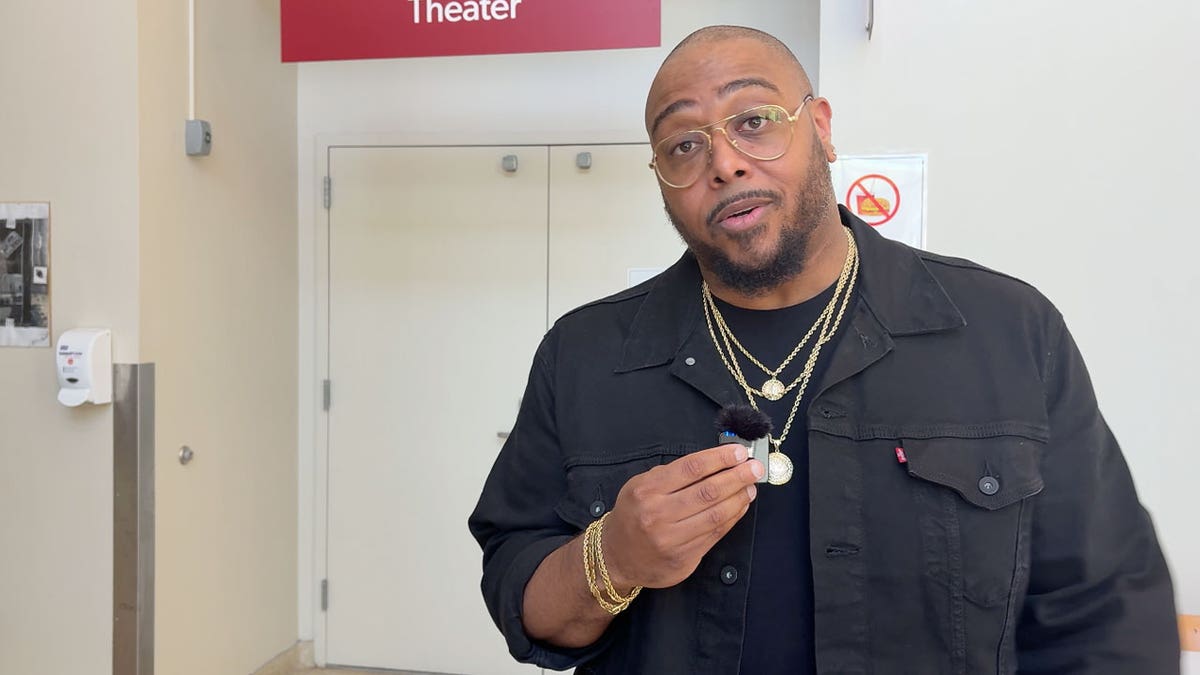
Dr. Daniel Davis, a faculty member at Kennedy King College’s social science department, teaches African American studies.
CLICK HERE TO GET THE FOX NEWS APP
Davis was one of the four speakers on a panel to give reparations information to the crowd of students in attendance.
“But the cash part — liquidity is necessary,” he said.
“Cash is king, right?” he continued. “So while we can have institutions and other things developed in the name of reparations, having cash to make moves and help make up for some of this harm and some of these inequities in these gaps.”
Reform UK’s leading figures have repeatedly promoted a new pothole-fixing machine by the construction company JCB, while the party received £200,000 from the British digger maker, the Guardian can reveal.
Several Reform politicians including Nigel Farage, Lee Anderson, Robert Jenrick, Zia Yusuf and Richard Tice have sung the praises of the JCB PotHole Pro machine.
At a rally last year in Birmingham, Farage entered the stage on one of the repair vehicles and suggested it would be used in Reform-run councils when the party had taken control at local elections.
Describing JCB as “one of the most incredible companies in the world” in March 2025, he said: “This machine can mend potholes at half the cost that currently is being charged by other commercial operators, and aren’t potholes just the perfect symbol of broken Britain?
“So I thought I’d come in on a JCB, with a machine that actually works, and that county council should use, if they weren’t tied in, to five and 10-year contracts with inferior providers. But we’ll fix that, won’t we, when we control those county councils?”
After Farage lavished praise on the business, JCB gave a donation of £200,000 to Reform in November last year. The donation came after years of the family-owned company giving money to the Conservatives, with its chairman, Anthony Bamford, having sat as a Tory peer until 2024.
Now at least two Reform-run councils have adopted the machines through their contractor. They said this had been done through the proper procurement channels and not cost them any more money.
Councils run by other parties, including the Tories and Labour, also make use of the PotHole Pro. Lilian Greenwood, the Labour party’s roads minister, has described it as “one of the many great examples of using new technology to repair potholes faster and demonstrates how companies are harnessing new technology to repair potholes faster.”
However, favourable mentions of the machine appear most concentrated among Reform politicians.
A month ago, Anderson posted a video of a PotHole Pro at Nottinghamshire county council, saying: “Have a look at this, you’ve got to be impressed.”
Jenrick visited a JCB factory with Nottinghamshire council in February claiming the machine could fix potholes six times faster, while Tice recorded a video on one ata Reform conference last autumn saying he was “excited to see this fantastic machine working”.
Yusuf, the party’s home affairs spokesperson, also accused councils of using “iron age technology” of pickaxes rather than “cutting edge tech like the JCB Pothole Pro” in May last year.
Reform are even promoting the JCB equipment on some local election leaflets, with Byline Times identifying two flyers in Barnet and Kirklees, where the machine is named as the answer to public frustration with degraded road surfaces.
Given the publicity being afforded to JCB, the Liberal Democrats have sent a complaint to the Electoral Commission and are calling for an investigation into whether the “public contracts may be being traded for political patronage”.
The party questioned whether Reform was “providing a product promotion service or a favourable policy environment” for JCB, asking if this was appropriate given the business was a donor.
A spokesperson for JCB said: “The JCBPothole Pro has a proven track record in undertaking permanent pothole repairs four times faster and at half the cost of traditional methods. For this reason, JCBPothole Pro machines are in use in Labour-led councils, Conservative-led councils, Reform-led councils, SNP-led councils and Liberal Democrat-led councils right across Great Britain. In council areas where the JCB Pothole Pro is not already in use, some trials are under way.”
Two Reform-led councils using the pothole fixing machine are Lincolnshire and Nottinghamshire. In Lincolnshire, where a previous trial in 2021 did not find the machine effective, the council confirmed this week that the PotHole Pro was “here to stay” after “the impressive kit completed an intensive trial on the county’s roads”.
In relation to the Lib Dem complaint, the councillor Sean Matthews, leader of Lincolnshire county council, said: “Given that this trial has been conducted, and that analysis has been overseen, by a very long-standing and respected group of (independent) officers who have been given the absolute freedom to say yes or no to this machine, I do not see how these comments apply to what has happened here.
“This trial has been set out differently to the previous trial in 2021, which lasted for just nine weeks. This new trial has shown a real benefit to road repair which can be proven, beyond doubt, after eight months on our roads. We now have a large amount of data which shows exactly where the gains are.
“To be clear, there was absolutely no political influence during this trial and we continue to look at other products to improve our roads … it is important that, as part of our efforts to improve our 5,500-mile road network, the highways team have the freedom to properly trial new tech, and revisit previously discounted ideas, in our ongoing effort to fix Lincolnshire’s roads.”
Reform sources said the councils were working with contractors rather than JCB directly to trial kit and make decisions based on effectiveness.
They also strongly rebutted any suggestion that Reform “are or would ever trade public contracts for political patronage, unlike the Tory or Labour parties”.
Nottinghamshire council did not respond to requests for comment.

NEWYou can now listen to Fox News articles!
President Donald Trump’s effort to broadly pull U.S. troops from key NATO allies over resistance to the Iran war could run into new limits imposed by Congress, but the administration may have a way around them.
Trump ordered the withdrawal of 5,000 troops from Germany Friday, a drawdown which will happen over the next six to 12 months, according to Pentagon spokesperson Sean Parnell.
Lawmakers have restricted large-scale troop reductions in Europe below 76,000.
But Trump still retains broad authority as commander in chief to move forces between countries, opening the door to shifting troops away from allies like Germany, Spain or Italy without reducing the overall U.S. presence.
Pentagon orders withdrawal of 5,000 U.S. troops from Germany as Trump escalates feud with Merz
The warning follows pushback from allies including Spain and Italy, which have limited how U.S. forces can use key bases for Iran-related missions, highlighting tensions inside NATO as Washington presses partners for support during the escalating conflict.
Trump said Wednesday the U.S. is “studying and reviewing the possible reduction of troops” in Germany, comments that came after Chancellor Friedrich Merz said the U.S. was “being humiliated” by Iran.
Merz downplayed the spat between Washington and Berlin in a statement Thursday.
“On all these issues, we maintain close and trusting contact with our partners, including — and especially — those in Washington. We do so in the shared transatlantic interest. We do so with mutual respect and a fair sharing of burdens.”
German foreign minister Johann Wadephul said in his own statement: “The Ramstein Air Base serves an irreplaceable function for both the US and us.”
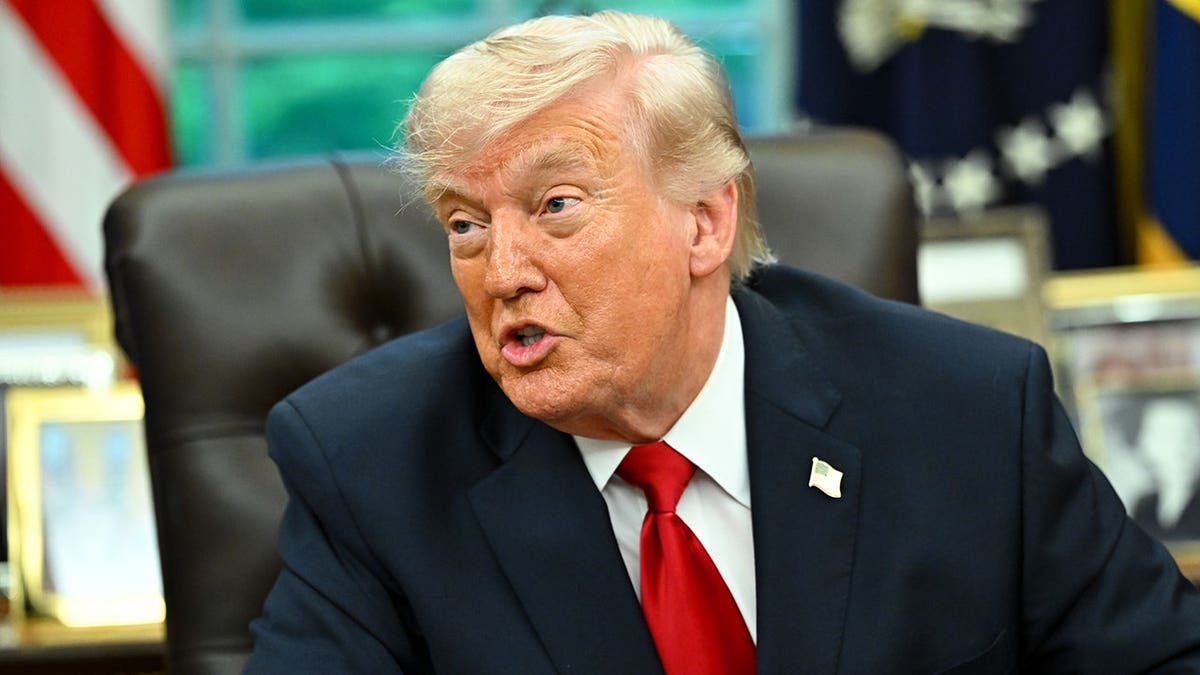
President Donald Trump’s effort to broadly pull U.S. troops from key NATO allies over resistance to the Iran war could run into new limits imposed by Congress, but the administration may have a way around them. (Graeme Sloan/Bloomberg via Getty Images)
Asked on Thursday whether he’d consider pulling troops out of Italy and Spain, Trump said, “Yeah, probably… Why shouldn’t I?”
The comments come as both countries have resisted U.S. requests tied to operations in Iran.
“Italy has not been of any help to us,” the president said, adding that Spain has been “horrible, absolutely horrible” and citing their refusal to allow the U.S. to use jointly operated bases for missions related to the conflict.
Any major withdrawal, however, would face hurdles in Congress.
Under the latest defense bill, the Pentagon cannot reduce U.S. troop levels in Europe below 76,000 without submitting an assessment and certifying to lawmakers that the move would not harm U.S. or NATO security interests.
“The provision does not prohibit the administration from going below 76,000, but it does establish hurdles it would have to clear,” Jeff Rathke, president of the American-German Institute at Johns Hopkins University and a former State Department official, told Fox News Digital.
Key US ally blocks airspace to military flights over Iran, escalating standoff with Trump
Congress cannot directly veto a troop withdrawal, but lawmakers can impose conditions and restrict funding, effectively slowing or blocking any significant drawdown if those requirements are not met.
The provision reflects recent concern in Congress over potential troop reductions, rather than a long-standing requirement in defense legislation. The restriction applies to total U.S. troop levels in Europe, not deployments in individual countries.
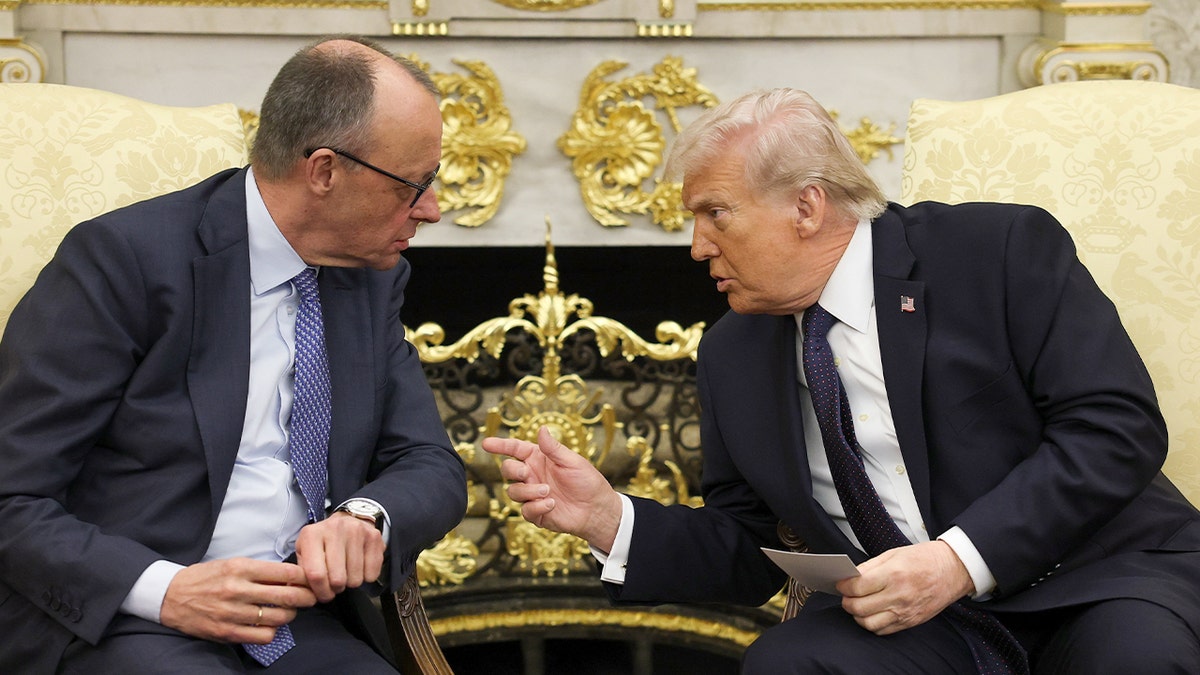
President Donald Trump and German Chancellor Friedrich Merz met in the Oval Office at the White House in Washington, D.C., on March 3, 2026, to discuss issues including recent U.S. and Israeli strikes on Iran. (Win McNamee/Getty Images)
NATO itself does not have veto power over U.S. troop deployments, which remain a national decision, though basing agreements depend on cooperation with host countries.
The U.S. currently has about 36,000 troops in Germany, about 13,000 in Italy and around 4,000 in Spain — three of the largest American military footprints in Europe.
Germany and Italy host key U.S. bases that serve as logistics hubs for operations in the Middle East, meaning any significant drawdown could complicate efforts tied to the Iran conflict itself.
That has raised the stakes for how Trump responds to allied resistance.
Seth Jones, a defense analyst at the Center for Strategic and International Studies, said the president likely has the authority to reposition or even withdraw forces, but warned that doing so raises broader questions about military strategy during an ongoing conflict.
“My issue is less the legal authority, but rather the strategic rationale behind a withdrawal — especially if it is done for political, rather than strategic, reasons,” Jones said.
He pointed to the role of key bases in Europe, including Rota in Spain, which supports rapid-response operations into North Africa, and Germany, which serves as a hub for deployments across both European and African theaters.
“The Russian threat to Eastern Europe remains serious,” Jones added, noting that some U.S. bases in Germany are positioned outside the range of certain Russian missiles and drones.
Jones also warned that relocating forces could carry significant costs and logistical challenges, adding to the complexity of any decision to scale back the U.S. presence.
The administration has pressed European allies to provide more direct support for operations tied to the Iran conflict, including broader access to bases and participation in efforts to secure key waterways such as the Strait of Hormuz.
But several countries have stopped short. Spain has imposed restrictions on how U.S. forces can use jointly operated bases, while Italy has allowed American troops to continue operating from its territory but limited how those facilities can be used for certain missions.
Germany has taken a more mixed approach, allowing operations from bases like Ramstein while publicly criticizing the administration’s strategy.
That dynamic has raised the possibility of alternatives to a full withdrawal, including shifting troops within Europe rather than reducing overall force levels.
Rathke said such a shift could avoid triggering the congressional threshold, since it applies to overall troop levels rather than deployments in specific countries.
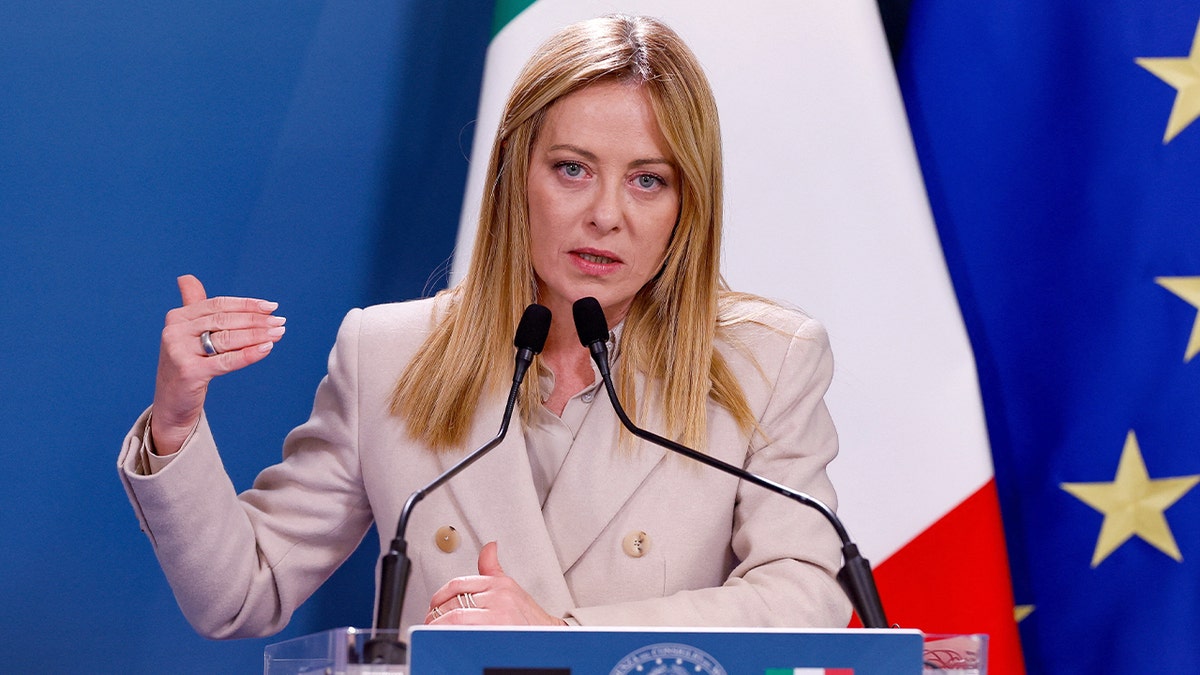
Italian Prime Minister Giorgia Meloni speaks during a joint statement at the conclusion of Italian-German government consultations in Rome on Jan. 23, 2026. (Remo Casilli/Reuters)
But he cautioned that major relocations would be difficult in practice, noting that key infrastructure — including Ramstein Air Base and the Landstuhl Regional Medical Center — cannot easily be replicated elsewhere.
“Even the most willing European country would not be able to offer that in the short term,” he said.
Even if troop levels remain above 76,000, major relocations would likely require funding and infrastructure changes that would bring Congress back into the process.
Lawmakers have stepped in before to block troop withdrawals from Europe, and a new push could trigger scrutiny on Capitol Hill, especially if it’s seen as weakening U.S. positioning during an ongoing conflict.
CLICK HERE TO DOWNLOAD THE FOX NEWS APP
A similar clash played out during Trump’s first term, when he ordered the withdrawal of roughly 12,000 U.S. troops from Germany in 2020, arguing that Berlin was not contributing enough to NATO defense. Congress imposed conditions through the annual defense bill, requiring the Pentagon to certify that any drawdown would not undermine NATO or U.S. operations. The effort ultimately stalled and was never fully implemented.
Lawmakers have not yet publicly responded to Trump’s latest comments. The White House did not return a request for comment.
Reference #18.2d4adc17.1777740577.856d7a5
https://errors.edgesuite.net/18.2d4adc17.1777740577.856d7a5
Reference #18.e40a3517.1777743316.8a6caed
https://errors.edgesuite.net/18.e40a3517.1777743316.8a6caed
NEWYou can now listen to Fox News articles!
Dr. Charles Lieber, a former Harvard scientist convicted in 2021 of concealing his ties to a Chinese-run recruitment program, has since rebuilt his brain-computer interface lab in Shenzhen, China, according to Reuters.
Convicted of six counts related to lying about a contract he held with Wuhan University of Technology, Lieber served two days in prison and six months on house arrest for his crimes.
Just over three years after that conviction, Reuters reported, Lieber fled for China, where he became the head of the nation’s burgeoning program to connect human brains to computers.
Lieber, considered one of the world’s authorities on nanotechnology, is now head of China’s Institute for Brain Research, Advanced Interfaces and Neurotechnologies, or i-BRAIN.
CHINA’S ULTRASOUND BRAIN TECH RACE HEATS UP
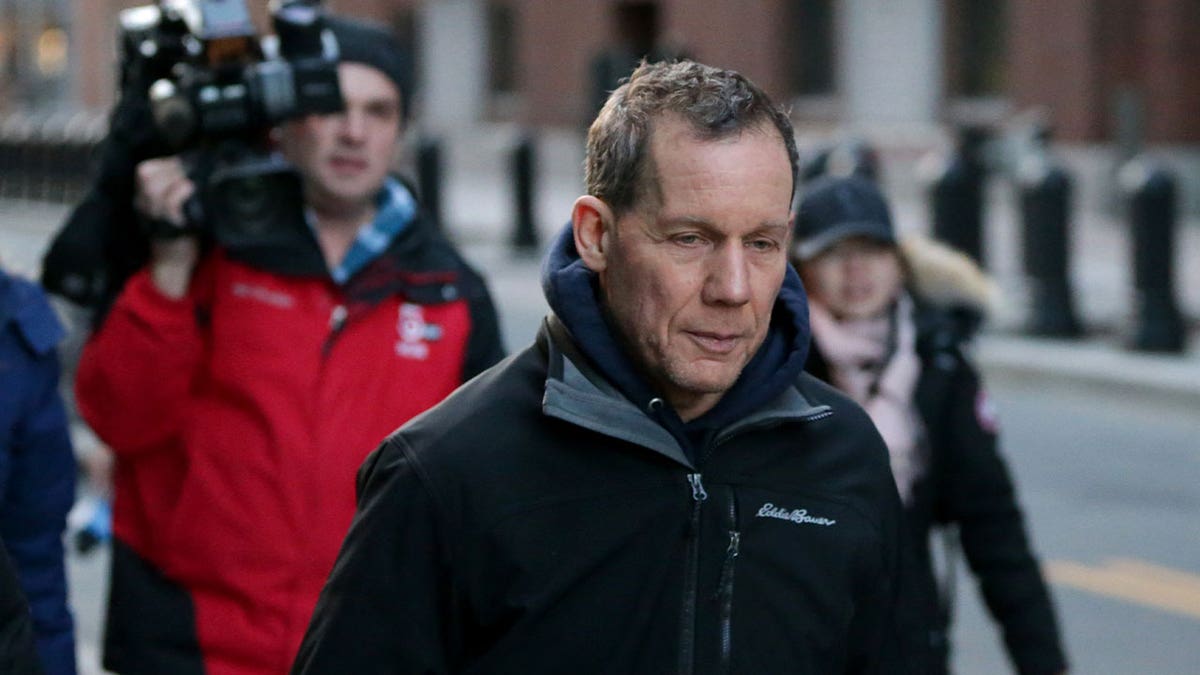
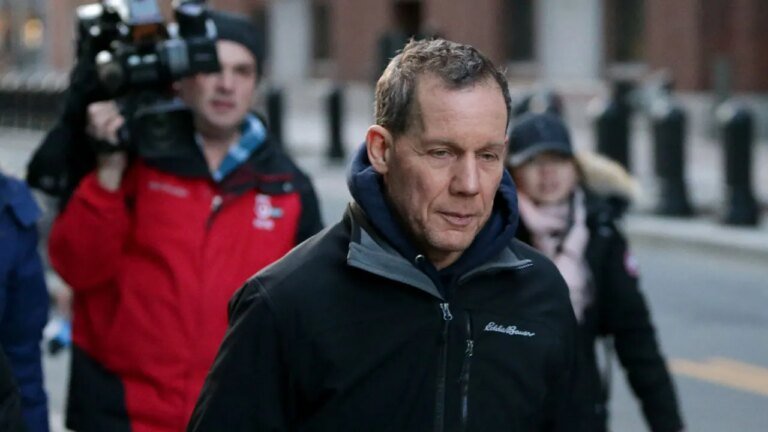
Charles Lieber, chair of Harvard University’s chemistry and chemical biology department, is released from John Joseph Moakley United States Courthouse in Boston on Jan. 30, 2020. Federal authorities said Lieber, a nanoscientist and entrepreneur, received hundreds of thousands of dollars from his Chinese connections. (Jonathan Wiggs/The Boston Globe)
“I arrived on April 28, 2025, with a dream and not much more, maybe a couple bags of clothes,” Lieber said during a Shenzhen government news conference in December. “Personally, my own goals are to make Shenzhen a world leader.”
His defection marks the confluence of a number of emergent trends. While his original conviction highlighted the United States’ ongoing efforts to mitigate Chinese technology theft, some experts argue his defection serves as proof those efforts have not succeeded.
“China has weaponized against us our own openness and our own efforts for innovation,” Glenn Gerstell, an advisor at the Center for Strategic and International Studies and former general counsel for the U.S. National Security Agency (NSA), told Reuters. “They’ve flipped that and turned it around against us, and they’re taking advantage of it.”
AI ARMS RACE: US AND CHINA WEAPONIZE DRONES, CODE AND BIOTECH FOR THE NEXT GREAT WAR

Beinao-1, a semi-invasive brain-machine interface system also known as the NeuCyber Matrix BMI system, is displayed during a media briefing as part of an organised media tour to the Chinese Institute for Brain Research in Beijing, China March 19, 2026. (REUTERS/Florence Lo TPX IMAGES OF THE DAY)
The move also showcases the import China places on developing cutting-edge technologies. Lieber’s original contract with Wuhan University of Technology paid him $50,000 a month and over $150,000 in living expenses. His new lab likely cost the Chinese government a great deal more than that.
Lieber reportedly has access to a wide suite of tools and resources to continue developing computer-brain interfaces, including machinery to fabricate coveted semiconductor chips and a large primate lab.

Wang Jianwei C, a professor at Peking University, tests an integrated photonic quantum chip with doctoral students Jia Xinyu L and Zhai Chonghao in a laboratory of Peking University in Beijing, capital of China, Feb. 18, 2025. (Xinhua via Getty Images)
CLICK HERE TO DOWNLOAD THE FOX NEWS APP
Computer-brain interfaces have shown promise in treating neurological disorders but also have potential military applications.
Fox News Digital contacted Harvard University and i-BRAIN for additional comment but did not immediately receive a response.