Reference #18.4d560e17.1770545099.1435d644
https://errors.edgesuite.net/18.4d560e17.1770545099.1435d644
Reference #18.4d560e17.1770545099.1435d644
https://errors.edgesuite.net/18.4d560e17.1770545099.1435d644
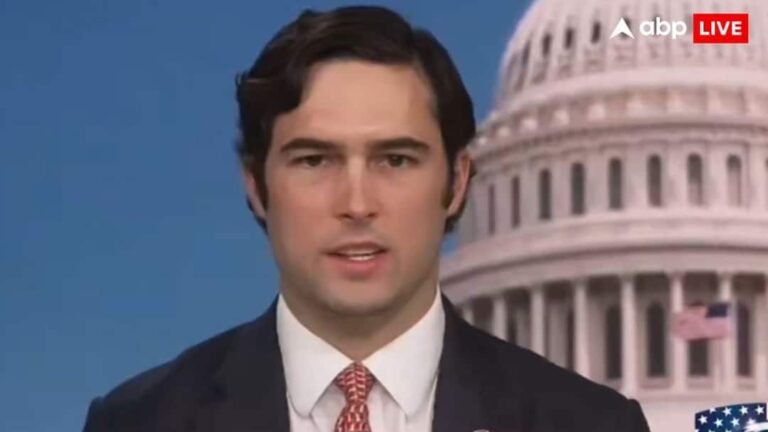
An MP’s statement has created an uproar in America. Republican Congressman Brandon Gill has sparked controversy by claiming Islamization is taking place in parts of his home state. He said that going to some malls in Texas feels like being in Pakistan, not Dallas.
He shared the video on social media with the caption ‘Islamic immigration is destroying the America we know and love’, in which Gill alleged that demographic changes in parts of Dallas have significantly changed the cultural character of local neighborhoods.
What did MP Brandon Gill say
Republican Congressman Brandon Gill said that I continue to receive complaints from people in my constituency who are extremely concerned about the Islamization of the Dallas area. They are hearing about mosques being built near the land that has been owned by their generations. Demographic change is taking place due to the construction of mosques and increase in large number of Muslim population.
What did you say by mentioning Pakistan?
He added, “When you hear your voters talking about going to their local mall and you look around it feels like you’re not in Dallas, Texas, but in Pakistan. That’s a problem. What you’re seeing is that our communities, our culture, the places we know and love, are fundamentally changing.”
Many people, including members of the Muslim community in Texas, described the lawmaker’s comments as separatist and not representative of the state’s culture. He said this amounts to unfairly targeting Muslim Americans. Hashim Sarwar, a Pakistani-origin doctor who works at the Texas Tech University Health Sciences Center, shared a photo of Gill posing with members of the Pakistani community while raising funds for his campaign.
read this also
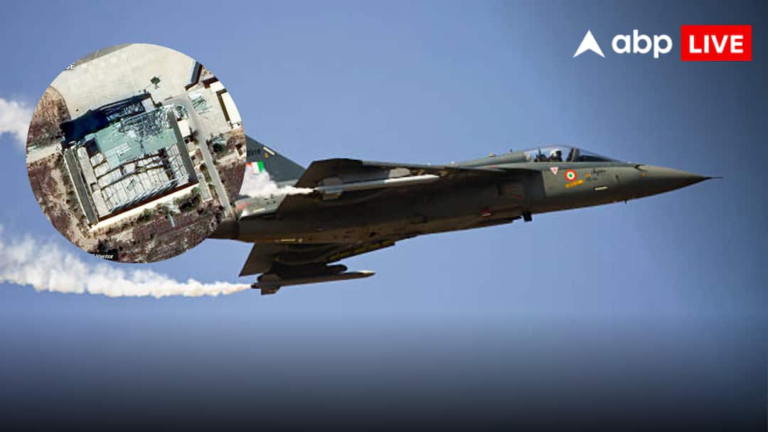
Pakistan Air Force (PAF) has indicated to start repairing the hangar at its Bholari airbase, which was heavily damaged in the Indian Air Force (IAF) attack on 10 May 2025. This attack took place during the short but serious 88-hour war between India and Pakistan.
According to the report of NDTV, in the new satellite pictures taken by the commercial satellite company Vantor on January 28, it has been seen that some part of the roof of the hangar has been removed. This makes it clear that now this place has not been abandoned like this, but preparations for repair have started. Although the hangar still looks quite dilapidated, removing the roof is considered to be the first step.
When was the attack on Bholari airbase?
The Indian Air Force believes that a special surveillance aircraft of Pakistan was present inside this hangar. This aircraft works to provide information about enemy air attacks and show direction to other aircraft. If this aircraft is really destroyed then it will be considered a big loss for Pakistan. The attack on Bholari airbase took place between 10 am and 12 noon on 10 May. At that time, the Indian Air Force had simultaneously attacked many military bases of Pakistan. This action was taken in response to drone attacks by Pakistan and attempts to target Indian targets. India has launched this entire campaign operation vermilion Name was given.
What caused the attack on Bholari?
The Indian Air Force did not reveal what weapon was used to attack Bholari, but it is believed that long-range modern missiles were used, so that the target could be destroyed without the aircraft crossing the border. Just hours after the Bholari attack, Pakistan talked about ceasefire with India. There were talks between the military officials of the two countries in the evening and on the same day it was agreed to stop the war, although it took about two days for complete peace to return to the border. Sindh Chief Minister later said that six Pakistan Air Force soldiers were killed in this attack. The repairs started at Bholari airbase show how deep the impact of this attack was.
Account of IAF attacks
At least 10 military positions in Pakistan were targeted in IAF operations that began on the night of 9 May. Chaklala, Rahwali, Rafiki, Rahim Yar Khan, Sukkur, Murid and Nayachor were attacked between 2 and 5 am on 10 May. After this, between 10 am to 12 noon, Sargodha, Bholari and Jacobabad were targeted by the Indian Air Force.
The work and pensions secretary, Pat McFadden, has spoken to Trevor Phillips on his Sky News politics programme.
McFadden was asked about the size of Mandelson’s payout from the Foreign Office. McFadden said he did not know how much Mandelson was entitled to, adding that figure would be negotiated between “him and his employers”.
Asked if he should give it back or donate it to charity on a moral basis, the minister said: “I think he probably should, yes. Either of those – either give it back or give it to a charity.
“Perhaps one involving violence against women and girls. I think taking a payoff in these circumstances, I don’t think the public will think much of that.”
Key events
McFadden is asked how he feels given he has known Mandelson a long time. He says how he feels is secondary to the feelings of the “women who were involved in this”, which is the most important thing in what he describes as a “terrible tale”.
McFadden said:
How I feel is a mixture of bewilderment, anger, and a sense of… this is somebody I’ve known on a political level for 30 years.
I was his minister, junior minister, at the department of business during the financial crisis. And, you know, that was a time of all hands to the pumps, banks collapsing, businesses collapsing, people wondering whether they could keep their homes or not.
And the idea that he was live downloading some of the information about that to this person in America who I’d never heard of, for many years afterwards – it is shocking.
Asked if he feels “betrayed”. McFadden replied: “Yeah I do and it is a strange thing in politics that you can have a close political relationship with someone but there can be this entire other side of their life that you have no knowledge of and no involvement in whatsoever which has all exploded into the public realm.”
As a reminder, recent disclosures from the Epstein files appeared to suggest Peter Mandelson sent emails to Jeffrey Epstein containing confidential information that the government was receiving to deal with the global financial crash while he was business secretary under Gordon Brown. You can read more in our explainer here.
The work and pensions secretary, Pat McFadden, has spoken to Trevor Phillips on his Sky News politics programme.
McFadden was asked about the size of Mandelson’s payout from the Foreign Office. McFadden said he did not know how much Mandelson was entitled to, adding that figure would be negotiated between “him and his employers”.
Asked if he should give it back or donate it to charity on a moral basis, the minister said: “I think he probably should, yes. Either of those – either give it back or give it to a charity.
“Perhaps one involving violence against women and girls. I think taking a payoff in these circumstances, I don’t think the public will think much of that.”
Good morning and welcome to our live coverage of UK politics as speculation over Keir Starmer’s future as prime minister continues.
Peter Mandelson is under increasing pressure to return the payoff he received after being sacked as ambassador to the US in September over his friendship with the late child sex offender Jeffrey Epstein.
The taxpayer-funded payoff he received after being dismissed last year could be as high as £55,000 before tax and deductions, the Sunday Times reported, with the exit payment equivalent to three months’ salary from the Foreign Office.
Although the salary has not been publicly listed by the government, the US ambassador post usually ranks at the highest end in the diplomatic service – between £155,000 and £220,000 per year.
Full details about Mandelson’s payoff will be revealed to parliament after MPs backed a call for disclosure of papers relating to his time in the government.
Sources told the Sunday Times that Mandelson had asked for a much more money than he ended up receiving. We have not been able to independently verify the contents oft the Sunday Times’ report yet.
Allies of Starmer said the peer should give the taxpayer-funded handout back or donate it to a victims’ charity. The Foreign Office said a review had been launched “in light of further information that has now been revealed”.
A Foreign Office spokesperson said:
Peter Mandelson’s civil service employment was terminated in accordance with legal advice and the terms and conditions of his employment.
Normal civil services HR processes were followed. Further information will be provided to parliament as part of the government response to the motion passed last week which is being coordinated by the Cabinet Office.

NEWYou can now listen to Fox News articles!
Jake Paul is in Italy to take in some Olympic action and cheer on his fiancée, speedskater Jutta Leerdam.
During his trip, he attended an Olympic hockey game with Vice President JD Vance, but afterward, ICE agents were on his mind, leading him to defend the officers on Saturday – Sunday morning in Italy.
“If you don’t like ICE then you can’t call 911 when you’re in trouble. If you don’t respect law enforcement agents then you shouldn’t depend on them,” Paul posted on X.
CLICK HERE FOR MORE SPORTS COVERAGE ON FOXNEWS.COM

Boxer Jake Paul and Vice President JD Vance are seen in the stands during the Women’s Preliminary Round Group B match between the USA and Finland on day one of the Milano Cortina 2026 Winter Olympic Games at Milano Rho Ice Hockey Arena on Feb. 7, 2026 in Milan, Italy. (EyesWideOpen/Getty Images)
Paul then took a shot at Billie Eilish, who defended illegal immigrants in her Grammys acceptance speech.
“When Billie Eyelash gets her home broken into it’s not gonna be f–k ICE I can promise you that,” Paul wrote.
Eilish proclaimed that “nobody is illegal on stolen land” during her speech.

Singer Billie Eilish accepts the Environmental Justice Award onstage during the 2026 King Holiday Observance: 2026 MLK, Jr. Beloved Community Awards at Hyatt Regency Atlanta on Jan. 17, 2026 in Atlanta, Georgia. (Paras Griffin/Getty Images)
“Wait technically she can’t get broken into because she stole the land lolololololol,” Paul followed up.
Earlier in the day, Paul criticized American Olympic skier Hunter Hess for saying he had “mixed emotions to represent the U.S. right now.”
“Wow pls shut the f–k up. From all true Americans. If you don’t want to represent this country go live somewhere else,” he wrote.
Paul and Vance attended the U.S. women’s hockey game against Finland on Saturday, which the Americans won 5-0.

US boxer and influencer Jake Paul and Vice President JD Vance attend the women’s preliminary round Group A Ice Hockey match between USA and Finland at the Milano Rho Ice Hockey Arena at the Milano Cortina 2026 Winter Olympic Games in Milan, on Feb. 7, 2026. (Alexander Nemenov/AFP via Getty Images)
CLICK HERE TO GET THE FOX NEWS APP
Paul’s fiancée will officially begin her quest for gold Monday in the 1,000 meters.
She earned a silver medal in Beijing four years ago and is a seven-time world champion.
Follow Fox News Digital’s sports coverage on X, and subscribe to the Fox News Sports Huddle newsletter.
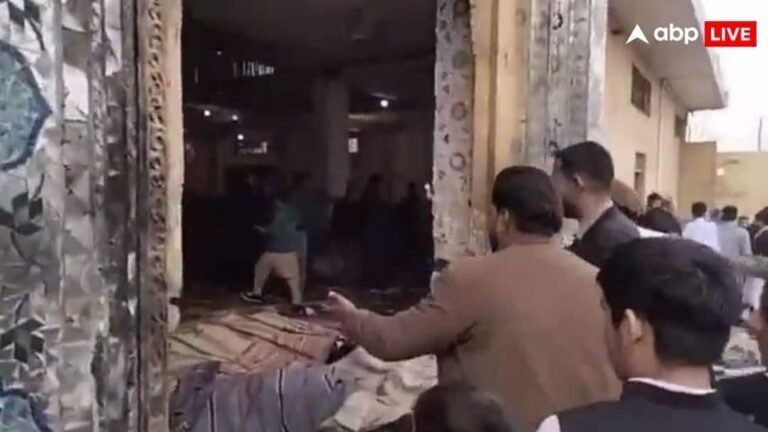
Pakistani security agencies have arrested four people in a suicide bomb blast in a Shia mosque in the capital of Pakistan. Pakistan Home Minister Mohsin Naqvi said that the arrested accused also included an Afghan citizen, whom he described as the mastermind of the suicide attack. After Naqvi’s statement, Pakistan’s conspiracy to defame India has again been exposed.
According to BBC report, Mohsin Naqvi said that a Pakistani security officer was also killed and three other people were injured in the search operation conducted to arrest the suspects. Naqvi’s statement came when the Islamic State group claimed responsibility for the bomb blast that took place during Friday prayers in the Shia mosque in Tarlai area.
This terrorist organization took responsibility for the suicide attack
The terrorist organization Islamic State Khorasan (ISKP) issued a statement on behalf of the propaganda channel Amaq Agency and said that it was it that had carried out this suicide attack. According to ISKP, they are fighting against it by forming Janbyon organization. ISKP has also released a photo of the suicide bomber with his face blurred.
In a statement issued by ISKP’s official propaganda channel Amaq Agency, Islamic State Khorasan said that it had carried out a suicide attack on a Shia mosque yesterday because Pakistani Shia fighters are fighting against it in Syria by forming the Zainbyon organization. Along with the statement, ISKP also released a picture of the suicide bomber with his face blurred.
Conspiracy to defame India
Earlier, Pakistan had made fabricated allegations against India regarding the suicide attack, which has been exposed by the statement of Pakistan Home Minister Mohsin Naqvi. Pakistani Defense Minister Khawaja Asif on Friday (February 6) had accused India and Afghanistan of this attack without any evidence.
Retaliated against false allegations
India had responded sharply to these false and fabricated allegations. Condemning the attack, the Indian Foreign Ministry refuted Pakistan’s baseless allegations and said that instead of solving its domestic problems, Pakistan is deceiving itself by blaming others. At the same time, Afghanistan also termed the statement of Pakistan Foreign Minister as irresponsible.
31 people were killed in the suicide attack
A suicide attack took place during Friday prayers in Pakistan’s capital Islamabad. In which at least 31 people were killed and a large number of people were injured. According to Dawn, the blast took place in Tarlai Imambara Khadijat-ul-Kubra in the Shahzad Town area of the capital.
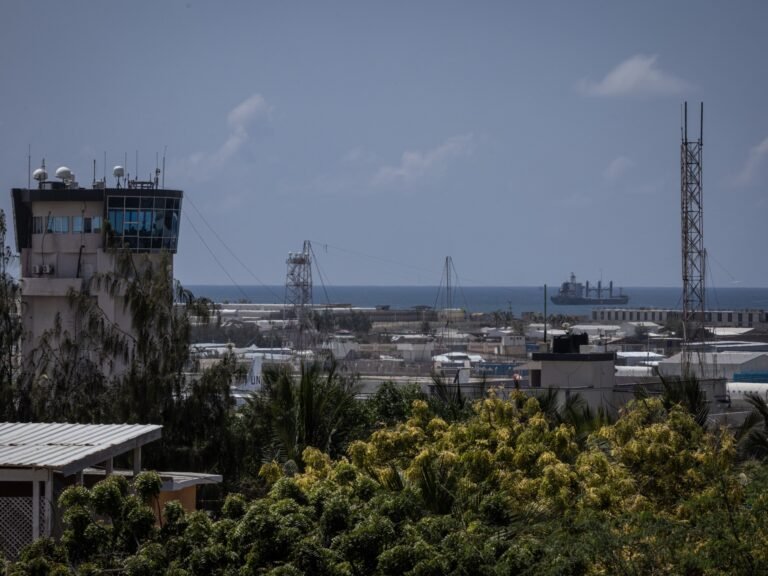
Global markets rarely reveal their vulnerabilities quietly. They do so when shipping lanes come under threat, energy prices surge, or supply chains fracture. Few regions illustrate this reality more starkly than the Red Sea and the Gulf of Aden, which are now among the world’s most contested maritime corridors. What unfolds along these waters no longer remains local. It shapes economic security across the Arab world and far beyond.
Yet, amid growing attention to this strategic corridor, one factor remains persistently underestimated: Somalia.
For decades, Somalia was viewed primarily through the lens of conflict and fragility. That narrative no longer reflects today’s reality. The country is undergoing a consequential transition, moving away from prolonged instability, rebuilding state institutions, and re-emerging as a sovereign actor with growing regional relevance. Situated at the intersection of the Arab world, Africa, the Red Sea, and the Gulf of Aden, Somalia is not peripheral to regional stability; it is central to it.
Geography alone explains much of this significance. With the longest coastline in mainland Africa, Somalia lies adjacent to the Bab al-Mandeb passage connecting the Red Sea to the Gulf of Aden and the wider Indian Ocean. A substantial share of global maritime trade and energy shipments passes through this corridor. Disruptions along Somalia’s coast, therefore, have immediate implications for shipping reliability, energy markets, and food security — issues of direct concern to Gulf states and Arab economies.
For the Arab world, Somalia should be understood not as distant terrain but as a front-line partner in regional security. Stability along Somalia’s coastline helps contain threats before they reach the Arabian Peninsula, whether in the form of violent extremism, illicit trafficking networks, piracy, or the entrenchment of hostile external military presences along Africa’s eastern flank.
Somalia is not attempting to build stability from scratch. Despite persistent challenges, tangible progress has been made. Federal governance structures are functioning. National security forces are undergoing professionalisation. Public financial management has improved. Diplomatically, Somalia has reasserted itself within the Arab League, the African Union, and multilateral forums. These gains continue to be built on daily and reflect a clear commitment to sovereign statehood, territorial unity, and partnership rather than dependency. Somalia today seeks strategic alignment grounded in mutual interest, not charity.
Somalia’s relevance also extends beyond security. Its membership in the East African Community integrates the country into one of the world’s fastest-growing population and consumer regions. East Africa’s rapid demographic expansion, urbanisation, and economic integration position Somalia as a natural bridge between Gulf capital and African growth markets.
There is a clear opportunity for Somalia to emerge as a logistics and transshipment gateway linking the Gulf, the Red Sea, East Africa and the Indian Ocean. With targeted investments in ports, transport corridors, and maritime security, Somalia can become a critical node in regional supply chains supporting trade diversification, food security, and economic resilience across the Arab world.
At the heart of Somalia’s potential is its dynamic population. More than 70 percent of Somalis are aged below 30. This generation is increasingly urban, digitally connected, and entrepreneurial. Somali traders and business networks already operate across Southern and Eastern Africa, spanning logistics, finance, retail, and services. A large and dynamic diaspora across the Gulf, Europe, North America, and Africa further amplifies this reach through remittances, investment, and transnational expertise.
None of these momentums, however, can be sustained without security. A capable, nationally legitimate Somali security sector is the foundation for durable stability, investment confidence, and regional integration.
For Gulf states and the wider Arab world, supporting Somalia’s security sector is therefore not an act of altruism. It is a strategic investment in a reliable stabilising partner. Effective Somali security institutions contribute directly to safeguarding Red Sea and Gulf of Aden maritime corridors, countering transnational terrorism before it reaches Arab shores, protecting emerging logistics infrastructure, and denying external actors opportunities to exploit governance vacuums. Such support must prioritise institution-building, Somali ownership, and long-term sustainability, not short-term fixes or proxy competition.
The stakes are rising. The Red Sea and the Gulf of Aden are entering a period of heightened strategic contestation. Fragmentation along their African coastline poses a direct risk to Arab collective security. Recent developments underscore this urgency.
Israel’s unilateral recognition of the northern Somali region of Somaliland, pursued outside international legal frameworks and without Somali consent, is widely viewed as an attempt to secure a military foothold along these strategic waters, risking the introduction of the Arab-Israeli conflict into the Gulf’s security environment.
Even more troubling are emerging narratives advocating the forced displacement of Palestinians from Gaza, with proposals to relocate them to Somaliland against their will. Such ideas, whether formally advanced or not, represent grave violations of international law and human dignity. Exporting the consequences of occupation and war onto African soil would not resolve conflict; it would multiply it.
For the Arab world, this should serve as a wake-up call. Allowing external actors to fragment sovereign states or instrumentalise fragile regions for unresolved conflicts carries long-term consequences. Somalia’s unity and stability, therefore, align squarely with core Arab strategic interests and with longstanding Arab positions on sovereignty, justice and self-determination.
Somalia is ready to be part of the solution. With calibrated strategic support, particularly in security sector development and logistics infrastructure, Somalia can emerge as a cornerstone of Red Sea and Gulf of Aden stability, a gateway to East Africa, and a long-term partner for the Arab world.
The question is no longer whether Somalia matters in the regional and global Red Sea and Gulf of Aden discussions and plans. It is whether the region will act on that reality before others do.
The views expressed in this article are the author’s own and do not necessarily reflect Al Jazeera’s editorial stance.
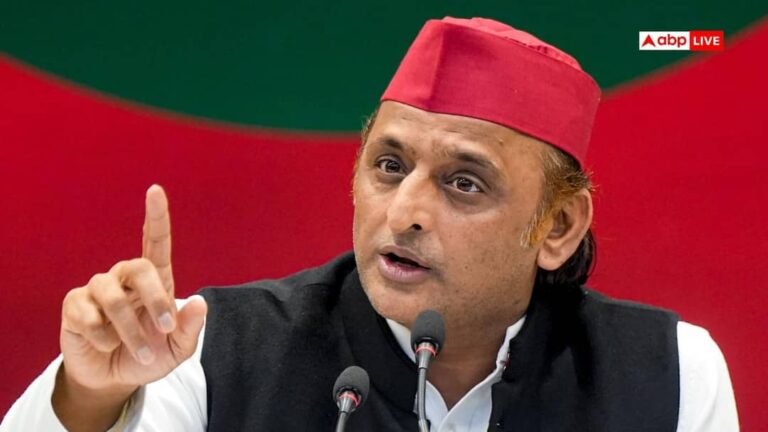
Samajwadi Party chief Akhilesh Yadav made a scathing attack on BJP and the Election Commission in the press conference. He alleged that BJP is disrupting the electoral process by going to the ground and in collusion with the Election Commission.
Akhilesh Yadav said that the Election Commission is no longer an impartial institution, but has become ‘BJP’s Commission’ and is working against democracy.
Referring to Bihar elections, Akhilesh Yadav said that SIR The role of (SIR) has also been very doubtful. Giving the example of a person named Nandlal, Akhilesh Yadav alleged that the thumb impression and signature were done fraudulently in the Form-7 filled in his name. He claimed that BJP itself has signed Nandlal’s form. Akhilesh Yadav said that the entire process of Form-7 should be stopped immediately. Because through this the democratic system is being weakened by creating fake signatures on a large scale.
He also said that Nandlal has worked to save democracy, hence he was given a help of Rs 1 lakh from the Samajwadi Party. Akhilesh Yadav alleged that only fake signatures are being made in Form-7 and the general public is being misled.
In the press conference, Akhilesh Yadav also targeted the state government. He said that the government which has disappointed the people will face the last Budget No one has any expectations from him. Raising questions on law and order, he said that prisoners are being driven out of jails in UP, talks of sending some to Nepal and from there to foreign countries are also coming to the fore.
Raising the issue of inflation, he said that gold has become so expensive that the common man is not able to buy it. He also alleged that the vote of the wife of one of his MLAs was also canceled. Akhilesh Yadav reiterated that to save democracy, the process of Form-7 should be stopped immediately and an impartial investigation should be conducted.
Read this also- ‘Not tolerated under any circumstances…’, Parashuram Sena’s demonstration in Indore regarding the film ‘Ghushkhor Pandit’
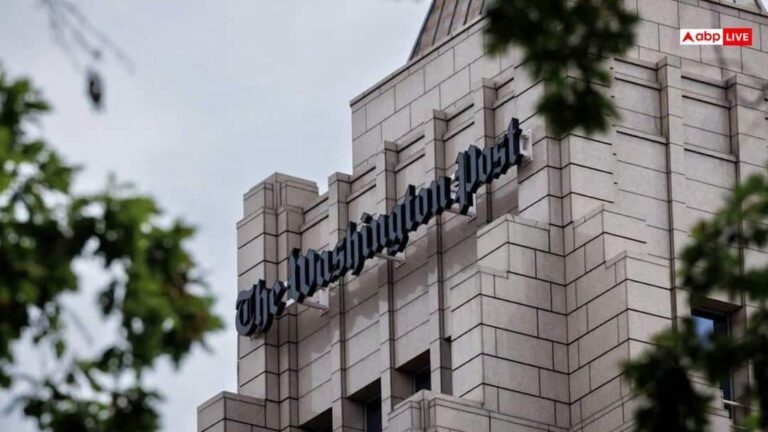
Washington Post publisher and CEO Will Lewis has announced his resignation. He announced this on Saturday (7 February). His resignation came after the newspaper had laid off about one-third of its employees three years earlier.
Lewis informed about his resignation in an email sent to the employees, saying, ‘After two years of change, now is the right time for me to step down. Tough decisions have been taken regarding the future of The Post. However, in his message he praised Jeff Bezos and wrote, “The organization could not have got a better owner than this.” After his resignation, Washington Post Chief Financial Officer Jeff D’Onofrio has been appointed temporary publisher.
300 journalists were laid off from the newspaper
This major change in leadership happened when major and controversial cost-cutting was announced this week, in which about 300 journalists were laid off. Senior columnist Tarun Tharoor, son of Congress MP Shashi Tharoor, was also included in this. He had given this information by posting on social media platform X. Apart from this, the sports and books sections were closed, and many offices of the newspaper in Asia and the Middle East were also closed. This happened when a large number of talented people left the institute in the last few years and there was a decline in the number of subscribers.
Who is Will Lewis? Who resigned from Washington Post
British-born Will Lewis took over as publisher of The Washington Post in January 2024, having worked as a top executive at The Wall Street Journal. His tenure was tumultuous, including newsroom layoffs and a failed restructuring plan that led to the resignation of former executive editor Sally Buzbee.
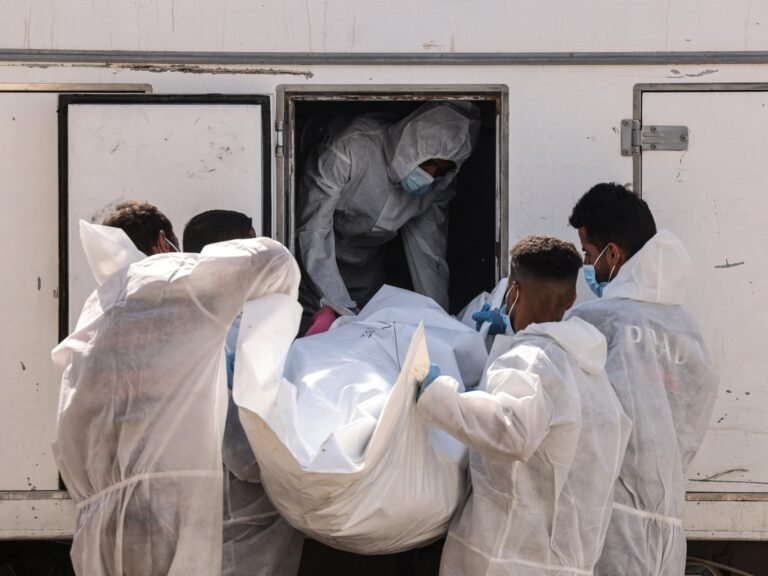
Palestinian medics say several of the 54 bodies were found to be mutilated and showed extensive signs of abuse.
Published On 8 Feb 2026
Israel has returned dozens of Palestinian bodies and human remains to Gaza without providing any information about their identities or how they were killed, according to Palestinian medical officials.
The remains arrived at al-Shifa Hospital in Gaza City on Wednesday in plain white bags and are now being examined by forensic teams in an effort to identify them and provide answers to grieving families.
“The bags carry the weight of lives lost. Now they’re undergoing examination, prolonging the grief of families desperate for closure,” Al Jazeera’s Ibrahim al-Khalili reported from al-Shifa Hospital on Saturday.
Palestinian medics say several bodies were mutilated.
“The International Committee of the Red Cross handed over 120 body bags containing 54 bodies as well as skull samples placed in 66 separate bags,” forensic official Omar Suleiman told Al Jazeera.
Previous exchanges of Palestinian prisoners’ bodies have revealed extensive signs of abuse, with many showing indications of torture, mutilation and execution.
In November, the rights group Physicians for Human Rights-Israel released a report saying at least 94 Palestinian detainees have died in Israeli custody, citing causes including torture, medical neglect, malnutrition and physical assault.
The group said the actual toll could be significantly higher.
For many Palestinians, the search for missing relatives has shifted from streets and rubble to computer screens and improvised identification centres.
At al-Shifa, Shadi al-Fayoumi scrolled through blurred and graphic images, hoping to spot anything recognisable that might tell him what happened to his brothers.
“My brothers have been missing for 10 months. They disappeared in the Tuffah neighbourhood,” al-Fayoumi, whose brothers remain missing, told Al Jazeera.
“I went to al-Shifa Medical Complex, where we were told there were bodies we could try to identify. However, the images were unclear and lacked discernible features. How are we expected to identify them under these conditions?”
According to al-Fayoumi, his brothers had gone in search of food and water during the peak of the famine last year but never returned.
“We contacted multiple institutions, but none was willing to help or provide reliable information,” al-Fayoumi added.
Al Jazeera’s al-Khalili said al-Fayoumi’s mother has been “inconsolable”.
“His brothers’ children are silent, unwilling to voice their worst fears. Israeli forces hand over the bodies of Palestinians with little regard for human dignity,” he added.
“There is no information on how they died or how long they were held, leaving Palestinians with not only their grief but unanswered questions.”
