Reference #18.490dde17.1778928808.472f95d3
https://errors.edgesuite.net/18.490dde17.1778928808.472f95d3
Reference #18.490dde17.1778928808.472f95d3
https://errors.edgesuite.net/18.490dde17.1778928808.472f95d3
FEATURE Can digital sovereignty exist on American silicon?
Europe is pouring more than €2 billion into sovereign cloud initiatives designed to reduce exposure to US legal reach. The EU’s IPCEI-CIS program funds infrastructure development. France qualifies operators under SecNumCloud, a framework with nearly 1,200 technical requirements promising “immunity from extraterritorial laws.”
But most datacenters and qualified cloud operators still rely heavily on Intel or AMD processors. And inside those processors sits a computer beneath the computer: management engines operating at Ring -3, below the operating system, outside the control of host security software, persistent even when the machine appears powered off. Under the US Reforming Intelligence and Securing America Act (RISAA) 2024, hardware manufacturers count as “electronic communications service providers” subject to secret government orders.
Europe’s frameworks certify the clouds. They don’t assess the silicon.
That computer beneath the computer has a name. On Intel processors, it is the Management Engine (ME), or more precisely the Converged Security and Management Engine (CSME). On AMD, it is the Platform Security Processor (PSP). Both run at what security researchers call Ring -3, below the operating system, below the hypervisor, in a privilege level the host cannot see or log.
“It’s a computer inside your computer,” explains John Goodacre, Professor of Computer Architectures and former director of the UK’s £200 million Digital Security by Design program. He is clear about what that means in practice. The ME has its own memory, its own clock, and its own network stack, and because it can share the host’s MAC and IP addresses, any traffic it generates is indistinguishable from the host’s own traffic to the firewall.
The architecture is not theoretical. Embedded in the Platform Controller Hub, the CSME is a separate microcontroller that operates independently of the host, with direct memory, device access, and network connectivity the host operating system cannot monitor. AMD’s PSP works the same way.
Intel’s Active Management Technology (AMT), the remote management feature the ME enables, exposes at least TCP ports 16992, 16993, 16994, and 16995 on provisioned devices. Goodacre notes that an attack surface exists on unprovisioned hardware too. These ports deliver keyboard-video-mouse redirection, storage redirection, Serial-over-LAN, and power control to administrators managing fleets of devices remotely. The capability has legitimate uses. It also provides a channel that operates at a level below what European sovereignty frameworks can attest.
Microsoft documented in 2017 that the PLATINUM nation state actor used Intel’s Serial-over-LAN (SOL) as a covert exfiltration channel. SOL traffic transits the Management Engine and the NIC sideband path, delivered to the ME before the host TCP/IP stack runs. The host firewall and endpoint detection saw nothing, and any security tooling running on the compromised machine itself was equally blind. PLATINUM did not exploit a vulnerability. It exploited a feature, requiring only that AMT be enabled and credentials obtained. In documented cases, those credentials were the factory default: admin, with no password set.
Goodacre catalogues this and related scenarios in a 37-page risk assessment prepared for CISOs evaluating Intel vPro hardware connected to corporate networks. Its conclusion is blunt: connecting an untouched-ME device to corporate resources “exposes the organization to a class of compromise that defeats the host security stack in its entirety.”
The ME does not stop when the machine appears to. Users recognize the symptom: a laptop powered off and stored for weeks is found, on next boot, to have a depleted battery. On modern thin and light platforms, what Microsoft documents as Modern Standby means “off” does not correspond to “all subsystems unpowered.” The system-on-chip components the Management Engine runs on remain in low-power states, drawing enough to drain a 55 Wh battery over weeks, on the order of 100-200 mW continuous draw.
The implication is documented in Goodacre’s risk assessment: “Whether the radio is in a Wake-on-Wireless-LAN listening state is firmware policy. On a device whose firmware has been tampered with during transit through the supply chain, the answer cannot be inferred from the visible power state.” A laptop that appears off, in a bag, can associate with a hostile network the user has no knowledge of.
Professor Aurélien Francillon, a security researcher at French engineering school EURECOM, has spent years studying exactly this class of problem. Working with colleagues, he built a fully functional backdoor in hard disk drive firmware [PDF], a proof of concept demonstrating how storage devices could silently exfiltrate data through covert channels. Three months after presenting it at an academic conference, the Snowden disclosures revealed the NSA’s ANT catalogue, which documented an identical capability already deployed in the field.
“The NSA were already doing it,” Francillon says flatly. “Quite amazing.” That background informs his assessment of the ME. “Yes, it can probably be used as a backdoor, like many other things, including BMC [baseboard management controller] and many other firmwares,” he says. The question, he argues, is not whether the backdoor exists but whether operational controls make it unreachable in practice.
AMD faces the same architectural question. On April 14, 2026, researchers demonstrated the Fabricked attack against AMD’s SEV-SNP confidential computing technology, achieving a 100 percent success rate with a software-only exploit. The Platform Security Processor proved vulnerable to the same class of compromise.
On server hardware, the picture is the same. Intel ME runs on servers under a different name, Server Platform Services or SPS, and the BMC, the remote administration controller standard in datacenter hardware, relies on it. “More or less the same,” Francillon says of the server variant. For datacenter operators, he sharpens the focus further: “If I look at cloud systems, servers, I would be more concerned with the BMC,” pointing to published research demonstrating remote exploitation of BMC vulnerabilities that could allow an attacker to reinstall or fully compromise a server. The BMC is not a separate concern from the ME: on server hardware, it is the primary network entry point into the SPS, making it both the most exposed interface and the most consequential.
Both Intel and AMD processors contain management engines that operate below the operating system. The silicon is designed by American companies and subject to American legal process.
That legal process has teeth that most European policymakers underestimate. The CLOUD Act, passed in 2018, gave US authorities extraterritorial reach to data held by American companies. FISA Section 702 allows intelligence agencies to compel US persons and companies to provide access to communications. Both are well known in European sovereignty discussions. They operate through the front door: a legal order served on a company that controls data. Less well known is RISAA 2024, a law that opens a different entrance entirely.
RISAA amended FISA’s definition of “electronic communications service provider” in ways that go beyond cloud operators and platform companies, and beyond the bilateral agreements that European policymakers have built their legal defenses around. Hardware manufacturers now fall within scope. Intel and AMD can be compelled, via secret orders with gag clauses, to cooperate with US intelligence access.
The mechanism through which that access could be exercised is the management engine: a persistent, privileged, network-connected runtime that operates below anything the host operating system can see or block. A SecNumCloud-certified operator can be legally isolated from American data demands. The processor inside its servers cannot. “You’ve actually got a policy mechanism by which any such machine anywhere can deliver any of its information,” Goodacre says.
RISAA’s two-year term expired on April 20, 2026, but Congress extended it by 45 days while debating reforms. Whether it is renewed, amended or allowed to lapse, the architecture it targets does not change.
France’s SecNumCloud is Europe’s most rigorous attempt to build a cloud certification that is legally immune to American law. It did not emerge from nowhere. ANSSI, France’s national cybersecurity agency, was established in 2009 as part of a broader effort to build institutional muscle on digital sovereignty long before the term became fashionable. When Edward Snowden revealed the scale of NSA surveillance in 2013, France’s response was technical rather than rhetorical: ANSSI published the first SecNumCloud framework in July 2014. A decade later, that framework has grown to nearly 1,200 technical requirements.
At the time, SecNumCloud was a cybersecurity qualification, not a sovereignty instrument: it set requirements for architecture, encryption standards, access controls, and incident response, but said nothing about who controlled the underlying infrastructure or whose laws applied to it. The CLOUD Act changed that. Passed in 2018, it gave American authorities extraterritorial reach to data held by US companies, and suddenly a French cybersecurity framework had a geopolitical dimension it was not designed for. Version 3.2, introduced in 2022, added Chapter 19: a set of explicit requirements targeting extraterritorial law, mandating that only EU operators could run the service, that no non-EU party could access customer data, and that the provider could operate autonomously without external intervention. It promised “immunity from extraterritorial laws.”
In December 2025, S3NS, a joint venture between French defense and technology group Thales and Google Cloud, operating Google Cloud Platform technology under French control, became the first “hybrid” cloud to receive SecNumCloud qualification. The certification triggered heated debate: was this real sovereignty, or American technology with a European flag?
But the debate missed a more fundamental question. Does SecNumCloud’s certification reach as far as the silicon it runs on? Francillon is positioned to see both sides of that question. He sits on the French Technology Academy’s working group on cloud security, a body that advises on the technical foundations of frameworks like SecNumCloud. And he has spent years studying firmware backdoors in academic literature and demonstrated them in practice.
He knows what the hardware can do, and he knows what the certification requires. His starting point is that SecNumCloud provides genuinely valuable protection, and that the silicon gap does not negate that. When asked whether SecNumCloud explicitly addresses Intel Management Engine or AMD Platform Security Processor vulnerabilities, his answer is unambiguous: “There is no direct requirement for firmware backdoor prevention.”
The framework is not designed to be a technical specification for hardware-layer security. “The document aims to be generic and not dive into technical details,” Francillon says. “Most of it is organizational security.” What SecNumCloud does require is that providers build a proper threat model, consider mitigation mechanisms, and monitor administration gateways where external tech support could be exploited. The hardware layer was not addressed by oversight. It was left out by design.
Francillon’s assessment is not a fringe view. Vincent Strubel, the director of ANSSI, the very agency that designed and administers SecNumCloud, is equally explicit about what the framework does and does not cover. In a January 2026 LinkedIn post addressing SecNumCloud’s scope, he writes that all cloud offerings, hybrid or not, depend on electronic components whose design and updates are not 100 percent controlled in Europe. If Europe were ever cut off from American or Chinese technology, he argues, the result would be a global problem of security degradation, not just in hybrid clouds, but everywhere.
Strubel frames SecNumCloud carefully: it is “a cybersecurity tool, not an industrial policy tool.” It protects against extraterritorial law enforcement and kill-switch scenarios. It was never designed to eliminate technology dependencies at the hardware layer, and no actor, state, or enterprise fully controls the entire cloud technology stack anyway.
One technology frequently cited in sovereignty discussions is OpenTitan, Google’s open source secure element deployed on its server hardware and used within the S3NS infrastructure. Francillon is clear about what it is and, critically, what it is not. “OpenTitan is a secure element, a small chip on the side that can be used for protecting sensitive keys, providing signatures, making attestations,” he explains. “It’s a bit like a TPM.” What it is not is a replacement for the main processor. “The Linux and all your applications will not run on it.” OpenTitan sits alongside x86 infrastructure as an external root of trust, independent of the ME. That matters because the default embedded TPM lives inside the ME, making it subject to the ME attack surface. OpenTitan sits outside that boundary. The two address different problems entirely, and conflating them, as sovereignty advocates sometimes do, obscures where the residual exposure actually lies.
ANSSI’s own technical position paper [PDF] on confidential computing, published in October 2025, concludes that Intel SGX, TDX, and AMD SEV-SNP are “not sufficient on their own to secure an entire system, or to meet the sovereignty requirements of SecNumCloud 3.2.” Physical attackers are “explicitly out-of-scope” of vendor security targets. Supply chain attackers are “explicitly out-of-scope.” The ME attack surface discussed in this article falls into neither category: it is a remote network threat, not a physical one. The paper’s conclusion for users concerned about hostile cloud providers is stark: “Switch to a cloud provider they trust, or use their own hardware with physical security protection measures.”
Francillon does not dispute that SecNumCloud leaves the ME unassessed. His argument is that this does not matter in practice. “What I mean is that if there is a backdoor to access a room, it cannot be directly used if the room is in a castle. You have to pass the castle walls first.” Network isolation, monitoring, and threat modeling are the walls. SecNumCloud’s operational requirements mandate that administration gateways be isolated, that external tech support be monitored, that network segmentation prevents lateral movement. The Management Engine backdoor may exist, but the framework makes it unreachable except in what Francillon calls “very high-end attacks.”
That qualifier matters. Francillon is not claiming perfect security. He is claiming that proper operational controls reduce the threat to a level where only nation state actors with significant resources could exploit it. For most threat models, he argues, that is sufficient. “Saying it is useless to do SecNumCloud because there is ME, or whatever backdoor in some hardware we don’t control, is a mistake,” he says. SecNumCloud improves security over deployments without such controls, he argues, provided that hardware is carefully evaluated and firmware securely configured.
The castle walls have a structural flaw that Goodacre’s risk assessment documents in detail. Corporate perimeter firewalls see the device’s traffic, but because the ME shares the host’s MAC and IP addresses, they cannot tell ME-originated flows apart from legitimate host traffic. “The perimeter cannot attribute a flow to host-versus-CSME origin without out-of-band knowledge,” Goodacre writes. A TLS-encrypted tunnel from the ME to an attacker server on port 443 looks, to the perimeter, like any other HTTPS connection the laptop makes. Network filtering reduces attack surface. It does not eliminate the exposure.
Goodacre’s position is that a “Tier-3 supply-chain residual remains in both cases and is the irreducible cost of buying any silicon that ships with a Ring -3 manageability engine.” He defines Tier 3 as nation state cyber services operating at the level of compromising firmware in transit, mis-issuing CA certificates via in-country authorities, and modifying hardware at customs or courier hubs. The NSA’s Tailored Access Operations division treated supply chain interdiction as routine business, with explicit doctrinal preference for BIOS and firmware implants over disk-level malware.
His risk assessment’s data on fleet vulnerability is concrete. Industry telemetry from Eclypsium, analyzing production enterprise environments, found that approximately 72 percent of devices observed remained vulnerable to INTEL-SA-00391 years after public disclosure, and 61 percent remained vulnerable to INTEL-SA-00295. The same reporting documented that the Conti ransomware group developed proof-of-concept Intel ME exploit code with the intent of installing highly persistent firmware-resident implants.
“Connecting an untouched-ME vPro laptop to corporate resources exposes the organization to a class of compromise that defeats the host security stack in its entirety,” Goodacre concludes. “The exposed controls include BitLocker full-disk encryption, FIDO2-protected sign-in, endpoint detection and response, the host firewall and the corporate VPN.”
The disagreement between Francillon and Goodacre is not about whether the vulnerability exists. Both confirm it does. Both confirm AMD faces the same issue. Both confirm software alone cannot fix it. The disagreement is about whether operational controls, Francillon’s castle walls, make an architectural backdoor irrelevant in practice, or merely reduce its exploitability while leaving nation state actors with a path through.
For SecNumCloud operators processing sensitive government or commercial data, the distinction is not academic. It is worth noting that SecNumCloud is designed for a higher level of security than standard cloud certifications, but is not intended for classified or restricted government data. The threat that can still slip through Francillon’s castle walls is precisely the threat SecNumCloud was designed to keep out.
Goodacre told The Register he tested awareness of the Management Engine with various attendees at the CyberUK conference in April 2026. “Almost no one” knew about it, he reports. The gap between the sovereignty rhetoric and the silicon reality is not being surfaced in policy discussions, procurement decisions, or public debate over what digital sovereignty means.
The debate that does happen, hybrid versus non-hybrid, Google/Thales versus pure European providers, focuses on operational control and legal structure. It does not address the shared silicon foundation. Strubel’s LinkedIn post pushes back against the framing: “Imagining this problem is limited to hybrid cloud offerings is pure fantasy that doesn’t survive confrontation with facts.” Every cloud provider, hybrid or not, depends on components they don’t fully control. The distinction isn’t hybrid versus sovereign. It is what you’re protecting against, and whether the controls you’re implementing address that threat.
There is no immediate solution. RISC-V, the open source processor architecture European sovereignty advocates point to as a long-term alternative, remains years from competitive performance in datacenter workloads. “It will take decades,” Francillon says flatly. Arm is a cautionary precedent: it took nearly 20 years from the first server attempts before Arm achieved any meaningful datacenter presence.
For Goodacre, the bottom line is simple: the Tier-3 supply chain residual is “the irreducible cost of buying silicon with a Ring -3 manageability engine.” Francillon argues that operational controls, including network isolation, monitoring, and threat modeling make the backdoor unreachable except in very high-end attacks. Strubel acknowledges hardware dependencies are real but maintains that SecNumCloud provides valuable protection for what it does cover: legal control, kill-switch resistance, defense against cyberattacks and insider threats.
The disagreement is not about technical facts. It is about risk tolerance and threat model calibration. For European CIOs choosing SecNumCloud-certified providers, the question to ask vendors is: how do you address Intel Management Engine and AMD Platform Security Processor in your threat model? The answer will clarify whether the vendor treats the hardware layer as out of scope, or has implemented controls that reduce but do not eliminate the exposure.
For European policymakers, the question is broader. Can digital sovereignty exist on non-sovereign silicon? The current frameworks do not answer that question. They certify operational controls, legal structure, and autonomous execution capability. They do not certify silicon-layer immunity, because the hardware is American or Chinese, subject to American or Chinese law, designed with management engines that European authorities did not specify, cannot legally compel on their own terms, and cannot replace.
Whether that is a gap worth addressing, or a risk worth accepting as the unavoidable cost of participating in global technology supply chains, is a question Europe will need to answer for itself. ®

NEWYou can now listen to Fox News articles!
Workers for the Long Island Rail Road (LIRR) — the nation’s largest commuter rail line — went on strike early Saturday, leaving more than 330,000 commuters scrambling for alternatives.
At 12:01 a.m., five unions representing roughly 3,700 workers — including ticket clerks, locomotive engineers, signalmen, electricians and machinists — walked off the job in the fourth strike in the rail line’s history.
The LIRR confirmed in a statement that service has been suspended until further notice.
“Avoid nonessential travel and work from home if possible,” the railroad said. “We will have limited shuttle bus service on weekdays for essential workers and those who cannot telecommute.”
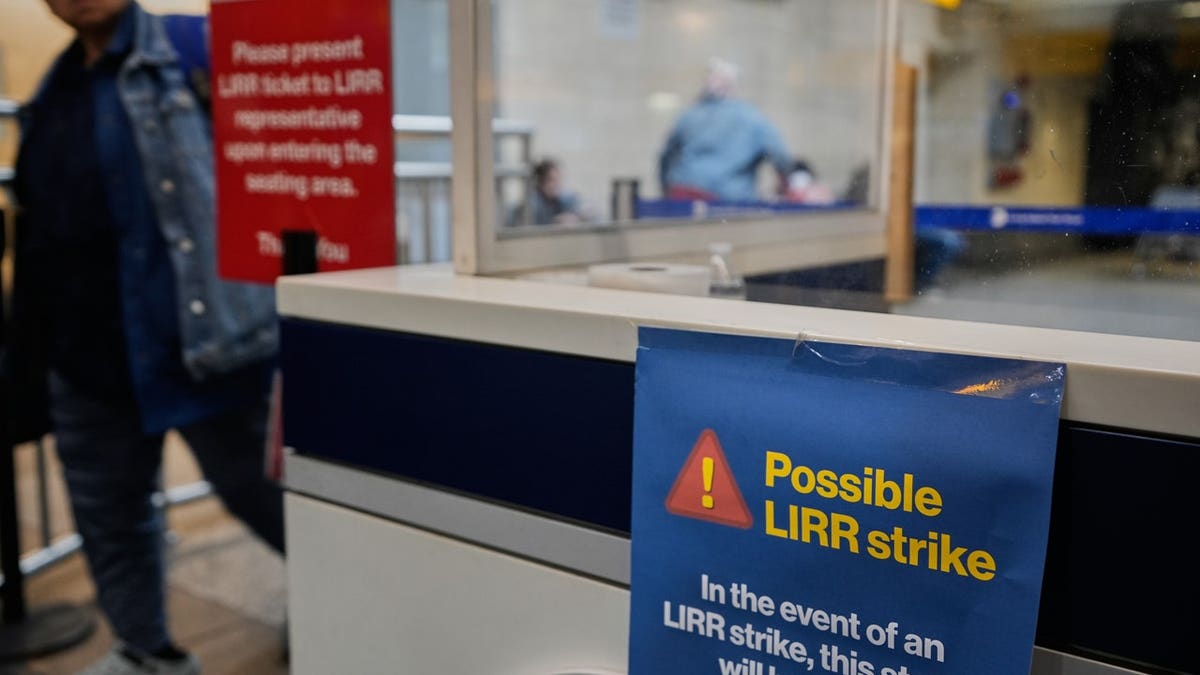
A sign warns commuters of a potential Long Island Rail Road strike at Penn Station in New York, Thursday, May 14, 2026. (AP Photo/Seth Wenig)
Kevin Sexton, national vice president of the Brotherhood of Locomotive Engineers and Trainmen, said no new negotiations had been scheduled.
“We’re far apart at this point,” Sexton said. “We are truly sorry that we are in this situation.”
MTA Chairman Janno Lieber said the agency “gave the union everything they said they wanted in terms of pay” and claimed it appeared union leaders had intended to strike all along.

A conductor stands in a train of the Long Island Railroad (LIRR), the nations largest commuter train system, ahead of a possible strike by railroad workers in Penn Station, New York City, U.S., May 15, 2026. (REUTERS/David Dee Delgado)
Leading up to the strike, unions and the Metropolitan Transportation Authority (MTA) negotiated a new contract that included work-rule changes and annual wage increases of 3% over three years.
The dispute centered on a proposed fourth-year wage increase, with unions seeking a 5% raise for the final year.
MTA officials said they could not meet that demand and warned it could force fare increases.
BRONX MAN CONVICTED OF RUNNING SECRET CHINESE POLICE STATION IN MANHATTAN USED TO MONITOR DISSIDENTS
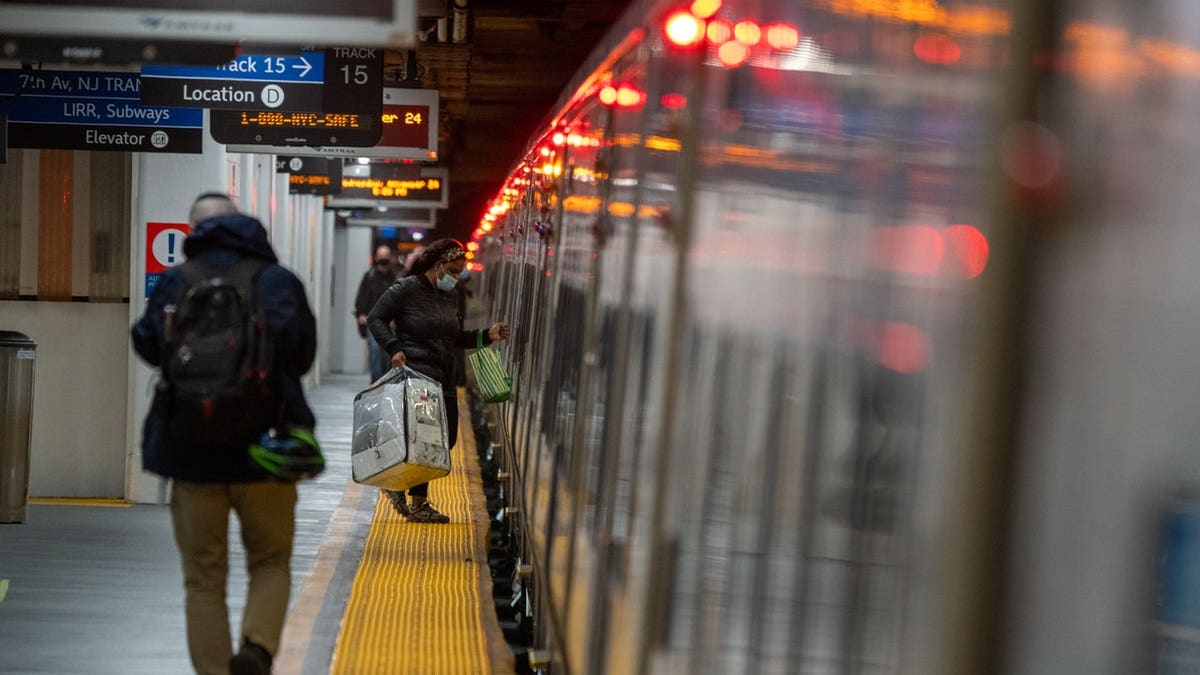
New York Gov. Kathy Hochul called the Long Island Rail Road strike “reckless” and “unacceptable.” (David Dee Delgado/Getty Images)
The agency also warned the shutdown would cause severe congestion and delays across the region.
As part of its contingency plan, the MTA said it would operate limited weekday shuttle bus service during peak commuting hours between select Long Island locations and subway stations in Queens.
New York Gov. Kathy Hochul described the strike as “reckless” and “unacceptable.”
“Commuters are dealing with unnecessary dysfunction and thousands of union LIRR workers are being forced to go without a paycheck because of decisions made by a small group of union leaders,” she said in a statement. “I stand with LIRR riders and will fight to preserve the long term stability of the MTA.”
“I believe a deal can be done and I urge both the MTA and these unions to return to the table and bargain non-stop until a deal is reached,” she added.
Hochul also blamed the disruption in part on the Trump administration, saying federal officials cut mediation efforts short and pushed negotiations closer to a strike.
FEDS SAY WOMAN TRIED TO EXTORT NBA TEAM OWNER WITH FAKE SEX VIDEOS AFTER ONE-NIGHT STAND
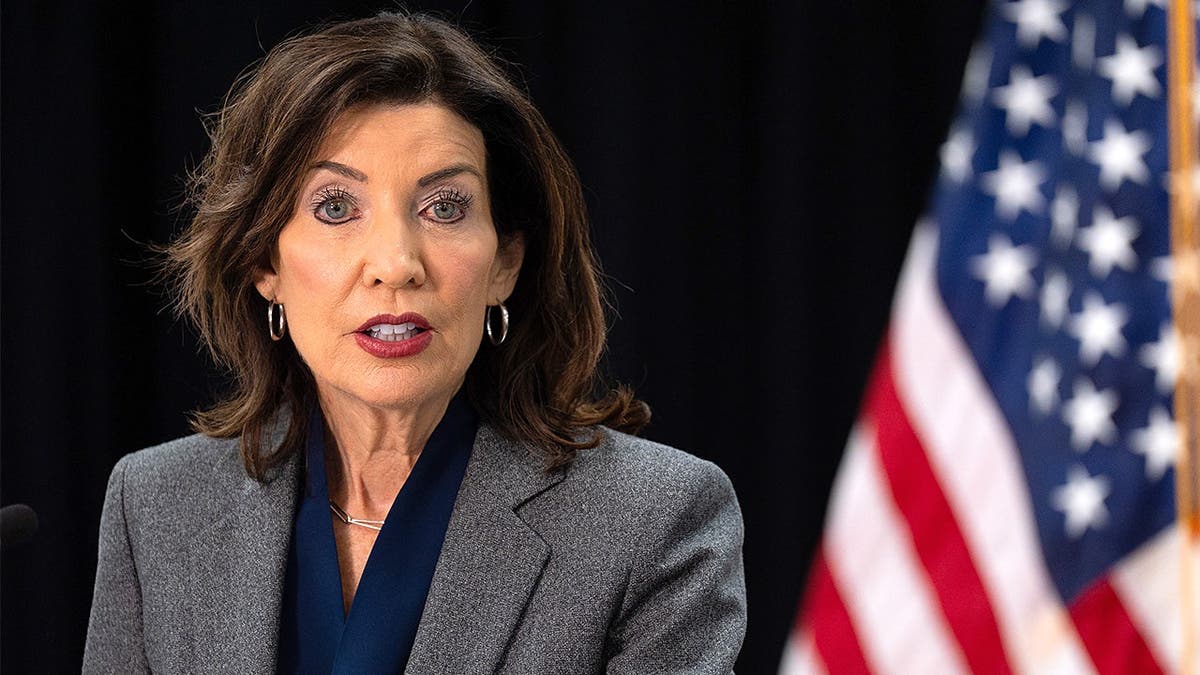
New York Gov. Kathy Hochul spoke during a news conference at the WIN NYC family shelter on March 5, 2026, in New York City. (Adam Gray/Bloomberg via Getty Images)
New York City Mayor Zohran Mamdani said his office was helping coordinate contingency efforts.
“New Yorkers should prepare for heavier-than-usual traffic, crowded transit options and additional travel time,” he wrote in a post on X. ”The MTA has announced that limited weekday bus service will be available for essential workers and others who cannot telecommute.”
CLICK HERE TO DOWNLOAD THE FOX NEWS APP
The first LIRR strike occurred in 1980 and lasted two days. Another strike in 1987 lasted 11 days, while a third strike in 1994 lasted two days.
The Associated Press contributed to this report.
Reference #18.94adc17.1778927723.21f5bf2
https://errors.edgesuite.net/18.94adc17.1778927723.21f5bf2
NEWYou can now listen to Fox News articles!
EXCLUSIVE: At President Donald Trump’s “Rededicate 250” prayer event on the National Mall this weekend, Bishop Robert Barron will address the “marginalization of God” and religion in society, which he said he considers a “true threat to democracy.”
Rededicate 250 is a major prayer event set for Sunday as a way of “rededicating” the nation as “One Nation Under God” ahead of America’s 250th anniversary. The event, which is being organized by the Trump-aligned “Freedom 250” nonprofit, is expected to include the president, White House Cabinet members and major faith leaders.
In an interview with Fox News Digital, Barron, perhaps America’s most well-known and beloved Catholic bishop, revealed that his address at the event will emphasize his belief that “if you marginalize and privatize religion, democracy is in danger.”
“God is essential to the very foundations of American democracy,” he asserted. “There’s a lot of talk today about the threats to democracy, that is a true threat to democracy, the marginalization of God.”
TRUMP LAUNCHES MASSIVE ‘FREEDOM 250’ PUSH TO IGNITE AMERICA’S 250TH BIRTHDAY CELEBRATION
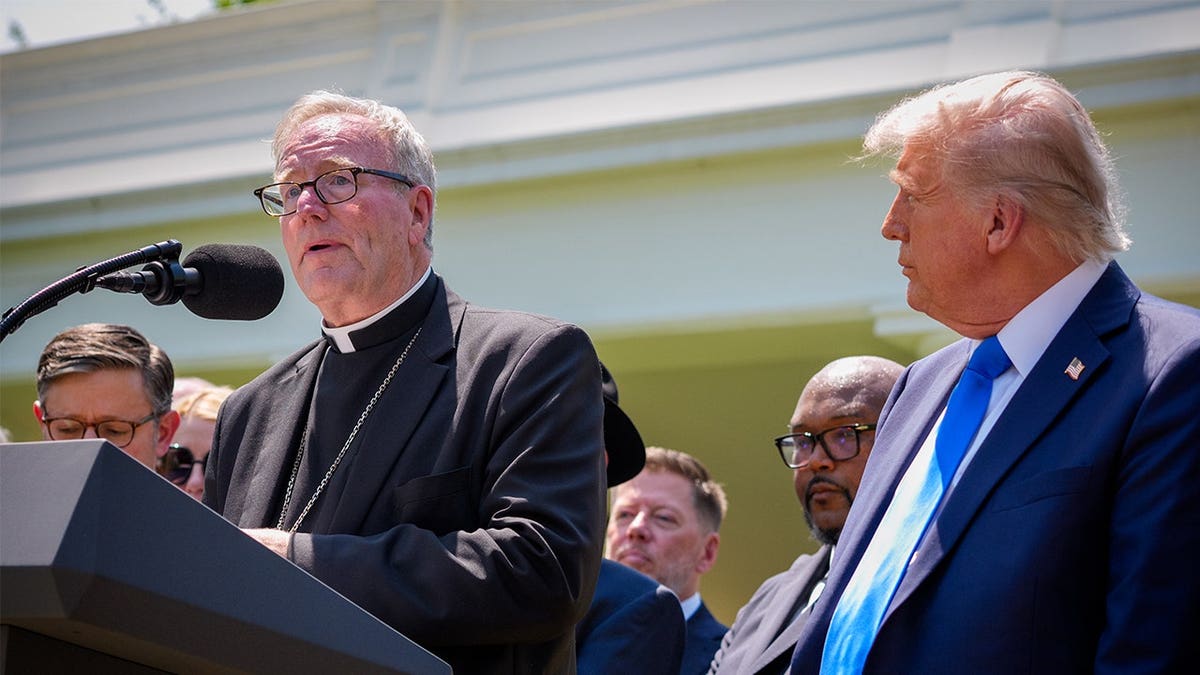
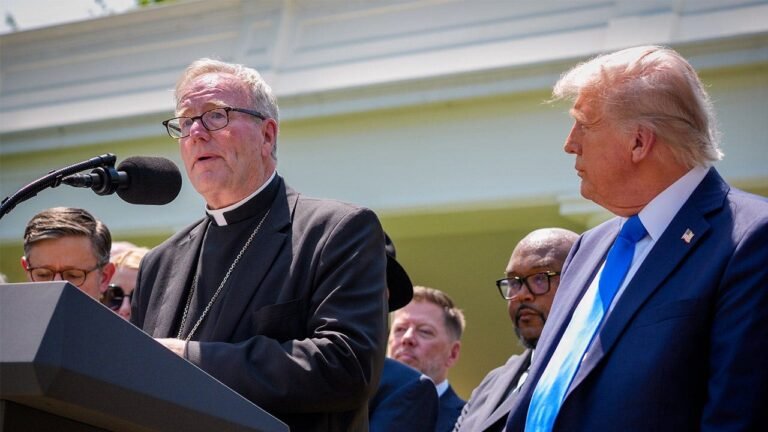
Photo: Bishop Robert Barron (L), accompanied by U.S. President Donald Trump, and other religious leaders, speaks during a National Day of Prayer event in the Rose Garden at the White House on May 1, 2025, in Washington, D.C. The National Day of Prayer is a congressionally recognized observance that calls on people of all faiths to participate in a day of prayer and reflection. (Photo by Andrew Harnik/Getty Images)
Barron explained that many of the societal ills seen today are due to this cultural separation from God.
“Take God out of the equation, what are you left with? Radical self-choice. Welcome to wokeism. Welcome to the culture of self-invention. ‘I make myself up, values is up to me, my gender, it’s up to the whole structure of my life, it’s my choice,’” he said. “That’s deadly to our democracy.”
“Religion belongs to the very fabric of our democracy, that’s the theme of my talk,” he said.
Barron said he will begin his speech by invoking Abraham Lincoln’s Gettysburg Address.
“We know from the early written versions [that] Lincoln didn’t have the phrase ‘under God’ when he said that this nation might have a new birth of freedom. But when he delivered the speech, he said this nation ‘Under God might have a new birth of freedom.’ So, what prompted Lincoln, as he was giving the Gettysburg Address, to add that phrase?” he said. “You could say, ‘Oh, it’s just a little pious declaration.’ No, no, no, I think that’s born of a very, very deep and correct intuition, America is a nation that’s conditioned by these great values, moral values, spiritual values that come finally from God.”
Barron argued that one of America’s most foundational ideas — that all men are created equal — is a novel concept made possible only by Christianity.
“We’re not equal in any way. Look at the classical political philosophers; they would never affirm the equality of all people. We’re not equal in intelligence or moral virtue or beauty or courage or anything. We’re radically unequal. So where does this come from?” he asked. “Why would you go from we’re not equal at all to it’s ‘self-evident that we’re equal’? And the answer is in that little word, ‘created,’ that ‘all men are created equal.’ So, despite all our differences, we are all equally children of God and then endowed by their creator with certain inalienable rights.”
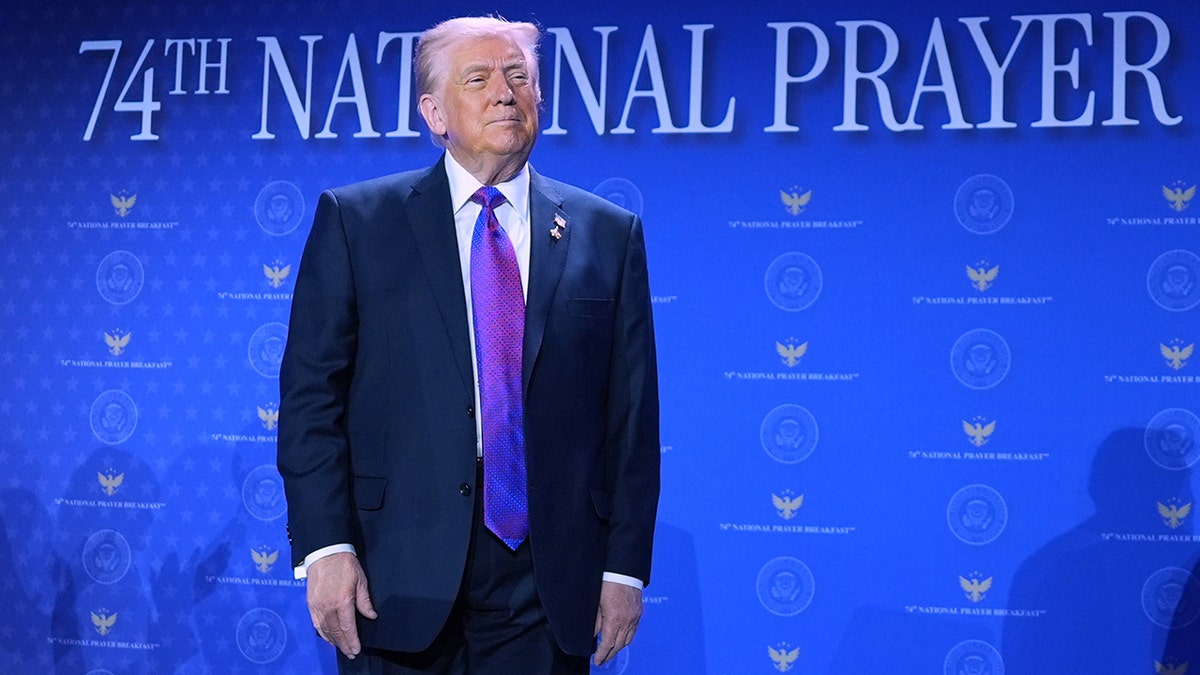
President Donald Trump arrives to speak at the National Prayer Breakfast in Washington on Feb. 5, 2026. (Evan Vucci/AP)
This second concept of all possessing inalienable rights, Barron argued, is a uniquely Christian idea imbued in America’s values.
“No one in the classical world believed that. Aristotle didn’t, Plato didn’t. Cicero didn’t, none of them,” he explained. “Look in societies more recent that don’t believe in God. Go to Soviet Russia, go to communist China, everyone has rights? No way.”
“Where do they come from?” he said. “Well, Jefferson gives away the game. They’re endowed by their creator with certain inalienable rights. Take the creator out of the equation, rights will go out in a minute. So, Lincoln’s intuition to say that this nation under God would have a new birth of freedom, God is essential to the very foundations of American democracy. If you marginalize and privatize religion, democracy is in danger.”
Barron said he will also address the nature of freedom itself.
“It’s a very modern sense of freedom that it means spontaneous choice, I’m free if I could just do whatever I want,’” he said. “But see, the founding fathers were trained both biblically and classically; they did not understand freedom that way.”

Attendees watch the Independence Day fireworks display along the National Mall in Washington, D.C., on July 4, 2024. (Probal Rashid/LightRocket)
“Freedom is more like this, it’s an ordering of desire toward the good, so as to make the achievement of the good first possible and then effortless.”
He pointed to mastering a new language or the piano as examples.
CLICK HERE TO DOWNLOAD THE FOX NEWS APP
“Think of the way you become a free speaker of a language, not by talking any old way you want, but rather internalizing the laws of the language. How do you become a free player with the piano? Not by doing whatever you want, but by internalizing the structure of music.”
“That’s the kind of freedom we’re talking about,” he said. “It’s the moral freedom to become the person you’re meant to be, that you can now effortlessly achieve the good, that this nation under God might have a new birth of freedom.”
Reference #18.2d4adc17.1778929191.27b14df
https://errors.edgesuite.net/18.2d4adc17.1778929191.27b14df
The number of president’s supporters accused of committing new crimes after Donald Trump pardoned them for their roles in the 6 January 2021 US Capitol attack recently increased to at least five.
Ryan Nichols, 35, became the latest such Capitol attacker on 10 May, when authorities in Harleton, Texas, say he threateningly displayed a handgun to a person with whom he was arguing in a church parking lot.
Nichols in November 2023 had pleaded guilty in connection with the insurrection at the Capitol from Trump supporters after his first presidency ended in defeat to Joe Biden after the 2020 election. Among other things, he acknowledged attacking officers with pepper spray and making a video during the riot in which he said, “It’s going to be violent and … if you are asking, ‘Is Ryan Nichols going to bring violence? Yes, Ryan Nichols is going to bring violence.’”
A federal judge later sentenced Nichols to five years and three months in prison. But Nichols was freed early when he was unconditionally pardoned along with 1,500 other participants on the first day of Trump’s second presidency in January 2025.
Then, on 11 May, the sheriff’s office of Texas’ Harrison county – which includes Harleton – said its deputies encountered Nichols one day earlier while responding to a complaint about “a person reaching for a firearm during a dispute outside the church”. Investigators learned Nichols had confronted someone in the church’s parking lot and continued doing so even after that person tried to leave, a sheriff’s office statement said.
The alleged victim reported turning away from the confrontation and trying to usher his family towards their car while asking Nichols to go away. The victim alleged that he eventually turned around to face Nichols, who then raised his shirt up, showed a gun and wrapped his hand around the weapon’s grip.
“The victim advised that he was in fear for his life due to this action,” and deputies arrested Nichols on a count of deadly conduct, the sheriff’s office said in its statement.
He was also booked on unrelated warrants alleging harassment. County jail records show Nichols was released two days later on bond in the amount of $8,000.
Nichols in April 2025 declared his intent to run for a seat in Congress. However, as the Texas news outlet KLTV reported, Nichols later announced he was withdrawing from the race.
“My heart is in the right place,” he said at the time. “But I do not have the ability to properly lead this country.”
A database maintained by the non-profit Citizens for Responsibility and Ethics in Washington (Crew) first published in December listed more than 30 people who attacked the Capitol who were pardoned by Trump, but face criminal charges in other cases.
Of those on that list prior to Nichols’ arrest, four had been accused of crimes reported after the Republican president pardoned them, according to Crew.
One of those four was Christopher Moynihan, who pleaded guilty in February in New York to a harassment charge over threats to kill Hakeem Jeffries, the US House Democratic leader. Moynihan was later sentenced to three years’ probation.
And another from that group was Zachary Alam, who was sentenced on 7 May to seven years in prison after a jury convicted him of committing a burglary in Virginia.

NEWYou can now listen to Fox News articles!
EXCLUSIVE: Hunter Biden was spotted by paparazzi in West Los Angeles this week, where the former first son briefly reacted to questions about ongoing litigation surrounding former President Joe Biden’s interview tapes and alleged government UFO files.
“Hunter, what do you think of the DOJ when they release your father’s interview tapes from the biography that he did?” a reporter asked as he approached Biden near Wilshire Boulevard.
“What are you talking about?” Hunter Biden said.
BIDEN SEEKS TO BLOCK DOJ RELEASE OF 2017 AUDIO, COURT FILING SAYS

Hunter Biden and his wife Melissa Cohen speak with a reporter after leaving Matsuhisa restaurant in Los Angeles, Calif. (Backgrid USA)
The exchange comes amid ongoing litigation seeking the release of audio tied to former President Joe Biden’s classified-documents probe, which fueled scrutiny over the elder Biden’s memory and fitness while in office.
The probe examined Joe Biden’s handling and discussion of classified material during conversations with ghostwriter Mark Zwonitzer. Special Counsel Rob Hur said the author had deleted the files, but the Justice Department was able to recover them.
BIDEN INTERVIEW AUDIO REVEALS WHO BROUGHT UP BEAU’S DEATH — AND IT WASN’T HUR

Hunter Biden and his wife, Melissa Cohen, smile after dining with friends at Matsuhisa in Los Angeles on May 13, 2026. (Backgrid USA)
The conservative watchdog Oversight Project sued the DOJ seeking release of audio recordings from Joe Biden’s interviews with special counsel Robert Hur. Biden has denied wrongdoing and said he cooperated fully with the probe.
“I don’t know, man — I hadn’t heard that one,” Hunter Biden later said.
ASHLEY BIDEN SLAMS REPORTING ABOUT HER DAD’S MENTAL ACUITY AS ‘DISRESPECTFUL AND UNTRUE’

Hunter Biden leaves restaurant after dining with friends at Matsuhisa in Los Angeles on May 13, 2026. (Backgrid USA)
The reporter also asked about the recently released UFO Files.
“It’s crazy right?” Hunter Biden replied, but did not elaborate.
Hunter Biden was also one of several recent individuals whose Secret Service protection was rescinded by the Trump administration.
TRUMP REVOKES SECURITY CLEARANCES OF FORMER OPPONENTS KAMALA HARRIS, HILLARY CLINTON

Former President Joe Biden and his son Hunter Biden stand side by side. (Mandel Ngan/Getty Images)
Trump announced in March 2025 that Hunter Biden and his half-sister Ashley Blazer Biden — child of Jill and Joe — would cease to have such protection.
The president criticized the fact that Hunter had “as many as 18 people” on his USSS detail.
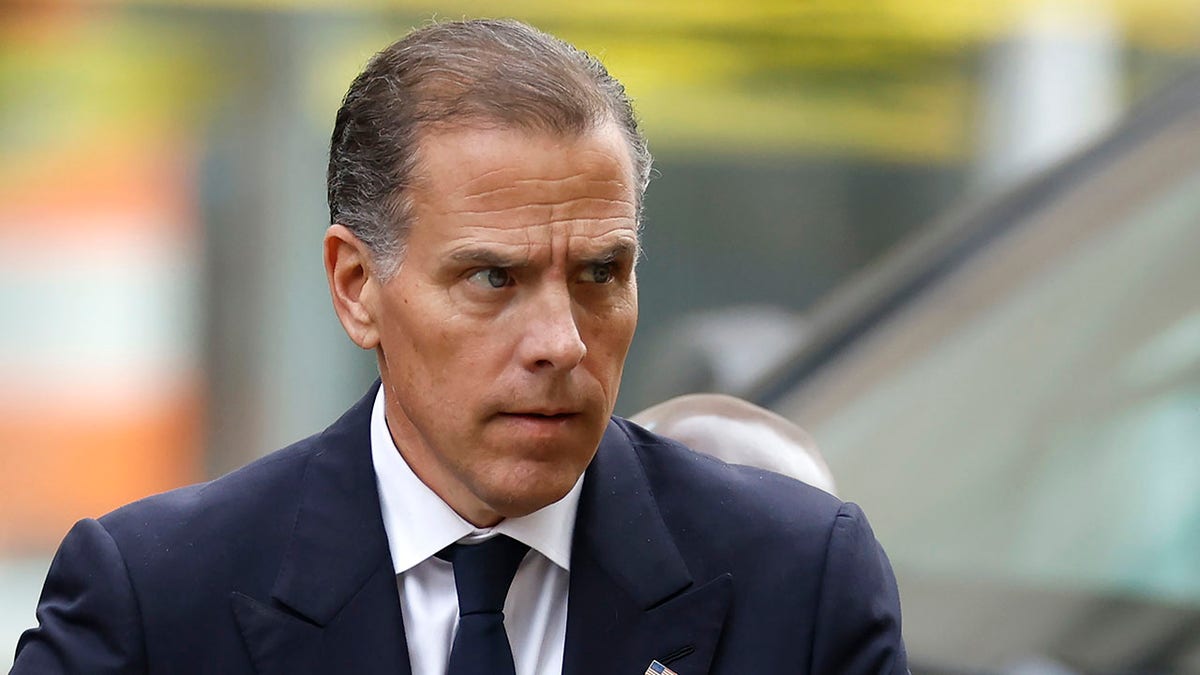
Hunter Biden arrives at the J. Caleb Boggs Federal Building in Wilmington, Del., on June 6, 2024, as his felony gun charges trial continues with additional witnesses. (Kevin Dietsch/Getty Images)
CLICK HERE TO DOWNLOAD THE FOX NEWS APP
Hunter Biden’s appearance marked a rare public sighting for the former first son, who has largely stayed out of public view in recent months.
Reference #18.49200117.1778930644.25f8ceb5
https://errors.edgesuite.net/18.49200117.1778930644.25f8ceb5
Wildlife officials in Florida will continue to allow threatened giant manta rays to be taken from the ocean, but have tightened their policies after a viral video showed a captured ray in severe distress, and a bipartisan group of politicians called for an end to the controversial practice.
Members of the Florida fish and wildlife conservation commission (FWC) voted on Wednesday to adopt an amended final rule reserving the right to say when and where rays can be captured for “responsible exhibition” in the US.
The 18 politicians, including the Republican congressman Brian Mast, Democratic state senator Jason Pizzo, and Florida house and senate members from both parties, had pressed for an outright ban.
“By continuing to permit manta ray capture, the commission prioritizes the interests of the captive marine animal entertainment industry over the protection of a threatened species,” they wrote to the FWC chair, Rodney Barreto, and other panel members earlier this month.
Their outrage was provoked by a video posted to social media last summer by a tour boat captain in Panama City Beach, who watched five men roughly hauling an upside-down ray in a net on to an unmarked private boat.
The capture was authorized by a “special activity license” (SAL) issued by the FWC, and the ray destined for display at SeaWorld Abu Dhabi. It was one of three taken from Florida waters for the United Arab Emirates theme park in two years, one of which died soon after capture, and the latest of 25 licenses issued for manta rays since 2019, the Tampa Bay Times reported.
Of those, 75% were intended for international aquariums, the newspaper said, after reviewing data provided by the Animal Legal Defense Fund (ALDF).
The commission discussed the concerns this week, but approved a rule anyway that will still allow manta rays to be taken, with the commission’s direct prior consent. Rays can no longer be captured and sent to aquariums overseas, and any US entity seeking to exhibit one must prove an educational reason.
Atlanta’s Georgia Aquarium, an attraction with a number of research and conservation programs, is currently the only facility in the country able to house and display the threatened species, which can reach a span of 26ft (eight meters) and a weight of 5,300lb (2,400kg).
The commission’s move was “a step forward in protecting Florida’s marine wildlife”, said Lindsay Cross, a Democratic state representative, letter signatory and sponsor of the Marine and Aquatic Native Threatened Animal (Manta) Protection Act in the Florida legislature.
Her bill, which died at committee stage in March, would have introduced an outright ban on the capture of threatened or endangered marine species from Florida waters and eliminated the need for an FWC rule.
“While myself and others were seeking a complete ban on the capture of species like the giant manta ray, the amended rule will ban the international export of any federally threatened or endangered species for the purposes of exhibition or education,” she said.
“Commission approval for any new SAL will improve transparency and allow for public comment and a more iterative process whereby the commission may designate additional parameters.”
Alicia Prygoski, the ALDF’s strategic legislative affairs manager, praised the commission for a “meaningful step”, but expressed concern that it also removed from the final rule a proposed cap of one manta ray every two years.
“Giant manta rays are threatened for a reason, and they deserve that highest level of protection, which would mean, of course, not pulling any of them from the water,” she said.
“But there is still some good that can be taken from this. The commission was strong on the outright prohibition on international export, which was somewhat of a response to stakeholder outreach and that very concerning viral video.
“The removal of the manta ray limit is the piece we still have concerns about. But in practice it doesn’t appear to create an immediate risk because there’s only one aquarium in the country equipped to house them.
“Overall we’re pretty happy to see the general outcome, and the FWC taking this seriously.”
Barreto, in a statement, said the panel was mindful of the concerns of the politicians and animal advocates, but weighed them against a need for education about vulnerable species.
“FWC is committed to the responsible conservation of endangered and threatened species,” he said.
“We recognize the role public aquariums play in building support for conservation. The actions we took will ensure the highest level of oversight for the collection of marine threatened species for responsible exhibition in the US.”
The new rule takes effect on 1 July.