Reference #18.b3560e17.1777818916.9be7c74f
https://errors.edgesuite.net/18.b3560e17.1777818916.9be7c74f
Reference #18.b3560e17.1777818916.9be7c74f
https://errors.edgesuite.net/18.b3560e17.1777818916.9be7c74f
Canada is to become the first non-European country to attend a meeting of the European Political Community when the prime minister, Mark Carney, joins Monday’s summit of the 48-plus nation grouping in Yerevan, Armenia.
Carney has said he is determined to build a new network of trade and diplomatic alliances after the loss of US markets under Donald Trump. His presence will also represent a show of western support for Armenia in its efforts to distance itself from Russia at a time when the US’s approach to Moscow’s opponents, such as Ukraine, is at best ambiguous. Canadian diplomats have rejected suggestions Ottawa might seek EU membership.
Trump’s plan to pull more than 5,000 troops out of Germany over the next year and the economic impact on western economies of a prolonged US-Iran conflict will be major subjects of discussion in Yerevan. Armenia shares a border with Iran, but unlike neighbouring Azerbaijan has not alleged Iranian missiles have landed in its territory.
Yerevan was chosen to host the EPC – an institution championed the French president, Emmanuel Macron, and which also includes the UK – to give Armenia a chance to showcase its strengthening links with Europe, and so continue its slow decoupling from Russia, its former backers. Its prime minister, Nikol Pashinyan, has pursued a policy of diversification that in practice is slowly drawing Armenia into the European ambit. His Civil Contract party is facing parliamentary elections in June, and is seeking a big win so he can continue efforts to make a peace with Azerbaijan. He faces three opposition parties more sympathetic to Russia.
Thomas de Waal, a senior fellow with Carnegie Europe specialising in the Caucasus region, said: “European leaders will have to walk a fine line in Yerevan. As they hold what looks like a pre-election rally for Pashinyan, they must also have a bigger conversation about building a more robust and less polarised Armenia.
“The country itself deserves full European attention. It is on the verge of a painful but transformative peace agreement with Baku that will lead to the reopening of its two long borders with Azerbaijan and Turkey, which have been closed since the 1990s. The country also has a historic opportunity to loosen its overdependence on Moscow as the war in Ukraine continues to distract and drain Russia.”
The day after hosting the EPC, Yerevan hopes the first bilateral summit between Armenia and the EU on Tuesday will result in the bloc offering extra funding to promote democracy as well as visa liberalisation. When the EU’s enlargement commissioner, Marta Kos, visited the country in March, she declared that “Armenia and the EU have never been closer”.
The country of 3 million people signed a comprehensive partnership agreement with the European Union in 2017. Last year, it adopted a law formally declaring its intention to apply for EU membership, taking the country in a very different political direction to neighbouring Georgia.
Armenia is a member of the Russian-led Eurasian Economic Union and the Moscow-led Collective Security Treaty Organisation (CSTO) alliance, although it froze its membership of the latter in 2024.
Vladimir Putin warned Armenia in April that it could not be a member of both the EU and CSTO. “It’s simply impossible by definition,” the Russian president told Pashinyan.
Macron has been the premier champion of closer European-Armenian ties and his attendance is being given a state-visit-level importance. He is also expected to attend a concert in Gyumri, Armenia’s second-largest city
The EPC, which was set up in 2022, brings together full members of the EU and the large constellation of nations outside the Brussels bloc, including the UK, Turkey, Norway, Switzerland, Iceland, Serbia and other Baltic nations.
The group has no formal secretariat and often avoids lengthy communiques in favour of bilateral leader-to-leader discussion.
The EPC was met with scepticism at its inception, with some fearing it was a sop for countries that had been waiting for years to have their applications for EU membership to be progressed. But the willingness of European leaders to continue to attend the summits suggests the gatherings serve a purpose.
With the support of Trump, Armenia and Azerbaijan initialled a peace agreement in Washington last August. The Azerbaijani side said it would fully sign up to the peace agreement once Armenia changed its constitution, claiming that it contains territorial claims against Azerbaijan, which Armenian authorities have repeatedly denied.

NEWYou can now listen to Fox News articles!
Three weeks after her husband’s funeral, Carol’s phone rings. The caller knows her husband’s name, their address and their daughter’s name, even mentioning that she lives across town.
He says he’s calling from a life insurance company and that there’s a policy ready to be paid out. He just needs Carol’s Social Security number and bank routing details to process it.
This scenario draws from real scams reported by fraud investigators and elder abuse advocates across the country. The details change, but the playbook stays the same.
The reason these attacks work so well comes down to something most grieving families never think to check.
HOW SCAMMERS TARGET YOU EVEN WITHOUT SOCIAL MEDIA

Scammers build detailed profiles using obituaries, public records and data broker sites often within days of a loss. (Kurt “CyberGuy” Knutsson)
Sign up for my FREE CyberGuy Report
Losing a spouse creates a perfect storm for scammers. Grief can leave you overwhelmed, and at the same time, you are handling financial decisions, paperwork and major life changes. That combination makes it easier for someone to catch you off guard.
THE ONE THING SCAMMERS CHECK BEFORE TARGETING YOU ONLINE
Meanwhile, your personal information becomes easier to find. Obituaries often include names, relationships and locations. Death records get filed with the Social Security Administration and added to the Death Master File. Probate filings can reveal property transfers, beneficiaries and account details.
Data brokers collect all of this and turn it into detailed profiles that almost anyone can access. According to research from a data privacy company analyzing five years of FBI Internet Crime Complaint Center data, about 52.5% of crimes reported by Americans over 60 in 2023 were either enabled or worsened by personal data available online. Widows, especially those managing estates alone, sit high on that target list.
Despite being in a high-risk group, taking these protective steps should keep scammers at bay. I know how overwhelming this time can be, so I recommend asking a trusted family member or friend for assistance setting things up. Though you should always refrain from sharing sensitive details like account numbers and your Social Security number.
THE DATA BROKER OPT-OUT STEPS EVERY RETIREE SHOULD TAKE TODAY
The first month is when the most damaging data gets published. So your first job is damage control.
Obituaries are the single most accessible data source scammers use after a death. A traditional obituary lists full names, survivor relationships, hometowns and sometimes even ages. That’s a complete family map, and in the wrong hands, it can be a powerful weapon.
You don’t have to skip the obituary. But consider removing or abbreviating the exact home city (use the region instead), names of minor grandchildren and the surviving spouse’s first and last name combined with their address. “Carol of Cleveland” is safer than “Carol Patterson of 114 Birchwood Lane, Cleveland.”
HOW TO REMOVE YOUR PERSONAL INFO FROM PEOPLE-SEARCH SITES
Before you can remove anything, you need to see what’s already there.
Go to Spokeo, Whitepages, BeenVerified and Intelius. Search your name and your spouse’s name. What you find will likely include your address, phone number, email addresses, relatives’ names and property records.
This snapshot is your starting point. Take screenshots. You’ll need them.
10 SIGNS YOUR PERSONAL DATA IS BEING SOLD ONLINE
It takes two minutes, and it’s free. Go to google.com/alerts and create alerts for:
If your information gets published anywhere new, you’ll get an email notification. This is your early warning system.
REMOVE YOUR PERSONAL INFO FROM THE WEB — STOP IT FROM COMING BACK

People-search sites can expose your address, relatives and contact details making it easier for scammers to target you. (Kurt “CyberGuy” Knutsson)
By now, your information has had weeks to spread. Manual opt-outs are worth doing, but here’s the reality: there are hundreds of data broker sites. Each one has its own removal process. Many require you to submit ID, wait days for confirmation, and then re-submit when your data reappears, because it will.
Prioritize manual opt-outs from the sites that appear in your Google search results. These carry the most weight because scammers often start with whatever Google surfaces first.
You can find these exposures quickly and easily with Incogni’s free scanner. This tool will scan the web for your personal information and email you a report with a list of results you can start with.
HOW TO HAND OFF DATA PRIVACY RESPONSIBILITIES FOR OLDER ADULTS TO A TRUSTED LOVED ONE
If you’d rather go about it on your own, some of the most common sites include:
Each one will ask you to verify your email. Follow through on every confirmation; unconfirmed requests don’t get processed.
Keep in mind that removing your information takes time and persistence. There are hundreds of data broker sites, and many of them re-list your information after it has been removed, especially when new public records become available.
Because of that, some people choose to use automated data removal services that send ongoing opt-out requests on their behalf. These services can help reduce the workload by continuously monitoring and removing listings as they reappear.
No matter which approach you take, consistency matters. Checking your information regularly and following up on removals helps limit what scammers can find.
Check out my top picks for data removal services and get a free scan to find out if your personal information is already out on the web by visiting Cyberguy.com
This step is urgent, and most people skip it entirely.
Data broker profiles almost always contain the exact answers to your bank’s security questions. Mother’s maiden name. Previous address. City where you were born. Scammers use these to impersonate you and access your accounts.
WHAT HACKERS CAN LEARN ABOUT YOU FROM A DATA BROKER FILE
Call your bank, brokerage and insurance companies. Ask to update your knowledge-based authentication questions. Use answers that are completely made up, something only you know and store them in a password manager. Don’t use any answer that appears anywhere in a data broker profile.
By now, the most urgent exposure has been addressed. These final steps close the remaining gaps and protect you in the long term.
A credit freeze prevents new credit accounts from being opened in your name. It’s free at all three major bureaus: Equifax, Experian and TransUnion, and TransUnion.
HOW TO SAFEGUARD YOUR CREDIT SCORE IN RETIREMENT AS FRAUD AND IDENTITY THEFT RISE AMONG SENIORS
Critically: freeze your spouse’s credit too. After a death, identity thieves frequently open new accounts in the deceased person’s name before the credit bureaus are updated. This is called ghosting, and it can haunt an estate for years.
To freeze a deceased spouse’s credit, contact each bureau individually and provide the death certificate. It’s a few phone calls. It’s worth every minute.
Families can submit a request to limit access to a deceased person’s Social Security data in certain contexts. Visit ssa.gov for current guidance. This won’t scrub the record entirely, but limiting access to the Death Master File reduces the pool of parties who can use it to enrich your data broker profile.
This isn’t directly a data privacy step, but it protects you from a related threat. Scammers who know about an estate sometimes pose as financial advisors, attorneys or government representatives to intercept beneficiary changes. Confirm all account changes directly through institutions you contact yourself, never through a number someone else gives you.
By this stage, your data is more controlled. Now the focus shifts to stopping scams before they escalate. Start by setting clear expectations with your family. Let them know you will never ask for money through an unexpected call, text or email. Creating a simple code word or check-in rule can stop panic-driven decisions, which is exactly what scammers rely on.
Next, slow down any urgent financial request. Scammers create pressure to force quick action. If someone claims there is a payout, problem or deadline, pause and verify it using a phone number or website you trust, not one they provide. It also helps to keep a short list of your financial institutions and their official contact details in one place. That way, you always know how to reach them directly without relying on incoming calls or messages.

Taking simple steps early, like removing your data and freezing your credit, can reduce your risk during the most vulnerable time. (Kurt “CyberGuy” Knutsson)
INSIDE A SCAMMER’S DAY AND HOW THEY TARGET YOU
Finally, be cautious in real-time conversations. Scammers often build trust by collecting small details over multiple interactions. Keeping answers brief and avoiding unnecessary personal details makes it that much harder.
Check out my top picks for data removal services and get a free scan to find out if your personal information is already out on the web by visiting CyberGuy.com
Get a free scan to find out if your personal information is already out on the web: CyberGuy.com
The first few months after losing a spouse bring enough decisions without adding fraud risks on top. Yet that is when your personal information spreads the fastest. Public records and data broker sites can quietly build a profile that scammers use against you. Early action makes a real difference. Limiting what gets published, removing existing data and securing your accounts all reduce your exposure. Even small steps, like updating security questions or freezing credit, can stop a scam before it starts. You do not need to handle everything at once. Start with a simple search of your name and review what appears. From there, take control at your own pace and protect what matters most.
If someone can piece together your personal life within days of a loss, how much of your information are you comfortable leaving online? Let us know by writing to us at CyberGuy.comCyberguy.com
CLICK HERE TO DOWNLOAD THE FOX NEWS APP
Sign up for my FREE CyberGuy Report
Copyright 2026 CyberGuy.com. All rights reserved.
Heathrow’s new chair has opened talks with airlines and the billionaire local landowner Surinder Arora to defuse a row that threatens to further delay the £49bn plan to build a third runway at Europe’s busiest airport.
Philip Jansen, who was appointed at the start of the year, is understood to have held meetings with the airport’s carriers and with Arora, who has been promoting his own £25bn expansion scheme, in the hope of finding the middle ground in a row over cost and service issues.
Last week the former BT boss and Thomas Woldbye, the chief executive of Heathrow, met International Airlines Group, the parent company of British Airways.
British Airways dominates Heathrow, accounting for more than 50% of slots, and the IAG chief executive, Luis Gallego, has said the cost of the third runway and associated works must be capped at £30bn.
Jansen is also understood to have held talks with Virgin Atlantic and Arora, a multibillionaire hotelier who has for years criticised the airport for “ripping off” passengers, airlines and retailers with high charges.
BA, Virgin and Arora are all part of Heathrow Reimagined, a campaign group seeking to drastically reduce the costs of operating at the airport. The airlines, as well as large carriers from the US, have refused to back the expansion plan “at any cost”.
Heathrow is considered to be Europe’s most expensive airport, and in March the UK aviation regulator rejected its plans to significantly raise its landing fees to fund a multibillion-pound upgrade.
“All airlines and their stakeholders agree over the necessity and long-term economic value of a third runway,” a source familiar with the talks said. “There are just differing points of view. Airlines want the lowest possible cost, other people want to get involved and think it can be done cheaper. Whatever happens, we are all going to have to work together. There needs to be good relations if we want to re-engineer a way forward.”
The chancellor, Rachel Reeves, has thrown the government’s weight behind the expansion, pledging that work will begin before the next election, after decades of controversy and opposition over costs and the local and environmental impact.
In November, ministers backed a plan for the runway to be up and running by 2035, before the rival proposal submitted by Arora Group, although Heathrow is still seeking formal planning approval to start construction by 2029.
Heathrow is owned by a consortium of investors led by the French company Ardian and includes the sovereign wealth funds of Qatar, Singapore and Saudi Arabia.
China Investment Corporation, which owns 10% of Heathrow, is reportedly considering selling its stake over concerns about rising costs as the expansion project rolls out, according to the Financial Times.
A spokesperson for Heathrow said: “As newly appointed Heathrow chairman, Philip Jansen is spending time meeting with the airport’s key stakeholders. Building constructive relationships with them and especially our airline and commercial partners is essential to deliver our shared goals of excellent customer experience and fulfil our vision of being an extraordinary airport, fit for the future.”
Jansen has built something of a reputation for bringing together opposing parties to tackle difficult corporate stalemates.
At BT he engineered the signoff of £15bn in funding to roll out full fibre broadband across the UK, after decades of wrangling between stakeholders, making a promise to “build like fury” and address the national embarrassment of the UK’s status as a global laggard in internet connectivity.
The beleaguered London-listed WPP drafted in Jansen as the chair at the beginning of last year, promptly resulting in the removal of the chief executive, Mark Read, as the advertising company restructures under the former Microsoft boss Cindy Rose.
Separately, Aviation Services UK, which represents ground-handling companies such as Menzies, Swissport and Dnata, wrote to the aviation minister, Keir Mather, warning that the sector may need a Covid furlough-style scheme for employees if there are widespread flight cancellations because of fuel shortages this summer.
The ground-handling sector, which manages baggage and check-in services at airports and employs about 30,000 people, is remunerated on the basis of planes flying routes.
The issue of cutting and rehiring staff, who require lengthy security vetting to work in airports, became apparent during the Covid pandemic, when shortages caused chaos as airports began to get back on their feet.

NEWYou can now listen to Fox News articles!
From classic diners to award-winning ice cream shops, a handful of spots serving up milkshakes across the United States are drawing national attention for their standout flavors and devoted followings.
A recent Tasting Table roundup highlighted top milkshake destinations in every U.S. state, based on strong customer reviews and local acclaim.
The ranking looked at different varieties — malt, hand-spun, custard and hand-dipped shakes — and did not consider major chains with locations across the country.
NEW ICE CREAM TRENDS CHURN UP INTEREST, BUT ONE CLASSIC STILL RULES THE $7.5B INDUSTRY
Local and regional chains were “fair game,” however, according to the outlet.
Here are five of the top shops that have broken through with national awards, media recognition and widespread buzz.

Across the U.S., ice cream shops are gaining attention for their inventive milkshake flavors and over-the-top presentations. (iStock)
This longtime Anchorage diner, which first opened in 1955, earned a James Beard America’s Classics Award, one of the most prestigious honors for regional restaurants, in 2025.
The family-owned diner has built a loyal, multigenerational following over seven decades, with returning customers often calling it their first stop when they come back to Alaska, according to Anchorage Daily News.
AMERICA’S BEST FOOD CITIES RANKED BY EXPERT, WITH CHOICES THAT COULD INFURIATE LOCALS
Customers regularly praise its thick, old-school milkshakes and malts, with flavors ranging from butterscotch and banana to coffee, root beer and peanut butter, according to Tasting Table.

From simple chocolate and vanilla to bold, unexpected creations, milkshakes remain a go-to dessert for many Americans. (iStock)
Just a year after opening in 2008, Morelli’s was named one of the best ice cream shops in the country by Bon Appétit.
6 ICONIC AMERICAN RESTAURANTS STILL SERVING UP NOSTALGIA AND CLASSIC FLAVORS
The Atlanta shop has built a loyal following over the years and is known for its unique flavor lineup, which includes coconut jalapeño, blueberry corncake, the real Krispy Kreme doughnut-filled “Krispy Kreamier” and maple bacon brittle.

Thick, creamy milkshakes remain a classic American treat, with shops across the country putting their own spin on the nostalgic favorite. (iStock)
“We cut, fry and then caramelize pieces of bacon, then incorporate the bacon brittle pieces into a maple ice cream base,” the shop says on its website, where it posts the flavors of the day.
CLICK HERE TO SIGN UP FOR OUR LIFESTYLE NEWSLETTER
“When you see it on the menu, get it!”
A Texas favorite for more than 40 years, Amy’s Ice Creams has racked up dozens of local awards, particularly from the Austin Chronicle.

Amy’s Ice Creams, founded in Austin in 1984, has become a Texas staple known for its creative flavors. (Smith Collection/Gado/Getty Images)
Founded in 1984, the Austin-based chain is known for its playful, customer-focused atmosphere. Not only do employees perform ice cream tricks, but hundreds of rotating flavors like Belgian chocolate and butterscotch banana keep fans coming back for rich, customizable shakes.
Founder Amy Simmons told MySanAntonio.com last year the brand was built around a simple mission: “to make people’s day.”
CLICK HERE FOR MORE LIFESTYLE STORIES
“Ice cream is this incredible vehicle for happiness,” she said.
Known for its over-the-top burgers made with a 50/50 blend of ground bacon and beef, as well as its indulgent desserts, Slater’s 50/50 has also gained national attention, with its Las Vegas location landing on Yelp’s Top 100 restaurants list in 2025.

Across the country, milkshakes are decked out with everything from bacon to cheesecake. (iStock)
The restaurant was also featured on Netflix’s “Fresh, Fried & Crispy” for its extravagant menu creations.
CLICK HERE TO DOWNLOAD THE FOX NEWS APP
The milkshakes are known to be indulgent and unique, often piled high with toppings like marshmallow fluff, cookies and candy. Its best seller, according to its website, is the Strawberry Deluxe Cheesecake Milkshake, which is topped with fresh strawberries and a whole slice of cheesecake.
This Baltimore ice cream shop has earned a spot among Yelp’s top-rated ice cream destinations in the U.S., drawing praise for its locally sourced ingredients and creamy texture.

From coconut jalapeño at Morelli’s Ice Cream in Atlanta to cheesecake-topped shakes at Slater’s 50/50 in Las Vegas, milkshake shops across the US are gaining buzz for bold, creative ingredients. (iStock)
Flavors like mint chocolate chip and peach pie are popular.
TEST YOURSELF WITH OUR LATEST LIFESTYLE QUIZ
Many customers point to the shop’s rich, well-balanced shakes, with one reviewer calling it “top-notch” for its quality ice cream and fun, rotating flavors.
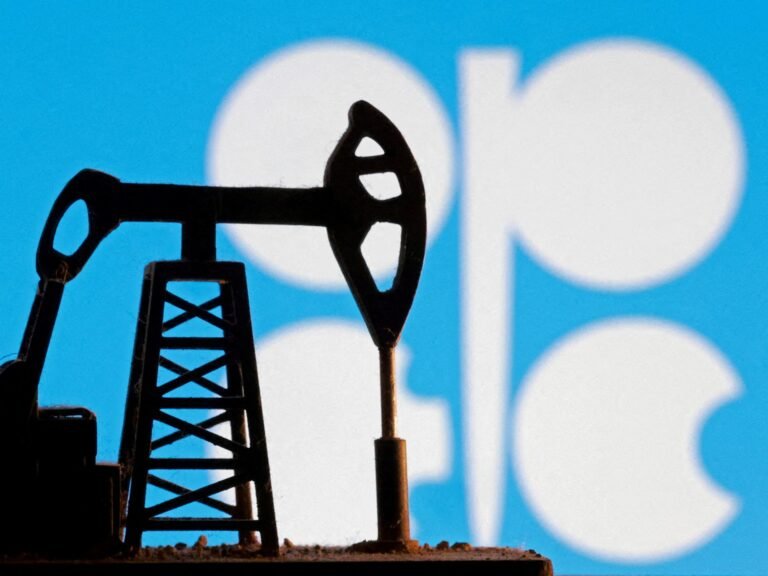
The seven major producers, including Saudi Arabia, will add 188,000 barrels per day to their total production quota for June, the organisation says.
Published On 3 May 2026
OPEC+ has agreed to a modest, largely symbolic oil output increase for June as the United States-Israel war on Iran disrupts Gulf supplies through the Strait of Hormuz.
“In their collective commitment to support oil market stability, the seven participating countries decided to implement a production adjustment of 188 thousand barrels per day,” OPEC+ said in a statement, making no mention of the United Arab Emirates, which quit the body on Friday.
“The seven OPEC+ countries also noted that this measure will provide an opportunity for the participating countries to accelerate their compensation.”
The statement was issued after the seven countries – Algeria, Iraq, Kazakhstan, Kuwait, Oman, Russia and Saudi Arabia – met virtually on Sunday to “review global market conditions and outlook”.
The move is designed to show the group is ready to raise supplies once the war stops and signals that OPEC+ is pressing on with a business-as-usual approach despite the departure of the UAE, OPEC+ sources said, according to the Reuters news agency.
Top OPEC+ producer Saudi Arabia’s quota will rise to 10.291 million barrels per day (bpd) in June under the agreement, far above actual production. The kingdom reported actual production of 7.76 million bpd to OPEC in March.
OPEC+ has 21 members, including Iran. But in recent years, only the seven nations plus the UAE have been involved in monthly production decisions.
The UAE, one of the world’s top producers, announced on Tuesday that it would withdraw from the Organization of the Petroleum Exporting Countries and the expanded OPEC+ group after chafing at their production quotas.
Neither group has reacted publicly so far, making the lack of any mention of the UAE in Sunday’s statement notable.
The Iran war, which began on February 28, and the resulting closure of the Strait of Hormuz have throttled exports from OPEC+ members Saudi Arabia, Iraq and Kuwait, as well as from the UAE. Before the conflict, these producers were the only countries in the group able to raise production.
Even when shipping through the Strait of Hormuz reopens, it will take several weeks, if not months, for flows to normalise, oil executives from the Gulf and global oil traders have said.
The supply disruption has propelled oil prices to a four-year high of more than $125 per barrel as analysts begin to predict widespread jet fuel shortages in one to two months and a spike in global inflation.
Crude oil output from all OPEC+ members averaged 35.06 million bpd in March, down 7.7 million bpd from February, OPEC said in a report last month. Iraq and Saudi Arabia made the biggest cuts due to constrained exports.
NEWYou can now listen to Fox News articles!
This is part one of a series examining the challenges confronting the NATO alliance.
As President Donald Trump ramps up pressure on NATO allies to increase defense spending — and orders the withdrawal of 5,000 U.S. troops from Germany over the next six to 12 months — a deeper issue is coming into focus: even as allied budgets rise, NATO still depends heavily on American military power to function.
NATO’s imbalance is not theoretical — and it is not new, retired Lt. Gen. Keith Kellogg told Fox News Digital, “I told the president… maybe you ought to talk about a tiered relationship with NATO,” Kellogg described conversations with Donald Trump in his first term about the alliance’s future. “…we need to develop a new, for lack of a better term, a new NATO a new defensive alignment with Europe.”
Kellogg, who served as a senior national security official during Trump’s first term, said the alliance has expanded politically but not militarily — creating what he sees as a growing gap between commitments and real capability.
NATO CHIEF SIGNALS ALLIES MAY ACT ON HORMUZ, WARNS OF ‘UNHEALTHY CODEPENDENCE’ ON US
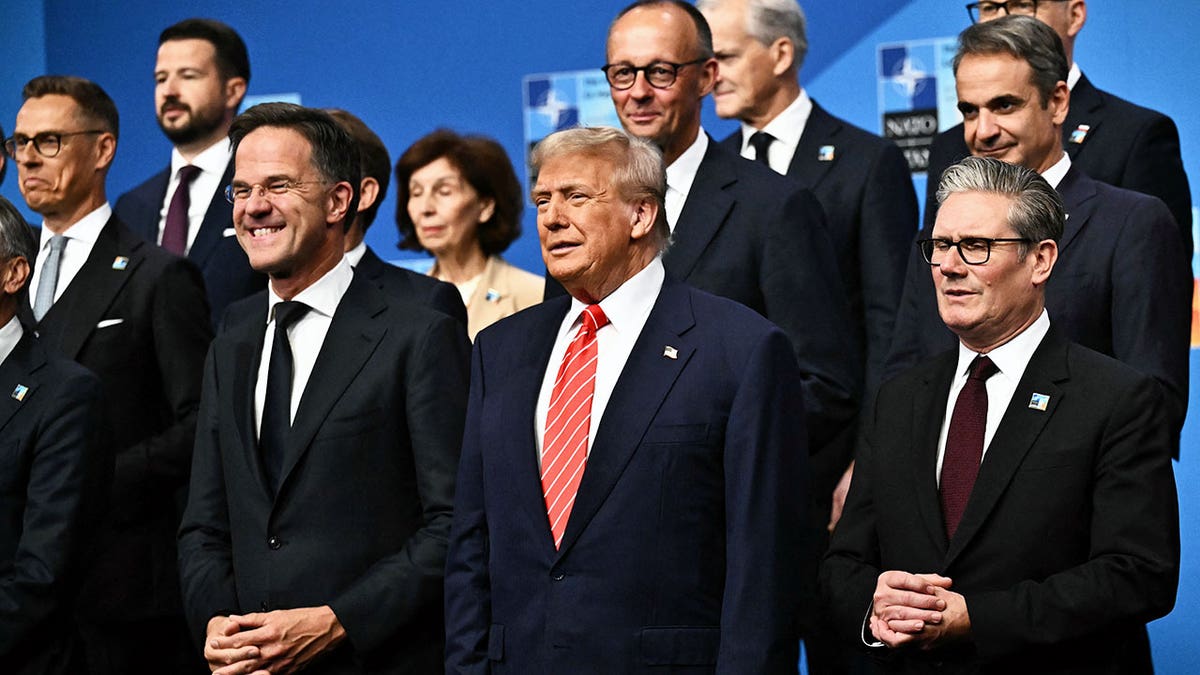
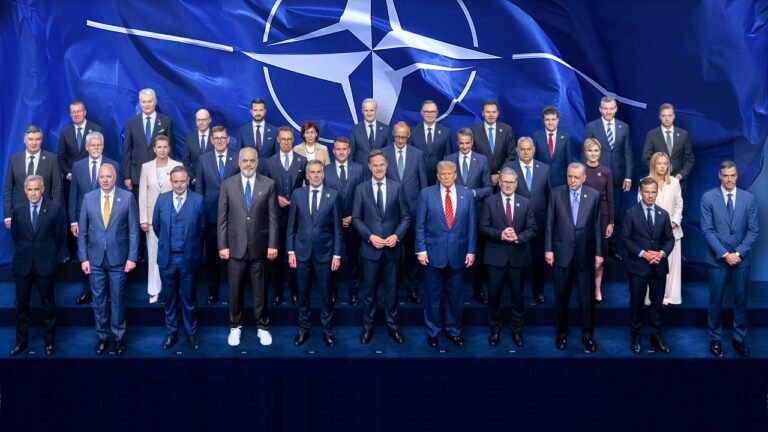
NATO Secretary General Mark Rutte, U.S. President Donald Trump and Britain’s Prime Minister Keir Starmer pose with NATO country leaders during the NATO Heads of State and Government summit in The Hague, Netherlands, on June 25, 2025. (Ben Stansall/Pool/Reuters)
“You started with 12, and you went to 32, and in the process, I think you diluted the impact,” he argued, calling today’s NATO “a very bloated architecture.”
“They haven’t put the money into defense. Their defense industry and defense forces have atrophied. When you look at the Brits right now, they could barely deploy forces: they have two aircraft carriers, both under maintenance. Their brigades are like one out of six that work. And you just look at the capability, it’s just not there. So I think we need to realize that and say, well, we need something different,” Kellogg, who is the co-chair of the Center for American Security at the America First Foreign Policy Institute, told Fox News Digital.
But not everyone agrees the alliance is losing relevance.
“It has never been more relevant,” said John R. Deni, a research professor at the U.S. Army War College, who says NATO remains central to U.S. national security.
“The reason for that is twofold,” he said. “One, it’s our comparative advantage versus the Chinese and the Russians… they don’t have anything like this.”
“And the second reason… NATO underwrites the security and stability of our most important trade and investment relationship,” he added, referring to economic ties between North America and Europe.
NATO ALLIES CLASH AFTER RUSSIAN JETS BREACH AIRSPACE, TESTING ALLIANCE RESOLVE
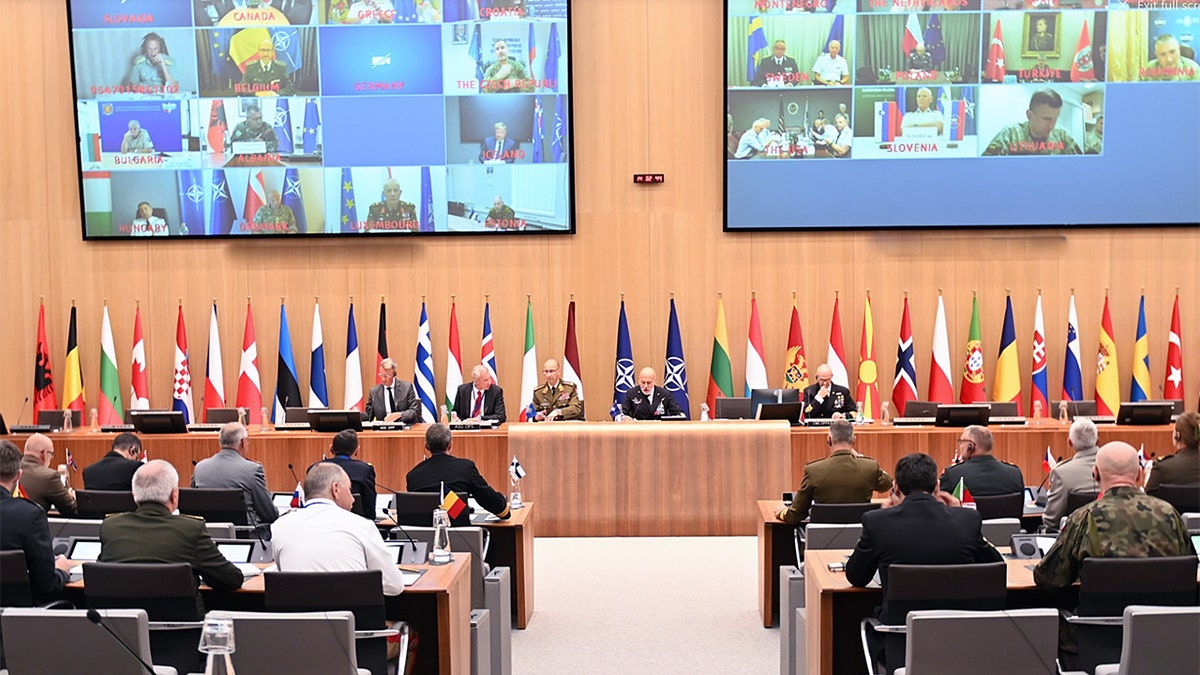
NATO Chiefs of Defense hold a hybrid meeting in Brussels on Aug. 20, 2025, with screens displaying allied leaders joining remotely to discuss Ukraine. (Fox News)
By around 2010, the United States accounted for roughly 65% to 70% of NATO defense spending, according to analysis provided by Barak Seener from the Henry Jackson Society, a London-based think tank.
“They’ve always been dependent on the U.S.,” Kellogg said of the European allies.
“The allies overall rely upon one another for deterrence and defense by design,” Deni said, explaining that alliances exist to “pool their resources” and “aggregate their individual strengths.”
Deni pointed to ground forces as a clear example of what the U.S. gains from the alliance, noting that “there are far more allied mechanized infantry forces on the ground than there are Americans.”
Still, he acknowledged that reliance has at times gone too far.
“In the past… it was fair to say that the European allies were overly reliant upon the Americans for conventional defense,” he said, pointing to the 2000s.
That, he said, was partly driven by U.S. priorities — as Washington pushed European allies to focus on wars in Afghanistan and Iraq rather than territorial defense.
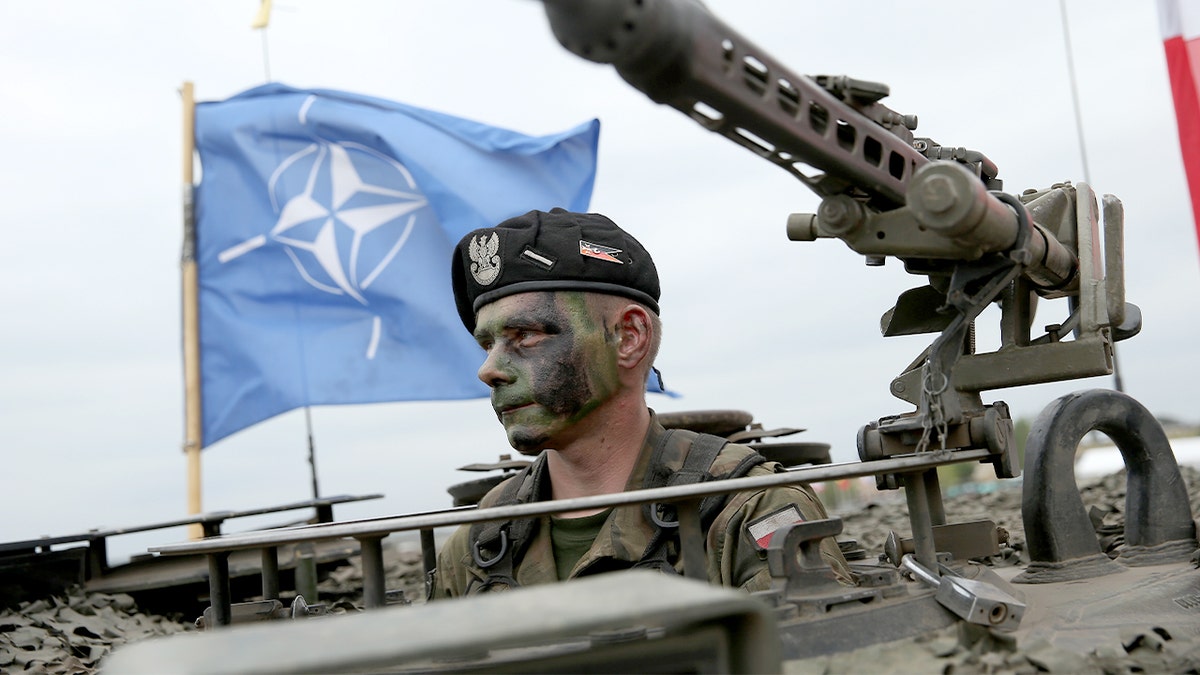
A Polish Army soldier sits in a tank as a NATO flag flies behind during the NATO Noble Jump VJTF exercises on June 18, 2015, in Zagan, Poland. (Sean Gallup/Getty Images)
Seener describes NATO as “formally collective, but functionally asymmetric,” with the U.S. providing a disproportionate share of “high-end capabilities.”
That asymmetry is most visible in nuclear deterrence.
Seener said the U.S. provides the overwhelming majority of NATO’s nuclear arsenal — including intercontinental ballistic missiles, submarine-launched systems and strategic bombers — meaning deterrence ultimately relies on the assumption of U.S. retaliation.
A NATO official told Fox News Digital that, “The U.S. nuclear deterrent cannot be replaced, but it is clear that Europe needs to step up. There’s no question. There needs to be a better balance when it comes to our defense and security. Both because we see the vital role the U.S. plays around the world and the resources that it demands, and also because it is only fair.”
“The good news,” the official added, “is that the Allies are doing exactly that. They are stepping up, working together — and with the U.S. — to ensure we collectively have what we need to deter and defend one billion people living across the Euro-Atlantic area.”
NATO LAUNCHES ARCTIC SECURITY PUSH AS TRUMP EYES GREENLAND TAKEOVER
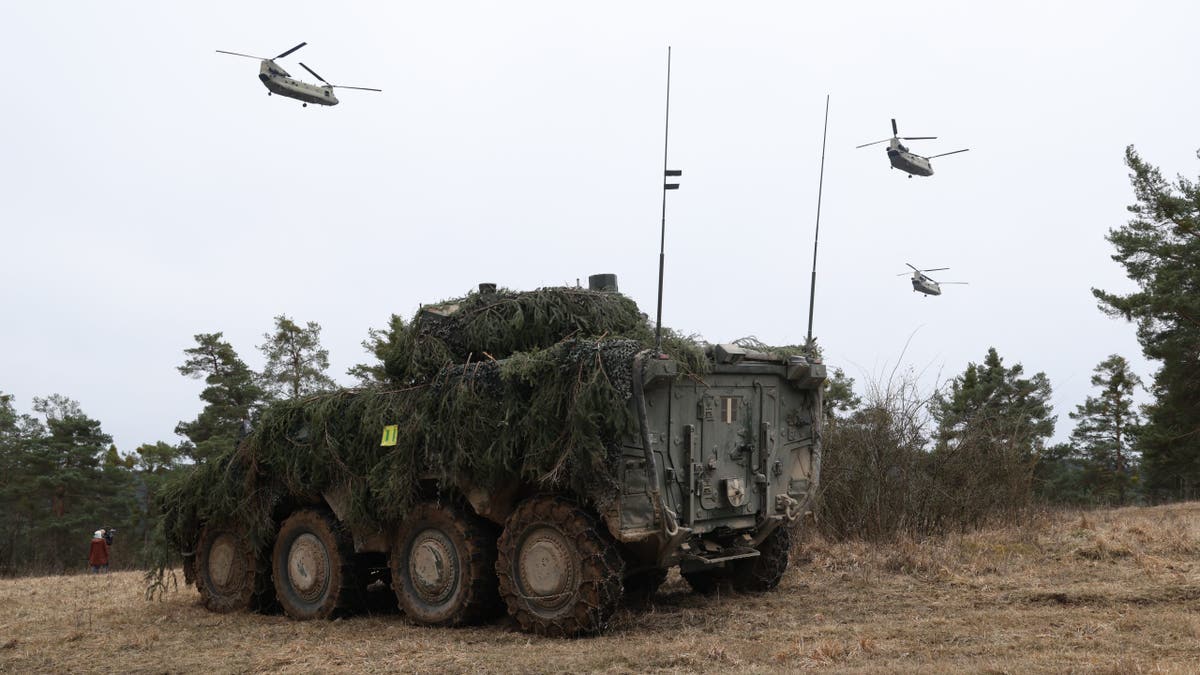
Boeing CH-47 Chinook helicopters of the U.S. Army 12th Combat Aviation Brigade fly over a Lithuanian Vilkas infantry fighting vehicle during the Allied Spirit 25 military exercise near Hohenfels, Germany, on March 12, 2025.
Beyond nuclear weapons, the dependence runs through the alliance’s operational backbone.
Seener pointed to U.S.-provided intelligence, surveillance and reconnaissance — as well as logistics and command systems — as essential to NATO operations.
“Without U.S. intelligence and surveillance, NATO loses situational awareness and early warning capabilities,” Seener said, adding, “So that means that Russia, for example, can attack Europe. And theoretically, if there’s no NATO and the U.S. is not involved, Europe would not be aware, or it would take it too long to be able to defend itself.”
Kellogg also says that much of Europe’s military capability falls short of top-tier systems.
“For the most part, their equipment, if you had to grade it A, B, C, D, E, F, they’re kind of like B players or C players,” he said. “It’s not the first line of work.”
He pointed to air and missile defense as a key gap, noting that while European countries rely on U.S.-made systems such as Patriot and THAAD, “they don’t have a system that’s comparable.”
Kellogg attributed that to years of underinvestment, saying European defense industries “have atrophied,” adding that the United States is also now “relearning that as well.”
TRUMP AFFIRMS US ‘WILL ALWAYS BE THERE FOR NATO,’ WHILE EXPRESSING DOUBTS ABOUT ALLIANCE
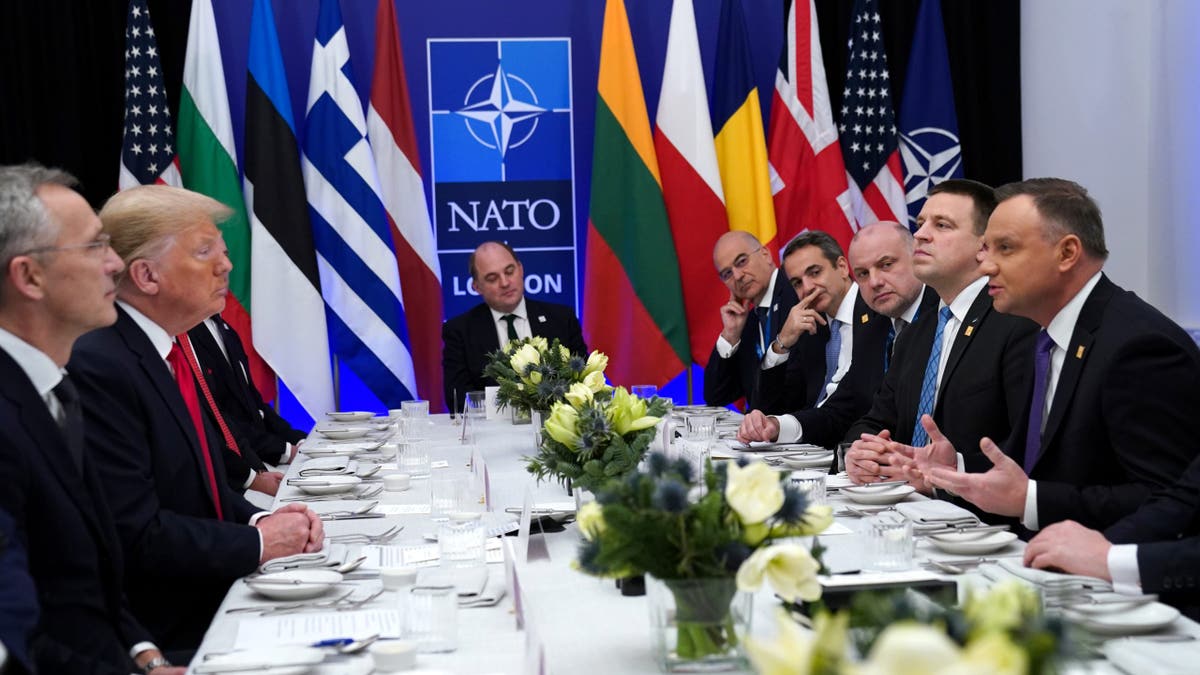
NATO Secretary General Jens Stoltenberg looks on as President Donald Trump and Poland’s President Andrzej Duda talk during a working lunch at the NATO leaders summit in Watford, Britain, on Dec. 4, 2019. (Kevin Lamarque/Reuters)
Deni said the picture today is more mixed.
“Alliance defense spending has been up… and has spiked far more after 2022,” he said, pointing to Russia’s invasion of Crimea in 2014 as a turning point.
But he cautioned that capability gains take time, noting that many improvements are still years away from full deployment.
Deni pointed to recent European purchases of U.S. systems as evidence of growing capability, noting that countries including Poland, Romania, Norway and Denmark are acquiring the F-35 fighter jet from the U.S.
“You can’t build an F-35 overnight,” he said, adding that many of these improvements will take years to fully materialize.
A NATO official told Fox News Digital the alliance “needs to move further and faster” to meet growing threats, pointing to new capability targets agreed by defense ministers in June 2025.
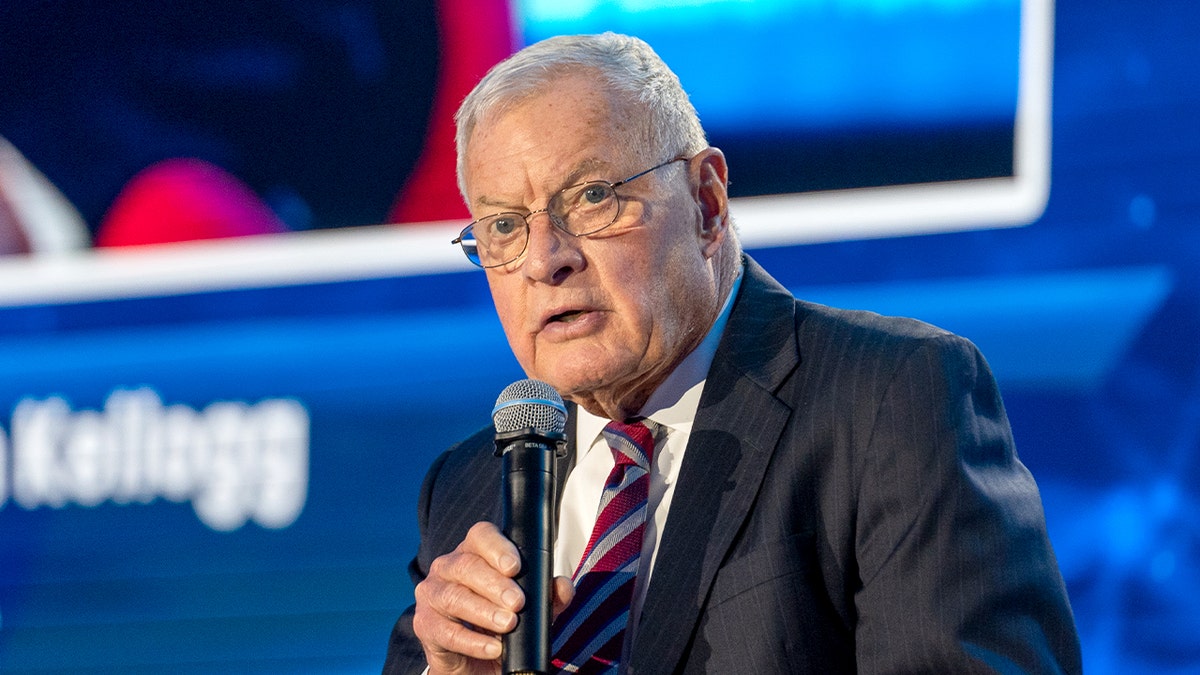
Keith Kellogg speaks during the Warsaw Security Forum 2025 on Sept. 30, 2025, in Warsaw, Poland. (Marek Antoni Iwanczuk/NurPhoto via Getty Images)
The official said priorities include air and missile defense, long-range weapons, logistics and large land forces, noting that while details remain classified, plans call for a fivefold increase in air and missile defense, “thousands more” armored vehicles and tanks, and “millions more” artillery shells. NATO also aims to double key enabling capabilities such as logistics, transportation and medical support.
The official added that allies are increasing investments in warships, aircraft, drones, long-range missiles, as well as space and cyber capabilities, while boosting readiness and modernizing command and control.
“These targets are now included in national plans,” the official said, adding that allies must demonstrate how they will meet them through sustained defense spending and capability development.
The NATO official also noted that European allies lead multinational forces across Central and Eastern Europe, while the U.S. and Canada serve as framework nations in Poland and Latvia, alongside ongoing air policing missions and NATO’s KFOR operation in Kosovo.
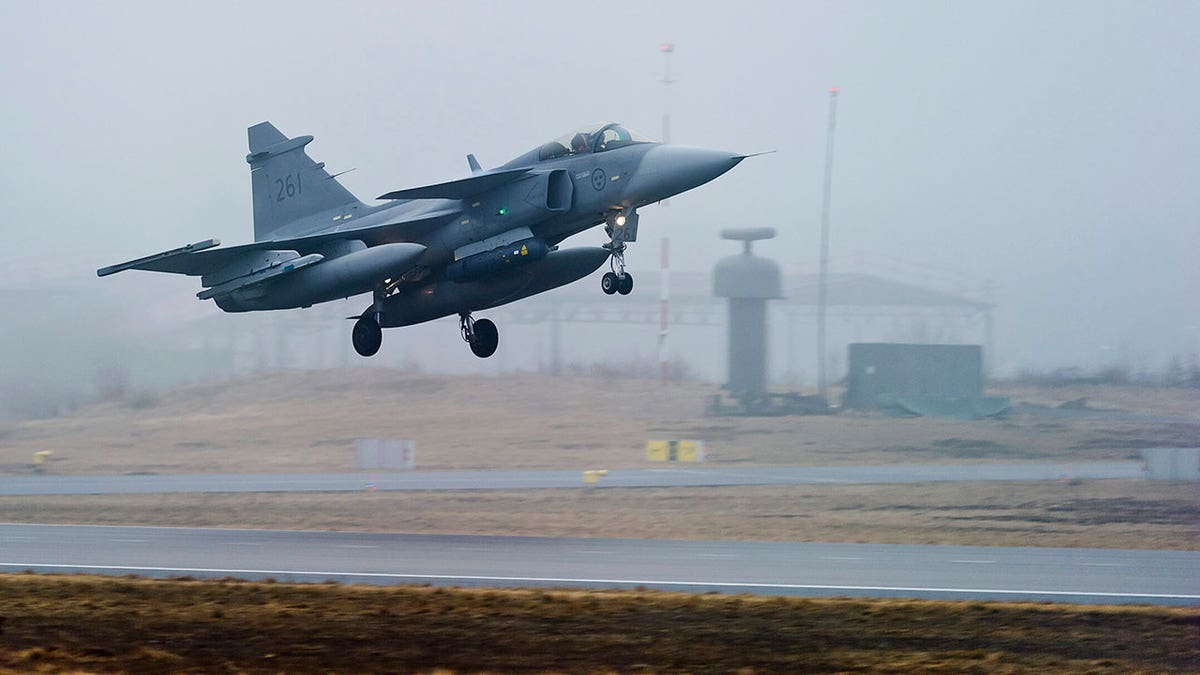
One of three Swedish Air Force JAS 39 Gripen fighter aircraft takes off from the Blekinge Wing F17, based in Kallinge southern Sweden for a base in Sardinia to join the Nato-led operation in Libya, on Saturday, April 2, 2011. As Sweden joins NATO, it bids a final farewell to more than two centuries of neutrality. (AP Photo/Scanpix/Patric Soderstrom, File)
Kellogg’s warning is direct: NATO’s deterrence depends on U.S. presence.
“The one you always have to worry about… is Russia,” Kellogg, who was Trump’s special envoy for Ukraine and Russia in 2025, said.
If U.S. forces are tied down elsewhere, NATO could face serious strain — particularly in areas like intelligence and logistics.
For Kellogg, the danger is delay. “We won’t know until it happens,” he said. “And then you won’t be able to respond to it.”
Deni, however, said the alliance remains a strategic asset — not a liability.
CLICK HERE TO DOWNLOAD THE FOX NEWS APP
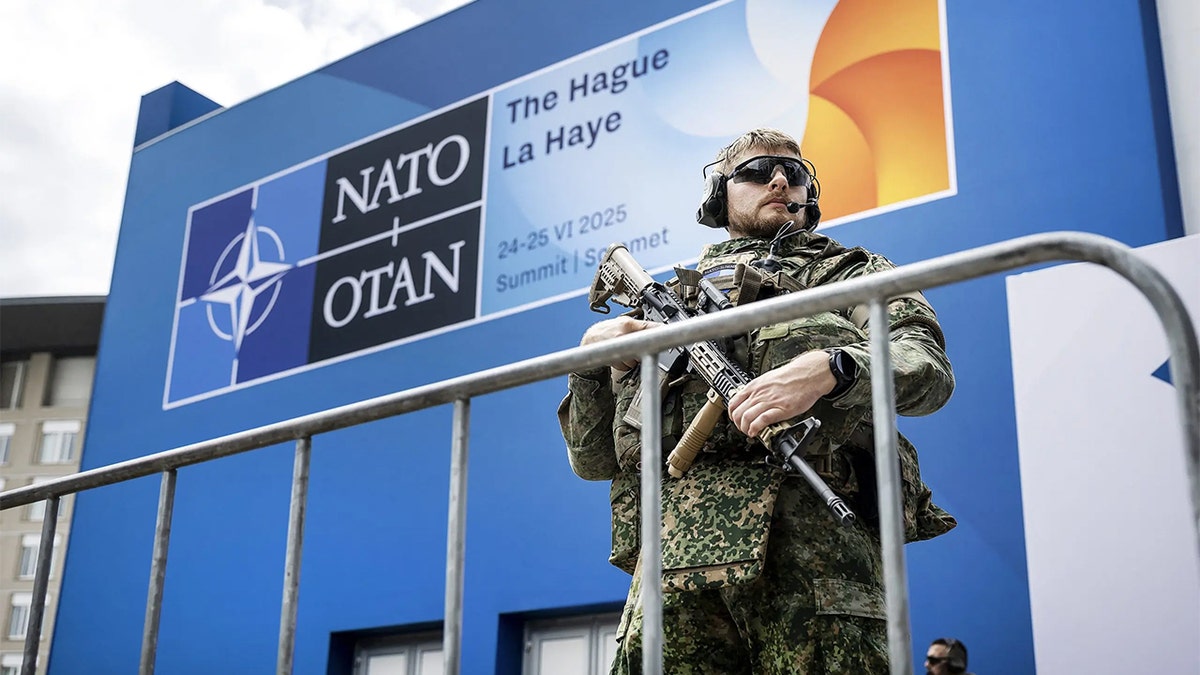
A NATO military force stands guard outside the World Forum in The Hague ahead of the two-day NATO summit on June 22, 2025. (Remko de Waal/ANP/AFP)
The question, he suggests, is not whether NATO still works. It is whether allies can adapt fast enough to keep it working.
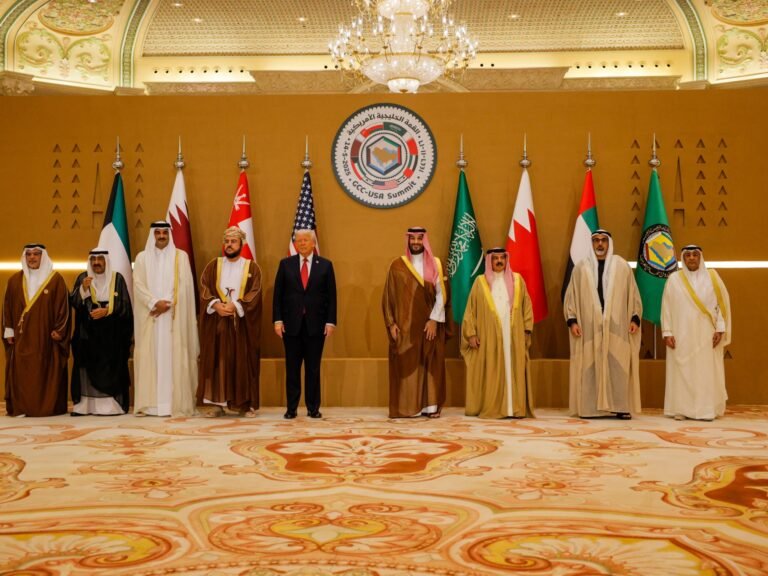
For decades, Gulf states operated under the assumption that their most important strategic partner was the United States. They built an extensive and multidimensional partnership with Washington, one that spanned security, energy, finance, and diplomacy.
In launching its war alongside Israel against Iran, however, the US sidelined its Gulf partners, ignoring their appeals and concerns. Now, as the Trump administration attempts to negotiate with Iran, it again appears to have the interests of Israel as its top priority; the concerns of its Arab allies are once again overlooked.
No matter how much these countries have done or how much more they are willing to offer, their interests will remain expendable in Washington whenever they collide with those of Israel.
Few alliances in modern history have been as deep or as mutually reinforcing as the one between the Gulf and the US, with with Gulf countries effectively opening their territory to a near-unconditional American military presence. Trade between the two sides exceeded $120bn in 2024, underpinned by Gulf investments in the US economy. This has been matched by a significant US presence in Gulf markets across technology, energy and infrastructure.
The scale of this interdependence was further underscored at the 2025 Riyadh summit, which yielded trade and investment agreements surpassing $2 trillion. In the same year, Gulf sovereign wealth funds channelled nearly $70bn into US assets.
Beyond headline figures, the Gulf has played a longstanding role in financing the US by recycling its Treasury bonds, helping sustain low borrowing costs and reinforcing the dollar’s global dominance, while supporting hundreds of thousands of US jobs across manufacturing, defence and technology sectors.
In return, Gulf governments expected something fundamental, that their core interests would be recognised, if not prioritised.
These interests had been remarkably aligned with US policy. They can be distilled into three pillars: first, economic diversification, a strategic shift away from dependence on hydrocarbons towards sustainable and resilient economic models; second, regional stability, a prerequisite for attracting investment, enabling growth, and sustaining long-term development; third, energy security, the uninterrupted flow of oil and gas, which was a pillar of global economic stability.
In pursuit of these goals, Gulf states invested heavily – financially and politically – in building a more stable regional order, actively pursuing diplomacy over confrontation. Saudi Arabia, for example, moved to end the war in Yemen, opened channels with Iran and Turkiye and deepened ties with countries such as Pakistan. These steps were not tactical gestures; they were part of a broader strategy to construct a flexible, cooperative regional architecture.
All this appeared to overlap with US interests. Washington had long claimed that its priorities in the Middle East included securing energy supply chains, stabilising oil markets, and ensuring regional stability so it could pivot towards Asia. And yet, the Trump administration chose to go against what it claimed to stand for.
By now, it is clear that Washington has chosen to support Israeli Prime Minister Benjamin Netanyahu’s agenda of pursuing regional instability and domination.
By opting to advance Netanyahu’s expansionist objectives, even at the cost of its own interests, Washington has effectively placed the Strait of Hormuz and Bab al-Mandeb – the world’s most critical energy chokepoints – at risk, exposing global oil and gas markets to extreme volatility.
These US choices have placed the entire region, with the Gulf states at the forefront, into a state of chaos. We are likely to live with its aftershocks for years to come, driven by the fears of all states and compounded by growing power imbalances.
Here, Gulf and Arab states must recognise a fundamental reality: there can be no durable regional stability built on dependence on the US. Americans are not the sons of this land nor of this region. No matter how much the international system evolves, and the world becomes interconnected through globalisation and technological change, geography and demography will remain decisive in shaping interests. A power located thousands of kilometres away, rooted in a different demographic and geographic reality, cannot be depended upon to defend Arab interests.
Still, some states continue to hedge their bets on a “special relationship” with the US, turning their back on unity. The United Arab Emirates, for example, recently decided to leave OPEC, which had long given leverage to oil-producing Arab states over the US and the rest of the world. This move signals withdrawal rather than deepening cooperation and working through disputes. In the short term, this may look like the right decision to preserve national interest, but in the long term, it plays into the hands of those who want to divide and rule the Arab world – something that is ultimately not in the Emirati interest.
Instead of investing more resources in an alliance with Washington, Arab states should focus on intra-regional development aimed at economic, security and military self-sufficiency, akin in some respects to the Turkish and Iranian projects. They should focus on internal dialogue and greater cohesion and pursue a broader strategic framework that secures balances of power based on political partnership and constructive competition, rather than reliance on external patrons.
The views expressed in this article are the author’s own and do not necessarily reflect Al Jazeera’s editorial stance.
NEWYou can now listen to Fox News articles!
LOUISVILLE, Ky. — At Churchill Downs, where the Kentucky Derby draws million-dollar horses and global attention, the cost of stabling those prized thoroughbreds is surprisingly modest — a reality that becomes clear beyond the grandstands and away from the pageantry.
Here, in what’s known as the “backside of the Downs,” the track operates like a small, self-contained community, with 47 barns housing the horses and as many as 600 workers living and working on site.
INSIDE THE KENTUCKY DERBY: WHAT FANS DON’T SEE AT CHURCHILL DOWNS ON RACE DAY

About 1,400 horses fill the stables across the sprawling grounds of Churchill Downs. (Amanda Macias/Fox News Digital)
“Want to take a guess how much it costs to rent one of these stalls at the most famous racetrack in the world?” asked Stan Bowling, lead tour guide at the Kentucky Derby Museum.
“$7.50.”
That modest daily fee stands in stark contrast to the high-stakes world of thoroughbred racing, where millions can go into preparing a single horse.
“Every morning, from mid-March through the end of the year, the horses are going to be out on the track training between 5:30 and 10 a.m.,” Bowling said.
GOLDEN TEMPO WINS 2026 KENTUCKY DERBY

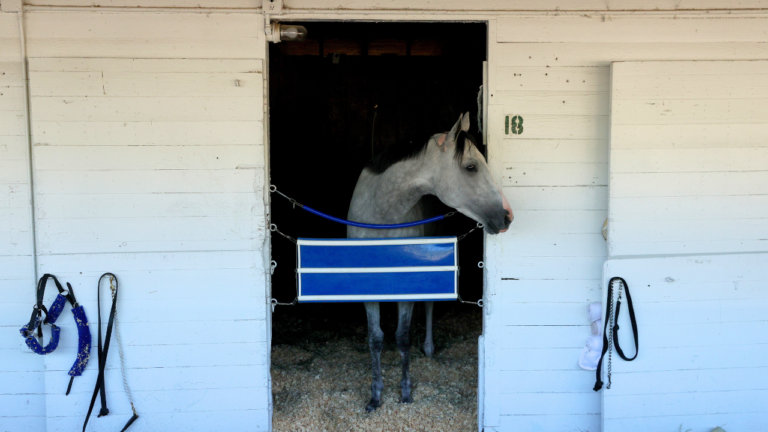
A view of the stables at Churchill Downs where the lease for a single stall costs $7.50. (Amanda Macias/Fox News Digital)
Steering a golf cart around the backside, he added that by mid-March, approximately 1,400 horses are on-site.
The grounds also include dorms, a chapel and even a small school — part of a world that runs parallel to the spectacle just steps away.
The backside stretches across rows of mostly nondescript stalls, punctuated by a few bearing the names of famed horses and their jockeys.
Qualifying horses arrive in early March to adjust to the track and settle into life at Churchill Downs, which hosts roughly 750 races each year. But no race carries the same weight as the Kentucky Derby, affectionately called the “fastest two minutes in sports,” the 12th in a 14-race lineup that anchors the day’s events.
That same high-stakes investment carries over to the fan experience, where attending the Kentucky Derby can come at a steep price.
KENTUCKY DERBY HEAD CHEF REVEALS THE ONE THING ON THE MENU THAT WILL NEVER CHANGE AT CHURCHILL DOWNS

A view of the Kentucky Derby grandstand at Churchill Downs, where seats can range from $1,000 to more than $400,000. (Amanda Macias/Fox News Digital)
“It’s an expensive ticket, I will grant you that, but, for most people, coming to see the Kentucky Derby is a bucket list event,” Bowling told Fox News Digital.
CLICK HERE TO DOWNLOAD THE FOX NEWS APP
Ticket prices range from about $160 for access to the 26-acre grassy infield, where fans watch the race on large screens, to roughly $800 for some of the cheapest grandstand seats — while luxury experiences above the track can top $400,000.

Tickets for the cohosts’ opening game in Los Angeles are available for prices ranging between $1,120 and $6,050.
Published On 3 May 2026
With under 40 days to go until the World Cup, tournament organisers continue to struggle with ticket sales as seats remain available for most group-stage games, albeit at exorbitant prices.
Home fans can find tickets for tournament cohost United States’ (USA) opener against Paraguay, with prices starting at $1,120 and going as high as $4,105, with many tickets priced around $2,000 for the June 12 match in Los Angeles. Seats in the hospitality package groupings go as high as $6,050 per seat.
Tickets are still available on FIFA’s official website through its “last-minute sales” section.
Football fans are already outraged by exorbitant match prices — the most expensive ticket for the final costs nearly $11,000 — since the first phase of ticket sales in December. Late last month, FIFA announced yet another “last-minute ticket phase” with tickets for all 104 matches available on a first-come, first-served basis.
The stagnant sales contradict FIFA President Gianni Infantino’s assertion in January that demand for tickets for this year’s tournament in the US, Canada and Mexico would be the equivalent of “1,000 years of World Cups at once”.
Experts attribute dynamic pricing and greed as key factors, with fans saying they have been “priced out” by FIFA.
While many in the US are accustomed to the pricing model commonly adopted at the Super Bowl, fans from around the world are not used to dynamic pricing and legal profiting from ticket resales, sports executive Peter Moore told Al Jazeera in a recent interview.
“FIFA taking a 30 percent cut of dynamic pricing is outrageous,” the former Liverpool chief executive said.
“FIFA is taking advantage of the unique commercial opportunities in the US, dynamic pricing and the secondary market being legal here, to make money. Infantino has said [he expects] FIFA revenues from the World Cup to exceed] $11bn. Why not make it more reasonable and accessible and make, maybe, $8bn?”
Last month, four seats for the World Cup final were listed at just under $2m each on FIFA’s official resale site.
A total of seven group-stage games still have general sale tickets available for $380, including Austria vs Jordan, New Zealand vs Egypt, Jordan vs Algeria, Cape Verde vs Saudi Arabia, Algeria vs Austria, Congo DR vs Uzbekistan and Curacao vs Ivory Coast.
The USA vs Paraguay opener is the most expensive group game, followed by Argentina vs Austria ($2,925), Ecuador vs Germany ($2,550), Uruguay vs Spain ($2,520) and England vs Croatia ($2,505).
According to FIFA’s website, a total of 17 group-stage games are sold out, including the tournament opener between Mexico and South Africa in Mexico City on June 11.
Seven games staged in Mexico are sold out, including the cohosts’ two other matches against South Korea in Guadalajara and the Czech Republic in Mexico City.
Turkiye vs USA in Los Angeles, Brazil vs Morocco in New York/New Jersey and Scotland vs Brazil in Miami are among other sold-out games.

