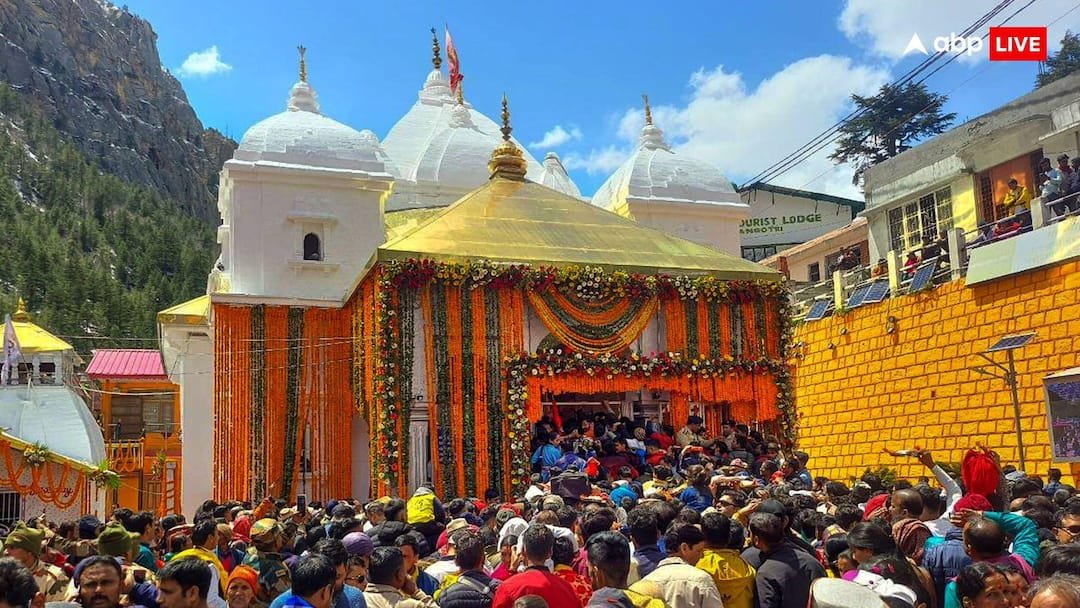
The temple committee has taken an important decision regarding the famous pilgrimage Gangotri Dham of Uttarakhand. According to the committee, now there will be a ban on the entry of non-Sanatanis, although they can be allowed to have darshan with special conditions. This condition is related to the consumption of Panchgavya.
Drink Panchgavya before visiting non-Sanatani darshan
The temple committee says that if any non-Sanatani devotee wants to visit Gangotri Dham, he will have to first drink Panchgavya. Only after this will he be allowed to enter the temple and worship. This decision has been taken by the Gangotri Temple Committee, which has come to the fore amid the ongoing discussions regarding entry into religious places in recent times.
Earlier, the Badrinath-Kedarnath Temple Committee had also adopted a strict stance regarding the entry of non-Sanatanis. There a system was made that if any non-Sanatani wants to visit Kedarnath Dham or Badrinath Dham, he will have to express his faith in Sanatan Dharma through an affidavit. Suresh Semwal, Secretary of Gangotri Temple Committee and President of Char Dham Mahapanchayat, said that normally there will be a ban on entry of non-Sanatanis in Gangotri Dham, but those who will consume Panchgavya with true devotion and bathe in Ganga water, they can be given entry into the temple.
Committee of 8 to 10 members formed in purification process
He told that Panchgavya is prepared by mixing five elements – Ganges water, cow urine, cow dung, milk, curd and ghee, which is considered a medium of purification from religious point of view. According to the temple committee, after this process the person will be considered pure and will be allowed to have darshan.
Suresh Semwal also informed that committee members will be present at the entrance of the temple complex, who will ensure this process. Also, for this arrangement, a committee of 8 to 10 members has been formed, which also includes people with legal knowledge, so that no one’s religious freedom or rights are violated. After this decision, the discussion is likely to intensify at the religious and social level, because this issue is related to both faith and constitutional rights.