→ Nearly half of seniors improve with age — and researchers think they know why
→ What’s healthier to drink, cold or hot water? Experts spill the truth
Quote of the week
“When we run into burning buildings, it’s really the invisible exposures over decades that threaten our lives. Being strong doesn’t cancel out toxic exposures or sleep deprivation.”
→ A California firefighter credits his “strict” home routine and wellness checks for keeping him alive well past retirement.
A Roman Catholic priest in the south-west Louisiana diocese where the US church’s clergy abuse scandal effectively started decades ago has been formally charged with three counts of felony indecent behavior with a juvenile.
A bill of information from the district attorney for Acadia parish charges 37-year-old Korey LaVergne with three counts of felony indecent behavior with a juvenile who was 15 at the time of the alleged offenses.
Court documents charge LaVergne with “willfully, unlawfully, knowingly and intentionally [committing] lewd or lascivious acts upon [the] juvenile” – or in the presence of the minor – on or about 1 January 2024. The charges contend that LaVergne had the “intention of arousing or gratifying the sexual desires of either person”.
A document dated 11 March filed by LaVergne’s attorneys state that the clergyman opted to waive his formal arraignment and in writing pleaded not guilty to the charges outlined in the bill of information.
LaVergne is a priest for the diocese of Lafayette, Louisiana. Another Lafayette diocese priest named Gilbert Gauthe brought the Catholic clergy abuse crisis to the US’s collective conscience by pleading guilty in 1985 to molesting several boys he encountered through his ministry.
He served 10 years in prison, now lives in Texas, and has continued to be named in civil lawsuits from victims seeking damages from the Lafayette diocese over their abuse at Gauthe’s hands.
LaVergne’s formal charges came after he was arrested in mid-January on the same three counts referred to in the bill of information.
At the time, records showed that LaVergne, the pastor at St Edward Catholic church in the community of Richard, posted bail of $15,000 less than 90 minutes after being jailed. That secured his release from custody while the case proceeds.
A week after his arrest, the Guardian obtained the investigators’ initial report on the case, which stated that LaVergne had been jailed after local authorities were told that the clergyman had “inappropriately touched a child” over the course of a year.
The Lafayette news station KADN reported on 16 January that another priest had reported the allegations against LaVergne to authorities prior to his arrest.
A pretrial hearing in the case has been tentatively scheduled for 12 June after LaVergne’s attorney filed a series of standard court motions, records show.
Neither LaVergne nor his attorney immediately responded to requests for comment from the Guardian on Friday regarding the formal charges.
LaVergne faces a maximum sentence of seven years in prison and up to $5,000 in fines.
Generally, under Louisiana law, indecent behavior with a juvenile can carry up to seven years in prison.
The state defines the offense as “any lewd or lascivious act … in the presence of any child under the age of 17”. The law also states that messages – including texts – and actions alleged to constitute grooming can fall under the the offense.
Two health workers killed in Israeli air strike in Lebanon
Lebanon’s health ministry said two health workers were killed and five others were injured in an Israeli airstrike. According to the ministry, the attack took place at a joint medical point jointly run by the Islamic Health Authority and the Islamic Message Scouts. The Lebanese government strongly condemned the attack, calling it a serious violation of international humanitarian law. The ministry said that protecting health workers is clearly stipulated in international law, yet targeting paramedics is a very dangerous and unacceptable step.
02:55 AM, 14-Mar-2026
Kuwait shoots down suspicious drone, security of important targets increased
Kuwait’s National Guard has informed that a suspicious drone has been shot down. National Guard official spokesperson Brigadier General Jadan Fadl Jadan said that this action was taken in the area where the responsibility of the security forces was decided. According to Kuwait’s government news agency, the step to shoot down the drone was taken to strengthen security and protect important targets. Officials said security agencies are on constant alert to prevent possible threats and protect the country’s strategic locations.
02:47 AM, 14-Mar-2026
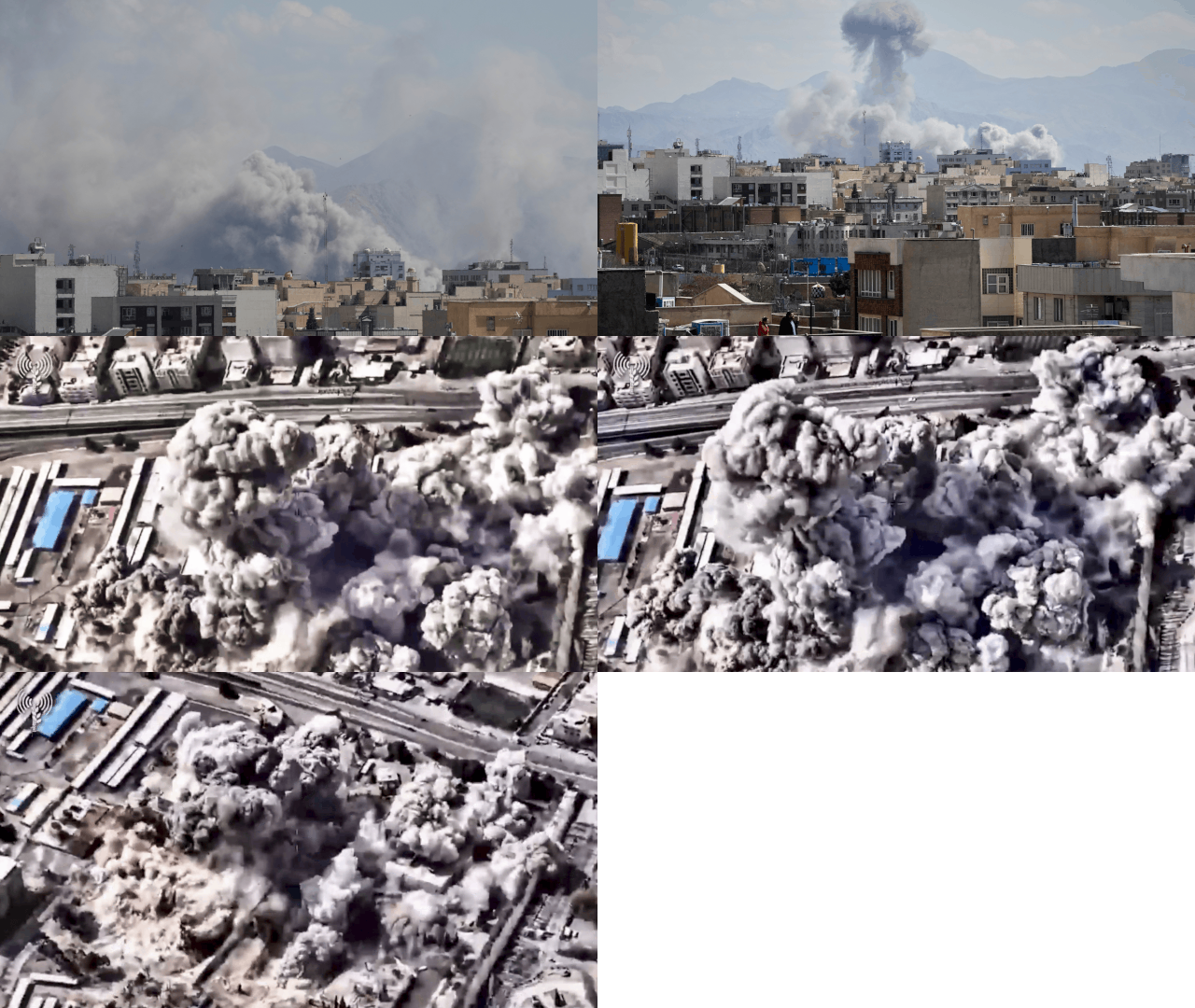
Loud explosions in Tehran, city shaken by explosions in many areas
Loud explosions shook many areas in Iran’s capital Tehran on Saturday night. Several large explosions were heard near the central part of the city, with tremors felt for several blocks nearby. The blasts took place near an area where a large number of civilians live. It is being told that the vacant building of a religious trust was targeted, which is located very close to a civil hospital. The explosion has caused massive damage to the building and the hospital may also be affected. Meanwhile, as usual, demonstrations were taking place on the streets in support of the government in the city.
02:42 AM, 14-Mar-2026
Controversy over no quarter order in Iran war, US MP calls it illegal
Amidst the ongoing war with America and Israel against Iran, a controversy has arisen over an order by US Defense Minister Pete Hegseth. Democratic congressman and former US Army officer Eugene Vindman has alleged that Hegseth’s alleged no quarter order is against international law. This order means that enemy soldiers will not be taken prisoner in war and those who try to surrender will also be killed.
Eugene Vindman said on social media that orders like no quarter violate the laws of war and the Geneva Conventions. He claimed that American soldiers are not obliged to follow orders that are against international law. Vindman said he has trained hundreds of soldiers in the laws of war and that the Army is required to follow these rules.
Meanwhile Pete Hegseth recently said that he had relaxed some of the useless rules during the war. They argue that this will make military action faster and more effective, while the death toll of civilians in the conflict is increasing.
02:41 AM, 14-Mar-2026
US Vice President JD Vance’s statement on Iran war
America’s Vice President JD Vance has given a big statement regarding the ongoing war with Iran. He said the purpose of America’s military action is to ensure that Iran can never acquire nuclear weapons. During an event in North Carolina, Vance appealed to pray for American soldiers and said that the US Army is currently engaged in an important military operation.
Vance said President Donald Trump has repeatedly made it clear that preventing Iran from acquiring nuclear weapons is America’s priority. According to him, Trump has taken concrete steps to achieve this goal. However, no concrete evidence has yet emerged that Iran was actively moving towards making nuclear weapons.
It is noteworthy that before becoming Vice President, JD Vance had been critical of America’s military involvement abroad. But in the current situation, he has supported this military operation and said that this step is necessary for America’s security and global stability.
12:49 AM, 14-Mar-2026
Qatar’s claim amid Hormuz tension
After Iran’s blockade in the Strait of Hormuz, concerns about food and water security have increased in the Gulf countries. However, Qatar has said that it has sufficient reserves. Qatar’s Interior Minister Sheikh Khalifa said the country has strategic water reserves to last for several months. Apart from this, the stock of food items is sufficient to meet the needs for about one and a half years. A large population of Gulf countries depends on imported food items, hence this statement is being seen as giving confidence in the region.
12:49 AM, 14-Mar-2026
Iraq’s confidence after the death of French soldier
Following the death of a French soldier in the Kurdish region of northern Iraq, Iraq has assured to stop such attacks. Prime Minister Mohammed Shia al-Sudani spoke to French President Emmanuel Macron over the phone and expressed condolences over the incident. He said that necessary steps will be taken to prevent such incidents in future and the attack will also be investigated. Kurdish region President Nechirvan Barzani also spoke to Macron and expressed condolences. The attack took place on Thursday and a coalition of Iran-backed groups claimed responsibility for it.
12:48 AM, 14-Mar-2026
Rocket attack on Israeli base from southern Lebanon
Lebanon’s armed group Hezbollah said its fighters fired rockets at an Israeli military base from southern Lebanon. The organization said in a statement that the attack was targeted at a newly established Israeli military base called Blatt. According to Hezbollah, this action was taken under “Al-Quds Day Operation”. This day is celebrated every year in support of the Palestinian cause. After this attack, tension has increased in the border area and the activities of both the sides are being monitored.
12:48 AM, 14-Mar-2026
Israel claimed attack on Iranian targets
Several explosions were heard in the western part of Iran’s capital Tehran on Saturday. The Israeli army has claimed that it has launched a new wave of attacks on targets linked to the Iranian regime in Tehran. According to local media, explosions were heard in Azadi Square, Nobonyad and surrounding areas. Iran’s Tasnim news agency reported that air defense systems were activated and an attempt was made to shoot down several projectiles. After the incidents, security has been increased in the capital and the situation is being closely monitored.
12:32 AM, 14-Mar-2026
West Asia Crisis LIVE: 80 Air India flights to West Asia today, Israel’s major attack on Iranian targets
Air India and Air India Express will operate a total of 80 scheduled and special flights to the West Asia region from 14 March 2026. Air India said that both the airlines are continuing their services to the region. A total of 10 flights to and from Jeddah will be operated on March 14. Air India Express is operating 8 scheduled flights to and from Muscat. According to the airline, despite the current situation, services have been continued keeping in mind the convenience of passengers and the status of all flights is being constantly monitored.
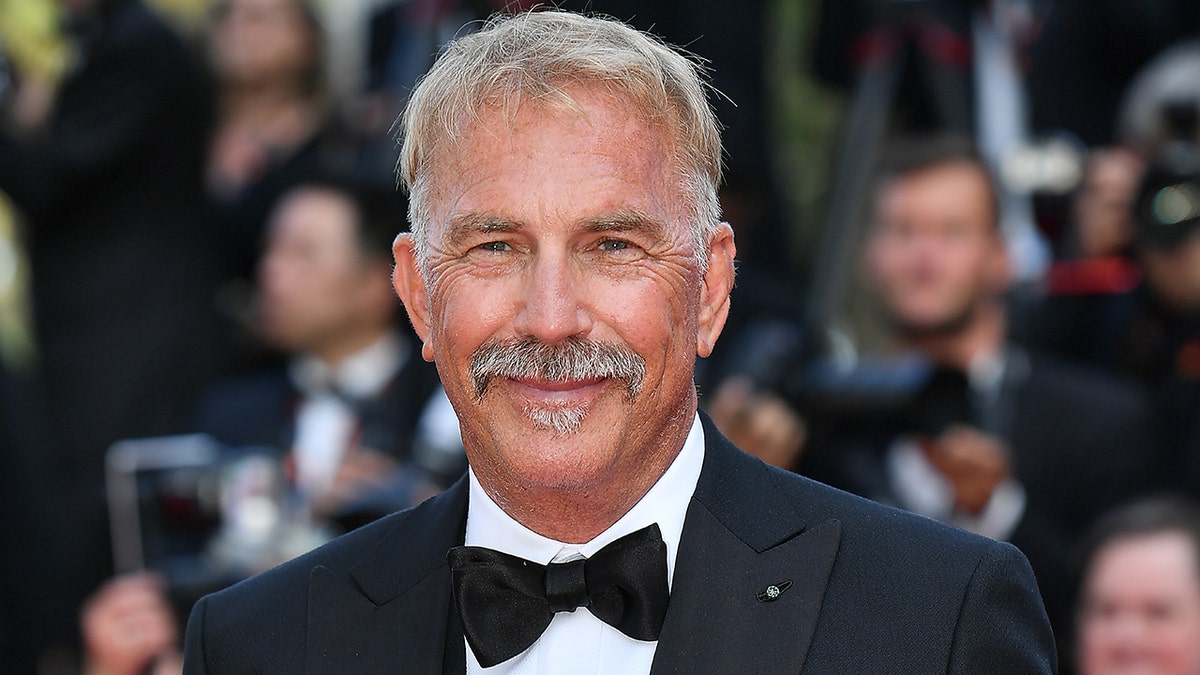
Brooks Nader is addressing romance rumors with Kevin Costner after photos of the pair went viral online.
Earlier this month, Nader, 29, and Costner, 71, were spotted at the Las Vegas opening of the social club Zero Bond.
According to TMZ, the model and actor were both in attendance at Scott Sartiano’s VIP dinner on March 7. The outlet also noted that Nader and Costner’s conversation seemed more platonic than romantic.
Brooks Nader denied that she’s currently dating Kevin Costner.(Getty Images)
Speaking to Entertainment Tonight, Nader shut down those rumors after being asked about their interaction.
“Oh my gosh. I am single. As of right now, I am single,” she told the outlet before covering her face with her hands. Nader then shifted the conversation to her role in the upcoming “Baywatch” reboot, sharing that she’s fully investing her time into preparing for the show.
“Oh my gosh. I am single. As of right now, I am single.”
— Brooks Nader
Fox is gearing up to reboot the iconic lifeguard show with a slew of new, young cast members. Including Nader, the “Baywatch” reboot cast will include gymnast Livvy Dunne, Stephen Amell, Shay Mitchell, Jessica Belkin and Noah Beck.
Per the Hollywood Reporter, the new “Baywatch” is set to launch during the 2026-2027 season. Filming will take place in Venice Beach and Fox’s Century City backlot this spring.
Brooks Nader is the oldest of the four Nader sisters. (Gilbert Flores /Variety via Getty Images)
Kevin Costner and Brooks Nader were spotted together out in Las Vegas on March 7.(Dominique Charriau/WireImage)
The new show’s synopsis reads: “The wild child Hobie Buchannon we all loved from the original series is now a Baywatch Captain, following in the footsteps of his legendary father, Mitch. Hobie’s world is turned upside down when Charlie, the daughter he never knew, shows up on his doorstep, eager to carry on the Buchannon family legacy and become a Baywatch lifeguard alongside her dad.”
Brooks Nader rose to fame from the reality series “Love Thy Nader.”(Michael Buckner/Variety via Getty Images)
“OG heartthrob Cody Madison now runs The Shoreline, the unofficially official Baywatch bar-and-grill, and still puts on the red trunks for the occasional shift saving lives. He’s a mentor to and a friend, providing a second home for his fellow lifeguards… and always offering free wings after a big save,” the synopsis concluded.
Nader rose to fame on the reality series “Love Thy Nader,” in which she stars alongside her three sisters.
Nader will star in the “Baywatch” reboot.(XNY/Star Max/GC Images)
The show documents the sisters living under one roof in New York, something Brooks has admitted “is a struggle” at times, while capturing both the high-profile moments and the blowups that come with four strong personalities sharing a space.
Top US regulators met with Bill Anderson, Bayer’s CEO, last year to discuss “litigation” issues – including “supreme court action” over its glyphosate weed killer – just months before the Trump administration took a series of steps to boost Bayer’s case at the high court, internal government records show.
The 17 June meeting, between officials at the Environmental Protection Agency (EPA), Anderson and two other top Bayer executives, came as the Germany-based company was working to quash costly US litigation brought by tens of thousands of people who allege they developed cancer from their use of the company’s glyphosate-based herbicides, such as Roundup.
At the core of those lawsuits are claims that the company failed to warn users of the risk of cancer, as shown in several research studies over many years.
One of Bayer’s stated key strategies to try to end the litigation, which has so far cost Bayer billions of dollars in settlements and jury verdict awards, is getting the supreme court to agree with Bayer’s argument that if the EPA does not require a cancer warning on its glyphosate products, the company cannot be held liable for failing to warn of a cancer risk.
While one appellate court has sided with Bayer, multiple other courts have rejected that preemption argument, as did the US solicitor general under the Biden administration. In contrast, the Trump administration has acted to defend and promote Bayer’s position and its glyphosate herbicides.
In a statement Bayer said the meeting at the EPA was a “normal part of the regulatory process” and that the company has been “transparent about our position” regarding glyphosate litigation.
The show of administration support has largely come after that 17 June meeting, which government email communications and visitor logs confirm took place with Anderson and the other Bayer executives arriving at the EPA on the appointed day a little before 1pm.
According to a 13 June internal EPA email planning for the meeting, Bayer’s team was “going to bring up some legal/judicial issues”, and discussion topics were to include “supreme court action”.
The company would “give an update to the administrator on where they stand in litigation and labeling options”, the planning email states.
The meeting came less than two weeks ahead of a request from the Supreme Court for the Trump administration’ Justice Department to weigh in on whether or not the court should agree to hear Bayer’s case.
The EPA officials attending the meeting with Bayer were to include Lee Zeldin, the agency’s administrator, along with Nancy Beck, formerly senior director at the American Chemistry Council who is now the EPA’s principal deputy assistant administrator in the Office of Chemical Safety and Pollution Prevention.
“It’s becoming abundantly clear that the political appointees at the EPA are more invested in protecting pesticide company profits than the health of Americans,” said Nathan Donley, environmental health science director for the Center for Biological Diversity, which obtained the email communications in a Freedom of Information Act request and provided them to the Guardian.
“When the CEO of one of the largest companies in the world is meeting with political appointees in a US regulatory office, it shows just how much power and influence these corporations have on decisions that can have very real consequences for the health of all Americans,” he said.
“The Trump EPA seeks input from a broad range of stakeholders, including MAHA advocates, doctors, scientists, farmers, and ranchers to ensure our policies are grounded in transparent, gold-standard science, and advance the Make America Healthy Again agenda,” Brigit Hirsh, the EPA press secretary, said in a statement. The meeting with Bayer was “a standard introductory meeting” and was not a meeting to discuss pending litigation, Hirsh said. She did not explain why the planning email for the meeting specifically said litigation would be discussed.
Multiple moves supporting Bayer
Since the meeting, the Trump administration’s support for Bayer has taken many forms.
In a 1 December filing with the US supreme court, D John Sauer, the solicitor general appointed by the Trump administration in April 2025, told the court that it should take up the Bayer case, and the supreme court subsequently agreed to do so, setting a hearing for 27 April.
On 18 February this year, the White House invoked the Defense Production Act to protect the production of glyphosate herbicides and provide so-called “immunity” for glyphosate makers such as Bayer.
And on 2 March, Sauer filed an amicus brief with the supreme court throwing the full support of the US government behind Bayer’s case. Signing off on the brief to the court was Donahue.
When asked about the meeting and the actions that the EPA and Trump administration took after, Bayer said in a statement that such meetings are “a normal part of the regulatory process”, and Bayer has been “transparent about our position on these topics.
Some legal experts said the meeting agenda and the subsequent actions by the administration were concerning.
“It’s concerning that the CEO of a major pesticide company can have private meetings with the EPA to talk about limiting the company’s liability,” said Whitney Di Bona, an attorney and consumer safety advocate at Drugwatch. “We should also ask whether the agency gave the same chance to speak to the thousands of people who say they got cancer after using Roundup, or to the families who lost loved ones.”
The high-level meeting between the CEO of a German company and the EPA’s top environmental regulator seems “similar to a pattern” in which “industry leaders have access to government officials” in a way that citizens do not, said Naomi Oreskes, a Harvard professor who traces corporate influence in regulation.
Zen Honeycutt, founder of Moms Across America and a Maha leader, said she was not surprised to learn of the meeting and subsequent actions by the government to aid Bayer.
“Coercion by chemical companies on our regulatory agencies is nothing new,” she said, adding that her organization had met with leadership at the EPA multiple times but had little to show for it and were still waiting to see if the agency would act on calls to restrict or ban several pesticides.
This story is co-published with the New Lede, a journalism project of the Environmental Working Group
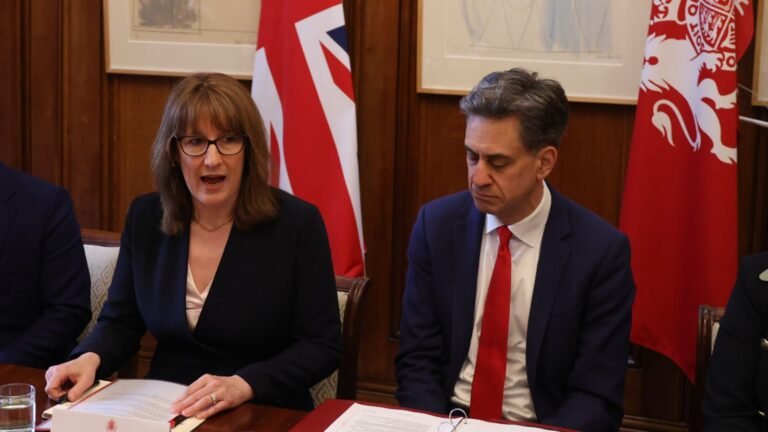
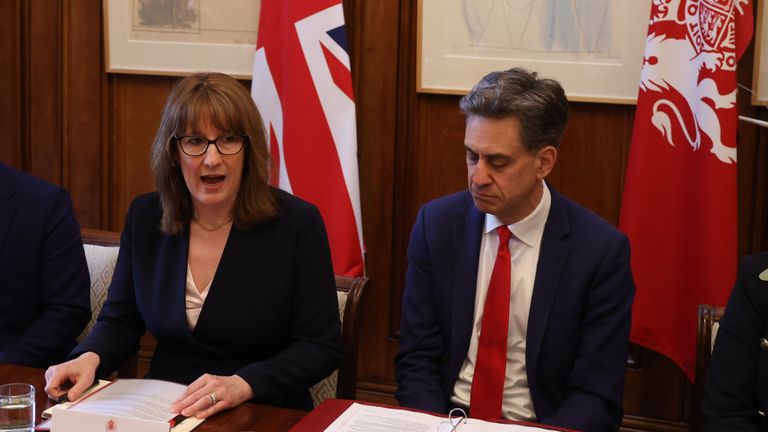
Chancellor Rachel Reeves has warned petrol retailers of a “shared obligation” to keep prices down for motorists amid soaring prices and war in the Middle East.
The Petrol Retailers Association (PRA) had threatened to pull out of the Downing Street meeting with Ms Reeves and Energy Secretary Ed Miliband hours before, citing “inflammatory language”.
That language had led to an increase in abuse against forecourt workers, the PRA said.
The meeting only went ahead after assurances from the Treasury that it would be held largely in private, with the PRA’s Gordon Balmer saying the government did not apologise for its language.
Image:Chancellor of the Exchequer Rachel Reeves and energy secretary Ed Miliband at Friday’s meeting. Pic: PA
Mr Miliband warned executives from firms including Asda, BP, ExxonMobil and Shell that the government would not tolerate “unfair practices” in the industry.
The RAC said the average price for a litre of unleaded had risen by 8p since the start of the crisis, with the cost now its highest for 18 months.
The chancellor hosted the industry chiefs in 11 Downing Street on Friday in response to rising concern about the impact of the Middle East crisis on household finances.
Ms Reeves thanked the petrol bosses for their cooperation but told them she wanted an “open and frank conversation” with them.
She said: “We have concerns around the high prices, and we do have a shared obligation.”
Despite this, the chancellor has not announced any change in her decision to gradually phase out a 5p cut to fuel duty, starting with a 1p increase from September this year.
The average litre of unleaded has already risen from 132.83p to 140.60p, according to the RAC.
Following the talks, Mr Balmer said: “The meeting went very well. We engaged in constructive discussion with the government on this, and we are working collaboratively with them.”
An official summary of the meeting said the attendees “agreed to continue working in the shared interest of motorists on this really important issue”.
Ms Reeves has previously asked the competition watchdog to “crack down” on “rip-off” fuel prices to guard against profiteering over the high oil prices due to the Iran war.
The government has already promised to intervene if companies engage in “unfair” practices that would hit customers facing a rise in the price of home heating oil, which is not covered by Ofgem’s energy price cap.
However, the AA warned motorists “will be stung” with inevitable rising costs because of a global hike in prices and called on Ms Reeves to delay a planned increase in fuel duty.
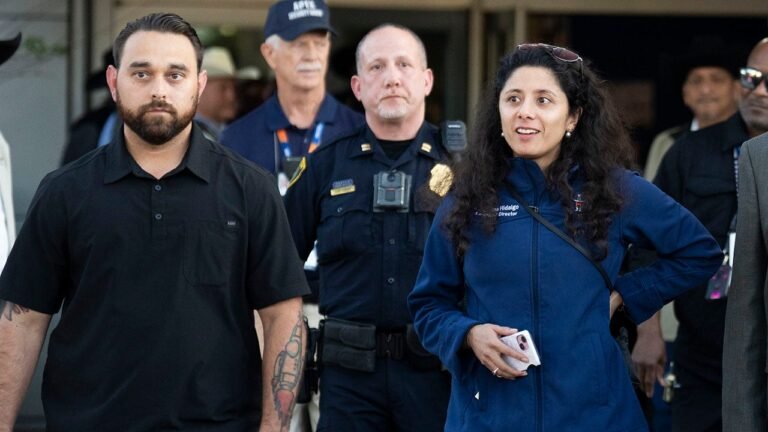
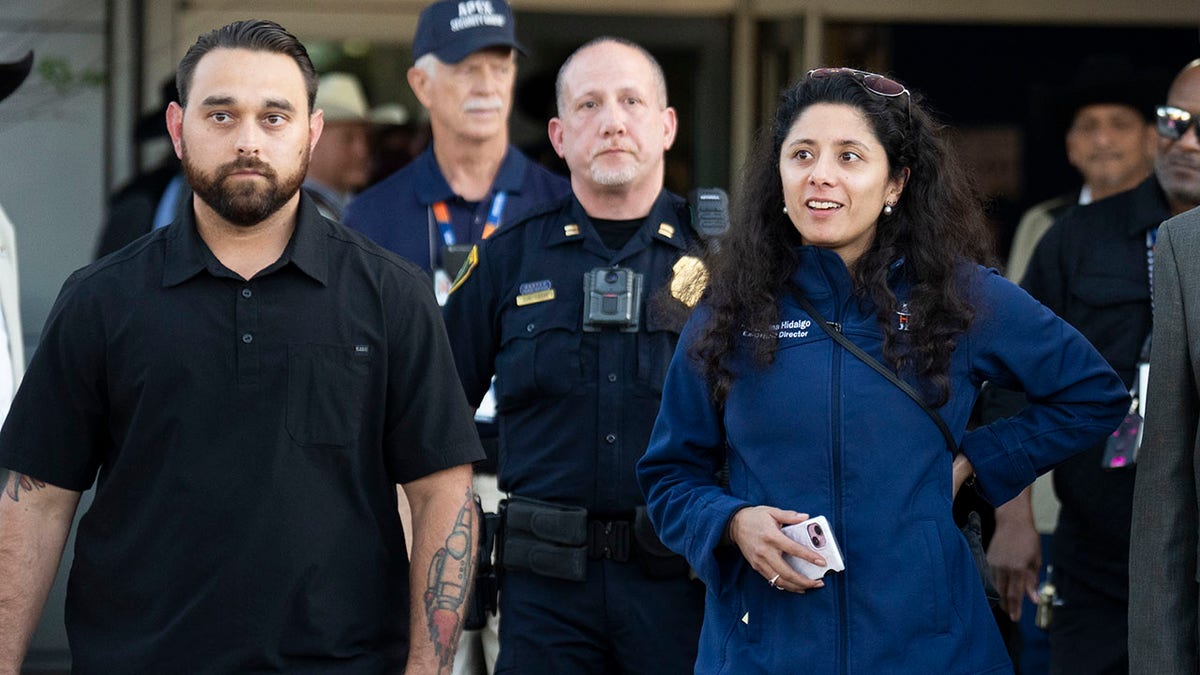
The judge who oversees the administration of Texas’ largest county was escorted out of a popular rodeo venue Thursday for a second time after holding a news conference that was sparked by her removal from a concert earlier this week after attempting to access a VIP seating area without tickets.
Harris County Judge Lina Hidalgo held a brief news conference outside NRG Stadium, where she attempted to secure security camera footage of the incident, before she was once again escorted out of the Houston Livestock Show and Rodeo grounds, as she was Tuesday night, the Houston Chronicle reported.
The judge was escorted to her vehicle by a police detail Thursday after a rodeo spokesperson said she didn’t have access to the rodeo grounds and was only permitted to briefly address reporters, the newspaper reported.
Harris County Judge Lina Hidalgo leaves NRG Stadium after reviewing security footage following an incident during Tuesday’s sold-out concert at the venue in Houston. Hidalgo was removed from the venue after attempting to access the dirt floor to the show, which she did not have proper tickets or credentialing for. The Houston Livestock Show and Rodeo board voted to revoke Judge Lina Hidalgo’s ex officio title amid an ongoing feud. (Jason Fochtman/Houston Chronicle via Getty Images))
Thursday’s removal came after Hidalgo was escorted from the venue while attending a Megan Moroney concert while trying to access a premium seating area, despite not having tickets.
Hidalgo has since had her “ex-officio director” status removed by the Rodeo Houston executive committee, meaning she will have to pay to access rodeo grounds like everyone else, a spokesperson told Fox News Digital.
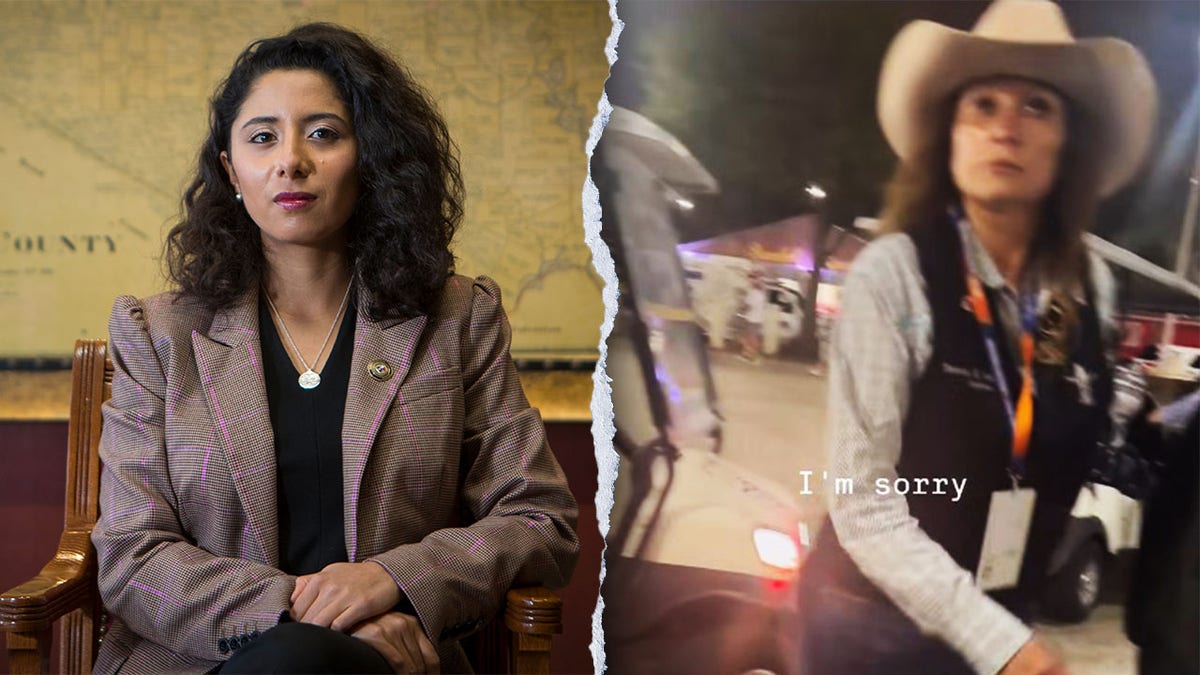
The move came after Hidalgo posted video and audio clips and a letter to rodeo leaders about what unfolded Tuesday night. She said she was manhandled and threatened with arrest after trying to access the concert’s chute area.
Staffers told her she and her guests could not access the area because wristbands were sold out and that they would have to return to their suite. Hidalgo was then asked to leave and escorted out of the venue after being asked several times to return to her seating area, rodeo officials said.
Harris County Judge Lina Hidalgo posted short clips on social media showing staffers escorting her from a concert venue at the Houston Livestock Show and Rodeo this week. Hidalgo said she was manhandled and threatened with arrest while attending a concert at the popular rodeo. (Getty Images; Lina Hidalgo Facebook)
In a one-page letter to board officials, Hidalgo suggested that her treatment stemmed from her being a Hispanic woman. She claimed that White men have “felt emboldened to treat others, particularly Hispanics, with physical force.”
“I don’t travel without my passport anymore,” she wrote. “Many of us do, especially those of us who are not white-passing.”
Houston Livestock Show and Rodeo Chairwoman Pat Phillips and rodeo President Chris Boleman pushed back with their own letter.
“We are very disappointed in Judge Hidalgo’s actions Tuesday night and since. But we must enforce the same access policies for everyone,” they said. “The Judge is the only elected official to request, even demand, these seats night after night. As Chairwoman of the Board, the idea that she was treated this way because she’s a woman or Hispanic is absolutely false and insulting.”
Shelby Pierson carries an American flag as the national anthem plays before Super Series I Round 1 at RodoeHouston during the Houston Livestock Show and Rodeo at NRG Park in Houston, Monday, March 2, 2026. (Jason Fochtman/Houston Chronicle via Getty Images)(Getty Images)
In addition, Rodeo officials said Hidalgo requested and was given $9,000 in floor access tickets for herself and her guests for three previous nights for concerts to see J Balvin, Dwight Yoakam and Luke Bryan.
On Thursday, Hidalgo called on officials to install more cameras at NRG Stadium.
“You can’t really make things out because it’s very dark and it’s from a distance,” she said.
Fox News Digital has reached out to Hidalgo. As the county judge, Hidalgo serves as its chief executive and presiding officer of the Commissioners Court, the county’s governing body, managing a budget over $4 billion.
Bailiffs have boarded a Ryanair aircraft after the airline refused to pay compensation to a passenger whose flight was delayed.
Austrian officials took action after the budget carrier ignored a court order to pay the unnamed woman €890 (£742) in legal costs and compensation for a delayed flight two years ago.
A bailiff entered the plane, which was bound for London, as it sat on the stand at Linz airport on Monday and fixed a seizure sticker to the cabin when crew were unable to settle the debt.
The label, known as a “cuckoo sticker”, gives the court legal control over the aircraft, which was allowed to continue to operate under set conditions. The court can sell the Boeing 737 at public auction if the debt is not paid by a deadline.
The dispute began in 2024 when a flight from Linz to the Spanish island of Mallorca was delayed by 13 hours. A passenger who was forced to pay for an alternative flight claimed a refund of her expenses and compensation under aviation regulations.
Ryanair failed to pay up and the passenger took her case to a court, which ordered the airline to hand over the claimed sum plus interest and legal costs. When Ryanair failed to respond, the passenger asked Austrian authorities to take enforcement action.
A spokesperson for Linz airport said: “We were informed that there was a pending claim against Ryanair in court and that a bailiff has been instructed by the district court of the city of Traun to carry out an official act. We accompanied the bailiff to the aircraft, where the bailiff carried out his official duties.”
The bailiff asked the crew to hand over the €890, but since Ryanair operates cashless flights they were unable to comply. so the seizure notice was placed on the cabin wall. The flight then departed for London.
A lawyer acting on behalf of the passenger told media that she intended to continue enforcement action until the debt was paid.
Ryanair denied the aircraft had been seized but refused to comment on whether bailiffs had applied a seizure notice or whether the debt had since been paid.
Passengers rights groups have criticised low-cost airlines for failing to compensate travellers whose flights are cancelled or delayed. Under European Commission regulations, they are entitled to €600 each if they are delayed by three hours or more.
The Guardian reported this week that Ryanair had refused compensation to a passenger whose plane had been diverted, claiming he reached his destination on a phantom flight. After the Guardian got in touch, the airline refunded the cost of the flight and offered to pay hotel and transport costs.
Disputes over unpaid compensation rarely result in the seizure of an aircraft. Claimants usually give up or airlines pay out before enforcement action is taken. French authorities, however, impounded a Ryanair plane carrying 149 passengers in 2018 after a years-long battle over illegal subsidies. Ryanair then paid the outstanding €525,000 bill.
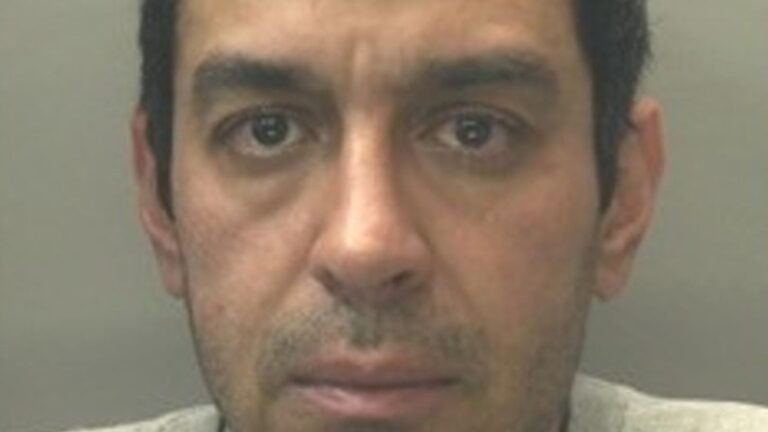
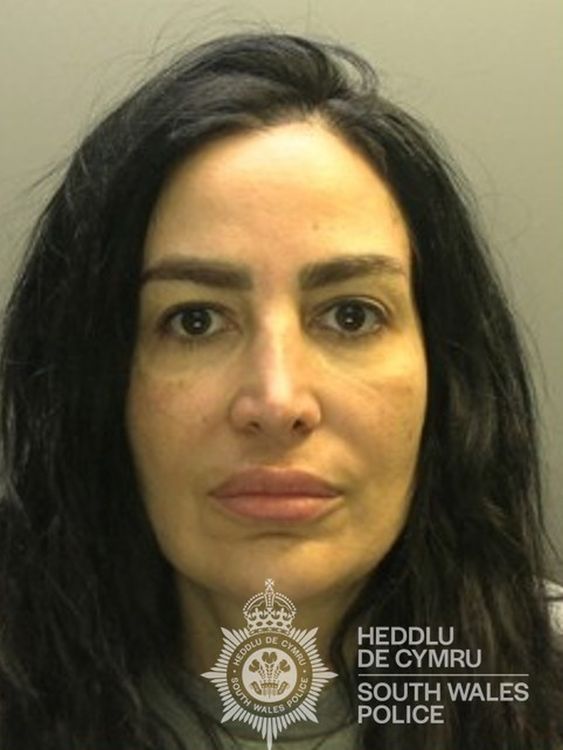
A man who murdered his ex-wife and buried her under patio slabs in his back garden has been jailed.
“Cold-blooded” Alireza Askari, 42, admitted killing Paria Veisi, 37, at the property they had previously shared in Penylan, Cardiff, on 12 April last year.
Cardiff Crown Court heard how he then hid her body underneath a “makeshift grave” concealed by patio slabs, soil and newly-planted flowers.
On Friday, Mrs Justice Stacey sentenced Askari to life imprisonment with a minimum term of 26 years.
Image:Paria Veisi, 37, had recently split up with Askari. Pic: South Wales Police
The court previously heard Askari and Ms Veisi moved to the UK from Iran in 2010 and had married, but were living separately at the time of the murder.
Police later discovered that he was texting a woman in Iran – thought to be his girlfriend.
In one message he said: “I’m planning for them to kill her in Iran.”
Image:Maryam Delavary, 48, was jailed for helping her nephew Alireza Askari cover up the killing. Pic: PA
On the day of the attack he purchased a set of kitchen knives from a supermarket before enlisting his aunt, Maryam Delavary, 48, to bring him bleach, compost and plants.
“On arrival, Maryam Delavary was to assist in the covering up of Paria’s murder,” William Hughes KC, prosecuting, said.
The next day a friend of Ms Veisi’s contacted police, fearing she was “being kept against her will by her ex-husband”.
On 15 April, Askari was arrested driving to Cardiff. Inside his car were canisters containing caustic soda.
“These chemicals, say the prosecution, were to be used in the destruction of Paria’s remains,” Mr Hughes added.
Following a search of the property, Ms Veisi’s body was found in the rear garden beneath patio slabs, soil and newly-planted flowers.
She had suffered four stab wounds, with injuries to her chest and neck.
Addressing Askari, Mrs Justice Stacey said: “She was in the prime of her life, her death has destroyed her family’s happiness, as you knew it would.
“You killed your ex-wife because she wanted a divorce and had left you less than two weeks earlier.
“Your hypocrisy was staggering – at the same time you wanted (Paria) out of the way so you could take up with your girlfriend in Iran.”
The fourth round of races in Formula 1’s new season, scheduled for next month in Bahrain and Saudi Arabia, are no longer expected to proceed as planned.
ESPN, citing sources, reported that F1 officials agreed to cancel the events amid the ongoing conflict involving Iran.
The Bahrain race had been scheduled for April 12, while the event in Saudi Arabia was slated to begin on April 19 in the city of Jeddah. Bahrain and Saudi Arabia have both been hit by missile strikes during Iran’s retaliation after a series of U.S. and Israeli attacks on Iran.
Driver Fernando Alonso of Aston Martin competes during the F1 Grand Prix of Miami at the Miami International Autodrome May 7, 2023, in Miami Gardens, Fla.(Eva Marie Uzcategul T/Anadolu Agency via Getty Images)
Although it remains unclear what state the conflict will be in around the dates the races were scheduled to begin, F1 teams would soon need to start sending freight to the region in preparation for both events. The condensed timeline likely prompted decision-makers to reach a conclusion now.
There is no word on whether the Middle East races will be rescheduled for a later date. However, there is little room on the rest of this year’s calendar to move the events.
The F1 logo is displayed during the Formula 1 MSC Cruises Grande Premio De Sao Paulo 2025 in Sao Paulo, Brazil, Nov. 6, 2025. (Alessio Morgese/NurPhoto via Getty Images)
Given the uncertainty, F1 reportedly made the decision to avoid any disruption to the championship should a race be canceled later in the calendar.
The reduced 2026 schedule of 22 races also creates a five-week gap between the season’s third round in Japan and the Miami Grand Prix, scheduled for May 3.
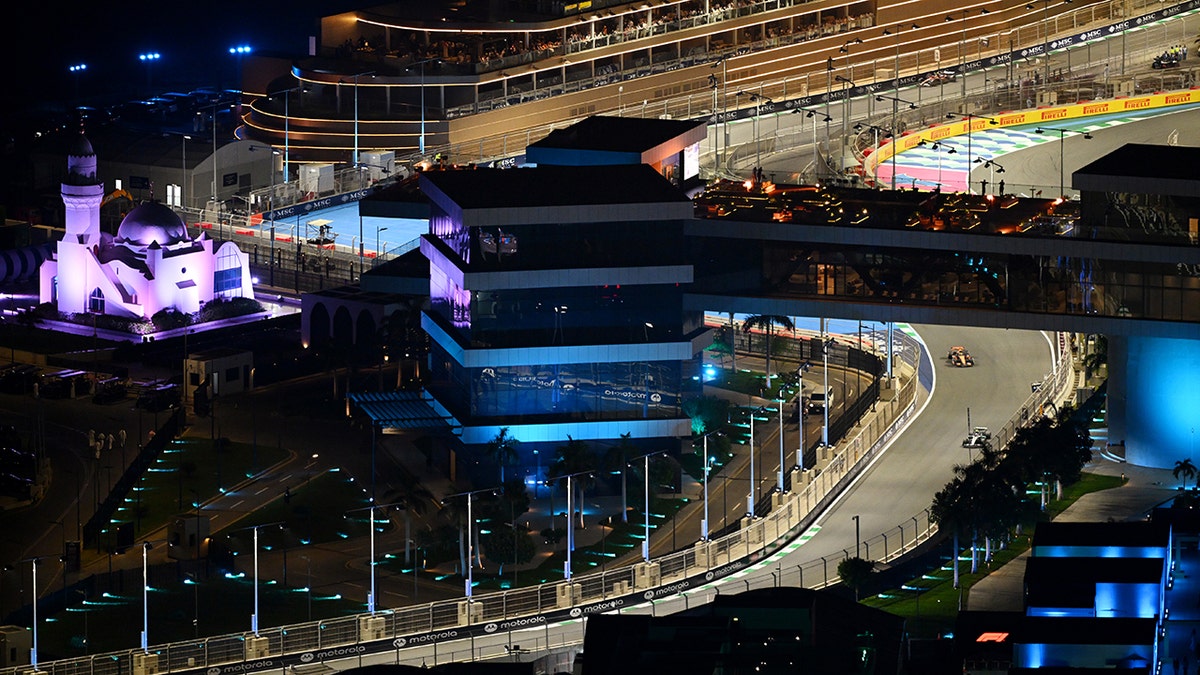
Italy’s Andrea Kimi Antonelli (12), driving the Mercedes AMG Petronas F1 Team W16, leads Great Britain’s Lando Norris, driving the (4) McLaren MCL39 Mercedes, during the F1 Grand Prix of Saudi Arabia at Jeddah Corniche Circuit April 20, 2025, in Jeddah, Saudi Arabia. (Clive Mason/Getty Images)
A request for comment from Fox News Digital to Formula 1 was not immediately returned.
On Thursday, seven-time champion Lewis Hamilton said he was confident F1 would make the best decision.
“I know that [F1 CEO] Stefano [Domenicali] will do what is right for all of us and the sport,” Hamilton said in the lead up to the Chinese Grand Prix. “That is the great thing about having a great leader like him.”