Barnum’s wasn’t the first animal cracker sold in the United States


NEWYou can now listen to Fox News articles!

When most Americans think of animal crackers, the familiar red Barnum’s box likely comes to mind.

Nabisco’s circus-themed version, however, was not the first animal cracker sold in the United States.

Long before Barnum’s became a household staple, a Pennsylvania bakery was already producing the nostalgic snack after animal crackers gained popularity overseas.

AMERICANS DIVIDED OVER ‘GRANDMA CANDIES’ AS CIRCUS PEANUTS AND CARAMELS SPARK DEBATE

Animal crackers were first made in England during the mid-1800s before eventually being imported to the United States, according to the food and dining website Tasting Table.

Barnum's Animals crackers boxes displayed on supermarket shelf in New York

Barnum’s Animal Crackers are a nostalgic staple that generations of Americans instantly recognize. (Daniel Acker/Bloomberg via Getty Images)

In 1871, baker David F. Stauffer began producing the crackers in York, Pennsylvania, through what became the D.F. Stauffer Biscuit Company, now known as Stauffers, according to the company.

At the time, crackers were commonly sold from large barrels and purchased by weight rather than packaged individually. Stauffer reportedly delivered the products around town using a wheelbarrow before later expanding to horse-drawn wagons and railroad shipments as demand increased.

CLICK HERE TO SIGN UP FOR OUR LIFESTYLE NEWSLETTER

The company still sells its classic animal crackers today, featuring shapes such as elephants, lions, camels, bears and tigers.

A pile of animal cracker cookies on a white surface

Animal crackers originated in England in the mid-19th century before later making their way to the United States. (iStock)

Today, Stauffers operates as a subsidiary of Meiji America Inc. and remains headquartered in York, Pennsylvania, where it continues manufacturing snack products in the United States, according to the company.

Decades after Stauffers began producing the snack, the National Biscuit Company, now known as Nabisco, introduced Barnum’s Animal Crackers.

CLICK HERE FOR MORE LIFESTYLE STORIES

The product was inspired by the popularity of the Barnum & Bailey Circus and packaged in the now-iconic circus train box designed to resemble a Christmas ornament.

The crackers quickly became one of America’s most recognizable snack foods and remain a staple in grocery stores generations later.

Happy little girl eating a cookie at home with her mother

The crackers grew into one of America’s most iconic snack foods and continue to hold a lasting place on grocery store shelves today. (iStock)

Today, animal crackers continue to span generations, with brands including Nabisco, Stauffers, Trader Joe’s and Costco all selling their own versions.

TEST YOURSELF WITH OUR LATEST LIFESTYLE QUIZ

On social media, many users reflected on the nostalgia associated with the snack.

“As a little girl, I would always feel super cool carrying this box around the grocery store. It was like a little purse to me,” one Reddit user wrote.

Another person added, “Brings back so many memories.”

CLICK HERE TO DOWNLOAD THE FOX NEWS APP

Fox News Digital reached out to Barnum’s for further comment.


Source link

Access Denied


Access Denied You don’t have permission to access “http://news.sky.com/story/police-chief-condemns-significant-attacks-against-officers-in-glasgow-some-who-were-injured-after-celtics-title-win-13544947” on this server.

Reference #18.c5d07868.1779033181.757f26e7

https://errors.edgesuite.net/18.c5d07868.1779033181.757f26e7


Source link

Access Denied

0

Access Denied You don’t have permission to access “http://hindi.news18.com/cricket/not-virat-kohli-venkatesh-iyer-won-player-of-the-match-award-against-punjab-kings-for-scoring-most-runs-ipl-2026-10486389.html” on this server.

Reference #18.49200117.1779033035.2bc75e63

https://errors.edgesuite.net/18.49200117.1779033035.2bc75e63

Access Denied


Access Denied You don’t have permission to access “http://news.sky.com/story/meloni-cancels-meetings-to-visit-modena-after-car-ramming-attack-13545099” on this server.

Reference #18.c5d07868.1779032848.7576ca17

https://errors.edgesuite.net/18.c5d07868.1779032848.7576ca17


Source link

How AI agent harnesses like OpenClaw are changing LLMs, inference, and CPUs

0


After nearly four years and hundreds of billions burned building smarter and more capable models, folks understandably would like to see them do something more than run a chatbot. 

In this respect, OpenClaw served like blood in the water, demonstrating that, in spite of its seemingly endless supply of security flaws, LLMs really can be used to automate complex tasks. Since then, you’ve probably noticed the term “harness” coming up more frequently to describe agentic AI frameworks, and for good reason.

You don’t need a harness to interact with a chatbot – local tools like Ollama send API calls directly to the LLMs – but to do today’s advanced work, they are essential.

On their face, AI harnesses are just a bit of code that wraps around an LLM’s API endpoint, orchestrates tool calls, and manages context. OpenClaw, Claude Code, Codex, and Pi Coding Agent are all examples of code-focused harnesses you may already be familiar with. 

As simple as all this sounds, harnesses are changing the way we think about everything from training new models to how we build and run them at scale. 

LLM inference on its own is pretty dumb  – not the models so much as the way we interact with them. The OpenAI-compatible API calls that have become the de facto standard are transactional. With most early chatbots, you made a request and the API would supply a response.

A harness, by comparison, orchestrates those API calls, breaking down one request into multiple. 

If you were to ask a code agent to build an app that parses logs, the harness might make one request to plan things out, another to review the log directory, a third to generate and execute that code in an interpreter, and a fourth to debug and fix any errors. This multi-step loop would continue until the work is done or the harness cuts it short to ask for user input.

At least for coding, these harnesses are getting good enough to be useful. In fact, a harness may have a bigger impact on whether the code assistant will be successful than the model itself. Even Qwen3.6-27B, a small-to-medium-sized LLM, proved to be a surprisingly effective alternative to larger paid models when paired with harnesses like Anthropic’s Claude Code or Cline. And yes, if you didn’t know, Claude Code works with any model you like.

In fact, the realization that small models with well-designed harnesses can now automate complex tasks has contributed to a shortage of Mac Minis, as AI enthusiasts race to self-host OpenClaw and LLMs on them.

Changing the way we build models

Training dominated the first two years of the AI boom. OpenAI, Google, Microsoft and others raced to build smarter models using as much data as they could harvest.

But by the end of 2024, the payoff of building ever larger models started to taper off, as the extra parameters only engendered small gains in intelligence.

DeepSeek R1 brought “reasoning” models and test-time scaling to the mainstream. To be clear, these models don’t actually reason, but instead trade time and tokens for higher quality answers and a lower propensity to make stuff up (aka “hallucinate,” although we at El Reg try to avoid anthropomorphizing AI).

It wasn’t the first. OpenAI’s o1 beat them to it, but R1 was the first widely adopted open weights model that used reinforcement learning (RL) to teach the model new skills, like chain-of-thought reasoning.

Over the past year, agentic code assistants have steadily gained traction. Consequently, people are increasingly using RL to teach models to use the tools and resources that agent harnesses expose to them.

If you look at many of the recent model releases on Hugging Face, you’ll notice a strong emphasis on agentic tool calling and long-context reasoning. If you want a model to work effectively with an agent harness, it needs to execute tool calls reliably. And since those tool calls can return large quantities of information, you also need the model not to lose track of that information.

While these qualities make for better agentic models, they also require a very different set of hardware.

CPUs take center stage

Compute to run these agent harnesses is in high demand. After living in the shadow of high-end GPUs and AI accelerators for the past few years, CPUs are back in the limelight.

Intel Xeon processors are selling faster than Intel can make them. Meta is buying up every chip it can get from Arm and Nvidia, and renting boatloads of Amazon’s Graviton CPUs while it awaits delivery.

This is happening because agent harnesses don’t run on GPUs. Even with enough CPU cores to execute these tasks at scale, the number of requests is also reshaping the way we run models.

If you haven’t noticed, inference costs have been on the rise. OpenAI recently raised the price of GPT-5.5, Microsoft moved GitHub Copilot to a purely usage-based pricing model, and Anthropic could soon force Claude Code users onto its pricier “Max” subscriptions.

Some of this is because of increased demand. Like it or not, vibe coding is catching on and probably isn’t going away. However, we suspect some of it may be down to the fact that these models are running on hardware that was originally built for training and is now having to play double duty for inference.

Only in the last year and a half have we started to see inference-optimized systems like Nvidia’s NVL72 racks hit the market. AWS, AMD, and others are now racing to catch up with rack-scale compute platforms of their own.

But it turns out that even these systems aren’t enough on their own. If agentic code harnesses are making dozens of requests, each generating hundreds of lines of code, inference performance becomes a major bottleneck. In the early days of ChatGPT, it might have been enough to churn out tokens faster than the average person could read. Remove the meatbag from the equation and speed becomes everything.

GPUs are incredibly compute-dense parallel processors, but their memory isn’t great for the kind of auto-regressive large models these harnesses are being saddled to.

Groq and Cerebras get their moment under the AI sun

Faced with these challenges, infrastructure providers have adopted new compute architectures that combine GPUs with specialized AI accelerators.

Nvidia’s acquihire of Groq is a prime example. Late last year, Nvidia dropped $20 billion to license the AI chipmaker’s language processing unit (LPU) chip tech and hire away its engineering staff.

As we wrote at the time, Nvidia could have built its own SRAM-heavy decode accelerator, if it wanted to, but because it was faster to use someone else’s.

By combining its compute heavy GPUs with Groq’s high-bandwidth LPUs, Nvidia was able to churn out more tokens faster and, in theory, improve the economics for AI agents.

Higher interactivity is key for agentic workloads because they can now serve more requests in the same amount of time, or “think” about the information that’s been provided to them for longer.

We’ve previously explored Nvidia’s new Groq-based LPXs back at GTC as well as the market dynamics behind the multi-rack architecture.

AWS is using recently public Cerebras Systems’ wafer-scale AI accelerators in much the same way, while Intel is now working with SambaNova on its own disaggregated compute architecture.

The pendulum swings

Given the sheer amount of compute these agent harnesses require, there’s a good chance we’ll start to see hyperscalers cut costs by offloading some of the work onto client devices.

Because of the way these harnesses work, simpler requests like planning could be run on small models running locally on the user’s PC. 

In fact, Google appears to be doing just that.

As we reported earlier this month, Google quietly began shipping as part of Chrome a small LLM that will eat up 4 GB of disk space, and presumably just as much memory when in operation. The model appears to power basic functionality like “help me write” functionally, scam detection, and other AI-assisted functions which have steadily invaded our browsers as of late.

It’s not hard to imagine code agents doing something similar. A small local model could be used to draft and test code snippets while the larger cloud-hosted model is used to debug and correct errors, shifting much of the load off datacenters and onto client devices. 

For that to work, we’re going to need systems with a whole lot more high-speed memory, which poses a bit of a problem in light of the DRAM and NAND shortage

While user-facing agent harnesses could be used to shove some of the computational load onto customer devices, many still want to see agents carrying out entire departments’ worth of work. Take the human out of the loop, and these agents wouldn’t be constrained by limitations of their fleshy masters and could work orders of magnitude faster given enough compute resources.

So, just like the rise of PCs didn’t spell the end of mainframes, local AI will no  is unlikely to end investors’ obsession with ever hotter and more power hungry bit barns any time soon. ®




Source link

Printmaking skills of Manet, Van Gogh and more celebrated in Bath show | Art

0

They may be best known for their vibrant oil paintings but an exhibition opening in the English West Country is focusing instead on the subtle printmaking skills of artists such as Édouard Manet, Vincent van Gogh and Paul Gauguin.

More than 50 prints created mainly by impressionists, post-impressionists and cubists are going on display at the Holburne Museum in Bath.

The idea of the show, called Beyond Impressionism, is to highlight how artists primarily known for their paintings also helped revive printmaking, which had fallen out of fashion by the mid 19th century.

Chris Stephens, the director of the Holburne, said: “We’re beyond excited to be bringing such a range of major artists here. The paintings of the impressionists are so familiar but we seem to forget that the same generation of artists, and their successors, radically changed printmaking. We wanted to acknowledge this great moment in the late 19th and early 20th century.”

Stephens got the idea for the show when he saw some Gauguin woodcuts at the Frieze Masters international art fair in London. “I was stuck by their sense of immediacy,” he said.

The likes of Rembrandt in the 17th century and, later on, Goya had been celebrated printmakers but Stephens said by the 19th century the process tended to be more associated with commercial reproductions of famous works.

“Many of the leading painters of the 19th century returned to the medium of printmaking, elevating its status as a form of artistic expression in its own right,” he said.

Preparations for the exhibition. Photograph: Karen Robinson/The Guardian

The image used in the exhibition’s publicity material is Manet’s lithograph of his fellow artist Berthe Morisot from 1872. Manet was a key member of the Société des Aquafortistes, founded in Paris in 1862 to promote etching as a medium on a par with painting and drawing.

Stephens said the inherently collaborative nature of printmaking fostered the exchange of ideas among artists of the day. They also looked towards the great printmakers of Japan.

Many of the pieces in the exhibition, created from the 1850s through to the 1930s, come from public collections, including the Courtauld Gallery in London and the Ashmolean in Oxford, but some have been borrowed from private collections and so are rarely seen by the public.

Stephens said he was particularly taken with etchings by James McNeill Whistler capturing scenes of the Thames in London and of Venice.

He said: “It’s interesting to see how he uses the kind of soft shading that you can make in an etching. That sort of has the same effect as the blue, moody, misty effect he got in his paintings.”

Van Gogh’s Gardener By an Apple Tree at the Holburne Musuem. Photograph: Karen Robinson/The Guardian

Visitors will be able to view Van Gogh’s Gardener By an Apple Tree, a scene he observed and sketched while visiting a retirement home.

The exhibition probes how advances in lithographic printing enabled the production of large, colourful prints such as the ones by Henri de Toulouse-Lautrec that promoted Parisian nightlife.

There are also a series of Pablo Picasso pieces including a print of The Frugal Meal and some of his minotaur etchings from the 1930s. The exhibition explains how Picasso fully embraced the medium, pushed the boundaries and cemented the standing of prints.

Stephens said: “It is wonderful to be able to demonstrate the revival of etching from Whistler’s Venetian nocturnes to Picasso’s minotaurs alongside Gauguin’s rare woodblock prints and lithographs by Toulouse-Lautrec.”

  • Beyond Impressionism: Printmaking from Manet to Picasso runs from 23 May to 13 September.

  • Another exhibition of printmaking opens in Bath on 22 May. The Transience of Light at the Victoria art gallery showcases the work of the landscape artist and master printmaker Norman Ackroyd.


Source link

What to know about Panama at the FIFA World Cup 2026 | World Cup 2026 News

0

Eight years after hearing their national anthem on football’s grandest stage for the first time, Panama will have the chance to relive that surge of national pride at the 2026 FIFA World Cup.

Having navigated a challenging qualification campaign, they return to the tournament as Central America’s highest ranked side, ready to test themselves against some of the world’s best nations.

Recommended Stories

list of 4 itemsend of list

In the words of head coach Thomas Christiansen, Panama are determined to go toe-to-toe with their more illustrious opponents and firmly put the country on the map as a regional football power.

Here’s all to know about Panama before the tournament kickoff on June 11:

Panama players celebrate after winning the 2026 FIFA World Cup Concacaf qualifier football match between Panama and El Salvador at the Rommel Fernandez Stadium in Panama City on November 18, 2025. (Photo by MARTIN BERNETTI / AFP)
Panama will compete at only their second FIFA World Cup, returning to the grand stage after their appearance at Russia 2018 [File: Martin Bernetti/AFP]

How did Panama qualify for the 2026 World Cup?

Panama underwent two rounds of qualifying to punch their ticket to the World Cup.

Their journey began in the second round of CONCACAF qualifying when they topped their group with a perfect record, beating Nicaragua, Guyana, Montserrat and Belize. During this run, Panama scored 10 goals and conceded just one.

The next round posed a greater challenge. Drawn alongside Suriname, Guatemala and El Salvador, Panama had just six points after four match days but found their stride when it mattered most, posting a 3-2 win at Guatemala before a 3-0 triumph against El Salvador.

The victory over El Salvador on the final match day on November 18 moved Panama above Suriname in the standings, thereby securing their spot at the world’s biggest football tournament.

How did Panama perform in their previous World Cup appearance?

Panama made their World Cup debut at the 2018 edition in Russia, finishing bottom of their group after defeats to eventual semifinalists Belgium and England as well as Tunisia.

However, their campaign was best remembered for Felipe Baloy’s historic strike against the Three Lions: Panama’s first and so far only World Cup goal.

Since then, Panama have emerged as the top-ranked team in Central America, marked by their impressive runs to the 2023 CONCACAF Gold Cup final and 2025 Nations League final.

Panama's defender Felipe Baloy blows a kiss after scoring a goal during the Russia 2018 World Cup Group G football match between England and Panama at the Nizhny Novgorod Stadium in Nizhny Novgorod on June 24, 2018. (Photo by Martin BERNETTI / AFP) / RESTRICTED TO EDITORIAL USE - NO MOBILE PUSH ALERTS/DOWNLOADS
Panama defender Felipe Baloy blows a kiss after scoring a goal during the 2018 FIFA World Cup group match against England at the Nizhny Novgorod Stadium [File: Martin Bernetti/AFP]

What is Panama’s FIFA world ranking?

Panama, one of the six CONCACAF representatives at the World Cup, are ranked 33rd.

Who will Panama face at the 2026 World Cup?

Panama are drawn in Group L, considered by many commentators to be the second most difficult behind Group I. They will compete to advance to the knock-out rounds against former champions and pretournament favourites England, last edition’s third-place finishers Croatia and African heavyweights Ghana.

Los Canaleros, which translates as “The Canal Men” in reference to the Panama Canal, will play two of their group matches in Canada and one in the United States.

Panama’s World Cup group stage matches:

  • June 17: Ghana vs Panama – Toronto Stadium
  • June 23: Panama vs Croatia – Toronto Stadium
  • June 27: Panama vs England – New York/New Jersey Stadium
New York Yankees' Aaron Judge displays Panama during the draw for the 2026 soccer World Cup at the Kennedy Center in Washington, Friday, Dec. 5, 2025. (Dan Mullan/Pool Photo via AP)
Panama’s opponents at the FIFA World Cup draw in December 2025 were picked by baseball star Aaron Judge of the New York Yankees [File: Dan Mullan/Pool Photo via AP]

Who is Panama’s head coach?

Christiansen has been in charge of Panama since 2020, making him the national team’s longest-serving coach. Under him, Panama reached the semifinals in the 2023 and 2024 Nations League and the final of the 2023 Gold Cup and 2025 Nations League.

Before this role, Christiansen held coaching positions across the world – from the United Arab Emirates to Cyprus – including spells with Leeds United in England’s second tier and Union SG in Belgium’s second division.

After having watched World Cups from the stands, Christiansen will step into the 2026 edition as a coach for the first time.

“I might have to pinch myself. It’ll be an incredible moment – a dream come true,” he told FIFA in an interview.

“It’ll be really special to hear Panama’s national anthem and an honour, as a coach, to represent the country I love so dearly at the highest level.”

Born in Denmark to a Spanish mother, Christiansen represented Spain in its under-21 team and the senior side during his playing career. He also plied his trade at clubs in Denmark, Spain and Germany, including a top-scoring campaign in the Bundesliga in 2002-2003.

Panama's Spanish head coach Thomas Christiansen speaks with members of the press after the FIFA World Cup 2026 official match schedule announcement in Washington, DC, on December 6, 2025. (Photo by Roberto SCHMIDT / AFP)
Thomas Christiansen is in his sixth year as head coach of Panama [File: Roberto Schmidt/AFP]

Who are Panama’s top players?

Experienced forward Jose Fajardo and winger Puma were Panama’s joint top scorers during the qualification phase with three goals each while striker Cecilio Waterman bagged two.

The dynamic duo of Fajardo and Waterman is particularly impactful as they combined for four goals in the final qualifying round while Adalberto Carrasquilla ensured Panama maintained their shape in central midfield.

Talented youngster Carlos Harvey has flourished under coach Christiansen’s set-up while veterans Anibal Godoy and Amir Murillo too are key to Panama’s success.

Panama's forward #17 Jose Fajardo celebrates scoring his team's first goal during the 2026 FIFA World Cup Concacaf qualifier football match between El Salvador and Panama at the Cuscatlan Stadium in San Salvador on October 10, 2025. (Photo by Marvin RECINOS / AFP)
Panama forward Jose Fajardo scored in the team’s crucial qualifier against El Salvador on the final match day [File: Marvin Recinos/AFP]

How is Panama preparing for the World Cup?

Panama played two friendlies in late March against World Cup-bound South Africa, drawing the first match 1-1 in Durban before winning 2-1 in Cape Town.

They will play one of the pretournament favourites Brazil in a friendly in Rio de Janeiro on May 31, about two and a half weeks before their World Cup campaign starts.

What can we expect from Panama at the World Cup?

Christiansen has described their group as “interesting”, adding that Panama will draw confidence from past victories against big name teams like the United States as they aim to replicate that success against Ghana, Croatia and England at the tournament.

“We’re keen for our fans to feel proud of the team. Scoring a consolation goal should no longer be a reason for Panamanians to celebrate,” he said.

“It’s time for us to up our game.”

Panamanians pose for pictures as they celebrate after Panama qualified for the 2026 FIFA World Cup in Panama City on November 18, 2025. (Photo by MARTIN BERNETTI / AFP)
Panama’s fans will cheer for Los Canaleros, the only representative from Central America at this year’s global football showpiece [File: Martin Bernetti/AFP]

You can follow the action on Al Jazeera’s dedicated FIFA World Cup 2026 page with all the latest news, match build-ups and live text commentaries and keep up to date with group standings and real-time match results and schedules.


Source link

‘Comics Unleashed’ host Byron Allen vows no politics in CBS late-night slot


NEWYou can now listen to Fox News articles!

Byron Allen announced Saturday that his show, “Comics Unleashed,” will avoid politics when it moves into Stephen Colbert’s Friday late-night slot on CBS — arguing the show should focus on laughs rather than partisan commentary.

“What I’m doing with ‘Comics Unleashed,’ we don’t talk about politics. We don’t talk about anything that’s topical,” Allen told CNN’s Michael Smerconish. “We don’t do anything that’s racist or sexist or antisemitic or homophobic. Just be funny and don’t offend.”

Smerconish pressed Allen on whether viewers would look for political leanings in the program, which arrives one night after Colbert ends his 11-year run as host of “The Late Show With Stephen Colbert.”

“A lot of eyes are going to be on your program to see, well, what are the political leanings? What can they read into it?” Smerconish asked.

Stephen Colbert and Byron Allen standing together at an event

Byron Allen said “Comics Unleashed” will avoid politics when it moves into Stephen Colbert’s late-night CBS time slot. (Scott Kowalchyk/CBS/Getty Images; Paras Griffin/Getty Images)

CBS FILLING STEPHEN COLBERT’S TIME SLOT WITH BYRON ALLEN PROGRAM COULD BE NEW MODEL FOR LATE-NIGHT TV

Allen said he wants the show to follow Norman Lear’s example by using comedy to bring people together, claiming his goal is to reach viewers regardless of how they vote.

He compared his approach to an apolitical business model associated with NBA Hall of Famer Michael Jordan.

“I don’t care who you vote for. I don’t care,” Allen said. “I’m here to make people laugh. You’re going to vote who you’re going to vote for, no matter what I say. It doesn’t matter. It’s not my business, do what you do. I’m here to make you laugh.”

Byron Allen speaks

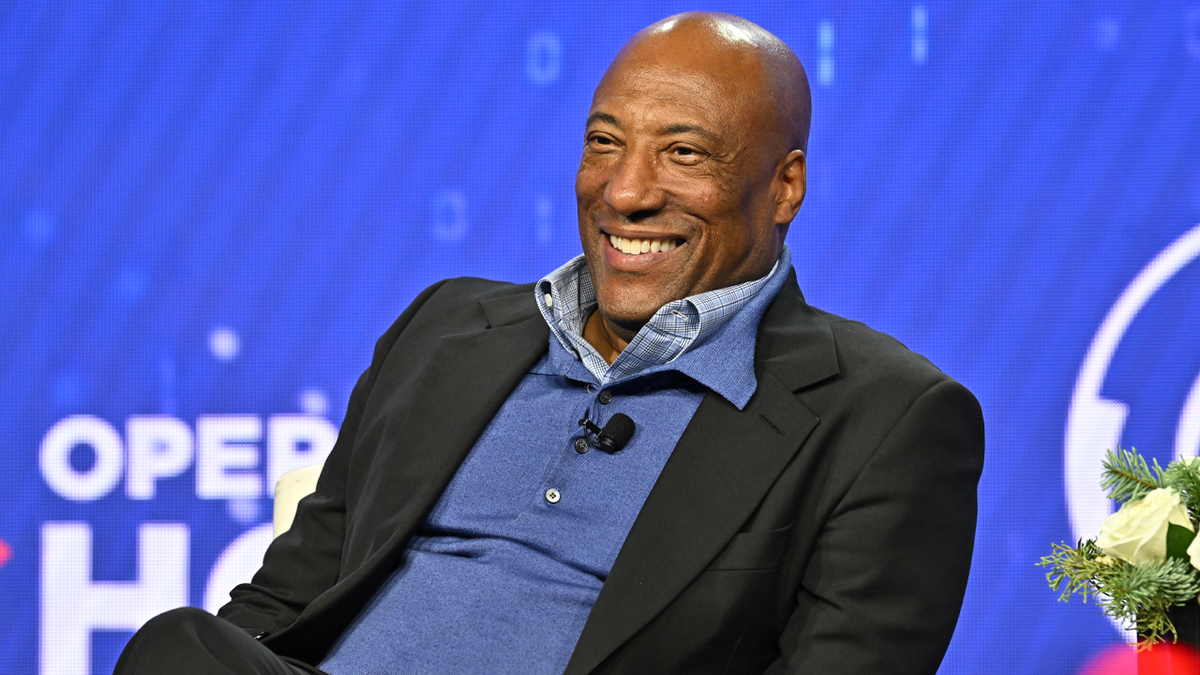
Allen told CNN that his goal for “Comics Unleashed” is to make viewers laugh without focusing on topical or partisan issues. ((Photo by Paras Griffin/Getty Images))

IN AN AGE OF OUTRAGE, COMEDIAN CHARLIE BERENS DOESN’T HAVE INTEREST IN THE POLARIZATION

The comments mark a sharp contrast with Colbert’s run on CBS, where political monologues and criticism of President Donald Trump became a part of the show’s identity.

Colbert, who took over the franchise from David Letterman in 2015, announced in July 2025 that CBS would end “The Late Show” after the current season.

Colbert’s final show will air on May 21, 2026.

Allen has also praised Colbert while preparing to take over the time period, telling Variety that the late-night host is an “American treasure.”

Stephen Colbert speaking on a television set

CBS announced in July that it had canceled “The Late Show with Stephen Colbert” and that it would end in May 2026. Liberal critics have accused CBS and Paramount of ending the show to appease Trump and receive approval for a long-planned merger between Paramount Global and Skydance Media. (Screenshot/CBS)

DEMOCRATS FAWN OVER STEPHEN COLBERT FOR HOLDING ‘TRUTH TO POWER’ AFTER CBS CANCELS SHOW

“I really like Stephen Colbert. I think he is a magnificent human being… He’s a super talent, I believe he is an American treasure.”

CBS announced April 6 that “Comics Unleashed” will air Monday through Friday with back-to-back half-hour episodes beginning May 22. The network also said Allen’s game show “Funny You Should Ask” will follow.

Allen said in CBS’ announcement that he created “Comics Unleashed” to give stand-up comics a platform.

CLICK HERE TO DOWNLOAD THE FOX NEWS APP

“I created and launched ‘Comics Unleashed’ 20 years ago so my fellow comedians could have a platform to do what we all love — make people laugh,” Allen said. “The world can never have enough laughter.”


Source link

Big tobacco is exploiting fears of the illicit market to unwind health gains, Australian experts warn | Health

0

Big tobacco is exploiting fears of the illicit market to unwind longstanding health policies, leading health campaigners have warned, amid a parliamentary inquiry which took secret evidence from the cigarette manufacturer Philip Morris.

A coalition of 15 health organisations including the Cancer Council and the Heart Foundation, as well as health experts and researchers, have accused the industry of trying to reshape public debate to push for major cuts to government excise.

The inquiry into booming illicit sales attracted controversy this month when Guardian Australia revealed it had held a secret hearing for Philip Morris executives, ending more than 15 years of precedent under Australia’s participation in a World Health Organization agreement.

Executives warned that illegal cigarettes would wipe out legal products in Australia by 2030 and called for a cut to the tobacco excise to undermine criminal business models. Company representatives appeared in secret at the first committee hearing and their names were withheld from public transcripts.

But the group of health organisations, led by the Cancer Council, rubbished the claims and called it a “dog whistle”.

“The industry is now using the rise of illicit tobacco to reshape public debate and to push for lower taxes,” the group said. “But illicit tobacco is primarily an enforcement and health issue, not a tax one.

Sign up for the Breaking News Australia email

“Even if we were to cut the tobacco tax altogether, illicit products would remain cheaper, while legal tobacco would become more affordable, tobacco industry profits would skyrocket and smoking rates would increase, undoing decades of progress.”

The WHO agreement on tobacco control requires public officials to protect health policy from interference from the tobacco industry and associated interests.

Australia’s health department guidance suggests Australian public officials, including MPs, should only interact with executives and lobbyists from tobacco manufacturers “when and to the extent strictly necessary” to effectively regulate smoking.

The group has written an open letter in the lead-up to the committee’s second hearing, which will include testimony from the Australian Criminal Intelligence Commission, Australian federal police, the health department and the tax office.

The letter says Australia’s success in tobacco control is fragile and must reject attempts by the tobacco lobby to regain influence over public health policy.

It calls for the government to enforce transparency and protection against tobacco industry interference, and to maintain tobacco levies, advertising restrictions and public education campaigns.

It said the decision by the Coalition-chaired committee to allow Philip Morris to give evidence in secret was “deeply concerning”.

“Giving a tobacco giant this platform undermines Australia’s obligations under the WHO Framework, which is designed to protect policymaking from tobacco industry interference,” it said.

“These safeguards exist for a reason – tobacco company profits depend on products that still kill 66 Australians every day.”

Smoking kills 24,000 Australians each year and is Australia’s leading cause of preventable death. One in five cancer deaths is attributed to tobacco use.

Public Health Association of Australia research suggests any lowering of the excise rate would hand manufacturers billions of dollars. A 50% cut would be worth an estimated $2.3bn to tobacco companies.

Already the surge in the illegal trade has caused a $6bn hit to the federal budget in less than six months.

In the Albanese government’s mid-year budget update in December, tobacco excise was expected to raise about $5.5bn in 2025-26. By the time of last week’s federal budget, that figure had dropped to $4.1bn.

Treasury expects it to fall to $2.1bn by mid-2030.


Source link

Danny Pintauro explains why ‘Who’s the Boss?’ fame didn’t make him rich


NEWYou can now listen to Fox News articles!

Danny Pintauro is revealing the less glamorous side of sitcom fame: Not every child star grows up rich.

The “Who’s the Boss?” alum went viral in April after posting a selfie while working as an Amazon driver in Los Angeles. After stepping away from acting for 10 years, the 50-year-old said he began delivering packages while trying to break back into showbiz.

The actor told Fox News Digital that despite starring in a hit sitcom from 1984 to 1992, he still has bills to pay.

‘WHO’S THE BOSS?’ STAR DANNY PINTAURO TRADES HOLLYWOOD FAME FOR DELIVERY ROUTES AS INDUSTRY STALLS

Split photo of actor Danny Pintauro as a child star in "Who's the Boss?"; Pintauro sits inside a car filled with boxes and belongings.

Danny Pintauro of “Who’s the Boss?” fame opened up to his followers about working as an Amazon Flex driver while pursuing acting. (ABC Photo Archives/Disney General Entertainment Content via Getty Images; Instagram)

“People always assume that if they recognize you, you must be financially set for life, and that’s just not how it works,” he explained. “There’s this very inflated idea of what residuals — especially residuals from that era, from the ‘80s — look like.

“We were working on a television model. DVD compilations didn’t exist, so there’s nothing in the contract to stipulate what to do if that should come up. Reruns and syndication were barely a thing, so the contracts were just not conducive to residuals.”

“When a network purchases the series, I get some money from the purchase, but I get less money every time it gets purchased,” he shared. “Season 1, for instance, has been purchased so many times by every network where it airs that I’m getting five to six cents per episode, and then they can air it as many times as they want.”

WATCH: ‘WHO’S THE BOSS?’ STAR DANNY PINTAURO TALKS RESIDUAL REALITY

“A lot of people think that every time it airs, I’m getting money for that airing,” he continued. “That’s not the case. The money that did come in from the show was great, but I used a hefty amount of it to pay for Stanford and support myself in the years after the show ended. So there just isn’t a pile of money sitting around these days.”

After “Who’s the Boss?” ended, Pintauro walked away from Hollywood to study at Stanford. Determined to build a life beyond child stardom, he took a job at the Gap to earn his own paycheck. He later waited tables and moved into management at P.F. Chang’s.

Danny Pintauro standing at the Lambda Legal West Coast Liberty Awards event in West Hollywood

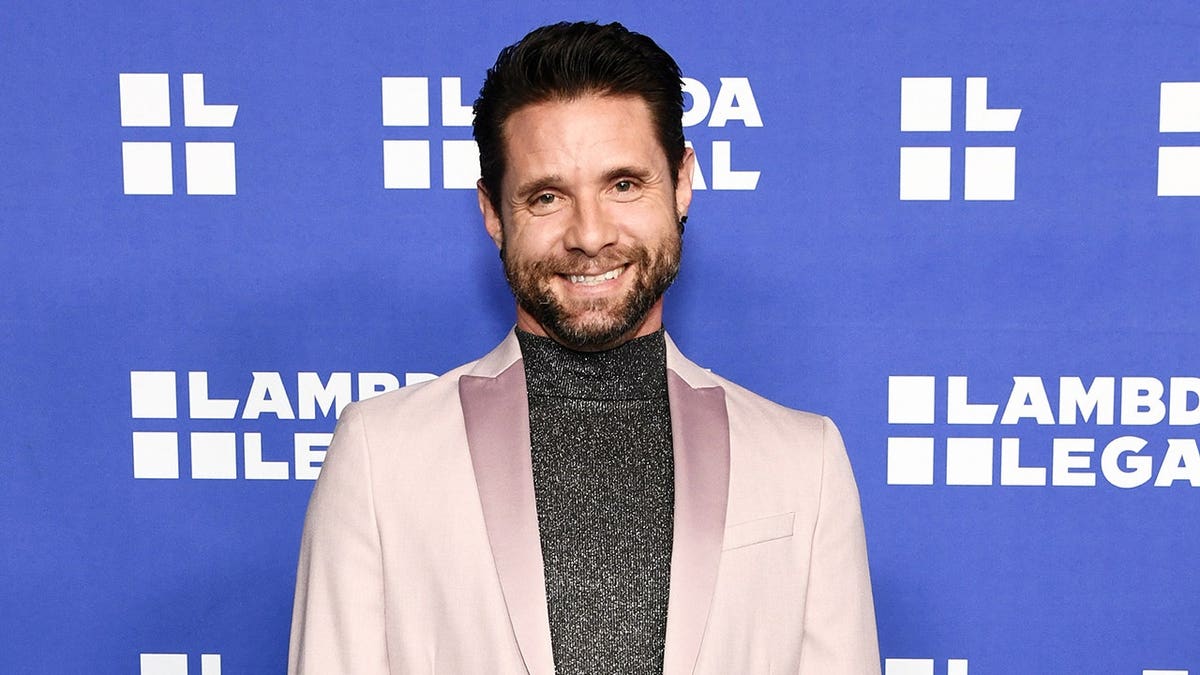
Danny Pintauro has been keeping busy in between auditions picking up shifts as an Amazon Flex driver. (Chelsea Guglielmino/Getty Images for Lambda Legal)

In New York, he tried to become a theater director but “failed miserably,” he said. In Austin, he worked at an animal shelter caring for cats while training to become a veterinary technician. But after feeling pulled back toward performing, he left his job to pursue acting full-time.

Danny Pintauro and Cindy Crawford walking dogs at Church Estate Vineyards in Malibu

Danny Pintauro attends the “Propel Zero To 1000” pledge and celebrity dog walking event with Cindy Crawford at Church Estate Vineyards in Malibu, California, on April 2, 2011. (Brian To/FilmMagic)

Amazon Flex, a delivery program that allows independent drivers to use their own vehicles to deliver packages, groceries and same-day orders, came in handy.

“I did it for a while when we were in Austin,” he said. “[My husband and I] discovered that living in Austin was not going to be conducive to getting my career off the ground, so we made the decision to move to L.A. [in 2022] and haven’t looked back.”

Tony Danza as Tony Micelli with Alyssa Milano as Samantha and Judith Light as Angela Bower in a living room

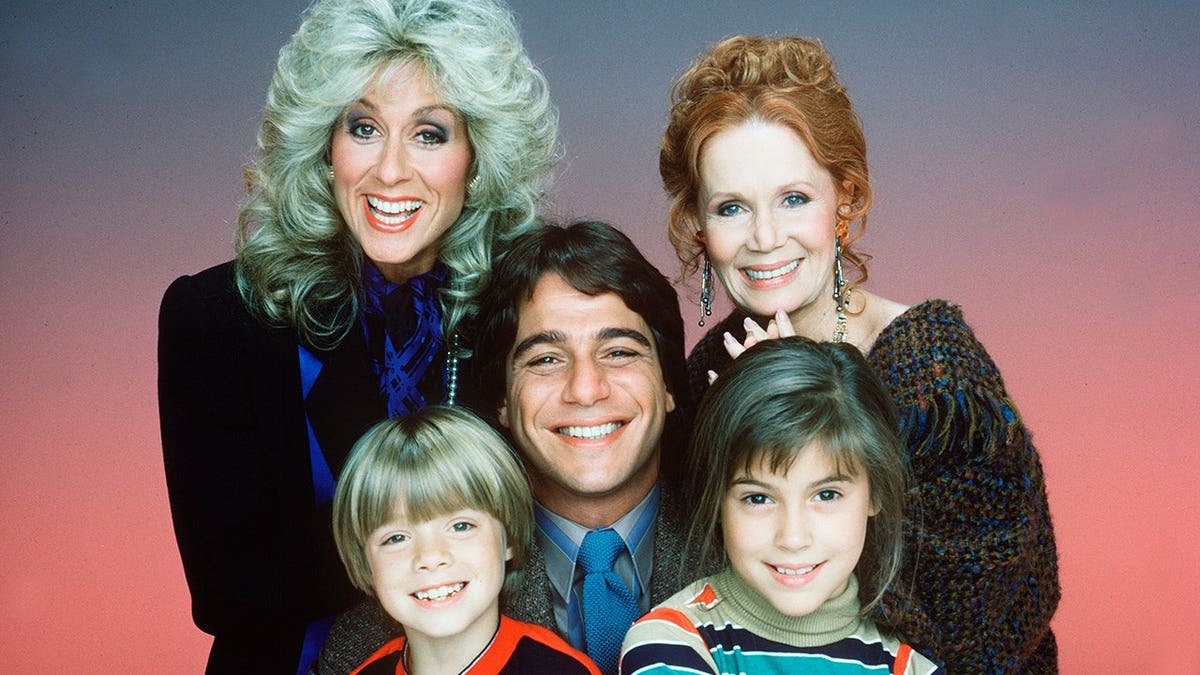
In “Who’s the Boss?” Tony Danza starred as Tony Micelli, a former athlete who becomes a housekeeper for advertising executive Angela Bower, played by Judith Light. The show also featured Alyssa Milano as Samantha and Danny Pintauro as Jonathan. (Bob D’Amico/Disney General Entertainment Content)

But being an Amazon Flex driver in Los Angeles wasn’t as easy.

CLICK HERE TO SIGN UP FOR THE ENTERTAINMENT NEWSLETTER

Danny Pintauro and Judith Light standing together at a Broadway event

Danny Pintauro and Judith Light attend the “Honeymoon In Vegas” Broadway opening night at Nederlander Theatre in New York City on Jan. 15, 2015. (Robin Marchant/Getty Images)

“The first shift I had was a little scary,” he admitted. “The neighborhood was not great. I had to put my hazards on, lock the car and run to deliver the package. And there was a dog. I had to throw the package over the gate because there was a scary dog barking at me. The whole shift felt like that.”

Pintauro said he never expected his Instagram post to go viral. He said he shared the selfie to shed light on the realities of chasing a career in an entertainment industry that looks far different from what it once did.

Actor and ETAF Ambassador Danny Pintauro speaking at UCLA event

Danny Pintauro moved to Los Angeles from Austin to pursue acting again. (Alberto E. Rodriguez/Getty Images for The Elizabeth Taylor AIDS Foundation)

“For me, as a working actor, I’m not working as an actor,” he said with a laugh. 

He noted that these days, fewer projects are being made, studios are playing it safe and actors with recognizable names are often prioritized for roles.

Danny Pintauro standing at the Chiller Theatre Expo in Parsippany, New Jersey

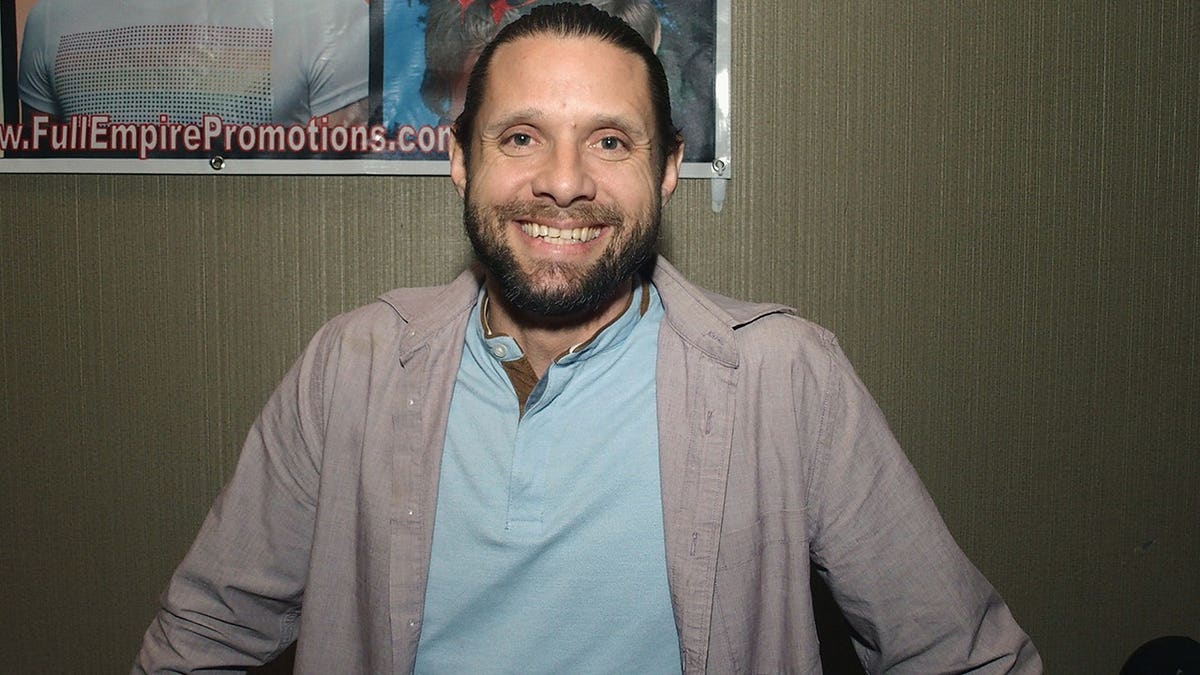
Danny Pintauro attends the Chiller Theatre Expo at the Parsippany Hilton in Parsippany, New Jersey, on Oct. 25, 2019. (Bobby Bank/Getty Images)

Still, Pintauro said he’s grateful he chose to be candid with his followers, using his platform to highlight the harsh realities of today’s Hollywood while encouraging others to keep pushing forward.

“I feel like people have really connected to the story, which I really love, but I think the connection is partly because we all know what it means to do what we’ve got to do, especially in this economy,” he said. “We’ve all got to work multiple jobs. We’ve all got to work in any way we can to make sure we provide for ourselves and our families.”

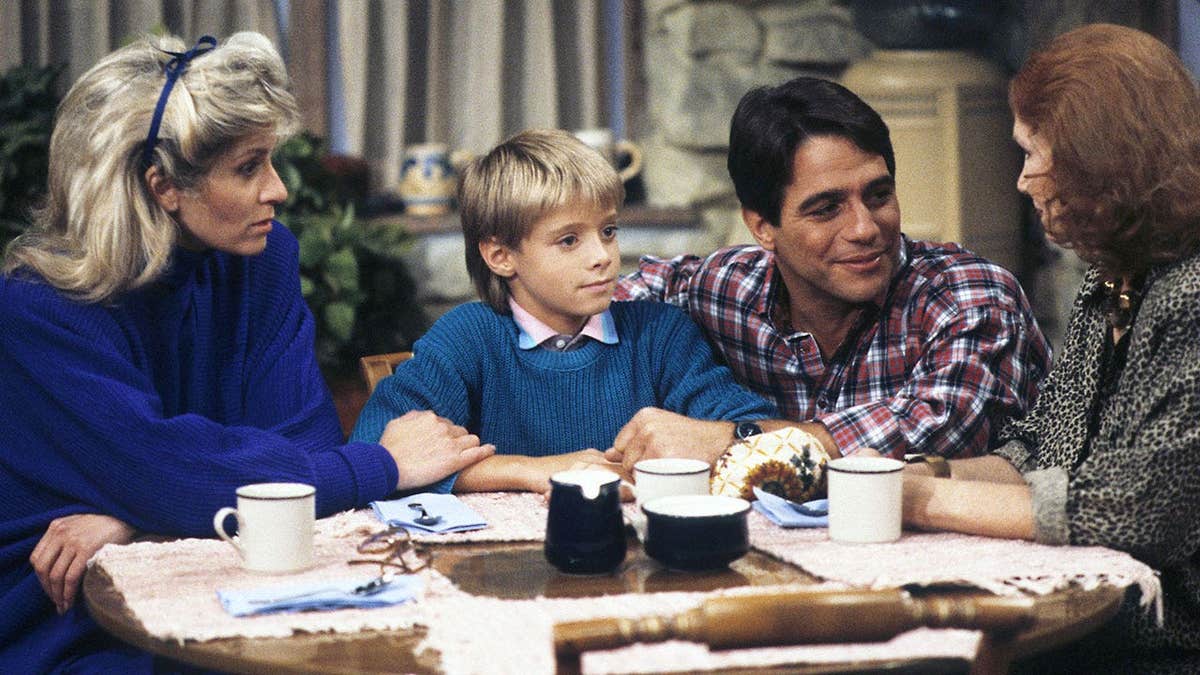
A scene from the popular 1980s sitcom "Who's the Boss."

“Who’s the Boss?,” which featured Judith Light, Tony Danza, Danny Pintauro and Alyssa Milano, became one of the most popular shows of the 1980s. (ABC Photo Archives/Disney General Entertainment Content via Getty Images)

Pintauro said he feels fortunate to stay busy. He wasn’t prepared for the obstacles and uncertainty he would face while trying to pursue his love of acting again.

LIKE WHAT YOU’RE READING? CLICK HERE FOR MORE ENTERTAINMENT NEWS

Daniel Pintauro standing and attending the Steve Chase Humanitarian Awards in Palm Springs

In 2022, Danny Pintauro returned to acting with his first major role in Lifetime’s “A Country Christmas Harmony.” (Gregg Felsen/Getty Images for Desert AIDS Project)

“It’s rough,” he said. “It’s a rough time to be an actor in Los Angeles. A lot of production is happening overseas now. So many of the major shows you know are filming in other countries. That means a lot of actors are being hired from those countries instead of trying to find us in L.A. and fly us to wherever they’re filming.”

“When I was a kid, I auditioned for the job and got it,” he said with a smile. “I always got the job. I was the cutest little kid. There was just something about my childhood. It felt like the universe was at hand. But the environment has changed. Sitcoms are really gone. I never expected network shows would become second fiddle to streaming services.”

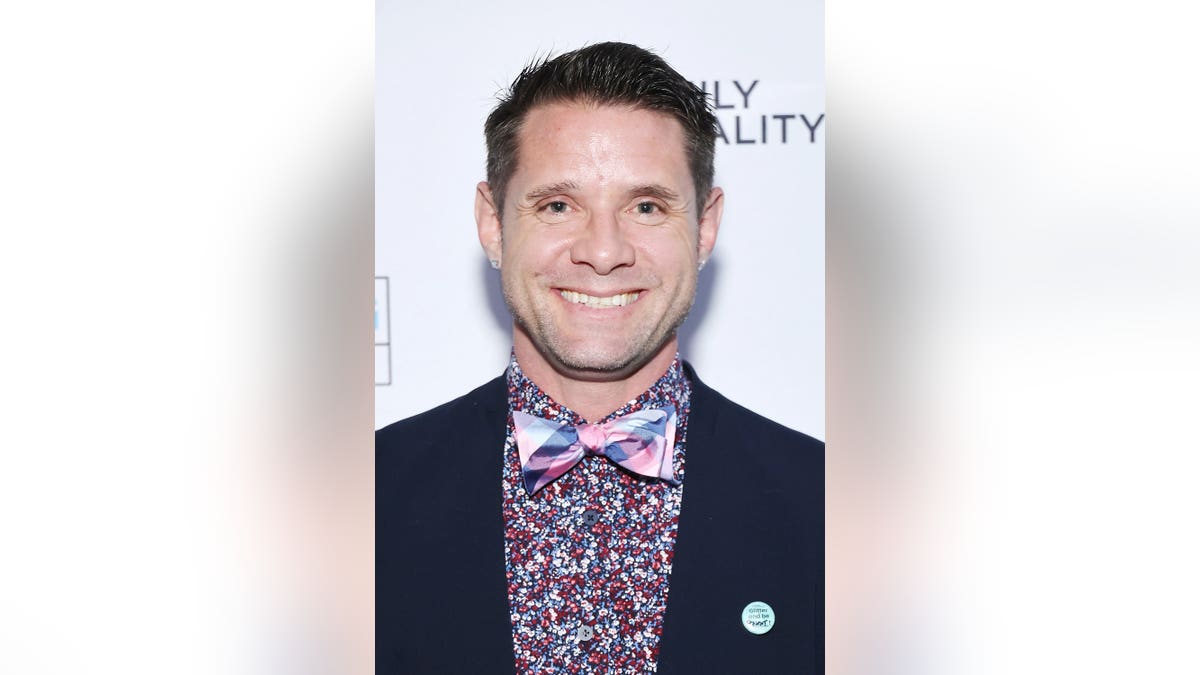
Danny Pintauro wearing a bow tie at an event in Los Angeles

Danny Pintauro attends the Family Equality Council’s Impact Awards at Citizen News Hollywood in Los Angeles, on Sept. 28, 2024. (Amy Sussman/Getty Images)

Today, Pintauro hopes more acting opportunities will come his way. He also wants others juggling side gigs and financial pressures while chasing their dreams to know they are not alone.

CLICK HERE TO DOWNLOAD THE FOX NEWS APP

Danny Pintauro posing for a portrait in 1987.

Danny Pintauro, appeared on “Who’s the Boss?” from 1984 to 1992. (ABC Photo Archives/Disney General Entertainment Content)

“We’re all doing what we need to do to stay in motion,” he said. “I have so much more respect for people doing whatever it takes to take care of themselves, their families and everything in between. Anyone who’s followed me for the last 10 years knows that I’ve pretty much done whatever it takes to stay afloat and keep going.”

“Through it all, I stay hopeful,” he said. “I keep moving.”


Source link