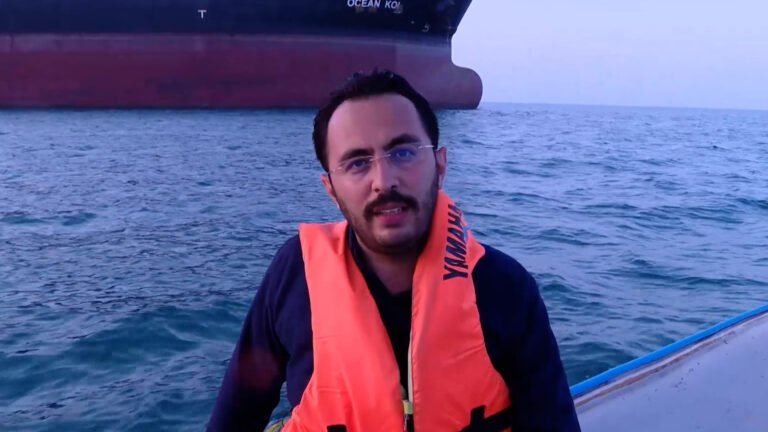
Traffic in the Strait of Hormuz is gradually increasing as Iran says its open for vessels who coordinate with the Iranian military, with the exception of ‘adversaries’. Al Jazeera’s Tohid Asadi reports from the strait and explains Tehran’s newest plan to manage shipping.
Veteran striker Azmoun was not named in the 30-man squad, which will be trimmed to 26 by June 1.
Published On 17 May 202617 May 2026
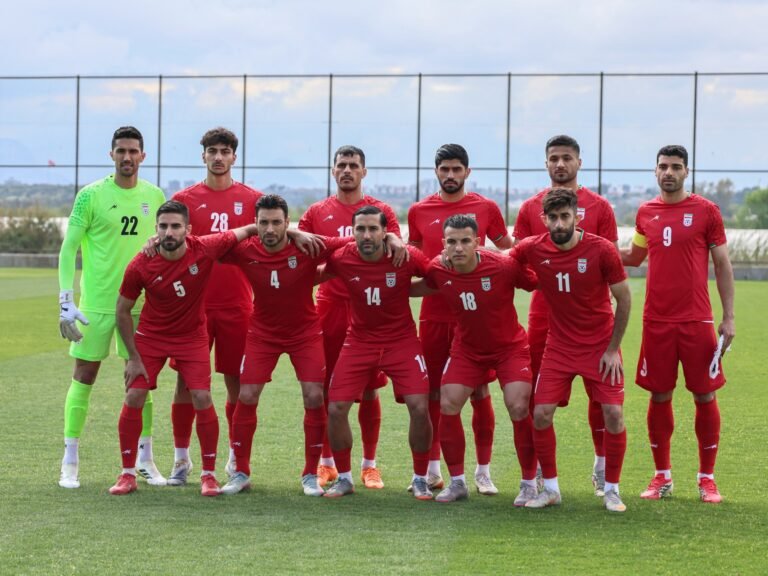
Experienced forward Sardar Azmoun was a glaring omission as Iran named their preliminary World Cup squad before departing for a pre-tournament training camp.
Azmoun, who was reportedly expelled from the national team for a perceived act of disloyalty to the government amid the US-Israel war on Iran, was not among the 30 players named in the squad on Saturday.
The 31-year-old striker, who plays his club football in the United Arab Emirates (UAE) for Dubai’s Shabab Al-Ahli, upset the Iranian authorities in March by posting a picture on his Instagram feed of a meeting with Dubai’s ruler, Mohammed bin Rashid Al Maktoum, according to reports in Iranian media.
A report on the Fars News Agency in March quoted “an informed source within the national team” as saying Azmoun had been expelled from the squad. The player later removed the picture but was still lambasted on state TV.
Azmoun has scored 57 goals in his 91 appearances for his country and was part of Iran’s squad in its last two appearances at the World Cup.
Iran’s forward line at the World Cup will be led by Mehdi Taremi, who has played in major European football leagues and is currently plying his trade at Olympiacos FC in the top tier of Greek football.
The 30-member squad will travel to Turkiye on Monday for a training camp, friendlies and to complete visa applications before heading to the United States, head coach Amir Ghalenoei said.
Team Melli will be returning to Antalya, where they trained and played friendlies in March.
The squad will have to be trimmed to the World Cup maximum of 26 by June 1.
“Selecting 30 players for this final training camp ahead of the World Cup was the most difficult technical decision of my coaching career,” Ghalenoei told the Iranian football federation website, adding he had selected players solely on “technical criteria”.
Iran hope to play two friendlies in Antalya. They have already confirmed one match against The Gambia on May 29, said Sam Mehdizadeh, an Iranian-Canadian who heads a company that sets up friendlies for the team.
The Iranian squad and support staff have not been issued visas for the World Cup, but football’s global governing body FIFA has issued reassurances in advance of the June 11 tournament kickoff.
“No visas have been issued yet,” Mehdi Taj, president of the Iranian football federation, said on Thursday.
Taj said players were expected to undergo fingerprinting in Turkiye as part of the visa process, but wished to avoid a trip of more than 450km (280 miles) from Antalya to the Turkish capital, Ankara.
Iran will begin their World Cup campaign against New Zealand in Los Angeles on 15 June, before facing Belgium in the same city and then Egypt in Seattle, in Group G.
Spain, the Netherlands, Ireland, Iceland and Slovenia stage the biggest political boycott in Eurovision history over Israel participating, citing its genocidal war against Palestinians in Gaza.
Published On 17 May 202617 May 2026
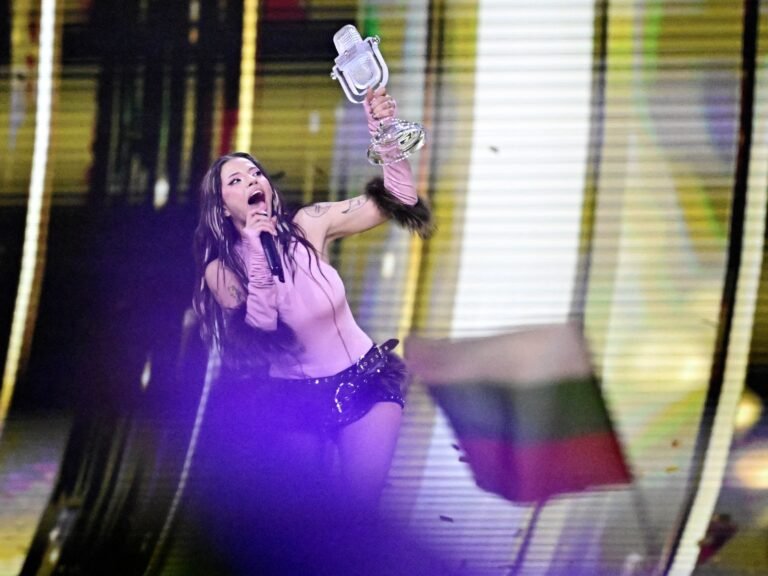
Bulgaria has won the Eurovision Song Contest for the first time as Israel, whose participation had triggered a boycott from five countries and protests over its genocidal war against Palestinians in Gaza, came in second.
Bulgarian pop singer Darina Yotova, known as Dara, won on Saturday with her catchy floor-filler Bangaranga, winning the 70th edition of the world’s biggest live televised music event.
Recommended Stories
list of 3 itemsend of list
“This is unbelievable. I don’t even know what’s going on right now,” Dara said at a news conference.
In a post on Facebook, Bulgarian Deputy Prime Minister Atanas Pekanov hailed a “magnificent story of immense talent, tireless effort, and faith in success, against all criticism”.
About 10,000 glammed-up fans filled the Wiener Stadthalle arena in the Austrian capital, Vienna, to watch the showpiece final, where, as always, the razzmatazz didn’t escape geopolitics.
Spain, the Netherlands, Ireland, Iceland and Slovenia staged the biggest political boycott in Eurovision history against Israel’s participation, citing its war on Gaza, which has killed more than 72,740 Palestinians since it began in October 2023.
Israeli singer Noam Bettan was loudly cheered although there was a smattering of boos as he performed Michelle, a rock ballad in Hebrew, French and English. Earlier in the week, four people were ejected for trying to disrupt his semifinal performance.
It was the second year in a row that Israel finished runners-up.
Eurovision organisers tightened voting rules this year after allegations Israel had mounted an intense lobbying campaign to get votes for its entry.
Hundreds of protesters against Israel’s inclusion marched near the arena before Saturday’s final, some holding placards saying “Block Eurovision.” Pro-Palestinian groups also staged an outdoor concert on Friday under the banner “No stage for genocide”.
Spanish public broadcaster RTVE, traditionally one of Eurovision’s major backers, not only boycotted the contest but also refused to screen the show.
Belgian broadcaster VRT said before the final that it was unlikely to compete in next year’s Eurovision if the European Broadcasting Union, which organises the event, did not hold a direct vote on Israel’s participation in the contest.
Access Denied
You don’t have permission to access “http://hindi.news18.com/news/ajab-gajab/viral-indian-influencer-finds-gold-bangle-in-garbage-dump-treasure-changes-mans-life-viral-video-10485433.html” on this server.
Access Denied
You don’t have permission to access “http://hindi.news18.com/cricket/ravi-shastri-urges-selectors-to-fast-track-vaibhav-sooryavanshi-into-india-t20-side-after-his-explosive-ipl-2026-for-rajasthan-royals-and-india-a-call-up-10485415.html” on this server.
England’s Department for Education is
advertising a role paying up to £200,000 a year to lead a new digital and
infrastructure group overseeing school buildings and maintenance, as well as technology and data.
Its Director General, Digital and
Infrastructure, will lead the technology function of
around 1,800 staff, develop a new strategy covering digital services, data, and artificial intelligence, and lead work on a unique identifier
for children and other learners in England. Scotland, Wales, and
Northern Ireland run education services on a devolved basis.
The successful candidate will also
implement a new strategy for “the education estate” of schools,
colleges, nurseries, and children’s homes. The job ad warns the function “carries
some of the highest levels of risk and accountability in the
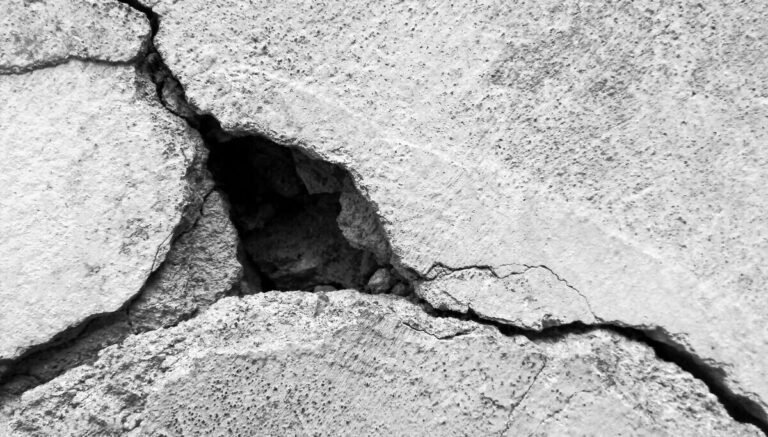
department – including life-and-death decisions on safety,” citing ongoing work to remove unsafe reinforced
autoclaved aerated concrete (RAAC) from schools.
“I am looking for a leader who is
motivated by impact – someone who is able to combine their digital
and data expertise with their drive to improve outcomes for children
and young people,” writes the department’s permanent secretary, Susan Acland-Hood, in a briefing document with the advert. “Whilst
you do not need to be an expert on education policy, you need to be
curious and committed to rapidly building your understanding of the
latest evidence, system, and policy landscape.”
The department is willing to base the
job in Bristol, Cambridge, Coventry, Darlington, London, Manchester,
Nottingham, or Sheffield, although those who do not work in the
capital will need to go there frequently. Applications close on June 1.
Several other departments have
recently advertised digital director-general posts, the civil service
job category just below permanent secretary (equivalent to chief
executive). In January, England’s Department of Health and Social Care
advertised the role of director general for technology, digital and
data with a salary of up to £285,000 a year.
Access Denied
You don’t have permission to access “http://hindi.news18.com/cricket/ipl-2026-cameron-green-admits-it-take-kkr-long-time-to-find-right-combination-10485132.html” on this server.
At Paris Modest Fashion Week last month, influencers, buyers and journalists crowded into the historic halls of Hotel La Marois as models prepared to emerge onto the runway in embellished satin tailoring, corseted silhouettes and full-coverage eveningwear.
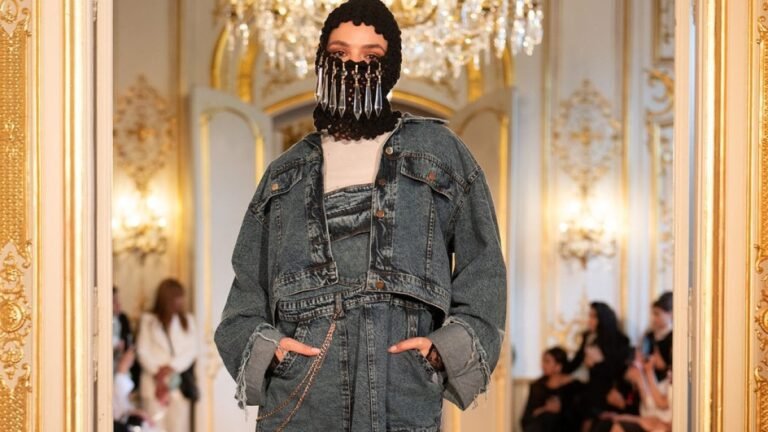
One model stomped through the hotel’s gilded salons dressed in a denim maxi dress with cargo pockets, paired with a matching cropped jacket, Far more unexpected than denim on the catwalk, however, was the black crochet balaclava, adorned with dramatic, oversized crystals, that covered her head and most of her face. It was French label Soutoura’s streetwear take on the niqab — a symbol that has been banned in France since 2010.
The country’s fraught relationship with visible expressions of Muslim identity makes it a meaningful, if not ironic, destination for the latest instalment of Modest Fashion Week, which is organised by Think Fashion and has previously held events in cities like Jakarta, Istanbul, Abu Dhabi and Amsterdam.
“Bringing it to Paris was a natural step in positioning modesty within the global fashion dialogue,” says Think Fashion CEO, Ozlem Sahin. “It’s also a statement that the industry has reached a level of maturity, where it can be presented at prestigious venues on the Champs-Elysees, with top model agencies, leading choreographers and strong execution. The message is clear: Modest fashion has the potential to be a leading force within the international fashion scene.”
French label Nour Turbans showcased full-coverage looks at Paris Modest Fashion Week, where fashion labels from across the globe presented their latest collections [Rooful Ali/Think Fashion]
Over the past decade, modesty has been reshaping retail, influencing fashion houses far beyond the Gulf. Muslim spending on fashion is forecasted to reach $433bn by 2028, according to DinarStandard’s State of the Global Islamic Economy report, as luxury brands, department stores and trend forecasters increasingly recognise modest fashion as one of the industry’s fastest-growing consumer markets.
By 2030, Muslims are expected to account for nearly a third of the world’s population, with more than half under the age of 25, and to attract this spending power, brands are increasingly catering to Muslim women and their fashion preferences.
Between 2014 and 2018, labels including DKNY, Tommy Hilfiger, Michael Kors, Mango and H&M launched Ramadan capsule collections aimed at shoppers in the Gulf. Initially, many of these collections remained geographically limited, stocked primarily in Middle Eastern stores or marketed specifically around the holy month.
At the same time, conservative silhouettes steadily migrated into the mainstream. Long hemlines, high necklines, draped tailoring and looser cuts appeared on runways that once relied heavily on skin-revealing and form-fitting fashion. Italian designer Alessandro Michele’s tenure at Gucci accelerated this shift, with Victorian-inspired blouses, floor-length skirts and layered styling turning so-called “granny chic” into one of fashion’s defining aesthetics of the late 2010s.
Modest fashion’s mainstream makeover must also credit Muslim influencers and designers on social media, who built highly engaged global audiences long before luxury fashion fully understood their commercial value. By the late 2010s, brands were flying hijabi influencers like British-Egyptian Dina Torkia, Kuwaiti Ascia al-Faraj and Palestinian-Puerto Rican Maria Alia, to fashion weeks in New York, London and Milan, dressing them in curated looks and positioning them within the front rows of luxury culture.
Yemeni-Kenyan sisters and modest fashion content creators Junaynah and Zeyaanah El Guthmy [Courtesy: Junaynah El Guthmy]
Even as wider fashion trends have swung back towards overt sensuality in recent years, Modest Fashion Week by Think Fashion continues to provide a platform for smaller, homegrown and start-up labels to showcase their designs. “These events create a sense of safety, belonging and shared identity,” says Yemeni-Kenyan creative strategist and content creator Junaynah El Guthmy. “That kind of grounding is essential if the goal is to eventually move beyond tokenism and into true, natural integration within the mainstream.”
Yet visibility has not erased tensions around ownership and authenticity. For El Guthmy, one of the biggest concerns is how modest fashion is often aestheticised within Western fashion spaces while becoming detached from the Muslim communities that built the industry. “It has deep roots in the GCC,” she says. “It came from us. If anything, it’s our perspective that has shaped how the rest of the world engages with it, not the other way around.”
That tension is especially visible in Europe, where modest fashion occupies an uneasy cultural position. Its move into luxury spaces can feel simultaneously progressive and exclusionary. As hijabi writer Hoda Katebi once wrote: “When you wear a turtleneck, you’re elegant; when I wear one, I’m oppressed.” Others have questioned why billboard campaigns depicting Muslim women often show modern turban styles rather than traditionally draped headscarves.
Working with designers and content creators from the community is crucial to avoid a Western co-opting of this market, believes El Guthmy. Some brands have taken this feedback on board. When MCM launched its first Ramadan collection in 2024, French-Moroccan hijabi influencer Hanan Houachmi was invited to co-design it with the German luxury label.
Another issue, believes El Guthmy, is the conflation of modest fashion into a single, universal aesthetic. “There is no one-size-fits-all when the realities on the ground are fundamentally different. What works in Europe will not automatically translate to the Middle East and North Africa,” she believes.
The sector’s expansion has brought to light a genuinely global ecosystem, each religion with its own aesthetics, strengths and priorities. UAE-based designer Rabia Zargarpur, who was also an adviser for previous Global Islamic Economy reports, points out that Turkiye has emerged as the logistical backbone of modest fashion e-commerce through platforms like Modanisa. Countries like Indonesia and Malaysia, meanwhile, have become the industry’s most innovative creative hubs.
Designers like Indonesian visionary Dian Pelangi helped establish Southeast Asia as one of the industry’s most influential creative forces, combining traditional silhouettes with contemporary streetwear and social media-driven styling that has helped shape modest fashion globally.
“Unlike other markets, Southeast Asia has successfully integrated fashion into a holistic lifestyle ecosystem that includes beauty, fintech, and travel,” explains Zargarpur, adding that they have made strides forward with innovative, breathable and high-performance textiles that allow for full coverage in tropical humidity.
Modest dressing increasingly blends heritage silhouettes with high-fashion styling, like designs by Turkish label Tug Fashion at Paris Modest Fashion Week [Rooful Ali/Think Fashion]
In the Gulf, the abaya has evolved from what Zargarpur describes as a “functional uniform” into “a high-fashion heritage statement”, increasingly positioned alongside high-fashion occasionwear. Here, consumers often gravitate towards embellishment, statement silhouettes and couture-level craftsmanship, while European modest dress tends to emphasise minimalism, layering and daywear versatility.
As modesty increasingly expands from a retail niche to a much larger sector with international demand, new opportunities have emerged — from hijabi models and content creators to behind-the-scenes jobs in marketing, design and development. A decade ago, the industry barely existed in institutional terms, reflects Zargarpur, who has evolved from a clothing designer to a consultant, mentoring entrepreneurs and helping build fashion ecosystems.
Today, she spends as much time advising governments and mentoring entrepreneurs as she does designing clothes — a reflection of how rapidly the sector has matured into a global commercial and cultural industry with its own infrastructure, talent pipelines and business networks.
“These roles simply didn’t exist in this space when I started,” she says. “The professionalisation of this sector created a massive demand for high-level advisory that bridges the gap between creative vision and wide-scale growth operations.”
And yet, for many women working in modest fashion, there is still more work to be done, beyond its mainstream acceptance. Mariah Idrissi, who became the first hijabi model to front a global H&M campaign in 2015, has increasingly focused on sustainability and ethical production within modest fashion — concerns that mirror broader anxieties across the luxury industry itself.
Avoiding fast fashion, promoting supply chain transparency and ensuring ethical labour practices are also Islamic values, believes Idrissi, and should be upheld by designers in this space. Following fast-paced trend cycles risks overconsumption, which is inherently at odds with the faith-based foundations of modest fashion.
As modesty gains traction, its compatibility with broader style movements has also emerged. “Quiet luxury”, for instance, has become a significant sartorial movement, championing minimalism, quality, neutral tones and a rejection of overt and flashy logos — values that closely mirror the ethos of modest fashion.
“Definitions of modesty have undoubtedly diversified,” says Deborah Latouche, founder of luxury label Sabirah [Asia Werbel]
Deborah Latouche, founder of London-based luxury label Sabirah, has tapped into this demand for longevity, creating investment pieces that transcend seasons and trends. She launched Sabirah in 2020 to challenge the narrative that elegance and coverage couldn’t co-exist in fashion-forward garments, and the brand has been showcased during London Fashion Week.
“In Europe, we have seen a clear shift from modest fashion being perceived primarily through a religious lens to being understood as a broader lifestyle choice,” says Latouche. “Definitions of modesty have undoubtedly diversified. It is no longer a fixed or singular idea; it is fluid, culturally nuanced and deeply individual.”
Whether modesty is being embraced because of ideology, ethics, a sense of autonomy or a rejection of hypersexualisation, it’s clear that what was once treated by much of the Western fashion establishment as outdated and commercially marginal is now being actively courted by the industry’s major players. As modesty moves into its next phase, the voices that will matter most belong to the women shaping it and wearing it.
“Today’s consumer is highly aware,” says Latouche. “She understands craftsmanship, she understands value, and she expects to be seen as part of the fashion conversation rather than an afterthought.”
Access Denied
You don’t have permission to access “http://hindi.news18.com/news/ajab-gajab/viral-60kg-grandma-lifts-110kg-shocking-fitness-video-gym-weightlifting-viral-10484826.html” on this server.
Access Denied
You don’t have permission to access “http://hindi.news18.com/news/ajab-gajab/viral-india-most-historic-bridge-built-in-just-two-days-500-years-ago-still-surprises-scientists-with-strength-10485351.html” on this server.