Reference #18.6e560e17.1778912309.143c261a
https://errors.edgesuite.net/18.6e560e17.1778912309.143c261a
Reference #18.6e560e17.1778912309.143c261a
https://errors.edgesuite.net/18.6e560e17.1778912309.143c261a
In a major shake-up at the US Food and Drug Administration (FDA), top regulators left on Friday – including Tracy Beth Høeg, the acting drug chief, who says she was fired, and Katherine Szarama, the acting vaccines chief who has only been in the position for days. Jim Traficant, the chief of staff, has also been ousted.
The FDA now has no permanent commissioner or deputy commissioner and no permanent leaders of two major centers, after the resignation of Marty Makary on Tuesday and other high-profile departures.
According to an email obtained by the Guardian, FDA staff only received official word on Friday afternoon that Makary is leaving and Kyle Diamantas, previously the top food regulator, will temporarily lead the agency as acting commissioner – though they had clues from President Donald Trump’s social media posts and the reported removal of Makary’s photo from the lobby of FDA headquarters.
The departure of Makary and several key allies at FDA signifies a potential new direction for the agency, which has been rocked by controversial decisions on vaccines, rare disease medications, staff layoffs and low morale.
“I was fired,” Høeg wrote on X on Friday night, noting that she had served exactly six months as head of the Center for Drug Evaluation and Research (CDER) – though she didn’t mention she served as acting, not permanent, director of the center.
Høeg told the New York Times and other outlets that she was fired from the agency after she declined to resign.
Before overseeing the nation’s drug regulation center, Høeg was an adviser to Makary, and she focused on gathering reports of adverse vaccine reactions and attempting to align the US childhood vaccine schedule with that of Denmark, where Høeg is a dual citizen and received her degree in epidemiology. A sports medicine physician, Høeg rose to national prominence by casting doubt on the safety and necessity of Covid vaccines, and she had no apparent experience in drug regulation.
Høeg was the fifth leader of the center in a year, after high-profile departures of leaders such as George Tidmarsh and Richard Pazdur.
Michael Davis, CDER’s deputy director, will now serve as acting director, according to STAT News.
Szarama took over as acting director of the Center for Biologics Evaluation and Research (CBER) after the departure of another highly controversial figure, Vinay Prasad, last month. But Szarama, who was in the position for 10 days and had not even had time to update her LinkedIn profile, is also reportedly leaving the agency. Karim Mikhail, who was CEO of the pharmaceutical company Amarin before joining FDA last year, will now temporarily head the center.
Traficant, who was chair and CEO of Citadel Sciences before joining the FDA last March, is also out.
Donald Trump has said US and Nigerian forces killed the “second in command” global leader of the Islamic State.
“Tonight, at my direction, brave American forces and the Armed Forces of Nigeria flawlessly executed a meticulously planned and very complex mission to eliminate the most active terrorist in the world from the battlefield,” the US president said on his Truth Social platform Friday.
“Abu-Bilal al-Minuki, second in command of ISIS globally, thought he could hide in Africa, but little did he know we had sources who kept us informed on what he was doing,” Trump added.
Al-Minuki had been placed under US sanctions in 2023 for ties to the Islamic State group.
“He will no longer terrorize the people of Africa, or help plan operations to target Americans,” Trump said. “With his removal, ISIS’s global operation is greatly diminished.”
Trump thanked the government of Nigeria for its “partnership” on the operation, while not disclosing exactly where it took place.
Al-Minuki, a Nigerian national, was designated as a “specially designated global terrorist” by the former Biden administration in 2023, according to the US federal register.
Trump has previously accused Nigeria of failing to protect Christians from Islamist militants in the north-west.
Nigeria denies discriminating against any religion, saying its security forces target armed groups that attack both Christians and Muslims.
The US carried out strikes targeting Islamic State-linked militants in Nigeria in December. Since then, Washington has deployed drones and 200 troops to provide training and intelligence support to the Nigerian military against Islamic State and al Qaeda-linked insurgencies that are spreading across west Africa.
The US forces were operating in a strictly non-combat role, Nigerian military officials said earlier this year.
With Agence France-Presse and Reuters
Reference #18.6e560e17.1778910389.143477f7
https://errors.edgesuite.net/18.6e560e17.1778910389.143477f7
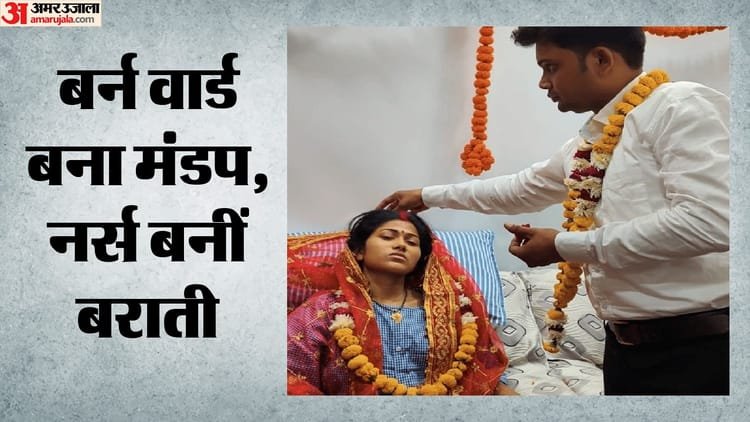
It is said that matches are made in heaven, but in Kanpur, a couple was born who has presented a new example of love and loyalty to the world. In the house where the wedding bells were to be resounding, the cylinder blast fire tried to turn the happiness into mourning. But, a groom’s steadfast decision not only saved his bride’s life, but also turned the hospital’s ‘burn ward’ into a sacred pavilion. On Friday night, when the groom asked for the bride lying on the hospital bed, wrapped in bandages, the eyes of everyone present there became moist.

After the Bhojshala complex located in Dhar, Madhya Pradesh was declared a temple, worship started here on Saturday. There is an atmosphere of happiness on the Hindu side after the Indore Bench of Madhya Pradesh High Court gave its verdict on the Bhojshala-Kamal Maula dispute. After the decision, a large number of devotees reached the Bhojshala premises and worshiped as per the rituals.
Reference #18.2d4adc17.1778910763.2514fa0
https://errors.edgesuite.net/18.2d4adc17.1778910763.2514fa0
“People hate you,” the adviser informed his leader. A think-piece in a daily newspaper noted that “almost everyone agrees on one thing: they don’t like him”.
The recent disastrous set of local election results in the UK built on Keir Starmer’s longstanding reputational problem: only 11% of Britons believe he has been a good or great prime minister, and nearly 60% believe he has been poor or terrible, according to polling by YouGov.
Little wonder that a large number of his colleagues are seeking to drag him out of Downing Street despite being in power for less than two years. But the startlingly frank adviser quoted above was not talking to Starmer but instead to France’s president, Emmanuel Macron. The no-nonsense newspaper article was not about the British prime minister but the German chancellor, Friedrich Merz.
Starmer is unpopular. According to Statista, just 27% approve of him, and 65% do not, with 8% said to be unsure. But the numbers are even more dire for both Merz (19% approve, 76% disapprove and 5% did not know) and Macron (18% approve, 75% disapprove, 7% don’t know).
The three largest economies in Europe are being led by leaders who are regarded by their people with something close to contempt, the polling suggests, but then few incumbents on the continent are bucking this trend.
The Austrian chancellor, Christian Stocker, is widely regarded as being an ineffective leader of his coalition. Jonas Gahr Støre, whose Labour party in Norway has been buffeted by all manner of scandals, has a disapproval rating that is only a marginal improvement on that of Starmer. The same is true of Bart de Wever, the prime minister of Belgium who is leading a coalition that is putting through strict budget cuts, pension reforms, and tax increases as it seeks to fix the country’s public debt.
All have ratings that are worse than Donald Trump (38% approve, 57% disapprove and 6% don’t know), at a time when the polling shows him to be as unpopular as he has ever been. That includes the period in the immediate aftermath of the storming of Congress by his supporters on 6 January 2021. Spain’s Pedro Sánchez and Italy’s Giorgia Meloni fare only a little better than the US president and, for all their faults, they did not start a war in Iran. So what is happening?
In Berlin, where Peter Matuschek, the head of the polling thinktank Forsa, follows the fortunes of the German chancellor, it can sometimes feel that Europe has fallen foul of a spectacularly poor generation of politicians.
Merz was unpopular even before he became chancellor, but his error-strewn pronouncements and empty promises have only worsened his polling numbers, said Matuschek. Most recently the loquacious self-confident chancellor opened up a transatlantic rift by telling a class of schoolchildren that the US was being “humiliated” by Iran’s leadership.
“If you look at the problems that all the other incumbents are confronted with, maybe it’s a lack of politicians able to tackle the problems,” Matuschek said. “In the Covid crisis, at the beginning of 2020, we saw that all the institutions, including the chancellor, the government, parliament, really got up digit points in approval because people saw that although the problem was so overwhelming, they had the impression that something was being done about it. So every crisis contains at least the chance for any leader to grow with the crisis.”
Such a conclusion may be a little hard on Macron, who is coming to the end of his 10 years in power. Since 2022, his capacity to make things happen has been hamstrung by his lack of a majority in the national assembly. But then Macron’s approval numbers are significantly worse than those enjoyed by Jacques Chirac in 2006 at the end of his two terms, and Chirac had been described at the time as “the most unpopular occupant of the Élysée Palace” in the history of the Fifth Republic. But Matuschek’s critique of Merz – broken promises, failure to deliver on reforms and an inability to manage his party – will have the ring of familiarity to it for anyone following the British prime minister’s time in power. Poor judgment and a lack of charisma, or arguably the wrong sort in the case of Merz, is surely part of the problem – but is there not a more structural issue facing the major European powers?
According to World Bank data, Europe’s share of global economic output, measured in current US dollars, fell from roughly 33% to 23% between 2005 and 2024 – a proportion said by the Maddison Project, a database that tracks economic history at the University of Groningen in the Netherlands, to be likely the lowest from the continent since the middle ages. The US economy is expected to expand by 2.4% this year. Compare that to France (0.9%), the UK (0.9%) and Germany (0.6%). The Wall Street Journal recently reported that executive assistants in New York City earn around the same as specialist doctors in London.
Strong leadership can make a difference but Fabian Zuleeg, of the European Policy Centre, said that European leaders are facing tough headwinds that any leader would struggle to navigate. They range from Europe’s need to cut itself off from its reliance on cheap Russian fossil fuels after Vladimir Putin’s full-scale invasion of Ukraine to the rise of China as an economic and manufacturing powerhouse. Indeed, Starmer’s poll numbers are not unheard of in British politics. The personal ratings for Margaret Thatcher, when polled 45 years ago this month during another time of major economic strife, bear a resemblance to that of Starmer’s: 33.5% were satisfied with Thatcher in May 1981 and 60.5% were dissatisfied.
“I think it is also more structural,” said Zuleeg of Europe’s leadership problem. “In Europe, in a sense, the holiday from history is over, which means we have to tell our populations that there are difficult times ahead, that this will have an impact on their daily lives, that this will entail decisions, which are unpopular, because of the global turmoil in which we find ourselves in. I don’t think our leaders have been able to convince populations that the pain which they are feeling is necessary, which means the this has a direct impact on their own popularity.”
Scan across Europe and there are leaders who appear to have bucked the trend, Zuleeg said. After seven years in power, Mette Frederiksen is still in with a shout of staying on as the prime minister of Denmark after an election in which her Social Democrats party was left bloodied but not bowed. Coalition talks are continuing. Frederiksen had cut into the votes of the far right by taking a tough stance on immigration and had navigated the clash with Donald Trump over his claims to Greenland, a Danish territory. “She’s a steady hand,” said Emil Sondaj Hansen from the Europa thinktank in Copenhagen.
But while the cost of living crisis was a major talking point in the recent elections, Denmark has also benefited from long-term energy planning, with 80% of the country’s electricity consumption now sourced from renewable energy, primarily wind power. Denmark’s economy is expected to grow by between 2% and 3% this year. Ultimately, today’s leaders can only do so much to make their mark. They operate in an environment shaped by the failures and successes of their predecessors.
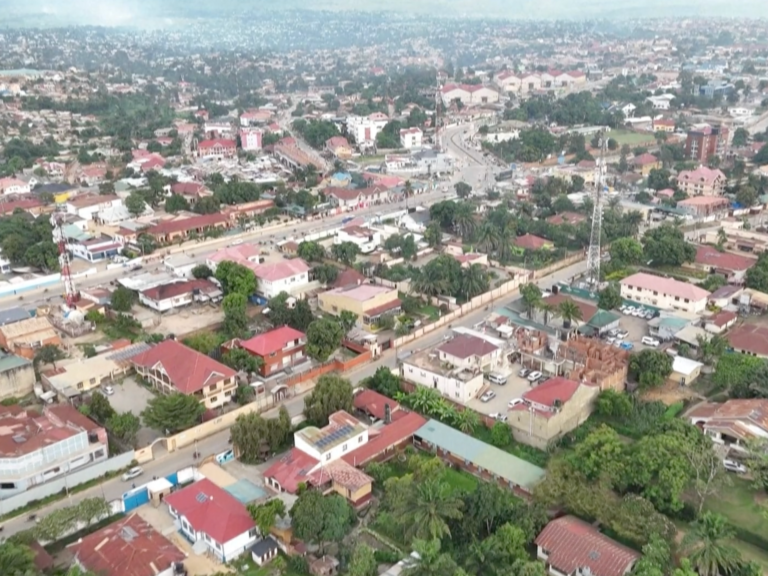
Sixty-five people have died in a new Ebola outbreak in DR Congo’s Ituri province with 246 suspected cases. A Congolese man has also died of the virus in Uganda’s capital Kampala, raising fears of further cross-border spread.
Published On 16 May 2026
British Palestinians feel unable to speak openly about Israel’s war on Gaza, the director of the British Palestinian Committee has said, amid what campaigners believe is a growing climate of hostility around Palestinian identity and activism in the UK.
Some were afraid to wear Palestinian symbols at work or display Arabic jewellery and keffiyehs in public, Sara Husseini said.
“We have many documented reports of Palestinians and allies being silenced or punished for wearing Palestinian symbols, watermelon pins, or speaking about the genocide,” she said. “Many colleagues across all kinds of sectors feel they are being gaslit while friends and families are being massacred back home.”
Speaking before Saturday’s national march in London commemorating the 78th anniversary of the Nakba (“catastrophe”) – the displacement of at least 700,000 Palestinians during the creation of Israel in 1948 – Husseini said many Palestinians felt they were being treated not as victims of mass suffering, but as suspects whose grief had become politicised.
“Cruelty is the word I would use, particularly for colleagues who are from Gaza or have family there, knowing these atrocities are being inflicted on their loved ones day in, day out,” Husseini said.
“And then being effectively told: not only are we not going to acknowledge that this is happening to you, we’re going to disbelieve you, interrogate you, stop you from speaking about it, and if you do speak, we’re going to paint you as the problem.”
Born to a Palestinian father from Jerusalem, and an English mother from Leicestershire, Husseini has spent decades involved in Palestinian advocacy, including advisory work for the Palestine Liberation Organisation during the years of the failed peace process.
“The past two and a half years have been one of daily horror and fear as Palestinians have watched our families and friends massacred, starved and tortured,” she said, describing this period as the darkest chapter in Palestinian history since 1948.
Yet despite her fury at successive British governments, she repeatedly returned to the solidarity shown by ordinary Britons, describing the mass pro-Palestine marches as a source of emotional survival for many Palestinians.
“We feel a great deal of solidarity from the British public,” she said. “What we’ve seen is hundreds of thousands, if not millions, of people of conscience from all walks of life and all backgrounds who have marched, signed petitions, written to their MPs and protested our government’s complicity in Israeli war crimes.”
A recent Unrwa dispatch said 111 Palestinians, including at least 18 children and seven women, were killed by Israeli forces in Gaza in April alone, bringing the total number of Palestinian deaths since the war began to 72,619. The UN agency said emergency tents for displaced people were now infested with disease-carrying rodents, causing an increase in skin infections.
An estimated 700 Palestinians have managed to flee Gaza for the UK. “Palestinians who came over during this period have had to find specialist nutritional support because they had been starved and couldn’t just take food on normally when they first arrived,” Husseini said. “That’s not to mention the trauma, the psychological damage, that will seep down through generations.”
The Nakba march comes amid mounting tensions over the future of pro-Palestinian demonstrations in Britain, with some Jewish groups and politicians calling on ministers and police to impose tighter restrictions on marches.
Husseini rejected descriptions of the protests as “hate marches”, stating: “It’s actually the complete inverse: it’s a protest against the most hateful acts possible: war and genocide.”
Husseini said she attended the protests with her two young children. “We walk alongside people of all faiths, all communities, including 13 organised Jewish blocs. These are all Britons of conscience protesting against the killing of children, the bombing of a captive population, the forced starvation of human beings,” she said.
“I think the answer to why they’re being very clearly misrepresented as hate marches is to undermine the hundreds and thousands of people who are turning up on the street. It’s to distract from the government’s complicity in these crimes.”
While the UK formally recognised a Palestinian state last year, some Palestinians hoped Keir Starmer’s government would take a more robust stance in defence of Palestinian rights.
Husseini said engagement with Palestinians in Britain often amounted to little more than “photo opportunities”. She pointed to Starmer’s visit to a Cardiff mosque shortly after his “unacceptable” 2023 LBC interview, in which he appeared to defend Israel’s right to withhold power and water from Gaza.
“This is part of stirring up communal tensions and a wider culture-wars mentality that frames it as Muslims against Jews,” she said. “That framing is just not right.”
Husseini said she was not surprised by commentary in the mainstream British media casting Palestinian identity itself as suspicious or extremist. “This is part of a broader attempt to erase and invisibilise Palestinians,” she said. “It goes hand in hand with attempts to dehumanise Palestinians, and dehumanisation is a prerequisite for genocide.”
Still, she said, she remained hopeful, linking her people’s struggle to the anti-apartheid movement in South Africa. “Our freedom is ultimately inevitable.”
