Trump pushes House to pass housing bill as GOP disagreement stalls action


NEWYou can now listen to Fox News articles!

President Donald Trump is leaning on Congress to tee up an affordability win ahead of November’s midterm elections, but entrenched GOP disagreement on a sweeping housing proposal threatens to derail it. 

Trump on Monday called on the House to swiftly approve Senate-passed legislation aimed at easing housing affordability that has languished in the lower chamber for several months. House Republicans, however, have balked at that request and are pitching a rival plan. 

House Speaker Mike Johnson, R-La., teased earlier in the week that Republicans and Democrats would come together to bring a “bipartisan, bicameral bill to the president’s desk.”  

“I think everybody feels like it’s important, so we’re just working out some nuances,” Johnson said.
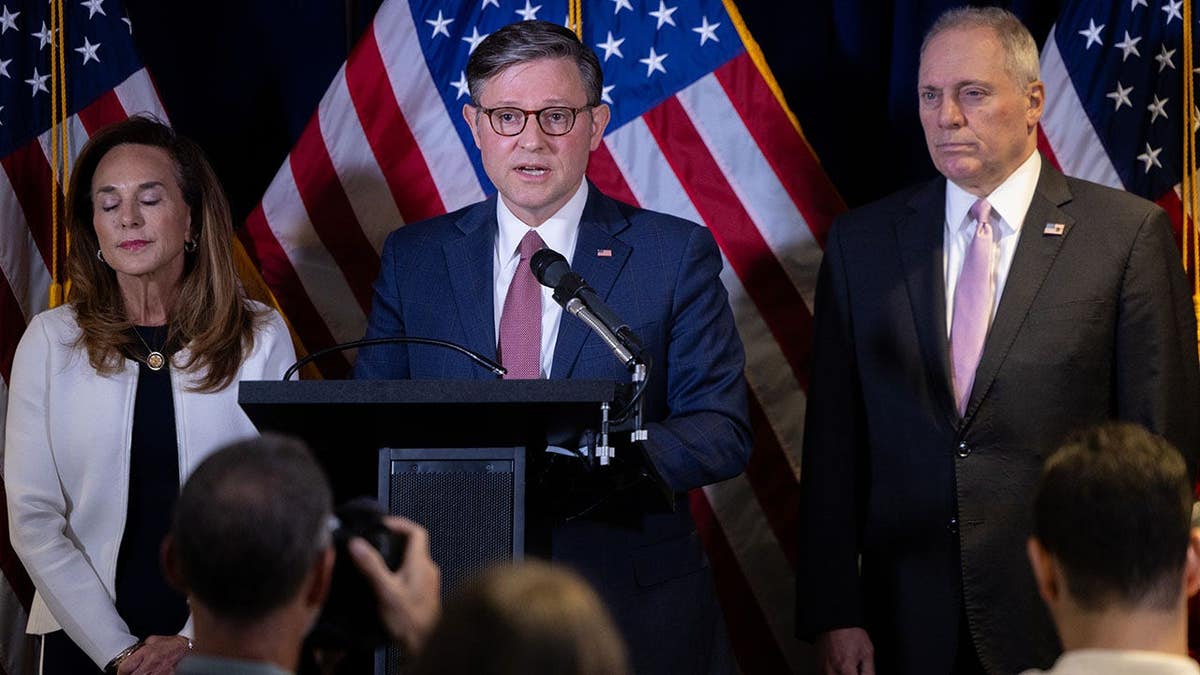
Speaker of the House Mike Johnson speaking at a press conference in Washington, D.C.

Speaker of the House Mike Johnson speaks at a press conference with House Republican leaders at the Republican National Committee headquarters in Washington, D.C., on May 13, 2026. (Nathan Posner/Anadolu via Getty Images)

TRUMP-BACKED AFFORDABLE HOUSING OVERHAUL CLEARS SENATE, WHILE HOUSE GOP RAISES RED FLAGS

Senior House lawmakers on Thursday unveiled a modified version of the Senate’s 21st Century ROAD to Housing Act, which is expected to receive a vote in the lower chamber as early as next week. 

Any changes to the Senate’s proposal would force the upper chamber to consider the measure again, prolonging the timeline lawmakers can send legislation to Trump’s desk.

Sen. Elizabeth Warren, D-Mass., one of the chief architects of the Senate’s bill, declined to say whether she was speaking with her counterparts in the House about tweaks to the bill, and argued that lawmakers were running out of time to do something.

“There’s a housing crisis out there,” Warren said. “This bill can pass today if the House would just put it on the floor and vote on it.
We need to get started, and if the House has more ideas than they’d like to add, start another bill.” 

Some GOP lawmakers are not sweating the wait.

“We cannot take the Senate bill to the floor,” House Freedom Caucus Chairman Andy Harris, R-Md., told Fox News Digital in an interview earlier this week.

The political dynamics are much different in the Senate, however. And the housing bill passed with fewer than a dozen defectors in March — a rare feat in such a hyper-partisan Congress. 

Senate Majority Leader John Thune, R-S.D., argued that the easiest route to putting the legislation on Trump’s desk is passing the Senate’s version.

“It’s been sitting over there for a while and the president’s weighed in on it. I think, you know, the White House made it clear, they would like to see the House pick up and pass the Senate bill,” Thune said. “We’ve done what we can do. It’s in the court of the House now.”

The House product struck out a controversial provision taking aim at the build-to-rent market that drew the opposition of conservatives, who argued the language amounted to excessive government interference in the housing market.

The clause in the Senate’s proposal would have specifically required some developers to sell single-family homes built for the purpose of renting within seven years after construction. The build-to-rent industry and opponents of the provision argued their properties provide a more affordable option for some Americans priced out of the housing market and could imperil the supply of rentals across the country.

“We’ve got to make sure we do it in a right way that continues to keep free markets,” Rep. Michael Cloud, R-Texas, said, adding that the clause in the Senate bill could make it “impossible” for some people to access housing.

Split of Thune, Johnson, and Trump

Senate Majority Leader John Thune, R-S.D., and House Speaker Mike Johnson, R-La., are pitching rival housing bills as President Donald Trump looks for a legislative win on affordability. (Anna Moneymaker/Getty Images; Kent Nishimura/Getty Images; Kevin Dietsch/Getty Images)

FOREIGNERS ARE SNAPPING UP US HOMES AND STEALING THE AMERICAN DREAM OUT FROM UNDER FAMILIES

The proposal, however, would also weaken a ban on large institutional investors from purchasing single-family homes — a priority of the Trump administration.

The House’s rival housing bill notably preserves a ban on central bank digital currencies (CBDC) through 2030 that was included in the Senate’s legislation.

House conservatives raged at the Senate bill for stopping short of enacting a permanent CBDC ban — a top priority of GOP privacy hawks, who have sought to add the language to various legislative vehicles.

“It has to be permanent,” Cloud said. “We’ve got to put the nail in the coffin on it.”

House Financial Services Chairman French Hill, R-Ark., a co-author of the House’s rival housing package, said he shared Trump’s goal of expanding access to affordable homeownership in a statement Thursday.

“It cuts unnecessary barriers to new home construction, modernizes HUD programs, and allows banks to more freely deploy funding into their communities,” Hill said regarding the lower chamber’s proposal. “We must get this right — and I am committed to working hard to do that.”

Not everyone in the Senate is upset by the House’s decision to modify the bill. 

Sen. Rick Scott, R-Fla., was one of the few lawmakers to vote against the 21st Century ROAD to Housing Act, and told Fox News Digital that housing affordability isn’t something that’s dictated by the federal government.

Prospective buyers arriving at an open house in Rancho Cucamonga California

Prospective buyers arrive during an open house in Rancho Cucamonga, Calif., on May 9, 2026, amid rising mortgage rates that could slow the spring home sales season. (Kyle Grillot/Bloomberg via Getty Images)

CLICK HERE TO DOWNLOAD THE FOX NEWS APP

“If you wanted to actually reduce housing costs, it’s local governments who are gonna have to allow more houses to be built,” Scott said. 

The legislative standoff comes as a recent Fox News poll found that nearly 80% of voters said housing costs were a problem for them or their family. The same survey also found that Democrats hold a lead over Republicans on inflation and the economy.


Source link

Access Denied

0

Access Denied You don’t have permission to access “http://hindi.news18.com/cricket/sourav-ganguly-asked-sachin-tendulkar-rahul-daravid-anil-kumble-tujhe-kisi-ne-pucha-first-team-meeting-fixing-controversy-man-who-changed-indian-cricket-forever-ws-n-10479757.html” on this server.

Reference #18.490dde17.1778842666.435c733e

https://errors.edgesuite.net/18.490dde17.1778842666.435c733e

Gold drops 2% as stronger dollar and rising yields pressure bullion

0

Other precious metals, including silver, platinum and palladium, also declined sharply.

Other precious metals, including silver, platinum and palladium, also declined sharply.

Gold dropped 2% on Friday as surging Treasury yields and a stronger US dollar dulled its appeal, with higher oil prices and persistent tensions in the Middle East reinforcing expectations of higher interest rates.

Spot gold was down 2.2% at $4,546.45 per ounce by 1000 GMT, its lowest since May 5. Bullion is on track for a weekly loss, down 3.6% so far. US gold futures for June delivery lost 2.9% to $4,550.80.

Rising yields and stronger dollar pressure gold

Benchmark 10-year US Treasury yields rose to a near one-year high, increasing the opportunity cost of holding non-yielding gold. The dollar also firmed, making greenback-priced bullion more expensive for overseas buyers.

“Yields and the dollar are higher on heightened inflationary concerns, stemming in part from the Gulf hostilities and backed up by the April PPI and CPI numbers released this week,” said StoneX analyst Rhona O’Connell.

Brent crude oil prices were up 7.8% this week, hovering above $109 a barrel, as the Strait of Hormuz remains largely shut.

Higher fuel prices can feed into inflation as manufacturers pass on costs. This, in turn forces central banks to keep interest rates elevated, dimming non-yielding gold’s appeal.

Inflation fears reduce hopes of rate cuts

Inflation data this week has shown consumers and businesses are starting to see big increases in price pressures as a result of the war.

Traders have largely priced out US interest rate cuts this year, according to CME’s FedWatch Tool.

“Gold has been wary of the Gulf war for a good while now and the slew of news out of India this week with respect to import duties has exacerbated tensions in an already weak market,” O’Connell added.

Gold discounts in India jumped to a record this week, triggered by a sharp import duty hike.

Other precious metals also head for weekly losses

“Longer term, the mood is constructive towards higher prices, but arguably in the short term gold is unreadable as uncertainty grips the newswires,” said independent analyst Ross Norman.

Spot silver fell 7.2% to $77.46 per ounce, platinum lost 2.9% to $1,996.34, and palladium was down 1.4% at $1,417.18. All three were headed for weekly losses.

Published on May 15, 2026

ZTE showcases at GSMA M360 LATAM 2026, driving future business model restructuring

0

AI-integrated networks can cut costs, boost 5G efficiency, and help regional telcos shift beyond basic connectivity

Partner Content ZTE Corporation (0763.HK / 000063.SZ), a global leading provider of integrated information and communication technology solutions, participated in GSMA M360 LATAM 2026. Ms. Chen Zhiping, Chief International Ecosystem Representative of ZTE, delivered a keynote speech entitled “Driving Future Business Model Restructuring — AI & Network Two-Way Integration” at the conference.

Ms. Chen provided an in-depth analysis of the industrial value of the two-way integration of AI and networks, sharing ZTE’s achievements in the Latin American market over the past two decades, its AI-Native network innovation practices, and its full-scenario intelligent solutions, helping Latin American operators complete their strategic upgrade from “connectivity providers” to “digital economy enablers”.

Facing the AI industry wave, ZTE released its global strategic vision in 2025: “All in AI, AI for All, Becoming a Leader in Connectivity and Intelligent Computing”. Ms. Chen stated that this strategy is highly aligned with the core concepts of this GSMA Summit. In the future, ZTE will move beyond traditional network connectivity services, continuously upgrade its basic network capabilities, and comprehensively expand its AI and intelligent computing business layout. Through a two-way integration model of AI empowering the network and the network supporting AI, ZTE will reconstruct a new business model adapted to the AI era and activate new growth momentum for the Latin American digital economy.

In terms of AI-enabled network upgrades, ZTE has pioneered the AI-Native network concept, deeply embedding AI capabilities into all network layers and processes to maximize network efficiency and optimize costs. In the wireless network field, ZTE’s new 5G BBU integrates native intelligent computing capabilities, effectively improving the overall efficiency of hardware and software resources and increasing cell throughput by 20%. Simultaneously, by combining Super-N high-performance power amplifiers and AI intelligent optimization technology, equipment energy consumption is reduced by 38%. Currently, AAU and RRU products equipped with this technology have been deployed on a large scale in several Latin American countries, including Chile, Ecuador, Bolivia, Brazil, and Peru, with over 37,000 units deployed to date, saving local operators millions of dollars in electricity costs annually and achieving efficient, green, and intelligent network upgrades.

Built upon AI-Native technology, the AIR Net advanced intelligent network solution enables commercial deployment of “autonomous driving” for networks, comprehensively revolutionizing operator operation and maintenance models and reducing overall TCO. This solution has already been commercially deployed in multiple locations globally. Currently, ZTE’s intelligent network capabilities have obtained authoritative L4-level certification from the TM Forum, and its self-developed Co-Claw enterprise-level intelligent agent has been fully implemented internally, continuously improving network automation and intelligence levels and helping operators move towards advanced intelligent networks.

In response to the complex and diverse network environment in Latin America, ZTE continues to implement scenario-based coverage solutions to bridge the regional digital divide. In indoor scenarios, ZTE has partnered with Chilean company Millicom to deploy the Qcell solution, achieving stable gigabit coverage throughout buildings. In remote rural scenarios, ZTE collaborates with Brazilian company Claro to implement the RuralPilot simplified rural network solution, addressing network coverage challenges in the vast Amazon region with its low cost and ease of maintenance. ZTE also offers a wide range of home coverage solutions, precisely matching the networking needs of different regions and scenarios in Latin America.

Ms. Chen Zhiping stated that ZTE will continue to be rooted in the Latin American market, deepen the two-way integration and innovation of AI and networks, and continue to implement green, efficient, and intelligent full-stack ICT solutions to help local operators complete their strategic transformation, upgrade from traditional connectivity service providers to digital economy enablers, comprehensively meet the intelligent needs of industries and families in all scenarios, and work together to build a smart, inclusive, and sustainable new digital ecosystem in Latin America.

Contributed by ZTE.


Source link

US teens getting less sleep than ever, new report finds | US news

0

A new study from the University of Minnesota School of Public Health shows that today’s teenagers are sleeping less than ever before.

The findings, which appeared in Pediatrics, showed a consistent decline in sleep across every age category. The latest figures revealed record-low sleep levels for all groups, with only 22% of older adolescents saying they slept at least seven hours each night.

“Some barriers to sleep faced by teens have existed across generations, such as the increased homework and extracurricular demands that come with high school, social pressures to stay up late with peers, and jobs,” said Rachel Widome, lead author on the study and a professor at the University of Minnesota School of Public Health.

“Other issues, though, are new in recent years, such as increasingly ever-present screens and social media as well as recent society-wide stressors such as the pandemic, social unrest or militarized policing,” she added.

The study also reported growing gaps in sleep outcomes. Black and Latino teens, along with adolescents whose parents have lower levels of education, are becoming increasingly less likely to get adequate sleep compared with other groups.

The greatest impact was seen among older adolescents. Sleep time steadily declines as teens age, while both sleep duration and feelings of getting enough rest drop significantly from early adolescence to later teen years.

For the study, researchers analyzed data from Monitoring the Future, a long-running national survey representing more than 400,000 US students in grades eight, 10 and 12 from 1991 through 2023. Participants responded to two primary questions: how often they slept at least seven hours per night and how often they believed they were getting enough rest.

Insufficient sleep contributes to everyday exhaustion and inhibited functioning, while also being linked to longer-term issues such as mental health problems, struggles in school and chronic illnesses later in adulthood.

While surging screen time may seem like the obvious culprit, the root cause may point to deeper feelings of social isolation and burnout. Recent high school student-led research from Aim Ideas Lab showed that roughly two-thirds of California teens reported experiencing burnout and anxiety.

The same research suggested that around a quarter of students believe they only have enough time to meet basic needs, such as sleep, eating and hygiene, two days a week or less.

Jolie Delja, executive director of Aim Youth Mental Health, said that the respondents “connected this directly to relentless academic pressure”.

“They asked for time to slow down, and the chance to learn and practice coping skills like breathing and mindfulness during calm moments, not just crisis ones,” Delja said. “Schools and communities do not need to invent entirely new solutions. They need to give students more time and space for the people, activities and coping tools that already help them manage stress, including getting more sleep.”

Studies have also shown that teens who go to bed earlier and sleep for longer than their peers tend to have sharper mental skills and score better on cognitive tests.

Although researchers say there is no single nationwide fix, they point to broader structural approaches that could help large groups of adolescents. One approach that the researchers suggest is to delay high school start times to 8.30am or later. “Earlier starts are in direct conflict with preset rhythms of adolescent circadian biology,” Widome said.

“A nation of sleep-deprived adolescents is not inevitable,” she added. “We should embrace a culture of sleep, where sleep is actually valued and where we commit to enacting policies and other interventions that promote healthy sleep for everyone.”


Source link

Honasa wins arbitration against Dubai distributor, awarded AED 7.25 million

0

Honasa's stock closed at ₹353 on the NSE on Friday, up marginally, touching a 52-week high of ₹364.70 intraday.

Honasa’s stock closed at ₹353 on the NSE on Friday, up marginally, touching a 52-week high of ₹364.70 intraday. Photo Credit: Dinakaran

Honasa Consumer Limited, the parent company of MamaEarth, secured a decisive arbitration victory on Thursday against its former Dubai-based distributor RSMM General Trading LLC, with the arbitral tribunal awarding the company AED 7,254,340 (approximately ₹18.88 crore).

The final award, passed on May 14, 2026, by sole arbitrator Justice (Retd) Hrishikesh Roy, a former Supreme Court judge, ruled entirely in Honasa’s favour.

The tribunal declared that Honasa’s termination of the Authorized Distributor Agreement (ADA) with RSM was valid, and that RSM had breached the arbitration and exclusive jurisdiction clauses of the agreement by approaching the Dubai courts. RSM has been permanently restrained from initiating or continuing any proceedings before the Dubai courts.

Arbitration Relief

The monetary award includes AED 4.34 million towards loss of profits from RSM’s contractual breaches, AED 1.56 million for litigation costs in Dubai and India, AED 1.06 million for substitution costs, and ₹76.5 lakh towards arbitration costs. Post-award interest kicks in if amounts remain unpaid beyond 30 days.

The dispute dates to 2020, when RSM and Honasa entered an authorized distributor agreement for the UAE market. Following termination of the agreement, RSM sued in Dubai, initially winning a judgment of AED 25 million at the Court of First Instance in May 2024. That figure was substantially reduced to AED 1.7 million by the Court of Appeal in February 2026, a de Honacisionsa has separately challenged before the Cassation Court, with a judgment due June 17, 2026.

Honasa’s stock closed at ₹353 on the NSE on Friday, up marginally, touching a 52-week high of ₹364.70 intraday. The stock has gained nearly 39 per cent over the past year and trades at a trailing P/E of 73.72, with a market capitalization of approximately ₹11,486 crore.

Published on May 15, 2026

Profiler reveals ‘extremely rare’ red flag in Texas migrant’s case


NEWYou can now listen to Fox News articles!

A prominent criminal profiler is warning that a suspected budding serial killer in Texas has allegedly started years earlier than expected and fears there may be more victims due to a six-year gap between murder charges.

Luis Benitez-Gonzalez, a 26-year-old previously deported Mexican national, is accused of strangling two women in the area of Austin, Texas, in 2018 and 2024.

Police announced his arrest earlier this week after two more women survived shootings in 2025, including one who fought back and police say swiped her attacker’s cellphone.

FOLLOW THE FOX TRUE CRIME TEAM ON X

A split image showing Benito-Gonzalez's mugshot and a photo of his arrest

Luis Benitez-Gonzalez has been accused of killing two women and shooting two more who survived. He is an illegal immigrant from Mexico who was voluntarily deported in 2020, according to authorities. Austin police believe there may be more victims. (Austin Police Department)

We usually never find out who the first victims really were. I just wonder how many this guy has killed with his homicidal anger towards women over the years?

“The rub for me…is that he is accused of killing Alba Jenisse Aviles-Marti when he was only about 18 years old,” said John Kelly, a criminal profiler who had been following the case since before Austin police and the U.S. Marshals announced an arrest. “We worked hard looking for this guy, because we believed there was a serial killer in this area. Little did we expect a budding serial killer who allegedly started killing at 18.”

Historically, most serial killers are older when they evolve into murderers, he said.

SIGN UP TO GET TRUE CRIME NEWSLETTER

Luis Benitez-Gonzalez mughsot and images of two female victims

Luis Benitez-Gonzalez is accused of murdering Alba Jenisse Aviles, 28, and Alyssa Ann Rivera, 34, in Texas during separate incidents. (Department of Homeland Security)

“This is extremely rare, as serial killers usually start killing between 23 to 35 years old,” the STALK Inc. founder told Fox News Digital. “We usually never find out who the first victims really were. I just wonder how many this guy has killed with his homicidal anger towards women over the years?”

Investigators working the case are asking the same question.

SEND US A TIP HERE

“We believe that there is a strong likelihood that Benitez is responsible for further acts of extreme violence,” said Chris Anderson, a homicide detective with the Austin Police Department.

He said police are already looking into more cases for potential connections.

The suspected is handcuffed in this image from Luis Benitez-Gonzalez's arrest in Dallas by the Lone Star Fugitive Task Force

An image from Luis Benitez-Gonzalez’s arrest in Dallas by the Lone Star Fugitive Task Force on April 27, 2026. He is accused of killing two women, shooting two more who survived, and Austin police say there may be more victims. (Austin Police Department)

He is urging anyone with additional information on Benitez-Gonzalez to contact the Austin Police Homicide unit at 512-974-8477 or Capital Area Crime Stoppers at 512-472-8477.

LISTEN TO THE NEW ‘CRIME & JUSTICE WITH DONNA ROTUNNO’ PODCAST

The suspect, an illegal immigrant from Mexico who voluntarily self-deported in 2020 before reentering the country at an unknown time, is believed to have ties to Austin, Houston, Dallas and Hidalgo County.

WATCH: Texas authorities say illegal migrant charged in 2 murders, 2 shootings and more victims possible

ILLEGAL IMMIGRANT WANTED FOR BRUTAL BATHTUB MURDER ARRESTED IN TEXAS AFTER CROSSING SOUTHERN BORDER AGAIN

Authorities announced charges against him Tuesday in connection with the murders of Aviles-Marti and Alyssa Ann Rivera, whose remains were found just three miles away in 2024.

LIKE WHAT YOU’RE READING? FIND MORE ON THE TRUE CRIME HUB

Anderson said that it’s suspicious that there’s a six-year gap between the slayings and that evidence shows an alleged “repeated pattern of violence conducted against vulnerable female victims.”

“He has a 2018 case, and he has a 2024 case,” Anderson said. “People who commit crimes of this nature, with the very distinct MO, they usually don’t take a break.

CLICK HERE TO DOWNLOAD THE FOX NEWS APP

Benitez-Gonzalez is also accused of shooting two more women in Austin in November and December 2025. Both of them survived, which helped authorities catch Benitez-Gonzalez.

He allegedly claimed self-defense in all four cases, but authorities said they don’t believe him. He has not yet entered a plea.


Source link

13 men killed by US military boat strikes identified: ‘These were flesh-and-blood people’ | US military

0

A five-month investigation has named 13 previously unidentified victims of US attacks on boats allegedly carrying narcotics in a campaign that has killed nearly 200 people in the Caribbean and the eastern Pacific.

It is unclear if the US has ever identified any of its 194 victims before attacking them, and the names of just three had previously emerged, after their families launched legal cases against the White House.

The Trump administration has consistently sought to justify the killings, which began during last year’s military buildup towards Venezuela, by arguing those targeted were “narco-terrorists” transporting drugs to the US.

But a joint effort by 20 journalists led by the Latin American Center for Investigative Journalism (CLIP) this week published the identities of 13 of those killed, some of whom showed no indication of involvement in drug trafficking.

The CLIP’s report showed that all the victims identified so far, including those who may have had some involvement in drug trafficking, came from extremely poor communities across Latin America and the Caribbean.

From left: Eduard Hidalgo, Dushak Milovcic, Ricky Joseph and Chad Joseph. Composite: Courtesy of the CLIP

“Despite the US claim that the strikes are fighting narco-terrorism, what is actually happening is that young people living in extremely precarious conditions, doing whatever work they can to support their families, are being targeted,” said María Teresa Ronderos, director and co-founder of the CLIP.

“The US is not taking down any Pablo Escobar or Joaquín ‘El Chapo’ Guzmán,” she added.

The investigation also underlined what other reports and security analysts have concluded: that the strikes have not reduced the flow of drugs to the US, but have instead torn apart communities already fractured and weakened by organised crime and state neglect.

“There are communities where they stopped fishing for several weeks – and if they do that, people go hungry – because they were terrified of being bombed,” said Ronderos.

The main finding, she said, was putting names and faces to a greater number of victims, “to show that these were flesh-and-blood people” – even if the vast majority remain unidentified.

From left: Rishi Samaroo, Alejandro Andrés Carranza Medina, Ronald Arregocés and Adrián Lubo. Composite: Courtesy of the CLIP

The investigation brought together journalists, media outlets and collectives from Colombia (CasaMacondo, Verdad Abierta and 360-grados.co) and Venezuela (Alianza Rebelde Investiga), and the Trinidad and Tobago Guardian, with support from the NGOs Airwars, from the UK, and El Veinte, from Colombia.

It was an “extremely difficult” investigation, said Ronderos, due to the fear of speaking out among relatives and communities –and local authorities. “Official government sources, prosecutors’ offices – nobody wants to speak because everyone fears damaging relations with the US and facing retaliation,” she added.

Of the 16 victims now identified, eight are Venezuelans: Juan Carlos Fuentes, 43; Luis Ramón Amundarain, 36; Eduard Hidalgo, 46; Dushak Milovcic, 24; and Robert Sánchez, Jesús Carreño, Eduardo Jaime and Luis Alí Martínez, whose ages are unknown. Three are Colombians: Alejandro Andrés Carranza Medina, 42, and Ronald Arregocés and Adrián Lubo (ages unknown). Two are from Ecuador: Pedro Ramón Holguín Holguín, 40, and Carlos Manuel Rodríguez Solórzano, 34; two are Trinidadians: Chad Joseph, 26, and Rishi Samaroo (age unknown); and one is from Saint Lucia: Ricky Joseph (age unknown).

Amundarain and Fuentes were drivers from Güiria, Venezuela, who crossed the Gulf of Paria to Trinidad and Tobago after being promised work at a car wash.

From left: Luis Ramón Amundarain, 36, and Juan Carlos Fuentes, 43, Composite: Courtesy of the CLIP

A few days later, they were offered a job on a small boat journey with two others. On 3 October, the boat was bombed. Their widows told the CLIP that neither man had any involvement in drug trafficking, but the report notes that “all signs suggest” they were “about to make a ‘run’, the local term for transporting illicit cargo”. Still, the fact that the boat was travelling from Trinidad and Tobago to Venezuela drew attention: “Boats carry drugs from South America northwards, not the reverse,” said Ronderos.

In several cases, the victims were fishers with no indication of involvement in the drug trade, such as the Colombian and two Trinidadians whose families have launched lawsuits against the US. But even those men who were involved in the drug trade generally fit the profile of people who turned to transporting drugs as a means to survive crushing poverty, the report found.

In the eight months since the airstrikes began, the US has not provided any evidence that any of the 194 victims were involved in drug trafficking.

A spokesperson for US Southern Command said that all the strikes were “deliberate, lawful and precise, directed specifically at narco-terrorists and their enablers. We have full confidence in the operations and intelligence professionals who inform our missions.”

A screen grab posted by Trump shows a US airstrike on an alleged drug boat in the Caribbean on 15 September 2025. Photograph: Donald Trump’s Truth Social account/AFP/Getty Images

Ronderos said that even if all those killed had been transporting drugs, “there is no death penalty for cocaine trafficking. So the fact that they were killed without even having the chance to defend themselves is deeply troubling.”

Brian Finucane, a senior adviser at the International Crisis Group and a former US state department lawyer, said the boat strikes were never “a serious counter-drug operation” by Trump. “I think this was in part a military spectacle to give the illusion of the administration doing something ‘macho’ about drugs,” he added.

Organisations, countries and the United Nations have condemned the attacks as extrajudicial executions, yet they continue.

Finucane warned that the killings risk being “normalised” by the population and US politicians, or becoming “‘background noise’ while the administration is engaged in so many different military misadventures, such as the ongoing war with Iran”.

Meanwhile, it is local communities that bear the burden of the killings, said Ronderos: “Whether those men were doing legal or illegal work, children were left without the person who brought food home, in families that were already extremely poor.”


Source link

New research identifies coffee’s ‘chemical fingerprint’ for better flavor


NEWYou can now listen to Fox News articles!

An inconsistent cup of coffee can make or break your day — but new research is shedding light on just how the industry can dial up the production process for a more reliable flavor.

University of Oregon researchers repurposed a tool called a potentiostat, typically used to test batteries, to send an electrical current through coffee. 

Through this simple process, they were able to identify coffee’s “chemical fingerprint” that determines the drink’s flavor.

YOUR MORNING COFFEE COULD BE MAKING YOU MORE TIRED, EXPERTS WARN: ‘LIKE A ROLLER COASTER’

“It’s an objective way to make a statement about what people like in a cup of coffee,” university chemist Christopher Hendon, the lead researcher known around campus as “Dr. Coffee,” said in a news release.

Traditional tests mainly focus on measuring the strength of coffee. Yet many other factors go into the way coffee tastes, including roast color and extraction strength.

A bearded man holds a cup of coffee.

Scientists have discovered how to use electrochemistry to determine a particular coffee’s flavor. (iStock)

The team’s research shows how to move beyond measuring the strength of coffee alone to produce a more complete flavor profile cafés can replicate.

CLICK HERE FOR MORE LIFESTYLE STORIES

“The reason you have an enjoyable cup of coffee is almost certainly that you have selected a coffee of a particular roast color and extracted it to a desired strength,” Hendon said. 

“Until now, we haven’t been able to separate those variables. Now we can diagnose what gives rise to that delicious cup.”

A barista smiles while she hands two coffees in to-go cups to a customer.

The new research will enable coffee shops to provide more consistent coffee flavors to customers. (iStock)

During testing, the researchers used four samples from the same English roaster and were able to identify a defective sample that had failed the roaster’s quality control, despite the identical appearance of all the batches.

CLICK HERE TO DOWNLOAD THE FOX NEWS APP

“In the short term, we hope this is something that will make a difference in coffee shops and in the coffee industry,” Hendon said.

Two people cheers mugs of coffee above a table.

A cup of coffee’s flavor is determined by more than its strength, researchers report. (iStock)

These findings, which the researchers published in the peer-reviewed journal Nature Communications, are remarkable, but they will take some time to drip down to the consumer, said Bryan Quoc Le, a consulting food scientist and founder and CEO of California-based Mendocino Food Consulting.

CLICK HERE TO SIGN UP FOR OUR LIFESTYLE NEWSLETTER

“[The science] still relies on expensive components to make it work into a feasible technology,” Le told Fox News Digital.

TEST YOURSELF WITH OUR LATEST LIFESTYLE QUIZ

“The interesting bit here is that now we have a way to access the subjective quality in the taste and flavor of coffee using quantifiable measurements. Which means we could start seeing a serious improvement in the coffee game across all coffee shops over the years.”


Source link

Trump and Xi move towards business-first relationship after Beijing summit | Xi Jinping News

0

Early signs point to the United States and China moving towards a relationship focused on pragmatic areas of common interest following US President Donald Trump’s trip to China, according to analysts, setting aside the turmoil that marked 2025.

Trump was in Beijing for three days this week to meet with Chinese President Xi Jinping, accompanied by a delegation of American CEOs, including the heads of Apple, Nvidia, BlackRock and Goldman Sachs.

Recommended Stories

list of 4 itemsend of list

The meeting between the two leaders came just over six months after they agreed to pause the US-China trade war for a year on the sidelines of a multilateral summit in South Korea. While a frequent critic of China’s economic policies at home, Trump appeared to get along with Xi in person throughout his trip and lavished praise on the Chinese leader.

“It’s an honour to be with you, it’s an honour to be your friend, and the relationship between China and the USA is going to be better than ever before,” Trump told Xi on Thursday.

The White House readout of the Trump-Xi meeting on Thursday stressed areas of common ground, stating that the leaders had “discussed ways to enhance economic cooperation between our two countries” by “expanding market access for American businesses into China and increasing Chinese investment into our industries”.

Notably absent from the statement was any mention of China’s export controls on rare earths, critical materials used across the tech, defence and energy sectors. China controls nearly the entire industry, and it has moved to restrict US access.

William Yang, senior Northeast Asia analyst at the Crisis Group, told Al Jazeera that Trump’s remarks showed he would likely try to compartmentalise US-China relations into areas where the two sides can work together without being overshadowed by geopolitical concerns.

Xi, while less effusive, also spoke of his desire to move towards a new US-China framework based on “constructive strategic stability”, meaning that the US and China should try to “minimise competition, manage differences and allow stability to be the foundation of the bilateral relationship”, according to Yang.

Both leaders appear to have sidestepped other controversial issues, such as the status of Taiwan, a 23 million-person democracy claimed by Beijing but unofficially backed by Washington.

Xi told Trump during their meeting that Taiwan was the “most important issue” in the US-China relationship, and that mishandling it could lead to “clashes and even conflicts” between the two sides. Beijing objects to Washington’s ongoing military support of Taiwan and has pressed the US to take a more explicit line on Taiwan’s political status.

Although the US does not recognise the government in Taipei, it maintains a deliberately vague policy on China’s territorial claims. Despite the controversy, neither the Chinese nor the US readout mentioned whether Trump discussed Taiwan or the future of arms sales – suggesting he either disagreed with Xi or avoided the topic.

Analysts like Yang say it is still too soon to know whether Trump will heed Xi’s remarks by blocking or delaying a $14bn arms deal reportedly in the works for Taiwan. The deal would need Trump’s sign-off to move forward, according to US legislators.

Xi was equally circumspect on Iran and the Strait of Hormuz, which has been shuttered since the US and Israel launched a war on Iran on February 28.

Trump has previously pushed China to encourage Iran to reopen the strait, through which a fifth of the world’s oil and gas passed each year before the war, because of its close relationship with Tehran. China and Iran signed a 25-year “strategic partnership” in 2021, and Beijing buys 80 to 90 percent of Iran’s oil annually.

Trump raised the points again in his meeting with Xi in Beijing, according to the US readout, which said the two leaders “agreed that the Strait of Hormuz must remain open to support the free flow of energy”.

“President Xi also made clear China’s opposition to the militarisation of the Strait and any effort to charge a toll for its use, and he expressed interest in purchasing more American oil to reduce China’s dependence on the Strait in the future. Both countries agreed that Iran can never have a nuclear weapon,” the readout said.

The Chinese readout of their meeting on Thursday did not include mention of Iran or its nuclear programme.

Chucheng Feng, founding partner of Hutong Research based in Beijing, told Al Jazeera that the omissions reflect that Xi and Trump still disagree on key issues, including Iran, but that the overall message from the summit was a desire to move forward.

“For Beijing, the most important thing is to find a floor for the relationship, to set up and enhance guardrails so that no surprises or uncontrolled escalations suddenly emerge. For that, item-by-item disagreements are largely secondary,” he said.


Source link