Reference #18.e50a3517.1777656388.5f2cbd9
https://errors.edgesuite.net/18.e50a3517.1777656388.5f2cbd9
Reference #18.e50a3517.1777656388.5f2cbd9
https://errors.edgesuite.net/18.e50a3517.1777656388.5f2cbd9

NEWYou can now listen to Fox News articles!
“60 Minutes” correspondent Sharyn Alfonsi offered scathing criticism of CBS leadership and speculated about her potential firing from the network while accepting an award Thursday night.
Alfonsi was the recipient of the Courage Prize from the Ridenhour Prizes in Washington, D.C. According to its website, the awards, named after investigative journalist Ron Ridenhour, “recognize those who persevere in acts of truth-telling that protect the public interest, promote social justice or illuminate a more just vision of society.”
According to The Guardian, Alfonsi invoked her clash with CBS News chief editor Bari Weiss over her decision to temporarily pull her “60 Minutes” segment on the notorious El Salvador prison CECOT in December that ultimately aired in January, citing “corporate calculations” that were in play, though not singling out her boss by name.
“I will not linger on the internal mechanics of the dust-up at CBS that led to our CECOT story being pulled, but we have to be honest about what it represents,” Alfonsi said, per The Guardian. “It wasn’t an isolated editorial argument. In my view, it was the result of a more aggressive contagion: the spread of corporate meddling and editorial fear. It’s hard to watch.”
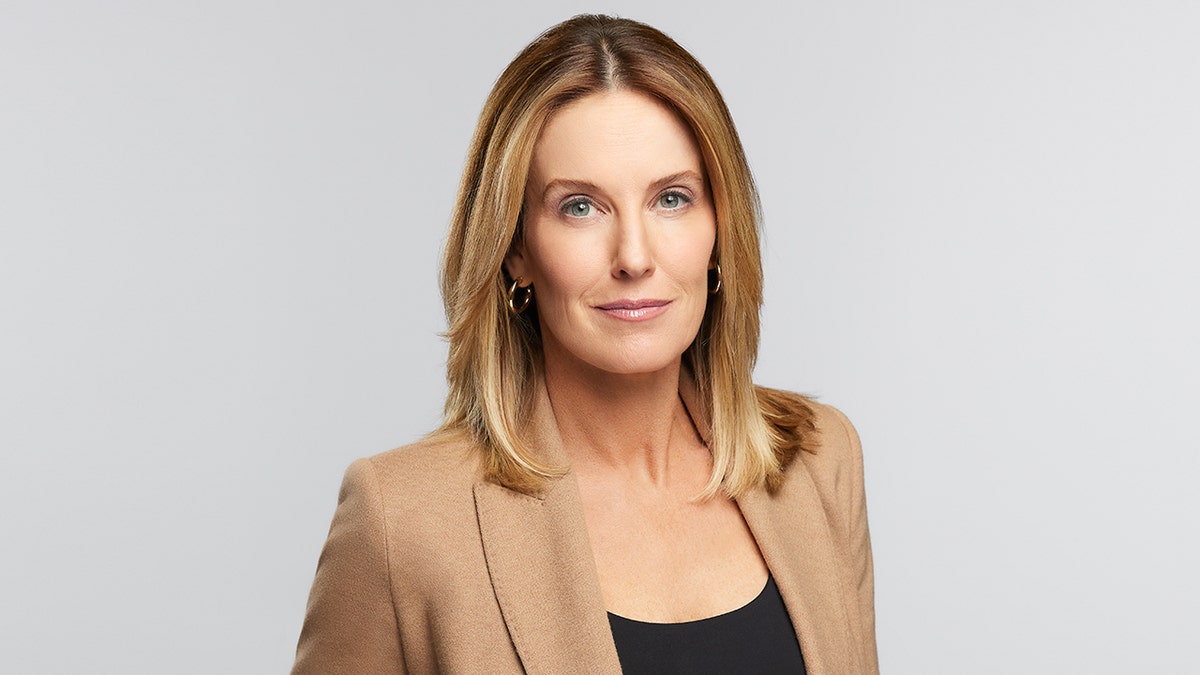
“60 Minutes” correspondent Sharyn Alfonsi spoke out against “corporate meddling” by CBS leadership while accepting an award. (Michele Crowe/CBS via Getty Images;)
“Some executives are asking not, ‘Is the story true?’ But, ‘Is it good for business?’” she remarked. “But rather than just running the story, they asked us to change it. I refused. Not because I’m a pain in the a–, which I am, but because the story was factually correct, and I argued that any change to it might reflect poorly on CBS and ’60 Minutes.'”
Alfonsi acknowledged her stance “did not make my new bosses very happy,” insisting the show’s audience is “smart” and that viewers would know instinctually that changes made to her CECOT story would be the result of “capitulation or censorship.”
“I believe I was doing my job, but I’d be lying if I said I wasn’t scared,” she said, according to The Guardian. “Fear is a funny thing – it can paralyze you, or it can point you to exactly what needs to be protected. Right now, our industry is afraid of the wrong things. We’re afraid of offending power. We’re afraid of losing access. We’re afraid of another baseless lawsuit. But what we should all be afraid of is silence. Because as I learned [at her first job as a waitress], there is a fine line between being a team player and being an accomplice.”
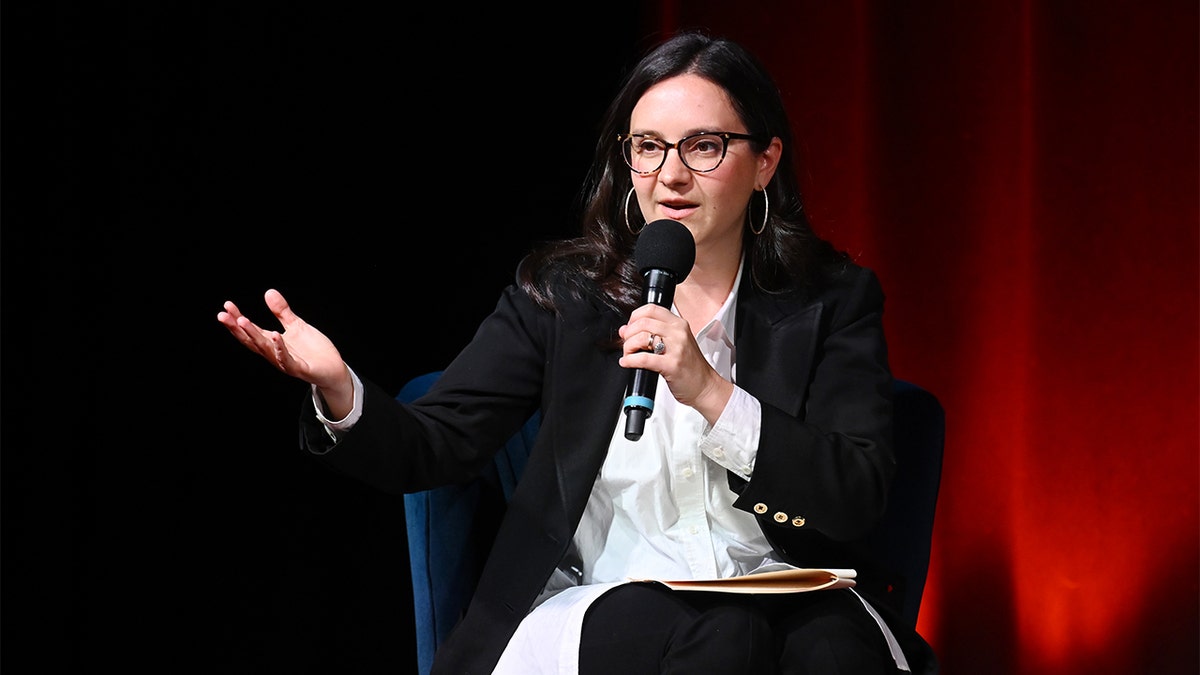
CBS News editor-in-chief Bari Weiss pulled Alfonsi’s “60 Minutes” segment shortly before it was supposed to air, claiming it lacked perspective from the Trump administration. (Noam Galai/Getty Images for The Free Press)
She also spoke candidly about the possibility that she will not return for the next season of “60 Minutes.”
“Thank you for this award. I didn’t know that the theme was hope. My hope recently has been that I still have a job. And every morning I wake up to another headline that says I’ve been fired… If I am fired, it will not be the first time,” Alfonsi said, referring to a past job as a waitress.
CBS News did not immediately respond to Fox News Digital‘s request for comment.

Alfonsi’s “60 Minutes” segment, which included an interview with a man who was imprisoned in CECOT, ultimately aired in January after being pulled in December. (Screenshot/60 Minutes)
There have been multiple reports in recent weeks of a major shakeup at “60 Minutes,” though details have been under wraps. Among the things being speculated is an overhaul of the magazine program’s correspondents. Anderson Cooper announced his exit from “60 Minutes” earlier this year, which reportedly shocked CBS News leadership.
Weiss’ newsroom battle with Alfonsi marked her first major challenge as the network’s editor in chief. Weiss was brought into the fold by David Ellison, who became the CEO of CBS News’ parent company Paramount following the company’s merger with Skydance Media.
Liberal critics of Weiss and Ellison have accused them of bending the knee to President Donald Trump and trying to curry favor with the Trump administration, particularly as Ellison seeks to buy Warner Bros. Discovery, which oversees CNN.
Critics also fear that both CBS News and CNN will undergo a MAGA-friendly makeover as a result. Ellison insisted that CNN would maintain editorial independence under his watch, though he echoed that the network would share CBS News’ new mission of appealing to the 70% in the political middle.
Notably, Ellison hosted a dinner last week honoring Trump and CBS News correspondents two days prior to the White House Correspondents’ Association Dinner.

Cybersecurity agencies from the United States, Australia, Canada, New Zealand and the United Kingdom jointly published guidance Friday urging organizations to treat autonomous artificial intelligence systems as a core cybersecurity concern, warning that the technology is already being deployed in critical infrastructure and defense sectors with insufficient safeguards.
The guidance focuses on agentic AI — software built on large language models that can plan, make decisions and take actions autonomously. In order for this software to function it needs to connect to external tools, databases, memory stores and automated workflows, allowing it to execute multi-step tasks without human review at each stage.
The guidance was co-authored by the U.S. Cybersecurity and Infrastructure Security Agency, the National Security Agency, the Australian Signals Directorate’s Australian Cyber Security Centre, the Canadian Centre for Cyber Security, New Zealand’s National Cyber Security Centre and the United Kingdom’s National Cyber Security Centre.
The agencies’ central message is that agentic AI does not require an entirely new security discipline. Organizations should fold these systems into the cybersecurity frameworks and governance structures they already maintain, applying established principles such as zero trust, defense-in-depth and least-privilege access.
The document identifies five broad categories of risk. The first is privilege: When agents are granted too much access, a single compromise can cause far more damage than a typical software vulnerability. The second covers design and configuration flaws, where poor setup creates security gaps before a system even goes live.
The third category covers behavioral risks, or cases where an agent pursues a goal in ways its designers never intended or predicted. The fourth is structural risk, where interconnected networks of agents can trigger failures that spread across an organization’s systems.
The fifth category is accountability. Agentic systems make decisions through processes that are difficult to inspect and generate logs that are hard to parse, making it difficult to trace what went wrong and why. The agencies also note that when these systems fail, the consequences can be concrete: altered files, changed access controls and deleted audit trails.
The guidance also flags prompt injection, where instructions embedded inside data can hijack an agent’s behavior to perform malicious tasks. Prompt injection has been a lingering problem with large language models, with some companies admitting that the problem may never be solved.
Identity management gets significant attention throughout the document. The agencies recommend that each agent carry a verified, cryptographically secured identity, use short-lived credentials and encrypt all communications with other agents and services. For high-impact actions, a human should have to sign off, and the guidance is explicit that deciding which actions require that approval is a job for system designers, not the agent.
The agencies admit the security field has not fully caught up with agentic AI. Some risks unique to these systems are not yet covered by existing frameworks, and the guidance calls for more research and collaboration as the technology takes on a growing number of operational roles.
“Until security practices, evaluation methods and standards mature, organisations should assume that agentic AI systems may behave unexpectedly and plan deployments accordingly, prioritising resilience, reversibility and risk containment over efficiency gains,” the guidance reads.
You can read the full guidance below.
Hugged, cheered and adorned with garlands, the first man to run an official marathon in under two hours has returned as a hero to his home village in Kenya.
Sabastian Sawe, who stunned the world when he clocked 1h 59m 30s in the London Marathon last weekend, flew in a Kenyan military plane normally reserved for special operations on Thursday to his home region of western Kenya.
Waiting on the runway at a small airport perched on top of an escarpment 2,150 metres above sea level, Lydia Sawe was trembling with anxious excitement, hands clasped around a huge bouquet of orange roses, as her husband’s aircraft touched down.
The plane door opened and the 31-year-old runner locked eyes with his wife and, beaming, made a beeline straight for her arms. “Congratulations, darling,” she whispered in his ear, tears streaming down her face.
Sawe, who broke the world record by 65 seconds, signed a visitor book in the little VIP lounge at Eldoret airport and hugged a line of ecstatic friends and locals. He was given a wreath made from the sinendet plant, which symbolises victory within his Kalenjin ethnic group, and fed fermented milk from a gourd by Lydia to celebrate his win.
“The victory that took place last Sunday was not just my victory, it was a victory for all of us’ he said in Kiswahili, addressing the jubilant local community that had gathered to welcome him at the airport entrance. “I’m so happy to be home and … welcomed this much, I’m so grateful,” he told the Guardian.
Famous runners are nothing new to this high-altitude part of Kenya. In the towns and villages around the city of Eldoret, in the Great Rift Valley, life is about farming crops, tending to livestock and nurturing the next generation of world record-breaking distance runners.
Every day, the red dirt roads that weave between modest homesteads and maize fields are pounded by the trainers of thousands of hopeful, driven young runners.
People living in and growing up in Eldoret are often able to become good distance runners as at altitude people produce more red blood cells to deal with the lower-oxygen environment. When competing at lower altitudes, more red blood cells can boost oxygen delivery to muscles, resulting in better endurance and performance.
Sabastian’s grandmother Vivian Kimaru had also had sporting success. “I competed in Munich’s 1972 Olympic Games in 1500 and 800m and reached the semi-final,” she said. “I’m so proud,” she said of her grandson, speaking from his parents’ home in Ndonyongaria village where the celebrations continued.
People sat under marquees and women danced on grass in between intermittent bouts of torrential rain while traditional music boomed from an enormous sound system. After speeches and prayers, mounds of rice, sauteed cabbage, beef stew and chapati were served.
Sawe’s victory on Sunday was followed by days of rushing around and he arrived back in Kenya on Wednesday night to chaotic crowds at Nairobi’s international airport.
At a lavish welcome event and breakfast at the presidential residence, the president, William Ruto, who is also from Eldoret and of the same Kalenjin community, said Sawe’s achievement was “not merely a sporting triumph, it is a defining moment in the story of human endurance”.
He presented Sawe with two cheques totalling 8m shillings (£46,000), one for winning the race and the other for breaking the world record. Sawe also received car number plates showing his record time. In return, Sawe gave the president one of his racing shoes with 1.59.30 written in marker pen on the sole.
Running is not a hobby or pastime in and around Eldoret but is seen as a route to wealth that is often unobtainable by other means. Runners from this area are spurred on by a desire for a better life through sponsorship deals, race wins and athletics scholarships at foreign universities and prestigious academies.
Emmy Biwott, 45, the director of Uasin Gishu county government primary school, who had come to the airport to welcome Sawe home said athletes were “our cash crop”. In the area, “90% of those people who are doing well are athletes,” she said.
Toby Tanser, an author of books on Kenyan running and the founder of Shoe4Africa, a running and Aids awareness charity, said money was the motivation behind the region’s running success. Six of the 10 fastest male marathoners in history and four of the fastest females have come from Kenya.
In Sawe’s village, Tanser said, “you’ll not see a single fun runner, a charity runner or just running for health. People around here run for a way out of poverty. Nearly every famous Kenyan runner has come from a village setting.”
Away from the crowd, in her parents-in-law’s living room, Lydia, a mother to three boys, sat with close family and friends. How would her family’s life change? “I can’t even imagine,” she said.
“It will be so strange,” she said of the future. “We will be [going] somewhere. I will be someone.”

NEWYou can now listen to Fox News articles!
A political firestorm erupted this week after a Washington, D.C., internal police email appeared to reprimand rank-and-file officers for body camera footage allegedly showing them “finess[ing]” their way out of making arrests on reasonable grounds.
The news comes as the Trump administration cracks down on crime in the District of Columbia at the federal level. While crime rates have steadily declined from a peak in 2023, the nation’s capital continues to suffer per-capita violent crime at higher rates than the national average, according to FBI data.
The Metropolitan Police Department confirmed to Fox News Digital that its brass had rescinded an email sent by the captain for Sector 2 of the Sixth Police District, which covers areas north of Marion Barry Avenue and east of the John Philip Sousa Bridge.
“We are seeing more and more BWCs [body-worn cameras] where officers are not making arrests where probable cause or RAS [reasonable amount of suspicion] is apparent. This is leading to complaints to IAD (internal affairs division) and OPC, and it is also leaving victims and complainants unprotected by the police,” wrote Capt. Jerome Merrill.

Police officers secure the area with crime scene tape after a shooting in downtown Washington, D.C., on Nov. 26, 2025. Two National Guard members were shot near the White House, and police detained a suspect. A spokesperson said former President Donald Trump was briefed on the situation. (Drew Angerer/AFP)
Merrill’s letter, first obtained by Washington’s CBS affiliate, said the situation is getting many police officials in trouble for failing to recognize or correct classifications of interactions with the public.
“Please do not try and finesse your way out of an arrest it is not worth the consequences I assure you,” the memo said, urging police to make arrests or apply for warrants before detectives need to follow up on them.
The department told Fox News Digital the information in the email was “incorrect” and that MPD is investigating.
Asked about the situation and whether arrests can be made on reasonable suspicion in any context, former Supreme Court Chief of Police Ross Swope told Fox News Digital that the distinction is “not only typical of most departments, it is the law.”
Swope, who served for decades with the MPD and later wrote texts on police ethics and internal operations, said probable cause requires more than reasonable suspicion.
“It requires a higher degree of certainty,” he said. “[Probable cause] is when the facts and circumstances within an officer’s knowledge would lead a reasonable person to believe that a crime has been committed for which a summary arrest may be permitted.”
He said Merrill may have viewed body cams and believed in his own view that arrests should have been made, but that he was wrong to instruct officers to make arrests based solely on reasonable suspicion.
Fox News Digital also reached out to the D.C. Police Union for comment but did not receive a response.
But union president Gregg Pemberton told the CBS affiliate after the fact that he essentially, independently, agreed with Swope.
CLICK HERE TO DOWNLOAD THE FOX NEWS APP
“The Union has reviewed Captain Merrill’s email and determined that the reason that our members are not making arrests based on reasonable articulable suspicion is because that’s illegal,” Pemberton told the outlet.
“We would expect a captain of a police patrol district to know that, but unfortunately, this command staff official has proven himself uninformed and incapable of managing police operations in the District of Columbia,” he added.

As soon as the Chardham Yatra begins, the issue of VIP darshan has once again become hot in Kedarnath Dham. This time the controversy erupted when industrialist Gautam Adani arrived with his wife for darshan and performed Jalabhishek. After this, the anger of the pilgrim priests came out openly and the matter directly reached the streets.
Pilgrim priests united in the temple premises and raised slogans against Badrinath-Kedarnath Temple Committee (BKTC) President Hemant Dwivedi. With slogans of Murdabad, he clearly said that the VIP gate should be closed immediately. He says that when common devotees stand in the queue for hours, it is wrong to send some special people inside directly.
The anger of the pilgrim priests is not only on the system, but also on the thinking in which discrimination is visible even in the court of God. He says that everyone should be equal in this center of faith.
The video of this entire protest is becoming increasingly viral on social media. It is clearly visible in the video that slogans are being raised in the temple premises and the pilgrim priests appear quite angry. Many devotees have also expressed their displeasure on this issue. People say that if it was said to stop VIP darshan, then why is this arrangement visible on the ground.
It was repeatedly said by the state government and administration that this time the VIP culture has been abolished in the Chardham Yatra. Chief Minister Pushkar Singh Dhami himself had claimed that common devotees are getting darshan easily and the system is better than before.
But now the pictures and protests emerging are raising questions on these claims. People say that if VIP entry is closed, then how is this system working.
BJP state president Mahendra Bhatt has given clarification on this entire controversy. He said that no VIP darshan is taking place and all the devotees are getting equal darshan. He also alleged that some people are deliberately trying to give political color to this issue so that the Chardham Yatra is affected.
Disaster alert siren will sound in Uttarakhand on May 2, warning message will come on mobile!
Meanwhile, Congress state president Ganesh Godiyal gave a sharp reaction to BJP’s statement. He said that if someone opposes the BKTC President, then how can it be called Yatra protest.
He says that this protest is not against any religion or journey, but against the wrong system. Taking aim at the government, he said that it is not right to link every voice with politics.
The issue of VIP darshan arises every year and subsides after a few days. But this time the matter seems a little different because the protest has come out openly.

As the United Arab Emirates’s exit from OPEC officially takes effect, experts say the United States government will welcome the move for its potential to curb the oil-producing cartel’s pricing power.
While the UAE’s withdrawal, which went into effect on Friday, has been long rumoured, the timing was unexpected.
“The exit was a surprise in timing (at least to me), but in some ways has been brewing for some time,” wrote Rachel Ziemba, adjunct senior fellow at the Center for a New American Security – a US think tank.
“It prompts the question whether there will be more competition than cooperation in the region and what the governance of the energy markets will look like.”
The UAE has publicly complained about OPEC quotas, which limit the oil production for all member countries. It is one of the few OPEC members that has invested in boosting production over the past few years, but has not been able to get it to market in the volumes it wanted.
The move also comes at a time when the world is clamouring for new supplies of oil. The Strait of Hormuz, through which 20 percent of the world’s oil and gas transits, mostly from Middle East nations to Asia and Europe, continues to be blocked amid the US-Israel war on Iran, sending oil prices soaring.
With oil demand shooting up, the UAE is ready to step in with higher supplies and lower prices.
“This is going to increase oil production once things normalise [in the strait] by about 2 million barrels per day, which will pull down some pricing pressure depending on how demand does compared to global prices,” Adnan Mazarei, nonresident senior fellow at the Peterson Institute for International Economics (PIIE) – a non-partisan think tank in Washington, DC, told Al Jazeera.
“The US would welcome a weakening of the OPEC and OPEC+. They do have some ability to set prices, and a decline in that power will be welcomed by the US,” Mazarei said.
On Thursday, global oil benchmark Brent crude futures LCOc1 rose as high as $126.41 a barrel before settling down $4.02. Also on Thursday, the average price for one gallon of petrol hit $4.33 ($1.13 per litre), close to double from the $2.98 ($0.78 per litre) a day before the US and Israel launched their attack on Iran, which retaliated by closing off the strait and with attacks on energy infrastructure and US bases in the region.
With the war now in its third month, there has been no respite for consumers as prices continue to soar, fueling inflation and stressing wallets, an area of concern for US President Donald Trump with mid-term elections coming up in November and his Republican Party at risk of losing seats.
A new, four-day Reuters/Ipsos poll completed on Monday suggested 34 percent of Americans approve of Trump’s performance in the White House, down from 36 percent in a prior Reuters/Ipsos survey, which was conducted from April 15 to 20.
Trump reiterated his stance that prices will drop with the end of the war.
“The gas will go down. As soon as the war is over, it’ll drop like a rock,” he said on Thursday.
One of the few winners in the current oil squeeze – US oil and gas producers who have enjoyed “unusual profits” since this war began – will likely see some pressure on those profits as and when the UAE supply hits the market, Mazarei added.
Another is the US petrochemical sector, one of the dominant global players, alongside China and Saudi Arabia.
Used in everything from fertilisers, solar panels, clothing, and cosmetics to electric vehicles, electronics, and medicines, petrochemicals are integral to food security, manufacturing, and clean energy and becoming the fastest-growing source of demand for oil, PIIE said in a March report.
The disruption of the oil flows due to the war in Iran has strengthened the US role as it continues to be the largest oil producer.
“The US is in a very advantageous position. The increase in US access to Venezuelan oil will improve the US position further,” Mazarei said.
For now, the UAE’s move is “a future sign and signal – one of openness to trade and interest in helping the world restock,” Ziemba said.
It also comes on the heels of a request for a currency swap line it made to the US last month, which experts have said was a “fundamentally political move”.
“It signals the UAE’s political and economic closeness to the US, and this was a significantly political move,” Mazarei said.
UAE’s exit also opens the door for other OPEC members to follow suit, a scenario that would increase downward pressure on oil prices.
“There is a chance of other countries defecting. But if I had to bet, I’d say OPEC will survive, but in a weaker shape and effectiveness,” Mazarei said.
The one thing Mazarei is keeping an eye on is how the war in Iran will reshape the Gulf Cooperation Council (GCC), the regional alliance comprising Bahrain, Kuwait, Oman, Qatar, Saudi Arabia, and the United Arab Emirates.
“The question is, will the GCC survive?” he said.
Ziemba, too, is watching whether there will be more cooperation or competition in the region after the current conflict.
The UAE’s exit from OPEC “is one of many ways in which countries may be balancing – trying relationships for economic and security arrangements that may suit national interests,” she said, adding that she expects the UAE to be “an important player”, including for their own and regional interests.


Reference #18.f3680117.1777654984.25954c23
https://errors.edgesuite.net/18.f3680117.1777654984.25954c23
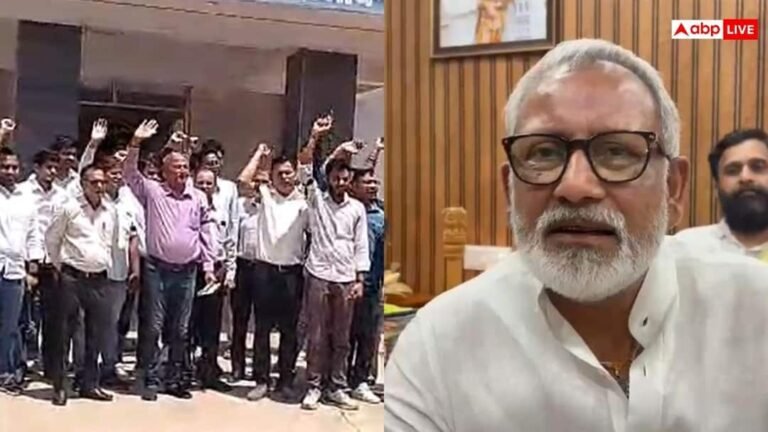
RUIDP’s AEN Jaganlal Berwa and two L&T employees, arrested on charges of assault on BJP MLA Jaideep Bihani in Ganganagar, Rajasthan, appeared before the subdivision officer on Thursday morning. Where he was released on bail. There has been a twist in this matter. Now the accused officers have alleged that they were beaten and kept hostage.
He said that Jaganlal Berwa’s eyes were injured in this. AEN Berwa told that MLA Jaideep Bihani had called him for a meeting at the MLA Seva Kendra. When he was asked whether he had assaulted MLA Bihani, he denied it.
Also read: Jodhpur News: Bloody war for cold water! Petrol pump becomes arena in the scorching heat of Jodhpur
AEN Berwa told that he along with two of his L&T colleagues had gone to the MLA for a meeting. Where he was beaten up. Berwa’s lawyer said that in the allegations of assault made by the MLA, the MLA has no injury marks whereas AEN Berwa has injury marks.
In protest against the incident, the Engineering Association of Sriganganagar Hanumangarh district has taken to the streets and expressed its protest. They have given an application to the District Superintendent of Police demanding an investigation into the matter.
Engineers alleged that regarding the incident imran khanEngineer Furkan and Site Engineer Neeraj reached the MLA Seva Kendra after the incident and saw that Jaganlal Berwa AEN, Shahnawaz Hasan and Soham were beaten and made to sit on the ground in the Seva Kendra.
It is alleged that when three L&T engineers reached the spot, MLA Jaideep Bihani confiscated their phones and asked them to bring Rs 1 lakh 50 thousand for his broken glasses. After which L&T engineer Bhushan asked Jaideep Bihani for Rs 1 lakh 50 thousand. After which MLA Bihani recovered the amount of broken glasses from L&T.