Max severity Ubiquiti UniFi flaw may allow account takeover

0

UniFi

Ubiquiti has patched two vulnerabilities in the UniFi Network Application, including a maximum-severity flaw that may allow attackers to take over user accounts.

The UniFi Network app (also known as the UniFi Controller) is management software that helps configure, monitor, and optimize Ubiquiti UniFi networking hardware, such as access points, switches, and gateways.

“Combines powerful internet gateways with scalable WiFi and switching. Provides real-time traffic dashboards, visual topology maps, and optimization tips,” the networking device manufacturer says. “The preferred way to deploy UniFi Network is on a UniFi Cloud Gateway, rather than on a server, laptop, or other self-hosted environment.”

Tracked as CVE-2026-22557, the security flaw impacts UniFi Network application version 10.1.85 and earlier and is addressed in versions 10.1.89 or later.

Successful exploitation enables threat actors without privileges to exploit a path traversal vulnerability to access files on the targeted devices and potentially hijack user accounts in low-complexity attacks that don’t require user interaction.

“A malicious actor with access to the network could exploit a Path Traversal vulnerability found in the UniFi Network Application to access files on the underlying system that could be manipulated to access an underlying account,” the company says in an advisory published on Wednesday.

Ubiquiti also patched a second flaw in the UniFi Network app that attackers with low privileges can exploit for privilege escalation.

“An Authenticated NoSQL Injection vulnerability found in UniFi Network Application could allow a malicious actor with authenticated access to the network to escalate privileges,” the company explained.

In recent years, Ubiquiti products have been targeted by both state-backed hacking groups and cybercriminals who hijacked them to build botnets designed to conceal malicious activity.

For instance, in February 2024, the FBI dismantled a botnet of hacked Ubiquiti Edge OS routers used by Russia’s Main Intelligence Directorate of the General Staff (GRU) to proxy malicious traffic in attacks targeting the United States and its allies.

Malware is getting smarter. The Red Report 2026 reveals how new threats use math to detect sandboxes and hide in plain sight.

Download our analysis of 1.1 million malicious samples to uncover the top 10 techniques and see if your security stack is blinded.


Source link

Access Denied

0

Access Denied You don’t have permission to access “http://hindi.news18.com/cricket/anil-kumble-compare-abhishek-sharma-with-virender-sehwag-gave-big-advice-to-team-india-young-opener-ws-n-10289169.html” on this server.

Reference #18.6e560e17.1773932385.314c447

https://errors.edgesuite.net/18.6e560e17.1773932385.314c447

Iran’s dilemma in war and peace | US-Israel war on Iran

0

Ayatollah Ruhollah Khomeini, upon coming to power in Iran after the 1979 Islamic revolution, adopted a distinctly Shia-sectarian constitution. With its approval, all Iranian citizens who did not belong to the Shia sect became, in practice, second-class citizens. At the same time, he embraced the export of the revolution beyond Iran through his “tilling the land” programme. To this day, the peoples of the region continue to suffer from the consequences of this programme. Among its bitter outcomes was the creation of ideologically driven Shia militias, which have caused significant bloodshed in several Arab countries.

Today, the Iranian regime is increasingly exposed amid the ongoing war with the United States-Israel alliance. What it had long concealed about its intentions towards the Arab Gulf states and the excess power it possesses has now been revealed. It has failed to respect the rights of neighbouring countries, targeting civilian sites and economic infrastructure in Gulf cities.

Gulf-Iranian relations are among the most complex issues in the regional system of the Middle East. The image of Iran in Gulf political, media, and intellectual discourse has been shaped by this ideological and military legacy, whose foundations were laid by Imam Khomeini and later translated into realities on the ground by Ali Khamenei. These relations have been defined by repeated military and security confrontations, as well as political positions viewed by Gulf Cooperation Council states as a direct threat to their security and sovereignty. Official and media discourse in the Gulf tends to portray Iran as a regional actor seeking to expand its political and military influence at the expense of neighbouring states and their peoples.

Imam Khomeini left Ayatollah Ali Khamenei with three directives: killing Saddam Hussein, producing an atomic bomb, and occupying Mecca and Medina. These directives have deepened the crisis within the system of Guardianship of the Jurist. While Iran ultimately saw the execution of Hussein, its continued pursuit of the other two directives has placed it in a regional and international dilemma. Iran’s programme of exporting the revolution and establishing armed Shia militias in Iraq, Lebanon, Syria and Yemen over the past four decades, while funding and directing them, has brought it into direct conflict with regional countries, especially the Gulf states. Likewise, its pursuit of a nuclear programme has placed it in sustained confrontation with the international community.

Iran’s regional network of armed groups reflects this strategy clearly. In Lebanon, Hezbollah is not merely a party but a “super-state” that takes its orders from beyond its borders; in Yemen, the Houthis are not a Yemeni national project but a tool to export Iranian national security to the borders of Saudi Arabia and threaten navigation in the Red Sea; in Iraq, Iran has established Shia militias to which the state itself defers; and in Arab Ahvaz, demographic change and the destruction of Arab palm trees are carried out in the name of Persian national security.

The project introduced by Khomeini is not an Islamic project, even if it employs Islam to serve it. It is a new imperial project, driven by Persian ambitions, using religion as both cover and driving force. Khamenei is considered the true heir to the 1979 revolution and the continuation of this ideological project in all its dimensions.

Khomeini developed the theory of Wilayat al-Faqih, which did not exist in Shia doctrine before he came to power. Under this theory, Ali Khamenei, and after him Mojtaba Khamenei, acts as the “Guardian Jurist” on behalf of the hidden imam and receives directives from him directly. The Guardian Jurist is not merely a religious concept but a political, security, and military authority, leading an axis of followers across the region and pursuing a project of dominance at both regional and international levels. The “scorched earth” approach is one manifestation of this imam-centred project.

The supreme leader is also a religious authority within the Shia sect, surrounded by an aura of sanctity among Twelver Shia believers. The assassination of Ali Khamenei would therefore mean the loss of a central pillar of the Wilayat al-Faqih system.

Ali Khamenei oversaw Iran’s nuclear programme, missile capabilities, space programme, and regional influence, including figures such as Qassem Soleimani. The killing of Khamenei would close a major chapter of revolutionary logic in Iran and push the state towards a retaliatory path. Iran has already sought to prepare for this by accelerating allegiance to his son Mojtaba, although he does not possess his father’s charisma or influence. Iran before Khamenei will not be the same as Iran after him.

Iran’s dilemma in war

Western media coverage has portrayed Iran as a central actor in regional instability, focusing on its military capabilities, support for armed groups, and nuclear and missile programmes. These narratives have reinforced the image of Iran as a destabilising force and contributed to a climate in which the current war between the US-Israel alliance and Iran is accepted by Western public opinion.

The 2019 attacks on oil facilities in Saudi Arabia marked a turning point in Gulf discourse on Iran. Gulf leaders viewed them as a direct threat to regional and global energy security. These events reinforced perceptions of an Iranian threat and pushed Gulf states to strengthen military and security cooperation with regional and international partners.

The Strait of Hormuz remains one of the world’s most important strategic maritime passages, with about 20 percent of global oil trade passing through it. It is the main artery for exporting oil and gas from the Gulf to global markets, particularly Asia. If Iran were to close the strait or disrupt navigation, exports would be halted, global prices would rise sharply, and major economic disruption would follow, including inflation, financial instability, and slower growth. Food supply chains in Gulf countries would also be affected.

Such a move would provide internationally acceptable justification for the US to form a military coalition to protect navigation, potentially including the occupation of Iran’s Kharg Island. Gulf states would also be compelled to expand security cooperation and strengthen maritime defence capabilities.

Iran faces a complex military dilemma. It does not possess a modern air force capable of sustaining a prolonged conventional war against the US or Israel. Instead, it relies on ballistic missiles, drones, and asymmetric warfare, which serve as tools of deterrence rather than decisive victory. It also depends on proxy warfare through groups such as Hezbollah and militias in Iraq.

The Houthis remain a key escalation factor. Their entry into the war would depend on a decision by the leadership of the Islamic Revolutionary Guard Corps (IRGC), to which they are subordinate. If the US were to forcefully reopen the Strait of Hormuz, the Houthis could attempt to close the Bab al-Mandeb Strait as a final escalation step.

Iran avoids direct war because its infrastructure is vulnerable to precision strikes, its nuclear facilities are exposed, and its economy cannot withstand prolonged conflict. It therefore follows a strategy of escalation without direct war, relying on indirect pressure through its regional network, while the US-Israel alliance seeks to draw it into confrontation.

Iran’s dilemma in peace

Politically, Iran faces a degree of international isolation under Western sanctions. Its allies, Russia and China, do not want to engage in direct war with the West on its behalf. Despite some improvement in relations with Gulf states following the 2023 Beijing agreement with Saudi Arabia, Gulf states continue to rely on the US for security.

Internally, Iran faces recurring protests, a legitimacy crisis, divisions between reformists and hardliners, and opposition from secular and independent currents. Economic sanctions have led to inflation, currency depreciation, and reduced investment. Iran operates a war economy with limited capacity, relying on unofficial oil sales and discounted exports, particularly to China.

At the same time, Iran seeks to achieve rapid deterrence through missiles, drones, and its regional proxies, while signalling nuclear capability. This increases the likelihood of preemptive strikes and exposes it to multiple fronts.

Iran is therefore caught in three dilemmas: strong deterrence but weak war-fighting capability; wide regional influence but limited economic resources; and an escalation strategy that risks turning into a full-scale war it seeks to avoid. It pursues sustained pressure below the threshold of war, seeking to exhaust its adversaries without entering direct confrontation.

For Iran, victory in this confrontation means the survival of the Islamic republic. It considers US military bases in the region legitimate targets, arguing that it cannot strike the US directly. This has extended to the targeting of Gulf economic infrastructure, embassies, and hotels, on the grounds that they host a US or Israeli presence. This has created a clear gap between what the political leadership declares and what the IRGC carries out in practice.

The Gulf at a crossroads

The Arab Gulf states now stand at a crossroads. In response to Iranian missiles and drones targeting civilian and economic sites, they have strengthened their air defence capabilities through systems such as Patriot and THAAD, intercepting many of these attacks before they reach their targets. They have also expanded security partnerships with countries such as Pakistan and Turkiye.

However, Gulf states do not seek an open war. If escalation continues and crosses critical thresholds, they may be forced to move beyond defence towards preventive military action to neutralise threats before they reach their cities.

If Iran retains sufficient capability, it may attempt to target or even occupy Gulf territories and islands, leading to a dangerous escalation with unpredictable consequences. The region would then face a conflict with consequences that cannot be controlled.

The views expressed in this article are the author’s own and do not necessarily reflect Al Jazeera’s editorial stance.



Source link

Drivers accused of ‘culture of speeding’ as motoring offences hit record high | UK News

0

The number of motoring offences has risen 9% in a year to a record high across England and Wales, excluding London, according to latest official statistics.

Home Office figures show there were 2.93 million offences registered in 2024, the most since comparable statistics began in 2011, and up on 2.69 million the previous year.

The vast majority of offences – 2.53 million or 86% of the total – involved speeding, another record high.

Motoring groups said the figures are of “great concern” and are warning that a lack of “decisive intervention” from police risks “normalising dangerous driving habits”.

Fines were issued in 37% of all the offences, while 12% involved court action and 51% resulted in a driver taking a retraining course.

The figures exclude London, as the Metropolitan Police uses a different system to document offences.

But the Home Office said the capital’s force recorded nearly 600,000 motoring offences in 2024, a 19% increase from 2023.

Department for Transport figures show speed contributed to 59% of fatal crashes in Britain in 2024, more than any other factor.

Careless driving was among the most common offences in 2024, and saw a 27% increase on the year before. The use of handheld mobiles, which was up 11%. The “neglect of traffic signs and directions and of pedestrian rights” increased by 6%.

There was an 11% rise in offences involving handheld mobiles while driving. Pic: iStock
Image: There was an 11% rise in offences involving handheld mobiles while driving. Pic: iStock

Jack Cousens, head of roads policy at The AA, told Sky News the figures were of “great concern” and “more needs to be done to tackle these offences” by increasing the number of traffic officers.

“AA members say they regularly see examples of poor driving standards but rarely see traffic officers on patrol,” he said. “At the moment, too many people think they can get away with it.”

RAC road safety spokesperson Rod Dennis had a similar message: “Half of drivers believe there is a culture of speeding in the UK. We urge the government to work with police forces and take firm action.”

“While enforcement through speed cameras has its place, greater visibility of police officers can also make a significant difference in changing driver behaviour,” he added.

Read more from Sky News:
Learner arrested during driving test
‘Dashcam vigilantes’ behind driver fines
E-bike rider convicted after fatal collision

In the case of speeding, some offenders can avoid prosecution by attending a speed awareness course, costing between £80 and £120.

But Churchill Motor Insurance said it had commissioned a survey which indicated 31% of drivers who attended a speed awareness course in the past three years were caught speeding again.

William Porter, policy and public affairs manager at road safety charity IAM RoadSmart, said the Home Office figures showed there was “widespread disregard” for speed limits.

“Without decisive intervention, we risk normalising dangerous driving habits that have devastating consequences,” he added.

Separately, Transport for London (TfL) has announced it will partner with police to trial a new type of speed camera which does not require a visible flash to capture an image of a speeding vehicle.

Unlike conventional speed cameras, the radar-based system, which is being installed at up to 10 locations across the capital, can also cover up to five lanes of traffic in two directions.


Source link

House Democrats oppose Republican bill targeting attacks on police dogs

0

NEWYou can now listen to Fox News articles!

Nearly all Democrats opposed legislation Thursday targeting noncitizens who harm law enforcement animals. 

Lawmakers voted 228-190 largely along party lines to approve the measure, with just 15 Democratic lawmakers voting “yes.” All Republicans who voted supported the legislation.

The Bill to Outlaw Wounding of Official Working Animals (BOWOW) Act, introduced by Rep. Ken Calvert, R-Calif., would make any noncitizen who is convicted of or admits to harming animals used in law enforcement operations deportable and not allowed to return.

“The dogs and horses on the front lines of our federal law enforcement efforts alongside our officers deserve our protection,” Calvert said upon introducing the legislation. “[It] sends a clear message that we will stand up for our four-legged friends and have zero tolerance for any immigrants who assault them.”

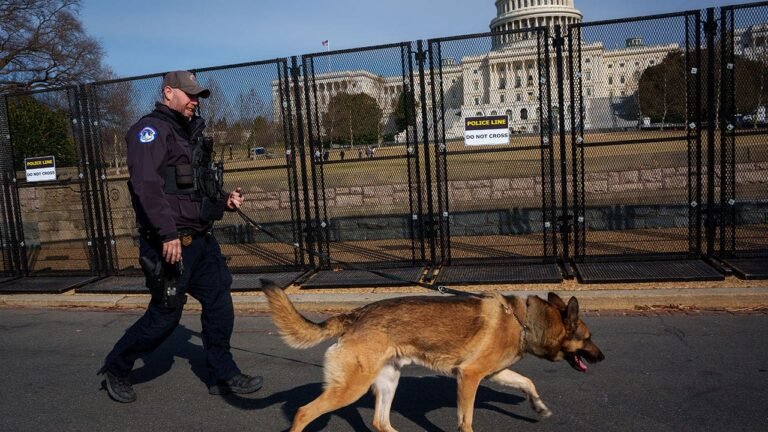
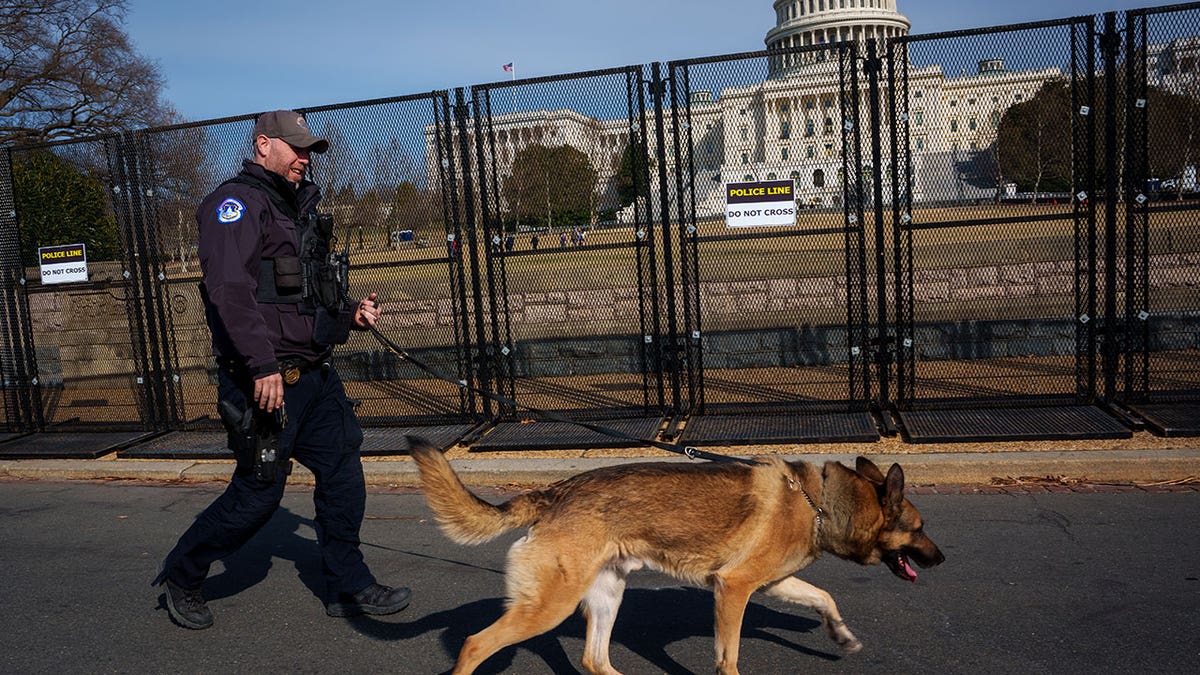
a Capitol police dog

The Dome of the U.S. Capitol building is visible through temporary protective fencing as a U.S. Capitol Police officer walks a dog along the West Front of the U.S. Capitol Building on March 4, 2025, in Washington, D.C. (Andrew Harnik/Getty Images)

POLICE DOG HELPS SNIFF OUT BURGLARY SUSPECT HIDING IN AIR VENT

Calvert cited an incident at Dulles Airport in June 2025 when Hamed Aly Marie, an Egyptian traveler, kicked a police K-9 that was screening his luggage and caught smuggled produce. The foreign national, who was promptly arrested by Customs and Border Protection (CBP), pleaded guilty to malicious assault on a police animal and returned to Egypt.

The California Republican’s legislation would have made Marie eligible for deportation and inadmissible to the United States.

“Can’t we at least all agree that kicking a 5-year-old beagle at an airport should disqualify a foreign national from entering our country ever again?” Rep. Tom McClintock, R-Calif, said in support of the measure Thursday.

A majority of Democrats opposed the legislation because they argued that offenders could already be deported under existing law.

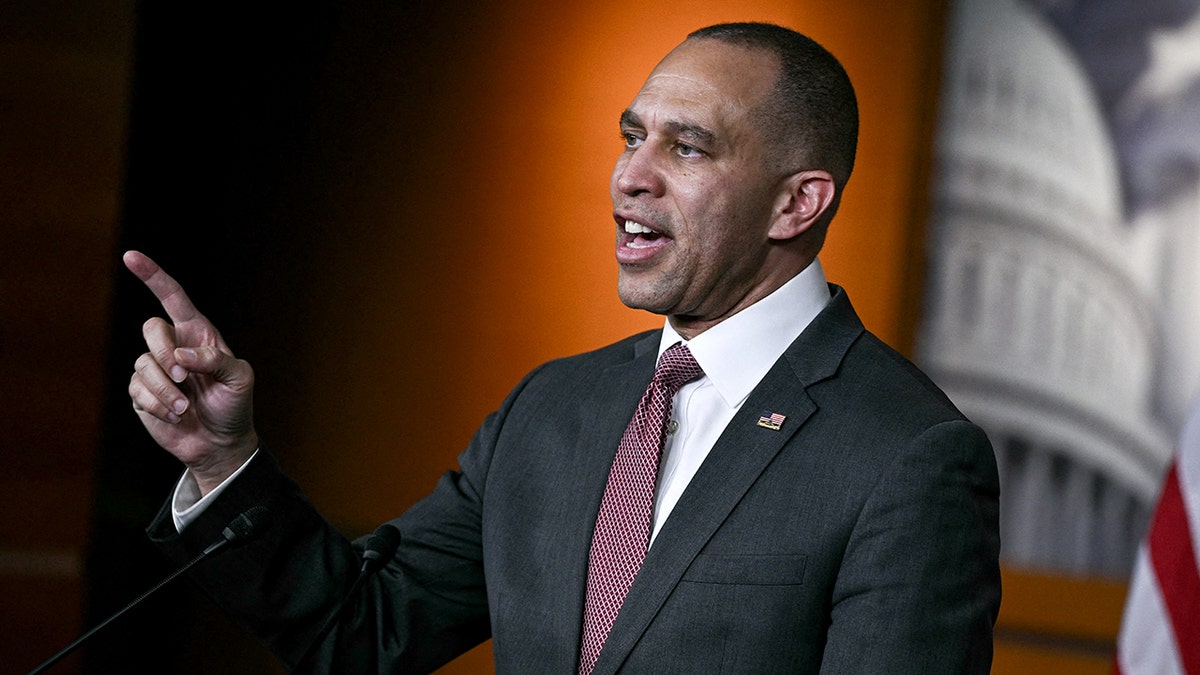
House Minority Leader Hakeem Jeffries speaks at a press conference.

House Minority Leader Hakeem Jeffries, Democrat from New York, speaks before an upcoming House vote on funding for the Department of Homeland Security on Capitol Hill in Washington, D.C., on March 5, 2026. (Brendan Smialowski/AFP via Getty Images)

SPARKS FLY AS GOP SENATOR REACTS TO BIDEN ADVISOR’S ‘I DON’T KNOW’ ANSWER ON ILLEGAL IMMIGRATION LAW

Democrats also raised concerns that Calvert’s measure would infringe on legal immigrants’ due process rights by allowing for their removal before obtaining a formal conviction.

“Here’s what America is talking about: Donald Trump’s unauthorized, undeclared war of choice,” Rep. Jamie Raskin, D-Md., said on the House floor Thursday. “What are MAGA Republicans in Congress talking about this week? They’re talking about the BOWOW Act.”

The legislation will likely be dead on arrival in the Senate given expected opposition from Democrats in that chamber. 

Rep. Jamie Raskin speaking to reporters outside House Speaker Nancy Pelosi's office in Washington, D.C.

Rep. Jamie Raskin, D-Md., speaks to reporters outside House Speaker Nancy Pelosi’s office in Washington, D.C., on July 22, 2021. (Anna Moneymaker/Getty Images)

CLICK HERE TO DOWNLOAD THE FOX NEWS APP

In addition to the BOWOW Act, House Republicans also passed legislation this week seeking to crack down on noncitizens who commit fraud in the United States. All GOP lawmakers — and 20 Democrats — supported a measure on Wednesday that would make noncitizens who are convicted of or admit to defrauding the government eligible for deportation and banned from future entry.

Rep. Marie Gluesenkamp Perez, D-Wash., one of the most vulnerable Democrats running for reelection, notably opposed the measure.


Source link

Access Denied

0

Access Denied You don’t have permission to access “http://hindi.news18.com/videos/ajab-gajab/bride-dance-in-sasural-in-blue-saree-amazing-moves-video-viral-10289289.html” on this server.

Reference #18.49200117.1773932779.d4b062c

https://errors.edgesuite.net/18.49200117.1773932779.d4b062c

FortiGate RaaS, Citrix Exploits, MCP Abuse, LiveChat Phish & More

0

Ravie LakshmananMar 19, 2026Cybersecurity / Hacking News

ThreatsDay Bulletin is back on The Hacker News, and this week feels off in a familiar way. Nothing loud, nothing breaking everything at once. Just a lot of small things that shouldn’t work anymore but still do.

Some of it looks simple, almost sloppy, until you see how well it lands. Other bits feel a little too practical, like they’re already closer to real-world use than anyone wants to admit. And the background noise is getting louder again, the kind people usually ignore.

A few stories are clever in a bad way. Others are just frustratingly avoidable. Overall, it feels like quiet pressure is building in places that matter.

Skim it or read it properly, but don’t skip this one.

  1. Deep link abuse enables command execution

    Proofpoint has detailed a new technique called CursorJack that abuses Cursor’s support for Model Context Protocol (MCP) deep links to enable local command execution or allow installation of a malicious remote MCP server. The attack takes advantage of the fact that MCP servers commonly specify a command in their “mcp.json” configuration. “The cursor:// protocol handler could be abused through social engineering in specific configurations,” the company said. “A single click followed by user acceptance of an install prompt could result in arbitrary command execution. The technique could be leveraged both for local code execution via the command parameter or to install a malicious remote MCP server via the URL parameter.” The enterprise security firm has also released a proof-of-concept (PoC) exploit on GitHub.

Some of this will fade by next week. Some of it won’t. That’s the annoying part, figuring out which “minor” thing quietly sticks around and turns into a real problem later.

Anyway, that’s the rundown. Take what you need, ignore what you can, and keep an eye on the stuff that feels a little too easy.


Source link

The US–Israel war with Iran will not end with a clear victor | Opinions

0

As the United States–Israel war against Iran enters its third week and continues to spill across the region, the question is no longer who will win but how this conflict might end. Each round of retaliation deepens a cycle that threatens to pull the wider Middle East into prolonged instability. Yet even the most entrenched wars eventually give way to negotiation. The challenge is recognising the moment when continuing the fight becomes more costly than stepping back.

Earlier this week, Iran once again denied responsibility for recent attacks on civilian infrastructure in the Gulf and proposed forming a joint committee with regional states to investigate the incidents. Tehran suggested that a cooperative mechanism involving Gulf countries could clarify what happened and determine responsibility. Whether such a proposal is sincere or simply tactical is another matter. Iran has repeatedly insisted that its war is with the US and Israel, not with its Gulf neighbours. But continued missile and drone attacks across the region have heightened suspicion. Any Iranian claim will be scrutinised carefully, if not outright rejected.

Still, Gulf states understand better than most that this war is not in their interest. It is not a conflict of their choosing, and they have been careful not to become direct participants so far. Their response has largely been limited to condemning Iran’s “indiscriminate and reckless strikes targeting sovereign territory and endangering civilian populations”, while focusing on defensive measures such as air defence operations. That restraint is not accidental. Gulf leaders know that a direct confrontation with Iran – a country of more than 90 million people with substantial military capabilities – could quickly spiral into a long and destructive regional war. The memory of the Iran–Iraq War in the 1980s still looms large across the Gulf, a reminder of how quickly such conflicts can drag on for years and reshape the region.

There is also a deeper anxiety at play. Gulf capitals see little clarity in Washington about what the endgame of this war might be. At the same time, they are acutely aware that the conflict reflects the strategic priorities of Israel’s leadership under Benjamin Netanyahu. The concern in many Gulf capitals is that, if the war widens, they may be left carrying much of the burden. From their perspective, escalation could leave them exposed while others move on to different theatres. Indeed, Israel has already begun shifting attention towards Lebanon, long a central front in its military planning. The unresolved challenge of Hezbollah and longstanding ambitions to occupy the area south of the Litani River continue to shape its strategy.

Against this backdrop, while Iran “sees no reason to negotiate with the US”, its proposal for a joint investigative mechanism still offers a narrow but meaningful opening for regional de-escalation. Gulf states may decide that cautiously exploring dialogue with Tehran, even if only at a technical level, could help prevent further destabilisation in their immediate neighbourhood. Their willingness to consider such engagement may also reflect the complex intelligence landscape that has emerged in the region. Since October 7, 2023, there has been growing recognition of the extraordinary reach of Israel’s intelligence services and their ability to operate across borders, including inside Iran itself. Israel’s decision to strike the South Pars gasfield (the world’s largest gas reserve, jointly shared between Iran and Qatar) on March 18, despite its clear regional and global economic significance, underscores the extent to which it may be willing to act in ways that risk drawing Gulf states more directly into the conflict. In such an environment, determining responsibility for attacks is rarely straightforward. A joint or independent investigation could therefore serve as a practical first step towards de-escalation.

This war is unlikely to produce a decisive military victory. Nor is it likely to evolve into a comprehensive peace process any time soon. The most realistic objective in the near term is a ceasefire.

Historically, ceasefires emerge when all sides reach the same conclusion: that continuing the war will cost more than ending it. But for a ceasefire to hold, each side must also be able to claim some measure of success. In practice, that means crafting an outcome that allows all parties to save face at home while quietly stepping back from escalation.

The most plausible path forward begins with phased de-escalation rather than a sweeping political agreement. In practical terms, an initial phase could focus on halting attacks on Gulf states and civilian infrastructure, alongside clear assurances that Gulf territory will not be used as a launch platform for strikes on Iran. For such an arrangement to work, Gulf governments would need to insist that the United States refrain from using its regional bases to launch further attacks on Iranian territory. At the same time, Iran would need to halt attacks on maritime shipping and energy infrastructure. Securing the Strait of Hormuz would create strong incentives for international actors, from Europe to Asia, to support and, where possible, enforce a ceasefire.

A second phase could then focus on ending the direct exchange of strikes between Iran and Israel. At that stage, political narratives will matter almost as much as the military realities. For Israel and the United States, leaders will likely argue that their operations succeeded in degrading Iran’s nuclear and missile capabilities and imposing significant strategic costs. They may also frame the decision to halt escalation as a deliberate choice aimed at sparing civilian lives. Presented in this way, stopping the campaign would not appear as a retreat but rather as the successful completion of a limited military objective.

Iran, meanwhile, would frame the outcome very differently. Tehran would emphasise resilience, arguing that the Islamic republic survived intense military pressure and that attempts to destabilise the regime failed. Iranian leaders would likely claim that their response to the assassination of their supreme leader and the imposed war restored deterrence and forced their adversaries to reconsider the risks of further confrontation.

These narratives may clash, but they are not unusual in war. Many wars end in precisely this way: not with a clear victor, but with an arrangement that allows each side to claim it achieved its core goals.

Direct negotiations between Iran and its primary adversaries remain politically fraught and difficult to sustain. In such circumstances, and given the recent history of misuse of negotiations hosted in the region, progress will require the involvement of a major external power capable of exerting influence on multiple sides at once. China appears well positioned to play such a role. Beijing has cultivated strong economic and diplomatic relationships across the Middle East, maintaining working ties with Iran, the Gulf states and Israel alike. Its growing political weight, combined with its interest in protecting the stability of global energy markets, gives it both the incentive and the leverage to encourage de-escalation.

China has already demonstrated its ability to mediate regional disputes. In March 2023, Beijing brokered a landmark agreement that restored diplomatic relations between Saudi Arabia and Iran after a seven-year rupture, leading to the reopening of embassies and the resumption of formal ties. High-level engagement between Washington and Beijing as part of preparations for President Donald Trump’s scheduled trip to China, recently delayed until late April due to the Iran war, could create a rare opportunity for quiet great-power coordination aimed at preventing a wider regional war. Despite their strategic rivalry, both powers share a clear interest in avoiding a conflict that could destabilise global markets, disrupt energy supplies and deepen geopolitical uncertainty.

Regional actors, particularly Saudi Arabia and Turkiye, would still play an important supporting role in encouraging China to become involved. Countries such as Oman and Qatar have long served as discreet conduits for dialogue, capable of hosting back-channel discussions and maintaining communication when formal negotiations stall. European governments and international institutions could complement these efforts by coordinating economic incentives or sanctions relief as part of a broader diplomatic package.

The most difficult challenge will be addressing the security concerns on all sides. Iran has long demanded that security in the Gulf be managed by regional states themselves. Israel and its partners, in turn, insist on credible guarantees that Iranian military capabilities will not threaten their security. Bridging this divide will require sustained, careful diplomacy and patience.

What is certain is that this war will not end through maximalist demands or decisive battlefield triumphs. It will end when leaders recognise that prolonging the conflict serves no one’s long-term interests.

The views expressed in this article are the author’s own and do not necessarily reflect Al Jazeera’s editorial stance. 



Source link

Two men accused of spying on Jewish community for Iran appear in court | UK News

0


Two men accused of carrying out “hostile” surveillance on London’s Jewish community on behalf of Iran have appeared in court.

Nematollah Shahsavani, 40, and Alireza Farasati, 22, are accused of spying on the Israeli Embassy, a synagogue in London and other Jewish organisations.

A woman living in the UK, who has been accused of being a Mossad agent, is also alleged to have been targeted.

Both defendants are facing a charge of engaging in conduct likely to assist a foreign intelligence service between 9 July and 15 August last year.

Prosecutor Louise Attrill said they “are suspected of assisting the Iranian intelligence service by conducting hostile surveillance of locations and individuals linked to the Israeli and the Jewish community”.

Read more:
AI Val Kilmer to star in new movie
Kevin Spacey settles sexual assault cases

The alleged surveillance targets included the Israeli Embassy, the Israeli Consulate, London’s Bevis Marks Synagogue, a Jewish community centre, and the Community Security Trust – a charity that provides security advice.

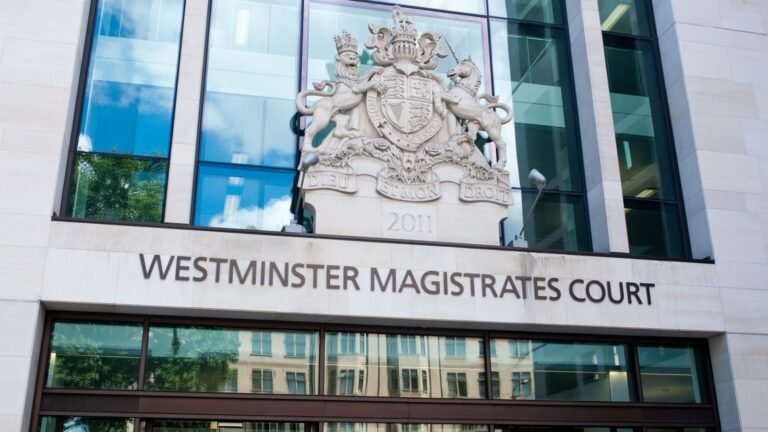
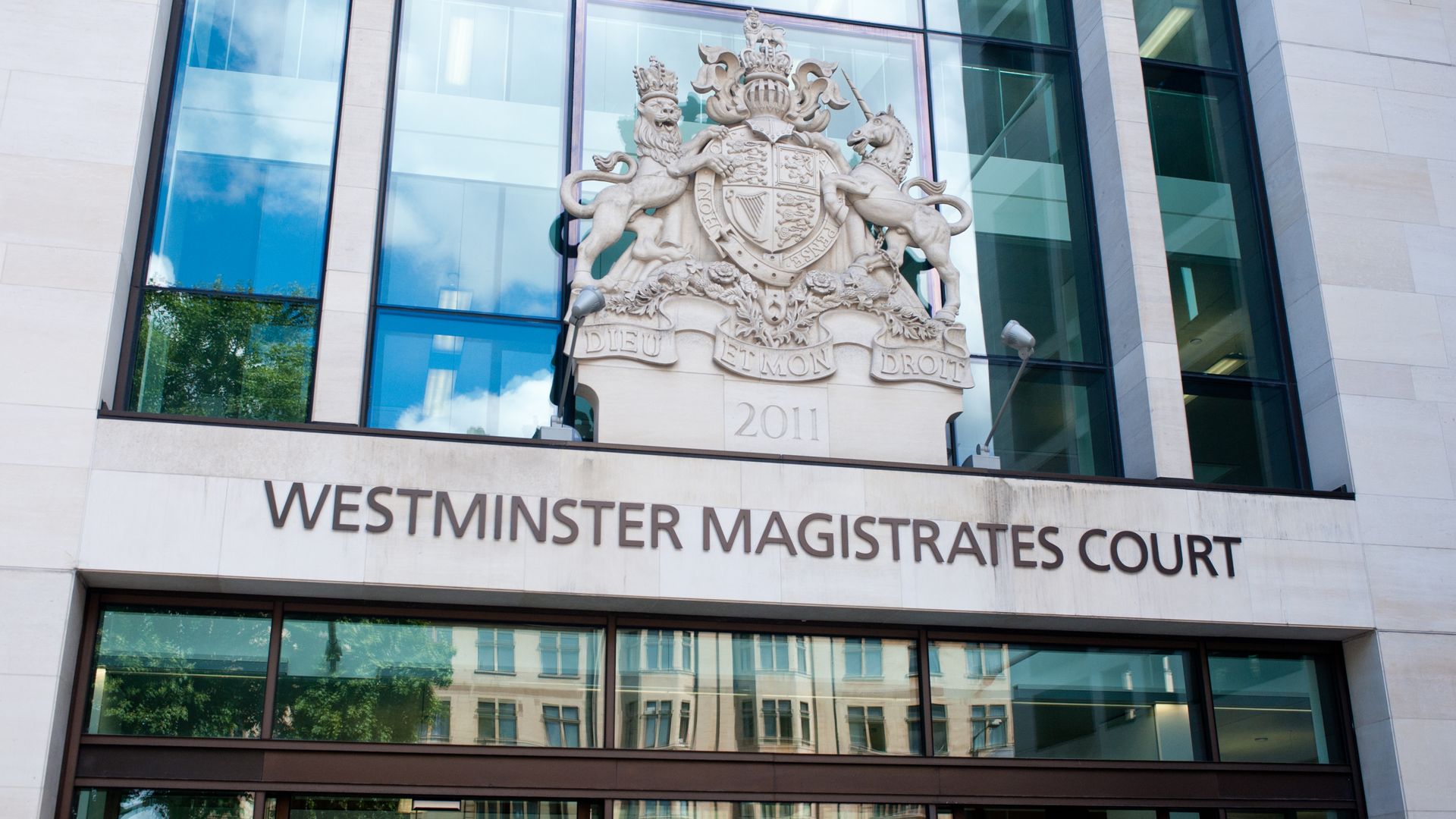
Delivery driver Shahsavani and Farasati appeared in the dock at Westminster Magistrates’ Court on Thursday.

They did not enter a plea to a single charge under the National Security Act 2023 and were remanded in custody ahead of the next hearing at the Old Bailey on 17 April.

Shahsavani, wearing a blue puffa jacket, was seen blowing a kiss towards the public gallery as he was led away to the cells.

He is alleged to have “tasked” Farasati “to conduct the surveillance activity against Israeli and Jewish sites and possible targets linked to the Iranian intelligence service”.

The pair are accused of “gathering information and undertaking reconnaissance of targets”, when they “knew or ought to have known their conduct was likely to materially assist a foreign intelligence service”.

Shahsavani, a father-of-two of North Finchley, north London, is a dual Iranian and British national and has lived in the UK since 2009.

Farasati, of Colindale, north west London, who is a trained barber, is an Iranian national and moved to the UK as a 17-year-old in 2021.


Source link

Fox News Lifestyle Newsletter: March 12-19, 2026

0

NEWYou can now listen to Fox News articles!

→ A proposed to-go packaging ban has restaurant owners warning it could upend costs, quality — and their survival.

→ Costco’s long-awaited churro comeback arrives in bite-size form — and fans aren’t exactly sweet on it.

→ A whiskey mogul is giving away a $200M campus — but only if it fuels a faith-driven revival.

Costco shoppers wait in line at the food court, where the Twisted Churro appears on the menu.

Costco’s latest food court dessert sparked mixed reactions online. (Patrick T. Fallon/AFP via Getty Images)

The hot plate

→ The so-called “Irish goodbye” might seem rude — but experts say it can actually be a polite move.

CLICK HERE TO SIGN UP FOR OUR LIFESTYLE NEWSLETTER

→ A tipping prompt ignites debate as a former NFL star questions when gratuity is actually earned.

Chew on this

→ Old-school prices are drawing crowds hungry for decades-old deals.

→ Martha Stewart’s go-to smoothie add-in is being likened to Ozempic. 

→ Struggling to sleep? These everyday foods could help your body wind down and rest easier tonight.

Car show outside Burgerville USA in the 60s.

Restaurants are tying anniversary celebrations to nostalgic menu pricing and historic dishes. (Burgerville, LLC.)

LIKE WHAT YOU’RE READING? CLICK HERE FOR MORE FOOD AND DRINK NEWS

Quote of the week

“It’s a bloodbath for all grape growers.”

America’s wine industry is reeling as younger drinkers ditch alcohol and demand dries up.


Source link