
New Fragnesia Linux flaw lets attackers gain root privileges

0

Linux

Linux distros are rolling out patches for a new high-severity kernel privilege escalation vulnerability that allows attackers to run malicious code as root.

Known as Fragnasia and tracked as CVE-2026-46300, this security flaw stems from a logic bug in the Linux XFRM ESP-in-TCP subsystem that can enable unprivileged local attackers to gain root privileges by writing arbitrary bytes to the kernel page cache of read-only files.

Zellic’s head of assurance, William Bowling, who discovered this new universal local privilege escalation flaw, also shared a proof-of-concept (PoC) exploit that achieves a memory-write primitive in the kernel that is used to corrupt the page cache memory of the /usr/bin/su binary to get a shell with root privileges on vulnerable systems.

Bowling said this flaw belongs to the Dirty Frag vulnerability class, which was disclosed last week, and affects all Linux kernels released before May 13, 2026. Just as Fragnasia, Dirty Frag has a publicly available PoC exploit that local attackers can use to gain root privileges on major Linux distributions.

However, Dirty Frag works by chaining two separate kernel flaws, the xfrm-ESP Page-Cache Write vulnerability (CVE-2026-43284) and a RxRPC Page-Cache Write security issue (CVE-2026-43500), to achieve privilege escalation by modifying protected system files in memory.

“Fragnesia is a member of the Dirty Frag vulnerability class. This is a separate bug in the ESP/XFRM from dirtyfrag which has received its own patch. However, it is in the same surface and the mitigation is the same as for dirtyfrag,” Bowling said.

“It abuses a logic bug in the Linux XFRM ESP-in-TCP subsystem to achieve arbitrary byte writes into the kernel page cache of read-only files, without requiring any race condition.”

To secure systems against attacks, Linux users are advised to apply kernel updates for their environment as soon as possible.

Those who can’t immediately patch their devices should use the same mitigation used for Dirty Frag commands to remove vulnerable kernel modules (however, it’s important to note that this will break AFS distributed network file systems and IPsec VPNs):


rmmod esp4 esp6 rxrpc
printf 'install esp4 /bin/false\ninstall esp6 /bin/false\ninstall rxrpc /bin/false\n' > /etc/modprobe.d/dirtyfrag.conf

Fragnasia’s disclosure comes as Linux distros are still rolling out patches for “Copy Fail,” another privilege escalation vulnerability now actively exploited in the wild.

CISA added Copy Fail to its catalog of flaws exploited in attacks on May 1 and ordered federal agencies to secure their Linux systems within two weeks, by May 15.

“This type of vulnerability is a frequent attack vector for malicious cyber actors and poses significant risks to the federal enterprise,” the U.S. cybersecurity agency warned. “Apply mitigations per vendor instructions, follow applicable BOD 22-01 guidance for cloud services, or discontinue use of the product if mitigations are unavailable.”

In April, Linux distros patched another root-privilege escalation vulnerability (dubbed Pack2TheRoot) in the PackageKit daemon that had gone unnoticed for a decade.

article image

AI chained four zero-days into one exploit that bypassed both renderer and OS sandboxes. A wave of new exploits is coming.

At the Autonomous Validation Summit (May 12 & 14), see how autonomous, context-rich validation finds what’s exploitable, proves controls hold, and closes the remediation loop.

Claim Your Spot


Source link

Iran war day 76: Vance says progress made in talks; Israel pounds Lebanon | US-Israel war on Iran News

0

US Vice President JD Vance says progress is being made in talks with Iran to end the war as President Donald Trump begins his state visit to China.

United States Vice President JD Vance has said he believes progress is being made in negotiations with Iran, despite President Donald Trump rejecting Tehran’s latest proposal as unacceptable. The comments come as diplomatic efforts continue to prevent a collapse in the fragile ceasefire between Washington and Tehran.

Meanwhile, Brigadier-General Mohammad Akrami Nia says Iran’s military remains at “the highest level of readiness”, warning that “there is no room for retreat” as tensions with the US persist. Iranian officials have continued to signal they are prepared to respond to any escalation.

Separately, Israel says Prime Minister Benjamin Netanyahu made a “secret” visit to the United Arab Emirates during the war on Iran, where he met the UAE president, according to the Israeli prime minister’s office. The UAE has denied that the trip happened.

Here is what we know:

In Iran

  • Iran warns states ‘colluding’ with Israel: Foreign Minister Abbas Araghchi said countries working with Israel against Tehran will be “held to account”, after Israel revealed Netanyahu visited the UAE during the war. Araghchi accused states of helping “sow division” alongside Israel, calling such actions “unforgivable”.
  • Iran gives World Cup send-off to national team: Crowds gathered in Tehran’s Enghelab Square to celebrate Iran’s national football team ahead of the 2026 World Cup, waving flags as players appeared on stage in red and black tracksuits. Iranian football federation president Mehdi Taj said the squad would represent “the people, the country’s fighters, the leader and the country”, while some fans carried placards honouring former Supreme Leader Ayatollah Ali Khamenei, who was killed during the war.INTERACTIVE_LIVETRACKER_IRAN_US_ISRAEL_MIDDLEEAST_ATTACKS_MAY5_2026_GMT1435-1777992258

War diplomacy

  • Vance says US is ‘making progress’ in talks: The US vice president says he believes progress is being made in negotiations with Iran. “I think that we are making progress. The fundamental question is, do we make enough progress that we satisfy the president’s red line?” Vance told reporters at the White House. “And the red line is very simple. He needs to feel confident that we put a number of protections in place such that Iran will never have a nuclear weapon.”
  • China may seek concessions over Iran role: Analysts say China could demand concessions from the US, potentially on Taiwan, in exchange for using its influence to pressure Iran to reopen the Strait of Hormuz, as Washington urges Beijing to play a greater role in easing tensions linked to the war.
  • Iran war to cast a shadow at BRICS meeting: Iranian foreign minister Araghchi arrived in New Delhi late on Wednesday night to represent Iran at the BRICS foreign ministers’ meeting.

In the Gulf

  • Netanyahu’s UAE visit: The Israeli Prime Minister held a “secret” meeting with the UAE President Sheikh Mohamed bin Zayed Al Nahyan, his office said. “The visit marked a historic breakthrough in relations between Israel and the United Arab Emirates.”
  • UAE denies Netanyahu visit claims: The UAE has rejected statements from Netanyahu’s office. In a statement carried by state news agency WAM, the UAE said reports of a Netanyahu visit or the presence of an Israeli military delegation were “baseless”, stressing that its ties with Israel under the Abraham Accords are public and “not based on secrecy or clandestine arrangements”.

In the US

  • Senate backs Trump: US senators narrowly rejected a resolution curbing President Trump’s power to wage war on Iran – their first vote on the conflict since a 60-day deadline expired for the White House to seek formal authorisation.
  • Trump dismisses China role on Iran: The US president said Washington does not need Beijing’s help to end the war in Iran or reopen the Strait of Hormuz, ahead of his China visit. “We’ll win it one way or the other, peacefully or otherwise,” Trump said, while analysts in Tehran said the summit was not seen as a threat to strong Iran-China ties.
  • US Secretary of State Marco Rubio has defended the war on Iran, claiming this time that Tehran was building a huge arsenal as a prelude to a nuclear weapon, which Tehran has always denied it is trying to obtain. “Iran was building up a conventional capability, where they would have so many missiles and so many drones, that they could overwhelm anyone’s defences,” Rubio told Fox News.

In Lebanon

  • Israel-Lebanon talks: Officials from Lebanon and Israel will convene in Washington, DC, later on Thursday for a new round of peace negotiations as their “ceasefire”, which is in name only and due to expire, remains technically active despite Israel killing dozens of Lebanese people daily.
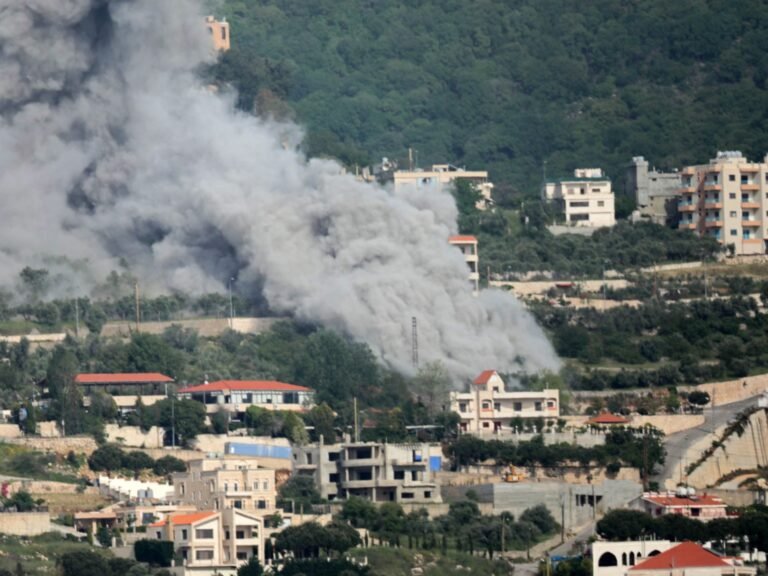
  • Lebanon’s National News Agency (NNA) reports that a series of Israeli overnight and early morning attacks have targeted multiple locations across southern Lebanon.
  • Hezbollah on Thursday said it has carried out several attacks on Israeli army positions in or near the southern Lebanese town of Biyyada.
  • Lebanon says 10,000 homes hit: More than 10,000 homes have been damaged or destroyed in Lebanon since a ceasefire in the war between Israel and Hezbollah, the head of the country’s National Council for Scientific Research said.
  • At least 12 killed in Lebanon – Israel intensified strikes on Lebanon with the Ministry of Public Health reporting 12 people were killed in attacks on Wednesday, mostly south of Beirut, despite a ceasefire between Israel and Hezbollah.


Source link

Politics in Rajasthan regarding Dinesh Binwal’s NEET paper leak allegations, Tikaram Julie presented ‘evidence’

0

The NEET 2026 paper leak issue in Rajasthan has now taken a completely political colour. The name of accused Dinesh Binwal is at the center of this entire controversy. The matter gained momentum when former Chief Minister Ashok Gehlot directly attacked the government and BJP.

Gehlot claimed that Dinesh Binwal, arrested in the paper leak case, is a person associated with BJP. He said that many people from the accused’s family are already in government jobs, hence an impartial investigation into the entire matter is necessary.

CM Bhajanlal Sharma’s unique style on Jalore tour, stayed overnight in the village, ate food at villager’s house

He also raised questions on the action of the state’s Special Operation Group (SOG). Gehlot asked that when such a big network is coming to light then why FIR has not been registered against the main accused till now. After his statement the politics of Rajasthan heated up.

BJP called the allegations false

After Gehlot’s allegations, an immediate reply came from BJP. BJP State President Madan Rathore termed Congress’s allegations as completely false and misleading.

BJP said in its statement that Dinesh Binwal is not a party worker. The party said that having photographs of people with leaders in public life is not a big deal and it is wrong to associate someone with BJP on the basis of photographs alone.

Madan Rathod accused Congress of using the issue for political gain. BJP said that the investigating agencies are doing their work and the opposition is trying to spoil the atmosphere without evidence.

Tikaram Julie presented social media posts

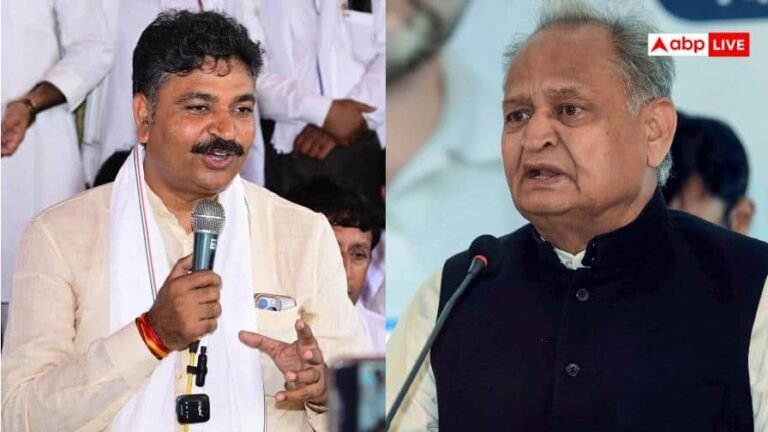
The matter became more heated when Leader of Opposition Tikaram Julie countered the BJP’s claims. Julie shared social media posts of BJP MLA Mahendra Pal Meena. In these posts, the MLA was seen congratulating the accused Dinesh Binwal by writing “Brother”. After this, Congress started cornering BJP.

Julie claimed that Dinesh Binwal is not only a supporter of BJP but has also been the district minister of BJYM Jaipur Dehat. He said that BJP is now trying to hide the truth.

The Leader of Opposition said that if BJP has no connection with the accused then how come the closeness of the leaders with him is coming to the fore. He demanded BJP to accept the truth.

Political pressure increased on paper leak case

The issue of NEET paper leak had already become a matter of concern among students and parents. Now with the addition of political rhetoric, the matter has become more sensitive.

Dungarpur: Lover’s house burnt in ‘fire of revenge’, angry family members raided at night due to daughter’s departure

Congress is continuously accusing the government of being lax in taking action, while BJP is calling it opposition politics. In the coming days, this issue can become a bigger controversy in the politics of Rajasthan.

Explained: Is there still an option to import oil from Russia, why did the Russian minister say that India should not worry about oil? Know the story behind the scenes

0

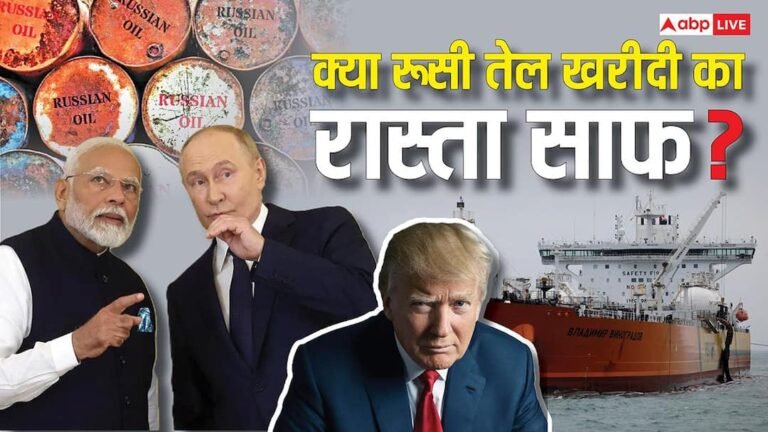
On one side is the friendly hand of Russia which is assuring cheap oil, on the other side is the whip of America which is trying to make every import expensive with the threat of tariffs and sanctions. Libra Is. Prime Minister Narendra Modi Tak had to say that people should use less petrol and diesel, because the area from which the world gets the most oil is burning in the fire of war. Meanwhile, Russian Foreign Minister Sergei Lavrov gave a statement just before the BRICS meeting to be held in Delhi, ‘India should not worry about oil at all.’ The question is, when the figures show a completely opposite picture, is this trust really enough?

The real stake behind Lavrov’s assurance

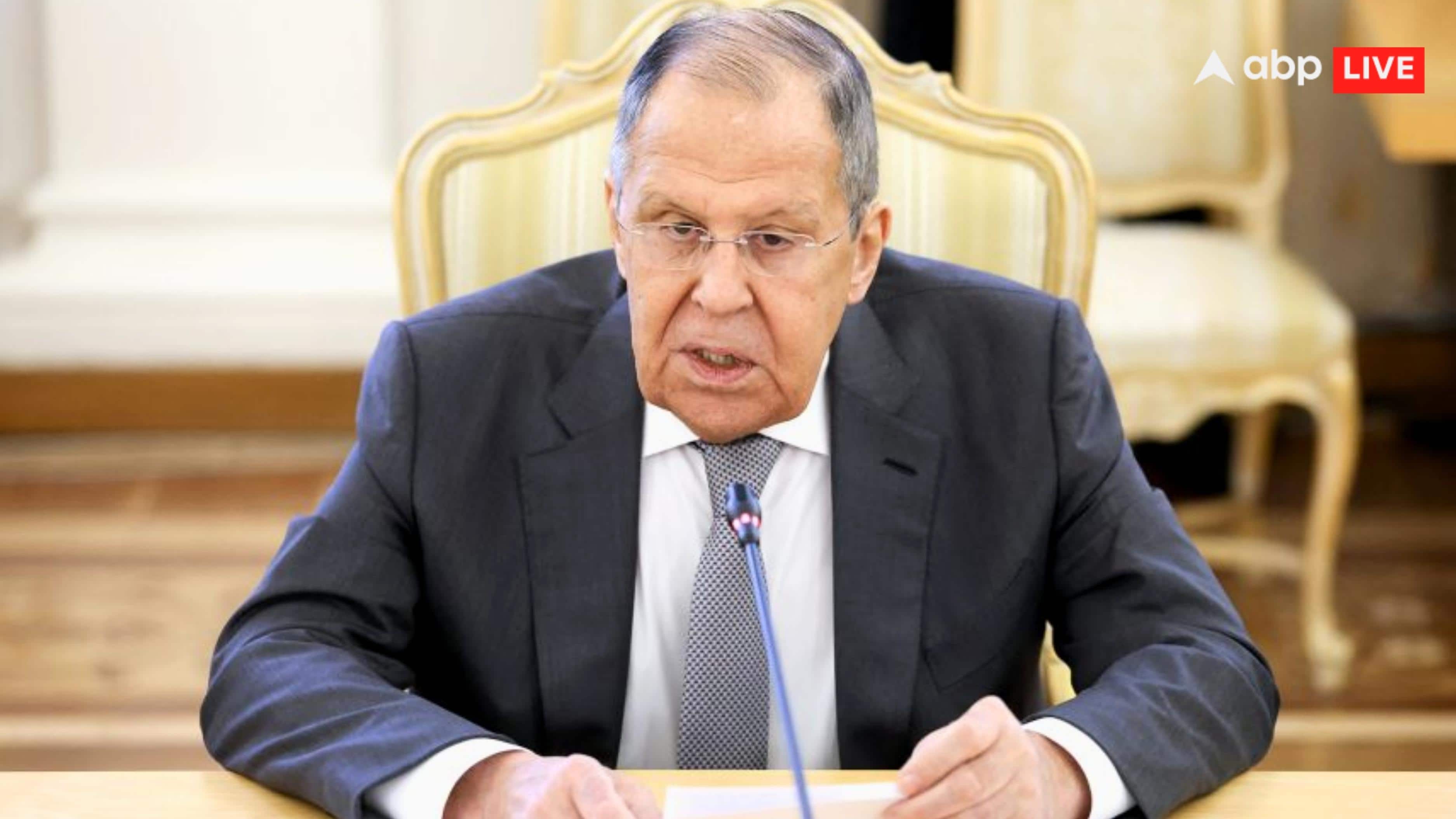
The Russian Foreign Minister openly said in an interview to RT India that the relations between India and Russia date back to before independence and no power in the world can weaken it. When he was asked why India’s imports fell after the ban on Russian oil companies Lukoil and Rosneft due to American sanctions, he directly targeted America.

Lavrov said, ‘This is an illegal decision of America. India has nothing to do with this. We will ensure that this game does not affect our contracts and India’s interests are not harmed. He sarcastically said that America’s only objective is that you should not buy cheap Russian oil, but buy my expensive oil and LNG so that I can rule the world’s energy.

Sergei Lavrov has said that the American tariff is illegal.

Why are ground reality figures scaring?

Trust in words is a good thing, but the real story is told by the numbers. India imports about 90 percent of its total crude oil requirement. The cheap oil that Russia started providing after the Ukraine war changed the entire mathematics. In July 2024, Russia became India’s largest oil supplier and its share in total imports reached a record level of 44.6%. But then America made a series of threats of strict sanctions and tariffs.

The result was that within just one and a half years, by January 2026, this share fell directly to 20.6%. Suppose, if your cheap LPG cylinder suddenly becomes less than half, then you will definitely be worried. This is the condition of India’s energy security.

Direct battle between experts: be afraid of America or make allies with Russia?

Opinion is divided on this issue in the diplomatic circles of Delhi. Ajay Srivastava, former commerce official and head of the Global Trade Research Initiative, clearly advises adopting an aggressive approach. He told the BBC that this is an ’emergency-like situation’. He explains, ‘About 50 percent of the oil coming from the Gulf countries is stuck due to the Strait of Hormuz and the remaining 30 percent that we were taking from Russia has stopped due to American pressure. We should set aside America’s legitimate and illegitimate threats and make an agreement for 30-50 years from now. His argument is that America does not have enough oil to replace Russia, because its refineries will be built only for the next 10 years.

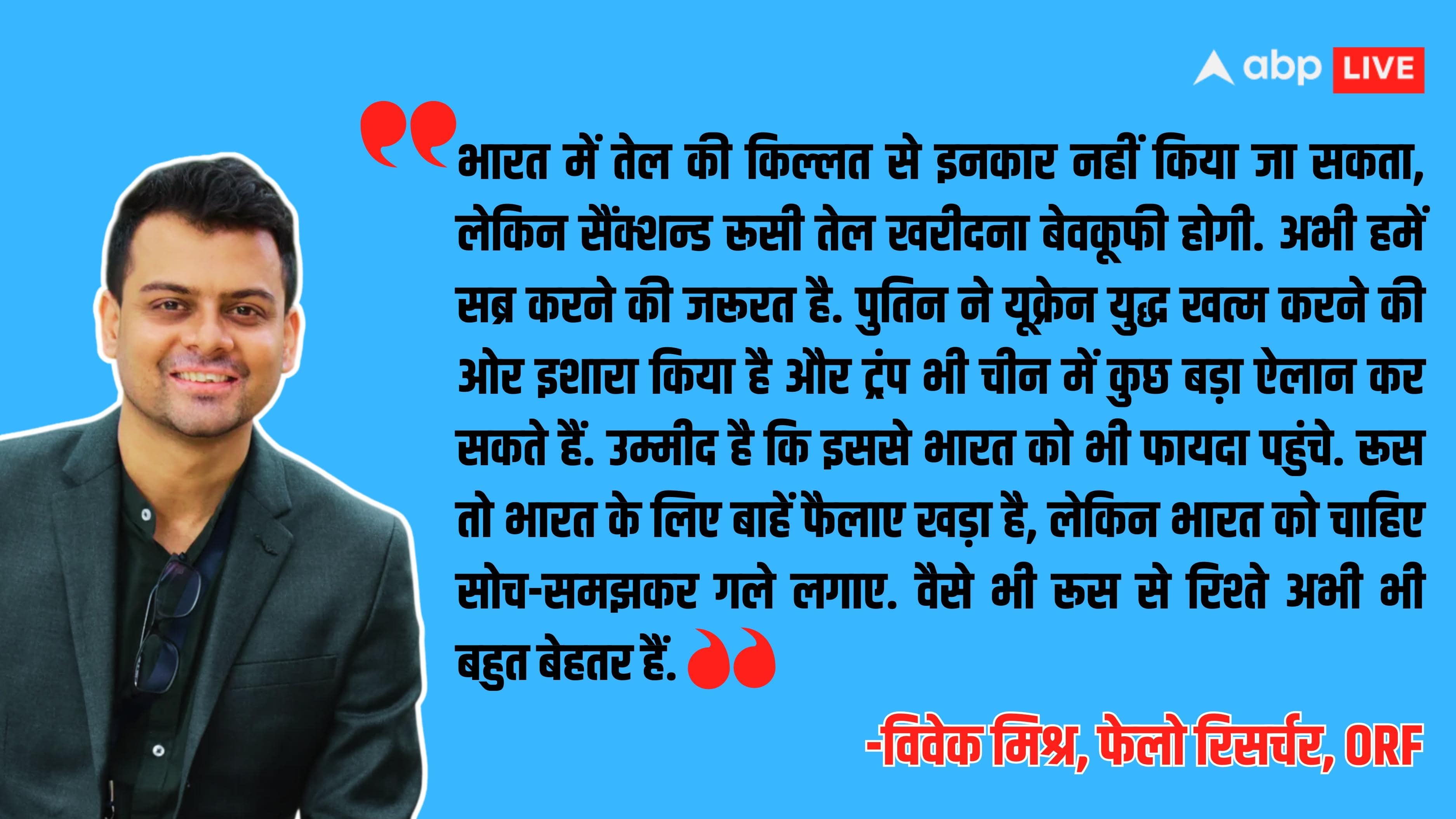
But on the other hand, ORF America’s Fellow Researcher Vivek Mishra points towards the bitter truth that India is currently not in a position to openly confront America. He said, ‘A strategic plan is needed to buy oil from Russia. America has imposed sanctions on Russian oil purchases. If India buys oil, it may have to pay a heavy price. PM Modi has appealed to save oil and gas, which should be strictly implemented. Not towards buying sanctioned Russian oil.


Explained: Is there still an option to import oil from Russia, why did the Russian minister say that India should not worry about oil? Know the story behind the scenes

This is why the Government of India has adopted a very clever ‘blurring’ policy. Neither was it ever announced that oil purchases from Russia had been stopped nor were the purchase figures ever discussed openly. There was also a slight increase in the purchase of Russian oil in February-March 2026, but this is going on completely behind the scenes.

What will be the way forward for India?

This tension is not limited to oil only, but divisions are also clearly visible on forums like BRICS. While America is pulling India towards itself, Iran has created a new polarization along with Russia and China.

Lavrov may be consoling, but until India finds a permanent diplomatic solution to avoid American tariffs and sanctions, cheap Russian oil will remain an ‘option’, but it will not have the freedom to use it fearlessly. It is like walking on the tip of a needle, where on one side is energy security and on the other is the American market and investment.

MTAR Technologies soars 6.5% to fresh 52-week high after Q4 results and ₹2,279 crore order win

0

Shares of MTAR Technologies surged as much as 6.48 per cent to ₹7,201.50 on the NSE by 12.36 pm on Thursday, touching a fresh 52-week high of ₹7,418 intraday, as investors reacted to a strong set of Q4 FY26 results reported the previous trading day and a massive new order disclosure filed this morning.

The stock has delivered a staggering 373.72 per cent return over the past year and is up over 200 per cent year-to-date, vastly outperforming the broader NIFTY Total Market index which is down 6.12 per cent in the same period. Trading volumes were elevated, with over 23.83 lakh shares changing hands worth ₹1,727 crore by midday. The buy-to-sell ratio stood at 69:31, indicating strong bullish sentiment. The company’s total market capitalization stood at approximately ₹22,538 crore.

The Hyderabad-based precision engineering company disclosed on Thursday morning that it had received blanket purchase orders worth $238.76 million — approximately ₹2,278.96 crore at ₹95.50 to the dollar — from an undisclosed international customer, described as a continuation of regular business.

On Wednesday, MTAR reported its Q4 FY26 financial results, which showed revenue from operations jumping 67.2 per cent year-on-year to ₹306.1 crore. Net profit for the quarter surged 222.3 per cent to ₹44.3 crore. For the full year FY26, revenue rose 29.6 per cent to ₹876.2 crore, while PAT grew 76.2 per cent to ₹94 crore. EBITDA margins improved to 19.5 per cent for the full year from 17.9 per cent in FY25.

The company also reported its highest-ever annual order inflows of ₹2,453.3 crore in FY26, with a diversified order book of ₹2,581.9 crore as of March 31, 2026. Clean energy — primarily fuel cells — accounts for over 51 per cent of the order book. MTAR is also expanding capacity and setting up a greenfield Oil & Gas facility expected to be commissioned by September 2026.

The stock is currently listed on the NIFTY India Defense index and carries a symbol P/E of 221.25, reflecting high growth expectations priced in by the market.

More Like This

Published on May 14, 2026

Access Denied

0

Access Denied You don’t have permission to access “http://hindi.gadgets360.com/internet/realme-buds-air8-pro-and-watch-s5-to-launching-on-22-may-with-longest-battery-and-advanced-features-news-11493727” on this server.

Reference #18.e50db17.1778770125.308ff71

https://errors.edgesuite.net/18.e50db17.1778770125.308ff71

IT stocks extend losses as Nifty eyes 23,700; Adani, Cipla lead rally

0

Markets extended their morning gains through midday trade on Thursday, with the Sensex trading at 75,405.46, up 796.48 points or 1.07 per cent, and the Nifty 50 at 23,681.60, up 269 points or 1.15 per cent, as of 12.43 PM. Despite the headline gains, the rally remained uneven, with advances and declines nearly split — of 4,159 BSE stocks traded, 1,945 advanced while 2,018 declined, and 99 stocks hit 52-week highs against 47 touching 52-week lows.

On the Nifty 50, Adani Enterprises led gainers, surging 7.09 per cent to ₹2,675, followed by Cipla at 6.17 per cent to ₹1,409.50. Bharti Airtel gained 3.37 per cent to ₹1,849.50, Dr. Reddy’s rose 2.80 per cent to ₹1,300.70, and HDFC Bank advanced 2.54 per cent to ₹768.65. IT stocks bore the brunt of selling, with HCL Technologies falling 3.42 per cent to ₹1,104.10 and Tech Mahindra declining 3.31 per cent to ₹1,329.50. Infosys dropped 2.81 per cent to ₹1,091.50, TCS slipped 2.55 per cent to ₹2,214.90, and Nestle India edged lower 0.55 per cent to ₹1,460.80.

A key development supporting broader sentiment was a reported agreement between the US and China that no nation should impose shipping tolls in the Strait of Hormuz. While the development provided some relief, it stopped short of resolving the underlying US-Iran conflict, keeping risk appetite measured. Crude oil remains above the $100 mark, with US Oil consolidating in the $100–$105 range. MCX Crude Oil is trading in the ₹9,700–₹9,800 zone, with immediate resistance at ₹9,900–₹10,000.

The rupee continued to press against record lows, trading above ₹95.7 against the dollar. “A sustained move above ₹95.80 could extend rupee weakness to break the ₹96 level, with ₹96.50 becoming a possibility,” said Ponmudi R, CEO of Enrich Money. On the upside, a pullback could find support at ₹95.30–₹95.10 unless the central bank intervenes.

Gold and silver remained in focus as safe-haven demand persisted. COMEX Gold is trading in the $4,680–$4,720 range, with a move above $4,760–$4,780 needed to push prices toward $4,850–$4,900. MCX Gold is trading near ₹1,61,500–₹1,62,000, with resistance at ₹1,62,000–₹1,63,000 and support at ₹1,58,000–₹1,57,000. COMEX Silver is holding the $87–$88 zone, while MCX Silver is trading in the ₹2,94,000–₹2,96,000 band with resistance at ₹3,00,000–₹3,02,000.

Technically, the Nifty opened with a gap-up near 23,535 but continues to face resistance around the 23,600 zone. A sustained breakout above this level could push the index towards 23,800, with the broader 23,900–24,000 band acting as stronger resistance. The 23,300–23,150 range remains crucial support. Bank Nifty opened near 53,678 and faces resistance at 53,900–54,100, with support at 53,200–53,000.

With roughly three hours left in the session, traders are watching whether Nifty can hold above 23,600 into the close. Institutional flows, crude oil prices, and any fresh geopolitical headlines from the Middle East remain the primary triggers for the remainder of the day.

More Like This

Reuters
iStockphoto

Published on May 14, 2026

Hbse 10th Result Out: Deepika became topper by scoring 499 marks, Roshan named Bhiwani; 16 children made it to the top-3 – Hbse Class 10 Result 2026: Deepika Tops With 499 Marks, Brings Glory To Bhiwani

0

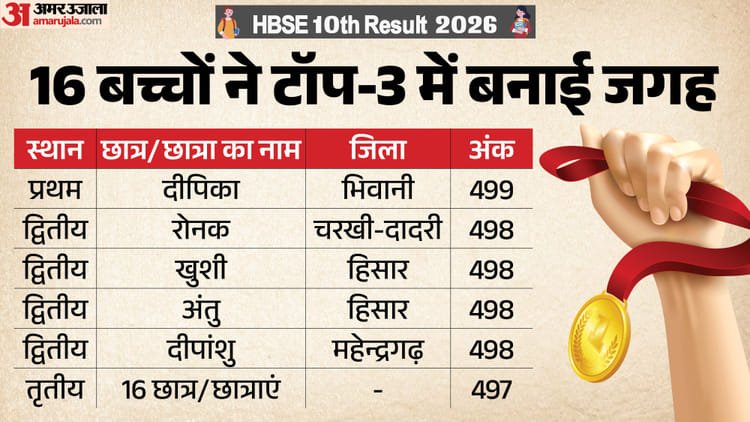
HBSE 10th Result OUT: Students have performed brilliantly this year in the 10th class results released by the Haryana School Education Board. In the list of toppers, Bhiwani student Deepika stood first by scoring 499 marks, while many other students also scored high marks and displayed their talent in the state.


This time in the 10th result Deepika secured first position by scoring 499 marks. Ronak, Khushi, Antu and Deepanshu stood second, who scored 498 marks. At the third position, 16 students made it to the top list.
place Name of student School District score
First Deepika Adarsh ​​Senior High School, Miran Bhiwani 499
II Ronak BSM V.M.V., Bigova Charkhi-Dadri 498
II Happiness NCVM High School, Puthi Samain Hisar 498
II Antu Swami Vivekananda V.M.V., Khedi Jalab Hisar 498
II Deepanshu Balaji V.M.V., Bhungarka Mahendragarh 498
third poem R.V.M.V., Shahpur Turk Sonipat 497
third Initiation Tagore High School, Rawat Kheda Road, Mangali Hisar 497
third Witness Shri Balveer Singh E.M.V., Madha Hisar 497
third Arju Pink City High School, Bisla Fatehabad 497
third Manshi Aryavart V.M.V., Devban Kaithal 497
third Ashu Holi V.M.V., Siwani Mandi Bhiwani 497
third manuraj Modern Shiksha Sadan, Dehra Panipat 497
third perfect Balveer Singh V.M.V., Madha Hisar 497
third Geeta R.V.M.V., Sundana Rohtak 497
third smell Arya High School, Mandholi Kalan Bhiwani 497
third dynasty god Maharshi Dayanand Public School, Narwana jind 497

Access Denied

0

Access Denied You don’t have permission to access “http://hindi.news18.com/news/ajab-gajab/viral-sons-dont-want-to-go-school-father-tied-them-with-bicycle-and-took-them-to-school-viral-video-10475228.html” on this server.

Reference #18.b5eb2d17.1778743953.132b3d66

https://errors.edgesuite.net/18.b5eb2d17.1778743953.132b3d66

Impact of West Asia crisis: Pressure due to rise in crude oil prices, wholesale inflation rate reached 8.3 percent in April – Wholesale Inflation Surges To 8.3% In April Amid West Asia Crisis And Crude Oil Spike

0

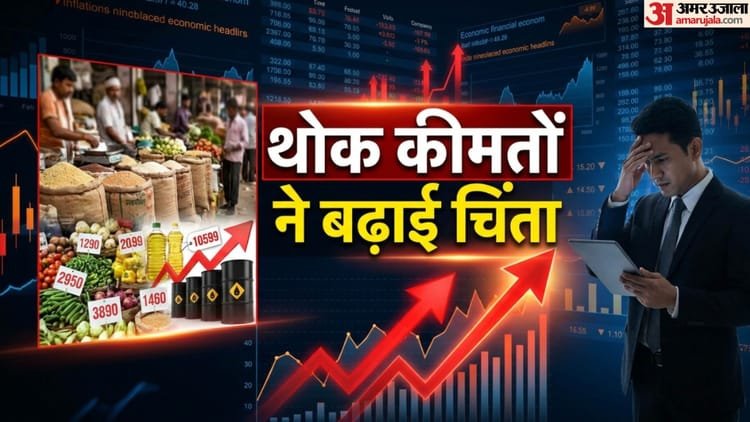
The direct impact of the energy crisis and geopolitical tension at the international level is now visible on the Indian economy. According to the data released by the Ministry of Commerce and Industry, a huge jump has been recorded in the inflation rate based on Wholesale Price Index (WPI) in the month of April.

What is the reason for inflation in April?

In the month of March, the wholesale inflation rate was at the level of 3.88 percent, which has increased rapidly to 8.30 percent in April. The main reason behind this tremendous increase is the huge increase in the prices of fuel, electricity and crude petroleum. According to the ministry statement, this positive rate of inflation in April 2026 is mainly due to increase in prices of mineral oils, crude petroleum, natural gas, basic metals, other manufacturing and non-food items.

Global crisis and supply chain disruption

This sharp jump in wholesale inflation directly reflects the ongoing crisis in West Asia. Additionally, the effective blockade of the Strait of Hormuz has made the situation more serious. This waterway is very strategically important for India as India obtains most of its imported crude oil through this route.

Impact on various sectors and products

The inflation situation in the fuel and energy sector has been most worrying. Key figures for different baskets are as follows:

  • Fuel and Electricity: Inflation rate in this region has jumped from 1.05 percent in March to 24.71 percent in April.
  • crude petroleum: Inflation rate of crude petroleum reached 88.06 percent in April as compared to 51.5 percent in the previous month.
  • Petrol and high-speed diesel: Inflation rate in petrol increased from 2.50 percent to 32.40 percent, while in high-speed diesel it increased from 3.26 percent to 25.19 percent.
  • LPG: LPG inflation rate was positive at 10.92 percent in April compared to (-) 1.54 percent in March.
  • Food and non-food items: The inflation rate of food items increased marginally to 1.98 percent in April as compared to 1.90 percent in March. At the same time, the inflation rate of non-food items increased from 11.5 percent to 12.18 percent.

Government’s stance and future outlook

Globally, a huge jump of up to 50 percent has been seen in the prices of crude oil. However, despite this, the Government of India has till now kept the retail prices of petrol, diesel and domestic LPG cylinders stable to provide relief to common families. This step has been taken to protect retail consumers from the direct hit of inflation, but on the other hand, the prices of commercial LPG cylinders have been increased. It will be important to see how long global geopolitical tensions and supply chain disruptions persist and how long the government can manage this pressure.