Sheikh Khalifa bin Hamad says Qatar will ‘not hesitate’ to ensure its stability as US-Israeli war on Iran continues.
Published On 13 Mar 202613 Mar 2026
Share
Qatar’s Interior Minister Sheikh Khalifa bin Hamad has said the situation in the Gulf country is “stable” amid Iranian drone and missile attacks launched across the Middle East in response to the US-Israeli war on Iran.
In an interview with Qatar Television on Friday, Sheikh Khalifa said the Qatari government had a plan in place to deal with the prospect of more Iranian attacks amid a regional war.
Recommended Stories
list of 3 itemsend of list
“The security situation in the country is stable, and we will not hesitate to take any measure that ensures the stability of our nation,” he said.
The interior minister said Qatar’s early warning system has been effective as authorities responded to reports of falling missile fragments at more than 600 sites across the country.
He added that Qatar has enough water to last for several months, as well as food reserves that will cover the nation’s needs for a year and a half.
Sheikh Khalifa’s remarks come as Qatar and other countries in the Gulf region have faced a barrage of Iranian attacks since the United States and Israel launched a war against Iran on February 28.
While Iran has said it is targeting US and Israeli military interests in the wider Middle East, the strikes have hit civilian infrastructure, including oil and gas facilities.
That has prompted a slowdown in regional energy production, which – coupled with Iran’s closure of the Strait of Hormuz, a key Gulf waterway – has raised concerns around the war’s effects on global economies.
Earlier this week, the United Nations Security Council passed a resolution denouncing the Iranian attacks on Gulf Cooperation Council (GCC) countries.
Sheikha Alya Ahmed bin Saif Al Thani, Qatar’s ambassador to the UN, had condemned the firings as “a clear violation of international law and the UN Charter”.
The attacks, she told reporters in New York on Wednesday, “impacts deeply the foundation of understanding upon which bilateral relations between our countries have been built”.
A third horse has died at this year’s Cheltenham festival.
The 12-year-old Envoi Allen collapsed and died after finishing ninth in the festival’s flagship race, the Boodles Cheltenham Gold Cup.
His owners, Cheveley Park Stud, had previously confirmed that he would have retired following his run in the blue riband, his eighth appearance at the festival.
Over the course of his life, Envoi Allen won 10 Grade Ones races in total, having started out with the stable of Gordon Elliott, before moving to trainer Henry de Bromhead.
HMS Seahorse and Hansard were the two other horses that died at this year’s Cheltenham festival.
Image:Jockey Darragh O’Keeffe after winning the BetVictor Champion Chase on Envoi Allen in Lisburn, Ireland in 2025, Pic: PA
In a statement after the death of the second horse, animal charity RSPCA said: “Lessons must be learned from tragedies like this – around the contributing factors, pre-and mid-race decision-making, and means of prevention”.
Chicago Public Schools (CPS) will no longer bar students from a Bible college from participating in its student-teaching program after reaching a settlement Thursday in the college’s religious discrimination case.
Moody Bible Institute, a private Christian college in Chicago, sued the Chicago Board of Education in November, alleging CPS had unlawfully blocked its students from participating in the district’s student-teaching program because of the school’s religious hiring practices.
The lawsuit claims CPS excluded Moody students from its student teacher internship program after the college refused to abandon its policy of hiring employees who affirm the school’s statement of faith and agree to live according to its Christian beliefs, including on gender and sexuality.
“As a condition of participation, Chicago Public Schools insists that Moody sign agreements with employment nondiscrimination provisions that forbid Moody from employing only those who share and live out its faith,” the complaint stated. “Such a requirement is unlawful.”
Students outside the Moody Bible Institute, a Christian college. (Jeffrey Greenberg/Universal Images Group via Getty Images)
Alliance Defending Freedom (ADF) said Thursday that the settlement resolves the dispute.
According to the Christian legal group, CPS agreed to modify its Student Teacher Internship Agreement to recognize Moody’s right to maintain its faith-based hiring practices, allowing the college to sign the agreement and participate in the student-teaching program. ADF also said CPS now lists Moody as an approved university partner on its website.
“Chicago desperately needs more teachers to fill hundreds of vacancies, and Moody’s students will be well-equipped and qualified to help meet that need,” ADF Senior Counsel Jeremiah Galus said in a press release.
“Moody holds its faculty and students to high standards of excellence, and we’re pleased to reach this favorable outcome that will allow it to participate in Chicago Public Schools’ student-teaching program,” he continued. “We’re hopeful other public officials will take note that they can’t inject themselves illegally and unconstitutionally into a religious non-profit’s hiring practices.”
The Moody Bible Institute campus on July 30, 2025.(E. Jason Wambsgans/Chicago Tribune/Tribune News Service via Getty Images)
According to the complaint, CPS had told the religious college it would need to sign two nondiscrimination agreements to participate in the teaching program. The agreements required Moody to stop hiring only employees who share its Christian beliefs and agree to its code of conduct. They specifically prohibited discrimination based on religion, gender identity or expression, and sexual orientation.
The complaint said that CPS denied Moody’s request to modify the language in the agreement to recognize its rights to hire people of the same faith, and selectively enforced its policy, alleging other religious colleges with similar hiring practices were approved for the program.
“We are deeply grateful that a resolution has been reached affirming our constitutional right to hire individuals who are aligned with our core mission and biblical values,” Moody Provost Dr. Tim Sisk said in the press release. “Moody’s Elementary Education students are eager and well-prepared to participate in the CPS student teaching program, which is an essential and formative part of their journey toward becoming effective educators.”
Students at a Chicago Bible college will now be allowed to participate in Chicago Public Schools’ student-teaching program, after a religious discrimination lawsuit settlement.(iStock)
A man has been jailed for at least 26 years for the “cold-blooded murder” of his ex-wife and the burying of her body in his garden.
Alireza Askari, 42, admitted killing Paria Veisi, 37, at the property they previously shared in Penylan, Cardiff, in April last year.
Veisi had separated from her husband and moved out of the house earlier that month, Cardiff crown court heard.
Paria Veisi’s body was found after a friend reported her disappearance to the police. Photograph: South Wales police
Police found her body buried in a “makeshift grave” in the rear garden, concealed by patio slabs, soil and newly planted flowers.
On Friday, Justice Stacey sentenced Askari to life imprisonment with a minimum term of 26 years for the “cold-blooded murder” of Veisi.
William Hughes KC, prosecuting, said Askari had murdered his ex-wife in the conservatory of the house at about 4.30pm on 12 April before attempting to destroy any evidence with the help of his aunt Maryam Delavary, 48.
The court previously heard Askari and Veisi had moved to the UK from Iran in 2010 and had married, but were living separately at the time of the murder.
Analysis of Askari’s phone found he had been texting a woman in Iran, believed to be his girlfriend, before the killing. In one message, he told the woman: “I’m planning for them to kill her in Iran.”
On the day of the attack, Askari bought the suspected murder weapon, a set of kitchen knives, from a supermarket before returning home.
Hughes said that after burying Veisi in a makeshift grave, Askari rang Delavary in London before making another trip to the supermarket, where he bought bleach, compost and plants.
Maryam Delavary was jailed for five years and six months for perverting the course of justice. Photograph: South Wales police/PA
Delavary travelled to Cardiff in a taxi “to assist in the covering up of Paria’s murder”, Hughes said.
A friend of Veisi contacted South Wales police the day after the murder, raising concerns that she was “being kept against her will by her ex-husband”, and a missing person investigation was launched.
On 15 April, Askari was arrested while driving from Birmingham to Cardiff. Canisters containing caustic soda were found inside the vehicle. Hughes said: “These chemicals … were to be used in the destruction of Paria’s remains.”
Veisi’s body was found during a search of the property. She had four stab wounds, and injuries to her chest and neck.
Addressing Askari, Justice Stacey said: “She was in the prime of her life, her death has destroyed her family’s happiness, as you knew it would.
“You subjected Paria to abuse at home and [she] was fearful of you; Paria confided to her friends how scared she was of you.
“You recruited your aunt … You did everything in your power to cover up the murder, to destroy evidence and to hinder the South Wales police investigation.”
He said Askari had killed Veisi because she had left him and wanted a divorce. “Your hypocrisy was staggering – at the same time you wanted [Paria] out of the way so you could take up with your girlfriend in Iran.”
Askari, of Penylan, Cardiff, had previously pleaded guilty to murder and preventing the lawful and decent burial of a body. A further charge of assault occasioning actual bodily harm was ordered to lie on file.
Delavary, of White City estate, west London, previously pleaded guilty to perverting the course of justice. She was sentenced to five years and six months in prison.
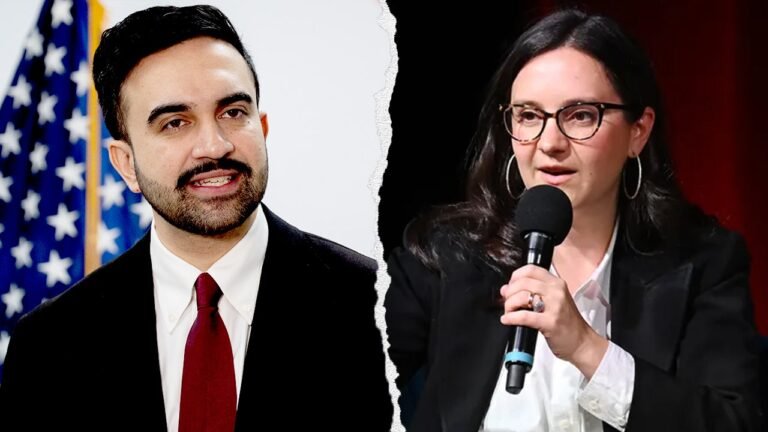
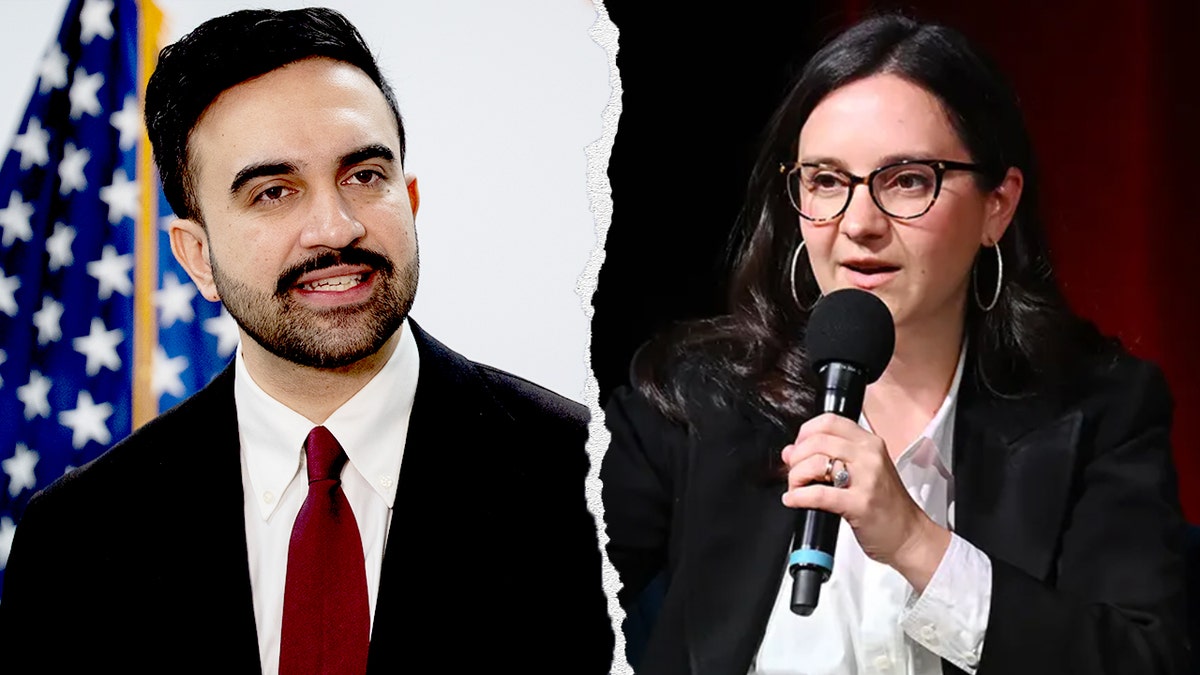
Democratic New York City Mayor Zohran Mamdani reportedly has backed out of an interview with CBS News over a social media post made by the network’s editor-in-chief Bari Weiss.
Vanity Fair reported Thursday that Mamdani was having discussions to sit down with Robert Costa on “CBS Sunday Morning” but had been “averse” to appearing on the Weiss-run network in the wake of critical coverage he had received from her digital outlet, The Free Press.
However, sources told the magazine that Weiss’ apparent endorsement of fiery remarks made Feb. 28 by Iranian journalist, activist and new CBS News contributor Masih Alinejad, who slammed the mayor’s condemnation of Operation Epic Fury against the Iranian regime, was the final straw.
New York City Mayor Zohran Mamdani reportedly backed out of a CBS News interview after its network’s editor-in-chief Bari Weiss appeared to endorse criticism of him on X.(Adam Gray/Bloomberg via Getty Images; Noam Galai/Getty Images for The Free Press)
“Mr. Mamdani, you are more than welcome to come to one of my safe houses,” Alinejad said during CBS News’ breaking news coverage of the conflict.
“Where were you when they sent killers here in New York City? You were crying for your aunt because she has stopped using the subway for simply — in an illusionist statement you made saying she didn’t feel safe, for wearing a hijab. Really? I stopped using subways because of the would-be assassins being sent to beautiful New York City by the Islamic Republic,” she continued, before urging Mamdani to shift his “hatred” away from President Donald Trump.
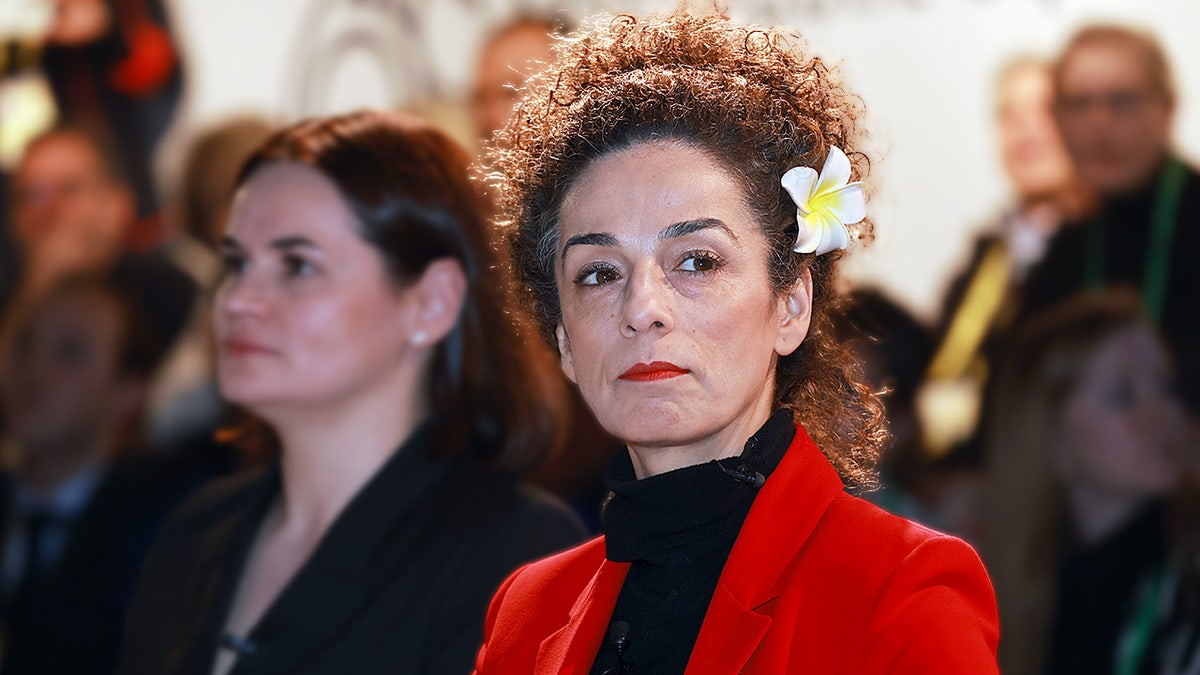
Iranian civil rights activist Masih Alinejad slammed Mamdani’s denunciation of Operation Epic Fury against the Iranian regime, a sentiment Weiss appeared to endorse.(Johannes Simon/Getty Images)
Weiss reacted to her comments using a fire emoji, something a source told Vanity Fair was the “nail in the coffin” for a Mamdani interview.
“Bari and her people have a clear ax to grind with him,” a former CBS producer told Vanity Fair. “It’s not just Zohran. It’s really hard now to get people to come on CBS.”
Neither CBS News nor Mamdani’s office responded to Fox News Digital’s requests for comment.
Bari Weiss was tapped by new Paramount owner David Ellison to become editor-in-chief of CBS News last fall.(Michele Crowe/CBS News via Getty Images)
One of the most wanted drug kingpins in South America, Sebastian Enrique Marset Cabrera, has been arrested in Santa Cruz de la Sierra in Bolivia, after a morning raid involving hundreds of police officers.
Following Marset’s capture on Friday, Bolivian President Rodrigo Paz celebrated the arrest as a milestone in the fight against drug trafficking on the continent.
Recommended Stories
list of 3 itemsend of list
“One of the drug traffickers and criminals considered among the four biggest on the continent has fallen,” Paz said during a news conference in La Paz, Bolivia.
“The capture of Mr Marset marks a turning point in the fight against organised crime, and it also reaffirms the government’s determination to confront international and domestic mafias.”
Paz’s leadership is part of a trend in South America, which has seen longtime left-leaning governments flounder in recent elections, in favour of right-wing alternatives.
Marset’s arrest also coincides with a renewed push from the United States to more aggressively address drug trafficking across the Western Hemisphere.
Paz’s nascent government has demonstrated a willingness to partner with the US on those efforts.
Paz was sworn into office in November, ending nearly 20 years of leadership from Bolivia’s Movement for Socialism (MAS), and in late February, his government reinstated ties with the US Drug Enforcement Administration (DEA) after a rupture in 2008.
US President Donald Trump recently hosted Paz and other right-wing leaders from Latin America at his Mar-a-Lago resort in South Florida to discuss shared efforts to combat drug cartels and other criminal networks.
One of Trump’s top advisers, Stephen Miller, reiterated the president’s hardline stance that drug traffickers should not be treated as criminals, but as unlawful combatants in an armed conflict.
“The cartels that operate in this hemisphere are the ISIS [ISIL] and the al-Qaeda of the Western Hemisphere and should be treated just as brutally and just as ruthlessly as we treat those organisations,” Miller said.
“We have learned after decades of effort is that there is not a criminal justice solution to the cartel problem.”
After his arrest on Friday, Marset was transferred into US custody, and he was seen boarding a US-tagged plane.
The DEA did not participate in his capture, which was led by local law enforcement. No injuries or deaths were reported after the operation.
Who is Marset?
The DEA considered Marset, a 34-year-old Uruguayan citizen, to be “one of South America’s most notorious drug traffickers”.
On March 7, 2024, he was indicted on money laundering charges, for allegedly using US-based financial institutions to process millions in drug-trafficking proceeds.
The indictment also accused Marset of leading a transnational criminal group, the First Uruguayan Cartel, responsible for shipping cocaine across the world, including to destinations such as Belgium and Portugal.
One drug bust in the Belgian port of Antwerp turned up nearly 16 tonnes of cocaine linked to Marset’s criminal network.
Prosecutors have also alleged that Marset solicited advice about disposing of the bodies of his enemies over text messages.
Both Paraguay and Bolivia had also sought to detain Marset on criminal charges. In 2023, Bolivia, for instance, posted a $100,000 reward for information leading to his capture.
The US, meanwhile, offered a $2m bounty in May of last year for help arresting or convicting him.
Marset appeared to relish his reputation as one of South America’s “most wanted” criminal suspects. The Washington Post reported that he stamped his drug shipments with the label, “The King of the South”.
Media reports also indicated that Marset was a diehard football fan, investing in lower-level sports teams in Latin America and Europe. He had been on the run since July 2023, ahead of a planned operation at the time to detain him.
In 2021, he was briefly stopped in Dubai, in the United Arab Emirates, for travelling under a fake passport. But Uruguayan authorities ultimately issued him new travel documents that allowed him to leave the country, prompting outcry.
Since his arrest on Friday, Paraguay has said it too would seek Marset’s extradition so he could stand trial in the country.
Marset’s arrest follows another major operation last month in Mexico to capture the drug kingpin Nemesio Oseguera Cervantes, known as “El Mencho”, a leader of the Jalisco New Generation Cartel.
That operation, however, resulted in El Mencho’s death and a wave of retaliatory attacks across Mexico.
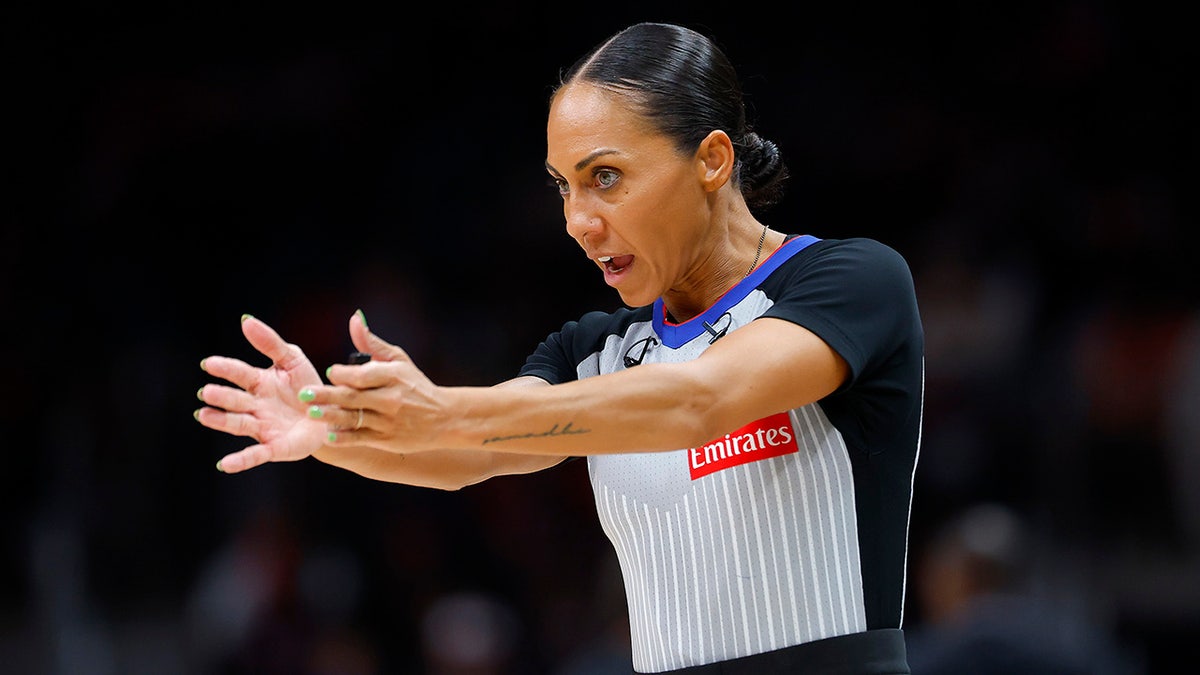
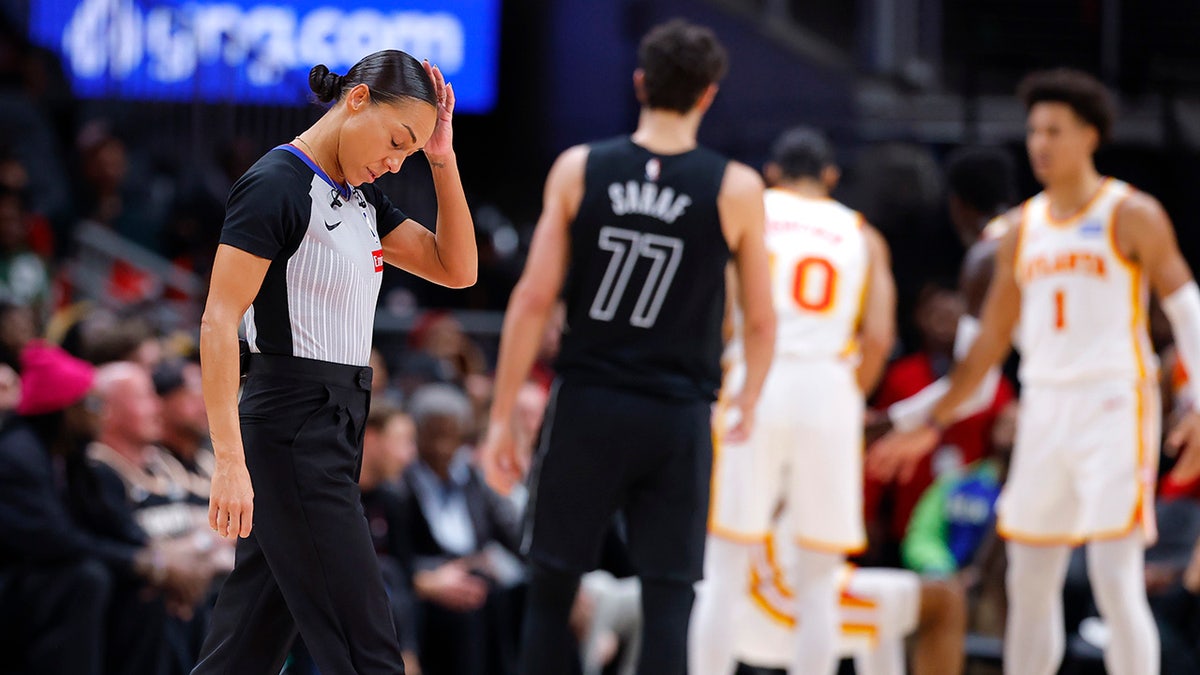
NBA official Sha’Rae Mitchell went down hard during Thursday night’s game between the Atlanta Hawks and Brooklyn Nets after she ran into a camera operator and appeared to injure her head in the collision.
Mitchell, who is in her first season as an NBA staff official, was jogging full speed along the court with just over eight minutes left in the game when she took a hard fall to the ground after running into a camera operator, who appeared to be filming the crowd courtside during play.
Referee Sha’Rae Mitchell (98) signals during the fourth quarter of an NBA basketball game between the Brooklyn Nets and the Atlanta Hawks at State Farm Arena in Atlanta, Georgia, on March 12, 2026.(Todd Kirkland/Getty Images)
The game was stopped as Mitchell appeared to grab the back of her head, bent over in obvious pain.
She walked off the court and sat down, continuing to grab at her head.
Referee Sha’Rae Mitchell holds her head after a collision during the fourth quarter of the Brooklyn Nets and Atlanta Hawks game at State Farm Arena in Atlanta, Georgia, on March 12, 2026.(Todd Kirkland/Getty Images)
Mitchell reportedly returned to the game as Jalen Johnson recorded 21 points, nine rebounds and nine assists to help the Hawks extend the NBA’s longest current winning streak to eight games with a 108-97 victory over the Nets.
The 40-year-old referee joined the league officially this season after previously officiating 11 regular-season games as a non-staff official during the 2022-23 NBA season and four games during the 2021-22 season.
Rapper and entertainer Boosie Badazz reacts after watching referee Sha’Rae Mitchell (98) fall to the floor following a collision during the fourth quarter of an NBA basketball game between the Brooklyn Nets and the Atlanta Hawks at State Farm Arena in Atlanta, Georgia, on March 12, 2026.(Todd Kirkland/Getty Images)
Mitchell was a standout women’s college basketball player at UC Santa Barbara before she served on coaching staffs at Stanford University, UCLA and Coastal Carolina University. She then moved to officiating college basketball for several years before making her debut at the pro level.
Rachel Reeves will set out extra support next week for households across the UK facing a surge in the cost of heating oil due to the conflict in the Middle East.
The chancellor is expected to set out plans to assist those on low incomes or with other vulnerabilities, particularly in rural areas. The help will be delivered in England via councils using the new crisis and resilience fund.
While the amounts involved have not yet been set out, it is understood that ministers could provide extra support to this fund if needed. In Scotland, Wales and Northern Ireland, devolved governments will receive money to deliver the help.
Heating oil, which provides heating and hot water for an estimated 1.7m UK households, is not covered by Ofgem’s energy price cap.
In some examples seen by the Guardian this week, customers have seen quoted costs to refill tanks almost triple since the disruption to fuel supplies after the US-Israeli war on Iran began.
In Northern Ireland, heating oil is the primary heating source for two-thirds of households.
Reeves said this week she recognised the “unique challenges” faced by people reliant on heating oil, and has asked Spencer Livermore, the financial secretary to the Treasury, to discuss possible remedies with rural and Northern Irish MPs.
As well as putting pressure on petrol retailers not to exploit the Iran crisis to excessively increase forecourt prices, ministers have asked the Competition and Markets Authority watchdog to look out for unjustified increases in the price of heating oil.
People who use the fuel generally purchase it in bulk to fill tanks, often because their home is not connected to the mains gas network.
As wholesale prices of heating oil have risen, some people have had pre-existing orders cancelled, forcing them to order again at a higher price. Others have struggled to find suppliers willing to deliver to them.
While ministers are confident that Keir Starmer’s refusal to support the initial attack on Iran has the broad support of the public, they are deeply wary about the impact of higher fuel and petrol prices, particularly if the conflict drags on.
Set up to run from 1 April, the crisis and resilience fund gives English councils money to support communities, particularly with financial pressures. It has a funding of £1bn a year for an initial three-year period.
A Treasury source said: “Families who rely on heating oil can’t spread the cost – when the tank’s empty, you have to find hundreds of pounds upfront. That’s why the chancellor is providing targeted help for low‑income and vulnerable households across the UK.”
You don’t get what you don’t pay for! Microsoft’s GitHub is dialing back on expenses by removing several costly premium models from its free GitHub Copilot Student plan.
On Wednesday, Martin Woodward, GitHub VP of developer relations, soured relations with the site’s student developer community by breaking the unwelcome news.
Characterizing the plan change as an effort to make student access sustainable, Woodward said that, starting Thursday, March 12, complimentary access to Copilot will be managed under a new GitHub Student Plan alongside other GitHub Education benefits.
“As part of this transition, however, some premium models, including GPT-5.4, and Claude Opus and Sonnet models, will no longer be available for self-selection under the GitHub Copilot Student Plan,” he explained in a discussion forum post. “We know this will be disappointing, but we’re making this change so we can keep Copilot free and accessible for millions of students around the world.”
The student plan still has access to many models including Claude 4.5 Haiku (normal price = Input $1 / 1M tokens; Output $5 / 1M tokens for output), Gemini 3.1 Pro (Input $2 / 1M; Output $12 / 1M), and GPT-5.3 Codex (Input $1.75 / 1M; Output $14 / 1M).
But costlier top performers like GPT 5.4 (Input $2.50 / 1M; Output $15.00 / 1M), Sonnet 4.6 (Input $3 / 1M; Output $15 / 1M), and Opus 4.6 (Input $5 / 1M; Output $25 / 1M) are no longer part of the mix.
OpenAI and Anthropic did not immediately respond to requests for comment.
GitHub’s decision has aroused ire. Woodward’s post had garnered just 21 up votes compared to 2,874 down votes at the time this article was filed, as well as more than a thousand comments in the past two days.
Most of the comments express disappointment, citing the educational benefits of having access to models that perform particularly well.
A forum participant posting under the name Sahad Rushdi remarked: “For many of us working on advanced engineering projects, Claude 4.6 Sonnet and Opus are not just ‘options’ – they are currently the most capable AI agents for coding, logic, and handling large-scale refactoring. Restricting these models from self-selection limits our ability to learn with the industry’s leading technology.”
That sentiment was echoed by an individual posting under the name Nguyễn Thế Toàn: “[T]he removal of premium models such as GPT-5.4, Claude Opus, and Claude Sonnet makes learning programming more difficult. These models are much better at explaining complex coding concepts, helping debug problems, and guiding students step by step when we are stuck.”
In response to the many calls to restore high-end model access, Woodward on Thursday offered a suggestion: Pay.
“We’ve now added the option so folks can upgrade from your GitHub Copilot Student plan to a paid GitHub Copilot Pro or GitHub Copilot Pro+ plan if you want to, while retaining the rest of your GitHub Student Pack benefits,” he said in an update to his initial post.
That’s exactly what Copilot users have been trying to avoid, and not just students. Only 3.3 percent of Microsoft 365 and Office 365 customers who bother with Copilot Chat actually pay anything for the service. One of the growing concerns for Microsoft investors is whether the company’s capex spending on infrastructure to support AI workloads will pay off. ®
The armed suspect who drove a vehicle into the hallway of a large Michigan synagogue complex that includes a school had lost four family members in an Israeli airstrike in his native Lebanon just last week, an official said on Friday.
A potential mass-casualty event was averted when security guards already in place at Temple Israel in West Bloomfield Township on the outskirts of Detroit killed the driver before any harm could come to the synagogue’s staff, teachers and 140 children at the early childhood center there on Thursday afternoon.
The suspect was later named by the authorities as Ayman Mohamad Ghazali, 41, who was born in Lebanon and had become a naturalized US citizen.
The Federal Bureau of Investigation (FBI), which is leading the investigation, described the attack on one of the nation’s largest Reform synagogues as an act of violence targeting the Jewish community.
Photographs of an FBI raid on Ghazali’s reported residence in Dearborn Heights, a Detroit suburb with a large Lebanese community, appeared on the website of the New York Post on Friday.
Ghazali came to the US in 2011 on a family-related visa as the spouse of a US citizen and was granted US citizenship in 2016, according to the Department of Homeland Security (DHS).
The New York Times reported Friday that Ghazali had a job at Hamido, a Mediterranean food restaurant in Dearborn Heights, but had been missing from work in recent weeks, a colleague said.
“He’s the face of the restaurant,” Rami Achkar, a regular diner, told the newspaper. “I’ve known him for years.”
An Israeli airstrike killed four people in the eastern Lebanon town of Mashgharah on 5 March, Lebanon’s state agency and the Lebanese Health Ministry reported. A woman was also wounded.
Coinciding with US and Israeli strikes on Iran that began late last month, Israel also once again began attacking its neighbor Lebanon in an effort to eradicate the Iran-backed Hezbollah militancy.
The bombardment of Lebanon, which is continuing, marked a significant escalation in Israel’s growing offensive there, which began after Hezbollah fired missiles and drones into Israel in early March in retaliation for the attacks on Iran, as the conflict has mounted and widened rapidly.
A local official in Mashgharah, in central Lebanon, told the Associated Press on Friday that Ghazali’s two brothers and a niece and nephew were killed at their home in the 5 March airstrike just after sunset as they were having their fast-breaking meal during the Muslim holy month of Ramadan.
The official, who requested anonymity because he could not publicly discuss details of the airstrike, told the AP that Kassim and Ibrahim Ghazali were killed, along with Ibrahim Ghazali’s children, Ali and Fatima. Ibrahim Ghazali’s wife was seriously wounded and remains in the hospital, the official said.
The official said that Kassim Ghazali was a well-known soccer coach and personal trainer while Ibrahim was a school bus driver in the village. The official added that Ayman Ghazali’s father was in the US and returned to Lebanon recently.
Iskander Barakeh, the mayor of Mashgharah, a religiously and politically diverse town of about 25,000 in the Bekaa valley, told the Guardian he did not know why the Ghazali residence was targeted.
“I asked a lot but no one said anything. He wasn’t affiliated with any party,” Barakeh said.
The mayor added that two multi-apartment blocks in the town were hit, as well as a community center, a school that was damaged indirectly, and a Christian cemetery.
“In Masghara you can consider it like Lebanon itself. Among Christians you have Roman Catholics, Greek Orthodox, Protestants, Maronites and Latins,” he said.
“Among the Muslim groups you have Shia, Druze, Sunnis. As for political parties, everything exists there, every party in the world is represented.”
Thursday’s incident at the Michigan synagogue resulted in the vehicle driven by the suspect catching on fire and black smoke could be seen billowing from the building.
One security officer was hit by the vehicle and knocked unconscious but did not suffer life-threatening injuries, the local Oakland county sheriff, Mike Bouchard said. And 30 law enforcement officers were treated for smoke inhalation.
Cassi Cohen, director of strategic development at Temple Israel, was in the hallway where the crash happened. She described hearing a loud bang and said she grabbed a few staff members, ran into her office and locked the door.
“When I heard the crash, I knew it was bad,” Cohen said.
She said the crash happened near a classroom and, in addition to the children, there were also more than 30 staff members in the synagogue.
Rabbi Arianna Gordon, from Temple Israel, thanked the security team, law enforcement and early childhood teachers for getting the children out safely and reunited with their parents amid the chaos and fear.
About a dozen parents sprinted to get their children soon after authorities cleared the building. Other families were reunited at a nearby Jewish Community Center.
Allison Jacobs, whose 18-month-old daughter is enrolled in Temple Israel’s day care, said she got a message from a teacher saying the children were okay even before she knew what happened.
“There are no words. I was in complete and utter shock,” she said.
Synagogues around the world have been on edge and further ramping up security since the US and Israel launched a war with Iran with missile strikes on 28 February.
Donald Trump said on Thursday: “It’s incredible that things like this happen” and called the Michigan attack a “terrible thing”.
However, Steven Ingber, the CEO of the Jewish Federation of Detroit, said: “I’d love to say that I’m shocked, that I’m surprised, but I’m not.”
Oakland county is Michigan’s second-largest county with roughly 1.3m people. The majority of Detroit-area Jewish residents live there. Temple Israel has 12,000 members, according to its website.
At a similar time to the attack on the synagogue, a gunman killed one and injured two in a shooting at Old Dominion University in Norfolk, Virginia.
That incident could also have resulted in more carnage after the suspect opened fire in a classroom of students doing military training with the Reserve Officers’ Training Corps, a college-based program, but he was subdued and killed by some of the students.
The suspect was later identified by authorities as Mohamed Jalloh, a former member of the army national guard who pleaded guilty in 2016 to attempting to provide material support to the Islamic State. The authorities said he shouted the Arabic phrase “Allahu Akbar”, meaning Allah is the greatest, or God is great and the FBI is investigating the shooting as an alleged act of terrorism.