Reference #18.49200117.1774850578.229245ba
https://errors.edgesuite.net/18.49200117.1774850578.229245ba
Reference #18.49200117.1774850578.229245ba
https://errors.edgesuite.net/18.49200117.1774850578.229245ba
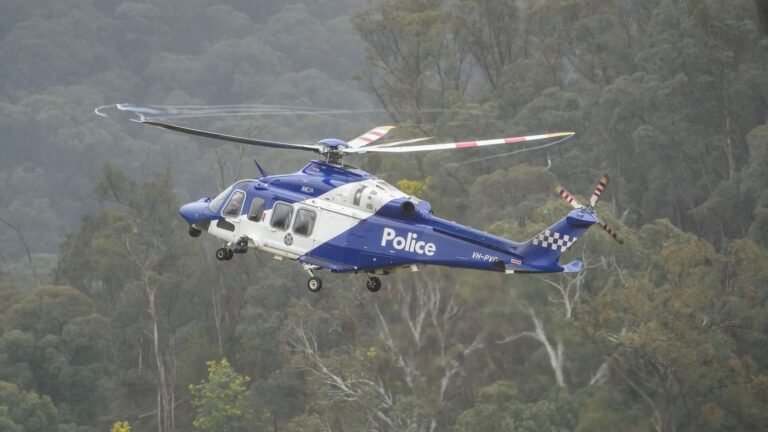
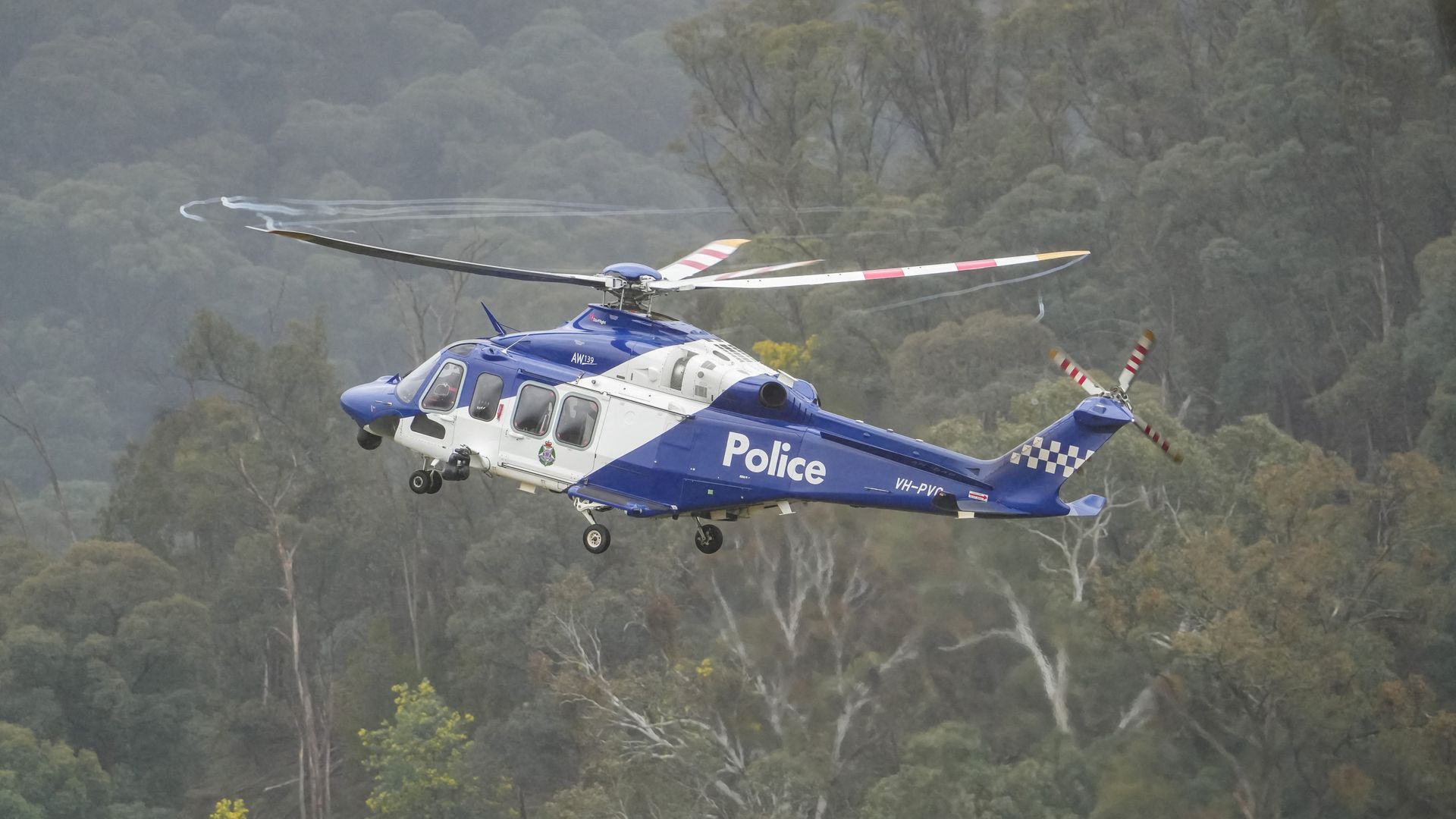
A fugitive accused of killing two police officers is believed to have been shot dead, Australian police have said.
Dezi Freeman, 56, was on the run for seven months after allegedly killing two officers in a remote town in Victoria state.
On Monday, police said they believed he was engaged in a three-hour standoff inside a rural property northeast of Victoria.
“While the man is yet to be formally identified, police believe it is likely to be 56-year-old Porepunkah man Desmond Freeman,” Victoria Police said in a statement.
Freeman, previously known as Desmond Filby, was shot dead at around 8.30am, local media widely reported.
Victoria Police Chief Commissioner Mike Bush declined to formally confirm the identity of the dead person pending official identification, but said the shooting was justified.
“Everything I know at this point tells me that this shooting was justified,” Chief Commissioner Bush said during a media briefing, adding that no police officers were injured during the incident.
“There was an opportunity for him to surrender peacefully, which he did not… we’re working through the sequence of that.
“We strongly believe, yet to be confirmed, that he was armed.”
More than 450 police officers had been involved in the hunt for Freeman since August, when he allegedly opened fire on a team of 10 police officers.
The officers had arrived at a property in Porepunkah, about 300 km (186 miles) northeast of Melbourne, to execute a search warrant.
Read more from Sky News:
Counter-terror police assisting investigation after pedestrians struck by car in Derby
Survey reveals three quarters of fans oppose use of VAR
A $1m (£520,000) reward had been offered for information leading to his capture.
Believed to have expert bushcraft skills and multiple powerful firearms, Freeman fled into bushland at Mount Buffalo
National Park following the shooting.
Local media described him as a “sovereign citizen”, a term used for individuals who regard the government as illegitimate.


Shares of Central Mine Planning and Design Institute Ltd made a discount debut on NSE, BSE on Monday.
Shares of Central Mine Planning and Design Institute Ltd made a subdued debut on the stock exchanges, listing at a 5–7 per cent discount to the issue price of ₹172.
On the BSE, the stock opened at ₹162.80, reflecting a 5.3 per cent discount, and moved in a range of ₹161.15 to ₹168.40 in early trade. On the NSE, it debuted at ₹160, marking a 7 per cent discount, before recovering to trade at ₹167 around 10.05 am.
The muted listing comes after the company’s initial public offering saw modest overall demand, with the issue scraping through on the final day of subscription. The IPO garnered 1.05 times subscription, supported primarily by institutional investors. The qualified institutional buyers segment was subscribed 3.48 times, while demand from non-institutional investors remained weak at 0.35 times. Retail participation was also subdued at 0.33 times, with the employee and shareholder portions seeing subscription of 0.21 times and 0.36 times, respectively.
The ₹1,842-crore public issue was priced in the band of ₹163 to ₹172 per share, valuing the company at around ₹12,280 crore at the upper end. The offering was entirely an offer-for-sale of 10.71 crore equity shares by parent. Coal India Ltdwith no fresh capital being raised by the company.
Ahead of the IPO, the company raised ₹470 crore from anchor investors. The anchor book saw participation from major domestic institutions such as Life Insurance Corporation of India and Nippon India Mutual Fund.
IDBI Capital Markets & Securities and SBI Capital Markets acted as the book-running lead managers to the issue.
Incorporated in 1975 as a wholly-owned subsidiary of Coal India Ltd, Central Mine Planning and Design Institute provides consultancy and technical support services in coal and mineral exploration, mine planning and design, infrastructure engineering, and environmental management.
Published on March 30, 2026


Kuku Kohli, Aruna Irani – Photo: Social Media
Reference #18.49200117.1774847749.22883f9b
https://errors.edgesuite.net/18.49200117.1774847749.22883f9b
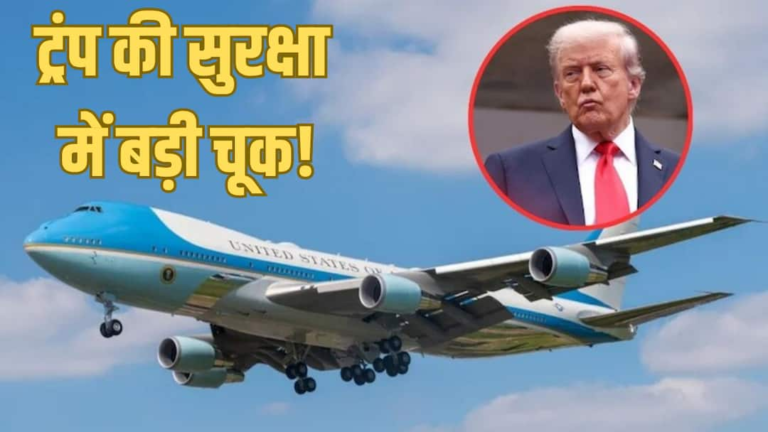
us President donald trump A case of major lapse in security has come to light. On Sunday, a civilian aircraft violated the no-fly zone near President Donald Trump’s Mar-a-Lago residence in Palm Beach, Florida. This created an atmosphere of chaos. F-16 planes were immediately deployed. During this time, Trump was present there, his plane was about to take off for Washington DC. Due to the war in the Middle East
Violation of no-fly zone
According to Reuters report, this incident took place near Palm Beach, Florida. airport But it happened. The North American Aerospace Defense Command (NORAD) said a civilian aircraft violated the no-fly zone near President Donald Trump’s Mar-a-Lago residence in Palm Beach, Florida on Sunday. After which he was safely taken out of the area.
flares fired to prevent
NORAD said in a statement that ‘the incident occurred at approximately 1:15 pm, when the temporary flight restriction was violated.’ Let us tell you that no fly zone is usually implemented when the US President is present in that area. NORAD said, ‘His planes released several flares to intercept the civilian aircraft. These flares were used to distract or contact the pilot. There was no threat to the people present on the ground from them.
Such incidents have happened before also
North American Aerospace Defense Command said, many such incidents have been reported after Trump became the President of America again last year. However, all of these were resolved without any threat reports. After this, operations at Palm Airport became normal. The security staff also got the airspace checked through helicopter.
White House gave information
The White House and Secret Service confirmed the incident. Also told that it has not had any impact on US President Donald Trump or his plane. The White House said that an aircraft had suddenly lost contact with the airport’s air control tower. After some time it was installed again. No drone activity of any kind was seen at the airport.
Reference #18.50200117.1774847368.493da873
https://errors.edgesuite.net/18.50200117.1774847368.493da873
Reference #18.4a200117.1774898405.2bf078f2
https://errors.edgesuite.net/18.4a200117.1774898405.2bf078f2
Reference #18.6e560e17.1774900155.1b39c332
https://errors.edgesuite.net/18.6e560e17.1774900155.1b39c332

The United States’ ban on foreign-made SOHO routers won’t improve security, and only makes sense as “industrial policy disguised as cybersecurity,” according to Milton Mueller, Professor at the University of Georgia’s School of Public Policy and founder of its Internet Governance Project.
Mueller notes that the Federal Communications Commission (FCC) justified its ban with two arguments, one of which refers to CISA and FBI analysis that found attackers targeted SOHO routers to build a botnet that hid the Volt Typhoon and Salt Typhoon intrusions. The other argument relied on a Department of Commerce study that Mueller summarized as finding “the concentration of 85 percent of the consumer router supply chain in China creates a ‘systemic vulnerability’ where a single firmware update could be weaponized to disable U.S. home internet access.”
The academic thinks neither argument holds water.
“The digital economy is global,” he pointed out in a Saturday post. “A router ‘Made in the USA’ likely runs a Linux kernel maintained by global contributors, uses Wi-Fi drivers written in Taiwan, and incorporates open-source libraries managed by developers worldwide.”
“By focusing on the geographic location of the assembly line, the FCC ignores the logical supply chain of the software. A U.S.-assembled router with a poorly written UPnP (Universal Plug and Play) implementation is just as vulnerable to a hijacking as a foreign one.”
He also points out that the FCC worries about backdoors in routers, when research into the Typhoon gangs found they exploited unpatched bugs, unchanged default device credentials, and bad design that leaves some network ports exposed to the public internet.
“Perhaps the most obvious lack of logic in the FCC’s policy is its exclusive focus on new equipment authorizations while leaving legacy devices in place,” Mueller wrote. He offered that idea because the Typhoon gangs targeted end-of-life routers and machines that use insecure legacy protocols.
“By banning the sale of the newest, most secure Wi-Fi 7 and Wi-Fi 8 routers from dominant foreign manufacturers, the FCC forces the American public to pay substantially more for upgraded, more secure equipment or, what is more likely, to keep their older, more vulnerable devices for longer,” he argued.
“If a consumer cannot easily or affordably replace their 2019-era router because the 2026 models are banned, the total attack surface of the United States actually increases. “The ban targets the very devices most likely to have modern, auto-updating security features, while providing a ‘free pass’ to the millions of insecure, aging devices that state-sponsored actors are currently exploiting.”
Mueller concludes that by using only the criteria of “foreignness,” the ban “actually worsens the security situation.”
“Incentives to upgrade to modern, more secure hardware are reduced, and users are encouraged to keep using unpatched legacy equipment—the exact hardware that state-sponsored actors have successfully weaponized for years.”
He then ponders if the policy makes any sense.
“It does if you see the FCC’s ban as an exercise in industrial policy disguised as cybersecurity,” Mueller argues, then points out that US company Netgear has funded lobbying efforts on issues including the Removing Our Unsecure Technologies to Ensure Reliability and Security Act – aka The “ROUTERS Act.”
“While the risks of state-sponsored infrastructure attacks are real, the remedy chosen – a geographic ban on new hardware – prioritizes geopolitical decoupling over the immediate technical hardening of the American digital home,” Mueller concludes. “Once again – as with the semiconductor export controls and the TikTok ban – we see the bootleggers seeking protection from competition hiding behind the religious banner of national security.” ®
