The government recently increased gold import duty to 10% from 5% and agriculture cess to 5% from 1%. | Photo Credit: istock.com
Pointing out that hiking import duties has historically failed to meaningfully curb gold imports, Gem and Jewelery Export Promotion Council (GJEPC) on Wednesday said the government’s latest move may only push up domestic gold prices, fuel smuggling and worse liquidity pressures for exporters and MSME manufacturers.
The government recently increased gold import duty to 10% from 5% and agriculture cess to 5% from 1%. While backing Narendra Modi’s broader call for reducing non-essential imports and supporting the economy, the industry body said higher duties have rarely reduced gold imports in proportion to rising prices. “Despite gold prices doubling recently, imports have not declined proportionally. Such measures often fuel smuggling and escalate export costs,” GJEPC said in a statement.
Calling the move a “retrograde step” that undermines competitiveness at a critical time, GJEPC said, “Exporters now face Bank Guarantees of ₹28-30 lakhs per kg of duty-free gold from Nominated Agencies, severely blocking working capital and stifling exports. The most severe impact of this policy will be felt by MSME manufacturers, who are the “backbone” of our industry, accounting for 80 per cent of GJEPC’s membership, who are currently facing a critical liquidity crunch.”
The council said it convened a meeting with major retailers and manufacturers following the Prime Minister’s appeal and has written to Modi proposing a set of industry-led measures aimed at reducing import dependence and promoting self-reliance. Among the measures proposed are promoting lower-carat jewelery such as 18K and 14K products, encouraging consumers to exchange old gold for new jewellery, reviving the Gold Monetization Scheme (GMS) in a more viable format, and discouraging investment demand for gold bars, billets and coins. According to GJEPC, promoting lower-carat jewelery could potentially reduce gold imports by 20-30 per cent.
The body noted that investment in gold bars, billets and coins currently accounts for nearly 20-30 per cent of total gold imports and said reducing such demand could help ease import pressures. GJEPC also sought special incentives for gold jewelery exporters to help the sector earn foreign exchange amid ongoing global economic uncertainty.
The council said it would soon submit a detailed proposal to the government for reviving the Gold Monetization Scheme to tap India’s estimated 25,000 tonnes of household gold holdings.
Echoing similar concerns, Sachin Sawrikar Founder and Managing Partner, Artha Bharat Investment Managers said the steep increase in import duties may ultimately strengthen grey-market activity rather than reduce India’s appetite for precious metals. “India’s appetite for precious metals is structural, not cyclical; it is woven into savings culture, festive demand, and portfolio behavior across hundreds of millions of households. When the price of the legal channel rises this steeply, a well-established informal trade simply fills the gap,” he said.
Sawrikar pointed to the sharp rise in gold smuggling following the 2013 duty hikes and warned that any expected savings in foreign exchange reserves may prove “largely illusory”. He added that a more sustainable solution would involve strengthening gold monetization schemes and developing financial products linked to gold that can reduce dependence on physical imports.
One Nation senator Malcolm Roberts has caused further confusion in comments about the Bondi beach antisemitic terror attack, clarifying that he thought it was an “absurd proposition” to call the shooting a “false flag” but standing by his claim that he didn’t have “data” to rule it out.
Roberts, Pauline Hanson’s fellow senator from Queensland, was interviewed on a YouTube channel, with the clip posted earlier this month.At one point in the 23-minute clip, social media creator Lisa Jane Spencer asked “do you think that Bondi was a false flag?”
A “false flag” is a term for an event or attack which would later be blamed on someone other than the actual perpetrator. The term originated in military operations, but is also commonly used by conspiracy theorists to claim governments stage false events to create favourable circumstances for actions which would otherwise be unpopular.
Roberts first responded “we haven’t had the royal commission”, before criticising prime minister Anthony Albanese’s initial opposition to holding such an inquiry, going on to claim Labor had tolerated antisemitism and “given fertile ground for Islamic terrorists”.
“So, what was the question? Oh that’s right, false flag. I haven’t got the evidence. I doubt whether it was a false flag,” Roberts said.
The interviewer responded: “it was a bit sus [suspicious] afterwards when the laws came out.”
Roberts replied: “I’m going to challenge you on that, because while what you said is correct, there are so many things in the last 30 years, but especially with Covid, that they seem to arrange something and then the laws would come. I can acknowledge that point, but that doesn’t necessarily mean that’s the case here.”
“You asked me if I thought it was a false flag. If I make a statement, it’s got to be backed by fact. I don’t have the facts yet. I’m not ruling it out. You notice that?” Roberts said, before going on to discuss the Israel-Palestine conflict.
The 14 December shooting at a Chanukah festival at Bondi beach left 15 people dead. Within hours, police and investigators said they were treating the incident as an act of terrorism, allegedly inspired by Islamic State. One of the alleged shooters, Sajid Akram, was killed at the scene and his son, Naveed Akram, is before the courts, charged with dozens of offences including 15 counts of murder. The federal government has convened a royal commission into the attack and broader issues of antisemitism in Australia.
‘They came to kill us – we just weren’t there,’ Jewish woman tells royal commission – video
At a press conference on Wednesdayalongside Hanson and One Nation colleagues in Canberra, Roberts was asked why he said he was “not ruling it out” in the interview when asked about the attack being a false flag.
“First of all, it’s an absurd proposition,” Roberts replied.
“Second thing is that I reinforce the fact that I make decisions and statements based on data, and I don’t have data.”
Asked for clarification, Roberts urged media to “look at it in context. The lady interviewing me was very naive and very young, very inexperienced. And I was just being gentle with her”.
Under sustained questioning from other journalists, Hanson stepped in to defend her colleague, claiming he’d been taken out of context.
“We have shown our support for the Jewish community, for what’s happened in this country. We’ve been very supportive of the people at Bondi, against the Bondi attack. We’ve come out quite strong on that,” she said.
“You have to understand the terminology that Senator Roberts used in that interview is not, is being taken completely out of context.”
Roberts interjected to add: “The other thing is that the media is culpable for that woman’s question, because the media has misled. People don’t trust the media. They don’t trust you.”
Asked by another journalist if Roberts would confirm that he didn’t believe there was a “false flag” attack, he said: “that’s an absurd proposition”.
Hanson replied: “of course there’s no false flag”.
“I will answer because I’ve had this discussion with Senator Roberts, there is no false flag.”
“We’ve been very, very strong on the floor of parliament to support the Jewish community. We pushed for this royal commission to antisemitism. And we’ve been very strong on that.”
Allegra Spender, the member for Wentworth which includes Bondi, said on the ABC on Monday night that Roberts’ comments on the YouTube interview were “absolutely appalling”.
“I have been to funerals … it is completely out of line of what Asio, the security agencies and others know. It is an affront to the families who have lost their loved ones.”
An incident that shames humanity has come to light from Tumkuru district of Karnataka. In a madrasa located in Amalapura village here, 24 children from Bihar were being held hostage and made to work as labourers. Fed up with physical torture and exploitation, these children somehow escaped from there. The police have registered a case against the accused preacher Moulali under serious sections.
Secret revealed due to promptness of RPF
This entire matter came to light when Railway Protection Force (RPF) personnel saw a large group of children abandoned at Krantiveera Sangolli Rayanna railway station in Bangalore. The children were badly scared during interrogation. They told the officials that they had fled from the madrassa in Tumkuru. He wanted to go back to his home in Bihar by any means. Seeing the crowd of the station and the big platform, he stopped there and started searching for the train going to Bihar.
labor and assault charges
During counselling, the children narrated their ordeal. These children, aged between eight and 17 years, told that they were beaten up in the madrassa. Instead of studying, they were being made to do construction work inside the campus. The children alleged that they were forcibly employed to build the wall. Not only this, they were not even allowed to talk to their parents.
Case registered under strict sections
The children are currently kept under the care of the Child Welfare Committee (CWC). Police have registered a case against the accused Moulali under the Indian Justice Code (BNS), Juvenile Justice (JJ) Act and Child Labor Prohibition Act. Earlier this case was registered by the Railway Police, which has now been handed over to the Tumakuru Rural Police. The police are investigating the matter in depth.
Access Denied
You don’t have permission to access “http://hindi.gadgets360.com/wearable/sony-reon-pocket-pro-plus-price-wearable-thermo-device-with-advanced-cooling-heating-technology-launched-news-11487793” on this server.
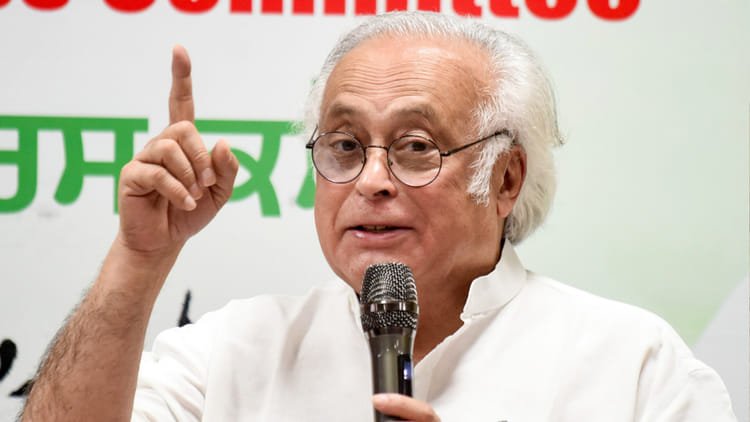
The Congress on Wednesday took a dig at the statement of senior Rashtriya Swayamsevak Sangh (RSS) functionary Dattatreya Hosabale in which he had said that an avenue for talks with Pakistan should always remain open. Congress said that his recent visit to America has affected both them and the RSS.
The opposition party also said that if the same statement had been made by anyone else, there would have been a sharp reaction from the ‘Bhakt Brigade and TV channels’. Congress General Secretary Jairam Ramesh made this comment while sharing the video of Hosabale’s interview on social media platform X.
He said, it seems that during his recent visit to America, one of his colleagues had admitted that the Prime Minister was working under pressure from America, which had an impact on both Hosabale and the RSS. Ramesh further said, just imagine, if someone else had said the same thing then how much ruckus the Bhakta Brigade and many TV channels would have created.
What did the host say in the interview?
Hosabale had said in an interview with PTI that people-to-people contact is the most important thing to break the deadlock with Pakistan and the door should always be open for dialogue. He said that Pakistan’s military and political leadership has lost the trust of India and now civil society should come forward.
Hosabale said, it is the job of the government to protect the security and honor of the country. But this does not mean that the avenues of dialogue should be closed. We should always be ready to negotiate. The RSS general secretary said that people-to-people contact is most important to end the deadlock between the two countries and it should be further increased.
RSS had recently launched a campaign to remove misconceptions about its organization in western countries, under which Hosabale participated in various programs in America and Britain. Hosabale has lectured at venues including Stanford University and the Hudson Institute, and met with the Indian diaspora community.
Rahul Gandhi also targeted RSS
Meanwhile, Congress leader Rahul Gandhi had called RSS ‘Rashtriya Samarpan Sangh’ and accused the organization of taking a different stand abroad and different in India. He had also referred to a statement by RSS leader Ram Madhav, in which he had said that India has agreed to stop purchasing oil from Russia and Iran and accept the tariffs imposed by the US.
However, Ram Madhav later apologized saying that his statement was factually incorrect and India has not stopped importing oil from Russia. He opposed the American tariff.
Good morning. First as tragedy, then as farce. Once again, the UK is shrouded in political uncertainty as a deeply unpopular prime minister clings to power. It has become a familiar cycle in recent years: the wait to find out which perishable good will survive longer than our next doomed premier.
Keir Starmer insists he is not leaving – a serious leader for a serious time – and will have been boosted by last night’s lifeline, when Wes Streeting’s challenge failed to materialise. However, his authority with Labour MPs remains weak. Each new resignation attempts to undermine his position. For now, Starmer remains in charge by default.
For today’s First Edition, I spoke with the Guardian’s policy editor, Kiran Stacey, about the latest goings on behind the scenes in Westminster, and the obstacles facing the runners and riders vying to be the next temporary occupant of 10 Downing Street. But first, the headlines.
Five big stories
UK politics | Keir Starmer will attempt to regain the political initiative today as his government announces a package of 35 bills for the next parliamentary session, covering everything from housing to immigration.
World news| Donald Trump is due to arrive in Beijing on Wednesday evening, the first visit to China by a US president in nearly a decade, as he seeks to mend power and prestige weakened by the war in Iran.
UK news | Nine in 10 UK millionaires are proud to live in Britain and three-quarters would be willing to pay more tax to ensure public assets get the funding they need, according to research.
Middle East | The risk of some Gulf states becoming embroiled in a direct war with Iran has risen after it was reported the United Arab Emirates had secretly launched a major attack on Iran during the conflict.
Health | After more than a decade of global consultation, polycystic ovary syndrome (PCOS) – a condition that affects one in eight women – has been renamed.
In depth: ‘Nobody is quite in control of events, including the prime minister’
Keir Starmer delivers a speech on Monday. Photograph: James Manning/PA
To the naked eye, Tuesday was aquiet day in Westminster. Union jacks werehung from buildings in preparationfor today’s state opening of parliament, where King Charles will set out the government’s priorities for the year ahead. Normally bustlingcorridors and courtyards were quiet, and the public was largely cordoned off from the estate. But the calm scene belied the political hurricane blowing through government.
Keir Starmer is fighting for his political life as the crescendo of calls for him to step down – or set out an exit plan, at least – grows louder.
But despite the noisy opposition to his leadership from across the Labour ranks, little else is certain. It remains unclear exactly how many MPs want Starmer to go. More than 100 signed a letter yesterday opposinga leadership contest. So far, it appears to exceed the number of Labour MPs calling for him to quit.
How a leadership contest would work is unclear. The Conservative party has grown used to dispatching leaders in recent years – with rules that allow MPs to start a leadership race without an alternative garnering support. Not so in Labour. Even if one ofStarmer’s rivals manages to force a leadership contest by winning the publicsupport of 81 Labour MPs, each would face major hurdles to win the keys to No 10. The prime minister has indicated he would stand against any opponent – Burnham, Streeting, Rayner, Milibandor anyone else – and each of their respective paths to power is shrouded with risk. Here, we go through the obstacles.
The ‘king in the north’?
Andy Burnham, the mayor of Greater Manchester, is the most popular candidate among Labour MPs, say many observers, and the country. His supporters argue only he could unite different wings of the party and take on the charisma of the Reform UK leader, Nigel Farage. But Burnham is not a member of parliament and anyreturn to Westminster would prove an uphill battle.
His team are understood to be scouring the Greater Manchester and Liverpool areas for an MP who would stand down and allow him to run in a byelection. A promised place in the House of Lords is a likely reward. But so far a willing volunteer is proving harder to find than hoped. On Tuesday, Marie Rimmer, the MP for St Helens South and Whiston whose seat was on Burnham’s wishlist, said she would not stand down, while backingStarmer.
If an MP does eventually stand aside, there is no guarantee that Burnham would even be permitted to stand by the Labour party as a candidate.
“Even if Burnham managed to find someone in the next week or so, we’re still talking about two months before he could even be in contention,” says Kiran. “The game for Andy Burnham supporters is to drag this out as long as they can. Really, they want to agree a timetable that allows them to do this.”
Then there’s the very real possibility a constituency would reject him.Reform and the Green party both surged in the north-west in last week’s local elections. For Burnham’s backers, timing is everything:“If Starmer said September’s party conference will be my last as leader and he would set the wheels in motion for choosing his successor, that would work for Burnham,” says Kiran.
The man in a hurry
Wes Streeting’s priority is speed. The health secretary is a skilled communicator, but he is not popular with the Labour party members who will actuallypick the next prime minister if a contest is held. On Tuesday, some of Streeting’s supporters with ministerial positions resigned – calling for Starmer’s exit.
Downing Street insiders said last night that the health secretary did not yet have the required support from the 81 MPs to formally launch a leadership bid, but Streeting and Starmer are set for talks today.
If Streeting’s challenge does materialise, it will probably come soon, says Kiran. The Ilford North MP faces a narrow road to power and is in a race against time to secure the leadership before Burnham can get back into parliament. But he faces further problems: a wafer thin majority in his constituency, a lack of popular support from his parliamentary colleagues and members, and his relationship with Peter Mandelson.
And then there’s the membership: many of Labour’s most leftwing members may have left to join the surging Greens, which could work in Streeting’s favour, but polling of Labour loyalists still shows him to be unpopular.
“Those who’ve stuck around are highly likely to be left wing and very socially liberal,” explains Tim Bale, a professor of politics at Queen Mary University of London, in a recent interview with my colleague Aletha Adu. “But one thing we know about members – and Starmer getting himself elected in 2020 rather than Corbyn’s anointed successor, Rebecca Long-Bailey, is proof of this – is that party members also want to win elections … if Streeting can show them he’s the guy to do that, he still has a chance, even if he’s not their ideological ideal.”
The best of the rest
The rest of the pack have similarly bumpy potential routes to victory. Former deputy prime minister Angela Rayner has long been rumoured to want to stand, but with a tax investigation by HMRC still trudging on, reports from Westminster indicate that she has decided against any move, instead indicating her support for Burnham. If she does not go for it, it would probably mean that the leader of the Labour party remains a man.
But that could open the door to others, says Kiran.
“If a leadership election is called, it all becomes very uncertain. There are others who might want to get in the fight. Ed Miliband might want to.” Despite failing to win power as Labour leader once before, Miliband remains popular with party members. “Or junior defence minister Al Carns might, too,” say Kiran, of the relatively unknown outsider. “And there are other people who we’ve not really talked about who might find themselves deciding to make a bid.”
When MPs return to Westminster today, they will do so once again in political chaos – in a country that has grown tired of drama. But predicting what is going to happen next is a fool’s game, says Kiran.
“The one thing that everyone knows at the moment is that nobody is quite in control of events,” he says, “including the prime minister.”
Eddy Frankel looks back at 20 years of Bold Tendencies, which saw art placed in a multi-storey car park in Peckham and changed the way people viewed the potential of those kinds of spaces. Martin
Do not miss our series on the 100 best novels, as voted for by authors, critics and academics worldwide. 100 to 61 will be published today. If you want to read any of the top 100, and support the Guardian at the same time, visit the Guardian bookstore here. Patrick
Sammy Gecsoyler has written a shocking feature on the rise of road rage incidents against lollipop people. Patrick
Judd Legum lays out the anatomy of a grift – the gold ‘Trump’ phones that have cost people $100 deposits, but have yet to ship any units. Martin
Sport
Southampton players celebrate at the final whistle after the Championship play off semi-final at St Mary’s Stadium. Photograph: Andrew Matthews/PA
Football | Southampton reach the Championship playoff final after a freak winner settles Middlesbrough grudge match.
Golf | Rory McIlroy has revealed he heard rumblings of impending trouble for LIV Golf weeks before Saudi Arabia’s Public Investment Fund confirmed it would withdraw funding for the circuit.
Football | Chelsea have held encouraging discussions over a move for Xabi Alonso but are keeping their options open and are closely monitoring Andoni Iraola’s situation.
The front pages
Photograph: The Guardian
“Starmer sees off threat for now as Streeting challenge fails to emerge” is the Guardian’s front page. The Times says “Starmer and Streeting set for No10 showdown” while the Telegraph’s headline is “Streeting to confront Starmer”. The Mirror simply writes “Stand-off”.
The FT leads with “Starmer throws down gauntlet to rivals as turmoil rattles gilts market”, and the i Paper says “Put up or shut up, Starmer tells his Cabinet rebels”. The Daily Mail splashes “Paralysed by Labour chaos”, while the Sun says “Crisis? What crisis?” The Metro calls it “Number 10 Doubting St”.
Today in Focus
The use of live facial recognition will expand surveillance into more public spaces Photograph: Alicia Canter/The Guardian
Is Big Brother watching you shop?
From supermarkets to corner shops, live facial recognition could be coming to retailers near you. Jessica Murray tells Annie Kelly about the AI systems increasingly used by the police and stores.
Cartoon of the day | Ella Baron
Ella Baron on Starmer in peril Illustration: Ella Baron/The Guardian
The Upside
A bit of good news to remind you that the world’s not all bad
The Cockrow Bridge is giving wildlife a chance to cross, and allows biodiversity to recover. Photograph: Rob J Follett/Shutterstock
The Cockrow ‘Green’ Bridge in Surrey is reconnecting habitats split by the A3, which cuts in half the protected Wisley and Ockham commons, a rare lowland heath in Surrey that for centuries has been home to a rich pocket of biodiversity. James Herd, the Surrey Wildlife Trust’s director of reserves management, says “This isn’t just about big, charismatic species – it’s about reconnecting entire communities of insects that underpin the heathland.”
The bridge itself is a floating patch of nature reserve; its contents were excavated and transplanted from the heathland on either side. Herd, who advised National Highways on the project, says it “changes how the ecosystem functionality can evolve and function better, in a landscape where species can interact more freely”. By building a link, he says, “we’ve removed a barrier”.
Sign up here for a weekly roundup of The Upside, sent to you every Sunday
Bored at work?
And finally, the Guardian’s puzzles are here to keep you entertained throughout the day. Until tomorrow.
{“_id”:”6a040588ef381cf3750881bd”,”slug”:”bihar-cabinet-first-cabinet-meeting-after-cabinet-expansion-cm-samrat-chaudhary-important-proposals-2026-05-13″,”type”:”story”,”status”:”publish”,”title_hn”:”Bihar Cabinet: First cabinet meeting after cabinet expansion, CM Samrat Chaudhary will give big proposals today gift”,”category”:{“title”:”City & states”,”title_hn”:”City & States”,”slug”:”city-and-states”}}
News Desk, Amar Ujala, Patna
Published by: Aditya Anand
Updated Wed, 13 May 2026 11:18 AM IST
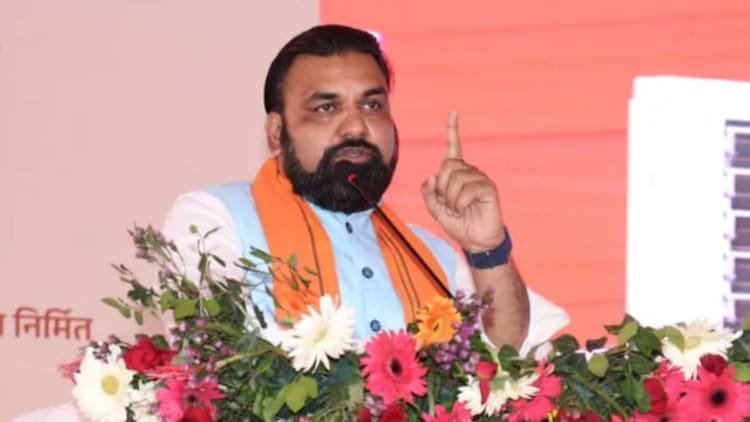
Chief Minister Samrat Chaudhary is holding a cabinet meeting today. A meeting is being held with ministers and senior IAS officers of all departments of Bihar government. CM can give a big gift to the people of the state today.
Samrat Chaudhary, Chief Minister, Bihar
– Photo: Social Media
Download Amar Ujala app to read news continuously.
Or WATCH VIDEO ADVERTISEMENT TO CONTINUE READING ON WEBSITE
If you have premium membership
Expansion
Chief Minister Samrat Chaudhary is holding the first cabinet meeting after the cabinet expansion in the Chief Secretariat of Patna. Today he can make a big announcement for the employees of Bihar government. According to secretariat sources, after the central government increased the dearness allowance of its employees by two percent, now the Bihar government is going to increase the dearness allowance of its employees. At present, employees get 58 percent dearness allowance. This can be increased to 60 percent. Apart from this, Samrat Chaudhary can approve some important proposals regarding jobs and employment.
gold prices extended gains on Wednesday, with domestic futures crossing the ₹1.63 lakh mark on the Multi Commodity Exchange (MCX)supported by geopolitical tensions, a record low in the rupee, and continued safe-haven buying. MCX Gold opened with a sharp gap-up and traded above ₹1,63,000 after breaking out of a medium-term consolidation range, while COMEX Gold hovered near the $4,700-$4,730 per ounce zone.
The rally in domestic bullion was further amplified after the Indian government raised the total import duty on gold and silver to 15 per cent from 6 per cent. Market participants said the higher levy could push up local prices further even as international bullion prices remain volatile.
The rupee weakened 32 paise to close at a fresh all-time low of 95.63 against the US dollar after trading in the 95.43-95.74 range intraday. Analysts expect the currency to trade with a weakening bias in the 95.45-95.90 band, with persistent dollar demand and geopolitical uncertainty continuing to pressure the domestic unit.
Globally, sentiment remained cautious after the US April headline consumer price inflation came in at 3.8 per cent year-on-year, higher than the expected 3.7 per cent, while core inflation stood at 2.8 per cent against expectations of 2.7 per cent. The stronger-than-expected inflation print pushed the US 10-year bond yield higher to 4.47 per cent, limiting gains in precious metals overseas.
According to market analysts, COMEX Gold faces immediate resistance in the $4,780-$4,800 range, while support is placed at $4,670-$4,640. On MCX, resistance is seen near ₹1,64,000, with a sustained move above the level potentially opening the path towards ₹1,65,000-₹1,66,000.
Silver prices also remained firm. MCX Silver traded above ₹2,95,000 after breaking key resistance levels, while COMEX Silver held in the $87-$88 range, supported by safe-haven demand and supply concerns.
Rebuttals come after US media report alleges that the CIA has ‘directly participated’ in deadly anti-cartel operations.
Published On 13 May 202613 May 2026
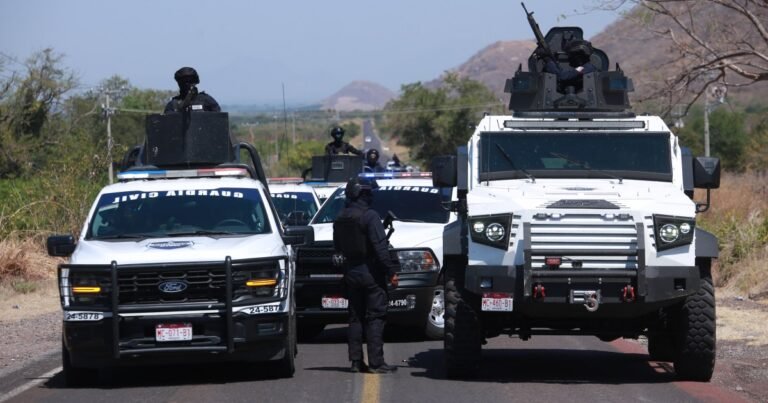
Mexico’s government and the CIA have rebutted a report claiming that US intelligence agents have participated in the targeted assassinations of alleged drug cartel members in the Latin American country.
The denials on Tuesday came after CNN reported that the CIA has been deeply involved in deadly operations aimed at dismantling Mexico’s drug cartels.
Recommended Stories
list of 4 itemsend of list
CIA operatives have “directly participated” in several attacks on drug trafficking syndicates since last year, including a car explosion in March that killed Francisco Beltran, an alleged member of the Sinaloa Cartel, CNN reported, citing multiple unnamed sources.
The operations have mostly targeted mid-level cartel members, with the CIA’s involvement ranging from “passive intelligence sharing” to “direct participation in assassination operations”, CNN reported.
In a social media post, CIA spokesperson Liz Lyons said the CNN report was “false and salacious” and “serves as nothing more than a PR campaign for the cartels and puts American lives at risk”.
Mexico’s Secretary of Security Omar Garcia Harfuch also challenged the report, saying the government “categorically rejects any version that seeks to normalise, justify, or suggest the existence of lethal, covert, or unilateral operations by foreign agencies on national territory”.
“Cooperation with the United States exists, is important, and has yielded relevant results for both countries,” Harfuch said in a post on X.
“However, it is carried out under clear principles: respect for sovereignty, shared responsibility, mutual trust, and cooperation without subordination.”
CNN did not immediately respond to a request for comment about the Mexican government and the CIA’s rebuttals.
Since returning to the White House in January last year, US President Donald Trump has targeted Latin American drug trafficking gangs in an aggressive campaign that critics say has overstepped legal and presidential norms.
Trump’s administration has designated nine Latin America-based drug gangs as “terrorist” organisations, including Mexico’s Sinaloa Cartel, La Nueva Familia Michoacana, and Carteles Unidos, and launched dozens of air strikes on boats suspected of ferrying drugs in the Caribbean Sea and Pacific Ocean, killing more than 190 people.
Trump’s anti-drug trafficking drive has been a source of friction with Mexico, which US officials say is the main transit point for the bulk of illicit flows of fentanyl, cocaine, heroin and methamphetamine into the country.
Last month, Mexican President Claudia Sheinbaum threatened to sanction authorities in the border state of Chihuahua for permitting CIA personnel to participate in raids on clandestine drug laboratories.
Sheinbaum said that she and other senior members of her government had not been notified of US involvement in the operations, which came to light after two Americans who were reportedly working for the CIA died in a car crash following a counter-narcotics raid.
Under a law passed by Mexico’s Congress in 2020, foreign agents operating in the country are required to share information with the government and do not enjoy diplomatic immunity.
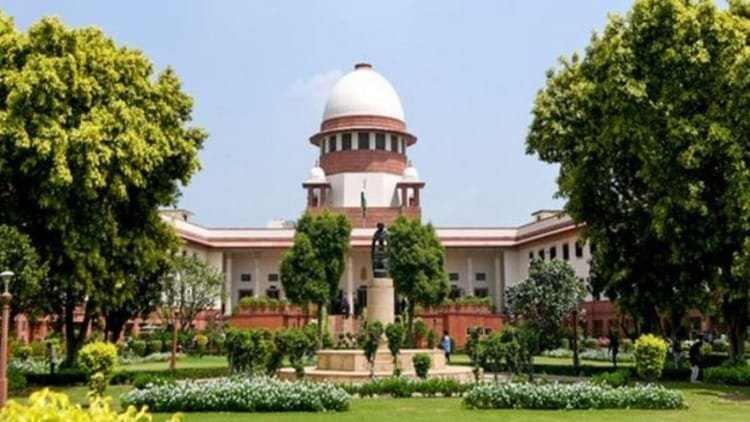
NEET UG 2026: Federation of All India Medical Association (FAIMA) has filed a petition in the Supreme Court. It said there has been a “systematic failure” in the conduct of NEET UG 2026 by the NTA. The petition demands that NTA be changed or completely restructured. Also, the new examination of NEET-UG 2026 should be conducted under judicial supervision.
The plea seeks a direction to the Central government to replace NTA with a “more robust, technologically advanced and autonomous body” to conduct the NET exam.