New TrickMo Variant Uses TON C2 and SOCKS5 to Create Android Network Pivots

0

Ravie LakshmananMay 12, 2026Malware / Mobile Security

Cybersecurity researchers have flagged a new version of the TrickMo Android banking trojan that uses The Open Network (TON) for command-and-control (C2).

The new variant, observed by ThreatFabric between January and February 2026, has been observed actively targeting banking and cryptocurrency wallet users in France, Italy, and Austria.

“TrickMo relies on a runtime-loaded APK  (dex.module), used also by the previous variant, but updated with new features adding new network-oriented functionality, including reconnaissance, SSH tunnelling, and SOCKS5 proxying capabilities that allow infected devices to function as programmable network pivots and traffic-exit nodes,” the Dutch mobile security company said in a report shared with The Hacker News.

TrickMo is the name assigned to a device takeover (DTO) malware that’s been active in the wild since late 2019. It was first flagged by CERT-Bund and IBM X-Force, describing its ability to abuse Android’s accessibility services to hijack one-time passwords (OTPs).

It’s also equipped with a wide range of features to phish for credentials, log keystrokes, record screen, facilitate live screen streaming, intercept SMS messages, essentially granting the operator complete remote control of the device.

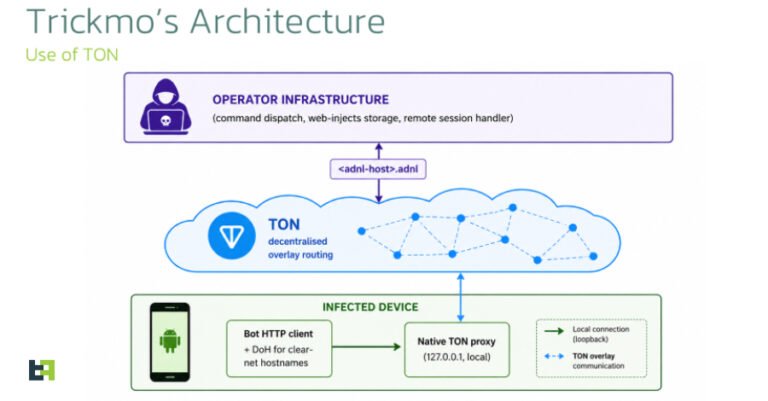
The latest versions, labeled TrickMo C, are distributed via phasing websites and dropper apps, the latter of which serve as a conduit for a dynamically loaded APK (“dex.module”) that’s retrieved at runtime from attacker-controlled infrastructure. A notable shift in the architecture entails the use of the TON decentralized blockchain for stealthy C2 communications.

“TrickMo carries an embedded native TON proxy that the host APK starts on a loopback port at process start,” ThreatFabric said. “The bot’s HTTP client is wired through that proxy, so every outbound command-and-control request is addressed to an .adnl hostname and resolved through the TON overlay.”

Dropper apps containing the malware masquerade as adult versions of TikTok, whereas the actual malware impersonates Google Play Services –

  • com.app16330.core20461 or com.app15318.core1173 (Dropper)
  • uncle.collop416.wifekin78 or nibong.lida531.butler836 (TrickMo)

While previous iterations of “dex.module” implemented the accessibility-driven remote control functionality through a socket.io-based channel, the new version utilizes a network-operative subsystem that turns the malware into a tool for managed foothold than a traditional banking trojan.

The subsystem supports commands like curl, dnslookup, ping, telnet, and traceroute, giving the attacker a “remote shell-equivalent for network reconnaissance from the victim’s network position, including any internal corporate or home network the device is currently associated with,” per ThreatFabric.

Another important feature is a SOCKS5 proxy that turns the compromised device into a network exit node that routes malicious traffic, while defeating IP-based fraud-detection signatures on banking, e-commerce and cryptocurrency exchange services.

Furthermore, TrickMo includes two dormant features that bundle the Pine hooking framework and declare extensive NFC-related permissions. But neither of them are actually implemented. This likely indicates the core developers are looking to expand on the trojan’s capabilities in the future. 

“Instead of relying on conventional DNS and public internet infrastructure, the malware communicates through .adnl endpoints routed via an embedded local TON proxy, reducing the effectiveness of traditional takedown and network-blocking efforts while making the traffic blend with legitimate TON activity,” ThreatFabric said.

“This latest variant also expands the operational role of infected devices through SSH tunnelling and authenticated SOCKS5 proxying, effectively turning compromised phones into programmable network pivots and traffic-exit nodes whose connections originate from the victim’s own network environment.”


Source link

Why the hantavirus outbreak is different from COVID-19 | Health News

0

The last of the passengers on the hantavirus-struck MV Hondius cruise ship have been flown to the Netherlands. But new cases are emerging as researchers race to track down where the outbreak originated.

As authorities seek to arrange quarantines and access to health facilities for the passengers, communities where some of the passengers have gone have responded with anger and protests against what many perceive as risk of exposure to the virus.

Recommended Stories

list of 4 itemsend of list

At the heart of those fears is the collective experience the world suffered through six years ago with the COVID-19 pandemic, which sent the planet into lockdown and killed nearly 15 million people in two years.

But the hantavirus is very different from COVID-19 in how it spreads, how deadly it is and how likely it is to trigger another global crisis, public health experts said.

“I need you to hear me clearly: this is not another COVID. The current public health risk from hantavirus remains low. My colleagues and I have said this unequivocally, and I will say it again to you now,” Tedros Adhanom Ghebreyesus, the director general of the World Health Organization (WHO), said in a statement on Saturday.

Here is a a breakdown of the key differences between the hantavirus and COVID-19:

What is the hantavirus?

Hantaviruses are a family of viruses that cause two main illnesses in humans. One is known as hantavirus pulmonary syndrome (HPS) and primarily attacks the lungs. The other, haemorrhagic fever with renal syndrome (HFRS), mainly affects the kidneys.

The viruses are named after the Hantan River in South Korea, where the first virus belonging to the family was isolated in 1978. By that time, researchers had tried for decades to identify the cause of what was known as the Korean haemorrhagic fever, which afflicted 3,000 United Nations soldiers during the Korean War from 1951 to 1953.

The virus is a rare infection transmitted to humans by rodents. The virus is most commonly spread by infected rodents, which can carry it in their urine, saliva and droppings. When these materials dry out and become airborne, humans can become infected by inhaling the contaminated particles.

HPS attracts the most attention because it has a high fatality rate, killing about 40 percent of the people it infects, according to the US Centers for Disease Control and Prevention (CDC). The death rate for HFRS is less clear with studies suggesting anything from about 1 percent to 15 percent.

Hantavirus pulmonary syndrome usually begins with flu-like symptoms, such as fatigue and fever, between one and eight weeks after exposure, according to the CDC. Four to 10 days later, coughing, shortness of breath and fluid in the lungs appear. Diagnosis in the first 72 hours of infection is difficult, the CDC said, and symptoms can easily be mistaken for the flu.

Research suggested hantaviruses have circulated for centuries with outbreaks recorded in parts of Asia and Europe.

A previously unknown group of hantaviruses emerged in the early 1990s in the southwestern United States, causing a severe respiratory illness now known as hantavirus pulmonary syndrome. The CDC began tracking the disease after a 1993 outbreak in the Four Corners region, where the states of Arizona, Colorado, New Mexico and Utah meet.

Can hantavirus spread from person to person?

The Andes strain of the hantavirus, which causes HPS, is the only hantavirus clearly shown to spread from person to person to a limited extent. The virus detected among passengers of the MV Hondius was the Andes strain, which drives most HPS cases in Chile and Argentina, where the MV Hondius cruise began.

According to the WHO and public health experts, person-to-person transmission of the hantavirus is rare and occurs as a result of close, prolonged contact, such as close proximity within the same household or intimate contact. It does not spread like an airborne virus through casual social contact.

“Occasional human-to-human transmission events may occur but require specific circumstances and long exposure times,” Tomas Strandin, a virologist and university researcher at the University of Helsinki in Finland, told Al Jazeera. “However, infections via rodents are becoming more widespread due to climate change, but these are local infection events.”

What is the latest update on the hantavirus outbreak?

The WHO on Tuesday confirmed the 11th hantavirus infection from the MV Hondius outbreak after Spain’s Ministry of Health said a Spanish passenger had tested positive.

The announcement was made the day after the evacuation of the cruise ship was completed. The Dutch Ministry of Foreign Affairs said on Monday that two planes carrying the final 28 evacuees had landed in the Netherlands.

These evacuees included 19 crew members and six passengers: four from Australia, one from New Zealand and one British resident of Australia. These six evacuees will remain in a quarantine facility near the Eindhoven airbase before they are repatriated.

The arrival of the last batch of evacuees from Spain’s Canary Islands concluded a complex operation in which 94 people were evacuated and repatriated to about 20 countries where they have entered a period of quarantine.

Officials from the US Department of Health and Human Services said on Monday that one of the 18 American passengers evacuated from the ship had tested positive at a biocontainment unit in Nebraska while the others are being monitored and tested after potential exposure.

The MV Hondius, which departed from South America on April 1, anchored at a port on Tenerife for the evacuation. A total of 150 people from 23 countries were on board the ship when it left Argentina, and some had disembarked before the ship reached the Canaries.

Three people – a Dutch couple and a German tourist – have died in the hantavirus outbreak on the ship.

The ship is now on its way with a small crew to the Netherlands, where it will be disinfected.

According to a hypothesis by the European Centre for Disease Prevention and Control (ECDC), the European Union’s principal disease prevention agency, some of the ship’s passengers caught the hantavirus while spending time in Argentina before boarding the MV Hondius. The hantavirus is endemic to Argentina, which means the virus is constantly present and has a predictable and relatively stable prevalence there.

While evacuations of the passengers were under way, Gianfranco Spiteri, ECDC’s head of global epidemic intelligence, told Al Jazeera: “Passengers and crew continue to disembark and to be medically evacuated to their countries of origin. At disembarkation, they are all considered high-risk and repatriated, whether symptomatic or not, through noncommercial flights.”

“ECDC continues to work closely with the [EU] member states, the European Commission, WHO and other partners to support a coordinated response and information-sharing. In connection with this outbreak, ECDC rapidly engaged the EU Public Health Reference Laboratory for emerging, rodent-borne and zoonotic viral pathogens to provide support to the member states to ensure rapid and high-quality diagnostics.”

Medical experts said they believe the measures governments are currently taking are adequate.

“Quarantine of individuals with potential exposure is important, and quarantine should be extensive since the virus may present an incubation period for up to several weeks during which it is undetectable,” Strandin said.

How are hantaviruses different from COVID-19?

Hantaviruses and coronaviruses, several strains of which cause COVID-19, are both ribonucleic acid (RNA) viruses, which means they use RNA as their genetic material instead of DNA. But the viruses have key structural differences.

Coronaviruses have a prominent spike protein protruding from their surface, which gives them a crown-like appearance. Hantaviruses, on the other hand, have a shell made up of hooks called glycoproteins, which form a grid-like pattern. A glycoprotein is a molecule that’s part protein, part sugar.

This structural difference is primarily why COVID-19 is highly contagious while hantaviruses are not nearly as transmissible. The COVID-19 spike protein is the part of the virus that allows it to attach itself to human cells.

Human cells have tiny protein structures called ACE2 (angiotensin‑converting enzyme 2) receptors, which can act as docking stations for certain viruses. The COVID-19 spike protein has adapted to easily latch onto the ACE2 receptors, which are abundantly present in the upper respiratory system, including the nose and throat.

The virus can easily replicate while latching onto these receptors, making several copies of itself that can be coughed or sneezed out. This can release tiny droplets or aerosols containing the virus into the air. Another person nearby can inhale them, and the droplets can enter their nose, throat and lungs and cause an infection.

The glycoproteins in the hantavirus structure, on the other hand, don’t latch onto ACE2 receptors, but instead bind to β3 integrins, which are receptor proteins found on human cells. Unlike ACE2 receptors, β3 integrins are located deep in the lungs and on the inner lining of blood vessels. As a result, hantaviruses primarily infect the lower respiratory system and the blood vessel lining, causing leakage and serious illness there. So if a person infected with a hantavirus sneezes or coughs, their droplets might contain some virus but generally not very much, which helps explain why human-to-human spread is rare.

Additionally, COVID-19 is a positive-sense RNA virus. This means that upon entering a human host, it immediately starts to replicate. Hantaviruses are negative-sense RNA viruses, having to go through an extra step to become positive-sense viruses before they can start replicating.

COVID-19 has a short incubation period, from two to 14 days, allowing for rapid spread. Hantaviruses have a longer incubation period, from one to eight weeks, which also slows down transmission.

However, Strandin said, while COVID-19 is typically “better controlled in previously healthy individuals”, hantaviruses “can cause severe infections in healthy younger individuals”.

And if a hantavirus does manage to infect the upper airways, it becomes easier for it to leave the body in droplets when someone breathes, talks, coughs or sneezes. Because the Andes strain is one of the few hantaviruses with documented person‑to‑person transmission, it might be a variant that does enable infection of the upper airways, Strandin said.

“Andes hantavirus may be different from other hantaviruses in that it could infect upper respiratory airways eventually due to high systemic virus loads, but this is rare,” he said.

What level of precaution is needed to prevent the spread of the Andes strain?

Spiteri said people who develop symptoms should be assessed quickly and, if needed, evacuated to hospitals that can provide intensive care.

“Anyone with symptoms is tested after leaving the ship, but a negative test doesn’t always rule out infection, so follow‑up is still important,” he said.

He added that healthcare workers caring for sick passengers should use protective gear to prevent close contact transmission and stronger precautions are needed if treatment procedures could create airborne particles.

“Passengers who leave the ship have received clear instructions on what to do and what symptoms to watch for until doctors can confirm whether they are infected. Passengers and crew who may have been exposed should be monitored for symptoms after leaving the ship and referred for medical care if needed,” he said. “According to ECDC’s scientific advice, passengers and crew who have symptoms require immediate medical isolation, testing and medical care while those who do not have symptoms are asked to quarantine and monitor for symptoms for up to six weeks.”

Could a hantavirus cause the next pandemic?

Experts said the low chances of human-to-human transmission make it almost “impossible” for hantaviruses to cause the next pandemic.

A pandemic is a fast‑spreading epidemic that affects many countries. Besides COVID-19, other pandemics have included the H1N1 swine flu, which was declared a pandemic by the WHO in 2009, as well as historic waves of plague and cholera.

Spiteri added that the risk of hantaviruses to the general population in Europe remains low.

“Widespread transmission is not expected. Any transmission is likely to remain limited due to the close contact required and the infection prevention and control measures in place,” Spiteri said.

“Transmission is normally through rodents while person-to-person spread occurs only in rare close-contact situations. As the natural reservoir is absent in Europe, rodent-to-human transmission is not expected.”

“People shouldn’t panic since human-to-human transmission is so rare that a pandemic is impossible,” Strandin said.

He added that the long incubation period of the virus also allows more time to quarantine exposed individuals and virus spread can be efficiently controlled.



Source link

Access Denied


Access Denied You don’t have permission to access “http://news.sky.com/story/obese-children-aged-five-to-12-referred-to-clinics-weighing-11st-new-nhs-figures-reveal-13543032” on this server.

Reference #18.c5d07868.1778594043.4ad7340f

https://errors.edgesuite.net/18.c5d07868.1778594043.4ad7340f


Source link

Wayfair’s early Memorial Day sale: Save up to 82% on grills, mattresses and more


Wayfair is kicking off summer with an early Memorial Day sale, slashing up to 82% off seasonal favorites like wicker patio sets and Weber grills. You can also score bigger-ticket items you may have been holding off on buying, like a memory foam mattress. Here are the early deals worth shopping before the sale ends May 25.

READ MORE: Memorial Day sales guide: When deals start and where to save the most

Early Wayfair Memorial Day deals

Floral indoor-outdoor rug: $89.99 (75% off)
Upholstered storage bed: $304.99 (66% off)
Kelly Clarkson Home faux leather task chair: $159.99 (58% off)
Wood planter box: $83.99 (40% off)
Royal Gourmet 30-inch barrel charcoal grill with smoker: $147.77 (39% off)

Outdoor furniture deals

Upgrade your outdoor space with deals on patio furniture, umbrellas and more. 

18-inch outdoor all-weather side table: $57.99 (80% off)
Farrah outdoor stacking dining chairs, set of 2: $279 (52% off)
Wicker teadrop swing chair: $339.99 (24% off)

Original price: $1,076

These all-weather patio chairs fold in half for easy storage. (Wayfair)

This set of four Adirondack chairs is built from weather-resistant HDPE, so it can stay outside through rain and sun exposure without fading. Each chair folds flat, making it easier to store when the season ends.

Original price: $1,142.82

Turn this outdoor sofa into a sectional with the movable ottoman. (Wayfair)

Pull together a backyard hangout with this wicker patio set, which includes a loveseat, two armchairs and a coffee table, now 68% off. The pieces can be rearranged to fit smaller patios or larger decks. Order ahead of the holiday weekend to help ensure timely delivery.

Original price: $159.99

A cantilever design swings shade wherever you need it. (Wayfair)

Looking to block out the sun? This umbrella features a crank-lift design that tilts and rotates 360 degrees to follow the light throughout the day. The UV-resistant fabric also helps the canopy maintain its color over time.

Grilling deals

Cook burgers, veggies and more on a brand-new grill this summer.

Costway portable single burner electric grill: $88.98 (55% off)
Cuisinart grilling tool set: $79.99 (38% off)
Feasto 4-burner freestanding propane gas grill: $243.99 (32% off)
Grill steam cleaning brush: $49.99 (17% off)

Original price: $799.99

The additional side burner adds more cooking space. (Wayfair)

Now 66% off, this R.W. Flame propane grill is priced below many comparable three-burner models. It delivers 34,000 BTUs across the burners for consistent heat, with an additional side burner for sauces or sides.

Original price: $1,099

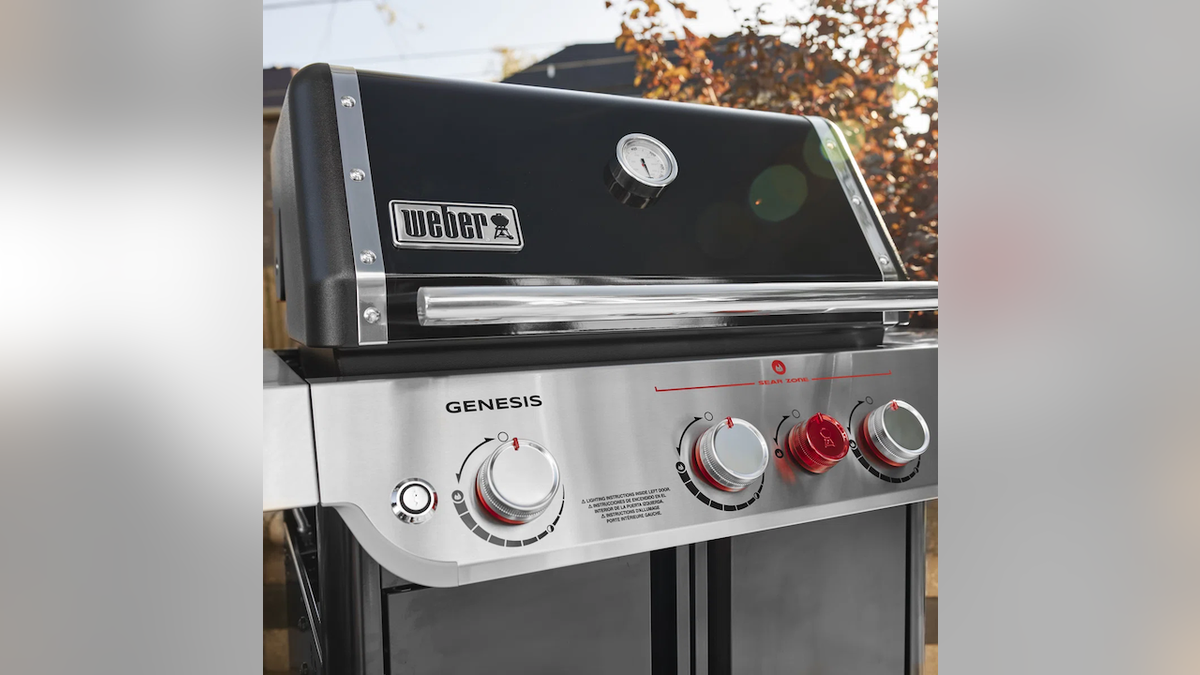
Weber’s flagship line rarely sees this kind of markdown. (Wayfair)

Weber’s Genesis E-325 grill offers a step up in performance, with three burners, a sear zone and a side burner. Memorial Day is one of the few times Weber grills are discounted, making it a good opportunity to buy.

READ MORE: Cookout season is here: These are the best grills to buy before Memorial Day

Original price: $79.99

This dishwasher-safe tool set covers all the grilling essentials. (Wayfair)

Round out your setup with this six-piece stainless steel grill tool set, which includes a spatula, tongs, fork, basting brush and two skewers. The heat-resistant handles and dishwasher-safe design add convenience.

Backyard upgrades

Add lighting, fire pits and more to your backyard.

Valentin striped indoor/outdoor area rug: $66.99 (76% off)
5-tier vertical raised garden bed: $61.99 (57% off)
Acacia natural wood interlocking deck tiles, set of 27: $70.99 (51% off)

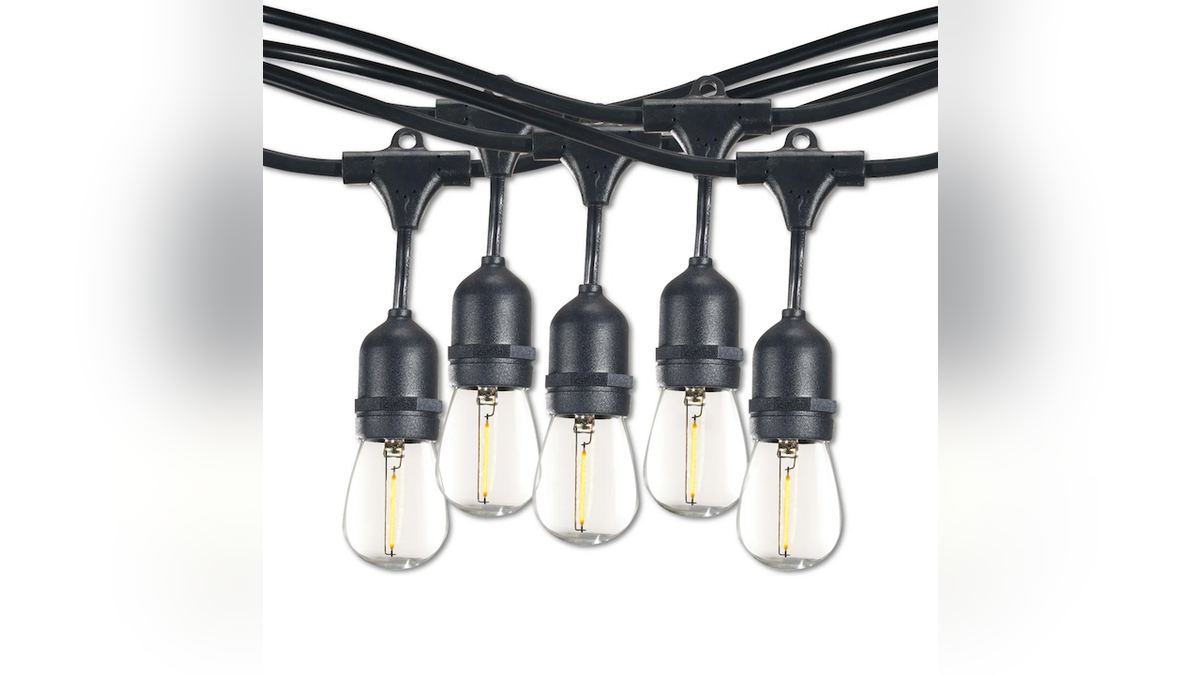
Original price: $101.99

Shatterproof bulbs link end-to-end for a longer connection. (Wayfair)

String these 30-foot LED lights across a deck or fence to add ambiance. The bulbs are shatter-resistant and weather-resistant, and the strands connect end to end for extended coverage.

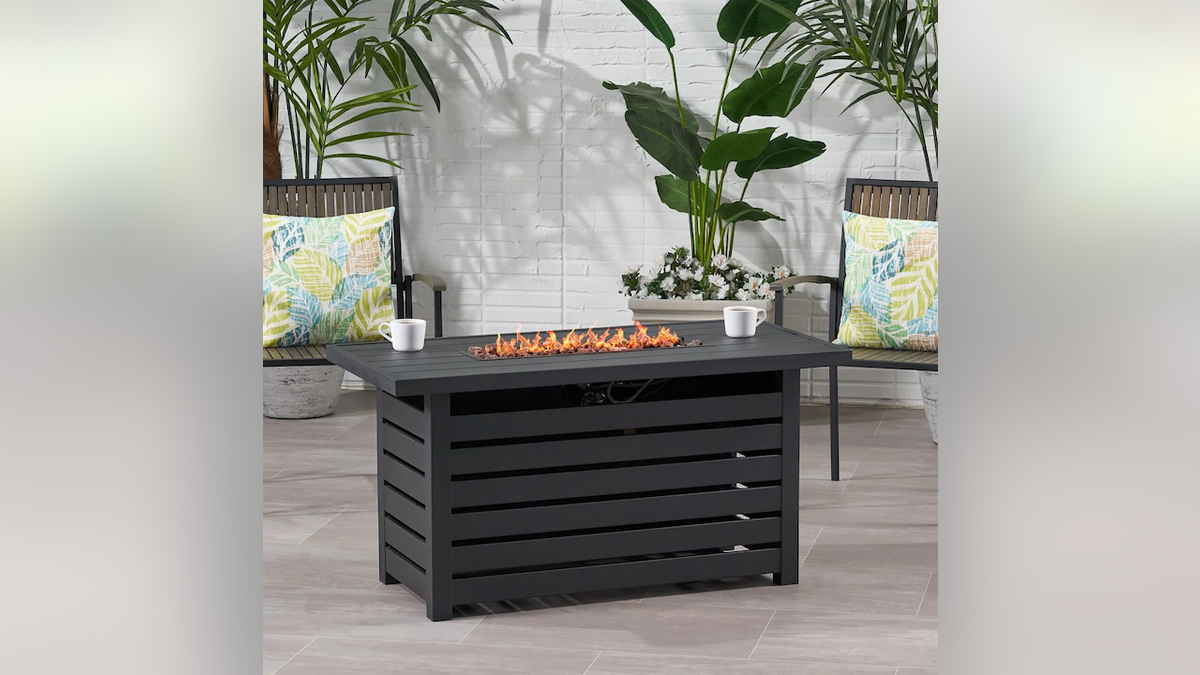
Original price: $434.99

This smokeless fire pit doubles as a low coffee table. (Wayfair)

This propane fire pit uses a knob ignition for quick lighting, so there’s no need for firewood or cleanup. The rectangular design also works as a low table when not in use.

READ MORE: These deals are 40% off or more ahead of Memorial Day — outdoor furniture, grills and more

Original price: $280

You can hose this rug clean outside after any spills. (Wayfair)

Define your patio seating area with this flat-weave geometric rug, designed for indoor or outdoor use. The polypropylene material can be hosed clean and resists mildew. Multiple sizes, from runners to 9-by-12 rugs, are on sale up to 80% off.

Mattress and bedding deals

Save on a new mattress ahead of Memorial Day.

Medium memory foam pocket hybrid mattress: $197.99 (70% off)
Rayon bamboo mattress topper: $55.99 (47% off)
Waterproof fitted mattress protector: $15.99 (47% off)

Original price: $139.99

Thanks to this deal, you won’t have to overspend on quality sheets. (Wayfair)

This soft sheet set comes with one flat sheet, one fitted sheet and two pillowcases, giving you everything you need for a simple bedding setup. The deep-pocket fitted sheet even has all-around elastic to ensure that it stays in place, fitting a mattress up to 14 inches deep. Choose from over 20 colors to best match your bedroom decor.

Original price: $349.99

Get gel-infused cooling in a budget-friendly package. (Wayfair)

If you struggle to sleep during warmer nights, this cooling gel memory foam mattress is a budget-friendly option. The gel-infused layer is designed to help dissipate heat, and the firm feel suits back and stomach sleepers. Sizes from twin to California king are discounted.

READ MORE: Early Memorial Day mattress deals: Save up to 66% on Nectar, Helix and more

Original price: $1,099

The inner coils and memory foam give you best-of-both-worlds comfort. (Wayfair)

Sealy mattresses rarely see discounts this steep outside major sales events, and this model is now more than 50% off. The 12-inch hybrid includes a CopperChill top layer designed to draw heat away, along with a pocketed coil base for support.

Original price: $3,081.99

The firm construction is perfect for side sleepers. (Wayfair)

Side sleepers looking for a firmer feel may want to consider this ComforPedic memory foam mattress. A gel-infused top layer helps limit heat retention, while the support core is designed to resist sagging over time.

Indoor furniture deals

Update the look of your interior with rugs, sectionals and dining sets on sale now.

Ardin solid wood bed frame: $384.99 (73% off)
Swivel bar stools, set of 2: $179.99 (64% off)
65-inch linen upholstered loveseat: $284.99 (50% off)
16-pair shoe storage cabinet: $99.99 (50% off)

Original price: $1,610

This low-pile rug suits entryways and dining rooms. (Wayfair)

For high-traffic areas, this low-pile rug is a practical choice, with a synthetic weave that wipes clean easily. The neutral pattern pairs with a variety of furniture styles, and it’s available in seven sizes on sale.

Original price: $1,599.96

Elevate your space with modern accent chairs for under $150 per seat. (Wayfair)

This set of four barrel-back dining chairs comes in at well under $150 per seat with the discount. The sculptural silhouette and padded seats give them a more formal look while still fitting under a standard 30-inch dining table.

For more deals, visit www.foxnews.com/deals

Original price: $1,069.99

The deep, foam-cushioned seats are meant for lounging out. (Wayfair)

Memorial Day often brings strong deals on sectionals, and this U-shaped model stands out for larger spaces. The modular pieces ship separately and can be rearranged into an L shape if needed.


Source link

Africa’s richest man plans new Mombasa oil refinery: Why this matters | Business and Economy News

0

After successfully launching Nigeria’s only operational oil refinery in 2024, billionaire businessman Aliko Dangote has set his sights on East Africa as the next location for another mega refinery project, according to recent reports.

It comes as African countries are actively seeking ways to make energy more secure, following huge global disruptions amid the US and Israel’s war on Iran and Tehran’s subsequent closure of the Strait of Hormuz, through which about 20 percent of the world’s oil and natural gas is shipped.

Recommended Stories

list of 3 itemsend of list

Dangote, Africa’s richest man, appeared to be one of the winners from this fallout when his newly operational refinery, located in Nigeria’s commercial Lagos State, began selling large volumes of crude oil across the continent as the war on Iran escalated in March and global oil prices soared.

At present, West, South and East Africa rely primarily on importing refined petroleum products from the Middle East, meaning they are highly vulnerable to disruptions there.

Neighbours of Nigeria – Cameroon, Togo, Ghana and even Tanzania, further to the east – are among the countries that have turned to Nigeria as supplies from the Middle East dry up.

By the end of March, the refinery, which has the capacity to produce 650,000 barrels per day (bpd), reported it was also receiving orders from beyond the continent, especially for severely scarce jet fuel as hundreds of flights were cancelled across regions.

Supply from Dangote’s refinery has cushioned the impact of the war in terms of fuel supply for Nigeria and neighbouring countries, analysts say.

Nigeria is Africa’s largest oil producer, and the $19bn project in Lagos is currently the world’s largest single-train refinery, meaning it employs a single processing line rather than multiple units. But it hit full production capacity in February 2026, the same month the war with Iran started.

Nigeria has no functional state-owned refinery, so Dangote’s refinery is now positioning the country to be a net exporter of jet fuel and diesel.

Here’s why more refining capacity in Africa matters for the continent:

Dangote
Petroleum trucks line up at the gantry inside the Dangote Industries oil refinery and fertiliser plant site in the Ibeju Lekki district of Lagos, Nigeria, March 2, 2026 [Sodiq Adelakun/Reuters]

What is Dangote’s plan for an East Africa refinery?

In April, Kenya’s President William Ruto announced that East African countries were in talks to build a joint oil refinery at Tanzania’s Tanga port, which would have a similar capacity to Dangote’s Lagos operation.

“We do not want to be held hostage any more by the Strait of Hormuz,” Ruto said at a Nairobi business event in April, which Dangote was present at.

“We do not want to be held hostage by wars that are started by other people. We have our resources here, and we are saying we are going to use our African resources to industrialise our region.”

In an interview with the Financial Times on Sunday, however, Dangote said he would prefer to build the new operation in Kenya rather than Tanzania.

“I’m leaning more towards Mombasa because Mombasa has a much larger, deeper port,” the billionaire told the UK newspaper.

“Kenyans consume more. It’s a bigger economy,” he said, adding that “the ball is in the hands of President Ruto … Whatever President Ruto says is what I’ll do.”

He has projected construction costs of between $15bn and $17bn.

But venturing into East Africa, which has a very different commercial landscape from West Africa, could prove a challenge, analyst Dumebi Oluwole of Lagos-based intelligence firm Stears told Al Jazeera.

“Dangote has proven it [his operation] can build at scale,” she said. “The East African test will be whether it can also navigate the political and logistical landscape of a fragmented, multi-country market.”

Why aren’t African countries already producing more oil?

Despite having sizeable crude reserves, African countries only refine about 44 percent of the total oil consumed themselves, with imports making up the rest, according to a 2022 African Union report.

The top producers of refined oil are Algeria, Egypt and South Africa. There are about 21 refineries in North Africa.

Southern Africa has another seven, while West Africa has 14. However, most refineries in the two regions are either not operating or are producing below the capacity they are equipped to.

East Africa’s only existing refinery is in Mombasa, but it stopped operating in 2013 due to a combination of slow government policies and exiting investors, who deemed it commercially unviable as a result.

There is currently no refining capacity at all in East Africa, despite the region having about 4.7 billion barrels of crude reserves, according to the African Union, mainly in Uganda, South Sudan, Kenya and the Democratic Republic of the Congo.

Kenya imported 40 million barrels of petroleum in 2025. It regularly buys oil from the UAE, Saudi Arabia, India and Oman, all of which have been hampered by Iran’s closure of the Strait of Hormuz.

Nigeria itself is Africa’s biggest net crude producer with a 1.5 million to 1.6 million bpd capacity. The country has not refined meaningfully since 2019.

What difference will local refineries make for African countries?

Exporting most of its crude to then import refined products is expensive and puts Africa on the back foot, analyst Oluwole said.

More oil refined on the continent would mean lower petrol pump prices, lower transport costs, and more energy available for people and businesses, in theory. It would also mean greater access to by-products like fertilisers for farmers, for example, or petrochemicals for manufacturers.

“Dangote has demonstrated that a viable, scalable, intra-African energy supply option is possible – that proof of concept matters enormously,” said Oluwole.

“It reflects a growing continental conviction that Africa can provide for itself, and that this is no longer wishful thinking,” she added.

In Nigeria’s case, Dangote’s refinery is yet to ease pressures, though. Local airlines, for example, have complained about having to pay high prices for jet fuel even with improved local supplies. Analysts say that could be because Nigeria’s government removed fuel subsidies in 2023. Bureaucracy within the state oil company also forced Dangote’s refinery to import crude.

Still, the refinery is contributing to “a more transparent and competitive market”, Oluwole said, adding that results should eventually show.

Other countries are stepping up. Last week, Angola’s $470m Cabinda refinery began supplying domestic as well as foreign markets. The project is owned primarily by the United Kingdom’s Gemcorp Capital and has a capacity of 30,000bpd, with plans to double by the end of 2026.

Dangote’s planned refinery in Kenya, if completed, could also help to reduce East Africa’s reliance on the Middle East.

A separate, government-funded refinery project in Uganda’s Hoima region is also in the works. Authorities expect the project to be able to refine 60,000bpd when it starts operations in 2029. It will be fed by the joint Uganda-Tanzania East African Crude Oil Pipeline (EACOP), an ongoing project which will transport crude from Uganda’s Lake Albert to Tanzania’s Tanga Port.

Uganda also plans to produce diesel, jet fuel, kerosene and Liquefied Petroleum Gas (LPG).

With big plans in place, Oluwole says it’s now left to African governments to create enabling business environments for the private sector.

“Dangote has opened the door,” she said. “The question now is whether African institutions and governments will walk through it.”


Source link

Access Denied


Access Denied You don’t have permission to access “http://news.sky.com/story/dunfermline-man-who-sexually-assaulted-women-on-crowded-train-to-edinburgh-jailed-13543090” on this server.

Reference #18.f3680117.1778593637.28d50ca

https://errors.edgesuite.net/18.f3680117.1778593637.28d50ca


Source link

LeBron James’ biggest hater was courtside to potentially witness The King’s last NBA game


I assume everyone here is familiar with the concept of a “hate watch,” correct.

If you are even a casual sports fan, you have engaged in hate watching before.

The premise is quite simple. You may have a favorite team, but you also have rival teams you despise more than anything.

These are teams that bring you almost as much joy when they lose as your favorite team does when it wins, and you never miss an opportunity to watch their downfall, live and in high definition.

FLOPPING IS RUINING THE NBA AND LEBRON SHOULD TAKE SOME BLAME FOR THAT

That is hate watching, in a nutshell, and it extends to players as well.

One player who I assume is maybe the single most hate-watched individual in America, and, potentially, the world, is one LeBron Raymone James, and Monday night offered the perfect opportunity for his haters to come out of the woodwork to witness another hate-watching masterpiece.

LeBron James standing on basketball court during NBA playoffs game.

Lakers forward LeBron James stands on the court in the closing minutes of Game 4 in the second-round NBA playoffs against the Oklahoma City Thunder in Los Angeles on May 11, 2026. (Mark J. Terrill/AP)

It’s not often you get to see one of the greatest players of all time get swept in the conference semifinals.

I assume all of you LeBron haters tuned in for a good old-fashioned hate watch (I certainly checked in from time to time), but one man took the concept of hate watching to the next level when he showed up courtside to Game 4, decked out in jewelry and ready to see his biggest nemesis fail.

Look at the evil laugh! Diabolical! He looks like a Bond villain who just told you his master plan.

The man in question is Dillon Brooks, a forward for the Phoenix Suns, and if you’re curious as to why he showed up to watch LeBron James get swept by the Oklahoma City Thunder, let’s just say the two have some history.

LEBRON JAMES DODGES RETIREMENT QUESTIONS AFTER MAKING RECORD 22ND ALL-STAR GAME APPEARANCE

LeBron James posting up on Dillon Brooks during basketball game at Mortgage Matchup Center

LeBron James of the Los Angeles Lakers posts up on Dillon Brooks of the Phoenix Suns during the second half at Mortgage Matchup Center in Phoenix, Ariz., on Dec. 23, 2025. (Chris Coduto/Getty Images)

Dating all the way back to 2023, Brooks and James have sparred with each other, though it has been mostly one-sided.

Even as recently as December of this season, the two got into it in a regular-season game between the Suns and Lakers, where Brooks would end up being ejected after a skirmish with LeBron.

ZERO BS. JUST DAKICH. TAKE THE DON’T @ ME PODCAST ON THE ROAD. DOWNLOAD NOW!

This beef runs deep, and LeBron has been on the winning side of things far too often, so it’s nice to see the underdog get a few in on the favorite.

Brooks is just living out the dream of every LeBron hater on the internet, showing up to what may be The King’s last game in the NBA to laugh right in his face while sucking down an overpriced drink at the venue formerly known as Staples Center.

CLICK HERE TO DOWNLOAD THE FOX NEWS APP

Dillon Brooks and LeBron James playing basketball during a playoff game at FedExForum in Memphis

Dillon Brooks of the Memphis Grizzlies and LeBron James of the Los Angeles Lakers compete during Game One of the Western Conference First Round Playoffs at FedExForum in Memphis, Tenn., on April 16, 2023. (Justin Ford/Getty Images)

My hat’s off to you, Mr. Brooks.

Keep up the hate!


Source link

Access Denied

0

Access Denied You don’t have permission to access “http://hindi.news18.com/cricket/6feet-5-inch-tall-nahid-rana-fast-bowler-from-bangladesh-has-created-history-by-bowling-152-kmph-against-pakistan-10469555.html” on this server.

Reference #18.6e560e17.1778594230.dc798fa

https://errors.edgesuite.net/18.6e560e17.1778594230.dc798fa

Israel approves law on death penalty for October 7 detainees | Death Penalty

0

NewsFeed

A new death penalty bill was approved by the Israeli Knesset to establish a special tribunal that can sentence Palestinians said to be linked to the Hamas-led October 7 attacks to death. Rights groups say it would weaken fair trial protections and make executions easier.


Source link

At least nine killed in explosion at Pakistan market | Crime

0

NewsFeed

At least nine people were killed and some 30 injured in a blast at a market in the Pakistani town of Sarai Naurang. The explosion was caused by a bomb-laden rickshaw. There was no immediate claim of responsibility for the attack.


Source link