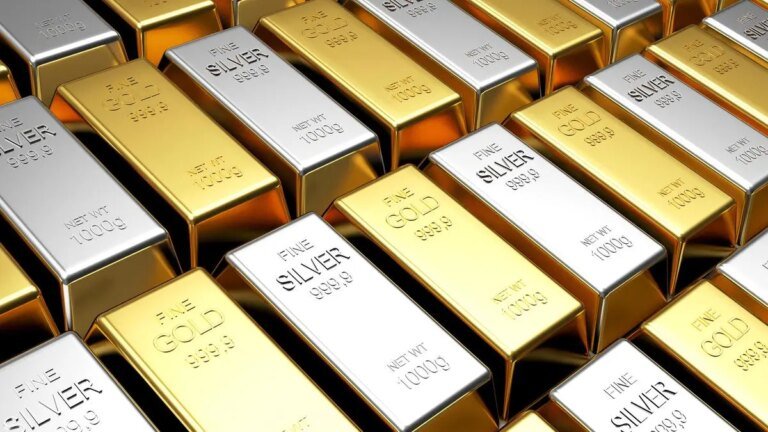
Why gold, silver & precious metals are on fire?

0

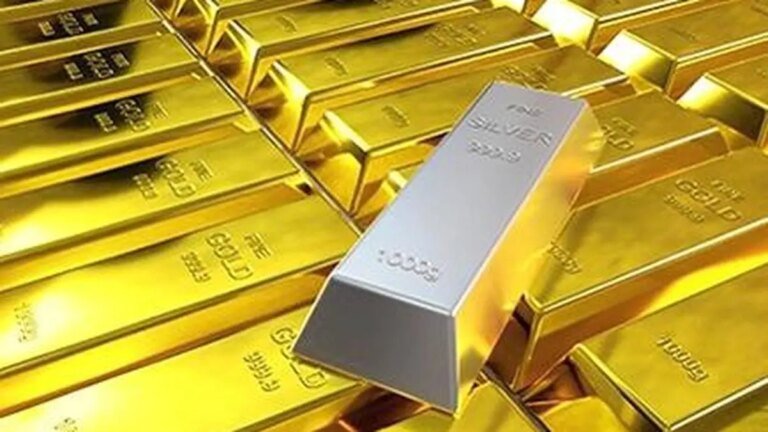
gold and silver are rewriting record books, and the reason behind this explosive rally is a rapidly weakening US dollar combined with mounting policy chaos in Washington. Gold touched a fresh all-time high of $5,258 per ounce on Wednesday, gaining over 3 per cent, while silver surged 8.5 per cent to $113.6. In India, mcx gold hit ₹1,62,500 and silver crossed the psychological ₹4 lakh mark in Hyderabad, jumping ₹1,44,000 in just 28 days.

The dollar has collapsed to a four-year low, and President Trump seems fine with it. When asked if the dollar had declined too much, Trump simply said “the value of the dollar was ‘great’.” He also signaled plans to announce a new Federal Reserve chair nominee, suggesting “interest rates would decline under new leadership”—a comment that sent shockwaves through currency markets and pushed investors toward safe-haven assets.

Renisha Chainani, head of research at Augmont, explains the shift: “Gold’s break above $5200 and silver’s surge past $115 mark a decisive escalation in the precious metals rally, driven primarily by a sharp weakening of the US dollar and rising policy uncertainty.” She adds that “tariff threats and perceived pressure on Fed independence have amplified geopolitical and policy risk premiums—firmly underpinning gold and silver prices.”

The numbers tell a grim story for the dollar: US consumer confidence plunged to an 11-year low in January amid fears of a slowing labor market. Trade tensions escalated with the US threatening a 25 per cent tariffs on South Korea, while investors worry about a possible government shutdown ahead of the January 30 funding deadline.

On the supply side, silver’s rally has been turbo-charged by industrial demand. “Demand from solar, EVs, AI/data centres, and electronics remains exceptionally strong,” says Ponmudi R, CEO of Enrich Money, highlighting “persistent supply deficits” driving prices higher.

Jateen Trivedi of LKP Securities notes immediate “resistance…near ₹1,62,500, while strong support is placed around ₹1,55,000” for MCX gold. Chainani projects gold moving towards $5,300 (₹1,65,000) and silver resuming higher towards $120 (₹3,90,000).

Central banks continue accumulating gold aggressively, while ETF inflows remain steady, helping gold gain nearly 20 per cent in 2026 alone, with silver outpacing even that blistering pace.

Published on January 28, 2026

Why India may increase duties on gold and silver imports

0

India’s gold and silver imports surged to record levels last year, sparking concern among policymakers, with the government having few effective tools to curb inflows that have remained resilient despite sky-high prices for the precious metals.

The country’s gold imports rose 1.6% from a year earlier to $58.9 billion in 2025, while silver imports jumped 44% to $9.2 billion, as prices of both metals hit record highs.

Why target gold and silver imports?

India is the world’s second-largest consumer of gold and the biggest market for silver, but it meets almost all of its gold demand through imports and relies on overseas supplies for more than 80% of its silver needs.

The country spent nearly a tenth of its total foreign exchange reserves on gold and silver last year, and the import bill is expected to rise further in 2026 as prices of both metals continue to surge.

Rising imports have widened the trade deficit and added pressure on the rupee, which hit a record low this month.

Unlike silver, which has industrial applications ranging from solar power to electronics, gold is largely used for jewelery and investment. The government views such demand as non-essential and has repeatedly sought to curb it by raising import duties, making the metal more expensive for buyers.

Why are traders speculating about a duty hike?

With gold and ⁠silver prices touching record highs, the value of imports could rise sharply even if volumes do not, stoking concerns about a widening trade deficit and further weakening of the rupee, which has already slid significantly against the dollar.

Trade and industry officials say these concerns could prompt the government to raise import duties on gold and silver in the coming weeks.

In 2012 and ⁠2013, the government sharply raised duties on gold imports to stabilize a rapidly depreciating rupee. With the currency losing ground again recently, traders speculate a new hike may be coming in coming weeks to reverse duty cuts made in 2024. At that time, India cut import duties on both metals to 6% from 15% to curb smuggling.

Gold and silver are already trading at a premium to global benchmarks as markets price in a potential increase in duties.

Why has Indian gold demand not slumped despite high prices?

Jewelery accounted for more than three-fourths of India’s total demand until 2023. Gold prices in the international market have risen 98% since the beginning of 2025 and while that has hit jewelery buying in India, overall demand has not slumped because investment demand has risen.

Indians are increasingly buying coins and bars in the physical market, while a growing number of investors are turning to exchange-traded funds. ETF inflows jumped 283% in 2025 from a year earlier to a record 429.6 billion rupees ($4.69 billion). As a result, the share of investment demand in India’s total consumption of gold rose above 40% in 2025 and is expected to increase further in 2026.

Gold and silver ETFs are investment funds that trade on stock exchanges like shares and are backed by physical gold and silver bars held in secure vaults.

Can a duty hike reduce gold demand?

India has repeatedly tried to curb gold imports by raising duties, but with little success. When New Delhi lifted the import tax on gold to 10% in August, 2013 from 2%, demand held steady despite the increase.

Domestic gold prices have risen from about 8,000 rupees per 10 grams in early 2006 to around 162,000 rupees now, but the rally has failed to significantly ⁠reduce annual demand. A fresh duty hike of 4 to 6 percentage points is therefore unlikely to deter buyers, who absorbed a 76.5% jump in prices in 2025.

Higher duties could, however, enhance investor returns and increase smuggling. Inflows into gold ETFs have been strong in recent months and are expected to remain firm, as investors turn to bullion ⁠amid weak equity market returns.

A sharp price drop could weaken investment demand but boost jewelery sales as buyers waiting for a correction return.

Why are silver imports also becoming a cause for concern?

Silver prices have risen faster than gold, pushing up India’s import bill. Until last year, silver demand was mainly driven by rising industrial consumption, but in recent months investment demand has been supporting imports.

Silver ETFs saw inflows of 234.7 billion rupees in 2025, up from just ⁠85.69 billion rupees a year earlier. The growing popularity of silver ETFs suggests imports for investment purposes could rise further if the price rally continues.

Published on January 28, 2026

Gold’s blistering rally continues past $5,200 as dollar plunges to 4-year low

0

*

Spot gold jumped 1.1% to $5,243.58 per ounce, as of 0314 GMT, after scaling a record high of $5,247.21 earlier, up more than 20% since the start of the year.

US gold futures for February delivery surged 3.1% to $5,237.70 per ounce.

“(Gold’s rise) is due to the very ⁠strong indirect correlation with the dollar and yesterday’s price-rise in gold in the US session was due to Trump’s remark to a casual question about the dollar which implied that (there is) ⁠a broad-based consensus within the White House to have a weaker greenback going forward,” said Kelvin Wong, a senior market analyst at OANDA.

The US dollar was grappling with a “crisis of confidence” as it struggled near four-year lows, exacerbating dollar selling, after President Donald Trump said the currency’s value is “great” when asked whether he thought it had declined too much.

US consumer confidence, meanwhile, slumped to its lowest level in more than 11-1/2 years in January amid mounting anxiety over a sluggish labor market and high prices.

Trump added that he will soon announce his pick to serve as head of the US central bank, and predicted interest rates would decline once the new chair takes over.

The Fed is widely expected to hold rates steady at its January monetary policy meeting, currently underway.

Wong added that near-term resistance for gold could be seen around $5,240/oz. Deutsche Bank said ⁠on Tuesday that gold could climb to $6,000 per ounce in 2026, citing persistent investment demand as central banks and investors increase allocations to non-dollar and tangible assets.

Spot silver was ⁠up 1.9% at $115.11 an ounce, after hitting a record high of $117.69 on Monday. The white metal has already jumped almost 60% so far this year.

Spot platinum gained 2% to $2,692.60 per ounce after hitting a record $2,918.80 on Monday, while ⁠palladium was up 1.4% at $1,961.68.

Published on January 28, 2026

India-EU FTA to boost gems & jewelery exports; faces challenge of EU sustainability rules

0

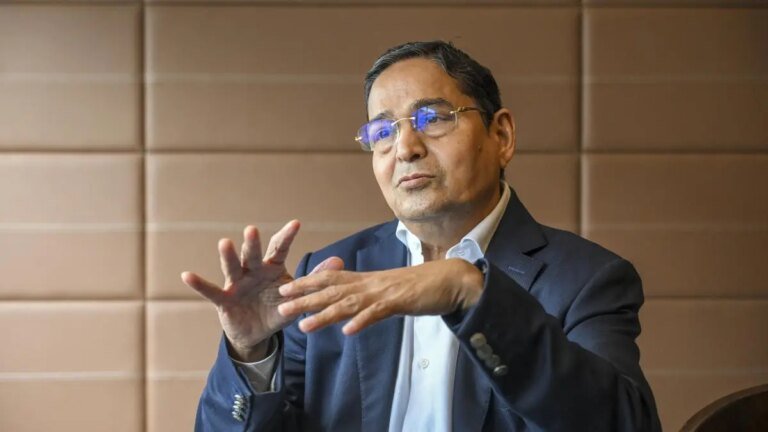
Kirit Bhansali, Chairman, GJEPC

Kirit Bhansali, Chairman, GJEPC | Photo Credit: EMMANUAL YOGINI

With India’s gem and jewelery exports to the US down 44 per cent this year, the India–European Union Free Trade Agreement (FTA) is being seen as a crucial growth lever for the sector, even as stringent EU sustainability and regulatory norms emerge as the key challenge. Industry experts said the ability of Indian exporters to meet ESG compliance, responsible sourcing, and traceability requirements will determine how effectively the industry capitalises on improved market access under the trade deal, particularly across major export hubs in Gujarat, Rajasthan, Maharashtra and West Bengal.

Describing it as “mother of all trade deals”, Kirit Bhansali, Chairman of the Gem and Jewelery Export Promotion Council (GJEPC) stated, “The India-EU FTA will supercharge market diversification for the gem and jewelery industry. This transformative pact aims to double bilateral trade to ₹91,000 crore within three years. Zero-duty access to the world’s largest consumer market empowers export hubs in Gujarat, Rajasthan, Maharashtra and West Bengal to ramp up shipments. of precious jewelery (plain and studded), silver and imitation jewelery — capitalizing on India’s renowned design prowess, especially with exports to the US down by 44 per cent, this timely pact will help Indian exporters salvage lost ground.”

“Amid soaring metal prices and evolving trade dynamics, the deal enhances margins, sharpens our competitive edge in design and craftsmanship, accelerates manufacturing and generates jobs. For Indian jewelery retailers, it opens doors to expand brands across Europe, building on their rising global footprint,” Bhansali added.

India’s gem and jewelery exports to the US saw a sharp decline during April–December 2025, falling 44.42 per cent year-on-year to $3.86 billion, compared with $6.95 billion in the same period last year, according to data from the Gem and Jewelery Export Promotion Council (GJEPC). The slowdown deepened in December 2025, with exports to the US plunging 50.44 per cent year-on-year, reflecting the impact of tariff-related pressures and weak discretionary spending in the key market. However, the contraction in the US was offset by stable performance in other markets, keeping overall gem and jewelery exports largely flat during the nine-month period. Provisional exports for April–December 2025 stood at $20.75 billion, marking a marginal 0.41 per cent decline in dollar terms, while registering a 3.69 per cent growth in rupee terms, aided by currency movements and steady trade flows.

Key challenge

While the India–EU trade deal offers a strong growth opportunity for the gems and jewelery sector, meeting Europe’s stringent sustainability and regulatory norms will be the key challenge, industry executives said.

“The India–EU trade deal comes at a critical time, amid geopolitical uncertainties and rising global tariff pressures and metal price volatility. For the gems and jewelery sector, the agreement is a strong positive, as tariff rationalization will significantly improve India’s competitiveness in the European market. Currently, India’s gems and jewelery exports are around $28 billion. With improved market access, supply-chain integration, and growing demand for responsibly sourced jewellery, the sector has the high potential to scale up exports to the EU over the next 4–5 years. While compliance with EU sustainability and regulatory standards will be a key challenge, the long-term impact of the trade deal is expected to be structurally positive, supporting diversification, value addition, and sustained export growth,” said Rajeev Toshniwal, Chief Financial Officer, Kisna Diamond & Gold Jewellery, the flagship natural diamond and jewelery brand of the diamond exporter Hari Krishna Group.

Surat-based Gautam Kanani who heads Pure Light Diamond, an online diamond selling platform, said the FTA with EU will help provide a boost to the MSMEs operating in the diamond sector. “Once the FTA is in place, Indian diamond traders will not only get a bigger market, but it will also reduce our dependence on the US. Such FTAs ​​fuel demand which in turn will provide a boost to MSMEs units operating in this sector,” Kanani said.

Published on January 27, 2026

Budget 2026 outlook: Possible changes in ETF and gold tax rules

0

Over the last 12 months, the gold price in India has increased by over 76 per cent. Despite the increase, India’s love for gold shows no indication of slowing down.

Unlike a few years ago, when gold was held in physical forms such as jewellery, coins and bars, investors/purchasers are now moving to modern ways of investing/holding gold such as Sovereign Gold Bonds (SGBs), Exchange-Traded Funds (ETFs), and gold mutual funds.

capital asset

Investment in gold is considered as a capital asset. With the price of gold hitting the roof, people may be looking at selling the gold. The profits on the sale of gold, in any form, are taxable in India. The taxation of gold varies depending on the form in which it is held and period for which it is held.

• Physical Gold (Jewellery, Coins, Bars):

If sold within 24 months, these will be treated as short-term capital gains (STCG) and will be taxed at the slab rate. If these are held for more than 24 months it would be treated as Long-Term Capital Gains (LTCG) and would be taxed at 12.5% ​​without indexation benefit.

• Sovereign Gold Bonds (SGBs):

Income from SGBs are in two forms

o Interest income: SGBs earn interest at a nominal rate of 2.5%. This interest is taxable at normal slab rate.

o Capital gains on sale/transfer: If SGBs are held till maturity (8 years), then the same will be exempt from tax. In other cases, it would be akin to the sale of an unlisted mutual fund and treated as LTCG if held for more than 24 months and taxed @ 12.5% ​​and STCG otherwise and taxed at slab rates.

• Gold ETFs and Mutual Funds:

Similar to physical gold, if sold within 24 months, these will be treated as STCG and would get taxed at the slab rate. If these are held for more than 24 months it would be treated as LTCG and would be taxed T 12.5% ​​without indexation benefit.

In addition, GST at 3 per cent is applicable on investment in gold except purchase of SGBs & ETFs.

Possible changes in budget 2026

• In order to determine the taxation of profit of gold, different holding periods apply to different forms of gold. Lower holding period is required for digital form of gold to qualify as long term capital asset as compared to physical form. It will be good to bring all forms at par.

• With the soaring gold price, the industry would like a reduction in the GST rate on gold. This will help boost sales.

• Currently import duty on gold is 6 percent. There is a lot of push from the industry to reduce the duty. This will help the industry and also curb smuggling.

• Keeping in mind that yellow metal is a scarce resource, the Government should incentivise digital form of gold products like gold ETFs and sovereign gold bonds (SGBs).

Anita Basrur is Partner, Sudit K. Parekh & Co. LLP

Published on January 18, 2026

Gold, Silver Rally: Gold at $5,111 as Silver surges to $117 on safe-haven demand

0

COMEX gold scaled a fresh all-time high of $5,111 per ounce on Tuesday before settling near $5,067, driven by sustained safe-haven demand and central banks purchasing. Silver jumped to $117.75, marking its own record peak, as geopolitical tensions and US-South Korea tariffs threats intensified.

On the Multi Commodity Exchange (MCX), gold rose over 1 per cent to approach ₹1.60 lakh per 10 grams, while silver surged approximately 6 per cent to trade above ₹3.5 lakh per kilogram. Both metals are trading well above their key moving averages, confirming the strength of the current bull run.

“Precious metals are firmly back in the spotlight,” said Aamir Makda, Commodity & Currency Analyst at Choice Broking. He attributed the rally to aggressive accumulation by central banks in China and Poland, along with safe-haven flows triggered by escalating US tariff threats against South Korea, which jumped from 15 per cent to 25 per cent.

ASK Private Wealth recently upgraded gold to overweight from neutral in its Quarterly Investment Policy Committee report titled “Playing with uncertainty?”, citing policy uncertainties and strong buying from central banks and consumers in China and India.

Market analysts flag technical concerns despite the bullish momentum. The Relative Strength Index (RSI) has entered overbought territory across multiple timeframes, with a daily RSI divergence appearing—typically a warning sign for long positions. However, structural support remains robust, with gold’s $5,000 level now acting as strong support and silver’s industrial demand from solar, electric vehicles and AI sectors providing fundamental backing.

Ponmudi R, CEO of Enrich Money, noted that USD/INR stability in the 91.50-91.93 zone has aided domestic gold strength. Justin Khoo, Senior Market Analyst at VT Markets, said the weak US dollar and ongoing risk aversion continue to support precious metals as portfolio hedges amid macro uncertainties.

Published on January 27, 2026

Silver Now: Fueling the new economy

0

For decades, silver lived in the shadow of gold—seen largely as a metal for jewellery, coins, and small-ticket savings. But as we move into 2026, that image is rapidly becoming outdated. Silver is no longer just a precious metal; it is increasingly a strategic metal, embedded in the functioning of the modern economy.

After a powerful rally in 2025, silver prices have gone through a phase of consolidation. Yet prices remain firm—not because of speculative frenzy, but because of a simple, persistent reality: global demand has been exceeding supply for several years, and that imbalance is becoming structural.

A world that needs more silver

Global silver demand in 2026 is projected at about 1.2 billion ounces, while mine supply is expected to stay near 1.05–1.06 billion ounces, setting up a fifth consecutive year of structural deficit.

What is more important than the number itself is the nature of demand. In the past, silver prices were driven mainly by jewelery consumption and investor sentiment. Today, more than half of global demand comes from industrial use. Silver is now critical to sectors that define modern life—clean energy, electric mobility, electronics, data centers, and advanced computing.

Solar power is a key driver. Although manufacturers are trying to reduce the amount of silver used per panel, the sheer scale of new installations worldwide means total consumption continues to rise. By the end of this decade, solar energy alone could absorb 15–20 per cent of annual global silver supply.

Electric vehicles add another layer of pressure. Each EV uses silver in power systems, battery management, sensors, and safety components. As EV adoption accelerates across China, the US, Europe, and India, this demand becomes structural—not cyclical.

Why supply cannot catch up quickly

Silver is not like gold, where production responds more directly to price. Nearly 70 per cent of silver is mined as a by-product of copper, lead, and zinc mining. That means silver supply depends more on the economics of base metals than on silver prices themselves. New mines take years to develop, and many existing mines are facing declining ore quality.

The result is a persistent structural deficit of roughly 140 million ounces per year—a gap that provides long-term support to prices.

India: The silent giant in silver demand

India has quietly become the world’s largest consumer and importer of silver. In 2026, India’s annual requirement is estimated at 5,000–7,000 metric tonnes.

This is no longer just about jewellery. Nearly half of India’s silver demand now comes from industrial uses—solar manufacturing, electronics, and electrical equipment. With India targeting 500 GW of renewable energy capacity by 2030, silver demand from solar alone is set to remain strong for years.

Investment demand is also rising. As gold prices stay elevated, many investors are turning to silver as a more affordable entry into precious metals.

Can silver be replaced?

Manufacturers are trying to substitute silver with cheaper metals like copper and aluminum. But silver has unique properties—it is the best conductor of electricity, dissipates heat efficiently, and resists corrosion over long periods.

In solar panels, replacing silver with copper often reduces efficiency by 5–10%, making it unattractive for large-scale power projects. In electronics, medical devices, and advanced technology, silver remains difficult to replace. Substitution may slow demand growth at the margins, but it cannot remove the structural deficit.

A policy shift: RBI brings silver into the credit system

Recognizing this structural shift in silver consumption and market dynamics, the RBI has permitted loans against silver from April 2026, effectively granting it a formal role as a financial asset alongside gold. By becoming acceptable as collateral for credit, silver moves beyond mere adornment and passive storage—it evolves into an active, productive asset within the financial system.

For households and small businesses, it means silver can be monetised without distress selling. For the market, it formally recognizes silver as a financial asset, likely encouraging more transparent investment and stronger institutional participation.

Price outlook: A demand-driven story

Silver is now trading in uncharted territory, with no clear historical resistance levels. Prices are forming higher highs with periodic corrections—typical of strong long-term uptrends.

Based on current trends: :

· Short term (2026): Prices have tested $100 per ounce owing to tight supply or strong investment flows (around ₹2.7 lakh per kg on MCX).

· Medium term (2–3 years): If annual deficits persist, silver could reach cycle highs of $150–$200 (₹4.0–₹5.5 lakh per kg).

Long term (5 years, scenario-based): If demand rises towards 1.4–1.5 billion ounces without major supply growth, price discovery could push silver to $350–$400 per ounce (₹9.5–₹10.8 lakh per kg).

The author is CEO – Enrich Money

Published on January 25, 2026
Indian gold, silver futures jump to record high tracking global gains

0

Indian gold and silver futures jumped to record highs early on Tuesday, tracking gains in overseas prices and supported by the rupee’s slide near an all-time low, dealers said.

Domestic gold futures rose ‌2.4% to a record high of ‌159,820 rupees per 10 grams in early trade, while silver futures jumped ‌6% to ‌an all-time high of ‌354,780 rupees ‌per kg.

Published on January 27, 2026

Gold reserve fund likely to see high allocation in RE of FY26, BE of FY27

0

With gold prices rising, the Union Budget is likely to provide a higher allocation to the Gold Reserve Fund in both the revised estimates (RE) for FY26 and the budget estimates (BE) for FY27. The fund is primarily used to meet redemption payouts under the Sovereign Gold Bond (SGB) scheme.

A key driver of the higher allocation is the large volume of SGB redemptions. Fourteen tranches of the 2017–18 series were redeemed during the current fiscal, with the final tranche maturing earlier this month. While these bonds were issued at ₹2,881–2,951 per unit, redemption prices ranged between ₹9,486 and ₹13,486. Several tranches from the FY19 series are also eligible for premature redemption, with the fifth tranche redeemed at ₹14,853 per unit.

Given that the BE for the Gold Reserve Fund in FY26 was only ₹700 crore, a substantial upward revision is expected in the RE. In FY25, allocations under RE had surged to over ₹28,000 crore against a BE of ₹8,550 crore.

Future allocations

Looking ahead to FY27, six tranches from the 2018–19 series will be eligible for final redemption, while ten tranches from 2021–22 may qualify for premature redemption. Bonds in the FY19 series were issued at ₹3,114–3,326 per unit, while FY22 issuances were priced at ₹4,777–5,109.

According to the RBI, SGB redemption prices are based on the simple average of closing gold prices of 999 purity over the previous three business days, as published by the India Bullion and Jewelers Association. With gold currently trading above ₹16,000 per gram, redemption costs are set to remain elevated.

Introduced in 2015 to curb physical gold imports, the SGB scheme saw 67 tranches issued between FY16 and FY24, with subscriptions equivalent to over 146 tonnes of gold. Bonds mature after eight years, with premature redemption allowed after five years. Interest of 2.5 per cent is taxable, while capital gains on full maturity are exempt; Gains on premature redemption are taxed at slab rates.

Amid the sharp rise in gold prices and mounting redemption costs, the government has not issued fresh SGB tranches since FY24 and has virtually ruled out future issuances.

Published on January 26, 2026

Gold price surges past $5,000 amid Trump tariff threats and dollar weakness

0

Analysts cited a growing crisis of confidence in US assets following erratic trade and tariff threats by President Donald Trump. Other precious metals also rallied, with silver, platinum and palladium touching fresh highs. Analysts see further upside for gold in 2026.

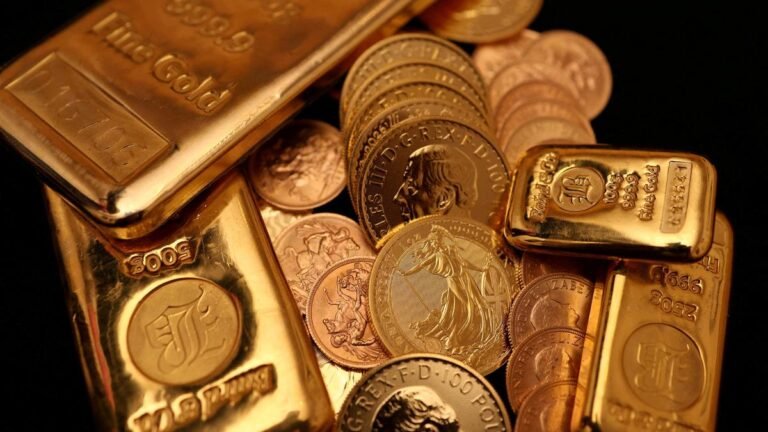
Analysts cited a growing crisis of confidence in US assets following erratic trade and tariff threats by President Donald Trump. Other precious metals also rallied, with silver, platinum and palladium touching fresh highs. Analysts see further upside for gold in 2026. Photo Credit: style-photography

Gold surged to a record high above $5,100 an ounce on Monday, extending a historic rally as investors piled into the safe-haven asset amid rising geopolitical uncertainties.

Spot gold were up ‌2.2% at $5,089.78 per ounce by 0656 GMT, after earlier touching an all-time high of $5,110.50. US gold futures for February delivery also gained the same amount to $5,086.30 per ounce.

Historic rally

The metal soared 64% in 2025, its biggest annual gain since 1979, driven by safe-haven demand, US monetary policy easing, robust central bank purchases including China’s fourteenth straight month of buying in December, and record inflows into exchange-traded funds.

Prices have set consecutive record peaks over the past week and have already risen more than 18% this year.

Crisis of confidence

The latest catalyst “is effectively this crisis of confidence in the US administration and US ⁠assets, that was set off by some of the erratic decision-making from the Trump administration last week”, said Kyle Rodda, a senior market analyst at Capital.com.

US President Donald Trump abruptly stepped back on Wednesday from threats to impose tariffs on European allies ⁠as leverage to seize Greenland.

trade threats

Over the weekend, he said he would impose a 100% tariff on Canada if it followed through on a trade deal with China.

He has also threatened to hit French wines and champagnes with 200% tariffs in an apparent effort to pressure French President Emmanuel Macron into joining his Board of Peace initiative. Some observers fear the board could undermine the United Nations’ role as the main global platform for conflict resolution, though Trump has said it will work with the UN.

“This Trump administration has caused a permanent rupture in the way things are done, and so now everyone’s kind of running to gold as the only alternative,” Rodda added.

dollar weakness

Meanwhile, a rising yen dragged the dollar broadly lower on Monday, with markets on alert for possible intervention in the yen and investors cutting dollar positions ahead of this week’s Federal Reserve meeting.

A weaker dollar makes greenback-priced gold more affordable for holders of other currencies.

Bullish outlook

Analysts expect gold prices to climb further toward $6,000 this year on mounting global tensions as well as strong central-bank and retail demand.

“We expect further upside (for gold). Our current forecast suggests that prices will peak at around $5,500 later this year,” said Philip Newman, director ⁠at Metals Focus.

“Periodic pullbacks are likely as investors take profits, but we expect each correction to be short-lived and met with strong buying interest,” Newman added.

precious metals rally

Spot silver advanced 4.8% to $107.903, after hitting a record of $109.44. Spot platinum climbed 3.4% to $2,861.91 ⁠per ounce, after hitting a record high of $2,891.6 earlier in the session, while spot palladium was 2.5% higher at $2,060.70, having touched a more than three-year high.

Silver climbed above the $100 mark for the first time on Friday, building on its 147% rise last year as retail-investor flows and momentum-driven buying compounded a prolonged ⁠spell of tightness in physical markets for the metal.

Published on January 26, 2026