House Republicans move to block DC from stopping Trump tax cuts on tipped workers

0

NEWYou can now listen to Fox News articles!

The House of Representatives passed a bill on Wednesday aimed at stopping the Washington, D.C. local government from blocking parts of President Donald Trump’s new tax law.

D.C.’s progressive city council passed a local measure to stop certain parts of Trump’s “One Big Beautiful Bill Act” from going into effect due to their expected effect of cutting city revenues. 

Policies that would have been blocked include Trump’s elimination of taxes on tipped and overtime wages, as well as certain tax cuts aimed at businesses.

The legislation was led by Rep. Brandon Gill, R-Texas, who told Fox News Digital he did not expect any Democrats to support his bill.

GOP UNVEILS PLAN TO CUT DEFICIT BY $1 TRILLION WITH SECOND ‘BIG, BEAUTIFUL BILL’

Trump signs the Big Beautiful Bill

President Donald Trump signs sweeping spending and tax legislation, known as the “One Big Beautiful Bill Act,” during a picnic with military families to mark Independence Day, at the White House in Washington, D.C., on July 4, 2025. (Ken Cedeno/Reuters)

“Republicans want more money to be in the hands and in the pockets of working-class families, and Democrats want that money to be in the hands of government,” Gill said.

The D.C. government generally conforms with large swaths of the federal tax code, as a federal territory itself.

But according to local officials, including non-voting Del. Eleanor Holmes Norton, D-D.C., enacting the full Trump tax bill would amount to a $600 million revenue loss for the city.

TRUMP SIGNS ‘BIG, BEAUTIFUL’ BILL IN SWEEPING VICTORY FOR SECOND TERM AGENDA, OVERCOMING DEMS AND GOP REBELS

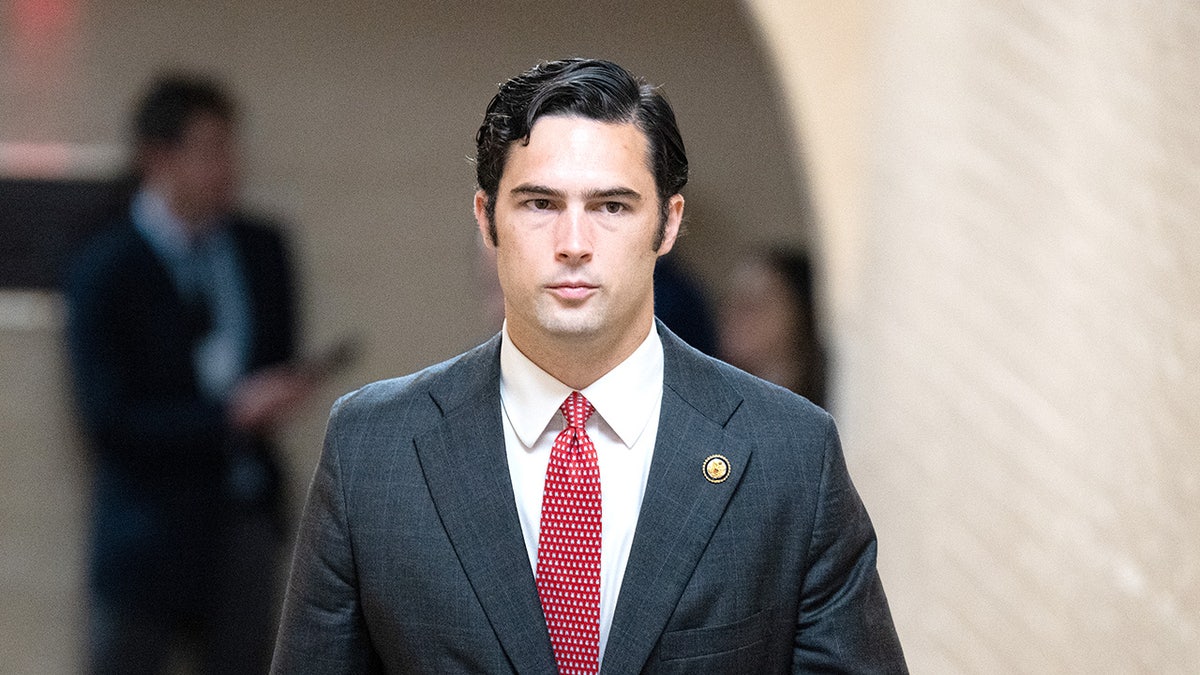
Congressman Brandon Gill

Rep. Brandon Gill, R-Texas, leaves the House Republican Conference caucus meeting in the Capitol in Washington, May 6, 2025. (Bill Clark/CQ Roll Call, Inc. via Getty Images)

“This resolution is nothing short of unprecedented and deliberate administrative and fiscal sabotage of D.C.,” Norton said in a statement.

But Republicans, including Gill, argue that the capital’s progressive officials are blocking Trump’s signature legislation for political reasons at the cost of working-class residents.

“Whenever we passed that tax law, we expected Washington, D.C. to conform to those tax provisions. And unfortunately, they decided that they were going to try to separate from them,” Gill said.

Del. Eleanor Holmes Norton

Del. Eleanor Holmes Norton, D-D.C., is seen during a House Transportation and Infrastructure Subcommittee hearing in Washington, D.C., July 23, 2025. (Graeme Sloan/Bloomberg via Getty Images)

“So to give you a few examples, you have no tax on tips, no tax on social security, no tax on overtime pay, a variety of pro-growth, pro-business tax provisions that they decided they wanted to decouple from. So what we’re saying is, we think that that’s bad policy on D.C.’s part, and we’re gonna stop them.”

CLICK HERE TO DOWNLOAD THE FOX NEWS APP

Congress has the ability to overturn most local laws set by D.C. thanks to the District of Columbia Home Rule Act of 1973.

If passed by both the House and Senate, however, Republicans’ bill could complicate the tax season for D.C. residents who have already begun filing for their annual returns.


Source link

What is Tarique Rahman’s vision for Bangladesh? | TV Shows

0

Sreenivasan Jain challenges BNP secretary Mirza Fakhrul on whether the party and its leader really represents change.

Bangladesh is heading into a historic election after the 2024 uprising that toppled Prime Minister Sheikh Hasina and sidelined the Awami League. The Bangladesh Nationalist Party has emerged as the frontrunner after years on the margins.

In this interview, Sreenivasan Jain speaks to BNP Secretary-General Mirza Fakhrul Alamgir about Tarique Rahman’s vision for the country and whether the BNP genuinely represents political change.

Guest:
Mirza Fakhrul Alamgir – Secretary-general, Bangladesh Nationalist Party


Source link

Federal probe launched into Waymo crash in Santa Monica school zone

0

NEWYou can now listen to Fox News articles!

Federal safety regulators are once again taking a hard look at self-driving cars after a serious incident involving Waymo, the autonomous vehicle company owned by Alphabet.

This time, the investigation centers on a Waymo vehicle that struck a child near an elementary school in Santa Monica, California, during morning drop-off hours. The crash happened on Jan. 23 and raised immediate questions about how autonomous vehicles behave around children, school zones and unpredictable pedestrian movement.

On Jan. 29, the National Highway Traffic Safety Administration confirmed it has opened a new preliminary investigation into Waymo’s automated driving system.

Sign up for my FREE CyberGuy Report
Get my best tech tips, urgent security alerts and exclusive deals delivered straight to your inbox. Plus, you’ll get instant access to my Ultimate Scam Survival Guide – free when you join my CYBERGUY.COM newsletter.

TESLA’S SELF-DRIVING CARS UNDER FIRE AGAIN

A Waymo taxi parked in front of a line of cars

Waymo operates Level 4 self-driving vehicles in select U.S. cities, where the car controls all driving tasks without a human behind the wheel. (AP Photo/Terry Chea, File)

What happened near the Santa Monica school?

According to documents posted by NHTSA, the crash occurred within two blocks of an elementary school during normal drop-off hours. The area was busy. There were multiple children present, a crossing guard on duty and several vehicles double-parked along the street.

Investigators say the child ran into the roadway from behind a double-parked SUV while heading toward the school. The Waymo vehicle struck the child, who suffered minor injuries. No safety operator was inside the vehicle at the time.

NHTSA’s Office of Defects Investigation is now examining whether the autonomous system exercised appropriate caution given its proximity to a school zone and the presence of young pedestrians.

AI TRUCK SYSTEM MATCHES TOP HUMAN DRIVERS IN MASSIVE SAFETY SHOWDOWN WITH PERFECT SCORES

A Waymo taxi sensor

Federal investigators are now examining whether Waymo’s automated system exercised enough caution near a school zone during morning drop-off hours. (Waymo)

Why federal investigators stepped in

NHTSA says the investigation will focus on how Waymo’s automated driving system is designed to behave in and around school zones, especially during peak pickup and drop-off times.

That includes whether the vehicle followed posted speed limits, how it responded to visual cues like crossing guards and parked vehicles and whether its post-crash response met federal safety expectations. The agency is also reviewing how Waymo handled the incident after it occurred.

Waymo said it voluntarily contacted regulators the same day as the crash and plans to cooperate fully with the investigation. In a statement, the company said it remains committed to improving road safety for riders and everyone sharing the road.

Waymo responds to the federal investigation

We reached out to Waymo for comment, and the company provided the following statement:

“At Waymo, we are committed to improving road safety, both for our riders and all those with whom we share the road. Part of that commitment is being transparent when incidents occur, which is why we are sharing details regarding an event in Santa Monica, California, on Friday, January 23, where one of our vehicles made contact with a young pedestrian. Following the event, we voluntarily contacted the National Highway Traffic Safety Administration (NHTSA) that same day. NHTSA has indicated to us that they intend to open an investigation into this incident, and we will cooperate fully with them throughout the process. 

The event occurred when the pedestrian suddenly entered the roadway from behind a tall SUV, moving directly into our vehicle’s path. Our technology immediately detected the individual as soon as they began to emerge from behind the stopped vehicle. The Waymo Driver braked hard, reducing speed from approximately 17 mph to under 6 mph before contact was made. 

To put this in perspective, our peer-reviewed model shows that a fully attentive human driver in this same situation would have made contact with the pedestrian at approximately 14 mph. This significant reduction in impact speed and severity is a demonstration of the material safety benefit of the Waymo Driver.

Following contact, the pedestrian stood up immediately, walked to the sidewalk, and we called 911. The vehicle remained stopped, moved to the side of the road, and stayed there until law enforcement cleared the vehicle to leave the scene. 

This event demonstrates the critical value of our safety systems. We remain committed to improving road safety where we operate as we continue on our mission to be the world’s most trusted driver.”

Understanding Waymo’s autonomy level

Waymo vehicles fall under Level 4 autonomy on NHTSA’s six-level scale.

At Level 4, the vehicle handles all driving tasks within specific service areas. A human driver is not required to intervene, and no safety operator needs to be present inside the car. However, these systems do not operate everywhere and are currently limited to ride-hailing services in select cities.

NHTSA has been clear that Level 4 vehicles are not available for consumer purchase, even though passengers may ride inside them.

This is not Waymo’s first federal probe

This latest investigation follows a previous NHTSA evaluation that opened in May 2024. That earlier probe examined reports of Waymo vehicles colliding with stationary objects like gates, chains and parked cars. Regulators also reviewed incidents where the vehicles appeared to disobey traffic control devices.

That investigation was closed in July 2025 after regulators reviewed the data and Waymo’s responses. Safety advocates say the new incident highlights unresolved concerns.

UBER UNVEILS A NEW ROBOTAXI WITH NO DRIVER BEHIND THE WHEEL

View of a Waymo Jaguar driver seat

No safety operator was inside the vehicle at the time of the crash, raising fresh questions about how autonomous cars handle unpredictable situations involving children. (Waymo)

What this means for you

If you live in a city where self-driving cars operate, this investigation matters more than it might seem. School zones are already high-risk areas, even for attentive human drivers. Autonomous vehicles must be able to detect unpredictable behavior, anticipate sudden movement and respond instantly when children are present.

This case will likely influence how regulators set expectations for autonomous driving systems near schools, playgrounds and other areas with vulnerable pedestrians. It could also shape future rules around local oversight, data reporting, and operational limits for self-driving fleets.

For parents, commuters, and riders, the outcome may affect where and when autonomous vehicles are allowed to operate.

Take my quiz: How safe is your online security?

Think your devices and data are truly protected? Take this quick quiz to see where your digital habits stand. From passwords to Wi-Fi settings, you’ll get a personalized breakdown of what you’re doing right and what needs improvement. Take my Quiz here: Cyberguy.com.

CLICK HERE TO DOWNLOAD THE FOX NEWS APP    

Kurt’s key takeaways

Self-driving technology promises safer roads, fewer crashes and less human error. But moments like this remind us that the hardest driving scenarios often involve human unpredictability, especially when children are involved. Federal investigators now face a crucial question: Did the system act as cautiously as it should have in one of the most sensitive driving environments possible? How they answer that question could help define the next phase of autonomous vehicle regulation in the United States.

Do you feel comfortable sharing the road with self-driving cars near schools, or is that a line technology should not cross yet? Let us know by writing to us at Cyberguy.com

Sign up for my FREE CyberGuy Report
Get my best tech tips, urgent security alerts and exclusive deals delivered straight to your inbox. Plus, you’ll get instant access to my Ultimate Scam Survival Guide – free when you join my CYBERGUY.COM newsletter. 

Copyright 2026 CyberGuy.com. All rights reserved.


Source link

Anthropic keeps Claude ad-free • The Register

0

Anthropic has taken the high road by committing to keep its Claude AI model family free of advertising.

“There are many good places for advertising,” the company announced on Wednesday. “A conversation with Claude is not one of them.”

Rival OpenAI has taken a different path and is planning to present promotional material to its free and Go tier customers.

With its abjuration of sponsorship, Anthropic is leaning into its messaging that principles matter, a market position reinforced by recent reports about the company’s clash with the Pentagon over safeguards. 

“We want Claude to act unambiguously in our users’ interests,” the company said. “So we’ve made a choice: Claude will remain ad-free. Our users won’t see ‘sponsored’ links adjacent to their conversations with Claude; nor will Claude’s responses be influenced by advertisers or include third-party product placements our users did not ask for.”

That choice may follow in part from how Anthropic’s customer base, and its path toward possible profitability, differ from rivals.

Anthropic has focused on business customers. According to The Information, “The vast majority of Anthropic’s $4.5 billion in revenue last year stemmed from selling access to its AI models through an application programming interface to coding startups Cursor and Cognition, as well as other companies such as Microsoft and Canva.”

For OpenAI, on the other hand, 75 percent of its revenue comes from consumers, according to Bloomberg. And given the rate at which OpenAI has been spending money – an expected $17 billion in cash burn this year, up from $9 billion in 2025, according to The Economist – ad revenue looks like a necessity.

Other major US AI companies – Google, Meta, Microsoft (to the extent its technology can be disentangled from OpenAI), and xAI – all have substantial advertising operations. (xAI, which acquired X last year, absorbed the social media company’s ad business, said to have generated about $2.26 billion in 2025, according to eMarketer.)

Anthropic’s concern is that serving ads in chat sessions would introduce incentives to maximize engagement. And that might get in the way of making the chatbot helpful and might undermine trust – to the extent people trust error-prone models deemed dangerous enough to need guardrails.

“Users shouldn’t have to second-guess whether an AI is genuinely helping them or subtly steering the conversation towards something monetizable,” the AI biz said.

The incentive to undermine privacy is what worries the Center for Democracy and Technology.

“Business models based on targeted advertising in chatbot outputs, for example, will create incentives to collect as much user information as possible, including potentially from the highly personal conversations some users have with chatbots, which inexorably will raise risks to user privacy,” the advocacy group said in a recent report.

Melissa Anderson, president of Search.com, which offers a free, ad-supported version of ChatGPT for web search, told The Register in a phone interview that she disagrees with Anthropic’s premise that an AI service can’t be neutral while serving ads.

“They’re kind of saying it’s one or the other and I don’t think that’s the case,” Anderson said. “And here’s a great example: The New York Times sells advertising. The Wall Street Journal sells advertising. And so I think what they’re conflating is the concept that maybe advertisers are gonna somehow spoil the editorial content.”

At Search.com and at some of the other large LLMs, she said, there’s a commitment to the natural, organic LLM answer not being affected by advertisers.

Anthropic’s view, she said, is valid but extreme. “The advertising industry for a long time has recognized that having too many ads is definitely a bad thing,” she said. “But it’s possible in a world where there’s the right volume of ads, and those ads are relevant and interesting and helpful to the consumer, then it’s a positive thing.”

Iesha White, director of intelligence for Check My Ads, a non-profit ad watchdog group, took the opposite view, telling The Register in an email, “We applaud Anthropic’s decision to forgo an ad-supported monetization model.

“Anthropic’s recognition of the importance of its role as a true agent of its users is both refreshing and innovative. It puts Anthropic’s trust-centered approach in stark contrast to its peers and incumbents.”

Other AI companies, she said, pointing to Meta, Perplexity, and ChatGPT, have chosen to adopt an ad monetization model that, by design, depends upon user data extraction.

“This data – including people’s deepest thoughts, hopes, and fears –  is then packaged to sell ads to the highest bidders,” said White. “Anthropic has recognized that an ad-supported model would create incentives that undermine user trust as well as the company’s own broader vision. Anthropic’s choice reminds one of Google’s original but now jettisoned motto, ‘Don’t be evil.’ Let’s hope that Anthropic’s resolve to do right by its customers is stronger than Google’s was.” ®


Source link

Six British activists acquitted over raid on Israeli defence firm’s factory | Protests

0

NewsFeed

Six British ‍activists ‍have been acquitted of aggravated burglary relating to a 2024 raid on ⁠a factory operated by Israeli defence firm Elbit. They were members of the now-banned organisation, Palestine Action.


Source link

‘Squad’ member Alexandria Ocasio-Cortez attacks CBS editor-in-chief Bari Weiss

0

NEWYou can now listen to Fox News articles!

Rep. Alexandria Ocasio-Cortez, D-N.Y., attacked CBS News editor-in-chief Bari Weiss on Tuesday in a rant against the media and said the network executive “killed” a “60 Minutes” segment on El Salvador’s maximum-security prison that aired in January.

Ocasio-Cortez said during an appearance on ex-CNN host Don Lemon’s show that MS NOW, CNN and CBS were home to some of the “best journalists” in the U.S., before taking aim at Weiss in an argument against what she says is the “oligarchical ownership structure” of media.

“We saw what happened with that ’60 Minutes’ piece on [Center for Confinement of Terrorism] CECOT. Bari Weiss killed it. And she’s not there because she’s a good journalist; she’s there because she kisses billionaire butt, and she makes them look good, and she executes on the censorship agenda that they want to see put out,” Ocasio-Cortez told Lemon.

The CECOT “60 Minutes” segment aired on Jan. 18, after initially being delayed by Weiss at the end of December. 

CBS, BARI WEISS FACING MOUNTING BACKLASH FROM LIBERAL CRITICS OVER YANKING ’60 MINUTES’ SEGMENT

Ocasio-Cortez and Bari Weiss

Representative Alexandria Ocasio-Cortez speaks in New York on Jan. 1, 2026. Bari Weiss speaks onstage during Book Club Event With Peggy Noonan on Nov. 19, 2024, in New York City. (Timothy A.Clary/AFP via Getty Images; Noam Galai/Getty Images for The Free Press)

Fox News Digital reported that Weiss made the decision to delay the segment after determining that, while the interviews were “powerful,” the story ultimately did not “advance the ball” and “was not ready.”

CBS News and Ocasio-Cortez’s office did not immediately return Fox News Digital’s requests for comment.

Ocasio-Cortez also took aim at The Washington Post, which is owned by billionaire Jeff Bezos.

“So now, it’s not just that these companies are very big, but that they answer to one very specifically, usually one billionaire with a very vested political agenda,” she said. “And so you have Jeff Bezos, who takes over the Washington Post — not because he loves journalism, but because he needs to start controlling and ensuring that dissenting opinions do not get aired in papers of record.”

“And so it’s not a coincidence, then, that you’ve got Jeff Bezos that takes over the Washington Post and then immediately takes over their opinion section, starts to take over their coverage of the 2024 election.”

The Washington Post did not immediately return Fox News Digital’s request for comment.

WHO IS SHARYN ALFONSI? ’60 MINUTES’ CORRESPONDENT IS ALLEGING POLITICAL INTERFERENCE IN HER STORY ON CECOT

Bezos has owned the Post since 2013 and the paper announced in 2024 that it would not be endorsing a political candidate in the 2024 election or any election going forward.

Ocasio-Cortez said the “same thing” happened with the Los Angeles Times. That outlet’s editorial board also declined to endorse a presidential candidate in 2024.

Bezos also announced changes to the Post opinion section in early 2025, saying, “We are going to be writing every day in support and defense of two pillars: personal liberties and free markets. We’ll cover other topics too of course, but viewpoints opposing those pillars will be left to be published by others.”

CLICK HERE FOR MORE COVERAGE OF MEDIA AND CULTURE

AOC speaks with reporters on Capitol Hill

Rep. Alexandria Ocasio-Cortez, D-N.Y., talks with reporters outside the U.S. Capitol on Sept. 11, 2025. (Tom Williams/CQ-Roll Call, Inc via Getty Images)

Ocasio-Cortez continued to criticize CBS, citing the network canceling “The Late Show with Stephen Colbert.” 

CLICK HERE TO DOWNLOAD THE FOX NEWS APP

“So you’ve got Larry Ellison, Jeff Bezos, you’ve got Elon Musk, you’ve got people that are starting to control and take over the content of what happens. It’s not a coincidence that this consolidation happens at CBS and then Stephen Colbert, who is a major critic of the president, gets de-platformed; Jimmy Kimmel gets threatened through Disney. And this is the goal,” she said.


Source link

Washington Post announces massive layoffs in blow to storied paper | Media News

0

Spokesperson says that cuts apply to about one-third of newsroom, with sport and international coverage largely gutted.

The Washington Post has laid off one-third of its staff, eliminating its sport section, several foreign bureaus and its books coverage in a widespread purge that represents a blow to journalism and one of its most iconic newspapers.

A spokesperson for the Post said the “difficult” decision would make the paper more dynamic, but reporters and editors across US media criticised the decision as baffling and irresponsible.

Recommended Stories

list of 3 itemsend of list

“This ranks among the darkest days in the history of one of the world’s greatest news organisations,” former Washington Post editor Marty Baron said in a statement responding to the announcement.

“The Washington Post’s ambitions will be sharply diminished, its talented and brave staff will be further depleted, and the public will be denied the ground-level, fact-based reporting in our communities and around the world that is needed more than ever.”

The cuts will affect the paper’s sport, books, editing, metro, and international coverage, with bureau chiefs from around the world announcing over social media that they had been fired.

“Heartbroken to share I’ve been laid off from The Washington Post,” Pranshu Verma, the paper’s New Delhi bureau chief, said over social media. “Gutted for so many of my talented friends who are also gone.”

Staff members were told they would receive an email confirming whether they still had a job.

“The Washington Post is taking a number of difficult but decisive actions today for our future, in what amounts to a significant restructuring across the company,” the Post said in a statement. “These steps are designed to strengthen our footing and sharpen our focus on delivering the distinctive journalism that sets The Post apart and, most importantly, engages our customers.”

The publication has been the site of clashing priorities between reporters and management, with many expressing frustration after the paper pulled its decision to endorse a 2024 presidential candidate, a move denounced by critics as an effort to curry favour with Donald Trump. More than 200,000 people cancelled their subscriptions in response to the decision.

Trump sharply criticised the Post’s reporting during his first term but said last March that billionaire founder of Amazon Jeff Bezos, who bought the paper in 2013, was doing “a real job” at the publication. Amazon recently spent more than $70m to buy and market a documentary about Trump’s wife, Melania, far more than is considered typical, prompting accusations that Bezos was attempting to cosy up to the White House.

“If Jeff Bezos is no longer willing to invest in the mission that has defined this paper for generations and serve the millions who depend on Post journalism, then The Post deserves a steward that will,” The Washington Post Guild, a labour union that represents staff, said in a statement responding to the cuts.


Source link

Alleged Minnesota childcare fraud schemes prompt calls for new oversight systems

0

NEWYou can now listen to Fox News articles!

Alleged fraud schemes plaguing Minnesota’s social services systems have elevated scrutiny surrounding childcare centers. 

But fraud can be challenging to identify for states – especially when agencies are using outdated systems that make it difficult to spot trends and red flags that could point to potential fraud, according to Chris Bennett, the CEO and founder of a Wonderschool, a platform that provides technology support to child care providers and states. 

“When you have all this data living in different place, it’s really difficult for a state to identify where there is risk and where there is fraud,” Bennett recently told Fox News Digital during an interview. “Additionally, a lot of states are using pen and paper still to collect information. So it makes it really difficult for an administrator and the administrator’s team to go through all of that and make sure that they’re keeping up with things on a regular basis.”

Minnesota Child Care daycare center

Children sleep during nap time at Minnesota Child Care in Minneapolis, Minn., on Dec. 30. (Renee Jones Schneider/The Minnesota Star Tribune via Getty Images)

Streamlining systems is key to identifying any atypical trends in billing behavior and attendance data that could point to fraud, Bennett said.

TREASURY SECRETARY ANNOUNCES CASH REWARDS FOR MINNESOTA FRAUD WHISTLEBLOWERS

“The best practice is moving to a modern system, moving to a system where all of the data is in one place and it’s all connected,” Bennett said. “So you can use that to identify risk, flag unusual patterns early, and then have humans go and investigate. Oversight should support child care providers, not punish them.” 

To help do this, Bennett spearheaded Wonderschool Oversight in January – building upon Wonderschool’s existing partnerships with states including Florida, Michigan and Illinois – that aims to centralize state agencies’ program data to evaluate enrollment, attendance, billing and licensing information in the same place. 

Having this information in one spot allows for Wonderschool Oversight to flag unusual patterns that could require human review, Bennett said.

Nick Shirley at a daycare in Minnesota

Nick Shirley upended the news cycle in December with a 42-minute video investigating Minnesota daycare centers that appeared inactive despite receiving millions of dollars in government funding.  (Nick Shirley)

GOP SENATORS LAUNCH TASK FORCE TO CRACK DOWN ON FRAUD TIED TO MINNESOTA SCANDAL

“For example, we can analyze daily attendance data to flag cases where billed attendance exceeds recorded attendance,” Bennett said. “We review billing behavior for anomalies — such as sudden spikes in billing corrections — which can indicate potential issues. Or, in another example, we compare reported attendance against licensed capacity, age-band limits, and required staffing ratios to surface possible regulatory or safety violations.” 

Childcare fraud has come under a microscope after right-wing influencer Nick Shirley shared a video in December detailing alleged fraud involving Minnesota childcare and learning centers. 

The Department of Health and Human Services (HHS) announced in January that it would put a hold on access to some federal childcare and family assistance funding for five states – including Minnesota – due to “serious concerns about widespread fraud and misuse of taxpayer dollars in state-administered programs.” 

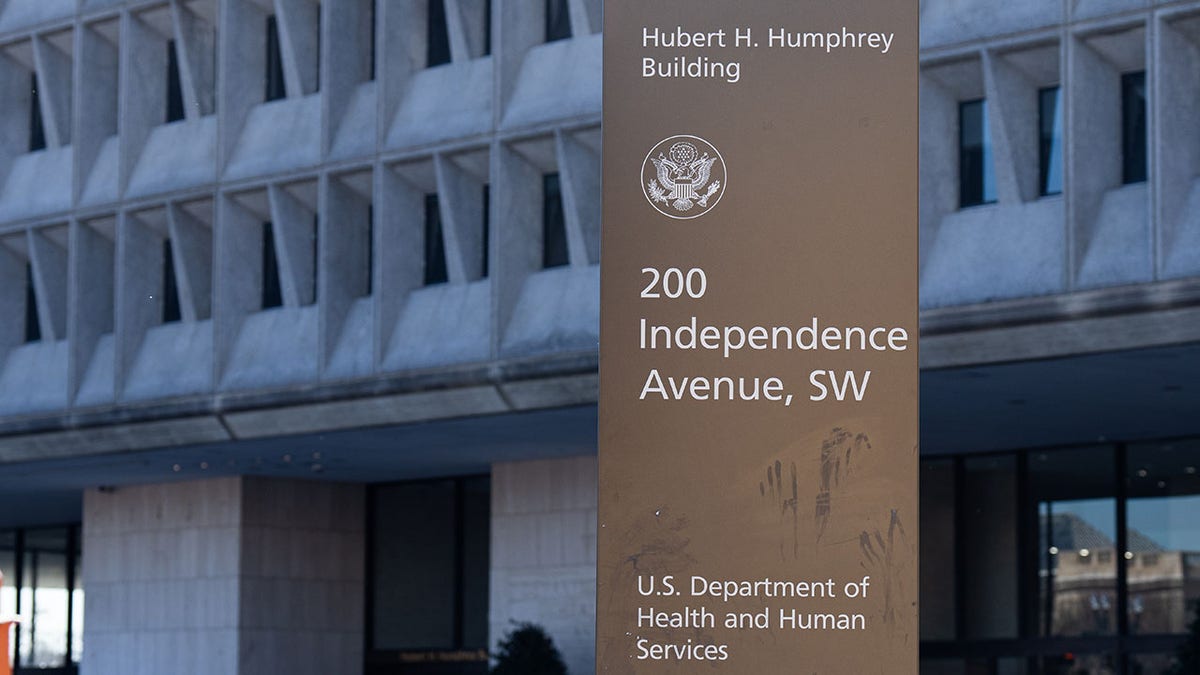
HHS building in DC

U.S. Department of Health and Human Services in the Hubert H. Humphrey Building in Washington on Monday, March 10, 2025.  (Bill Clark/CQ-Roll Call, Inc via Getty Images)

Days later, a federal judge temporarily blocked the Trump administration from halting the funding freeze for at least two weeks. Fox News Digital reached out to HHS for comment. 

That’s not the only alleged fraud scheme the state is facing. Lawmakers have spearheaded investigations into Minnesota’s alleged “Feeding Our Future” $250 million fraud scheme that allegedly targeted a children’s nutrition program the Department of Agriculture funded and that Minnesota oversaw during the COVID-19 pandemic.

CLICK HERE TO DOWNLOAD THE FOX NEWS APP

At least 77 people have been charged in that scheme, which took advantage of the U.S. Department of Agriculture’s decision to waive certain Federal Child Nutrition Program requirements.

Likewise, another alleged fraud scheme in the state stems from the Housing Stability Services Program, which allegedly offered Medicaid coverage for housing stabilization services in an attempt to help those with disabilities, mental illnesses and substance-use disorders receive housing.


Source link

Coinbase confirms insider breach linked to leaked support tool screenshots

0

Coinbase

Coinbase has confirmed an insider breach after a contractor improperly accessed the data of approximately thirty customers, which BleepingComputer has learned is a new incident that occurred in December.

“Last year our security team detected that a single Coinbase contractor improperly accessed customer information, impacting a very small number of users (approximately 30),” a Coinbase spokesperson told BleepingComputer.

“The individual no longer performs services for Coinbase. Impacted users we notified last year and were provided with identity theft protection services and other guidance. We have also disclosed this incident to the relevant regulators, as is standard practice.”

Wiz

BleepingComputer has learned that this is a newly revealed insider breach and is not related to the previously disclosed TaskUs insider breach in January 2025.

This statement comes after threat actors known as “Scattered Lapsus Hunters” (SLH) briefly posted screenshots of an internal Coinbase support interface on Telegram and then deleted the posts soon after.

The screenshots showed a support panel that gave access to customer information, including email addresses, names, date of birth, phone numbers, KYC information, cryptocurrency wallet balances, and transactions.

It is not uncommon for screenshots and stolen data to be passed around among different threat actors before being leaked or disclosed, so it is unclear whether this group was behind the insider breach or whether other threat actors carried it out. 

However, the same threat actors previously claimed to have bribed an insider at CrowdStrike to share screenshots of internal applications.

BPOs under attack

Over the past few years, Business Process Outsourcing (BPO) companies have become increasingly targeted by threat actors seeking access to customer data, internal tools, or corporate networks.

A Business Process Outsourcing (BPO) company is a third-party firm that performs operational tasks for another organization. These tasks commonly include customer support, identity verification, IT help desk services, and account management.

Because BPO employees often have access to sensitive internal systems and customer information, they have become a high-value target for attackers.

In the past year, threat actors have exploited BPOs through bribing insiders with legitimate access, social engineering support staff to grant unauthorized access, and compromising BPO employee accounts to reach internal systems.

As we have seen with Coinbase this year, one way BPOs are targeted is by bribing their employees to steal or share customer information.

Coinbase disclosed a similar data breach last year, later linked to external customer support representatives employed by TaskUs, an outsourcing firm that provides services to the crypto exchange.

Another common tactic is social engineering attacks against outsourced IT and support desks, where threat actors impersonate employees and call BPO help lines to obtain access to internal corporate systems.

In one of the most prominent cases, attackers posed as an employee and convinced a Cognizant help desk support agent to grant them access to a Clorox employee account, allowing them to breach the company’s network. The incident later became the focus of a $380 million lawsuit by Clorox against Cognizant.

Google also reported that threat actors targeted U.S. insurance firms in social engineering attacks on outsourced help desks to gain access to internal systems.

Retailers also confirmed that social engineering attacks against support personnel enabled ransomware and data theft attacks.

Marks & Spencer confirmed attackers used social engineering to breach its networks, while Co-op disclosed data theft following a ransomware attack that similarly abused support staff access.

In response to the attacks on M&S and Co-op retail companies, the U.K. government issued guidance on social engineering attacks against help desks and BPOs.

In some cases, hackers target the BPO employee accounts themselves to gain access to the customer data they manage.

In October, Discord disclosed a data breach that allegedly exposed data from 5.5 million unique users after its Zendesk support system instance was compromised.

While the company did not confirm how its instance was breached, the threat actors told BleepingComputer that they used a compromised account belonging to a support agent employed by an outsourced business process outsourcing (BPO) provider. Using this account, they downloaded Discord’s customer data.

This repeated abuse of outsourced support providers shows how threat actors are increasingly bypassing vulnerability exploits and instead targeting third-party companies with access to corporate networks and data.

Modern IT infrastructure moves faster than manual workflows can handle.

In this new Tines guide, learn how your team can reduce hidden manual delays, improve reliability through automated response, and build and scale intelligent workflows on top of tools you already use.


Source link

Some in Israel question its influence over US as Iran war decision nears | Israel-Iran conflict News

0

As the prospect of a conflict between the United States and Iran looms, analysts within Israel have questioned the country’s capacity to determine the outcome of a confrontation in a region that, just months ago, it had regarded itself as on the brink of dominating.

“The [Israeli] opposition are accusing [Israeli Prime Minister Benjamin] Netanyahu of giving in to [US President Donald] Trump and ending the war on Gaza too soon,” said Israeli political analyst Ori Goldberg. “[Israel is] being hounded out of Lebanon, [its] freedom to operate within Syria has been halted. All that’s left to [Israel] is the freedom to kill Palestinians, and with Qatar, Turkiye and Egypt now being involved in Gaza, over Israel’s objection, it won’t be allowed to do that for much longer.”

Recommended Stories

list of 4 itemsend of list

While senior Israeli figures including Netanyahu are liaising directly with the Trump administration over a possible attack on Iran, analysts say it is increasingly clear that Israel’s ability to shape regional developments is diminished.

After two years of genocide in Gaza, where Israel has killed more than 71,800 Palestinians, the US now appears to have taken the lead and has overruled Israel when it objected to the admission of Turkiye and Qatar to the board that will oversee the administration of Gaza.

In Syria, Israeli ambitions to hobble the new government of President Ahmed al-Sharaa also appear to have fallen foul of Trump’s White House, which is actively pushing the Netanyahu government to reach an accommodation with Damascus. In Lebanon, too, the US continues to play a defining role in determining Israeli actions, with any possible confrontation between Hezbollah and Israel said to be dependent upon Washington’s green light.

What influence Israel could wield over US action in Iran, according to many, is uncertain, even to the point that Washington could enter negotiations with no regard for Israeli concerns.

“There’s a worry that Donald Trump will not strike in Iran, which will continue to endanger Israel, and instead negotiate a conclusion that’s good for him as a peacemaker and leave the regime in place,” Netanyahu’s former aide from the early 90s and political pollster, Mitchell Barak, told Al Jazeera from West Jerusalem. “He’s transactional. That’s what he does. It’ll be like Gaza. Israel will secure their ultimate victory, then lose control to the US, whose interests – under Trump – don’t always align with ours.”

‘Big Bad Wolf’

While analysts’ expectations that Netanyahu could influence Trump’s actions in Iran may be limited, their sense that a fresh war would buy the Israeli prime minister relief from his current difficulties seems universal.

“Iran is Israel’s ‘Big Bad Wolf’,” Chatham House’s Yossi Mekelberg said of the geopolitical opponent that many in Israel believe exists only to ensure Israel’s destruction.

Mekelberg added that a war with Iran would serve as a useful distraction from Netanyahu’s domestic troubles, such as an inquiry into government failures related to the October 7, 2023 Hamas attack on Israel, his attempt to weaken the oversight powers of the judiciary, and his ongoing corruption trials.

“There’s a saying in Hebrew: ‘the righteous have their work done by others.’ I’m not for a moment saying that Netanyahu is righteous, but I’m sure he’s keen on having his work done by others,” Mekelberg said.

War fears

How much public appetite there may be for a confrontation with Iran is unclear.

Israel was able to heavily damage Iran during the conflict it started in June last year. But Iran was also able to repeatedly pierce Israel’s defences, making it clear that the Israeli public is not safe from the wars its state pursues in the region.

The threat – rather than the reality – of a confrontation with Iran also serves the prime minister’s ends, Goldberg noted. “Netanyahu has no need for a war. He doesn’t really need to do anything other than survive, which he’s proven adept at,” the analyst said, referring to the absence of any credible political rival, as well as the risk that an actual war may highlight Israel’s diplomatic weakness in its dealings with the US.

“There’s this joke phrase that became popular with those resisting Netanyahu’s judicial reform: ‘This time he’s done’,” Goldberg said. “Netanyahu’s never done. He committed a genocide, and all people in Israel can object to is the management of it. He’s currently losing military and diplomatic influence across the region, and few are noticing. I can’t imagine that this will be ‘it’ either.”


Source link