Reference #18.2d4adc17.1778578457.b13b1bd
https://errors.edgesuite.net/18.2d4adc17.1778578457.b13b1bd
Reference #18.2d4adc17.1778578457.b13b1bd
https://errors.edgesuite.net/18.2d4adc17.1778578457.b13b1bd
Reference #18.2d4adc17.1778584018.b1f4551
https://errors.edgesuite.net/18.2d4adc17.1778584018.b1f4551
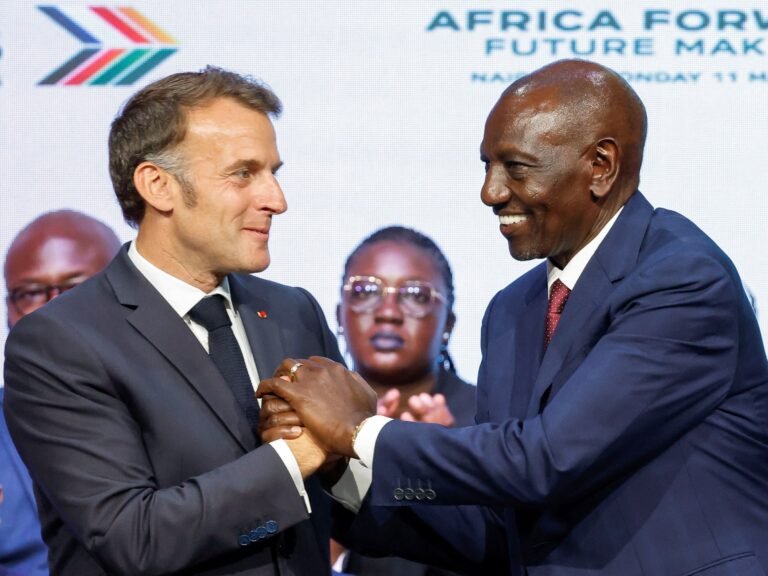
The Africa Forward summit comes amid France’s fading ties with its former African colonies, as Kenya seeks greater trade.
Published On 12 May 2026
French President Emmanuel Macron has announced 23 billion euros ($27bn) of investment during the Africa Forward summit in Kenya.
Macron said on Monday that Africa and France had a “partnership of equals” with common objectives, as he announced 14 billion euros ($16.4bn) of investments in private and public funds from French companies, and 9 billion euros ($10.5bn) from African ones, on energy transition, agriculture and artificial intelligence (AI).
These investments would create 250,000 jobs in France and Africa, Macron said at the two-day summit – France’s first in an English-speaking African country – which started on Monday.
“We are not simply here to come and invest on the African continent alongside you – we need great African business leaders to come and invest in France,” he told the heads of state and leaders of more than 30 African nations, including Francophone countries, at Nairobi’s convention centre.
“And that too is what underpins this relationship, now entirely free of hang-ups,” Macron said.
The summit is seen as an attempt by France to strengthen its ties with English-speaking African countries amid waning ties with its former colonies on the continent.
Africa’s richest man, Nigerian industrialist Aliko Dangote, was in attendance, as were executives from leading French firms TotalEnergies and Orange.
The French shipping group CMA CGM committed an investment of 700 million euros ($8.2m) to modernise a terminal at the Kenyan port of Mombasa.
Many have observed that the summit comes as France’s influence in Africa has faded, with French forces recently forced to withdraw from former colonies. Macron aims to renew France’s engagement with the African continent, which he said he views as a “whole”, while positioning Europe as a more reliable trade partner than China or the United States.
In advance of the summit, Macron told Paris-based magazine The Africa Report that colonialism could no longer be blamed for all of Africa’s challenges. “We must not exonerate from all responsibility the seven decades that followed independence,” he said, calling on African leaders to improve governance.
Speaking at the summit, Macron also said the process of returning African artworks looted during the colonial era had become “unstoppable”. The French parliament last week passed a law paving the way for the government to return looted African cultural artefacts.
At a time when many African nations, particularly in the Sahel region, are reducing or expelling foreign military forces, Kenya is hosting a growing international military presence. A month before the summit, about 800 French soldiers arrived in Kenya on a navy ship.
Kenyan President William Ruto praised his relationship with France, saying, “We should no longer think in terms of aid and loans, but rather in terms of investment and what Africa has to offer.”
Networks
Satellite service supports troops and Ukraine, but payments may raise eyebrows after boss’s political broadsides
Britain’s Ministry of Defence (MoD) has clocked up a £16.6 million ($22.6 million) bill with Starlink over the past four years, despite SpaceX CEO Elon Musk expressing a desire to overthrow the UK government.
Data released by the MoD shows that Britain has continued to pay for access to the spaceborne data network, primarily to help support the Ukrainian military in its ongoing battle against the Russian invasion.
Not all of the expenditure is accounted for by Ukraine, however. Some goes toward providing British military personnel serving overseas with a vital link home.
According to Business Matters, upward of 50,000 Starlink terminals have been sent to Ukraine since the start of the war in 2022. Initially, the cost of helping that nation’s frontline communications was borne by Starlink itself, with some grumbling from Musk, who controls the company’s parent business, SpaceX.
However, a year later the satellite operator clinched an official US government contract covering the Starlink service for Ukraine, which we understand is still funded by the Department of Defense (DoD), although President Trump has not sought congressional approval for any new funding for US military assistance to Ukraine since returning to office.
The UK appears to be footing part of the Starlink bill. The MoD acknowledged the figure, with some spending understood to cover terminals gifted to Ukraine, including their purchase and airtime.
However, the MoD seems keen to emphasize that Starlink is not being used for any kind of military purposes by British forces.
“Starlink technology is not used for military operations and is primarily used by our hardworking personnel to stay connected with their loved ones when they’re in areas without regular internet access, for example on a warship,” a spokesperson told The Register.
“As the public would rightly expect, all spending is rigorously checked to ensure it delivers value for taxpayers’ money and spend on Starlink has significantly reduced in the last year.”
Ukraine uses Starlink for battlefield communications and remote control of drones.
The sum is modest in relation to the entire UK defense budget, on track to hit £62.2 billion ($85 billion) for FY 2025/26. It is also likely just covering a small part of the Ukrainian service costs, as Starlink was asking for $400 million per year to cover these at one point.
Some Brits may feel uncomfortable paying a man who has openly called for the overthrow of the British government. Earlier this year, Musk publicly mused whether the US should “liberate the people of Britain from their tyrannical government.” No, it wasn’t on April 1. ®

One killed and four others wounded in attacks on Ukraine’s Dnipropetrovsk region, local administration chief says.
Published On 12 May 2026
Russia and Ukraine have resumed air attacks after a United States-brokered three-day truce expired, with President Volodymyr Zelenskyy saying more than 200 drones were used to attack Ukraine overnight.
Russian aerial attacks across Ukraine’s Dnipropetrovsk region on Tuesday morning killed at least one person and injured four others, according to regional administration chief Oleksandr Ganzha.
Russian drones also hit energy infrastructure in Ukraine’s Mykolaiv region, causing outages, and struck residential buildings and a kindergarten in the Kyiv region, according to local authorities. Russia also carried out attacks on the regions of Kharkiv, Zhytomyr, Sumy and Chernihiv, according to authorities.
More than 200 long-range drones were used in the wave of attacks, Zelenskyy said. “Russia itself chose to end the partial silence that had lasted for several days,” he said in a post on X.
Russia’s military, meanwhile, said its defences downed 27 Ukrainian drones over the regions of Belgorod, Voronezh and Rostov.
The exchange of aerial attacks came after the expiry of a 72-hour truce announced by US President Donald Trump on Friday, which he said he hoped would mark “the beginning of the end” of Russia’s four-year war on Ukraine.
The May 9-11 truce overlapped with Russia’s Victory Day, which celebrates the defeat of Nazi Germany in the second world war.
But even before it expired, both sides accused each other of violating the truce by attacking civilians.
Zelenskyy said Russia was neither observing the truce nor “even particularly trying to”, adding there had been no calm in front-line areas despite a lull in large-scale attacks.
Meanwhile, Russia’s Ministry of Defence accused Ukraine of committing more than 1,000 ceasefire violations. It said Ukrainian forces attacked civilian targets in several Russian regions and carried out strikes against Russian military positions on the front line.
Russia’s military had “responded in kind” to the ceasefire violations, according to the Defence Ministry.
US-backed negotiations on ending the Russia-Ukraine war have made little headway and have been largely sidelined by the crisis in the Middle East amid the US-Israel war on Iran. Trump’s ceasefire announcement had raised some hope that US-led talks to end Russia’s invasion could be resumed.
On Saturday, Russian President Vladimir Putin suggested for the first time that the Ukraine war may be “coming to an end” and expressed a willingness to meet Zelenskyy in Moscow or a neutral country once an agreement to end the war is finalised. He also accused the “arrogant” West of risking a global conflict, warning that Russia’s “strategic forces” are combat-ready.
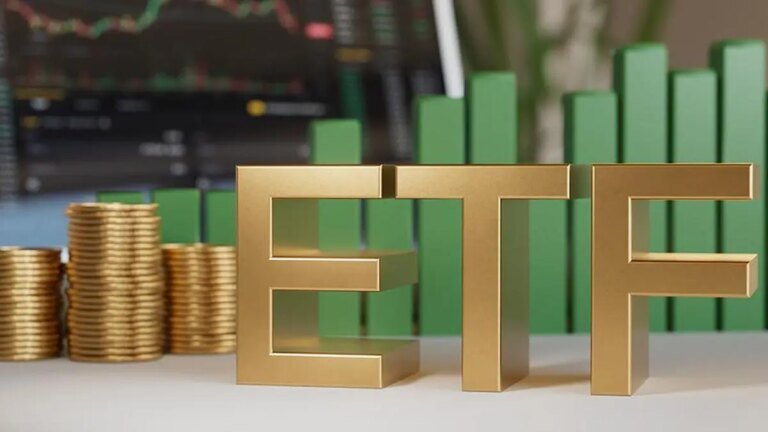
Net holdings in physically-backed gold exchange-traded funds (ETFs) dropped by nearly 80 per cent between the start of the year and May 8, with outflows continuing for the third week in a row, data from the World Gold Council (WGC) showed.
Asian investors are keeping overall investments positive, though more investors continue to exit ETFs. For the week ending May 9, net investments were negative at $629 million, data from the World Gold Council (WGC) showed.
As of May 8, investments in ETFs were $69 billion, while exits were $50.01 billion. This resulted in a net inflow of $18.93 billion. North America led the exits from ETFs, with $1.29 billion in outflows so far. Asians led investments at $16.16 billion, followed by Europe at $3.66 billion.
Country-wise, exits in the US totaled $1.72 billion, while China ($9.23 billion) and India ($3.55 billion) led the funds’ investments. Other countries with positive investments were the UK ($2 billion) and Switzerland ($1.89 billion).
This is in contrast to the ETFs holding at the start of the year. In 2025, net inflows were positive at $88.91 billion, with investments being $167.18 billion and exits $78.27 billion.
In the week ending May 1, investments in ETFs were $2.03 billion, while exits totaled $2.40 billion. Last week, inflows were $1.18 billion, and $1.43 billion were taken out of ETFs.
India and Italy led the inflow into ETFs in the week ending May 1 at $292.4 million, followed by Italy at $129.3 million, the UK 98.8 million and Singapore at $15.7 million.
During the week, outflows were the highest from the US at $780.4 million, followed by China at $130.5 million.
Last week’s details of ETF investments by Indians were not available, but Chinese investors added $241.1 million to the inflows. Investors in the UK ($95 million), Canada ($80.3 million), Germany ($48 million), and Ireland ($24.8 million), as well as Singapore and Hong Kong, returned to invest in ETFs last week.
In the US, the exits were over $550 million, followed by Switzerland ($108 million) and France ($100 million).
Investors have been exiting ETFs after gold prices tumbled following the outbreak of the Iran war on February 28. The yellow metal prices had soared to a record high of $5,608 an ounce on January 29 before its southward journey began.
Currently, gold is quoting at $4,700 an ounce. The precious metal has shelved its gains on fears of a hike in US Fed interest rates, inflation, slowing economic growth and investors switching to crude oil futures from gold.
The yellow metal surged as the US Fed cut interest rates, with the geopolitical crisis and US trade war with other countries adding further momentum.
Besides more exits from ETFs, central banks have also turned sellers of gold. WGC data showed that they were net sellers in March.
Published on May 12, 2026
Reference #18.6e560e17.1778575633.d8fa6f9
https://errors.edgesuite.net/18.6e560e17.1778575633.d8fa6f9
Miatta Fahnbulleh has become the first minister to resign from Keir Starmer’s government, calling on the prime minister to quit.
The communities minister’s resignation came as one of Starmer’s closest aides declined to say whether he would lead Labour into the next election amid mounting calls for him to resign.
Darren Jones, a close ally of Starmer, said the prime minister was “listening to colleagues” who were asking him to set out a timetable for departure but would make his own decisions about the way forward, the prime minister’s chief secretary said on Tuesday.
He warned the prime minister’s rivals that it was a “gruelling” job. “Anybody who thinks that they can just walk into the job of prime minister and, like the second coming of the messiah, fix all of our problems probably hasn’t really thought carefully enough about how difficult it is,” he said.
Fahnbulleh, who is close to the energy secretary, Ed Miliband, said she would “urge the prime minister to do the right thing for the country and the party and set a timetable for an orderly transition”. The MP for Peckham said the message on the doorsteps at local elections was that the prime minister had “lost the trust and the confidence of the public”.
More than 70 Labour MPs have publicly called for Starmer to stand down after dire election results across England, Wales and Scotland last week.
Asked if Starmer would be leading Labour into the next election, Jones said: “I’m not going to get ahead of any decision that the prime minister may or may not take.
“He was very clear yesterday that he will not be walking away, as some of my colleagues have asked him to do. We’ve got over 400 Labour MPs in the House of Commons. I think there are now 70 who have raised concerns publicly.”
The Guardian understands that four senior cabinet ministers – Shabana Mahmood, the home secretary, Yvette Cooper, the foreign secretary, John Healey, the defence secretary, and the deputy prime minister, David Lammy – were among those who spoke to Starmer on Monday.
Some told the prime minister he should oversee an orderly transition of power after crushing election defeats risked ringing the death knell on his premiership.
Others discussed with Starmer how they should take a “responsible, dignified, orderly” approach to what may follow. Several others, including Richard Hermer and Steve Reed, urged him to fight on.
Jones told Times Radio that most MPs wanted to focus on using the time in government to deliver Labour’s policies. “We have to work together then as a party in this new political era of five-party politics, of the rise of populist parties in our country, to be able to set the course for winning that next election.”
Asked if the king’s speech would still happen on Wednesday, he told Sky News: “Yes, as far as I’m aware, the king’s speech is going ahead tomorrow.
“We’ve been working very hard to bring together a programme of bills for the next session that meet the challenges that we face as a country and it’s important that we get on with that work.”
The cabinet would meet later on Tuesday morning, Jones said. “[Starmer] obviously will be in conversations with colleagues because of the issues that they have raised, but he was very clear with himself and with all of us that this morning we would be getting on with the job, and I think that’s the right thing to be doing.”
He continued: “Obviously, colleagues are asking the prime minister to consider different options in the future. And, as I say, he rightfully is listening to them. It would be wrong if he wasn’t listening to them.”
In a speech on Monday, Starmer said he would not resign and would prove his doubters wrong, and that he would fight any leadership challenge.
“I take responsibility for not walking away, not plunging our country into chaos, as the Tories did time and again, chaos that did lasting damage to this country. A Labour government would never be forgiven for inflicting that on our country again,” he said.
Overnight, some Labour MPs began to voice public support for the prime minister. One, Neil Coyle, said he was “horrified at the elephant trap colleagues are falling into. Those who claimed council elections were about Keir had nothing to offer local communities.”
Another, Nick Smith, said. “A global security crisis and its economic impact on our country means we need political stability. Unity is strength.”
Reference #18.6e560e17.1778575336.d8e848f
https://errors.edgesuite.net/18.6e560e17.1778575336.d8e848f
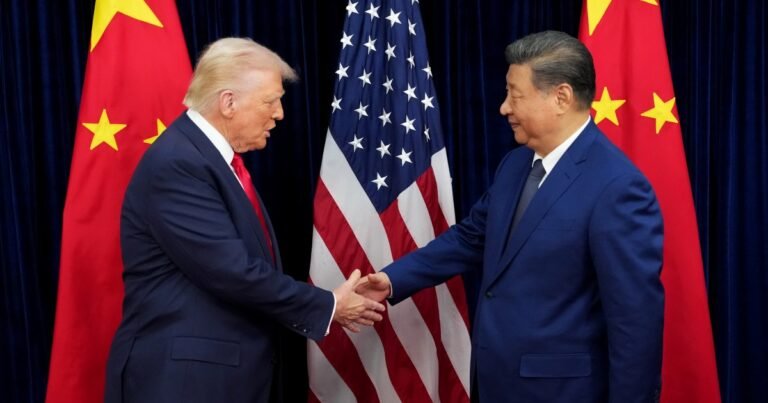
United States President Donald Trump’s visit to China this week will mark his seventh face-to-face meeting with Chinese President Xi Jinping.
The visit will also be the first trip by a US leader to China since 2017.
Trump and Xi’s three-day summit, which kicks off on Wednesday, is expected to focus on the US-Israel war on Iran, trade, and the status of Taiwan, among other issues.
Here’s a rundown of the past meetings between the leaders of the world’s two most powerful nations:
The two first met at Trump’s private Mar-a-Lago resort on April 6, 2017, just a few months into his first term.
At the time of their meeting, Trump was coming off a presidential campaign that had heavily criticised China’s trade practices and their impact on the US economy.
Trump had also angered China by accepting a congratulatory phone call from then-Taiwanese President Tsai Ing-wen, breaking decades of diplomatic precedent set in 1979 when Washington cut off relations with Taipei.
During their Mar-a-Lago meeting, Trump appeared to build a personal rapport with Xi and said the two sides had made “tremendous progress” towards improving US-China relations.
The summit was largely overshadowed, however, by Trump’s decision to launch airstrikes on Syria, then led by Beijing-backed Bashar al-Assad, during Xi’s visit.
Xi and Trump met on the sidelines of the G20 summit on July 8, 2017, beginning a pattern of engagement that would see the leaders repeatedly cross paths at major international gatherings.
Their meeting focused heavily on North Korea’s nuclear programme and economic ties.
A month later, the Trump Administration fired its first shot in the US-China trade war by launching an investigation into alleged theft of US intellectual property.
By invoking Section 301 of the Trade Act of 1974, the White House would lay the groundwork to impose punitive tariffs on China.

Trump landed in China on November 8, 2017 for a three-day visit, joined by a delegation of American CEOs and business leaders.
Trump’s itinerary included watching a Peking opera with Xi and his wife, visits to the Forbidden City and Palace Museum, a formal reception at the Great Hall of the People, a state banquet, and, finally, a private meeting with the Chinese leader.
Trump left China touting $250m in “business deals” spanning energy, agriculture, and technology, although some of the agreements were tentative or covered projects already under way.
The summit’s positive tone did not stop Trump from imposing tariffs on China a few months later.
Trump and Xi held a dinner on December 1, 2018, on the sidelines of the G20 summit.
Months earlier, the Trump administration had imposed tariffs on $250bn worth of Chinese goods and banned US government agencies from using Chinese firms Huawei and ZTE, prompting Beijing to hit back with tariffs on $110bn worth of US goods.
Despite the tensions, the White House hailed the meeting as “highly successful”, and the sides agreed to begin negotiations on outstanding issues, including intellectual property protection and cybertheft.
Trump and Xi came face-to-face at the G20 summit on June 29, 2019.
During their talks, the leaders agreed to a host of measures to de-escalate their rivalry, including a halt to new US tariffs, more open-ended trade negotiations, an easing of restrictions on Huawei, and a Chinese commitment to buy more US agricultural exports.
The US and China would months later sign a “phase one” trade deal, under which Washington agreed to roll back a number of tariffs and Beijing pledged to buy $200bn worth of US goods and services.
China ultimately did not meet its purchase commitments during the required timeframe, which overlapped with the collapse of global trade due to the COVID-19 pandemic.

Trump and Xi held their first meeting in six years on the sidelines of the 2025 APEC summit on October 30, 2025.
The leaders met to extend a truce in a spiralling tariff war that briefly saw the US and China impose duties of 145 percent and 125 percent, respectively.
Despite the trade truce, the Trump administration imposed sector-specific tariffs on China and restrictions on Chinese technology exports in the run-up to the summit, while Beijing tightened export controls on rare earth minerals.
After their talks, Trump and Xi announced a one-year pause in their trade war.
Among other measures, the US eased its tariffs, while China agreed to drop some of its export restrictions on rare earths and resume purchases of US agricultural exports.
