Reference #18.84adc17.1778573593.191553a1
https://errors.edgesuite.net/18.84adc17.1778573593.191553a1
Reference #18.84adc17.1778573593.191553a1
https://errors.edgesuite.net/18.84adc17.1778573593.191553a1
A man walks past the JSW Steel stall at the India Steel 2025 Conference in Mumbai, India, April 25, 2025. Reuters/Francis Mascarenhas | Photo Credit: FRANCIS MASCARENHAS
JSW Steel reported consolidated crude steel production of 21.18 lakh tonnes for April 2026, down 1 per cent from 21.40 lakh tonnes in the same month last year, according to a regulatory filing submitted to stock exchanges on Tuesday.
Indian operations contributed 20.40 lakh tonnes, a marginal 1 per cent decline year-on-year, while the company’s US facility in Ohio produced 0.78 lakh tonnes, down 7 per cent from 0.84 lakh tonnes in April 2025.
The primary drag on domestic output was a planned shutdown of Blast Furnace 3 (BF3) at the company’s Vijayanagar plant in Karnataka for capacity upgradation. Excluding BF3 from the prior-year base, production growth was approximately 10 per cent, driven by the full ramp-up of JVML operations. Capacity utilization at Indian operations stood at around 94 per cent excluding BF3, but fell to 83 per cent when BF3 capacity was included.
The year-ago figures have been restated following the transfer of the steel business of Bhushan Power and Steel Limited (BPSL) to JSW-JFE Steel Limited, a joint venture, on a slump-sale basis in March 2026.
JSW Steel shares were trading at ₹1,250.60 on the NSE at 12.50 PM on Tuesday, down 0.95 per cent from the previous close of ₹1,262.60, giving the company a market capitalization of approximately ₹3.06 lakh crore. The stock has outperformed the broader market significantly, returning 24 per cent over the past year against a 5.6 per cent decline in the Nifty 50 over the same period.
JSW Steel has a consolidated crude steel capacity of 35.7 MTPA and has outlined plans to expand this to 48.9 MTPA over the next four years.
Published on May 12, 2026

A gunman has been arrested in Cambridge, Massachusetts after opening fire at passing cars on a busy street near Harvard University, injuring two people. Local authorities have named the suspect as 46-year-old Tyler Brown from Boston.
Published On 12 May 2026
Reference #18.f3680117.1778572704.81995
https://errors.edgesuite.net/18.f3680117.1778572704.81995
Reference #18.490dde17.1778582331.3648f698
https://errors.edgesuite.net/18.490dde17.1778582331.3648f698


American educational technology company Instructure, the parent company of Canvas, said it reached an “agreement” with a decentralized cybercrime extortion group after it breached its network and threatened to leak stolen information from thousands of schools and universities.
In an update shared on Monday, the Utah-based firm said it “reached an agreement with the unauthorized actor involved in this incident,” citing “concerns about the potential publication of data.”
In taking the controversial decision to pay a ransom to avoid a leak, the company said the agreement covers all its impacted customers and that the pilfered data was returned to it, along with digital confirmation of data destruction. It also said it has been informed that none of the company’s customers will be separately extorted as a result of the hack.
“While there is never complete certainty when dealing with cyber criminals, we believe it was important to take every step within our control to give customers additional peace of mind, to the extent possible,” Instructure said.
It also said it’s working with expert vendors to support its forensic analysis, improve its cybersecurity posture, and conduct a comprehensive review of the data involved.
The disclosure comes as the ShinyHunters extortion crew waged a digital attack against Canvas, a popular web-based learning management system, late last month, resulting in the theft of 3.65TB of data. The incident impacted nearly 9,000 organizations.
Although the breach was assumed to be initially contained, a second wave of unauthorized activity tied to the same incident was detected on May 7, 2026, defacing the Canvas login portals with extortion messages at roughly 330 institutions and giving Instructure a deadline of May 12, 2026, to negotiate a ransom or risk a data leak.
The attackers are said to have weaponized an unspecified vulnerability “regarding support tickets” in its Free-for-Teacher environment to obtain initial access and siphon about 275 million records containing usernames, email addresses, course names, enrollment information, and messages. Instructure has emphasized that course content, submissions, and credentials were not compromised.
In the wake of the breach, Instructure has temporarily shut down Free-For-Teacher accounts. The company did not disclose the nature of the vulnerability, but said it revoked privileged credentials and access tokens for affected systems, rotated internal keys, restricted token creation pathways, and deployed additional security controls.
“The exfiltrated data provides threat actors enough personal context to conduct targeted phishing campaigns against staff, students, and parents alike,” Halcyon said.
“Leaked records can be used to impersonate school administrators, IT support, or financial aid offices in follow-on attacks. Students, parents, and personnel at affected institutions should be considered, and institutions should issue phishing advisories and direct communications immediately.”
A 45-year-old man has been charged with arson with intent to endanger life after reports of a fire at a former synagogue in east London.
Moses Edwards, from Wanstead, will appear at Westminster magistrates court on Tuesday after the alleged arson attack on the building in Nelson Street, Whitechapel, on 5 May.
Police said minor damage was caused to the gates and a lock at the front of the building shortly after 5am and no one was hurt.
The building is in the process of being sold to a Muslim organisation that plans to turn it into a mosque and community centre.
The incident was one of a series of separate alleged arson attacks at Jewish sites in London in the past two months.
A 52-year-old woman who was also arrested as part of the investigation has been released on bail to a date in August.


Reference #18.c5d07868.1778572397.490478c0
https://errors.edgesuite.net/18.c5d07868.1778572397.490478c0
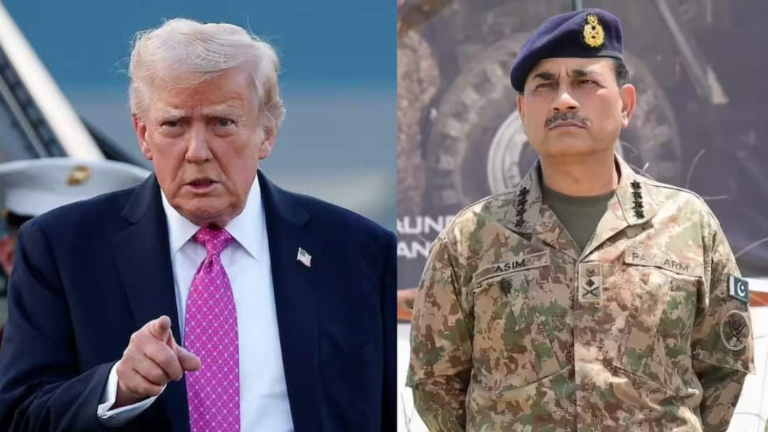
A shocking American report has come out amidst the ceasefire between America and Iran, in which questions are being raised on the role of Pakistan. According to the report, on one hand Pakistan is pretending to be a mediator, while on the other hand it has given a place to Iran’s military planes to hide at its airbase to protect them from a possible attack by the US. Amidst the uproar over the report, Pakistan’s Foreign Ministry’s reaction has come to light.
What is the claim in the report?
CBS News quoted American officials as saying that after the ceasefire, Iran had sent its planes to ‘Noor Khan Airbase’ in Rawalpindi, Pakistan. These aircraft especially included ‘RC-130’, which is used for intelligence gathering and surveillance. It is being said that to protect against possible US attacks, Tehran had sent its planes to Noor Khan Airbase in Pakistan.
Pakistan rejected the claim
Pakistan’s official reaction has come to the fore on CBS’s report regarding Iranian planes in Pakistan. Pakistan Foreign Ministry, in a post on Twitter, rejected the CBS News report on the presence of Iranian aircraft at Noor Khan airbase, calling it misleading and sensational.
What did Pak Foreign Ministry say?
In the statement issued by the ministry, it was said that such speculations are being done with the aim of weakening the ongoing efforts for regional stability and peace. The statement said that during the first round of peace talks held in Islamabad after the ceasefire, many aircraft of Iran and America reached Pakistan, some of these aircraft and support personnel stayed temporarily in Pakistan waiting for the next round of talks, but talks could not be resumed at the high level.
The ministry further said that the Iranian aircraft currently stationed in Pakistan had arrived during the ceasefire period, it has nothing to do with providing any protection. Any further claims are speculative, misleading and completely out of touch with reality. Further said that Pakistan has played the role of a fair and responsible mediator to reduce the tension in talks and has maintained transparency and communication with all parties.
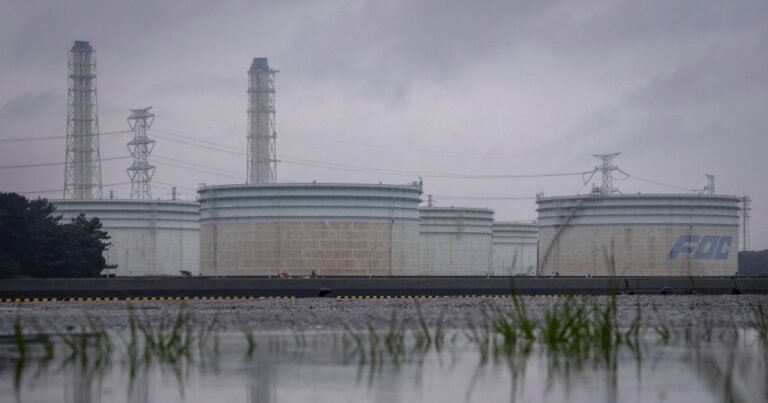
As the blockade of the Strait of Hormuz drives the worst energy crunch in modern history, leading governments to scramble to unload their emergency oil stockpiles, developing countries are among the least prepared to mitigate the shock.
Although surging fuel prices due to the fallout of the US-Israel war on Iran have impacted most of the world, import-reliant poorer countries are among the worst affected and the most lacking in energy reserves to cushion the blow.
The International Energy Agency (IEA), the Paris-based body tasked with ensuring the global oil supply, is comprised exclusively of the industrialised countries that are part of the Organisation for Economic Co-operation and Development (OECD).
Established in 1974, when developed Western countries accounted for the bulk of global oil consumption, the IEA’s 32 member countries represent only about 16 percent of the world’s population.
While the agency’s coordinated release of 400 million barrels of emergency reserves in March was aimed at easing prices globally – theoretically benefitting all countries – the move highlighted the lack of stockpiles across much of the Global South.
Apart from the Middle East and Central Asia, the epicentre of the conflict, the Asia Pacific region, where many economies are heavily reliant on imported fuel, is expected to take the biggest economic hit.
In its latest forecast last month, the Asian Development Bank downgraded its 2026 growth outlook for the region’s developing economies to 4.7 percent, down from an earlier estimate of 5.1 percent.

Developing countries are among the “least able to pay the premium” of building up oil stockpiles, making them especially vulnerable to price shocks, said Khalid Waleed, a research fellow at the Sustainable Development Policy Institute in Islamabad, Pakistan.
“Strategic petroleum reserves are expensive to build, fill, finance, rotate, and govern,” Waleed told Al Jazeera.
“For countries facing foreign exchange constraints, debt servicing pressures, food import bills, electricity subsidies, and social protection needs, holding millions of barrels of oil in storage can look like a luxury, even when it is strategically necessary,” Waleed said.
Estimating oil stockpiles across countries is difficult due to patchy data.
IEA member countries are required to maintain oil stocks equivalent to 90 days of their imports as a buffer against price shocks.
As of March, member states held a total of 1.2 billion barrels in public reserves, with a further 600 million barrels held by private industry under government mandates.
While the IEA represents less than one-fifth of the global population, several non-IEA members also hold large stockpiles.
China is estimated to maintain about 1.4 billion barrels of emergency supplies, more than the combined reserves of the US, Japan, the European members of the OECD, and Saudi Arabia, according to the US Energy Information Administration.
Other non-IEA members with substantial stockpiles include India, Saudi Arabia, the United Arab Emirates and Iran.
According to IEA estimates, the 10 countries or blocs with the most reserves account for 70 percent of global stockpiles.
Those 10 – including China, the US, Japan, India and the OECD’s European members – together account for roughly half of the global population.

As the economic influence of countries such as China and India increased in recent years, the IEA’s sway over oil prices diminished, leading to greater risks to global energy security, said Andreas Goldthau, an energy expert at the Willy Brandt School of Public Policy at the University of Erfurt in Germany.
“The smaller the share of OECD nations in global demand, a function of reduced oil intensity at home and demand growth abroad, the smaller the share of the market organised under the IEA, and its joint emergency management mechanisms,” Goldthau told Al Jazeera.
“Put differently, the global oil market faces the growing challenge of an ever-smaller group of nations effectively buffering market swings,” he said.
Though many governments do not release data on their oil stockpiles, Claudio Galimberti, the chief economist at the Houston, Texas-based Rystad Energy, estimates that more than 70 percent of the world’s population lives in countries that lack sufficient buffers.
Countries should aim to maintain reserves for 120-150 days, Galimberti said, more than the IAE’s 90-day requirement, to manage energy price shocks more easily.
“Strategic petroleum reserves are a matter of national security,” he added.
In many parts of developing Asia, where economies are highly reliant on fuel imports, officials’ public statements have made it clear that existing buffers fall well below the IEA standard, leading to energy shortages.
In an interview with Samaa TV late last month, Pakistan’s Federal Minister for Energy Ali Pervaiz Malik said the country only had crude oil reserves to last five to seven days. Meanwhile, officials in Indonesia, Bangladesh and Vietnam have, in recent weeks, provided estimates that their current stacks cover a period of just 23 days to one month.
Neil Crosby, the head of research at Sparta in Singapore, said that many developing countries not only lack the financial means to build up strategic reserves but also suffer technical problems, such as grid failures and inadequate domestic refining capacity.
This means they are ill-equipped to maintain large crude oil stores that could otherwise help keep a lid on fuel prices and, in turn, those of daily necessities, such as food, he said.
While the Global South could mitigate some of the overheads of building up their reserves by partnering with the private sector, governments will also need to reduce their dependence on fossil fuels over the coming years, Crosby said. This would require costly investments in green energy to make the shift.
“Ultimately, the strongest long-term defence is accelerating renewable energy projects to permanently decouple local power generation from the international oil market,” Crosby told Al Jazeera.
Though developing economies could benefit from greater international cooperation on energy, energy crises in these countries are often exacerbated by “anti-free market” policies, said Adi Imsirovic, a veteran oil trader who lectures at the University of Oxford.
“Fossil fuel subsidies, price caps, and controls and the like are the main cause of shortages and waste of precious fuel,” Imsirovic told Al Jazeera.

Some analysts have argued that the fallout of the US-Israel war on Iran makes it evident that new mechanisms to manage the stockpiling and distribution of global energy supplies are needed to ensure more stable prices.
At present, IEA membership is restricted to members of the OECD, ruling out the inclusion of such major economies as China and India – though both are among 13 “association” countries that collaborate with the body on energy-related issues and can participate in most of the agency’s meetings.
Rystad Energy’s Galimberti said the energy crunch is likely to spur developing countries to push for a greater say in the management of global stockpiles.
“It is essential these countries join either the existing IEA or form a new body to defend their national security,” he said.
Rather than creating a rival to the IEA, the Global South could pursue regional agreements on issues such as cross-border electricity trade, emergency energy sharing, and joint financing for strategic infrastructure, said Waleed of the Sustainable Development Policy Institute.
“South Asia, ASEAN, Africa, and small island developing states could all benefit from such arrangements,” he said, referring to the Association for Southeast Asian Nations.
Still, efforts to provide alternatives to the IEA would likely face practical limitations, said Crosby of Sparta.
“In reality, these blocs often struggle with internal alignment, as mixing net-importers and net-exporters creates fundamentally conflicting economic goals during price swings,” Crosby said.
“And what’s more, regional supply-sharing agreements offer limited protection during a synchronised global shortage, as an entire regional bloc may find itself simultaneously without excess product to share,” he added.