Global gold demand crosses 5,000 tonnes in 2025: WGC

0

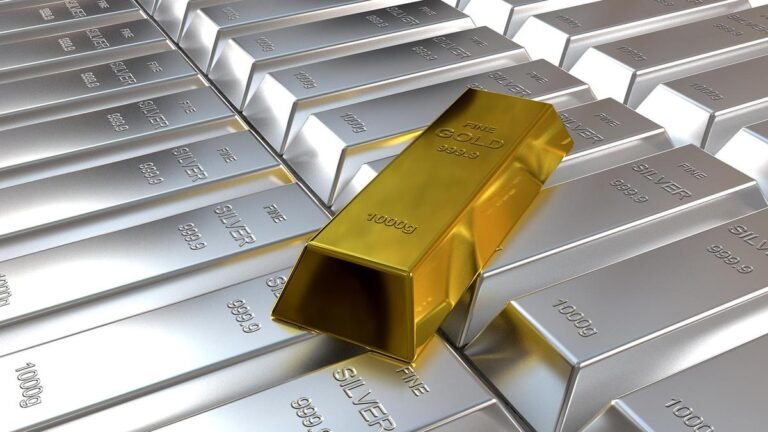
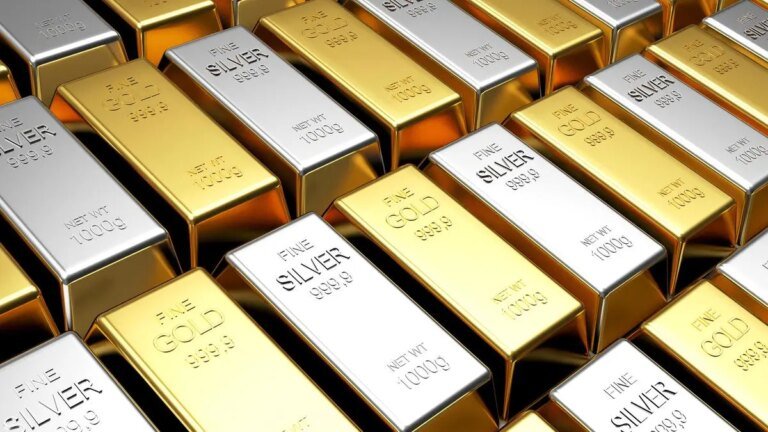
Global demand for gold has crossed 5,000 tonnes to reach a new all-time high in 2025, mainly driven by investments, the World Gold Council (WGC) said in a report on Thursday.

Total gold demand hit a new all-time high of 5,002 tonne in 2025, up from 4,961.9 tonne in the previous year, as the investment demand surged to 2,175.3 tonne compared to 1,185.4 tonne in 2024, driven by safe-haven and diversification factors, according to the WGC’s Full-Year 2025 Gold Demand Trends report.

In the October-December quarter, the consumer demand went up by 2 per cent to 1,345.3 tonnes compared with 1,318.5 tonnes in the corresponding period of the previous year.

The average gold price globally stood at $2,709.7 per ounce in January 2025 on the LMBA (London Bullion Market Association) as compared to $2,034 per ounce in January 2024.

Investment demand, both ETFs and bars and coins, went up by 84 per cent in 2025 to 2,175.3 tonnes from 1,185.4 tonnes in the previous year.

This surge in investment demand was due to safe-haven and diversification factors following elevated geopolitical and geoeconomic risk, US dollar weakness, extended stock valuations and expectations of lower interest rates, especially in the October-December quarter.

Meanwhile, Central bank demand remained elevated in 2025, with the official sector adding 863 tonne of gold, as the buying gained momentum in the fourth quarter (October-December) at 230 tonne.

The National Bank of Poland was the largest buyer for the second consecutive year, adding 102 tonne in 2025, followed by the National Bank of Kazakhstan with 57 tonne, the Central Bank of Brazil with 43 tonne, the State Oil Fund of Azerbaijan with 38 tonne, the Central Bank of Turkey with 27 tonne, the People’s Bank of China with 27 tonne and the Czech National Bank bought 20 tonne in 2025.

While annual demand was below the 1,000 tonne mark surpassed in the previous three years, central bank buying remained a prominent and additive factor in the global gold demand picture, said the WG report.

Amidst a spate of price highs, global jewelery demand softened across the globe as expected throughout the year, declining 18 per cent compared to 2024.

However, the total value of gold jewelery demand increased 18 per cent year-on-year to $172 billion, highlighting the relevance of gold for consumers in the long term.

Total supply also reached a new record, as mine production rose to 3,672 tonnes and recycling increased by a modest 3 per cent, remaining subdued despite high prices.

“The year 2025 saw surging demand for gold and rocketing prices. Consumers and investors alike bought and held gold in an environment where economic and geopolitical risks have become the new normal. Investment demand stole the show as investors raced to access gold through all available routes, but other segments played a supporting role,” WGC Senior Markets Analyst Louise Street said.

Jewelery demand dipped by only 18 per cent year-on-year against a 67 per cent price increase, highlighting continued consumer willingness to buy at elevated prices, while central banks remained firmly committed to bolstering reserves, she said.

“With economic and geopolitical instability showing little sign of retreat in 2026, momentum from last year’s strong gold demand is likely to persist. In the first month of this year, gold has already pushed past $5,000 an ounce for the first time, underscoring gold’s role as a safe haven in uncertain times,” she added.

Published on January 29, 2026

Why Gold explodes past $5,600, silver near $120?

0

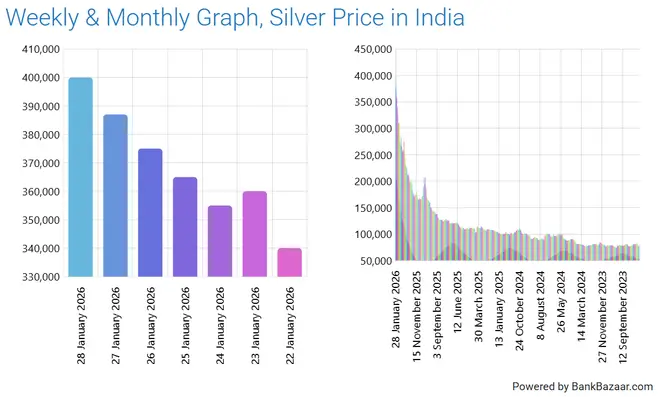
The precious metals rocket ship keeps accelerating into uncharted territory. gold exploded past $5,600 to touch $5,626 on Thursday, smashing through ₹1.80 lakh in India, while silver broke the psychological ₹4 lakh barrier, marking a staggering 30 per cent year-to-date gain for gold and an eye-popping 66 per cent surge for silver. But as silver “screams” past historical norms, some experts are raising yellow flags about what comes next.

“Gold’s surge beyond $5,600 (₹1,80,000) and silver’s breakout above ₹4,00,000/kg reflect a deepening macro and geopolitical risk premium rather than short-term speculation,” explains Renisha Chainani, head of research at Augmont. The trigger? A combustible mix of Middle East tensions, dollar weakness, and Federal Reserve policy that’s essentially locked rates into accommodative mode.

Geopolitical tensions escalated sharply after President Trump urged Iran to return to nuclear negotiations, warning that “any future US military action would be far more severe.” Iran fired back with threats of retaliation against the US, Israel, and their allies, sending shockwaves through global markets and turbocharging safe-haven demand. “This exchange has heightened fears of a broader regional escalation in the Middle East, reinforcing risk-off sentiment,” notes Chainani.

The Fed held rates steady on Wednesday, but Chair Jerome Powell’s acknowledgment of “elevated inflation and an uncertain outlook” while declaring that “rate hikes are not anyone’s base case” has effectively given precious metals a green light. Powell also warned that “the US budget deficit is unsustainable,” adding another layer of fiscal anxiety driving investors into hard assets.

mcx gold has now crossed ₹1,77,000. Ponmudi R, CEO of Enrich Money, sees more upside ahead: “A clear and sustained breakout above the ₹1,80,000 band could quickly open the path toward ₹1,85,000–₹1,90,000, with a psychological extension toward ₹2,00,000 increasingly likely if global momentum sustains.” For silver, he projects targets at “₹4,08,000–₹4,15,000, with scope to extend towards ₹4,17,000–₹4,25,000.”

But here’s where it gets interesting. WhiteOak Capital Mutual Fund just released a report titled “Gold is Talking, Silver is Screaming: A Case for Prudent Repositioning,” warning that silver’s parabolic move “often signals the final, speculative stage of a run.” The Gold-to-Silver ratio has collapsed to approximately 46:1, far below the 10-year average of 80:1. “When it drops below 50:1, silver is no longer cheap,” the report cautions, noting that “in previous cycles, a ratio this low has preceded a mean reversion where silver prices corrected significantly faster relative to gold.”

Ross Maxwell from VT Markets explains the broader dynamic: “Policy uncertainty around growth, trade, and fiscal sustainability tends to pressure the USD increasing volatility expectations. If this environment continues, gold and silver benefit as a softer or range-bound USD would support precious metals.”

The industrial demand story for silver remains robust. “Robust industrial demand, fueled by rapid expansion in AI infrastructure, data centers, solar energy, electric vehicles, and advanced electronics—has emerged as a key support,” says Ponmudi. He adds that “momentum-driven participation, including FOMO (Fear of Missing Out)-led buying during technical breakouts, has amplified upside moves.”

Rahul Kalantri of Mehta Equities notes that “gold prices have surged more than 10 per cent over the last four sessions” with “investors increasingly shifting away from paper currencies and moving toward tangible assets.” Additional support has come from central bank buying and crypto major Tether’s plans to invest 10-15 per cent in physical gold.

Chainani’s technical view shows “gold sustaining above $5600 (₹1,87,000) opens the door to $5800–6000” while silver’s “decisive move above $118 (₹4,05,000) targets $125–130 (₹4,30,000–4,50,000).”

WhiteOak’s contrarian take suggests investors should “harvest the scream” by taking profits on silver first and rotating gains into diversified Indian equities, which offer better long-term returns and tax advantages. But for now, the precious metals party rages on, fueled by geopolitical chaos, fiscal fears, and a weakening dollar that shows no signs of stabilizing.

Published on January 29, 2026

Gold demand to fall in 2026 as jewelery slump offsets investment rise

0

India’s gold demand is likely to fall in 2026 following a drop of 11 per cent last year, as a surge in prices dampens jewelery sales and offsets an uptick in investment buying, the World Gold Council (WGC) said on Thursday.

Demand for gold could stand between 600 metric tons and 700 metric tons, compared to 710.9 tons last year, which was the lowest in five years, Sachin Jain, chief executive of the WGC’s Indian operations, told Reuters.

Jewelery buyers prefer stable prices of gold, but the volatile rising prices of recent months have far outstripped consumer budgets, ⁠Jain said.

“Inflow into exchange-traded funds (ETFs) will continue to grow,” he said. “The stock market hasn’t performed very well in 2025, so investors are looking for better returns from ⁠gold.”

Inflows into gold ETFs jumped 283 per cent in 2025 from a year earlier to a record 429.6 billion rupees ($4.67 billion).

Domestic gold prices surged 76.5 per cent in 2025, while India’s benchmark Nifty 50 has risen 10.5 per cent in 2025.

Jewelery demand in 2025 fell 24 per cent from a year earlier to 430.5 metric tons, its lowest in nearly three decades except for 2020, when the COVID-19 pandemic distorted figures, the WGC said in a report published on Thursday.

By contrast, investment demand rose 17 per cent in 2025 to 280.4 tons, its highest since 2013, the WGC said. Investment demand accounted for a record roughly 40 percent of India’s total gold consumption in 2025, up from a usual share of about a quarter.

“Equities may stay subdued and less attractive amid high valuations, tariffs, and foreign outflows,” ⁠the WGC said. “A gradual shift from jewelery to pure investment demand should continue to support bars and coins.”

Higher gold prices have historically spurred Indians to sell jewelry ⁠and coins, in a category called scrap supplies.

In 2025, however, such scrap supplies fell 19 per cent from a year earlier to 92.7 tonnes, as expectations of further price gains persisted despite bullion hitting fresh ⁠record highs almost weekly, the WGC said.

Published on January 29, 2026

Gold, silver extend rally to record highs

0

Indian gold and silver futures jumped 6 per cent to record highs in early trade on Thursday, tracking gains in overseas prices and supported by a slide in the rupee to an almost all-time low, dealers said.

Domestic gold futures jumped 6 per cent to a record ₹1,75,869 per 10 grams in early trade, while silver futures jumped 6 per cent ⁠to an all-time high of ₹407,456 ⁠per kg.

Published on January 29, 2026

Gold hits record above $5,500 as dollar weakness fuels rally

0

    Gold surged to a record above $5,500 an ounce, extending a sharp rally driven by a weaker US dollar, a flight from sovereign bonds and rising geopolitical tensions.

Gold surged to a record above $5,500 an ounce, extending a sharp rally driven by a weaker US dollar, a flight from sovereign bonds and rising geopolitical tensions. | Photo Credit: iStockphoto

Gold surged to an all-time high above $5,500 an ounce, extending a breakneck rally fueled by US dollar weakness and a wider flight from sovereign bonds and currencies.

Bullion jumped as much as 3.2% in early trading, building on a 4.6% leap in the previous session – its biggest one-day gain since the height of the Covid-19 pandemic in March 2020. Precious metals have risen dramatically this year on heightened geopolitical tensions and worries about the independence of the Federal Reserve, which have supported the debasement trade. Silver also hit an all-time high on Thursday.

Fed Watch Mode

Traders looked beyond the Fed’s widely expected decision Wednesday to leave interest rates unchanged. With a new monetary chief expected to take over from Jerome Powell later this year, BlackRock Inc.’s Rick Rieder — an advocate for more aggressive rate cuts — has emerged as a top contender. Traders are ramping up bets on a dovish policy shift, which would benefit non-yielding precious metals.

Global Bond Jitters

A recent selloff in the Japanese bond market is the latest example of concerns over heavy fiscal spending, while speculation the US may intervene to support the yen has weighed on the dollar, making precious metals cheaper for most buyers.

Dollar Debate

US President Donald Trump said this week he was not concerned about a drop in the dollar that dragged the world’s premier reserve currency to its weakest level in nearly four years, although Treasury Secretary Scott Bessent later said the administration supports a stronger currency.

Policy Shockwaves

The White House’s actions — threats to annex Greenland and military intervention in Venezuela — have also unsettled markets in recent weeks. The US leader has pledged to hike tariffs on South Korean goods and impose 100% levies on Canada if Ottawa reaches a trade deal with China.

Gold rose 0.8%% to $5,461.98.21 an ounce as of 8:02 am in Singapore, having earlier hit an all-time high of $5,588.71. Silver climbed 0.9.% to $117.119 an ounce. Platinum and palladium both fell. The Bloomberg Dollar Spot Index was down 0.2%.

More stories like this are available on bloomberg.com

Published on January 29, 2026

Dollar slump lifts precious metals complex to fresh high

0

The dollar’s slide to a four-year low lent fresh momentum to the precious metals complex on Wednesday, pushing prices further, even as geopolitical tensions continued to support it.

Reactions to the latest rally were mixed with some analysts forecasting further surge in the precious metals, but some cautious saying they are in the over-bought category.

At 1915 hours IST, gold zoomed to $5,295 an ounce. Gold April futures soared to $5,344 an ounce before easing. In India, the yellow precious ended at a fresh high of ₹1,64,635 per 10 gm. On MCX, its April futures quoted at ₹1,73,799 after hitting ₹1,73,900.

Silver, which ruled over $115 an ounce, eased to $113.93 an ounce. March futures of the white precious metal quoted at $114.20 an ounce. In the Mumbai spot market, it ended at ₹3,58,627 per kg after soaring to ₹3,61,821 at the opening. On MCX, February futures were ₹3,81,160, easing from ₹3,83,100.

Platinum, which plunged by over 10 per cent on Tuesday, recovered to rule at $2,655.50 an ounce. Palladium, which lost 12 per cent, topped $2,000 an ounce again at $2,015.50.

Research agency BMI, a unit of Fitch Solutions, said precious metals continued to rally as a myriad of geopolitical tensions supported their rise. “We have raised our gold price forecast for 2026 to an annual average of $4,600/oz, and expect it to remain elevated between $4,500 and $5,500/oz in the coming weeks,” it said.

Aamir Makda, Commodity & Currency Analyst at Choice Broking, said while the momentum (in precious metals) was “undeniably” strong, there was a technical warning sign. “The RSI (Relative Strength Index) is currently in overbought territory across all timeframes. More importantly, a Daily RSI divergence has appeared—a classic “red flag” suggesting that long positions should proceed with caution despite the bullishness,” he said.

In a separate note, Goldman Sachs flagged a “meaningful upside risk” to its gold forecast of $5,400 an ounce by December 2026. Deutsche Bank said, based on gold’s performance over the past two years, prices closer to $6,900 an ounce would be more consistent.

Société Générale expects gold to reach $6,000 an ounce by end-2026 but said the forecast could prove conservative. Morgan Stanley sees gold potentially topping $5,700.

BMI said uncertainty surrounding US President Donald Trump’s shifting policy stance on Greenland and other geopolitical issues was likely to remain bullish for gold in 2026.

On silver, BMI noted that the market remained fundamentally tight, with implied lease rates — the cost of borrowing physical silver — still elevated near 3 per cent. “In a balanced market, these rates would typically be near zero,” it said, adding that the Shanghai premium was at an all-time high of about 10 per cent, indicating stronger prices in China than in London or New York.

Domestic market

Prices are even higher in India, where retail demand for silver continues to climb. “From a technical perspective, however, silver now appears expensive relative to gold, with the gold-to-silver ratio currently at a four-year low. We believe most of the rise in silver over the past week has been due to the same reasons as gold, with speculative buying leading the latest rally,” said BMI.

It said it expects silver prices to ease in the coming months as supply tightness eases and industrial demand for silver starts to peak with a slowing Chinese economy. “Indeed, we believe demand for silver from China’s solar industry has likely already peaked in 2025,” said the research agency.

Some analysts, including Marko Kolanovic, former chief strategist and co-head of Global Research at JP Morgan, see silver prices halving later in 2026.

US-based financial services firm Citigroup Inc said spot silver could surge to as high as $150 an ounce over the next three months. It said in a note that Chinese buying is providing the momentum for silver.

“Silver is behaving like ‘gold squared’ or ‘gold on steroids’. We think this will likely continue until silver looks expensive by historical standards, relative to gold,” it said. Earlier this week, silver touched a record $117.7 an ounce, fueled by physical demand, speculative interest and Chinese purchases.

Meanwhile, Deutsche Bank said the platinum group of metals has been supported by demand from China with fundamentals favoring platinum over palladium.

So fat this year, gold has gained 22 per cent, silver 58 per cent, platinum 28 per cent and palladium 19 per cent.

Published on January 28, 2026

Indian bullion, jewelery industry seeks key policy reforms in Budget

0

Stakeholders from the Indian bullion and jewelery sectors have sought several policy measures from the Government in the upcoming budgetincluding the rationalization of duty and tax structures, to ensure fairness, competitiveness, and long-term sustainability of the sectors.

Prithviraj Kothari, Managing Director at RiddiSiddhi Bullions Ltd and President of the India Bullion and Jewellers’ Association Ltd, said the Indian bullion industry has highlighted three key policy demands to ensure fairness, competitiveness, and long-term sustainability.

Under the Tariff Rate Quota (TRQ) framework and FTAs ​​such as the CEPA with the UAE, the 1 per cent customs duty benefit should be passed on equitably. While Dubai imports around 180 tonnes of gold annually with a 1 per cent duty advantage, gold dore bars imported into India receive only a 0.65 per cent benefit, risking a sharp decline in dore imports. “To correct this imbalance, we have proposed raising the duty on dore bar imports to 1.65 per cent,” he said.

‘Simplify mining norms’

To address the misuse of FTAs, he suggested reducing the basic customs duty on gold from 6 per cent to 4 per cent, creating a more level-playing field for the domestic industry.

Urging the Government to simplify gold mining regulations in India and sanction funds, he said with supportive policies and funding, India’s domestic gold production can be significantly enhanced, reducing import dependence.

Suvankar Sen, MD and CEO of Senco Gold Ltd, said despite volatility in gold and silver prices, consumer demand in India has remained resilient, though more carefully budgeted.

Sen said initiatives such as regulated small-ticket EMI options for gold jewelery and a review of the current 3 per cent GST structure could meaningfully ease consumer burden and encourage higher participation in the formal market.

“We are also witnessing growing traction in old gold exchange, which now accounts for nearly 45 per cent of transactions. Given India’s household gold holdings of close to 24,000 tonnes, continued policy focus on innovative mechanisms to mobilize physical gold can help unlock significant long-term value for the economy,” Sen said.

reduce costs

Namita Kothari, Founder at Akoirah by Augmont, said that with recent tariff increases leading to a decline of over 44 per cent in India’s gem and jewelery exports to the US, strengthening the domestic market becomes increasingly important. As lab-grown diamonds scale beyond early adopters, consumer trust and regulatory clarity must scale with them. Clear frameworks such as BIS certification help formalize the category and build confidence at every price point. At the same time, measures that encourage domestic consumption, including a review of capital gains taxation on jewellery, could support long-term participation and resilience, Namita Kothari said.

Colin Shah, MD, Kama Jewelry, said the gems and jewelery sector is crucial to India’s export ecosystem and global competitiveness, and it seeks a prudent mix of tax rationalization, duty structure adjustments, and greater operational flexibility to navigate current headwinds and sustain growth.

Boosting exports

There’s a need to boost exports and attract FDI by creating a more predictable, low-tax regime for rough diamond miners selling in India. Furthermore, a stable, transparent tax environment for rough diamonds can significantly enhance supply chain efficiency and support downstream value addition, he said.

With tax and duty rationalization for rough and polished stones, there needs to be a simplified and predictable tax regime for rough diamond transactions. Waiver of duties on rough gemstones will improve early-stage cost competitiveness, and the introduction of an ad-valorem drawback mechanism will enhance export competitiveness, he said.

Mangesh Chauhan, Managing Director of Sky Gold & Diamonds, said the gems and jewelery sector seeks measures that reduce costs, simplify trade procedures, boost domestic demand, and enhance global competitiveness.

A key priority is rationalizing import duties on gold, silver, platinum, colored gemstones and other essential inputs. Lower duties will ease manufacturing costs, improve pricing for exporters, and help Indian producers compete more effectively in global markets. Simplification of customs procedures through faster clearances, risk-based checks, and digital documentation would reduce delays and lower logistics costs for exporters.

Rationalizing duty on gems

On the domestic front, streamlining GST on jewellery, including a reduction from the current 3 per cent to around 1-1.25 per cent, will lower the cost to consumers, encourage formal sales, and broaden the tax base, Chauhan said.

Jignesh Mehta, MD and Founder of Divine Solitaires, a natural diamond jewelery brand, said Indian-origin consumer brands with a global vision should receive stronger institutional support from the government, whether through duty rationalization or easier access to financing, enabling them to scale competitively on the global stage.

Rationalizing the existing 5 per cent import duty on cut and polished diamonds as well as colored gemstones to 2.5 per cent will further boost exports, generate employment and push local manufacturing.

Ricky VasandaniCEO and co-founder of Solitario, said India has a once-in-a-generation opportunity to lead the global shift towards ethical, lab-grown diamonds. Continued policy stability, expanded R&D incentives and easier access to financing for manufacturers in the upcoming Budget will be critical to helping India become the world’s largest hub for sustainable diamond production. With indigenous technology, including initiatives such as the IIT Madras seed programme, India could reduce production costs by 20-30 per cent over the next two years, making lab-grown diamonds more affordable globally while strengthening exports and job creation.

Mangesh Chauhan, Managing Director, said the gems and jewelery sector seeks measures that reduce costs, simplify trade procedures, boost domestic demand, and enhance global competitiveness. In a challenging global trade environment, marked by tariff pressures and shifting supply chains. Pragmatic and growth-oriented reforms can have an outsized impact on industry sustainability and employment.

A key priority is rationalizing import duties on gold, silver, platinum, colored gemstones and other essential inputs. Lower duties will ease manufacturing costs, improve pricing for exporters, and help Indian producers compete more effectively in global markets. Simplification of customs procedures through faster clearances, risk-based checks, and digital documentation would reduce delays and lower logistics costs for exporters.

Pooja MadhavanFounder & Managing Director, Limelight Lab Grown Diamonds, said: “As we head into the Union Budget, we look forward to encouraging reforms that support responsible growth in the jewelery sector. Rationalization of GST, encouragement for Indian origin lab grown diamonds, and support for domestic manufacturing will go a long way in making India a global hub for new-age jewellery. Introducing Gold Monetization Scheme can also be very timely given the rising gold prices and can work in Clear policy signals can help the industry drive innovation while remaining accessible to the modern Indian consumer.”

Mr. Neil Sonawala of Chairman, Zen Diamond, said: “As India’s gems and jewelery sector continues to grow at a healthy 8–10% annually, the upcoming Union Budget will play a crucial role in sustaining this momentum. We are optimistic about measures such as rationalization of import duties on gold and diamonds, incentives to boost organized retail, and policies that strengthen exports and ease of doing business. With rising consumer preference for contemporary, lightweight diamond jewellery. and increasing design-led demand, a forward-looking policy framework will further enhance industry competitiveness. A budget that supports digital enablement, manufacturing and consumer confidence will be instrumental in unlocking the next phase of growth for the jewelery sector.”

Published on January 27, 2026
Gold hits record above $5,280 as Trump dollar comments aid rally

0

Gold has gained around 22% since the beginning of the year, smashing through $5,000 an ounce for the first time this week.

Gold has gained around 22% since the beginning of the year, smashing through $5,000 an ounce for the first time this week.

Gold surged to a record high above $5,280 an ounce, extending a breakneck rally fueled by US dollar weakness and a flight from sovereign bonds and currencies.

Bullion rose as much as 2 per cent on Wednesday, building on a 3.4 per cent jump in the previous session — its biggest one-day gain since April. President Donald Trump said he was not concerned about a drop in the value of the dollar that has dragged the world’s premier reserve currency to its weakest level in nearly four years.

That decline, combined with heightened geopolitical risks and investor flight from currencies and Treasuries, has sparked a wave of investment demand in precious metals. Gold has gained around 22 per cent since the beginning of the year, smashing through $5,000 an ounce for the first time this week. In the same period, silver has surged roughly 60 per cent.

A massive selloff in the Japanese bond market is the latest example of concerns over heavy fiscal spending, while speculation the US may intervene to support the yen has weighed on the dollar, making precious metals cheaper for most buyers. A gauge of the US currency fell 1.1 per cent on Tuesday, its biggest one-day drop since April.

Trump told reporters in Iowa on Tuesday that the dollar was “doing great” and he expected currency values ​​to fluctuate. “No, I think it’s great,” he told reporters when asked if he was worried about losses in the currency.

The Trump administration’s actions — threats to annex Greenland and military intervention in Venezuela, as well as renewed attacks on the Federal Reserve’s independence — have also unsettled markets in recent weeks. The US leader has pledged to hike tariffs on South Korean goods and to impose 100 per cent levies on Canada if Ottawa reaches a trade deal with China.

Meanwhile, bond traders are ramping up bets on a dovish policy shift at the Fed on the expectations that BlackRock Inc. Chief Investment Officer Rick Rieder will succeed Jerome Powell as chair. The Wall Street veteran has advocated for an aggressive approach to lower borrowing costs. A lower rate environment benefits precious metals, which don’t pay interest.

Expectations of a more dovish and less independent Fed, as well as geopolitical risks, “are likely driving more rapid allocations to gold, led by retail investors,” Suki Cooper, global head of commodities research at Standard Chartered Plc, said in a note. “Barring short-term corrections, we continue to see further upside risk.”

Gold’s rally has also been driven by elevated central-bank buying and inflows to bullion-backed exchange-traded funds. Its appeal is also showing up in positioning data, with options traders bracing for further gains in a market where few are willing to bet against the rally. Implied volatility on Comex futures climbed to the highest since the peak of the Covid-19 pandemic in March 2020.

Even crypto giants have joined the rally: Tether Holdings SA is now the world’s largest known hoard of bullion outside of banks and nation states, having quietly become a major player in the global market over the past year. The company holds around 140 tons of gold, most of which are its own reserves, Chief Executive Officer Paolo Ardoino told Bloomberg News in an interview.

Silver rose as much as 3.6 per cent to close in on a record high above $117 an ounce hit on Monday. CME Group is raising margins on Comex silver futures from Wednesday’s close, while China’s only pure-play silver fund halted trading earlier in the day. The UBS SDIC Silver Futures Fund LOF also paused new subscriptions after repeated warnings that its current premium over Shanghai Futures Exchange silver contracts is “unsustainable.”

Gold rose 2 per cent to $5,282.01 an ounce as of 3:31 pm in Singapore. Silver climbed 2.1 per cent to $114.38 an ounce. Platinum and palladium advanced, while the Bloomberg Dollar Spot Index was up 0.2 per cent on Wednesday but down 1.4 per cent for the week.

More stories like this are available on bloomberg.com

Published on January 28, 2026

Why gold, silver & precious metals are on fire?

0

gold and silver are rewriting record books, and the reason behind this explosive rally is a rapidly weakening US dollar combined with mounting policy chaos in Washington. Gold touched a fresh all-time high of $5,258 per ounce on Wednesday, gaining over 3 per cent, while silver surged 8.5 per cent to $113.6. In India, mcx gold hit ₹1,62,500 and silver crossed the psychological ₹4 lakh mark in Hyderabad, jumping ₹1,44,000 in just 28 days.

The dollar has collapsed to a four-year low, and President Trump seems fine with it. When asked if the dollar had declined too much, Trump simply said “the value of the dollar was ‘great’.” He also signaled plans to announce a new Federal Reserve chair nominee, suggesting “interest rates would decline under new leadership”—a comment that sent shockwaves through currency markets and pushed investors toward safe-haven assets.

Renisha Chainani, head of research at Augmont, explains the shift: “Gold’s break above $5200 and silver’s surge past $115 mark a decisive escalation in the precious metals rally, driven primarily by a sharp weakening of the US dollar and rising policy uncertainty.” She adds that “tariff threats and perceived pressure on Fed independence have amplified geopolitical and policy risk premiums—firmly underpinning gold and silver prices.”

The numbers tell a grim story for the dollar: US consumer confidence plunged to an 11-year low in January amid fears of a slowing labor market. Trade tensions escalated with the US threatening a 25 per cent tariffs on South Korea, while investors worry about a possible government shutdown ahead of the January 30 funding deadline.

On the supply side, silver’s rally has been turbo-charged by industrial demand. “Demand from solar, EVs, AI/data centres, and electronics remains exceptionally strong,” says Ponmudi R, CEO of Enrich Money, highlighting “persistent supply deficits” driving prices higher.

Jateen Trivedi of LKP Securities notes immediate “resistance…near ₹1,62,500, while strong support is placed around ₹1,55,000” for MCX gold. Chainani projects gold moving towards $5,300 (₹1,65,000) and silver resuming higher towards $120 (₹3,90,000).

Central banks continue accumulating gold aggressively, while ETF inflows remain steady, helping gold gain nearly 20 per cent in 2026 alone, with silver outpacing even that blistering pace.

Published on January 28, 2026

Why India may increase duties on gold and silver imports

0

India’s gold and silver imports surged to record levels last year, sparking concern among policymakers, with the government having few effective tools to curb inflows that have remained resilient despite sky-high prices for the precious metals.

The country’s gold imports rose 1.6% from a year earlier to $58.9 billion in 2025, while silver imports jumped 44% to $9.2 billion, as prices of both metals hit record highs.

Why target gold and silver imports?

India is the world’s second-largest consumer of gold and the biggest market for silver, but it meets almost all of its gold demand through imports and relies on overseas supplies for more than 80% of its silver needs.

The country spent nearly a tenth of its total foreign exchange reserves on gold and silver last year, and the import bill is expected to rise further in 2026 as prices of both metals continue to surge.

Rising imports have widened the trade deficit and added pressure on the rupee, which hit a record low this month.

Unlike silver, which has industrial applications ranging from solar power to electronics, gold is largely used for jewelery and investment. The government views such demand as non-essential and has repeatedly sought to curb it by raising import duties, making the metal more expensive for buyers.

Why are traders speculating about a duty hike?

With gold and ⁠silver prices touching record highs, the value of imports could rise sharply even if volumes do not, stoking concerns about a widening trade deficit and further weakening of the rupee, which has already slid significantly against the dollar.

Trade and industry officials say these concerns could prompt the government to raise import duties on gold and silver in the coming weeks.

In 2012 and ⁠2013, the government sharply raised duties on gold imports to stabilize a rapidly depreciating rupee. With the currency losing ground again recently, traders speculate a new hike may be coming in coming weeks to reverse duty cuts made in 2024. At that time, India cut import duties on both metals to 6% from 15% to curb smuggling.

Gold and silver are already trading at a premium to global benchmarks as markets price in a potential increase in duties.

Why has Indian gold demand not slumped despite high prices?

Jewelery accounted for more than three-fourths of India’s total demand until 2023. Gold prices in the international market have risen 98% since the beginning of 2025 and while that has hit jewelery buying in India, overall demand has not slumped because investment demand has risen.

Indians are increasingly buying coins and bars in the physical market, while a growing number of investors are turning to exchange-traded funds. ETF inflows jumped 283% in 2025 from a year earlier to a record 429.6 billion rupees ($4.69 billion). As a result, the share of investment demand in India’s total consumption of gold rose above 40% in 2025 and is expected to increase further in 2026.

Gold and silver ETFs are investment funds that trade on stock exchanges like shares and are backed by physical gold and silver bars held in secure vaults.

Can a duty hike reduce gold demand?

India has repeatedly tried to curb gold imports by raising duties, but with little success. When New Delhi lifted the import tax on gold to 10% in August, 2013 from 2%, demand held steady despite the increase.

Domestic gold prices have risen from about 8,000 rupees per 10 grams in early 2006 to around 162,000 rupees now, but the rally has failed to significantly ⁠reduce annual demand. A fresh duty hike of 4 to 6 percentage points is therefore unlikely to deter buyers, who absorbed a 76.5% jump in prices in 2025.

Higher duties could, however, enhance investor returns and increase smuggling. Inflows into gold ETFs have been strong in recent months and are expected to remain firm, as investors turn to bullion ⁠amid weak equity market returns.

A sharp price drop could weaken investment demand but boost jewelery sales as buyers waiting for a correction return.

Why are silver imports also becoming a cause for concern?

Silver prices have risen faster than gold, pushing up India’s import bill. Until last year, silver demand was mainly driven by rising industrial consumption, but in recent months investment demand has been supporting imports.

Silver ETFs saw inflows of 234.7 billion rupees in 2025, up from just ⁠85.69 billion rupees a year earlier. The growing popularity of silver ETFs suggests imports for investment purposes could rise further if the price rally continues.

Published on January 28, 2026