Cholamandalam Investment shares jump 9% after Q3 show, brokerages upbeat despite asset-quality concerns

0

Brokerages broadly highlighted strong disbursement momentum and margin improvement, while flagging elevated credit costs as a key monitorable.

Brokerages broadly highlighted strong disbursement momentum and margin improvement, while flagging elevated credit costs as a key monitorable. | Photo Credit: iStockphoto

Shares of Cholamandalam Investment and Finance Company rallied 9 per cent in early trade after the lender reported a steady set of December-quarter numbers and announced an interim dividend.

The stock jumped as much as 9 per cent to ₹1,740 on the NSE before paring gains. At 10 am, it was trading 5.5 per cent higher at ₹1,681.10.

The company posted a standalone net profit of ₹1,287.66 crore for the quarter ended December 2025, up 18 per cent year on year from ₹1,086.53 crore. Revenue from operations rose 17 per cent to ₹7,874.94 crore compared with ₹6,709.21 crore in the corresponding period last year.

The board also approved an interim dividend of ₹1.30 per share, with February 5 set as the record date.

Brokerages broadly highlighted strong disbursement momentum and margin improvement, while flagging elevated credit costs as a key monitorable.

Motilal Oswal said Cholamandalam Investment delivered a mixed operating performance, noting that a healthy pickup in disbursements during the festive season and following GST cuts drove assets under management growth of 21 per cent year on year. The brokerage pointed out that credit costs remained high because of write-offs and slippages, though an improvement in Stage-2 assets could translate into better Stage-3 trends in the March quarter. It added that margins expanded around 10 basis points quarter on quarter on better yields and a decline in cost of funds.

Motilal Oswal reiterated its buy rating with a target price of ₹2,000, saying the stock trades at 3.7 times FY27 estimated book value and needs sustained AUM growth and improving asset quality to justify the premium valuation.

PL Capital upgraded the stock to buy from accumulate, citing improved growth visibility and a better credit-cost outlook into Q4FY26 and FY27. The brokerage highlighted 16 per cent year-on-year growth in Q3 disbursements across segments and retained its AUM growth estimates of 22 per cent and 21 per cent for FY26 and FY27 respectively. While credit cost stayed elevated at 1.8 per cent, PL Capital said management expects moderation ahead and kept its target price unchanged at ₹1,850, noting the stock had corrected 12 per cent over the past month.

JM Financial described the quarter as broadly in line, with AUM rising 21 per cent year on year and net interest income up 24 per cent, helped by a modest expansion in margins. It noted operating profit was impacted by a one-off labour-code related expense, while credit cost improved marginally to 1.78 per cent.

Although it trimmed its FY27 and FY28 earnings estimates by around 3 per cent due to potential pressure on margins from yield hardening, JM Financial upgraded the stock to add from reduce, saying downside looked limited at current valuations. It revised its target price to ₹1,720.

HDFC Securities also pointed to the strong business momentum and reflation in margins but persistently high credit costs. The brokerage said disbursement growth of 16 per cent year on year and 23 per cent quarter on quarter is likely to strengthen further in Q4 on the back of GST cuts and a better macro environment. However, it cautioned that valuations at around 3.8 times September-27 adjusted book value offer limited margin of safety and maintained an add rating with a revised target price of ₹1,730.

Nuvama Institutional Equities struck a more cautious tone, acknowledging strong growth in disbursals led by a revival in commercial vehicles and healthy pre-provision operating profit growth, but flagged sticky non-performing loans and rising credit costs. The brokerage said improvement in asset quality remains a key monitorable and maintained a hold call at ₹1,650 target price.

Published on February 3, 2026

Gift Nifty indicates 800-point gain for Nifty following US-India trade deal

0

Gift Nifty at 25,935 signals a gain of nearly 1000 points for Nifty at open, following the announcement of the historic India-US deal. Nifty futures on Monday closed at 25,142.

Sujan Hajra, Chief Economist & Executive Director, Anand Rathi Group, said while the imposition of a 50 per cent US The tariff disrupted a wide swathe of Indian exports, its direct impact on the earnings of India’s listed corporates was limited. India’s tariff-impacted goods export exposure to the US is skewed toward privately held MSMEs and low-margin manufacturing rather than large, listed firms. Consequently, the subsequent rollback in tariff rates is, by itself, unlikely to materially alter the earnings trajectory of Indian equities.

“Yet, the macroeconomic and strategic consequences of the episode have been far more significant. The tariff shock acted as a catalyst for reforms that may ultimately prove far more valuable than the relief from tariffs themselves. It accelerated rationalization of GST rates to protect domestic demand, pushed long-pending labor and compliance reforms to the forefront, and encouraged a deliberate diversification of India’s foreign-exchange reserves away from excessive dollar concentration. Most importantly, it forced India to seek deeper market access and geopolitical hedging through a landmark trade agreement with the European Union — opening a far larger, richer and more stable export market for Indian manufacturing and services,” he added.

Meanwhile, global stocks are also showing a strong rebound. Nikkei jumped over 3 per cent, Kospi nearly 5 per cent.

With the India–US treaty in place, that overhang is beginning to lift. The key shift is not incremental tariff relief, but the restoration of geopolitical and trade stability. As risk premia normalize, India once again looks investable to global capital — a high-growth, politically aligned, strategically important economy with deep domestic demand and improving external linkages to both the US and Europe, he further said.

Garima Kapoor, Deputy Head of Research and Economist at Elara Capital said: as per POTUS’s Truth Social post, the US and India have reached a trade deal, with the US lowering Reciprocal Tariff on India to 18%. “Our estimates indicate the policy implies the effective tariff rate on India post-deal is at 14.1%, if Russia-related tariffs are removed.” The 18% tariff brings the rate in line with India’s peers that have ~20% rates. Removal of Russian oil related penalty is likely to generate a positive tariff differential for India.”

“Indian equities, in that sense, have been priced in a geopolitical discount, that is now fading. The case for a catch-up rally lies less in near-term earnings upgrades and more in the reversal of capital-market pessimism that the tariff shock and diplomatic friction had previously created,” she said.

Analysts said post-Budget, this would trigger unwinding of short positions and boost India stocks.

Ponmudi R, CEO of Enrich Money, said: “This positive external trigger is helping markets look past the recent post-Budget volatility triggered by the Union Budget 2026–27, where the unexpected hike in STT on derivatives led to a sharp knee-jerk sell-off, increased trading costs, and pressure on F&O heavy and brokerage stocks. “As markets gradually absorb the Budget impact, yesterday’s rebound highlighted selective value buying in infrastructure, defense, and large-cap stocks. Overall, the trade deal offers a strong near-term sentiment boost, particularly for the export-oriented and manufacturing sectors, while continued government focus on capex provides steady underlying support for the broader market,” he said.

Published on February 3, 2026

Why stocks of Tata Steel, Tata Chem, PB Fintech, textile stocks, Vedanta, Unichem Lab, Brigade Hotel, Union Bank, Nexus Select Trust, IRB Infra, Bharat Forge will be in focus today

0

Tata Steel has completed a major share acquisition, purchasing equity worth $625.75 million in Tata Steel Holdings Pte Ltd. The share purchase represents a considerable financial commitment by the company, with the total investment value reaching $625.75 million. The acquisition involves shares in TSHP, though specific details about the percentage stake acquired or the strategic rationale behind the investment, have not been disclosed.

Tata Chemicals board of directors has approved an investment of ₹515 crore for establishing a new greenfield manufacturing facility for Iodised Vacuum Salt Dried (IVSD) production. The facility will be located at Valinokkam in Ramnathapuram district, Tamil Nadu.

The board of PB Fintech will meet on February 5 to consider fundraising via QIP, with the proceeds earmarked for inorganic growth opportunities.

Indian textile and apparel stocks Gokaldas Exports Ltd., Welspun Living Ltd., KPR Mill Ltd., Indo Count Industries Ltd., among others, which were the worst hit by the US imposing a 50% tariff on Indian exports, will be in focus on Tuesday, after India and the US agreed to a trade deal late Monday night.

Vedanta Aluminum has received land allotment of over 1,447 acres from Odisha for its proposed project in Dhenkanal district.

Unichem Laboratories has informed the exchanges that the United States Food and Drug Administration (USFDA) inspection at its Kolhapur API facility from January 27 to February 2 closed with five observations, which were largely procedural in nature, and none were related to data integrity.

Brigade Hotel Ventures has signed a Memorandum of Understanding (MoU) with the Government of Tamil Nadu, committing an investment of Rs 1,100 crore in Chennai. As part of this initiative, the company will add over 500 new keys across three properties in Chennai, including Courtyard by Marriott at Chennai World Trade Center, Grand Hyatt Chennai ECR, and JW Marriott Chennai OMR. Brigade Group has already acquired land for these projects to develop hospitality destinations in Chennai.

Union Bank of India on Monday announced a partnership with C2FO Factoring Solution on the Trade Receivables Discounting System (TReDS) front. The tie-up will help the lender strengthen its digital supply chain finance and enhance liquidity access for small and big businesses.

Nexus Select Trust, a real estate investment trust (REIT) backed by rented retail spaces, on Monday announced a distribution of Rs 358.60 crore to its unitholders for the quarter ended December 2025. According to a regulatory filing, the company reported a consolidated net profit of Rs 139.40 crore in the October-December period, against Rs 114.73 crore in the year-ago period.\

IRB Infrastructure and Developers (IRB) on Monday said it has completed the acquisition of Gandeva Ena (VM7) HAM highway assets worth about Rs 1,200 crore. The acquisition has been made through the company-sponsored IRB InvIT Fund.

Bharat Forge, a wholly-owned step-down subsidiary JS Auto Cast Foundry India (JSA), has received a Rs 300-crore equity infusion from the Family Office of Azim Premji, Premji Invest, for capacity expansion and acquisitions. Post-fund infusion, as part of the deal, Premji Invest will hold a 23 per cent stake on a fully diluted basis in the company, which is a supplier of critical ferrous castings for industrial and automotive applications, JSA said.

Published on February 3, 2026

US-India trade agreement improves stocks, rupee outlook; GIFT Nifty up 4.5%

0

Indian equities are set to regain ground against Asian peers after India and the US finalized a long-awaited trade agreement. Early market indicators signal rising risk appetite, although challenges such as mixed earnings, valuation concerns, and uncertainty over future purchase commitments remain.

Indian equities are set to regain ground against Asian peers after India and the US finalized a long-awaited trade agreement. Early market indicators signal rising risk appetite, although challenges such as mixed earnings, valuation concerns, and uncertainty over future purchase commitments remain.

Indian equities are primed to narrow their rare underperformance versus Asian peers after New Delhi and Washington clinched a long-awaited trade agreement, removing a key overhang that had weighed on the nation’s financial assets and triggered record foreign outflows.

The accord, announced late Monday night India time, saw President Donald Trump cut the reciprocal tariff on Indian goods to 18% from 25% and eliminate an additional 25% duty linked to India’s purchases of Russian crude oil. The move is widely seen by fund managers as a catalyst for global investors to return to Indian equities, which logged their worst January since 2016, while also offering support to a rupee that has slid to a series of record lows.

“This is a good reset to India-US trade that may shift foreign investor sentiment toward India to positive,” said Arvind Chari, chief investment strategist at Q India UK. “India’s underperformance versus emerging markets could reverse.”

Market Mood

Early market reaction pointed to rising risk appetite. Nifty 50 futures traded at GIFT City surged as much as 4.5% overnight following the announcement, signaling optimism ahead of Tuesday’s session. Cash equities had shown tentative signs of a rebound earlier in the day, with the NSE Nifty 50 Index climbing 1.1% — its strongest gain in more than two months — even as most Asian markets closed in the red amid a broader regional selloff. The advance came despite investor concerns over a proposed tax hike on equity derivatives in the Feb. 1 budget and a sharp drop in metal prices that weighed on risk assets globally.

Valuation Reset

India’s valuation premium over Asia has also fallen to its lowest level in nearly five years as concerns about steep US tariffs and a drawn-out earnings slowdown weighed on sentiment. The trade deal’s finalization comes just a day after Sunday’s budget, which offered fresh support for exporters and strategic sectors such as rare earths, reinforcing early signs of improving investor confidence.

“It is a great development coming immediately after a path-breaking budget announcement that will lead to a reversal of foreign outflows and also rally in the Indian currency,” said A Balasubramanian, chief executive officer of Aditya Birla Sun Life AMC Ltd. “Close to $100 billion was waiting to enter into India over the next two to three years, pending the tariff settlement with the US.”

Lingering Risks

Still, not all of India’s challenges have eased. Earnings this reporting season have been mixed, and investors are awaiting clarity on India’s commitment to buy $500 billion of goods from the US as part of the deal. At the same time, scope for further monetary easing is narrowing, with economists in a Bloomberg survey expecting the central bank to hold rates on Feb. 6.

“The deal that US officials are outlining seems a relatively favorable one, although there will be questions as to whether the $500 billion in purchase commitments ever come to fruition,” said Michael Brown, senior research strategist at Pepperstone Group.

Growth Bets

For now, investors are looking past near-term uncertainties, drawing comfort from the finalization of the US-India trade deal and the budget’s growth tilt, which prioritized manufacturing incentives and infrastructure spending. Morgan Stanley expects stronger capital expenditure, services-sector growth and wider AI adoption to underpin earnings growth in the fiscal year beginning April 1.

“We remain constructive on Indian equities,” strategists including Ridham Desai wrote in a note before the US trade deal was announced, pointing to the prominence of semiconductors in the budget speech as a signal of long-term growth priorities.

More stories like this are available on bloomberg.com

Published on February 3, 2026

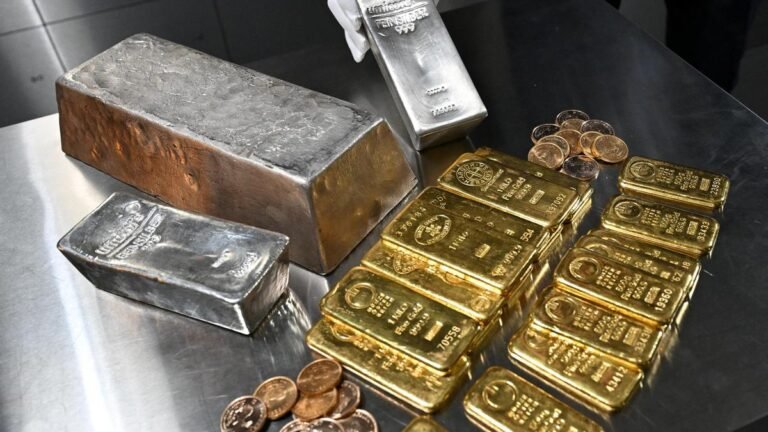
Precious metals plunge as Silver falls 10%, Gold down 6%

0

The precious metals complex continued its southward journey on Monday, but the movements in domestic and global markets were volatile as traders weighed in the latest hike in the CME Group margins for these metals.

Prospects of the US Fed turning hawkish and the dollar recovering, too, drove the complex lower. However, prices sashayed as some traders saw buying opportunities, though the bears seemed to have the upper hand currently.

In the morning, silver fell by over 10 per cent, gold by 7 per cent, platinum by 8 per cent and palladium by over 7 per cent as Friday’s hammering of the metals continued. But mid-day, the white precious metals pared its losses to 4 per cent and the yellow metal to 3.5 per cent. The palladium group metals (PGMs) edged up marginally.

Margin hike

The CME Group’s decision to hike the margins for gold futures from Monday to 8 per cent from 6 per cent and for silver to 15 per cent from 11 per cent unnerved investors. Platinum and palladium too will attract the same margin as silver.

Apurva Sheth, head of market perspective and research at Samco Securities, said from a price action perspective, the larger trend in gold remains clearly intact. The long-term structure continues to show higher highs and higher lows, and the recent decline looks more like a pause within an ongoing uptrend rather than the start of a reversal.

“What seems increasingly likely is a phase of time-wise consolidation. Gold may spend the next few months moving within a broad range, capped near ₹1,80,779 (per 10 gm) and supported around ₹1,36,185 and ₹1,32,294,” said Sheth.

common ranges

Such ranges are common after sharp advances, allowing excess optimism to cool off and positioning to reset, without damaging the underlying trend, said the Samco official.

Traders said investors are switching to bonds and currencies as they feel the new Fed Chief, Kevin Warsh, will likely increase interest rates, which will lead to the strengthening of the dollar. The dollar index was up 0.4 per cent at 97.285.

At 2000 hours IST, gold was lower at $4,738 an ounce, down 3 per cent from Friday’s close but up from $4,546.96 early in the morning. Gold April futures on COMEX recovered to $4,788.11 an ounce from $4,546.96 earlier in the day, though they are lower than Friday’s close.

In the Mumbai spot market, gold closed higher at ₹1,48, 748 per gm, up from ₹1,42,270 at open and a tad higher from Sunday’s close. On MCX, gold April futures recovered to ₹1,49,197 for gm from ₹1,40,424 in the morning and higher than Sunday’s closing prices.

Chinese premium

Silver recovered to $82.27 an ounce. Silver March futures ruled at $81.89 an ounce with the market swinging between $71.2 and $87.97. Spot gold prices in Mumbai closed at ₹2,59,500 a kg after having opened at ₹2,36.496. It was still lower than Sunday’s closing price of ₹2,65,751.

On MCX, silver March futures dropped by recovered to ₹2,54,492 a kg from ₹2,28,002 earlier in the day. On Sunday, they ended at ₹2,65,652. On the Shanghai futures market, silver dropped to 21,255 yuan a kg ($95.07 an ounce) with prices in China enjoying a premium owing to demand from multiple sectors.

Platinum slipped below $2,000 earlier in the day, but recovered to $2,138 an ounce, up nearly a per cent from Friday’s close., Palladium also recovered to $1,735 an ounce after dropping to $1,587, up 1.85 per cent from the previous trading close.

Still higher YTD

Despite the fall over the past two sessions, gold is up nearly 10 per cent since the beginning of the year, while silver’s gains have been shaved to 12.5 per cent. Platinum is up over 3 percent and palladium has increased by over 4 percent.

The precious metals complex has had a sparkling rally since January 2024, with gold soaring to a new high of $5,068 an ounce and silver to $122 an ounce, before they began to tumble.

Meanwhile, pointing to the COMEX report, traders said US multinational financial services firm, JP Morgan, closed its short positions in silver on Friday.

e.

More Like This

Market observers noted the correction appeared technical rather than structural.
NATHAN HOWARD

Published on February 2, 2026

Stocks to Watch: BSE, Angel One, Groww, Nuvama, 360 ONE WAM shares swing after STT hike

0

Shares of BSE climbed 4.5% to ₹2,694.50 on the NSE after touching an intraday low of ₹2,530, compared with the previous close of ₹2,578.10.

Shares of BSE climbed 4.5% to ₹2,694.50 on the NSE after touching an intraday low of ₹2,530, compared with the previous close of ₹2,578.10.

Shares of brokerage and exchange-linked companies saw sharp moves for the second straight session as investors digested the impact of the government’s decision to raise securities transaction tax (STT) on derivatives, with some counters rebounding after steep losses while others remained under pressure.

Shares of BSE climbed 4.5 per cent to ₹2,694.50 on the NSE after touching an intraday low of ₹2,530, compared with the previous close of ₹2,578.10.

Angel One also recovered, rising over 2 per cent to ₹2,371.90. In contrast, groww continued to trade in the red, slipping more than 4 per cent to ₹160.20. Nuvama Wealth, 360 ONE WAM and IIFL Capital Services remained volatile through the session.

Brokerages struck a cautious tone on the sector following the sharp hike in STT on futures and options. Motilal Oswal said it estimates FY27 earnings of Angel One, Groww and BSE to be hit by 13 per cent, 7 per cent and 9 per cent, respectively, assuming a 10 per cent impact on orders and volumes versus its current forecasts.

Elara Capital noted that a higher STT in the derivatives segment could reduce speculative churn and potentially attract long-term investors over time, but added that the budget was unlikely to immediately arrest foreign portfolio investor outflows. It said FPIs are still looking for signs of earnings recovery and stability in the rupee before committing fresh capital.

Emkay highlighted that while capital gains tax was largely left untouched, STT on derivatives was sharply raised to 5, 12.5 and 15 basis points on futures, option premia and option exercise, respectively, from 2, 1 and 1 basis point earlier. This, it said, could hurt volumes and market liquidity, even though retail participation has historically been resilient to such changes. Emkay added that exchanges and broking firms are the primary near-term losers, and warned that lower market depth could eventually weigh on overseas institutional flows.

Jefferies described the move as a sentimentally negative development for the sector. Based on discussions with industry participants, the brokerage projected a volume impact of up to 5 per cent. It said it expects a similar decline in average daily turnover or orders for BSE and Groww, which could translate into about a 4 per cent hit to earnings.

Bernstein focused on the potential fallout for high-frequency trading firms, which form a key client base for Nuvama Wealth’s services business. The brokerage said that if higher STT meaningfully erodes profit spreads for such traders, it could shrink the overall profit pool in Indian markets and hurt Nuvama in turn. It added that market-neutral strategies could face a greater impact compared with directional trades.

Kotak Institutional Equities said the sharp STT hike in the F&O segment came as a surprise, particularly in futures, which it termed a bit unreasonable given the higher level of institutional participation. While it believes the increase in options STT may be less disruptive as volumes there are driven more by accessibility, Kotak argued that a reduction in STT on cash equities would have been more effective in addressing the disproportionate share of derivatives trading. For retail brokers, the firm said January volumes had been strong but advised waiting for clearer trends to emerge, especially after recent commodity price corrections.

Citi, meanwhile, said Angel One and Groww could face marginal topline pressure due to their higher dependence on F&O revenues, while the impact on other capital market players such as Nuvama is likely to be limited. Overall, analysts suggested that while the immediate reaction in stocks has been volatile, the trajectory of trading volumes in coming weeks will be key to determining how sharply earnings estimates across the sector are revised.

Published on February 2, 2026

Q3 Results Today Highlights: Bajaj Housing, Hyundai Motor & Sundaram Finance, PB Fintech profit rise, UPL, Honeywell Automation Q3 profit falls, Ather Q3 loss narrows, Tata Chemicals Q3 loss widens

0

02-Feb-2026

derivatives

• Indus Towers Ltd

• PG Electroplast Ltd

• UPL Ltd

• PB Fintech Ltd

Cash Segment

• Thermax Ltd

• Bajaj Housing Fin Ltd

• Honeywell Automation India Ltd

• Akzo Nobel India Ltd

• Aarti Industries Ltd

• Ather Energy Ltd

• Campus Activewear Ltd

• City Union Bank Ltd

• Paradeep Phosphates Ltd

• Tata Chem Ltd

• Chateau Hotels Ltd

• Hyundai Motor India Ltd

• Railtel Corp Of India Ltd

• Aditya Birla Lifestyle Brands Ltd

• Olectra Greentech Ltd

03-Feb-2026

derivatives

• Bajaj Fin Ltd

• Mankind Pharma Ltd

• Pidilite Ind Ltd

• Adani Ports and Special Eco Zone Ltd

• Aditya Birla Capital Ltd

• Adani Enterprises Ltd

• Solar Ind India Ltd

• Varun Beverages Ltd

• NMDC Ltd.

Cash Segment

• Castrol India Ltd

• Godrej Agrovet Ltd

• Alkyl Amines Chem Ltd

• Action Construction Equipment Ltd

• Aether Industries Ltd

• Firstsource Solutions Ltd

• Gabriel India Ltd

• HFCL Ltd

• PCBL Chem Ltd

• Signatureglobal (India) Ltd

• Triveni Turbine Ltd

• Zydus Wellness Ltd

• AWL Agri Business Ltd

• Choice Intl Ltd

• Dr. Agarwal’s Health Care Ltd

• JK Lakshmi Cement Ltd

• Sheela Foam Ltd

• Lloyds Metals & Energy Ltd

• NMDC Steel Ltd

04-Feb-2026

derivatives

• NHPC Ltd.

• Bajaj Finserv Ltd

• Bajaj Holdings & Inv Ltd

• Cummins India Ltd

• Tata Power Co Ltd

• Trent Ltd

• Tube Invs of India Ltd

• Sammaan Capital Ltd

Cash Segment

• Emami Ltd

• Aptus Value Housing Fin India Ltd

• Timken India Ltd

• Gallantt Ispat Ltd

• Hexaware Tech Ltd

• Jubilant Ingrevia Ltd

• Apollo Tires Ltd

• CCL Products (India) Ltd

• Cera Sanitaryware Ltd

• Emcure Pharma Ltd

• Global Health Ltd

• Rites Ltd

• Inventurus Knowledge Solutions Ltd

• Jaiprakash Power Ventures Ltd

• Kalpataru Projects Intl Ltd

• Force Motors Ltd

• Redington Ltd

• Metropolis Healthcare Ltd

05-Feb-2026

derivatives

• Tata Motors Passenger Vehicles Ltd

• Godrej Properties Ltd

• Indian Oil Corp Ltd

• Page Ind Ltd

• Bharti Airtel Ltd

• FSN E-Commerce Ventures Ltd

• Hero MotoCorp Ltd

• Hitachi Energy India Ltd

• Kaynes Technology India Ltd

• Life Ins Corp Of India

• UNO Minda Ltd

• Power Fin Corp Ltd

• Rail Vikas Nigam Ltd

• Suzlon Energy Ltd

• Astral Ltd

• Max Healthcare Institute Ltd

Cash Segment

• Berger Paints India Ltd

• JM Fin Ltd

• Cemindia Projects Ltd

• Alembic Pharma Ltd

• NCC Ltd

• Aavas Financiers Ltd

• Bharti Hexacom Ltd

• Caplin Point Laboratories Ltd

• Minda Corp Ltd

• Sai Life Sciences Ltd

• Nava Ltd

• Aditya Birla Fashion and Retail Ltd

• Hindustan Copper Ltd

• Data Patterns (India) Ltd

• Kirloskar Brothers Ltd

• Poly Medicure Ltd

• PVR Inox Ltd

06-Feb-2026

derivatives

• Bosch Ltd

• SHREE CEMENT LTD

• Kalyan Jewelers India Ltd

• Crompton Greaves Cons Electricals Ltd

• Tata Steel Ltd

Cash Segment

• Godawari Power And Ispat Ltd

• Jubilant Pharmova Ltd

• MRF Ltd

• Swan Corp Ltd

• BEML Ltd.

• CESC Ltd.

• Sapphire Foods India Ltd

• Sonata Software Ltd

• Sun TV Network Ltd

• Whirlpool Of India Ltd

• Lemon Tree Hotels Ltd

07-Feb-2026

derivatives

• State Bank of India

Cash Segment

• HBL Engineering Ltd

• Sarda Energy & Minerals Ltd

• Mahanagar Gas Ltd

• General Ins Corp of India

09-Feb-2026

derivatives

• BSE Ltd

• Zydus Lifesciences Ltd

• Aurobindo Pharma Ltd

Cash Segment

• Navin Fluorine Intl Ltd

• Glaxosmithkline Pharma Ltd

• Cholamandalam Fin Holdings Ltd

• Gujarat State Fertilizer…

Biopharma SHAKTI: Stocks in focus after Budget 2026

0

The Budget announcement included a ₹10,000 crore outlay to develop biopharmaceutical production in India. Over the next five years biopharmaceutical focus is to be developed in educational institutions through NIPERS (National Institute of Pharmaceutical Education and Research) and even regulatory arm – CDSCO (Central Drugs Standard Control Organisation). The plan also includes developing over 1,000 clinical trial sites. As the speech noted Indian pharmaceuticals need to align with the noncommunicable disease burden which has overtaken communicable diseases as the cause for deaths in India. Globally as well, small molecules (chemically synthesized) are ceding space to biologics/biosimilars.

Company focus

Indian companies have been focusing on biologics/biosimilar production. Biocon has the largest concentration of biopharmaceutical products in its revenues with more than 60 per cent of H1FY26 revenues from biologics and biosimilars. The other companies have a basket of developed and commercialized biosimilars – Sun Pharma, Dr. Reddy and Zydus Lifesceices. The other leading pharma companies, including Aurobindo and Cipla are in a development mode with respect to biosimilars.

The announcement also mentioned an improved approval timeframe for biosimilars and large network of clinical testing sites. These two measures along with a larger talent pool of professionals should drive Indian companies shift from a small molecule led portfolio to a biologics/biosimilar led portfolio.

Published on February 1, 2026

Gokaldas Exports Q3 profit plunges 71% as US tariffs weigh on earnings

0

Sivaramakrishnan Ganapati, Vice-Chairman and Managing Director, Gokaldas Exports

Sivaramakrishnan Ganapati, Vice-Chairman and Managing Director, Gokaldas Exports | Photo Credit:

Shares of Gokaldas Exports fell nearly 4.92 per cent in Monday’s trade after the company reported a sharp 71 per cent year-on-year decline in profit after tax (PAT) for Q3FY26. Addressing investors after the results, Vice-Chairman and Managing Director Sivaramakrishnan Ganapati said the company’s performance during the quarter was significantly impacted by steep US tariffs, resulting in an estimated impact of around ₹40 crore.

He added that US-based brands are increasingly hesitant to build inventory at higher tariff levels, and may be factoring in weaker consumer demand in 2026. In contrast, imports from the EU and the UK recorded higher growth in the January–November 2025 period than in the same period last year. Looking ahead, Ganapati said the company has good visibility on its order book for both its India and Africa operations in the coming quarters.

Margin pressure

On margins, he cautioned that the reciprocal tariffs imposed by the US on India are likely to continue impacting performance in the next quarter as well. “Any positive outcome from a US-India trade agreement will, of course, help offset this impact,” he said, adding that the Africa business is beginning to see some tailwinds.

Africa operations

The company’s Africa operations, however, were impacted in Q3 by the expiry of the African Growth and Opportunity Act (AGOA), which led to a dip in orders and revenues from the region. This was compounded by supply chain disruptions that affected operations in the quarter. Ganapati noted that the imposition of incremental reciprocal tariffs on Asian countries from August 2025 has since restored Africa’s relative tariff advantage.

Margin recovery

From Q4 onwards, the company expects margin improvement in its Africa business, supported by a stronger order book. This improvement is driven by higher reciprocal tariffs of up to 20 per cent on Asian countries, while tariffs on African exports remain at around 10 per cent.

Over the longer term, Ganapati said free trade agreements with the EU and the UK are expected to provide structural benefits. “Until those materialise, we expect a degree of status quo, with improvements largely coming from internal efficiency measures,” he said.

bangladesh watch

Providing an update on Bangladesh, Ganapati said the company continues to utilize subcontracting relationships in the country. However, any direct investment in Bangladesh would be considered only after greater clarity emerges on the macroeconomic situation.

“There is an election expected in February, and we will take a call after assessing how the situation evolves post that,” he said.

Published on February 2, 2026

Budget makes leveraged investments turn less attractive

0

Investors reduced their taxable dividend income by claiming interest cost, up to 20 percent of the dividend received.

Investors reduced their taxable dividend income by claiming interest cost, up to 20 percent of the dividend received.

The Budget proposal to scrap setting off interest expenditure incurred for earning dividend income or income from units of mutual funds will make leveraged investments less attractive and impact investors returns.

Dividend income and income from units of mutual funds constitute passive investment receipts taxable under the head “Income from other sources” under the Income Tax Act, 2025. Section 93 of the Act provides for allowing certain deductions against such income. This includes interest expenditure incurred for earning such income, subject to a ceiling of 20 per cent of the gross dividend or income from units of mutual funds.

The Budget has proposed amending the relevant section so that the deduction, allowed on interest expenditure incurred for earning dividend income or income from units of mutual funds, has been removed.

What this means is that if an individual has taken a loan to invest in stocks and mutual funds then the interest paid on that loan can no longer be offset against the dividend income from the stocks or MF units. “Its going to get taxed on a gross basis,” said Rajeshree Sabnavis, Senior Advisor, Grant Thornton Bharat.

The amendment will take effect from April 1.

Aditya Bhattacharya, Partner, King Stubb & Kasiva, Advocates and Attorneys said the change aligns with the broader intent to rationalize tax benefits and curb mismatch claims, signaling a stricter approach towards leveraging interest deductions against passive investment income.

Any sum previously allowed as a deduction, or excluded from total income under the repealed Income-tax Act, 1961, will now be deemed income under the Income-tax Act, 2025, even if no conditions were violated, he said.

tax leakage

Another reason for not allowing the deduction is to plug tax leakage. “People would take loans and use that interest as a deduction. To that extent, the dividend income which was offered for tax was on the lower side,” said Sabnavis.

Investors reduced their taxable dividend income by claiming interest cost, up to 20 percent of the dividend received. With this benefit removed, an investor in the highest tax bracket will now pay extra tax equal to about 6 percent of the dividend amount.

However, this interest cost is not completely lost. The same interest can be added to the purchase cost of the investment to lower the capital gains tax payable when the investment is sold, said Chintak Shah, Vice President, Anand Rathi Wealth.

While the rule change increases tax on dividends today, a part of this can be recovered through lower capital gains tax later, he said, adding that the proposal would affect only those who borrow money to invest in stocks and MFs.

From a legal standpoint, this retroactive deeming ensures continuity and removes potential disputes arising from the shift between statutes, providing taxpayers and practitioners a clear framework for compliance and assessment under the new Act, said Bhattacharya.

Dividend income is taxed at the investor’s slab rate, which can go up to 30 per cent. Capital gains on listed equities continue to be taxed at 12.5 per cent for long-term gains and 20 per cent for short-term gains.

Published on February 2, 2026