Reference #18.490dde17.1778483702.31e1be75
https://errors.edgesuite.net/18.490dde17.1778483702.31e1be75
Reference #18.490dde17.1778483702.31e1be75
https://errors.edgesuite.net/18.490dde17.1778483702.31e1be75
The address may not sound familiar, and the street name is best known as the heart of British tailoring. But 3 Savile Row is one of the most iconic buildings in British pop and rock: the former home of the Beatles’ record label Apple Corps, and the location of the band’s final public performance when they took to its rooftop in 1969.
Apple Corps has now re-acquired the building in Mayfair, central London, and plans to open it to the public as a new tourist attraction in 2027.
Across seven floors, The Beatles at 3 Savile Row will showcase items from the Apple Corps archives and host temporary exhibitions and a shop. The biggest attractions, however, will be a recreation of the studio where the band recorded their last album, Let It Be, and access to the rooftop where that poignant final concert was performed.
Paul McCartney, who recently revisited the Georgian mansion house, said: “There are so many special memories within the walls, not to mention the rooftop. The team have put together some really impressive plans and I’m excited for people to see it when it’s ready.” His bandmate Ringo Starr described it as “like coming home”.
The Beatles founded Apple Corps in the late 60s to gain control of their own financial affairs and with the intention of backing other artistic and business ventures, ranging from music and film to retail and electronics. When the band split in 1970, it found new purpose as the guardian of their legacy, stewarded by their former road manager, Neil Aspinall, until shortly before his death in 2008.
Apple Corps left Savile Row in 1976 and today the company’s chief executive is Tom Greene, who is overseeing the ambitious return. “Every single day, fans are taking pictures of the outside of 3 Savile Row – but next year they can go in,” he said. Regarding the rooftop, he confided: “Even the railings remain the same from that famous day in 1969.”
That open-air performance featured five new Beatles songs, performed across nine takes: Get Back, Don’t Let Me Down, I’ve Got a Feeling, One After 909 and Dig a Pony, plus a rendition of God Save the Queen. The unadvertised gig was filmed for Michael Lindsay-Hogg’s 1970 documentary about the making of Let it Be, and attracted an astonished crowd of passersby – plus the police. Two officers entered the building, climbed to the roof and switched off the band’s amps, though the band still managed to perform one last take of Get Back.
Sadiq Khan, the London mayor, called the plans for The Beatles at 3 Savile Row “hugely exciting” and said the attraction would “captivate Londoners and visitors from across the globe”.
Anyone thinking the project comes decades too late, meanwhile, can be disabused by the band’s career in the 2020s so far.
In 2021, Disney released Get Back – an acclaimed reworking of footage recorded for Lindsay-Hogg’s 80-minute Let it Be film. Made by Lord of the Rings director Peter Jackson, the three-part documentary ran to nearly eight hours and spawned a further standalone film of the 3 Savile Row performance.
Then, in 2023, the band released a “new” song – Now and Then – which used AI technology to enhance demo recordings of the late John Lennon and George Harrison with newly recorded parts by McCartney and Starr. It reached No 1 in the UK, creating a record-breaking 54-year gap between chart-topping singles for a band.
Another documentary film followed in 2024, with the Martin Scorsese-produced Beatles ’64 focused on the moment the band broke the US and featuring new interviews with McCartney and Starr.
And last year, the career-spanning Beatles Anthology project, which originally told the band’s story across three albums of demos and outtakes, a TV documentary and a book in 1995 and 1996, was reissued and updated with a fourth album and a new documentary episode.
McCartney and Starr, meanwhile, have continued to release new music, with McCartney’s next album, The Boys of Dungeon Lane, due for release on 29 May. Featuring ruminative songs that contemplate his parents, his marriage, his boyhood in Liverpool and his memories of his Beatles bandmates, it also includes his first ever duet with Starr.
Starr has released two albums in the past 15 months, exploring a country blues sound on Look Up and Long Long Road with producer T Bone Burnett and star guests such as Sheryl Crow and St Vincent.
And the biographies keep on coming. Sam Mendes is currently filming one about each band member, for simultaneous release in April 2028. The “four-film cinematic event” will star Paul Mescal as McCartney, Harris Dickinson as Lennon, Joseph Quinn as Harrison and Barry Keoghan as Starr.
Likely to arrive before that is Hamburg Days, a TV drama focusing on the band’s formative years playing a concert residency in the German city’s red light district. Now filming, with UK broadcast rights acquired by the BBC, the series is scripted by Jamie Carragher, part of the writing team for Succession.
If you can’t wait for those projects, rare photos and letters from the band’s formative years are currently on display in Hamburg as part of the city’s Hafengeburtstag festival, while Please Please Me, a play by Tom Wright about the Beatles’ manager, Brian Epstein, and his closeness with John Lennon is playing this month at London’s Kiln theatre.
Finally, Beatles aficionados are also still anticipating the second volume in All These Years, a trilogy of biographies by Mark Lewisohn, arguably the pre-eminent Beatles historian. The first volume, Tune In, was published in 2013 after a decade of work. Lewisohn said in February that he couldn’t give a firm sense of when part two would arrive. “I’ve left no stone unturned, and in doing so found wonderful things,” he said. “But the problem is I’ve got too much. So it’s very hard to get any momentum going.”
Reference #18.530dde17.1778484705.252b7f2c
https://errors.edgesuite.net/18.530dde17.1778484705.252b7f2c
NEWYou can now listen to Fox News articles!
The Trump administration is using the immense muscle of federal power to punish media outlets whose coverage is disparaged as overly negative.
The president has long used harsh rhetorical attacks against such companies as CNN and The New York Times, as well as individual journalists, and filed a flurry of lawsuits against them. He’s even accused the press of “seditious” conduct. I suppose we’ve grown accustomed to that.
But there is a whole new level of escalation that goes beyond intimidation. Trump and his allies are pushing the regulatory levers to force networks to spend enormous time and money to preserve their franchise.
And the biggest target right now is ABC.
TUNING OUT: WHY MANY AMERICANS ARE SICK OF THE NEWS – ESPECIALLY TRUMP NEWS
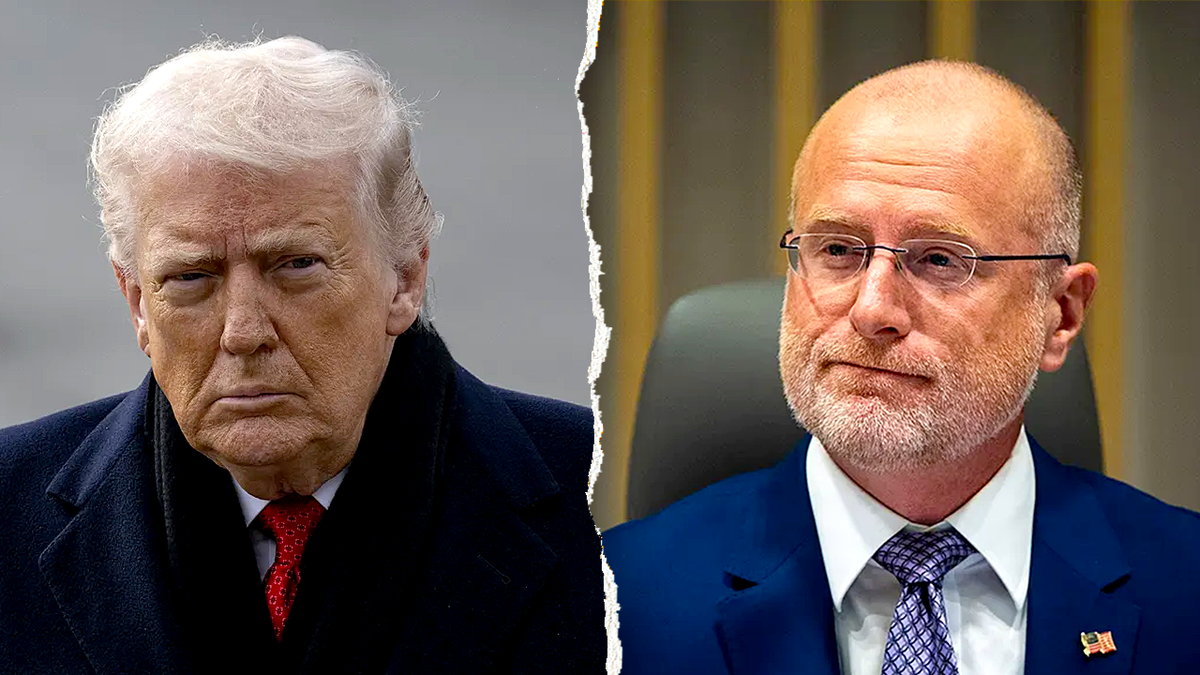
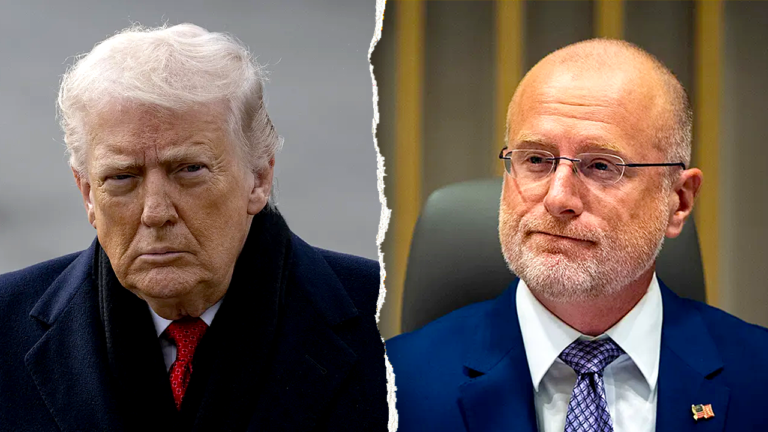
President Trump stands with FCC Chair Brendan Carr as the chair warns news organizations to correct course or risk losing licenses. (Celal Gunes/Anadolu/Getty Images Al Drago/Bloomberg/Getty Images)
FCC Chairman Brendan Carr, who along with Trump has demanded Jimmy Kimmel’s firing, has launched a review of the local station licenses connected to the Disney-owned company. This legal war will drag on for years and is unlikely to succeed; only one license has ever been pulled, and that was a half-century ago.
Think about it. Why should an ABC-owned station in New York, Chicago or Los Angeles have its license jeopardized because a federal agency dislikes the network’s content?

Late-night host Jimmy Kimmel addresses a new FCC threat during his show on Jan. 21, 2026. (JimmyKimmelLive/ABC)
ABC has produced 11,000 documents in the inquiry so far, which gives you an idea of the scope of the showdown.
FCC LAUNCHING PROBE INTO ABC’S ‘THE VIEW’ AMID CRACKDOWN ON EQUAL TIME FOR CANDIDATES
“The commission’s actions threaten to upend decades of settled law and practice and chill critical protected speech, both with respect to ‘The View’ and more broadly,” ABC said in a legal filing.
Yes, “The View,” the all-female talk show founded by Barbara Walters in 1997 and syndicated by ABC. That’s now a bullseye within the larger target.
The show has generally featured one conservative to balance the aggressively liberal Whoopi Goldberg and Joy Behar. But these days the conservative panelists are also strongly anti-Trump.
REPUBLICANS VIRTUALLY SHUT OUT OF DEM-DOMINATED TALK SHOWS AS FCC AIMS TO REFORM NETWORK BIAS
The initial filing was based on an ABC station in Houston, KTRK, stemming from a minor dispute with “The View.” And as the New York Times points out, the station’s paperwork was signed by former solicitor general Paul Clement.
At issue is whether the program, which is part of ABC’s news division, should be exempt from equal-time rules.
ABC says it has invited JD Vance, Robert F. Kennedy Jr., Lindsey Graham, Josh Hawley, Elon Musk, Kevin McCarthy and Marco Rubio, according to the Hollywood Reporter, but all have refused.
“The View” was given an exemption as a news show back in 2002.
Disney also notes that the FCC hasn’t gone after conservatives – or liberals – on talk radio.
We’ve seen these tactics in other realms. The Trump Justice Department last fall brought an indictment against James Comey, which was rejected by a judge. After Trump fired Pam Bondi for not getting results, the department last month brought a second, much narrower indictment against the former FBI chief despised by Trump, based solely on the posting of seashell art that said 86*47. And Comey has to hire lawyers again.
It so happens that the media, even most conservative legal commentators, are calling the case absurd.
Says National Review’s Andy McCarthy, a former federal prosecutor:
“Sure, Comey plainly did not intend to threaten bodily harm. More fundamentally, though, even if Comey’s state of mind had been sinister, he’d still be innocent because the seashell array was not an actionable threat…
LINE IN THE SAND: WHY TRUMP IS DRAWING FLAK FOR THE JAMES COMEY INDICTMENT OVER SEASHELLS
“The case must be thrown out pretrial because ‘86 47’ is not a true threat.”

The Federal Communications Commission has launched a probe into ABC’s “The View” over its policy on providing equal time for political candidates, Fox News Digital has learned. (Lou Rocco/Getty Images)
Look, the administration has done what it can to crack down on the press, such as booting Pentagon reporters out of the building after they refused to submit to advance censorship.
And Trump has previously collected at least $16 million apiece from earlier lawsuits against CBS and ABC.
What’s more, Trump’s friend, Oracle co-founder Larry Ellison and his son David, who bought CBS without government interference, may soon control CNN as well. The expectation is that they would shift the world’s first 24-hour network, whose founder Ted Turner died last week, in a more Trump-friendly direction.
CLICK HERE TO DOWNLOAD THE FOX NEWS APP
Singling out a network or program for retaliation is itself a form of sheer partisanship.
And using the unchecked levers of government against disliked journalists and programs, down to the Whoopi Goldberg level, is deeply troubling.


FILE PHOTO: A salesperson attends to a customer in a jewelery showroom | Photo Credit: SHAILESH ANDRADE
Prime Minister Narendra Modi’s appeal to reduce buying gold jewelery could impact employment linked to the jewelery industry, which supports more than one crore people directly and several allied sectors indirectly, highlighted Rajesh Rokde, Chairman, All India Gem and Jewelery Domestic Council.
Speaking to ANI, Rokde reacted to Prime Minister Narendra Modi’s recent appeal asking people to reduce fuel consumption, avoid unnecessary foreign travel and stop buying gold for one year amid the ongoing West Asia crisis and rising crude oil prices.
“Whatever the Prime Minister has to say is absolutely correct in patriotism and national interest,” Rokde said. He noted that the Prime Minister has consistently spoken about “self-reliant India” and “Viksit Bharat 2047”, and said the appeal was made keeping national economic interests in mind.
However, Rokde said gold jewelery has deep cultural significance in India and any broad reduction on jewelery purchases could affect economic activity and employment. “The Prime Minister might be saying that those who buy unnecessary gold, those who buy gold for investment purposes should be discontinued. I definitely agree with that,” he said.
According to Rokde, the jewelery industry contributes around 7 per cent to India’s GDP and supports a large employment ecosystem. “Today, more than one crore people work directly in the showrooms through employment through artists through their employment,” he said.
He added that several sectors, including insurance, banking, furniture, packaging and logistics are also dependent on the jewelery industry.
“Giving any kind of restriction on jewelery can raise a big question of big unemployment,” Rokde stated. At the same time, he supported discouraging bullion and coin purchases for investment purposes.”
I consider it absolutely right to stop buying bullion, buying coins,” he said.
Rokde also said the All India Gem and Jewelery Domestic Council has submitted a Gold Monetization Scheme proposal to the government.
According to him, Indians are estimated to hold around 40,000 to 50,000 tonnes of gold across the country. He said if even 10 to 20 per cent of this gold is monetised, it could significantly reduce dependence on gold imports.
“We have submitted this end-to-end solution of monetization to the government,” Rokde said, adding that if implemented effectively, India may not need to import gold for the next 10 years.
Prime Minister Narendra Modi on Sunday urged citizens to avoid buying gold for a year, reduce fuel consumption and conserve foreign exchange amid rising geopolitical tensions in West Asia.
Addressing an event in Hyderabad, the Prime Minister also called for reviving work-from-home practices.The remarks came as global crude oil prices surged nearly 4 per cent on Monday to around $105 per barrel amid escalating tensions in West Asia and disruptions around the Strait of Hormuz.
Following the remarks and rising geopolitical concerns, major jewelery stocks on the National Stock Exchange came under pressure on Monday. Shares of major jeweler companies faced pressure on Monday, with PNG Jewelers declining around 8 per cent, while Kalyan Jewelers fell 8 per cent.
Thangamayil Jewelery shares declined around 4 per cent, while Titan Company stock dropped more than 6 per cent.
Published on May 11, 2026
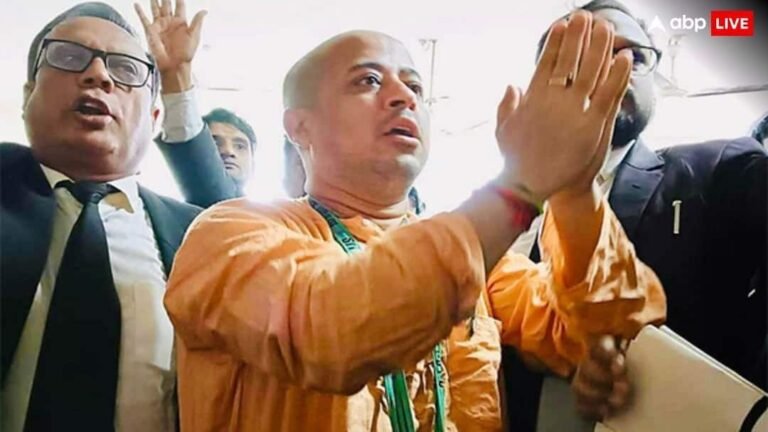
bangladesh The Delhi High Court on Sunday (May 10, 2026) rejected the bail plea of Hindu saint celibate Chinmoy Krishna Das, who is facing trial in a trial court in connection with the murder of a lawyer in 2024. He was sent to jail after being denied bail by a court in the south-eastern port city of Chittagong, prompting protests by his followers in Dhaka and other places.
Protests turned violent in Chittagong where junior public prosecutor Saiful Islam Alif was killed. Chinmoy Krishna Das’s lawyer Apoorva Kumar Bhattacharya told reporters, ‘The High Court bench rejected our bail plea as the process of recording the statements of witnesses was going on in the lower court in Chittagong.’
Apoorva Kumar Bhattacharya said that two judges – Justice K.M. A bench of Justices Zahid Sarwar and Justice Sheikh Abu Tahir, however, fixed Monday for hearing of bail pleas in four other cases against Chinmoy Krishna Das. The Chittagong Divisional Speedy Trial Tribunal on January 19 framed charges against former ISKCON official Chinmoy Krishna Das and 38 others in connection with the death of the lawyer in Chittagong and initiated a trial against them.
Also read:- Major accident during landing in Nepal, tire of plane caught fire, 278 passengers were on board the flight
Chinmoy Krishna Das’s lawyer, while seeking bail, said that the saint has been facing problems in jail due to illness for a long time. Earlier on April 30 last year, the High Court had granted him bail in the treason case on charges of insulting the national flag of Bangladesh, but the Supreme Court later stayed the bail order.
Also read:- ‘Trump’s entire tenure is a therapy session’, Iranian embassy taunts after rejecting Tehran’s new proposal
In the year 2024, Chinmoy Krishna Das’s organization ‘Samlito Sanatan Jagran Jot’ then Prime Minister Sheikh Hasina After his removal from power, several rallies were organized condemning the attacks and discrimination against people of the Hindu community. According to the data of 2022 in Bangladesh, the number of Hindus is about eight percent of the approximately 17 crore population.
On a dusty hill overlooking the Atlantic Ocean in the south of Tenerife, groups of tourists and locals are gathered to witness one of the island’s best new attractions.
Some are gazing through binoculars while others are taking photos on their phones of a vessel only a few hundreds metres away, anchored near the Granadillo commercial port.
It is the MV Hondius, the small cruise ship at the centre of a giant global commotion.
Christened the “rat virus boat” by the internet after three people travelling onboard died of hantavirus, a disease normally carried by rats and mice, its story has enraptured people all over the world.
And now, after reaching the Canary Islands shortly before dawn on Sunday, the ship is finally being evacuated, ending the ordeal for the remaining 149 passengers and crew.
The scene is watched from the hire car of Amy Byres and Emma Armitage from Sheffield, on holiday in Tenerife for Byres’s 22nd birthday.
“We’ve got some time to kill before our flight later,” Armitage said.
“It was either this or lay by the pool all day,” added Byres.
The pair said they had spent their holiday fascinated by the story of the passengers trapped on board and confined to cabins, in between their whale-watching and quad biking activities.
“We saw this at the start of our trip – we arrived on Monday – and we’ve been following it all week on TikTok,” Byres said. “We were looking at TikTok trying to find out where it was and then we saw the name of the port and came here. It’s just really interesting, isn’t it?”
The novelty has attracted dozens of others who came to the island to enjoy sun, sand and cerveza (beer) – and stayed for the international rescue operation.
But down at the dock, the mood is more sober. First, only a handful of Spanish passengers appear, looking dazed and bewildered, wearing face and hair coverings and large blue ponchos over their clothes.
Clutched in one hand are small plastic bags containing only a few possessions. The rest of their luggage needs to remain on the ship to be taken to the Netherlands for decontamination.
It is the first time many of them have been outside since they were locked down in their cabins several days ago, after the deaths of a Dutch couple and a German passenger.
It took a while for the cause to be diagnosed as hantavirus. The disease, though not uncommon, is rarely spread person-to-person. The variant is not new, and health bodies have sought to reassure people that it is a known pathogen, not a new disease such as Covid-19.
There are few parallels with the virus that caused the global pandemic in 2019 but all over the world people have feared what would happen if another disease was able to get out of control.
The director general of the World Health Organization (WHO), Dr Tedros Adhanom Ghebreyesus repeated the refrain that the outbreak was “not the start of a Covid pandemic” dozens of times in the lead up to the 24-hour evacuation period in Tenerife.
The passengers and crew from 23 countries are being repatriated thanks to an enormous international effort led by the WHO and coordinated by the Spanish government, which offered Tenerife as a base to launch the rescue.
It was Spain’s obligation under international law to offer the Canaries’ assistance as one of the closest territories that had the resources to help and, on Sunday, the plan appeared to be being successfully executed.
Boatload after boatload of blue plasticky figures appeared, to be loaded on to coaches by health workers in hazmat suits and face masks.
Inside, plastic sheets cover the seats and, in scenes reminiscent of the Covid-19 pandemic, hazard tape marks seats that cannot be used. Those leaving the ship are not allowed to sit next to each other.
But what happens when each passenger gets home is a matter of some contention. While the WHO recommends each passenger isolate for 45 days from the last contact point, 6 May, it cannot enforce that. The UK and Spain have put in place hospital quarantines for those coming off the ship but many countries have not.
Causing further concern is the absence of testing. Those onboard have had their temperatures taken by WHO tropical medicine doctors and have shown no symptoms of a possible infection. But only a PCR test would confirm whether hantavirus – which has an incubation period of up to eight weeks – is present in their systems. Every country would need to carry out their own.
Among the media brought to the island by the MV Hondius’s arrival, questions were being asked about whether this was enough.
Tedros was asked at a press conference at the Granadilla port late Saturday night whether allowing passengers to travel all over the world and relying on them to self-isolate with no oversight could cause further outbreaks.
“Based on our assessment, what you have said is not going to happen,” he told the media.
The planned approach by the US caused particular alarm, after the country’s withdrawal from the WHO last year. Returning passengers to the country are being asked to self isolate, something an American journalist asked Javier Padilla Bernáldez, the Spanish secretary of state for health, for his opinion on.
He said the European Commission and the European Centre for Disease Prevention and Control were “trying to achieve a certain degree of coordination, and not a high variation among the different countries”.
“But every country has its own confidences,” he said.


Brokerages remained positive on the stock following the earnings performance and improving growth outlook. | Photo Credit: istock.com
Northern Arc Capital Shares rallied 12 per cent to hit their 52-week high on Monday after the non-banking financial company reported a nearly three-fold jump in net profit for the March quarter, driven by strong growth in interest income and improvement in asset quality.
The stock traded at ₹312.05 on the NSE at 12.21 pm, hitting a 52-week high of ₹321.70 compared to the previous close of ₹287.30.
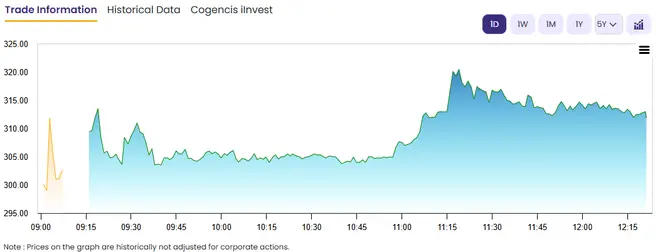
Northern Arc Capital shares jump
Post market hours on Friday, the company posted a net profit of ₹139 crore in Q4FY26 compared with ₹47 crore in the corresponding quarter last year. Total income rose to ₹735 crore during the January-March quarter of FY26 from ₹593 crore a yearago, while net interest income increased 21 per cent yoy to ₹387 crore.
Total expenditure stood at ₹552 crore during the quarter compared with ₹545 crore in the year-ago period.
Asset quality improved during the quarter, with gross non-performing asset ratio moderating to 1.2 per cent as of March 31, 2026 from higher levels earlier, while net NPA ratio eased to 0.6 per cent.
Brokerages remained positive on the stock following the earnings performance and improving growth outlook.
DAM Capital said the stock continues to trade at inexpensive valuations of around 0.9x FY28 estimated book value and nearly 7x FY28 estimated earnings. The brokerage expects the company to deliver more than 22 per cent CAGR growth and over 25 per cent earnings growth, supported by return on equity of over 14 per cent by FY28. DAM Capital has a target price of ₹400 on the stock, implying around 40 per cent upside over the next 12 months.
Motilal Oswal reiterated its buy rating with a target price of ₹390, citing healthy growth across key operating parameters in Q4FY26. The brokerage said management remains confident of sustaining growth momentum in FY27, aided by recovery in the microfinance segment and continued traction in MSME and consumer finance businesses.
The brokerage added that the company’s credit solutions business provides a stable fee income stream, while its continued focus on asset quality and prudent risk management positions it well for sustainable long-term growth. Motilal Oswal expects assets under management and profit after tax CAGR of around 21 per cent and 34 per cent respectively over FY26-28.
ICICI Securities maintained its buy rating and raised the target price to ₹370 from ₹340, valuing the stock at 1.35x FY27 estimated book value. The brokerage highlighted regulatory changes related to digital lending and the performance of the rapidly growing MSME loan book as key monitorable risks for the company going forward.
Published on May 11, 2026

The annual ritual that is the Victory Day Parade in Moscow serves a dual purpose. It reminds Russia’s citizenry and the Kremlin’s audience across the former Soviet Union of the glorious past. The muscle flexing on May 9 each year benchmarks Russia’s geopolitical fortunes.
Last year on the 80th anniversary of the Soviet triumph over Nazi Germany, Russian President Vladimir Putin was flanked by foreign dignitaries from far and wide: Chinese President Xi Jinping, Brazilian President Luiz Inacio Lula da Silva, Slovak Prime Minister Robert Fico, Serbia’s Aleksandar Vucic, Nicolas Maduro of Venezuela, Abdel Fattah el-Sisi of Egypt and Mahmoud Abbas, the head of the Palestinian Authority.
This year, the lineup was much less impressive. Leaders from Belarus, Kazakhstan, Laos, Malaysia and Uzbekistan attended – with Republika Srpska, Abkhazia and South Ossetia for some added flavour – but no heavy hitters like India or China.
The talk of Russia as a linchpin of a new multipolar world order rings a tad hollow today, not least because no heavy equipment was marched through during the parade out of fear of Ukrainian drone strikes. On top of it, United States President Donald Trump claimed credit for a three-day ceasefire between Moscow and Kyiv.
The relatively dull affair that was this year’s parade speaks volumes about Russia’s current state. On paper, everything is going just fine. Trump has not wholly abandoned the idea of a deal to freeze the war in Ukraine, even at the cost of major concessions by Kyiv. The current US National Security Strategy calls for “strategic stability” with Russia while blasting Europe’s “woke” policies.
The inconclusive war against Iran, meanwhile, has exposed the limits of US military might. Oil prices have jumped, filling Russia’s coffers and improving its fiscal balance. On top of it, Trump has removed sanctions on some Russian oil to increase the global supply. Meanwhile, the Europeans are signalling they want to talk to Moscow.
In reality, the mood is gloomy. The Russian war effort in Ukraine continues to be stalled no matter how much money, materiel and human lives the Kremlin throws into the meat grinder that is the so-called special military operation (SVO). Ukrainian drones have hit deep inside the Russian homeland with even Red Square apparently not being immune to aerial attack.
Trump has lost interest in wooing Putin. With Hungarian Prime Minister Viktor Orban gone, the European Union has consolidated ranks. In Russia itself, economic growth has plummeted from 4 percent in 2024 to a projection of just over 1 percent this year.
The prospects for long-term development, productivity growth and technological innovation are lacklustre. There are modest signs of discontent within the Russian elite. Even Putin’s sky-high popularity ratings are slightly down, according to pollsters.
The stifling of the mobile internet in Moscow and other big cities has been met with dismay. Russians could be excused for puzzling over how the SVO, sold as a glorious repeat of the 1941-1945 Great Patriotic War, has gone on longer than the latter with no end in sight. It is no wonder Putin felt compelled to say on Saturday that “the matter” is coming to an end.
While its resources are focused on Ukraine, Russia is on the back foot in what it still calls its “near abroad” too. The past week showed that Europe is gaining momentum there.
On Monday, Armenia hosted the annual summit of the European Political Community (EPC), where European leaders gathered. Ukrainian President Volodymyr Zelenskyy was in attendance too. Once Moscow’s loyal client and member of the Russia-led Collective Security Treaty Organisation and Eurasian Economic Union, Yerevan is now strengthening ties with the West.
Even if the EPC is dismissed as a pan-European talking shop – or maybe a transatlantic one, given that Mark Carney, the Canadian prime minister, came as well – observers cannot ignore the fact that it was followed by the first EU-Armenia summit. The high-profile meeting signalled in no ambiguous terms that Yerevan sees its future in the EU. Strategically, it is looking at joining the trio of Ukraine, Moldova and Georgia.
The EU is reciprocating: The summit discussed up to 2.5 billion euros ($2.95bn) in investment in Armenia; cooperation on energy, transport and digital infrastructure; and visa liberalisation.
In parallel, both Armenia and Azerbaijan are courting the Trump administration. The two countries have welcomed the US as a peacebroker as they move closer to normalising ties. In August at the White House, Armenian Prime Minister Nikol Pashinyan and Azerbaijani President Ilham Aliyev signed a joint declaration pledging to seek peace.
In February, JD Vance became the first sitting US vice president to visit Yerevan and then hopped over to Baku. Armenians and Azeris are negotiating the opening of the Zangezur corridor running between Azerbaijan proper and its exclave Nakhchivan (from where the Aliyev family hails). The project has a name – Trump Route for International Peace and Prosperity.
In short, the US has scored a couple of points in Russia’s back yard with the help of Pashinyan and Aliyev. Moscow is watching from the sidelines as a former satellite drifts away from its embrace. And the EU but also Turkiye are to benefit because Armenia’s opening and interconnection with its neighbours favours their pro-integration agenda.
Of course, this does not mean that Armenia could simply jump ship from Russia to the West. Moscow retains stakes in the Armenian economy and, therefore, political leverage.
This will be put on display in the June general election, which will pit Pashinyan’s Civil Contract against the Armenia Alliance of former President Robert Kocharyan and Strong Armenia associated with the Russian-Armenian billionaire Samvel Karapetyan. Both Kocharyan and Karapetyan have strong connections to Moscow.
Public opinion is in favour of diversifying relations but not a complete break-up. That is a pragmatic position shared by Pashinyan too despite his focus on deepening ties with the West.
Russia failed to – or was reluctant to – support Armenia against Azerbaijan and prevent the loss of the Nagorno-Karabakh region, and Armenians are right to look for alliances elsewhere. But without a peace treaty with Azerbaijan and without full normalisation with Turkiye, one has to tread carefully and not burn bridges.
The Armenian leadership has to also factor in neighbouring Iran, with whom it enjoys positive ties. An escalation of the US-Israel war on Iran could threaten cross-border energy trade.
Putin would have loved to see Armenia and Azerbaijan attending Saturday’s parade. Ditto for Moldova, where pro-EU forces prevailed in the 2025 parliamentary elections. Or Georgia, which still has no diplomatic relations with Russia despite the rule of the authoritarian-minded Georgian Dream, a party viewed positively in the Kremlin.
The chances of those countries turning up next year are slim too. Even Kazakhstan and Uzbekistan will probably not confirm until the last minute, as they have been doing for years.
These days, Russia’s near abroad is much more abroad than near.
The views expressed in this article are the author’s own and do not necessarily reflect Al Jazeera’s editorial stance.

Edwards’s 36 points give Minnesota 114-109 win and tie the Western Conference semifinals 2-2 against San Antonio Spurs.
Published On 11 May 2026
Anthony Edwards scored 16 of his 36 points in the fourth quarter, and the Minnesota Timberwolves took advantage of Victor Wembanyama’s ejection to post a 114-109 win over the San Antonio Spurs.
The Timberwolves’ win on Sunday night in Minneapolis tied the Western Conference second-round series at two games apiece.
Naz Reid contributed 15 points and nine rebounds off the bench for Minnesota. He also took an elbow from Wembanyama into his chin on the play in which the Spurs star was ejected in the second quarter.
Jaden McDaniels scored 14 points, Julius Randle scored 12 and Rudy Gobert had 11 points and 13 rebounds for the Timberwolves. Ayo Dosunmu added 10 points for Minnesota.
De’Aaron Fox and reserve Dylan Harper scored 24 points each, and Stephon Castle added 20 for the Spurs. Devin Vassell tallied 14 points for San Antonio. Wembanyama had four points, four rebounds and no blocks in 12-plus minutes.
“We never expected them just to go away,” Timberwolves coach Chris Finch said. “They won a game in the Portland series without Wembanyama, so they’re very good, very good team.”
The Spurs trailed by seven before Harper made two free throws with 29.1 seconds left and Julian Champagnie hit two with 20.6 seconds remaining to bring San Antonio within 112-109.
Dosunmu answered with two free throws with 9.8 seconds left as Minnesota closed it out.
“Just small-time plays,” Edwards told reporters when asked how the Timberwolves won Game 4. “Small-time plays win big-time games. That’s what we needed. Diving on the floor, offensive rebounds and it was a great sub by Finchie for putting in Ayo for that last minute and a half.”
Earlier, Wembanyama grabbed a rebound and was trying to protect the ball from two Timberwolves when he turned and unleashed a vicious right elbow into Reid’s chin and was called for a foul with 8:39 left in the first half.
The officiating crew studied views of the play before upgrading the foul to a flagrant 2, which is an automatic ejection. Crew chief Zach Zarba said, “There was wind-up, impact and follow-through above the neck of an opponent.”
“I’m glad he [Wembanyama] took matters into his own hands – not in terms of hitting Naz Reid, I want to be very clear about that,” Spurs coach Mitch Johnson said. “I’m glad Naz Reid is OK, and I didn’t want him to elbow him. But [Wembanyama’s] going to have to protect himself if no one else does it for him. And I think it’s disgusting.”
Minnesota led 60-56 at the break. Edwards scored 18 in the half while Castle led San Antonio with 14 first-half points.
Despite the loss of Wembanyama, the Spurs scored 20 of the first 28 points in the third quarter and led 76-68 after a basket by Vassell with 4:33 left in the period.
“I thought, offensively, we were really doing a lot of good things,” Finch said. “We lost our way a little bit and gave them life.”
San Antonio’s Keldon Johnson drove for a hoop with 21.9 seconds remaining for an 84-80 advantage entering the final stanza.
Fox buried a three-pointer to give San Antonio a 94-86 lead with 8:51 left in the contest before Edwards scored 12 points during the Timberwolves’ 14-5 run.
“We had a chance to win,” Johnson said. “We didn’t close it out the way we wanted to. … Minnesota made some plays and finished the game.”
Edwards started the burst with a jumper, and he soon scored five consecutive points on a short floater and a long straightaway three-pointer to cut the Minnesota deficit to three with 7:10 remaining. He later canned two free throws with 5:51 left to bring the Timberwolves within 97-95 before drilling a three-pointer 39 seconds later to give Minnesota a one-point edge.
Gobert later delivered a thunderous dunk to give the Timberwolves a 107-101 lead with 1:56 to play.
Minnesota shot 44.7 percent from the field, including 10 of 27 from three-point range, while the Spurs made 47.7 percent of their attempts and hit just six of 26 from behind the arc.
Game 5 is on Tuesday in San Antonio.