India’s Modi and Malaysia’s Anwar plan partnerships spanning semiconductors, defence, healthcare and food security.
Published On 8 Feb 20268 Feb 2026
Share
Leaders from India and Malaysia have affirmed their commitment to strengthening trade ties and exploring new cooperation in semiconductors, defence and other sectors.
Indian Prime Minister Narendra Modi and Malaysian Prime Minister Anwar Ibrahim met on Sunday in the Malaysian administrative capital, Putrajaya.
Recommended Stories
list of 3 itemsend of list
The two leaders pledged to deepen Indian-Malaysian collaboration across trade and investments, food security, defence, healthcare and tourism.
“It’s really comprehensive, and we believe that we can advance this and execute in a speedy manner with the commitment of both our governments,” Anwar said at a news conference after hosting Modi at his official residence in Putrajaya.
Modi is on a two-day visit to the Southeast Asian country. It is his first since the two countries elevated ties to a comprehensive strategic partnership in August 2024.
“Had an excellent meeting with PM Anwar Ibrahim at Seri Perdana earlier today. India and Malaysia are maritime neighbours who have always enjoyed a close friendship,” Modi posted on X.
After their meeting, Anwar and Modi witnessed the exchange of 11 cooperation agreements their countries had signed, including on disaster management and peacekeeping.
Anwar said India and Malaysia would continue efforts to promote the use of local-currency settlement for cross-border activities and expressed hope that bilateral trade would surpass last year’s $18.6bn.
Malaysia will also support India’s efforts to open a consulate in Malaysia’s Sabah state on Borneo island, Anwar said.
Under the 2024 comprehensive strategic partnership, Malaysia and India already collaborated on a range of issues, including defence. India and Malaysia have conducted five joint military exercises in the past five years, and defence cooperation is expected to grow further.
Pledge to deepen semiconductor ties
The two countries also pledged on Sunday to deepen their semiconductor partnership.
“Along with AI and digital technologies, we will advance our partnership in semiconductors, health and food security,” Modi said.
India’s Ministry of External Affairs said the Southeast Asian nation has a “very strong semiconductor ecosystem”.
“They have almost 30 to 40 years of experience in those areas,” the ministry added in a statement before Modi’s arrival.
“Our companies are … interested in collaborating with Malaysia,” it said, including in research and development and building manufacturing and testing plants.
Tata Electronics was in talks in June with global semiconductor companies to buy a fabrication or outsourced semiconductor assembly or test plant in Malaysia, Indian and Malaysian news reports said at the time.
Last year, India exported $7.32bn in goods to Nepal, mainly in engineering and petroleum products, the India Brand Equity Foundation said.
Imports from Malaysia amounted to $12.54bn, mainly minerals, vegetable oil, and electrical machinery and equipment.
The New England Patriots are going to the Super Bowl for a record twelfth time. But this time is unlike any previous trip.
Last season the Patriots won only four games. This season they won 17 games and are the AFC Champions. It is one of the greatest turnarounds in NFL history.
I’ve written and spoken about comebacks and turnarounds. I wrote a book “Turn Your Setbacks Into Comebacks” sharing the components of a comeback and the steps to a turnaround.
But before you can drop setback mentality, exit survival mode, have forward focus or regain your momentum something must happen first.
New England Patriots quarterback Drake Maye celebrates with the AFC championship trophy after the AFC championship game between the Denver Broncos and the New England Patriots in Denver, Colo., on Jan. 25, 2026.(AP Photo/John Locher)
A turnaround or comeback will only happen if you change. You must be willing to do things differently from what you’ve done up to that point. A turnaround pivots on decisive change.
This is exactly what the Patriots did. They made massive changes to their team, and the result is a wildly successful season with an opportunity to become NFL champions. And be the first NFL team to win seven Super Bowls.
Anyone who wants a turnaround in their life must be willing to change too.
The first thing that must change is your mind. And you change your mind through knowledge. A change of mind happens when you receive new information and gain new knowledge. Part of that knowledge comes through defeat and failure.
The Patriots knew they had to make wholesale changes after losing 13 games last season. Their change started at the top by hiring a new head coach Mike Vrabel. He had played for the Patriots and won three Super Bowls. He previously was the coach of the Tennessee Titans. He hired Josh McDaniels as Offensive Coordinator. McDaniels had coached for the Patriots twice before and won Super Bowls with them.
McDaniels developed quarterback Drake Maye from a rookie to an MVP candidate in just his second season. Maye’s progress meant the Patriots had an All-Pro at the most important position in football.
The Patriots made changes in their roster too. They signed wide receiver Stefon Diggs who leads the team in receptions and yardage. They signed linebacker Robert Spillane who leads the team in tackles. They signed edge rusher Harold Landry who leads the team in sacks. And they signed defensive tackle Milton Williams who impacts the whole defense.
They drafted key players as well. The Pats picked Will Campbell to be their new left tackle and Jared Wilson their new left guard. They drafted running back Treveon Henderson who scored 10 touchdowns this season. The Patriots opening day roster included 30 new players, most in the NFL. All these changes helped turn around the Patriots season.
A turnaround or comeback will only happen if you change. You must be willing to do things differently from what you’ve done up to that point. A turnaround pivots on decisive change.
You can have an incredible comeback if you change your mind. It happens because you know more, you are wiser, and you have insights that will lead to a turnaround.
After a change of mind, there must be a change of heart. A change of heart is the result of a new attitude; you decide that your attitude is going to change. You determine that you are going to view life from a positive perspective.
Some people never have the comeback they should because they refuse to change their attitude. A negative attitude will never lead to a positive comeback.
Resistance to change is mostly fear of the unknown. The way you overcome fear is with belief. You believe that the change can happen, that it can be done. This is what Coach Vrabel stressed to his team, “You have to believe things sometimes before you can see them.”
Drake Maye of the New England Patriots is pressured by Nik Bonitto of the Denver Broncos during the first quarter in the AFC Championship Playoff game at Empower Field At Mile High on Jan. 25, 2026, in Denver, Colo.(Matthew Stockman/Getty Images)
You must open yourself up to new possibilities, new opportunities and new experiences. But if your attitude doesn’t change and you don’t have a change of heart, it won’t happen.
Vrabel helped his team to believe more by introducing the Four H’s, where players shared personal insights into their history, heroes, heartbreaks and hopes. He went first, and the entire team bonded over a newfound attitude of belief.
There is a final change that must happen. You must change your future. And you change your future through commitment. You choose to be committed to your turnaround. Everybody wants a turnaround; every NFL team wants to be a conference champion. The Patriots won because they committed to Coach Vrabel’s two non-negotiables — effort and finish.
Not when you want to change, not when you think you should change, not when you talk about changing, but when you commit to change.
Commitments drive success more than goals. Successful people are simply ordinary people who make commitments others are unwilling to make. I’ve seen it repeatedly in my life and leadership. And the NFL has witnessed it with the Patriots remarkable turnaround.
If you gain new knowledge, believe you will have a comeback and stay committed to the process — you can experience a powerful turnaround too.
Opinion The real opponent of digital sovereignty is “enterprise IT” marketing, according to one Red Hat engineer who ranted entertainingly about the repeated waves of bullshit the industry hype cycle emits.
During a coffee break at this year’s CentOS Connect conference, The Reg FOSS desk paused for a chat with a developer who was surprised but happy to find us there. We won’t name them – we’re sure that they’d prefer to keep their job rather than enjoy a moment of fame – but we much enjoyed their pithy summary of how IT has faced repeated waves of corporate bullshit for at least 15 years now, and how they keenly and enthusiastically anticipate a large-scale financial collapse bursting the AI bubble.
This vulture has been working in the tech field for some 38 years now, and the Linux developer we spoke with has been in the business nearly as long. We both agreed that the late 20th century – broadly, the period from the early 1990s onward for a decade or so – had mostly been one of fairly steady improvement. Then, they suggested, roughly following the 2008 credit crunch, we’ve had some 15 years of bullshit in tech.
They called out about half a dozen particular instances of what they considered to be bullshit technology. We were too busy laughing sympathetically to whip out a laptop to make notes, but as best as we can recall the sequence, they were:
Containers
Kubernetes
The “Cloud”
Anything at all “as a Service”
The Blockchain – anything, everything, based on it
And now, arguably the biggest and worst of all, “generative AI”
Adding back some of the rather invective-laden commentary…
Containers: Sure, yes, they work, they are handy for testing. But they aren’t a deployment method. You shouldn’t need them. Anything that you can run in a container, you can just run on the bare metal, and if you’re not competent enough to get – and keep – that working, then you probably aren’t competent enough to deploy a container either.
Kubernetes: If you don’t need containers, then you don’t need another vastly more complicated tool to deploy those containers. The chances are, you are not a vast multinational that must be able to withstand ten million potential new customers visiting your site all at once. It won’t happen, so you won’t lose any of that imaginary business.
(This is sometimes known as the Use One Big Server approach, and in our humble opinion, it has great merit.)
The cloud: Nebulous by name and by nature. Who thought it was smart to take all your company’s important data and hand it to some internet rando – probably the lowest bidder – trusting them to store the crown jewels, keep them safe, and never ever peek at them. If that sounds reasonable to you, maybe you should try selling homeopathy.
Anything “as a service” – it doesn’t matter what: Infrastructure as a service – if you need servers, buy servers, or rent your own private servers. Nobody else will ever care as much about your servers as you will. Platform as a Service – now you don’t even get servers, just OS instances. That’s even worse. Software as a Service? Now you don’t even know what the server is, or where it is, or what it’s running; you don’t get software, and you don’t even know what data you have or how it’s stored – you’re paying for access to your own stuff.
The blockchain, and anything built on the blockchain: the world’s slowest and most-distributed database. Cryptocurrencies? Hashcash on the blockchain. NFTs – URL shorteners on the blockchain, only they’re longer rather than shorter. Worthless. Web3? Get ripped off, as a service.
Which brings us round to “generative AI” or, as we prefer to term them, large language models, powered by the transformer algorithm. If The Financial Times can explain how it works to a banker in a couple of thousand words and a few minutes, it can’t be that complicated or hard to understand, and it isn’t. It’s predictive text turned up to 11. It can’t even count. As Daniel Stenberg, author of curl, caustically observed:
Honestly, we can’t fault any of this reasoning. We’ve looked into the chronological sequence of the waves of marketing drivel, and it’s not quite how we expected. Although the earliest mention of Salesforce.com we can find on The Reg is from 2002, when we called it “relatively new,” it was founded in 1999. Perhaps the first mass SaaS offering to the general public was Google’s Gmail in 2004.
Cloud computing in the sense of automatic creation and deployment of VMs arguably dates to Amazon taking Amazon Web Services live in 2002.
Whoever “Satoshi Nakamoto” is or was, their paper [PDF] introducing Bitcoin was published in 2008, although it didn’t come to The Reg’s attention until 2011.
2008 was also the year that the first version of LXC (you can still find version 0.1.0 on the downloads page) was released. Docker debuted in 2013 but your humble correspondent had predicted that Linux containers would be the Next Big Thing a couple of years earlier, back in 2011. We reckon we called it.
Kubernetes first appeared in 2014, although Google had been running “Borg” internally since around 2008. We still harbor a cynical suspicion that Mountain View threw it over the wall for no other reason than to distract the Penguinisti and keep them busy.
So in chronological order, those are:
1999: SaaS
2002: Cloud computing goes mainstream with AWS
2004: SaaS reaches the general public
2008: LXC frees application containers from FreeBSD’s Jail and brings them to Linux… and Bitcoin delivers full industrial-scale mass-production of the ancient scam of the pyramid scheme
2014: Kubernetes is loosed upon an all-too-willing tech world
All right, yes, rather more than 15 years. “A century of tech BS” seems a bit over the top when it’s only 2026, but it certainly feels that long.
Obviously there are many more potential candidates, but we thought this was an excellent top six. Some of the other contenders are more niche, from the eternally awful Jira to the project managers’ religion of Agile. Which of your bêtes noires did we miss? ®
Skiing icon Vonn cried in anguish and pain after her awful fall high up the course days after sustaining an ACL injury.
Published On 8 Feb 20268 Feb 2026
Share
Lindsey Vonn’s Winter Olympic dream ended in screams of pain after she crashed out of the women’s downhill, failing in her audacious bid to medal in her favoured discipline at the Milan-Cortina Games.
The American’s teammate and world champion, Breezy Johnson, won the race to claim gold on Sunday.
Germany’s Emma Aicher, just 0.04 seconds slower, took the silver medal, and Italy’s home favourite Sofia Goggia had to settle for bronze, according to provisional results.
Johnson’s Olympic title, on Cortina d’Ampezzo’s sunlit Olimpia delle Tofane piste, came exactly a year after she won world championship gold at Saalbach-Hinterglemm, Austria.
American star Vonn had been trying to claim her fourth Olympic medal despite suffering a ruptured anterior cruciate ligament in her left knee about a week ago, but her race ended early in Cortina d’Ampezzo.
She cried in anguish and pain after her awful fall high up the course, medical staff surrounding the distraught 41-year-old on the Olimpia delle Tofane piste, where she has enjoyed much success in the past.
The 2010 Olympic downhill champion hit the firm snow face – first after just 13 seconds of her descent. She then rolled down the slope with her skis still attached, which could likely cause further serious damage to her knee.
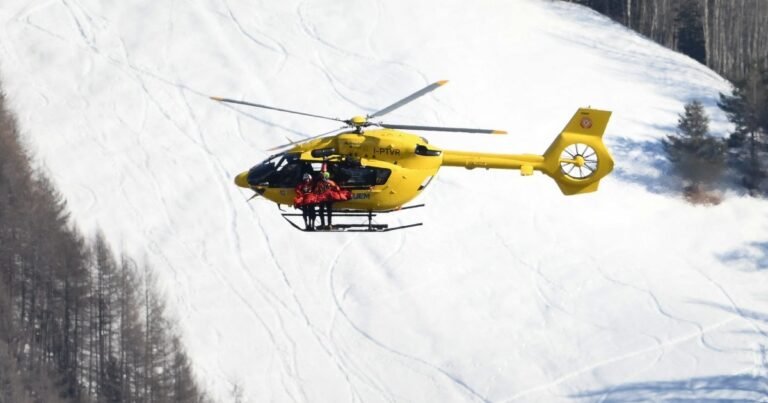
Vonn’s Olympic dream now lies in tatters after her brave effort to achieve the seemingly impossible, an attempt which ended with her being taken away in a helicopter as fans in the stands saluted her with loud applause.
One of the world’s most recognisable sports faces and an alpine skiing icon, Vonn has insisted that she could not only compete but win against the world’s best female skiers, some of whom, like Aicher, are nearly half her age.
Vonn said ahead of the games that she was planning on also competing in the team combined event on Tuesday and the super-G two days later.
But that now looks unlikely, a potential long layoff perhaps heralding the end of her comeback to skiing in her early 40s.
Vonn retired in 2019 but returned to competition in November 2024 following surgery to partially replace her right knee to end persistent pain.
Vonn had finished on the podium in every previous World Cup downhill race this season, including two victories in St Moritz and Zauchensee, and claimed two more top-three finishes in the Super-G.
But retirement looms for Vonn following a disastrous end to one of the biggest stories of the Winter Olympics.
A future with flying cars no longer lives just in concept videos. It now lives in Palo Alto, and if you have about $200,000 plus patience, you can reserve one today. The company behind that future vehicle is Pivotal, a California company that has quietly spent more than a decade turning a radical idea into a real aircraft. Its latest creation, called Helix, is now open for reservations, and delivery could be less than a year away. Yes, this is an actual flying car you can buy.
Sign up for my FREE CyberGuy ReportGet my best tech tips, urgent security alerts and exclusive deals delivered straight to your inbox. Plus, you’ll get instant access to my Ultimate Scam Survival Guide — free when you join my CYBERGUY.COM newsletter
How Pivotal turned a secret flying car into a real product
The Helix flying car cruises at about 62 miles per hour and operates in unregulated airspace under FAA Part 103 rules. (Pivotal)
Pivotal’s story started back in 2009, when founder Marcus Leng began developing an electric aircraft that could take off vertically without gasoline. In 2011, Leng became the first person to fly the real thing. He called it BlackFly and worked on it quietly for years. By 2014, the company relocated to the Bay Area. In 2018, it finally stepped out of stealth and revealed BlackFly to the public. That second-generation design became the foundation for Helix, the aircraft Pivotal now offers for sale. Leadership shifted in 2022 when Ken Karklin took over as CEO. Under his watch, the company moved from experimental flights to customer reservations and structured training.
What the Pivotal Helix flying car actually is
Helix is a single-seat, electric vertical takeoff and landing aircraft, often called an eVTOL. Unlike helicopters, it has fixed wings, while traditional airplanes need a runway to get airborne. Instead, Helix takes off and lands vertically and runs entirely on electricity. As a result, it falls under the FAA’s Part 103 ultralight category, the same regulatory class as a hang glider. That distinction matters because it means you do not need a pilot’s license to fly it.
At about 355 pounds empty, Helix is designed to fly below 200 feet in unregulated airspace. It cruises at roughly 62 miles per hour and offers around 30 minutes of flight time per charge. Meanwhile, charging takes about 75 minutes using a 240-volt outlet.
How much the Helix flying car costs to own
Helix starts at $190,000. Buyers can also add a transport trailer for $21,000 and a charger for $1,100. To reserve one, customers place a $50,000 deposit. According to Karklin, buyers who reserve today could receive their aircraft in nine to twelve months. Pivotal says it has already received more than a year’s worth of reservations.
Pivotal says it does not publicly share exact sales figures, but the company says interest remains strong. “While Pivotal doesn’t share specific order numbers, we have a healthy backlog of orders, and customers who place a deposit today can expect delivery within 9-12 months.”
How long it takes to learn to fly the Helix
Training takes place at Pivotal’s Palo Alto headquarters and at the Monterey Bay Academy Airport. The process includes passing the FAA knowledge test, completing ground school and learning how to control, maintain, transport and assemble the aircraft. Most customers complete training in under two weeks. More than 50 people have already been trained to fly Pivotal aircraft. Some are customers. Others are employees.
Why Pivotal says the Helix flying car is built for safety
Helix was designed with simplicity in mind. It has only 18 moving parts and relies heavily on redundancy to prevent system failures. The aircraft has been independently evaluated by the Light Aircraft Manufacturers Association. Pivotal’s quality management system is also certified by SAE International, which sets global aviation safety standards. Noise is another concern people often raise. During takeoff and landing, Helix sounds roughly like a couple of leaf blowers. Once airborne, people on the ground may not hear it at all.
Pivotal says years of real-world flight data across its fleet continue to shape how the aircraft performs. “Across our fleet, and including privately owned BlackFly aircraft, Pivotal eVTOLs have completed over 9000 flights to date — of those 2500+ have had a pilot onboard.” That history, the company says, comes without safety incidents.”We have a flawless flight record and a flawless safety record.” The company also points to what it has learned from connected aircraft systems.”We learn so much from these cloud-connected aircraft.” According to Pivotal, that data has had a direct impact on the Helix design. “Most importantly, we have been able to enhance the experience, make flying simpler, safer, and more enjoyable as we move into production.”
Who is already flying Pivotal’s flying cars today
A small group of early-access customers already owns and flies BlackFly aircraft, the predecessor to Helix. One of them is Tim Lum, a Washington state resident who bought his aircraft in 2023. Since then, Lum has completed about 1,200 flights in more than 100 locations across the U.S.
Despite not being an FAA-certified pilot, he regularly takes off and lands on private land with permission and uses small private airports. In addition, Lum tows the aircraft coast to coast and shares it with trained family members and friends. For him, flying is deeply personal. According to Lum, being in the air helps clear his mind and opens doors in ways money cannot.
To understand what it feels like to fly Helix for the first time, we asked Pivotal what new pilots say after their initial flights.
“First-time pilots- especially those without any aviation background-often talk about the unforgettable joy of their initial flight,” a Pivotal spokesperson told CyberGuy. “The huge smiles on every face say it all.” They say that excitement comes from more than simply being airborne. “They describe the thrill of being up in the air, feeling truly one with the aircraft, and seeing the world from an entirely new perspective.” The company says many first-time pilots are also surprised by how the aircraft feels in flight. “Many are surprised by how freeing it feels to fly, particularly because sitting at the center of gravity creates a sensation unlike traditional airplanes-more balanced, more immersive and incredibly intuitive.”
Not everyone is sold on flying cars
As with any new aircraft technology, concerns remain. Aviation groups have raised questions about crowded airspace and how communities will respond as more vehicles take to the sky. Pivotal says it approaches this differently than air taxi companies. While others focus on urban shuttles, Helix is built for single-person recreation, short-hop travel and specialized missions.
Noise and airspace concerns often come up when people hear about personal eVTOL aircraft. Pivotal says those concerns are central to how it designs and operates its vehicles. “At Pivotal, we design light eVTOL aircraft for the real world-where people live, work and play- and that includes addressing community and regulatory concerns around airspace use and noise.” The company says trust matters as much as technology. “Earning public trust is essential to making electric aviation part of everyday life, and noise is a key factor.”
Helix breaks down for transport and fits into a trailer, allowing owners to tow it and fly in different locations across the country.(Pivotal)
Pivotal says direct engagement helps address those concerns. “We engage directly with communities through events and demonstrations across the country, giving stakeholders the opportunity to experience the aircraft firsthand.” The company also points to independent testing. “Our aircraft are quiet by design. Independent NASA testing shows the Pivotal BlackFly produces approximately 70 dBA of flyover noise at 100 feet, a level aligned with how sound is perceived by the human ear.”
Federal rules also limit where ultralight aircraft can operate. “Under FAA Part 103 regulations, ultralight aircraft are allowed to operate in uncontrolled airspace, including public and private land – close to 90% of the country.” Still, Pivotal notes that there are clear boundaries. “However, ultralight aircraft are not permitted to fly over congested areas, further reducing any concerns around noise.”
How Pivotal plans to use Helix beyond personal flying
Pivotal plans to operate across three business segments: personal ownership, public safety and defense. In 2023, the company leased eight aircraft to an innovation arm of the United States Air Force and defense technology firm MTSI. That testing helped inform the latest version of Helix. Karklin believes recreational flying and short-distance travel should not be dismissed. He argues that those use cases may drive adoption faster than large urban systems.
Think your devices and data are truly protected? Take this quick quiz to see where your digital habits stand. From passwords to Wi-Fi settings, you’ll get a personalized breakdown of what you’re doing right and what needs improvement. Take my Quiz here: Cyberguy.com
Kurt’s key takeaways
Flying cars still sound wild when you say it out loud, yet Helix shows this idea has moved well past hype and headlines. This is a real aircraft, flown by real people, with real rules and real limitations. For most people, Helix will remain something to watch rather than buy. The price alone puts it out of reach. Even so, its existence matters. It shows that personal flight no longer belongs only to licensed pilots, airfields and aviation clubs. Pivotal took a slow and deliberate path to get here. That patience may be why Helix feels less like a stunt and more like a glimpse of what comes next. Just as electric cars reshaped expectations before becoming mainstream, personal eVTOL aircraft are starting at the top and working their way down. The question now is not whether flying cars are possible. It is how comfortable we become sharing the sky when they are no longer rare.
Designed for recreation and short-hop travel, Helix offers a new way to experience flight without a pilot’s license. (Pivotal)
Would you trust yourself in a single-seat flying car, or does the sky still feel like a line we should not cross? Let us know by writing to us at Cyberguy.com
Sign up for my FREE CyberGuy Report Get my best tech tips, urgent security alerts and exclusive deals delivered straight to your inbox. Plus, you’ll get instant access to my Ultimate Scam Survival Guide — free when you join my CYBERGUY.COM newsletter
Copyright 2026 CyberGuy.com. All rights reserved.
Kurt “CyberGuy” Knutsson is an award-winning tech journalist who has a deep love of technology, gear and gadgets that make life better with his contributions for Fox News & FOX Business beginning mornings on “FOX & Friends.” Got a tech question? Get Kurt’s free CyberGuy Newsletter, share your voice, a story idea or comment at CyberGuy.com.
In the international market, gold gained $234.7, or nearly 5 per cent, over the past week on the Comex, recovering to $5,000 per ounce from a low of $4,400 per ounce.
Gold prices are likely to trade firm next week as traders await key economic data, including US inflation numbers, for fresh cues on interest rate outlook, while silver may remain volatile amid shifting risk sentiment and speculative activity, analysts said.
Traders will look for cues from US GDP, PMI, non-farm payroll and inflation data. Also, inflation readings from China, Germany, and India will also be keenly watched. Speeches from US Federal Reserve officials will be closely tracked as well for indications on the timing of potential rate cuts and their impact on bullion prices, they added.
“Gold consolidation and recovery suggest that bias still remains positive. However, in case of silver, we remain cautious of volatility and further corrections,” Pranav Mer, Vice President, EBG – Commodity & Currency Research, JM Financial Services, said.
During the past week, gold futures climbed ₹7,698, or 5.2 per cent, while silver slumped ₹15,760 or nearly 6 per cent on the Multi Commodity Exchange. The commodities market remained open on Sunday due to the presentation of the Union Budget by Finance Minister Nirmala Sitharaman.
“Gold and silver endured an extremely volatile week as a sharp dollar rebound, shifting Fed expectations and aggressive position unwinding triggered one of the steepest corrections in decades,” Manav Modi, Analyst – Commodities, Motilal Oswal Financial Services Ltd (MOFSL), said.
He said easing tensions between Washington and Tehran, progress in tariff negotiations by President Donald Trump and reduced risk of a US government shutdown lowered safe-haven premiums, while Kevin Warsh being nominated as the next Fed Chair also prompted traders to scale back aggressive rate-cut expectations.
“The unwind was severe: gold recorded its sharpest decline in nearly four decades, while silver languished, amplified by heavy call option positioning, margin calls and speculative driven liquidation,” Modi noted.
The domestic markets were not spared from the turmoil. Though the Union Budget largely met expectations with no major-specific surprises, volatility in bullion persisted amid swings in the rupee. A softer USD/ INR following progress on a potential trade deal between New Delhi and Washington, which pressurized local bullion prices.
Despite the steep selloff, Modi explained that signs of stabilization emerged as forced liquidation eased and value buying returned across both metals.
“A sharp rebound followed, aided by weaker economic data and value buying after a near 15 per cent correction in gold,” he said adding that domestic gains were further supported by rebound in USD/ INR from recent lows.
In the international market, gold gained $234.7, or nearly 5 per cent, over the past week on the Comex, recovering to $5,000 per ounce from a low of $4,400 per ounce.
“There has not been much change in the fundamentals, as geopolitical uncertainty still prevails. Central banks and ETFs investors continue to add gold to their holdings, while crypto firms have also increased buying to create & trade gold tokens, backed by physical assets,” Mer said.
However, silver futures remained under pressure, slipping $1.63, or 2.08 per cent.
“Volatility grips silver as prices pass through a phase of high swings after the parabolic rally that ended on January 30 with a flash crash from an all-time high around $121 to a recent low of $64 per ounce,” Pranav Mer of JM Financial Services said.
According to Manav Modi, physical demand from China ahead of the Lunar New Year, has remained resilient and could help absorb further selling.
“Broader fundamentals still support bullion through 2026, driven by central bank buying, fiscal concerns and geopolitical risks, though near-term volatility is likely to remain elevated,” he said.
Analysts said that macroeconomic data and remarks from Fed officials are poised to dominate next week’s agenda, traders expect continued volatility but see opportunities for short-term buying on dips, especially in gold.
A US oil blockade is causing a severe energy crisis in Cuba, as the government has been forced to ration fuel and cut electricity for many hours a day, paralysing life in the communist-ruled island nation of 11 million.
Bus stops are empty, and families are turning to wood and coal for cooking, living through near-constant power outages amid an economic crisis worsened by the Trump administration’s steps in recent weeks.
President Miguel Diaz-Canel has imposed harsh emergency restrictions – from reduced office hours to fuel sales – in the backdrop of looming threats of regime change from the White House.
The Caribbean region has been on edge since the US forces abducted Venezuela’s President Nicolas Maduro last month and upped the pressure to isolate Havana and strangle its economy. Venezuela, Cuba’s closest ally in the region, provided the country with the much-needed fuel.
So, how dire is the situation in Cuba? What does United States President Donald Trump want from Havana? And how long can Cuba sustain?
A man carries pork rinds to sell as Cubans brace for fuel scarcity measures after the US tightened oil supply blockade, in Havana, Cuba, February 6, 2026 [Norlys Perez/Reuters]
What are Cuba’s emergency measures?
Blaming the US for the crisis, Cuba’s Deputy Prime Minister Oscar Perez‑Oliva Fraga appeared on state television on Friday to inform the millions of the emergency steps “to preserve the country’s essential functions and basic services while managing limited fuel resources”.
Now, the Cuban state companies will shift to a four‑day workweek, with transport between provinces dialled down, main tourism facilities closed, shorter schooldays and reduced in‑person attendance requirements at universities.
“Fuel will be used to protect essential services for the population and indispensable economic activities,” said Perez-Oliva. “This is an opportunity and a challenge that we have no doubt we will overcome. We are not going to collapse.”
The government says it will prioritise available fuel for essential services – public health, food production and defence – and push the installation of solar-based renewable energy sector and incentives therein. It will prioritise shifting energy to selected food production regions and accelerate the use of renewable energy sources, while cutting down on culture and sport activities and diverting resources towards the country’s early warning systems.
US Secretary of State Marco Rubio looks on as President Trump speaks during a cabinet meeting at the White House in Washington, DC, January 29, 2026 [Evelyn Hockstein/Reuters]
Why has the US blocked oil to Cuba?
Decades of strict US economic sanctions against Cuba, the largest island nation in the Caribbean, have destroyed its economy and isolated it from international trade. Cuba relied on foreign allies for oil shipments, such as Mexico, Russia, and Venezuela.
However, after the US forces abducted Venezuelan President Maduro, Washington blocked any Venezuelan oil from going to Cuba. Trump now says the Cuban government is ready to fall.
Under Trump, Washington has pivoted to the Western Hemisphere, which it wants to dominate. The military actions in Venezuela, the pledge to take over Greenland and changing the government in Cuba are part of the new policy.
Last month, Trump signed an executive order – labelling Cuba a threat to national security – imposing tariffs on any country that sells or provides oil to the island nation. Further pressure on the Mexican government reportedly led to oil stocks reaching a record low in Cuba.
“It looks like it’s something that’s just not going to be able to survive,” Trump told reporters last month, when questioned about the Cuban economy. “It is a failed nation.”
Havana has rejected accusations that it poses a threat to US security. Last week, the Cuban Ministry of Foreign Affairs issued a statement calling for dialogue.
“The Cuban people and the American people benefit from constructive engagement, lawful cooperation, and peaceful coexistence. Cuba reaffirms its willingness to maintain a respectful and reciprocal dialogue, oriented toward tangible results, with the United States government, based on mutual interest and international law,” a statement from the ministry said on February 2.
Trump’s goals in Cuba remain unclear; however, US officials have noted on multiple occasions that they would like to see the government change.
Responding to a question during a US Senate hearing on Venezuela, Secretary of State Marco Rubio said, “We would like to see the regime there change. That doesn’t mean that we’re going to make a change, but we would love to see a change.”
Rubio, who is of Cuban descent, is one of the most powerful figures in Trump’s administration.
“The Cuban-American lobby, which Rubio represents, is one of the most powerful foreign policy lobbies in the United States today,” Ed Augustin, an independent journalist in Havana, told Al Jazeera’s The Take.
“In the new Trump administration, [with] an unprecedented number of Cuban Americans, the lobbyists have become the policymakers,” he said, adding that Rubio has built firm control over the lobby.
On January 31, Trump told reporters, “It doesn’t have to be a humanitarian crisis. I think they probably would come to us and want to make a deal. So Cuba would be free again.”
He said Washington would make a deal with Cuba, but offered no clarity on what that means.
A woman walks past a building with an image of former President Fidel Castro as people prepare for the arrival of Hurricane Melissa in Santiago de Cuba, Cuba, October 27, 2025 [Norlys Perez/Reuters]
History of US-Cuba relations
Since Fidel Castro overthrew the pro-US regime in the Cuban revolution in 1959, the country has been under US embargo. Decades of sanctions have denied Cuba access to global markets, making even supply medicines difficult.
Castro nationalised US-owned properties, mainly the oil sector, and Washington responded with trade restrictions that soon became a full economic embargo that continues to this day, undermining Cuba’s economy.
The US also cut diplomatic ties with Havana, and three years later, a missile crisis almost brought Washington and the erstwhile USSR, an ally of Cuba, to the brink of nuclear war.
In 2014, Washington and Havana restored ties after 50 years. Two years later, US President Barack Obama travelled to Havana to meet Raul Castro.
However, during his first term as president, Trump reversed the historic move in 2017. Since then, the US has reimposed a raft of sanctions against Cuba, especially economic restrictions, leading to one of the worst economic crises in the island nation’s history. Within hours of his inauguration in January 2025, Trump reversed the previous administration’s policy of engagement with Havana.
People wait for transport at a bus stop as Cubans brace for fuel scarcity measures, Havana, Cuba, February 6, 2026 [Norlys Perez/Reuters]
How long can Cuba sustain?
Until last month, Mexico reportedly remained Cuba’s major oil supplier, sending nearly 44 percent of total oil imports, followed by Venezuela at 33 percent, while nearly 10 percent was sourced from Russia and a smaller amount from Algeria.
According to Kpler, a data company, by January 30, Cuba was left with oil enough to last only 15 to 20 days at current levels of demand.
Cuba currently needs an estimated 100,000 barrels of crude oil per day.
A man rides a bicycle in Havana, Cuba, on February 6, 2026 [Yamil Lage/AFP]
What has the UN said about the Cuban crisis?
United Nations spokesperson Stephane Dujarric told reporters on Wednesday that “the secretary-general is extremely concerned about the humanitarian situation in Cuba, which will worsen, and if not collapse, if its oil needs go unmet”.
Dujarric said, for more than three decades, the UN General Assembly has consistently called for an end to the embargo imposed by the US on Cuba, adding that the UN urges “all parties to pursue dialogue and respect for international law”.
Francisco Pichon, the senior-most UN official in Cuba, described “a combination of emotions” in the country – “a mix of resilience, but also grief, sorrow and indignation, and some concern about the regional developments”.
The UN team in Havana says the vast majority of Cubans are hit by rolling blackouts, with the number of people in vulnerable situations increasing significantly.
“The last two years have been quite tough,” Pichon said, adding that urgent changes are needed to sustain Cuba “in the midst of the severe economic, financial and trade sanctions”.
Breezy Johnson put Team USA on the board Sunday when she won a gold medal in the alpine skiing women’s downhill event at the 2026 Winter Olympics.
Johnson was the sixth rider to go down the mountain and scorched the course with a 1:36.10 time. She wasn’t exactly the favorite going into the race and had to hold her breath as 30 other competitors had to go downhill after her.
United States’ Breezy Johnson celebrates at the finish area of an alpine ski women’s downhill race, at the 2026 Winter Olympics, in Cortina d’Ampezzo, Italy, Sunday, Feb. 8, 2026. (AP Photo/Andy Wong)
Italy’s Sofia Goggia won a silver medal in 2022 and a gold in 2018 and had a good chance to pick up another gold medal in the Milan Cortina event. However, one false move threw her time off enough to keep Johnson in the lead.
Johnson also had to wait through Lindsey Vonn’s run. But Vonn’s hopes of eclipsing her American teammate and pull off a miraculous gold medal victory came to a nasty halt.
As Vonn entered the first sector, she crashed hard. The event was put on hold for several minutes as medical professionals tended to Vonn and waited for a helicopter to carry her off the mountain. She was coming to the event injured as she ruptured her ACL in a crash before the Olympics began. Vonn powered through a training session on Friday to be able to stay in the event.
United States’ Breezy Johnson speeds down the course during an alpine ski women’s downhill race, at the 2026 Winter Olympics, in Cortina d’Ampezzo, Italy, Sunday, Feb. 8, 2026. (AP Photo/Robert F. Bukaty)
Johnson is the first American to medal at the Winter Olympics. It’s also the first time she’s medaled at any Games. She was supposed to compete for Team USA in 2022 but a knee injury forced her off the team.
She is the second American woman to take gold in the event, following in Vonn’s footsteps.
United States’ Breezy Johnson speeds down the course during an alpine ski women’s downhill race, at the 2026 Winter Olympics, in Cortina d’Ampezzo, Italy, Sunday, Feb. 8, 2026. (AP Photo/Marco Trovati)
Germany’s Emma Aicher won the silver medal and Goggia picked up the bronze.
Lyubomir Korba is extradited from the UAE, where he fled hours after Friday’s attack, Russia’s FSB says.
Published On 8 Feb 20268 Feb 2026
Share
A man accused of shooting a high-ranking Russian military official on Friday has been taken into custody, according to Russia’s Federal Security Service (FSB).
The suspect, Russian national Lyubomir Korba, was arrested and extradited from Dubai in the United Arab Emirates, where he fled hours after the attack, Russia’s state-run TASS news agency reported on Sunday, citing the FSB.
Recommended Stories
list of 3 itemsend of list
Korba is accused of ambushing and shooting Russia’s deputy military intelligence chief, Lieutenant General Vladimir Alekseyev, in the stairway of his Moscow apartment building, leaving him with wounds in his arm, leg and chest. Alekseyev was hospitalised and has undergone surgery, according to Russian media.
Korba was detained in Dubai with assistance from UAE partners, according to the FSB, Russia’s primary intelligence and security agency.
An alleged accomplice was arrested in Moscow while another, a woman, crossed into Ukraine, the FSB said. TASS added that “a search for the organisers of the attack is ongoing.”
Moscow blames Kyiv
Russian officials accused Ukraine of being behind the attack, which occurred a day after peace talks involving Russian, Ukrainian and United States officials had concluded in Abu Dhabi with a prisoner swap but no breakthrough on ending Russia’s four-year war on Ukraine.
Russian Foreign Minister Sergey Lavrov called the shooting a “terrorist act” by Ukraine aimed at sabotaging those talks.
The incident is the latest in a series of attacks on senior Russian military officers that Moscow has attributed to Ukraine.
In December, a car bomb killed Lieutenant General Fanil Sarvarov, head of the Operational Training Directorate of the General Staff.
In April, Lieutenant General Yaroslav Moskalik, deputy head of the main operational department of the General Staff, was killed by a bomb placed in his car parked near his apartment building just outside Moscow.
After Moskalik’s killing, Ukrainian President Volodymyr Zelenskyy said he had been briefed on the “liquidation” of top Russian military figures, adding that “justice inevitably comes” without naming Moskalik.
Korba’s arrest came as the Ministry of Defence said Russian forces captured two more villages in northeastern Ukraine’s Kharkiv and Sumy regions, furthering a slow advance it hopes may give the Kremlin the edge in peace negotiations.
The main obstacle in the talks remains the future status of territory in eastern Ukraine. Moscow has demanded Kyiv cede the fifth of the Donetsk region that it still controls, a proposal Ukraine has rejected. Trilateral negotiations are expected to continue in the coming weeks, according to Ukraine’s chief negotiator, Rustem Umerov.
Bad Bunny as the Super Bowl LX halftime show performer has sparked reactions across the board ahead of the game between the Seattle Seahawks and New England Patriots.
The Puerto Rican Grammy Award-winning artist has been outspoken against Trump administration policies, specifically the use of U.S. Immigration and Customs Enforcement (ICE) agents targeting illegal immigrants.
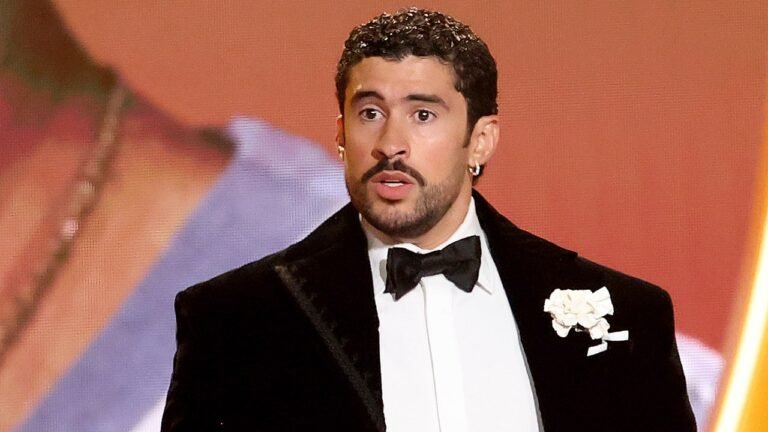
Bad Bunny speaks on stage at the Super Bowl LX Pregame & Apple Music Super Bowl LX Halftime Show Press Conference at Moscone Center West on Feb. 5, 2026 in San Francisco, California.(Jeff Kravitz/FilmMagic)
NFL Commissioner Roger Goodell said earlier in the week that he believed Bad Bunny understood the platform that comes with the halftime show and was hopeful that the artist would unite fans rather than cause more division. Former NFL star Robert Griffin III shared the same sentiments.
“One thing I know Bad Bunny can do is that he can all make us tap our feet and shake our booties. I want him to go out there and unite people with music,” he told Fox News Digital on Saturday night ahead of Sports Illustrated’s Super Bowl party. “Music we can all dance to it and enjoy. So, I’m looking forward to the performance. I’m not worried about the politics. I’m not worried about any statements. Just have a good time and do what you’re supposed to do, uniting the world around something that is eternal. Music is the heartbeat of the world.”