Reference #18.94adc17.1778314207.a8ffcac
https://errors.edgesuite.net/18.94adc17.1778314207.a8ffcac
Reference #18.94adc17.1778314207.a8ffcac
https://errors.edgesuite.net/18.94adc17.1778314207.a8ffcac
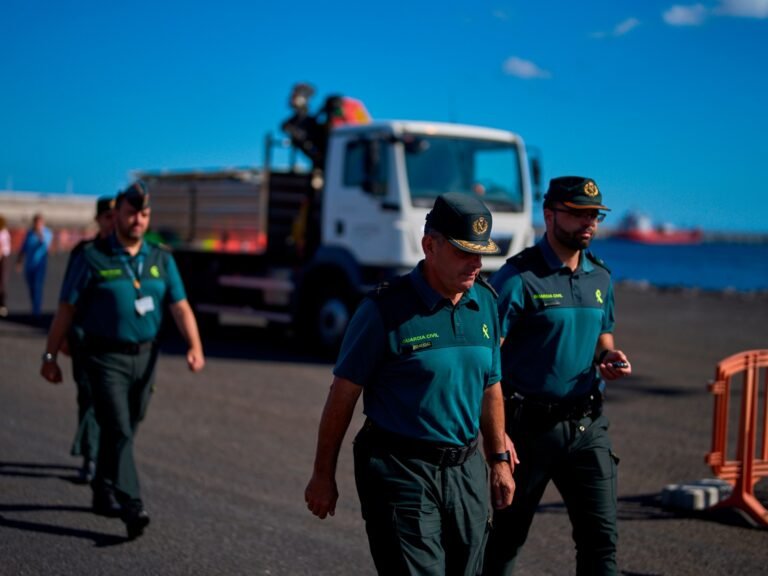
140 passengers and crew on the MV Hondius vessel will be ‘completely isolated’ and evacuated, say Spanish authorities.
Published On 9 May 2026
A cruise ship hit by a hantavirus outbreak is en route to Spain’s Canary Islands, where it plans to drop off 140 passengers and crew so they can be evacuated after weeks stranded at sea.
The Dutch-flagged MV Hondius vessel, on which at least eight people fell ill, is due to reach the Spanish island of Tenerife, off the coast of West Africa, early Sunday morning.
Passengers will be taken to a “completely isolated, cordoned-off area”, said the head of Spain’s emergency services, Virginia Barcones. World Health Organization (WHO) chief Tedros Adhanom Ghebreyesus will be on the island to help coordinate their evacuation, according to Spanish ministry sources cited by AFP.
While three people have died since the outbreak, and five passengers who left the ship are known to be infected with hantavirus, cruise operator Oceanwide Expeditions said Friday there were no people with symptoms of a possible infection on board the ship.
The WHO considers the risk to the wider public from the outbreak as low.
“This is not a new COVID,” said WHO spokesman Christian Lindmeier. “The virus is not that contagious that it easily jumps from person to person.”
Hantavirus is usually spread by the inhalation of contaminated rodent droppings and is not easily transmitted between people. But the Andes virus detected in the cruise ship outbreak may be able to spread between people in rare cases. Symptoms usually show between one and eight weeks after exposure.
Health authorities across four continents were tracking down and monitoring more than two dozen passengers who disembarked the ship before the deadly outbreak was first detected on May 2. They were also scrambling to trace others who may have come into contact with them.
Some Spanish residents expressed concern that the passengers’ arrival would create a health risk on the island and that not enough measures were in place to contain it.
Iustitia Europa, an anti-establishment Spanish group that rose to prominence by challenging COVID-era restrictions, called for the MV Hondius to be barred from reaching Spanish shores.
“The Canary Islands cannot become Europe’s health laboratory … We demand transparency, responsibility, and protection for Spaniards to avoid repeating the mistakes of the past,” the group posted on X.
Alicia Rodriguez, a bar owner on Tenerife, said the incoming vessel “has been the talk of the town” for days. “I think to a certain extent we have to be concerned, but hopefully they’ll try to handle things in the least dangerous way possible,” she told Al Jazeera.
Several Spanish passengers told The Associated Press news agency they worry they will be ostracised once on land. “We’re scared by all the news that’s coming out, by how people are going to receive us,” said one of the passengers, who declined to give their name.
“You see what’s out there and you realise you’re heading into the eye of a hurricane,” said another passenger, who also requested anonymity. “Many people forget that in here there are more than 140 passengers. In reality, there are 140 human beings.”
Once the ship reaches Tenerife, passengers will be evacuated in small boats to buses only after their repatriation flights are ready to take them, Spanish officials said. They will then be transported in isolated and guarded vehicles, officials added, with the parts of the airport they travel through being cordoned off.


cPanel has released updates to address three vulnerabilities in cPanel and Web Host Manager (WHM) that could be exploited to achieve privilege escalation, code execution, and denial-of-service.
The list of vulnerabilities is as follows –
The shortcomings have been patched in the following versions –
cPanel has released 110.0.114 as a direct update for customers who are still on CentOS 6 or CloudLinux 6. Users are advised to update to the latest versions for optimal protection.
While there is no evidence that the vulnerabilities have been exploited in the wild, the disclosure comes days after another critical flaw in the product (CVE-2026-41940) has been weaponized by threat actors as a zero-day to deliver Mirai botnet variants and a ransomware strain called Sorry.
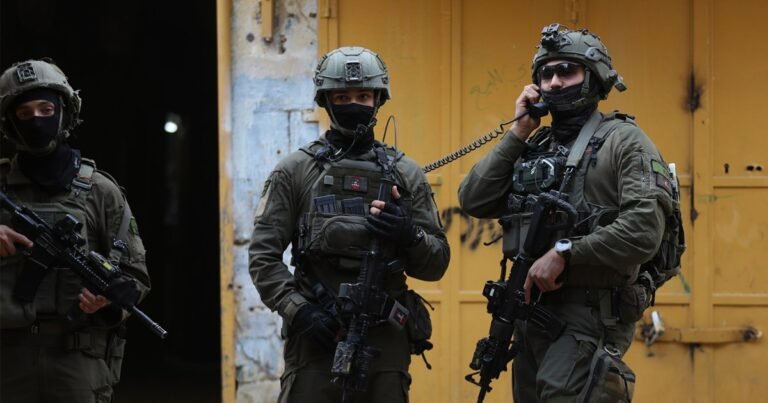
Dozens of Israeli settlers stormed various areas of the West Bank, set cars on fire and attacked Palestinians.
Published On 9 May 2026
Israeli settlers have launched another wave of raids in the occupied West Bank, with houses and cars set on fire and a Palestinian child attacked.
The Palestinian Wafa news agency reported that a man and his child were attacked with “sharp instruments” in the village of Khirbet Shuweika, south of Hebron, on Friday.
The father and child were taken to hospital due to head injuries.
Israeli settlers torched a home in the village of al-Lubban Asharqiya, south of Nablus, after which members of the Palestinian Civil Defence arrived to extinguish the blaze.
In Abu Falah, northeast of Ramallah, Wafa cited security sources that the settlers “stormed the outskirts of the village, burned a citizen’s vehicle, and wrote racist slogans on the walls of houses”.
In the village of al-Asa’asa in Jenin, Israeli forces forced residents to exhume a newly buried body and take it elsewhere. They claimed the first site was too close to an illegal Israeli settlement.
Israeli settlers also attacked a Palestinian man in the town of Beit Fajjar, south of Bethlehem, and stole his mobile phone.
A group of Palestinians were picnicking in the Burak Sulayman (Solomon’s Pools) area, south of Bethlehem, but were forced to leave after Israeli forces fired stun grenades at them.
The Palestinian Red Crescent Society treated two people for tear gas inhalation and evacuated five others from the scene after the attack.
In the town of Tuqu, southeast of Bethlehem, the mayor, Taysir Abu Mufreh, told Wafa that Israeli forces fired “tear gas and sound bombs” at a group of worshippers who were leaving a local mosque and locked a number of them inside.
On Friday, Israeli forces arrested four Palestinian men in the town of Battir, west of Bethlehem, while they were hiking near a railway line. The following day, three more Palestinians were arrested during a raid on the city of Nablus.
Settlers attacked the town of Silwad, northeast of Ramallah, leading to clashes when residents confronted them.
Human rights groups say Israeli authorities have allowed the settlers to operate with total impunity in their attacks against Palestinians.
In February, Israel approved a plan to claim large areas of the occupied West Bank as “state property”.
More than 700,000 Israelis live in illegal settlements in the occupied West Bank.
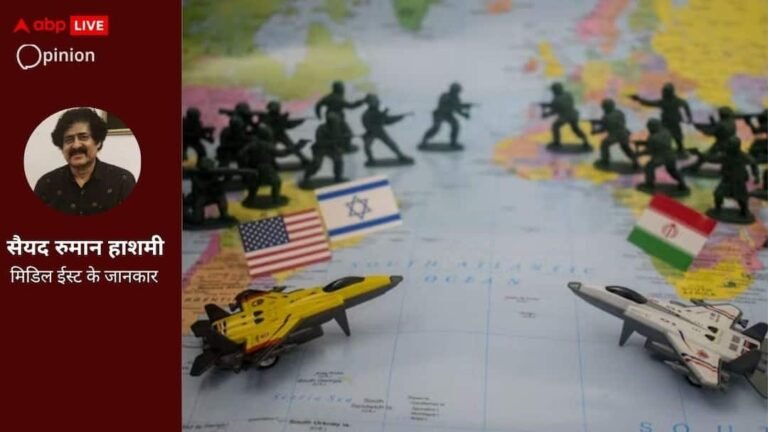
The conflict that broke out between Iran, America and Israel in the Middle East and the fragile ceasefire that followed has shaken the politics not only of the Gulf region but of the entire world. The situation has reached such a stage that it would not be wrong to say that this war has created a “new world equilibrium”.
The recent military clash between America and Iran has once again exposed the weakness of this ceasefire. After the encounter between American warships and Iranian forces in the Strait of Hormuz using missiles, drones and high-speed boats, the eyes of the world have again turned to the Gulf. The US retaliated, but Donald Trump refused to consider it a “violation of the embargo”, calling it a “love tap”. This statement indicates that Washington wants to avoid a major war with Iran.
US wants to avoid a big war
After the long wars in Afghanistan and Iraq, the American public is not in favor of another Middle East war. There is a growing perception within the United States that this conflict is primarily related to Israel’s security and its political interests, and not directly to America’s interests. This is the reason why Trump did not fully trust Benjamin Netanyahu before the ceasefire, which has also exposed the strategic differences between the two countries.
While the Russia-Ukraine war united the Western countries, the Iran-Israel tension has created cracks in the same alliance. Many countries of Europe have now started distancing themselves from American military policy. Political changes are clearly visible in the Gulf region also. There are reports of growing divisions within the UAE, where some emirates, particularly Sharjah, Abu Dhabi and Dubai, are not entirely satisfied with Israel’s growing closeness to Israel.
Iran showed diplomatic activism
Iran has shown activity at the military as well as diplomatic level during this crisis. He is trying to improve relations with Saudi Arabia, Oman and other Arab countries. A new political axis seems to be emerging in the Muslim world too, which includes countries like Saudi Arabia, Pakistan, Turkey and Egypt.
The root of this entire crisis is the issue of Palestine, which even today remains the biggest cause of instability in the Middle East. Unless the “two-state solution” is implemented, i.e. both Israel and Palestine are recognized as independent states, lasting peace does not seem possible.
This conflict is no longer just a military confrontation, but has become a major battle of changing global alliances and balance of power, which can deeply influence world politics in the times to come.
(These are the personal views of the author)
Reference #18.490dde17.1778313201.2b03e2a4
https://errors.edgesuite.net/18.490dde17.1778313201.2b03e2a4
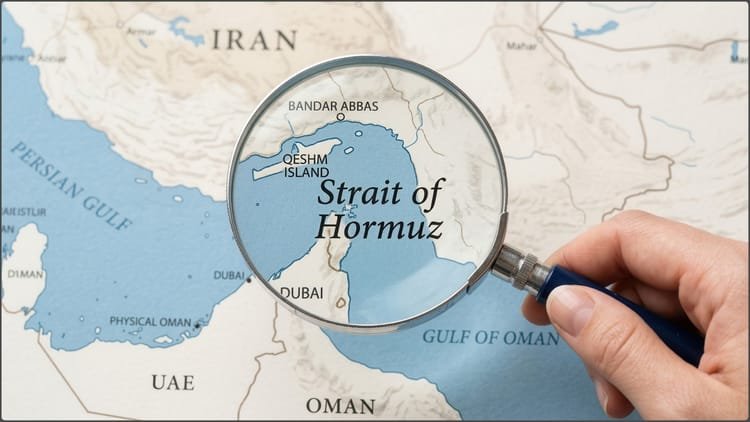
An Indian sailor has died near the Strait of Hormuz. Along with this, many others have been injured. Actually, this accident happened due to fire in a wooden boat. A government source gave this information on Saturday.
17 people were rescued
He said 17 other Indian crew members were rescued after the incident on Friday. It was also informed that the exact cause of the fire is still being ascertained. According to sources, the crew members were rescued by a ship passing through the area. The incident comes amid escalating hostilities between Iran and the US over the Strait of Hormuz, a vital sea route between the Persian Gulf and the Gulf of Oman through which a significant portion of the world’s oil supply passes.
Indian Consulate officials met
Another source said officials of the Indian Consulate in Dubai met the rescued Indian nationals last night. Sources said the Consulate is in touch with the boat owner and is providing all possible assistance.
A barrister has suggested that a “dead woman was put on trial” in the case of Christopher Trybus, who was cleared of manslaughter by a jury.
Charlotte Proudman’s comments came after Trybus was found not guilty by a jury of eight women and four men, who deliberated for more than 40 hours. He was acquitted of all charges: manslaughter, coercive and controlling behaviour and two counts of rape.
The case had been brought after his wife, Tarryn Baird, 34, took her own life in 2017. Prior to her death, she made allegations that Trybus had been abusive to her.
Trybus’s defence argued that Baird had made false allegations because she was “bored and lonely”, and because she had been “desperately seeking help” for her mental health issues, “and feeling she wasn’t receiving it and she may have become addicted to the attention that her allegations brought”.
Trybus, 44, denied all of the charges and said he had been unaware of his wife’s allegations before her death. He told the court: “I feel bad she was in such a place that she was saying these things – what was going through her mind?”
He said that the day Baird had died was “the worst day of my life, just absolutely terrible, I don’t know how else to describe it”.
Baird had lived with PTSD from witnessing violent incidents in South Africa where the couple had lived before they moved to the UK, and had taken several prescription drug overdoses in the months leading up to her death.
Trybus told the court that he could not have caused some of the injuries Baird had presented to doctors with, as he was not in the country at the time.
After the trial, Proudman criticised Trybus’s defence for aspects of its closing speech.
The defence had questioned how Trybus was “supposed to answer the allegations of a ghost from 10 years ago”. It described the case as “Kafkaesque”, and suggested the prosecution had “an agenda”.
Trybus’s barrister, Katy Thorne KC, said: “They are totally obsessed with a dogma, this whole case is based on an agenda that when women allege violence and domestic abuse, they must be telling the truth.”
Proudman said she felt the comments meant that a “dead woman was put on trial”, while “the defendant faded into the background”.
Thorne said Proudman’s remarks did not “accurately reflect what was said to the jury” and showed a “limited understanding of the facts of the case”. Shesaid Proudman, who practises family law, had not been in court to hear evidence during the trial.
Trybus’s defence argued the case had echoes of the French Revolution, where innocent people had been swept up by a cause that was ultimately trying to achieve a positive aim, and compared Trybus to Mr Cellophane from the film Chicago, likening Baird to Roxy, a murderer who manipulates her husband.
Thorne also made a direct appeal to the men on the jury, saying: “You might feel very afraid now, because if you enter into a relationship with a woman who’s making allegations against you, even if they turn out to be untrue, you will be prosecuted even if the allegations are uncredible, you will be prosecuted.”
Proudman said: “[The defence] claimed there is an ‘agenda’ to believe women by the criminal justice system when in fact it barely prosecutes rape and routinely retraumatises victims. That claim is false and misleading.”
She also criticised the defence for “telling male jurors to be afraid of false allegations”, saying they were “vanishingly rare” and represented less than 2% of reports made.
In response, Thorne said: “This trial was prosecuted by the most senior prosecutor in the country and presided over by a senior high court judge whose background is in discrimination law. Had I said anything to the jury which was improper or did not reflect the evidence in the case, the prosecution and the judge would have objected. They did not.
“Dr Proudman was not present for any part of the trial and did not hear any of the evidence. Her comments do not accurately reflect what was said to the jury and show a limited understanding of the facts of the case.”
However, Janaya Walker, the interim director of End Violence Against Women, said that many women were “treated as suspects” by the criminal justice system after dying by suicide. “Successive governments have rightly taken action to address the fact that the criminal justice system and courts are often a site of harm and retraumatisation … with high dropout rates and low prospects of justice.
“However, we can see that harmful sexist beliefs about women are still widely prevalent, with women treated as suspects even after they’ve died by suicide – this includes a culture of disbelief and wrongful claims about false allegations, which are exceptionally rare.”
Although the Crown Prosecution Service (CPS) has yet to see a successful case in a jury trial for a prosecution of manslaughter after a suspected suicide related to domestic abuse, it has said it will consider bringing cases where there is evidence to do so.
A spokesperson for the CPS said: “We respect the decision of the jury. They have heard all the evidence and come to their verdicts.”
In the UK and Ireland, Samaritans can be contacted on freephone 116 123, or email jo@samaritans.org or jo@samaritans.ie. In the US, you can call or text the National Suicide Prevention Lifeline on 988, chat on 988lifeline.org, or text HOME to 741741 to connect with a crisis counselor. In Australia, the crisis support service Lifeline is 13 11 14. Other international helplines can be found at befrienders.org
Reference #18.2d4adc17.1778365422.751b2a5
https://errors.edgesuite.net/18.2d4adc17.1778365422.751b2a5
Benjamin Netanyahu interrupted an uncharacteristically long silence over the Iran conflict this week with a video commentary insisting he had “full coordination” with Donald Trump, with whom he spoke “almost daily”.
The insistence that all was rosy in the US-Israeli relationship followed weeks of reports in the domestic press that Israel was no longer being consulted over the Iran conflict, and even less over Pakistani-brokered peace talks. Such is the scepticism over Netanyahu’s trustworthiness among the general public and independent press that the immediate reaction among observers to his video statement was speculation that the reality could be even worse than they had imagined.
“He is doing so much talking about how great the relationship is that it makes me rather concerned about how much tension there is,” said Dahlia Scheindlin, an American-Israeli political consultant and pollster. “I wouldn’t be surprised, as the war is clearly going very poorly from all perspectives related to the original goals.”
The US president and the Israeli prime minister have long presented mirror images of each other. They have both pioneered populist methods to dominate domestic politics, cutting away at the constitutional underpinning of the very systems that brought them to power, with little regard for past norms or constraints.
Since 28 February, when they brought the Gulf to a standstill with a devastating US-Israeli assault on Iran, they have bound their fate together so tightly that it will be very hard for either of them to unstick themselves from its legacy.
Netanyahu spent decades trying to persuade a succession of US presidents to join Israel in a war against the Islamic Republic. He went to unprecedented lengths for a foreign leader wading into US domestic politics, in particular when it came to undermining the multilateral nuclear deal with Iran of 2015, which had been Barack Obama’s flagship foreign policy achievement.
Netanyahu helped coax Trump to walk out of that deal in 2018, which in turn led to a ramping up of Iran’s nuclear programme and accumulation of a stockpile of highly enriched uranium sufficient for a dozen nuclear warheads. And in February this year, according to extensive reporting in the US press, Netanyahu was instrumental in convincing Trump that war was the only solution to the threat, and one that would be easily won.
By then, the Israeli leader was pushing at a door that was already ajar. The month before, US forces had pulled off an extraordinary coup, swooping into Caracas in a surprise raid and whisking away the Venezuelan president, Nicolás Maduro.
“Netanyahu, being the conman that he is, used Venezuela as an example,” Alon Pinkas, a former Israeli diplomat, said. “He said to him: ‘Look what you did in Venezuela. It was painless. It was effortless. It was beautiful. You changed the regime.’
“Then he begins bombarding Trump with intelligence data showing that Iran had expanded its missile production and its missile-launching capabilities, and still has 450kg of highly enriched uranium,” Pinkas said.
With the help of the Mossad director, David Barnea, Netanyahu portrayed the Tehran regime as an overripe fruit ready to drop from the branch.
“He told Trump: ‘The Iranian economy is in shambles. The people are on the precipice of revolt. The Revolutionary Guards are losing control. Life in Iran is intolerable. This is our time,’” Pinkas said. “‘What we could do together is bring down the regime … think that together, jointly, we can win the war in three, four days.’”
According to multiple reports, US intelligence and military officials stressed the risk that Iran could attack US allies in the Gulf and close the strait of Hormuz. But Netanyahu – and US administration hawks including the defence secretary, Pete Hegseth – prevailed, arguing that Iran’s Revolutionary Guards were overrated and would not have the strength to hit back.
They were proved wrong on every count. The Iranian people did not rise up, the regime did not fall, the Kurds did not attack from the north-west and the Revolutionary Guards were able to inflict withering damage on US bases and Gulf monarchies, close the Hormuz strait and trigger a global economic crisis.
“Some 30 days into the war, by the end of March there were signs that Trump was very disappointed with Netanyahu,” Pinkas said.
The president stopped mentioning Israel and Netanyahu in his relentlessly upbeat public statements about the war. When US negotiators started talking to their Iranian counterparts and Pakistani mediators in the run up to a ceasefire announcement on 8 April, Israel was left out of the loop. Israeli officials complained to the press that they had to use their intelligence assets to try to find out what was going on.
There are varying accounts of what is on the table in the peace talks, but there has been no mention of Iran’s missile arsenal or its use of regional proxies, both of which are Israeli priorities.
When Trump did mention Netanyahu, it was mostly to tell him off. After Israel bombed Iran’s South Pars gasfield, for example, Trump said he had told Netanyahu “not to do that”.
“On occasion, he’ll do something, and if I don’t like it … we’re not doing that any more,” the president said.
When the ceasefire was agreed, Trump initially sided with Netanyahu’s interpretation that Lebanon was excluded and then, with the truce in jeopardy, swiftly reversed himself and made Israel follow suit.
“Israel will not be bombing Lebanon any longer. They are PROHIBITED from doing so by the U.S.A. Enough is enough!!!” he said in a social media post on 17 April, in an unprecedented public rebuke to Netanyahu.
Since this nadir, Israeli government officials have been briefing reporters that the ceasefire cannot last and that a return to hostilities was inevitable. Last weekend, there was a flurry of reporting in Israeli newspapers that intensive US-Israeli military coordination had resumed at their earlier tempo, in anticipation of further joint strikes.
Those strikes have yet to materialise, however, and the Trump administration has sought to downplay the significance of recent exchanges of fire around the strait of Hormuz.
Daniel Shapiro, a former US ambassador to Israel, said Trump is already looking beyond Iran to his next major challenge: a 14 May trip to China and a critical meeting with President Xi Jinping.
“President Trump is going to want to have this war more or less behind him by the time he goes to Beijing,” Shapiro said. “Otherwise, he will be in the position of a supplicant seeking Xi Jinping’s help to get them to convince Iran to accept his terms or to make concessions they haven’t made. And that’s a very weak position to be in when he would rather focus on getting some of the Chinese-US economic relations on a more stable ground.”
From prior experience in the Gaza and Lebanon conflicts, Netanyahu can draw some confidence that even if he is forced to accept a temporary peace deal that runs counter to his own interests, Trump’s attention will inevitably be diverted elsewhere, and Israel’s hands will be freed again.
“If Trump reaches a deal, the Israelis will have to accept it for the time being, and then perhaps they will revisit it to ‘mow the grass’, as they say, on the missile programme or on the nuclear programme at some later time,” Shapiro said.
Netanyahu also knows there are limits to the extent Trump can free himself from their geopolitical embrace. As Trump’s former national security adviser, John Bolton, points out, Netanyahu can always make waves in US politics.
“I think Trump’s jealous of Netanyahu because Netanyahu is one of the few people who can generate more press than he does,” Bolton said, pointing out that despite Trump’s imposition of a ceasefire, “he’s still giving Netanyahu a pretty free hand in Lebanon.”
Pinkas, who served as adviser to prime ministers Ehud Barak and Shimon Peres, argues that strategic failure in the Iran war will also prove to be too powerful a glue for Trump to dissolve quickly.
“The problem Trump has is that if he lashes out at Netanyahu, if he expresses his disillusionment or desperation, he basically admits he was led into this war,” Pinkas said, adding that the conflict looks certain to hurt both men at the ballot box.
Netanyahu must hold an election by October, which by current polling would finally end his premiership. The elections in the US are congressional, but they could still render Trump a lame duck, at least in domestic politics.
“This affects Netanyahu politically and this affects Trump politically,” Pinkas said. “In other words, they have screwed each other pretty badly.”
