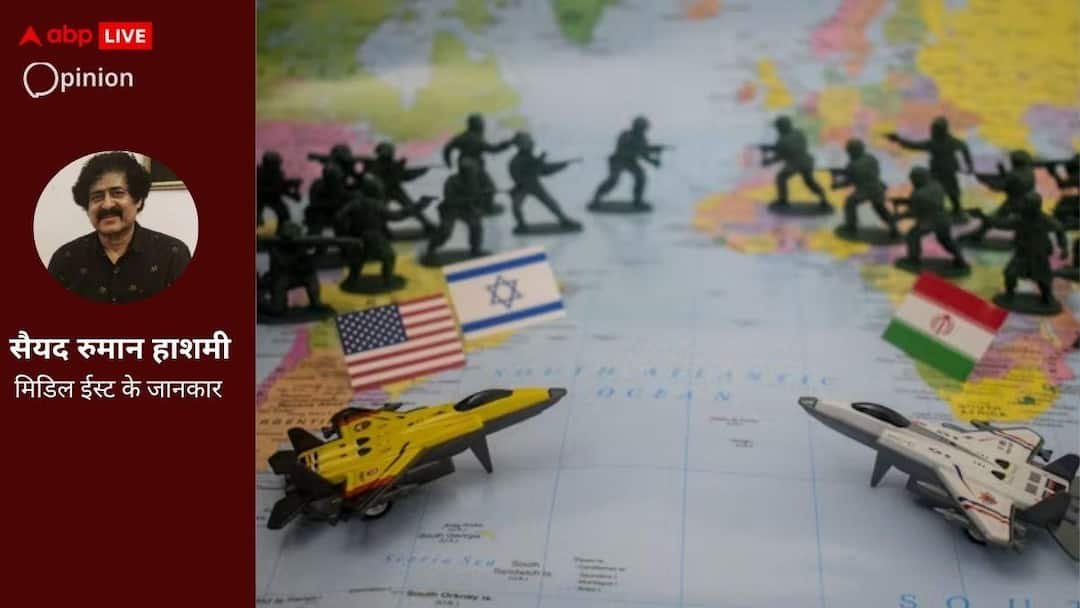
The conflict that broke out between Iran, America and Israel in the Middle East and the fragile ceasefire that followed has shaken the politics not only of the Gulf region but of the entire world. The situation has reached such a stage that it would not be wrong to say that this war has created a “new world equilibrium”.
The recent military clash between America and Iran has once again exposed the weakness of this ceasefire. After the encounter between American warships and Iranian forces in the Strait of Hormuz using missiles, drones and high-speed boats, the eyes of the world have again turned to the Gulf. The US retaliated, but Donald Trump refused to consider it a “violation of the embargo”, calling it a “love tap”. This statement indicates that Washington wants to avoid a major war with Iran.
US wants to avoid a big war
After the long wars in Afghanistan and Iraq, the American public is not in favor of another Middle East war. There is a growing perception within the United States that this conflict is primarily related to Israel’s security and its political interests, and not directly to America’s interests. This is the reason why Trump did not fully trust Benjamin Netanyahu before the ceasefire, which has also exposed the strategic differences between the two countries.
While the Russia-Ukraine war united the Western countries, the Iran-Israel tension has created cracks in the same alliance. Many countries of Europe have now started distancing themselves from American military policy. Political changes are clearly visible in the Gulf region also. There are reports of growing divisions within the UAE, where some emirates, particularly Sharjah, Abu Dhabi and Dubai, are not entirely satisfied with Israel’s growing closeness to Israel.
Iran showed diplomatic activism
Iran has shown activity at the military as well as diplomatic level during this crisis. He is trying to improve relations with Saudi Arabia, Oman and other Arab countries. A new political axis seems to be emerging in the Muslim world too, which includes countries like Saudi Arabia, Pakistan, Turkey and Egypt.
The root of this entire crisis is the issue of Palestine, which even today remains the biggest cause of instability in the Middle East. Unless the “two-state solution” is implemented, i.e. both Israel and Palestine are recognized as independent states, lasting peace does not seem possible.
This conflict is no longer just a military confrontation, but has become a major battle of changing global alliances and balance of power, which can deeply influence world politics in the times to come.
(These are the personal views of the author)