Shohei Ohtani has made plenty of opponents, both on the mound and at the plate, look completely foolish, but the swing-and-miss he got out of Jose Altuve on Tuesday night in Houston was downright stunning.
After striking out and then grounding out in his first two at-bats against the Dodgers’ star, the second baseman stepped to the dish in the bottom of the fifth inning with base runners on the corners. Sitting on a 1-2 count, Ohtani threw a sweeper hoping to get Altuve to chase one away.
And boy, did he chase.
Los Angeles Dodgers starting pitcher Shohei Ohtani pitches during the third inning against the Toronto Blue Jays at Rogers Centre in Toronto on Apr. 8, 2026.(John E. Sokolowski/Imagn Images)
Ohtani’s pitch never came close to the strike zone, but despite the pitch getting way away from him, Altuve stuck his bat out and did not come close to making contact.
The pitch from Ohtani would have hit a left-handed batter, and Altuve would have needed a ladder to even come close to reaching it, but nevertheless, he pulled the trigger.
Houston Astros left fielder Jose Altuve walks off the field during the game against the San Diego Padres at Daikin Park on April 18, 2025.(Troy Taormina/Imagn Images)
The camera focusing on Ohtani’s face after earning the bizarre K is classic. It looked like he was fighting for his life to not start laughing at what he just witnessed from Altuve.
Altuve finished the contest going 0-for-4 at the plate while striking out three times, but his Astros were able to get the best of Los Angeles 2-1 on the night on the back of four total hits.
Ohtani struck out eight batters in his seven innings of work on the mound, but the two solo home runs he gave up ended up being the difference in the tight contest.
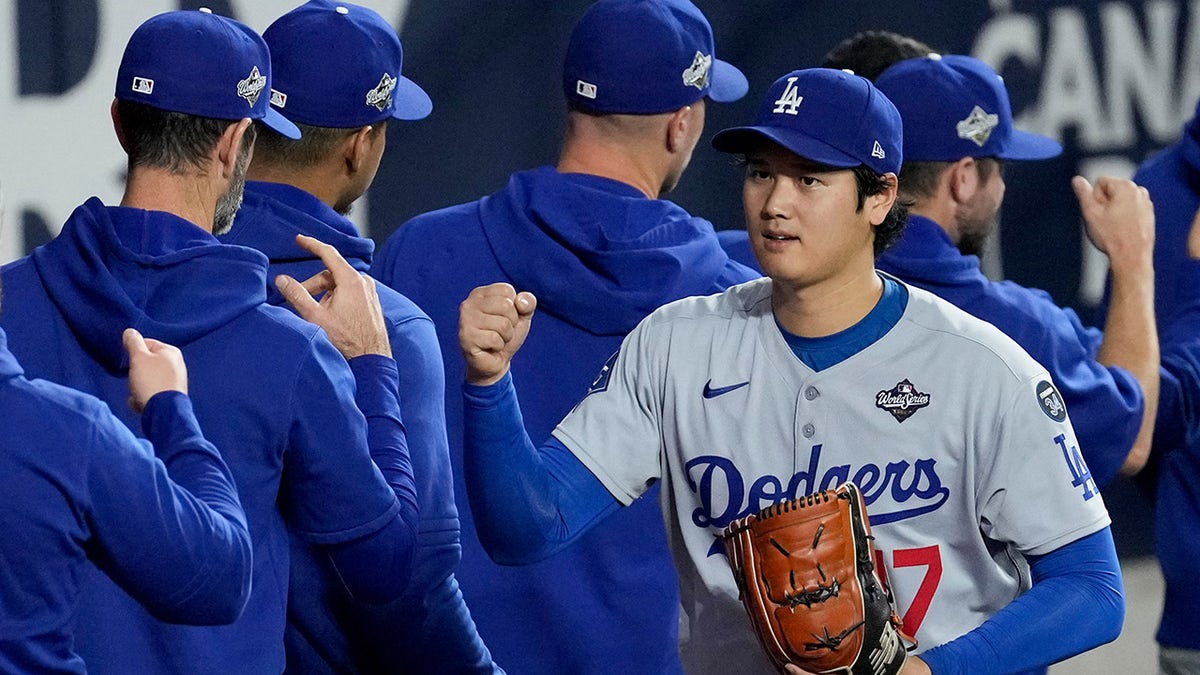
Shohei Ohtani greets his Los Angeles Dodgers teammates in the bullpen before Game 7 of the World Series against the Toronto Blue Jays in Toronto on Nov. 1, 2025.(Ashley Landis/AP)
Islamabad, Pakistan – On Monday morning, the United States Navy began escorting commercial vessels through the Strait of Hormuz. By Tuesday afternoon, the operation had been paused.
President Donald Trump announced the reversal on Truth Social, citing the “request of Pakistan and other Countries” and “great progress” towards a “complete and final agreement” with Iran.
Recommended Stories
list of 4 itemsend of list
Earlier on Tuesday, US Secretary of State Marco Rubio declared that Operation Epic Fury, the air and naval campaign launched on February 28, was “concluded”.
What Washington now sought, he said, was a “memorandum of understanding for future negotiations”.
For weeks, that is precisely what Iran has been demanding.
In proposals passed on to the US through Pakistan, Iran has in recent weeks sought multistage negotiations, with a preliminary deal aimed at ending the war, and negotiations on the White House’s demands that Tehran end its nuclear programme pushed for later.
Trump and his administration resisted, with the US president insisting that getting Iran to give up its nuclear programme was central to any deal with Tehran.
Now, the US appears to have come around to accepting Iran’s demand, say experts. On Wednesday, the Reuters news agency and the US publication Axios reported that the US and Iran were close to agreeing to a one-page MoU to end the war, even though there have been no detailed negotiations on Tehran’s nuclear programme.
Seyed Mojtaba Jalalzadeh, an international relations analyst based in Tehran, said the week’s diplomatic signals reflected a sober reassessment in Washington of what was achievable.
“Moving towards a memorandum of understanding, a framework for future talks, is a good, viable and important first step to solve the immediate problem,” he told Al Jazeera.
Shift amid fraying ceasefire
Pakistani officials close to the country’s efforts to mediate peace between the US and Iran told Al Jazeera that Islamabad’s role as an intermediary had intensified in recent days, with senior officials in direct communication with both sides. Details of those exchanges remain closely held.
On Wednesday afternoon in Islamabad, Pakistani Prime Minister Shehbaz Sharif responded to Trump’s announcement of the pause in the operation to open the Strait of Hormuz, naming Saudi Arabia’s Crown Prince Mohammed bin Salman as a partner who prodded the US president to suspend the military mission in the waterway.
Pakistan, Sharif wrote on social media, was “very hopeful that the current momentum will lead to a lasting agreement that secures durable peace and stability for the region and beyond”.
Just 24 hours earlier, that optimism would have appeared misplaced.
Since the weekend, an already fragile ceasefire between the US and Iran appeared to be fraying.
Iran’s Islamic Revolutionary Guard Corps (IRGC) allegedly launched missiles and drones at the United Arab Emirates on Monday and Tuesday, the first such attacks since the April 8 truce. An oil facility in Fujairah was struck, wounding three Indian workers. Iran denied involvement.
The US and Iran each claimed they had hit the other’s ships, and each denied the other’s claims of success.
Washington, however, declined to escalate. Joint Chiefs of Staff Chairman General Dan Caine said the incidents remained “all below the threshold of restarting major combat operations”. US Defense Secretary Pete Hegseth said the ceasefire “certainly holds”.
Has Washington blinked?
The central question is whether the US has, implicitly, accepted Iran’s core demand: end the war and settle the Strait of Hormuz first, with the nuclear programme to follow.
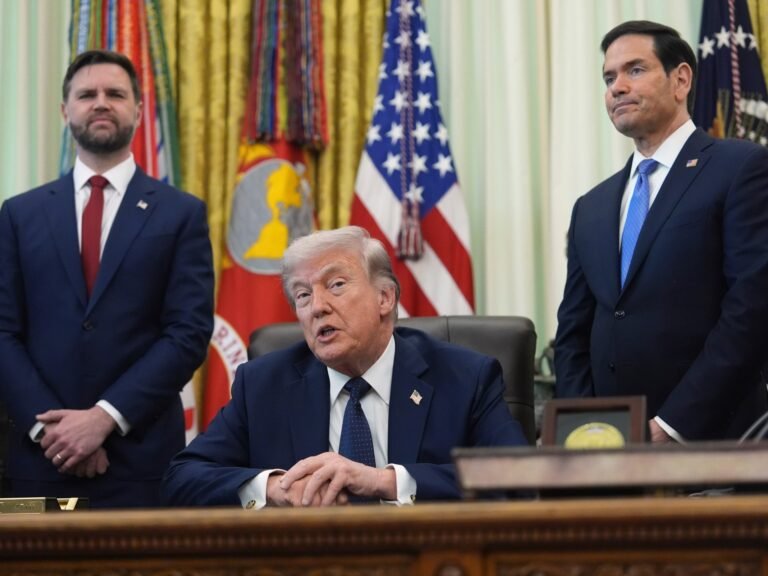
US Secretary of State Marco Rubio gestures at the White House in Washington, DC, May 5, 2026 [Mark Schiefelbein/AP Photo]
Rubio’s Tuesday briefing suggests a sharp departure from Washington’s initial position.
At the outset, the US outlined four objectives: destroy Iran’s ballistic missile capabilities, dismantle its navy, sever support for armed proxies, and ensure Iran never obtained a nuclear weapon.
A 15-point proposal delivered to Tehran via Pakistan in late March went further. It called for dismantling nuclear facilities at Natanz, Isfahan and Fordow, handing over highly enriched uranium to the International Atomic Energy Agency (IAEA), and permanently prohibiting nuclear weapons development.
By contrast, Rubio declared the military phase over. Nuclear material, he said, “has to be addressed” and is “being addressed in the negotiation”, but he declined to elaborate.
What Washington now seeks is an MoU, a framework defining “the topics that they’ve agreed to negotiate on” and “the concessions they are willing to make at the front end”.
That marks a significant shift from March.
In early April, he warned that “a whole civilisation will die tonight” if Iran did not yield. This week, he called for an agreement to be “finalised and signed”.
Rubio also offered a revised account of the campaign’s outcomes, arguing it had destroyed the “conventional shield” behind which Iran concealed its nuclear programme.
The framing sidesteps the question of enriched uranium still buried underground and effectively redefines the war’s purpose.
The shift has not gone unnoticed in Tehran. When Trump launched Project Freedom — the mission aimed at escorting stranded ships through the Strait of Hormuz — on Sunday, Iran’s Foreign Minister Abbas Araghchi posted on X that “there’s no military solution to a political crisis”, calling it “Project Deadlock”. Within 48 hours, it was paused.
Jalalzadeh said the reversal reflected a reality Washington had been slow to acknowledge.
“The balance of deterrence is currently skewed in Iran’s favour, and I think this reality is slowly sinking in in Washington,” he told Al Jazeera.
Andreas Krieg, associate professor at King’s College London’s School of Security Studies, described the shift as a limited but meaningful concession.
“Washington has accepted that the simultaneous resolution of the war, Hormuz, and the nuclear file in one final package is not currently feasible,” he told Al Jazeera. “Diplomatically, this is a concession to Tehran.”
Gaps that remain
Iran’s position has remained consistent.
After submitting a 14-point proposal to Pakistan on April 30, later transmitted to Washington and described by Trump as “better” than expected, Iranian Ministry of Foreign Affairs spokesman Esmaeil Baghaei made the sequencing explicit.
“At this stage, we do not have nuclear negotiations,” he said.
The proposal calls for ending the war within 30 days, lifting the US naval blockade, releasing frozen Iranian assets, paying reparations, removing sanctions and establishing a new mechanism governing the Strait of Hormuz. Nuclear talks are deferred.
Iran received a US response via Pakistan on Sunday. Neither side has disclosed its contents.
Significant gaps remain. Rubio made clear that Washington’s definition of “opening the strait” diverges from Tehran’s.
“Under no circumstances can we live in a world where we accept that this is normal, that you have to coordinate with Iran, you have to pay them a toll in order to go through the Straits of Hormuz,” he said.
Iran’s proposal, however, calls for a “new mechanism governing the strait”, language Washington is likely to interpret as precisely such an arrangement.
Jalalzadeh said Hormuz remains the most unresolved issue, not only between the two sides but within Iran itself.
“Neither side has a good offer on the table because even the Iranians do not yet know how they want to administer it,” he said.
The diplomatic clock
Still, several deadlines are now converging, and none favours any delay.
Araghchi arrived in Beijing on Wednesday for talks with Chinese Foreign Minister Wang Yi, his first visit to China since the war began in February.
He said, according to Iran’s state-affiliated ISNA news agency, Tehran would “only accept a fair and comprehensive agreement” in negotiations with the US.
The trip comes eight days before Trump’s scheduled summit with President Xi Jinping on May 14 and 15. US officials have openly pressed China to lean on Tehran to open up the strait.
But Beijing’s willingness to act as a pressure mechanism on Iran is constrained by its own confrontation with Washington, say analysts.
Last week, China’s Ministry of Commerce ordered domestic companies to defy US sanctions on five Chinese oil refineries buying Iranian crude oil, invoking for the first time a law allowing Beijing to retaliate against what it considers unlawful foreign sanctions.
China absorbed more than 80 percent of Iran’s shipped oil in 2025, according to analytics firm Kpler.
Gulf states are applying pressure from a different direction. Saudi Arabia’s Ministry of Foreign Affairs, in a statement on Tuesday, expressed concern over the “current military escalation” and explicitly backed Pakistan’s mediation efforts.
Iran’s Foreign Minister Abbas Araghchi meets his Chinese counterpart, Wang Yi, in Beijing [Abbas Araghchi/Telegram via AP]
Riyadh called for the Strait of Hormuz to be restored to its pre-February 28 state and demanded the safe, unconditional passage of ships, a position that mirrors Washington’s stated demands and sits at odds with Tehran’s insistence on a new governing mechanism for the waterway.
On Wednesday, in Beijing, Araghchi spoke by telephone with Saudi Foreign Minister Prince Faisal bin Farhan Al Saud, according to Iran’s state news agency IRNA.
The two sides reviewed the latest regional developments and emphasised the continuation of diplomacy and cooperation among regional countries to prevent further escalation.
The approaching Hajj pilgrimage adds a separate constraint. With roughly 1.8 million Muslims expected to converge on Mecca from around May 25, including Iranian pilgrims, any escalation during that period would carry severe political costs for all parties.
Krieg said the converging deadlines made some form of agreement more likely without guaranteeing its substance.
“Washington wants to maintain military pressure but not burn the diplomatic path. In the language of negotiations, such a move is more of a limited confidence-building measure than a strategic concession,” Krieg said.
“The timetable increases the chances of a limited deal, but lowers the chances of a grand agreement.”
Dr. Zaid Fadul, a physician, discusses the deadly hantavirus outbreak on a cruise ship, confirming the Andes strain has a roughly 40% mortality rate. He explains its human-to-human transmission, distinct from other hantaviruses, and highlights the need for a possible eight-week quarantine due to a long latency period.
NEWYou can now listen to Fox News articles!
A Swiss man who returned from a cruise linked to a deadly hantavirus outbreak has tested positive and been isolated, as health officials say the strain involved can spread between people in rare cases — though the overall risk remains low.
Health authorities in Switzerland confirmed the man recently traveled aboard the MV Hondius, the cruise ship at the center of an outbreak that has already killed three passengers and sickened several others.
Swiss health officials said the man sought medical care after developing symptoms and was immediately placed in isolation. His wife, who traveled with him, is self-isolating but has not shown symptoms.
The officials confirmed his case involves the Andes strain of hantavirus.
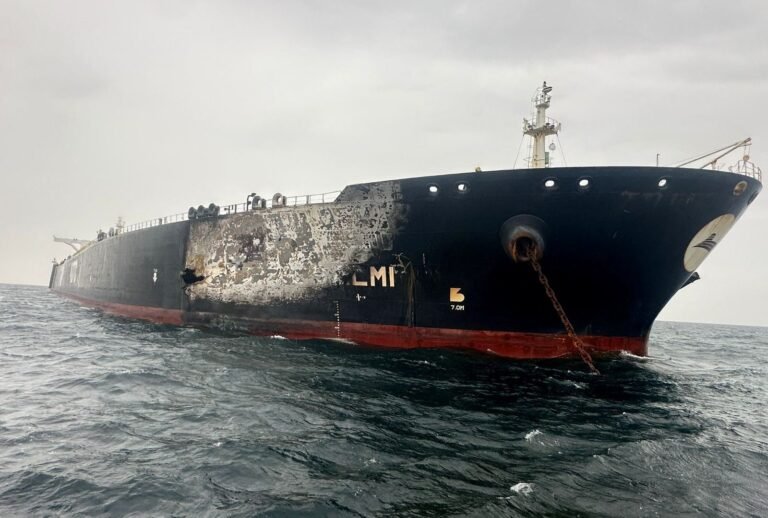
The MV Hondius Dutch cruise ship is anchored in the Atlantic Ocean off Cape Verde on May 5, 2026.(Arilson Almeida/AP)
The World Health Organization said the Andes strain is a rare form of hantavirus that can spread between humans through close contact — unlike most hantavirus infections, which are typically linked to exposure to rodent droppings.
South African health authorities said they also identified the Andes strain in two other passengers who were on the ship.
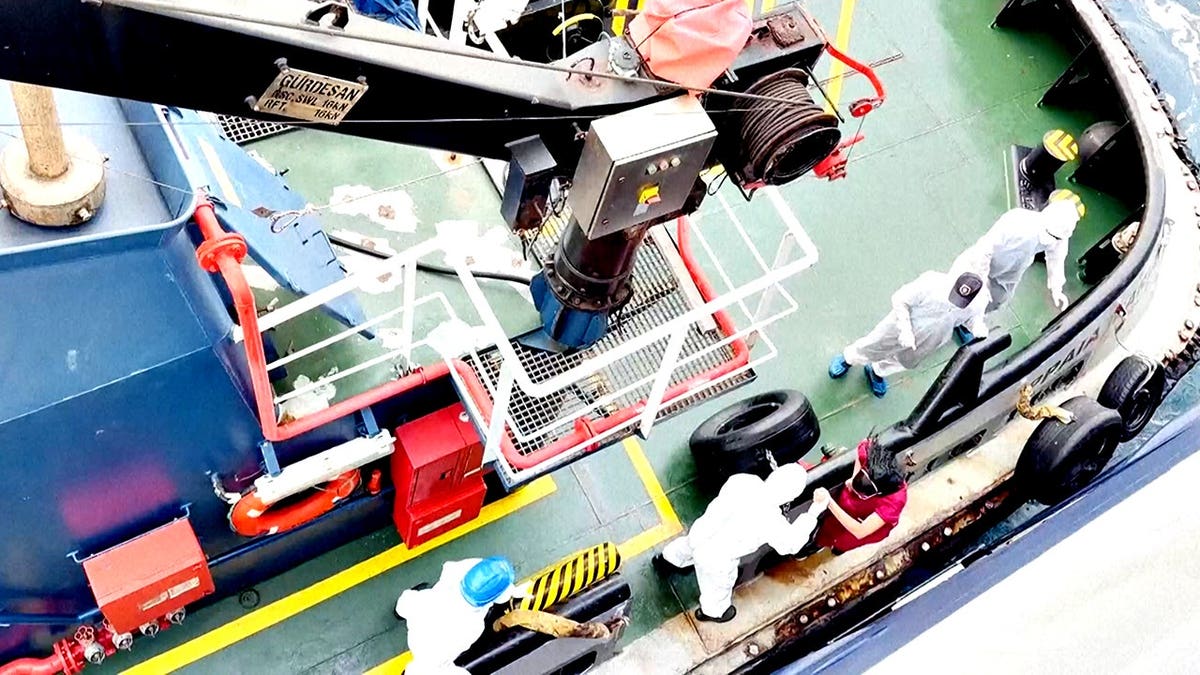
Health workers disembark from the Dutch-flagged MV Hondius cruise ship off Cape Verde on May 4, 2026, after three passengers died and several others fell seriously ill in a suspected hantavirus outbreak.(Qasem Elhato/AP)
The outbreak left the Dutch-flagged cruise ship stranded off the coast of Cape Verde, with nearly 150 passengers and crew on board as authorities scramble to contain the situation.
WHO Director-General Tedros Adhanom Ghebreyesus said Wednesday that three suspected cases were evacuated from the vessel and are being transported to the Netherlands for treatment.
“At this stage, the overall public health risk remains low,” Tedros said.
Authorities stress that while the Andes strain can spread person-to-person, transmission remains uncommon and typically requires close, prolonged contact.
Health officials have launched monitoring efforts for passengers both on board and those who have already disembarked, coordinating across multiple countries as the investigation continues.
The ship departed Argentina on April 1 and was scheduled to travel through the Southern Atlantic, including stops in Antarctica, before the outbreak disrupted its itinerary.
Spain has agreed to receive the vessel in the Canary Islands, though local officials have raised concerns about potential risk to residents.
The Dutch-flagged MV Hondius cruise ship remains off Cape Verde on May 4, 2026, after three passengers died and several others fell seriously ill in a suspected hantavirus outbreak.(Qasem Elhato/AP)
equity benchmarks staged a sharp recovery on Wednesday, with the Nifty 50 closing at 24,331, up 298 points or 1.24 per cent, after clawing back from an intraday low of 23,998.
The BSE Sensex ended at 77,958, gaining 941 points or 1.22 per cent. The turnaround was driven primarily by a near 6 percent slump in Brent crude oil to the $103–104 per barrel range, following reports that the United States and Iran are close to agreeing on a one-page memorandum to end hostilities in West Asia.
The session was anything but straightforward. Markets opened with a gap-up but quickly surrendered gains under selling pressure in the first half, with the Nifty drifting down to the 24,000 zone.
The index spent the morning session pinned in a narrow band, with heavy options open interest at the 24,100 Call and 24,000 Put levels keeping participants cautious.
The recovery, when it came, was swift — the Nifty gained over 275 points from intraday lows post 1 PM, closing well above the 24,200 resistance mark that had held for several sessions.
Ajit Mishra, SVP Research at Religare Broking, noted that the rebound was broad-based, with banking, financials, and realty leading. “…Indications favor further upside towards 24,550 and then 24,750 levels. On the downside, support remains intact at 24,000–23,800…,” he said.
The broader markets outperformed the benchmarks. The Midcap 100 gained 1.7 per cent and the Smallcap 100 rose 1.9 per cent. The Midcap Index registered a fresh breakout above the 60,950–61,000 resistance zone, while the Smallcap Index exited a five-session consolidation range. Market breadth was firmly in favor of buyers, with 407 of the Nifty 500 stocks ending in the green.
Sectorally, Realty and Metals led gains, with Pharma adding 2.3 per cent and Chemicals rising 2.4 per cent. PSU Banks and Financial Services were among the top Nifty sectoral gainers.
IndiGo was the top gainer on the Nifty, benefiting directly from the fall in aviation turbine fuel costs. ONGC and Reliance were among the notable laggards, weighed down by the crude price decline impacting upstream earnings.
On the policy front, the Union Cabinet approved ECLGS 5.0, a ₹18,100 crore government-backed credit guarantee scheme designed to facilitate nearly ₹2.55 lakh crore in incremental credit for businesses facing liquidity stress linked to the West Asia conflict, including a dedicated ₹5,000 crore window for the aviation sector.
Gold rallied sharply on the geopolitical developments, with MCX gold surging nearly ₹3,000 to ₹1,52,800, up around 2 per cent, while COMEX gold gained about 3.45 per cent to near $4,710. Rupee appreciation, however, capped some of the domestic price upside.
India VIX, the fear gauge, fell sharply — by between 5.8 per cent and 6.87 per cent depending on the measure used — to close around 16.67–16.88, signaling a meaningful reduction in near-term anxiety.
Technically, the Nifty’s recovery aligned with its 20-day exponential moving average around 24,028, reinforcing that level as a key near-term support. Siddhartha Khemka, Head of Research at Motilal Oswal, observed that if diplomatic momentum sustains, “…the prolonged consolidation phase in the Nifty could begin transitioning into a more durable market re-rating…,” with domestic macro support and a steady Q4FY26 earnings season adding to the case.
Looking ahead, market participants will be closely watching for any official confirmation — or breakdown — in the US-Iran talks, as that remains the single most important variable for crude prices and, by extension, for the direction of Indian equities, the rupee, and inflation expectations in the sessions ahead.
A serious case reported from Mathuradas Mathur Hospital in Jodhpur has raised big questions on the functioning of the health system. The inquiry committee of the hospital has clearly admitted in its report that there was serious negligence by the doctors and staff of the orthopedic unit.
The case pertains to an old woman Dhapu Devi, whose left leg was to be operated on, but in a shocking mistake, the doctors performed the surgery on her completely healthy right leg. After this incident came to light, there was panic in the hospital administration and immediate investigation was ordered.
President of MDM Hospital, Vikas Rajpurohit said that considering the seriousness of the matter, an investigation committee was formed. The committee has confirmed negligence in its report. The committee’s report has been submitted to Ba Jodha, Principal of SAIL Medical College. Notices were issued to the doctors and nursing staff involved in this case and now strict action will be taken against them based on the report.
Questions raised on protocol
This incident has also raised questions on the medical protocols adopted in hospitals. Generally, before any surgery, patient identification, operation site confirmation and matching of related documents are done, so that such serious mistakes can be avoided. Despite this, such a big mistake is a matter of serious concern.
Patient safety crisis
This case points not just to the error of one person, but to the flaws in the system. Experts believe that such incidents weaken the trust of patients and affect the credibility of health services.
eyes fixed on action
Now all eyes are on what action the administration takes against the culprits and what concrete steps are taken to prevent recurrence of such incidents in future. This incident is a warning that there should be no scope for negligence in the medical field, because here even a small mistake can cost someone’s life.
Rajasthan government’s Chief Minister Bhajanlal Sharma and Health Minister Gajendra Singh Khinvsar are very serious about health and have issued instructions for strict action in case of any kind of negligence.
In its recent statement, the Gulf Cooperation Council declared that “Iranian attacks have also led to a sharp loss of confidence by the Council states in Iran, which requires Iran to take the initiative to make serious efforts to rebuild trust”. While rebuilding trust in our region is a lofty and essential objective, and while Iran has always taken the initiative in this regard, it is imperative for all sides to recognise their share in the current regrettable state of affairs.
The unprovoked aggression against Iran was the product of blatant miscalculations and mistakes. It was predicated on the illusion that Iran had been weakened and thus incapable of resisting and responding forcefully to a massive onslaught by two nuclear powers, aided and abetted by regional actors. Policymakers in Washington and Tel Aviv and in some regional capitals convinced themselves that a swift campaign of economic pressure, sabotage, covert operation, decapitation and indiscriminate war crimes could break the Islamic Republic and leave it with little opportunity to respond. They were wrong. Iran’s response, measured yet resolute, demonstrated not only its military resilience but also its capacity to react on a scale that reverberated far beyond the region.
Our Arab neighbours in the GCC had their grave share in these miscalculations – and Iran may have played a role in misleading them. For five decades, they consistently stood on the wrong side of history – supporting Saddam Hussein’s aggression and even assisting Israel to intercept Iranian missiles launched in self-defence following Israel’s murder of an Arab leader in Iran. Some of them actively encouraged the United States to take military action against Iran, even asking the latter to add Iranian naval forces to its list of targets. In return, they allowed the United States to establish military bases within their territories to launch and logistically support many of its acts of aggression and war crimes against Iran. They even publicly sided with the United States as it committed war crimes against Iran, reminding Iranians of the sad days when these Muslim brothers and sisters sided with Saddam Hussein as he used chemical weapons against Iranian and Iraqi Kurdish civilians. Extensive human and financial damages were inflicted upon the people of Iran through these illegal attacks, which were deliberately launched and sustained from the sovereign territories of our Arab neighbours. Even as it became unmistakably clear that the United States was preparing to commit systematic war crimes against Iran’s civilian population — including strikes on populated areas and critical infrastructure — they indeed proved unwilling to prohibit or even restrict the use of their land, airspace and military facilities for such war crimes against their Muslim brothers and sisters in Iran.
Some of our Arab neighbours in the GCC mistakenly hoped that Iran would either be incapacitated and unable to respond, or would continue to turn a blind eye to their complicity in an aggression that explicitly targeted its territorial integrity and even its very existence. That illusion proved tragically wishful, and Iran had no other choice but to reluctantly respond – still in a calibrated and restrained fashion – to the attacks launched or logistically supported from the territories of Council states.
To move forward, it is therefore imperative for our neighbours to disabuse themselves of such distorted perceptions of the past and their misplaced proclamations of victimhood. A transitional moment now confronts our region. The conflict has exposed the fragility of imported security architectures and the enduring strength of Indigenous power and regional security networking. Rather than doubling down on yesterday’s alliances, our brothers and sisters in the region will be well-advised to pause and reassess. The right lessons from this episode point towards a future grounded in self-reliance, regional agency and an inclusive security network.
First, Iran and its Arab neighbours are here to stay. Iran has weathered sanctions, foreign-sponsored terrorism, hybrid warfare and even decapitation for nearly five decades. Its population, though diverse, has repeatedly shown it will rally around the flag when faced with foreign intervention. Tehran possesses the means to counter existential threats, and its geography grants it leverage that can impose devastating consequences on global markets if pushed too far. Iran’s exercise of restraint for far too long created the misimpression that the Strait of Hormuz could be open to all while Iran was essentially deprived of it due to illegal and immoral US sanctions – from which our neighbours immensely benefit – building their fortunes on the unlawful miseries imposed on their Iranian brethren.
More importantly, Iran’s power is not imported or artificial; it is home-grown, rooted in unchangeable variables: a millennial history of an enduring and continuous civilisation-state, a rich and cohesive culture, a youthful and educated population and an instinct for survival sharpened by centuries of resisting external domination. No amount of foreign pressure can alter these foundations. Those neighbours who continue to bet against this reality can only blame themselves for ignoring geography, history and demography.
Second, the “security-and-development model” pursued by several Arab states has proven deeply flawed. For years, the formula was simple: purchase security by spending lavishly on procuring the most sophisticated US weapons systems and hosting US military bases – and even Israeli intelligence and terrorism centres – and invite foreign investment under the umbrella of that imported security. The model delivered neither genuine security nor the perception of stability required for sustainable economic growth.
The perception that some Arab capitals sided with the United States and Israel against a fellow Muslim country earned them infamy across the Islamic world. That reputational damage was later compounded by the US president’s crude and condescending rhetoric directed at them. Now, reports that Washington is contemplating forcing our neighbours to foot the bill for a war launched at their expense and on Israel’s behalf only confirm the cynicism at the heart of the arrangement. The greatest mistake would be to double down on this failed model once the guns fall silent. Continuing to tie national security and economic futures to external patrons who use their bases as a staging ground for aggression against neighbours and treat them as obedient clients is a recipe for perpetual dependence and recurring humiliation.
Third, the war has produced political and legal realities that our neighbours need to recognise. The presence of American bases – from which aggression to “annihilate Iranian civilisation” was launched and logistically supported – cannot be considered as an innocent and neutral security partnership, but as an existential threat to Iran – as it has been proven over the course of the past two wars and even in previous hostilities against Iran. These bases have been erected here not to protect their hosts but to harm Iran even at the expense of their hosts. Arab states that continue to host such installations are actively participating in the militarisation of the region, including the Strait of Hormuz, a chokepoint vital to their own economies.
Fourth, Israel’s deepening presence in the region has only brought conflict and will bring nothing but insecurity and the erosion of state independence. Israel does not merely occupy land; it penetrates political systems through sophisticated networks of lobbies and pressure groups. It hollows out sovereignty from within, turning national decision-making into an extension of its own interests. To understand the pattern, one needs only examine how AIPAC has captured key levers of power in Washington, or how similar organisations have replicated the model across European capitals. Just pay attention to the disgust in the United States about how Israel – which has never taken one single step to help its American benefactors – has imposed its whims at the expense of American blood and treasure. Arab states that have rushed to normalise ties with Tel Aviv – or want to replicate its behaviour – have traded long-term autonomy for short-term optics. The people of our region deserve better than to watch their governments’ foreign policies increasingly dictated from afar. A regime that is actively blackmailing its patron, including through the Epstein files, cannot be expected to treat any better those who want to outsource their security to its defunct iron dome.
Fifth, and most constructively, Iran’s past initiatives – such as the Hormuz Peace Endeavour (HOPE), the Muslim West Asian Dialogue Association (MWADA) or the Middle East Network for Atomic Research and Advancement (MENARA) – have demonstrated a genuine desire to reach out to neighbours in order to establish inclusive regional cooperation networks. Ignoring or even dismissing these overtures under the illusion that Washington would provide ironclad security has been a historic error. The path forward lies in revising past mistakes and embracing a genuinely local security networking regime rooted in shared interests.
West Asia is blessed with immense wealth, energy resources, ancient cultures, a common religion and centuries of intertwined histories. These assets should be capitalised upon to forge a new regional network capable of addressing common challenges – from water scarcity and climate change to economic diversification and technological advancement – without external tutelage. A security network architecture built by the region, and for the region, is no longer a utopian slogan; it is a strategic necessity.
The war has ended the era of comfortable illusions. It is evident that security cannot be purchased or outsourced. Nor can security be attained at the expense of the insecurity and threats against Iran. With this war, realities cannot be ignored, nor can Iran’s grievances be swept under the rug. Foreigners are only here to take advantage and will leave as soon as the costs outweigh the benefits. But we are destined to live together until the Day of Judgement. Iran has shown it cannot be subdued by the war machines of the biggest evil powers, but is eager to live in peace with its Muslim brothers and sisters in the region. The real question is whether the rest of West Asia will have the wisdom to adapt to that enduring truth. Let us all seize this moment to build a future defined by respect, dignity, and mutual security and prosperity.
The views expressed in this article are the author’s own and do not necessarily reflect Al Jazeera’s editorial stance.
In the murder case of property dealer Chamanpreet Singh alias Chinni Kubahedi, which took place in broad daylight on March 18, 2026 in Sector-9, Chandigarh, the police took major action and arrested the mastermind of the case, Amreen Rai. This case became a sensation when Chamanpreet was openly shot dead outside the gym. Now the investigation has revealed the conspiracy behind this incident.
There was a dispute regarding the property purchased by Amrin in New Chandigarh.
According to the police, Amreen Rai is a relative of a senior IPS officer of Punjab. Investigation revealed that there was a dispute going on between Amreen and Chamanpreet regarding the property purchased in New Chandigarh. Amrin alleged that Chamanpreet cheated him, sold the property at high prices and did not even give him possession, due to which he suffered huge financial loss. Due to this rivalry, he decided to teach Chamanpreet a lesson.
Further investigation also revealed that Amreen contacted gangster Lucky Patial to plan this murder. Property dealer Harshpreet Singh, resident of Kaimbala village of Mohali, played an important role in this entire network. Harshpreet established contact between Amreen and the gangster through an encrypted app.
It is being told that Amreen had promised to give a huge amount in exchange for the murder, after which this incident was carried out. The police is now also investigating other accused and connections involved in this entire case. Amreen Rai is a resident of Sector-35, Chandigarh and after her arrest, many more big revelations are expected in this high-profile case.
Access Denied
You don’t have permission to access “http://hindi.news18.com/videos/ajab-gajab/girl-wreaked-havoc-on-song-sheesha-did-tremendous-dance-people-kept-watch-viral-video-10451004.html” on this server.
Dr. Zaid Fadul, a physician, discusses the deadly hantavirus outbreak on a cruise ship, confirming the Andes strain has a roughly 40% mortality rate. He explains its human-to-human transmission, distinct from other hantaviruses, and highlights the need for a possible eight-week quarantine due to a long latency period.
NEWYou can now listen to Fox News articles!
A Swiss man who returned from a cruise linked to a deadly hantavirus outbreak has tested positive and been isolated, as health officials say the strain involved can spread between people in rare cases — though the overall risk remains low.
Health authorities in Switzerland confirmed the man recently traveled aboard the MV Hondius, the cruise ship at the center of an outbreak that has already killed three passengers and sickened several others.
Swiss health officials said the man sought medical care after developing symptoms and was immediately placed in isolation. His wife, who traveled with him, is self-isolating but has not shown symptoms.
The officials confirmed his case involves the Andes strain of hantavirus.
The MV Hondius Dutch cruise ship is anchored in the Atlantic Ocean off Cape Verde on May 5, 2026.(Arilson Almeida/AP)
The World Health Organization said the Andes strain is a rare form of hantavirus that can spread between humans through close contact — unlike most hantavirus infections, which are typically linked to exposure to rodent droppings.
South African health authorities said they also identified the Andes strain in two other passengers who were on the ship.
Health workers disembark from the Dutch-flagged MV Hondius cruise ship off Cape Verde on May 4, 2026, after three passengers died and several others fell seriously ill in a suspected hantavirus outbreak.(Qasem Elhato/AP)
The outbreak left the Dutch-flagged cruise ship stranded off the coast of Cape Verde, with nearly 150 passengers and crew on board as authorities scramble to contain the situation.
WHO Director-General Tedros Adhanom Ghebreyesus said Wednesday that three suspected cases were evacuated from the vessel and are being transported to the Netherlands for treatment.
“At this stage, the overall public health risk remains low,” Tedros said.
Authorities stress that while the Andes strain can spread person-to-person, transmission remains uncommon and typically requires close, prolonged contact.
Health officials have launched monitoring efforts for passengers both on board and those who have already disembarked, coordinating across multiple countries as the investigation continues.
The ship departed Argentina on April 1 and was scheduled to travel through the Southern Atlantic, including stops in Antarctica, before the outbreak disrupted its itinerary.
Spain has agreed to receive the vessel in the Canary Islands, though local officials have raised concerns about potential risk to residents.
The Dutch-flagged MV Hondius cruise ship remains off Cape Verde on May 4, 2026, after three passengers died and several others fell seriously ill in a suspected hantavirus outbreak.(Qasem Elhato/AP)
Ghaziabad’s Loni police station has arrested two accused including his son while solving the mystery of the murder of an elderly man that took place on April 11. After being evicted from property worth crores, the son, along with his friend and female companion, murdered his father, left the body in the basement and ran away. Police have arrested the murderer’s son from Maharashtra while his girlfriend from Ghaziabad. However, the third accused is still absconding.
In Ghaziabad, ACP Loni Siddharth Gautam said that on April 11, 2026, Wadia Nasreen wife of Azumaddin alias Tannu resident of Toli Mohalla Loni had given a complaint. The allegation was that her husband Azimuddin alias Nanna had been murdered. In this matter, the police registered a case under section 103(1)/3(5) of BNS and started investigation.
The police officer said that, based on CCTV footage, surveillance and manual input, the name of son Bilal came up in the investigation, Bilal was on transit remand from Mumbra in Maharashtra. Ghaziabad Was brought. His female friend Khushboo, who was involved in the murder, was arrested from Loni area.
Murder along with female friend and friend
During police interrogation, Bilal told that his father had evicted him from all the property. Even after much persuasion, the father did not give his share in the property or the expenses. It is alleged that after this Bilal along with Khushboo and friend Nisar planned to murder his father. After the murder, they left the body in the basement and locked it from outside and fled to Mumbai. A reward of Rs 20 thousand was announced on both of them.
The father had evicted the son from the property
Police interrogation revealed that Bilal used to loiter and take loans from people. Due to this, the father evicted Bilal. According to the police, on April 11, Bilal Khushboo and Nisar had killed the deceased by attacking and kicking him in the chest and after that everyone fled away.





![Iran's FM Abbas Araghchi published this image on Wednesday on his Telegram channel of him meeting with his Chinese counterpart Wang Yi in Beijing China [Abbas Araghchi/Telegram].](https://www.aljazeera.com/wp-content/uploads/2026/05/FM-Araghchi-1778038420.jpg?w=763&resize=763%2C441&quality=80)