Italian teenager breaks an 18-year-old record in China to become the youngest pole sitter in Formula One history.
Published On 14 Mar 202614 Mar 2026
Share
Italian teenager Kimi Antonelli said it was “just the beginning” after he set a pole record in China with Mercedes predecessor and seven-times world champion Lewis Hamilton lavishing praise on him.
At 19 years, six months and 17 days Antonelli became the youngest Formula One driver ever to take pole position for a full Grand Prix on Saturday.
Recommended Stories
list of 4 itemsend of list
“A great record. It’s going to take a while for someone to ever get close to that one,” Ferrari driver Hamilton, whose seat Antonelli took in 2025, told a news conference after qualifying third.
The previous record was set by now-retired German driver Sebastian Vettel when he put Red Bull-owned Toro Rosso (now Racing Bulls) on pole at the age of 21 and 72 days at the 2008 Italian Grand Prix.
Pundits questioned whether the then-18-year-old could live up to Hamilton’s legacy, even as Mercedes team boss Toto Wolff consistently touted the Italian as a top-tier talent.
“He took my seat! And he hit it hard from the get-go, so it’s really great to see him progressing and he really deserves it,” a beaming Hamilton said while sat next to Antonelli.
The Italian was his country’s first pole sitter since Giancarlo Fisichella for Mercedes-powered Force India, the team that is now Aston Martin, in Belgium in 2009.
“I’m very happy because at the end, you know, it’s just the beginning,” said Antonelli, who had a sprint pole in Miami last year but has yet to win a race.
“Obviously there’s a lot more to come. And, yeah, really looking forward to tomorrow … the car is feeling really good, the car is strong so, yeah, a lot to play for tomorrow.”
Antonelli was helped by Russell having no battery and getting stuck in gear at the start of the final phase and then getting only one flying lap for pole, which he converted into second place on the grid.
“Many said the kid was too young to be in a Mercedes, we should have prepared him otherwise. He did good today,” said Mercedes team boss Toto Wolff.
“It’s a shame that George couldn’t do the lap.”
Former champion Max Verstappen was only eighth fastest, continuing an unhappy weekend in a clearly struggling Red Bull.
Sunday’s Grand Prix will be raced over 56 laps of the 5.451km (3.387-mile) Shanghai International Circuit.
Democrat darling and Texas Senate candidate James Talarico is taking heat after it was discovered that, as a public school teacher in San Antonio, he made his sixth-grade students write “Obama memoirs” celebrating his election.
Corey DeAngelis, a school choice advocate and research fellow at the Heritage Foundation, called the assignment “disqualifying” for a Senate hopeful in Texas.
In a Facebook post by Talarico dated Nov. 13, 2012, he announced, “Today, we finished writing our Obama memoirs,” explaining that “students wrote a memoir of Election Night from the point of view of a member of the Obama family.”
One of the memoirs shared by Talarico showed one of his students writing as if they were former President Barack Obama’s child, saying, “I was crying when my father was giving his speech” and praising “those lovely words that came out of his mouth” during his election night speech.
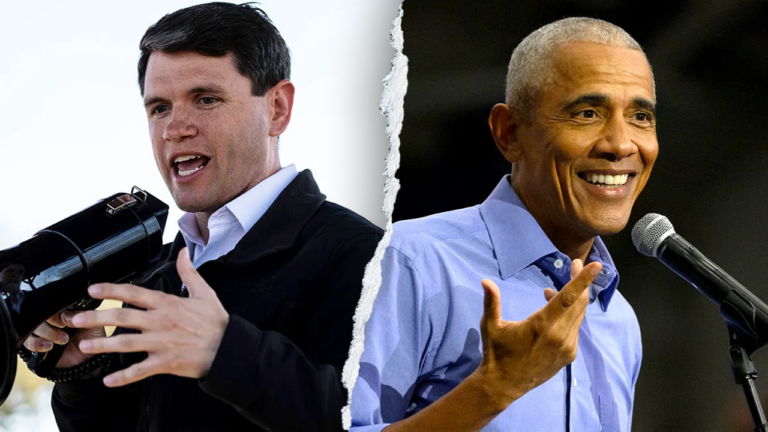
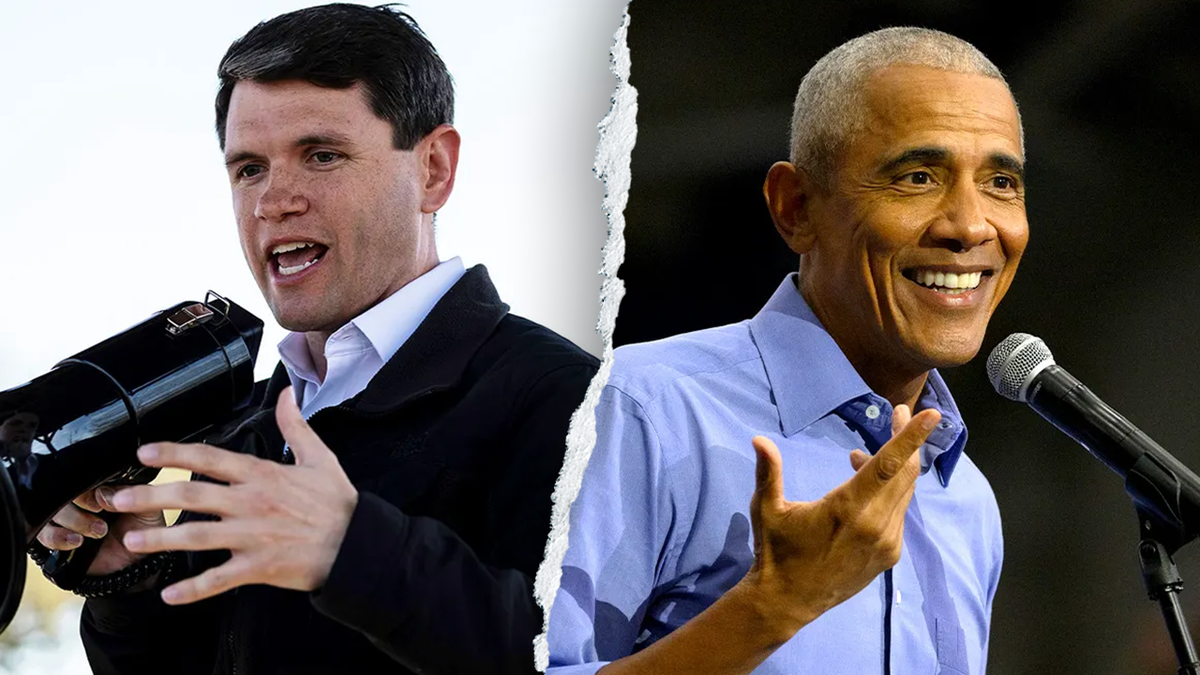
Texas Senate Democratic candidate James Talarico is taking heat for giving his sixth-grade students an “Obama memoir” assignment in 2012.(John Moore/Getty Images; Jeff Swensen/Getty Images)
The Democratic Party has high hopes that Talarico, a progressive state representative, can flip a critical Senate seat blue and become the first Democratic senator from Texas in decades. Since winning the party’s nomination, however, many have called out his history of progressive statements, including saying “God is nonbinary” and using the Bible to justify abortion.
In another Facebook post, dated Nov. 16, 2012, Talarico shared an image of a poster board full of Obama memoirs with a banner reading “Mr. Talarico’s Wall of Fame.” The display featured more than a dozen memoirs along with photos of Obama and his family, as well as presidential seals and Obama’s campaign emblem. Talarico commented, “Our Wall of Fame has been updated with our awesome Obama Family Memoirs!”
The Obama memoirs are not the only posts from Talarico’s teacher account drawing criticism. Some have also taken issue with a Sept. 14, 2011, post depicting a classroom “free thinker” display. Among the figures labeled as free thinkers were Obama, Bill Gates, Supreme Court Justice Sonia Sotomayor and Housing and Urban Development Secretary Julián Castro.
Texas Democratic Senate candidate and Texas state Rep. James Talarico, D-Austin, waves before speaking for the first time since winning the Democratic nomination in Austin, Wednesday, March 4, 2026.(Eric Gay/AP Photo)
Other figures included in the display ranged from Ludwig van Beethoven to Frida Kahlo to Jay-Z. Harry Potter author J.K. Rowling was also included. Not included, however, were any Republican or conservative leaders.
Some have also criticized Talarico for a Sept. 4, 2012, post in which he encourages students to watch the Democratic National Convention to see Castro, a former mayor of San Antonio, give the keynote speech.
Conservative commentator Steve Guest slammed Talarico for this, writing on X, “What Talarico was doing as an ‘educator.’”
The National Republican Senatorial Committee also chimed in, writing, “James Talarico made his public school students write ‘Obama memoirs’ and encouraged them to watch the DNC What else was he telling Texas kids in his classroom?”
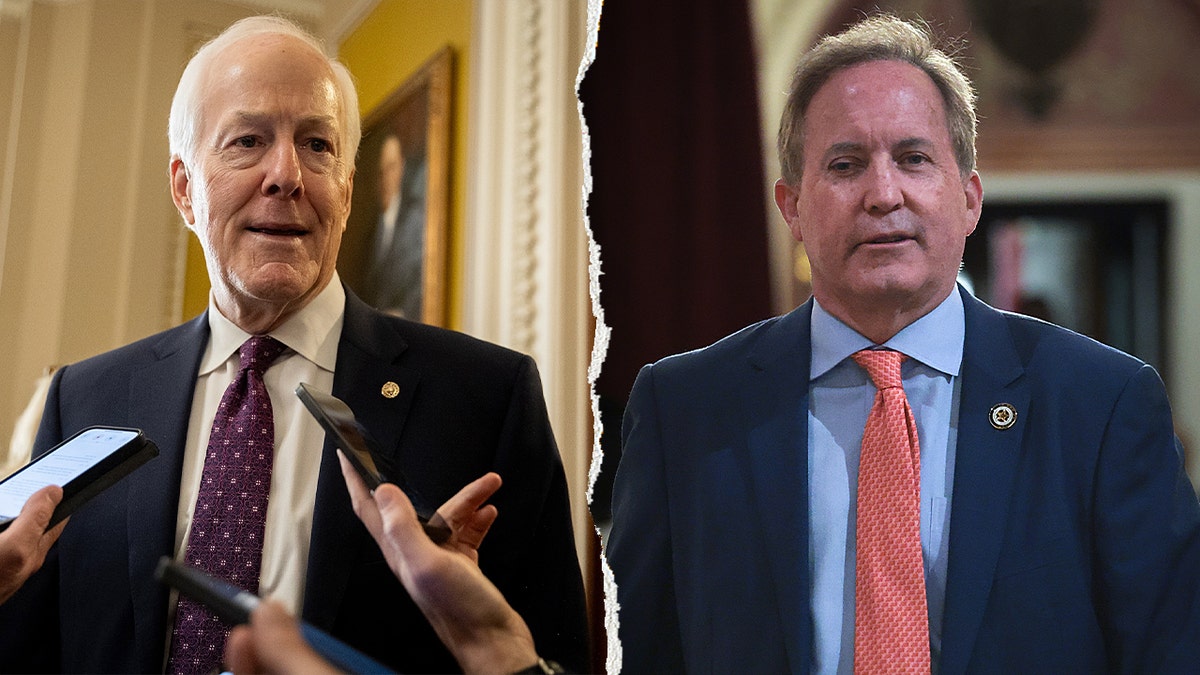
Texas Attorney General Ken Paxton and his bitter rival, Sen. John Cornyn, R-Texas, are heading to a runoff in Texas, further extending their bloody primary battle until late May. (Photo by Nathan Posner/Anadolu via Getty Images; Photo by Anna Moneymaker/Getty Images)
A Talarico spokesman responded to conservative critics in a statement to Fox News Digital.
“John Cornyn, Ken Paxton, and the billionaires who prop them up are scared of James Talarico for good reason: our campaign is building a movement poised to change the politics of this state and take power back for working people,” press secretary JT Ennis said. “While they spend their time lobbing stale attacks to mislead Texans, we are uniting the people of Texas to win in November.”
Talarico will be facing off against either incumbent Sen. John Cornyn, R-Texas, or state Attorney General Ken Paxton this November. Cornyn and Paxton are currently locked in a bitter primary runoff that will come to a head this May.
Peter Pinedo is a politics writer for Fox News Digital.
The Trump administration is poised to expand immigration detention operations at a controversial site inside a rural Louisiana airport, the Guardian has learned.
The administration is seeking to establish a “first of its kind” short-term facility that would hold migrant families and unaccompanied children next to a runway that has become a central node for the White House’s mass deportation agenda.
The proposed center, housed inside the Alexandria international airport complex, will confine family groups and children for between three and five days inside a converted military barracks before they are deported, according to the project’s lead contractors, who presented their plan to a sparsely attended airpark commission meeting in February.
Local airport officials confirmed to the Guardian that a series of lease agreements with the Department of Homeland Security (DHS) and its contractors are close to being signed. It is expected the site could be operational within 60 to 90 days.
According to a public presentation, the center will house only individuals who have sought to voluntarily “self-deport” – a claim questioned by a host of migrant and civil liberty groups who argue the compound will be a detention center in all but name.
Airpark officials said the facility will be operated by the non-profit arm of a private corrections company, the LaSalle family foundation, and a Texas-based childcare non-profit, Compass Connections, which has previously housed unaccompanied minors.
The proposed site is situated just across the tarmac from a short-term adult detention center run by the private prison company Geo Group, which was the subject of a recent Guardian investigation revealing an array of alleged due process violations, medical issues, abuse and crowded conditions.
Speaking at a public hearing on 26 February, the local airpark’s deputy director, David Broussard, described the new family and child facility as a “humanitarian effort” that would have a “different feel and vibe from what goes on across the ramp with Geo Group” as he encouraged a local board of commissioners to approve a five-year lease for the project. The lease also includes the use of an office block and 10 acres of additional land.
The authority would be paid more than $535,000 in annual rent with funding from the One Big Beautiful Bill Act, which the Trump administration championed and which has designated more than $170bn for immigration enforcement activities. The commissioners voted the proposal through almost unanimously.
Compass Connections president Sonya Thompson described the site as the “first of its kind”. She also said it would provide “wrap-around services” in a bid to “make sure that as these individuals are spending their last couple of days in the United States, that it is something that they can take back with them.”
An environmental impact assessment found issues with asbestos and other unspecified concerns, which would be addressed, according to public comments.
Speaking to the Guardian, the airpark’s executive director Ralph Hennessy described the project as a “done deal” and said he was not concerned about any potential reputational issues.
“I have no concerns over what’s going to be happening,” Hennessy said. “I’m not losing sleep.”
Hennessy described the Guardian’s previous reporting on detention operations at the Alexandria airport as “full of crap”. He also dismissed concerns relayed in the reporting over poor medical care and a spate of emergencies including suicide attempts.
Some migrants detained in Alexandria “don’t want to go home”, Hennessy said. “They’d rather stay here in the United States being fat, dumb and happy and living off … our federal government.”
The Department of Homeland Security did not respond to multiple requests for comment on the new project.
As the Trump administration’s hardline immigration agenda sees an unprecedented surge in detention numbers, with more than 68,000 people currently detained, the number of voluntary departures has also increased. In 2025, 28% of removal cases in detention ended in voluntary departure, according to analysis by CBS News. Advocates contend that extended detentions and coercive measures have pushed many migrants into agreeing to forgo legal challenges and leave voluntarily.
“We’ve heard story after story of immigrant families who have been really coerced into signing voluntary departure forms,” National Coalition to End Family and Child Detention coordinator Kristin Kumpf said. “Many have not been given options, had access to legal counsel or even seen paperwork in their own language.
“There are a variety of reasons why people sign these forms, but we have to understand there are many situations where it is not as voluntary as it might be perceived.”
Compass Connections did not respond to multiple interview requests or written questions.
A representative for the LaSalle Family Foundation did not respond to interview requests and written questions. Government non-profit filings show the foundation is run by the same father and son directors as LaSalle corrections, a family operated private corrections group, which has prisons and detention centers in Georgia, Louisiana and Texas.
In October, a federal jury found the company liable for $42.75m in damages over the 2015 death of an inmate, Erie Moore Sr, who was beaten by guards at a jail in Richwood, Louisiana. It was reportedly the largest judgment against a private correctional group in US history.
The Alexandria airport has become a major hub for Immigration and Customs Enforcement (ICE) deportation and transfer flights, with family groups and unaccompanied minors sometimes held for days in nearby hotels before they are placed on jets. The Guardian has previously examined how a mother and her two US citizen children were held secretly in that manner and allegedly blocked from accessing their lawyers before being deported to Honduras.
The south-east advocacy manager for the National Immigration Project, Tania Wolf, expressed worries that the new center would perpetuate the same due process concerns.
“It’s two buildings that they’re trying to renovate, to disappear more families and children under the auspices of a voluntary program,” Wolfe said. “They are just trying to put a coat of paint over something that is really foul. This is simply detaining children and families.”
KKR had taken the most wrong decision in IPL history, Kumble exposed the team
Last Updated:
Anil Kumble statement on KKR: Former Indian cricket team legend Anil Kumble said that the Kolkata Knight Riders team took the wrong decision by releasing Shreyas Iyer and Phil Salt. KKR won the trophy under the captaincy of Iyer, but the franchise released him in the very next season. Apart from this, Phil Salt was dropped by KKR.
Anil Kumble reacts to KKR’s strategy in IPL 2025
Mumbai: Legendary cricketer Anil Kumble said that Kolkata Knight Riders took a wrong decision by letting go of Shreyas Iyer and Phil Salt after winning the title in 2024. He said that until the three-time IPL champion team does not understand the importance of retaining important players, it cannot be considered a serious contender for the title. Iyer left KKR and joined Punjab Kings, under whose captaincy he took the team to the IPL final for the first time in almost a decade in the last season.
Whereas in 2024, Phil Salt, who was an important part of KKR’s success, moved to Royal Challengers Bangalore (RCB) where he played an important role in helping the franchise win the title for the first time last year. Kumble said in a release on ‘Jio Hotstar’, “Two years ago, KKR won the IPL and lifted its third trophy. The two important players of that victory were Shreyas Iyer and Phil Salt. Both played important roles in the team’s victory but KKR let both of them go. ”
Shreyas Iyer joins Punjab Kings
He said, “There is no continuity in terms of keeping players with them. KKR took a wrong decision by letting go of Shreyas Iyer and Phil Salt and because of this they now do not have a captain who can win the IPL. Kumble said that even though KKR has an experienced player like Ajinkya Rahane as captain, he has not yet won the IPL title as a captain.
Kumble said, “Ajinkya Rahane is an experienced player. He has captained Mumbai in domestic cricket and Rajasthan Royals in IPL. But he has not yet won the IPL title as a captain.” The veteran spinner further said, ”Being a captain who has won the trophy gives you an advantage. They have to learn how to retain their key players. Otherwise they will continue to struggle and cannot be considered contenders to win the trophy. ”
Punjab had reached the final under the captaincy of Iyer.
The former India captain praised Iyer’s leadership abilities in taking Punjab Kings to the IPL final last year. He said, “Shreyas Iyer is definitely underrated as a captain. It is not easy to win a trophy with one franchise and then move to another franchise. The management, environment and team there are all different. The pressure there is also different. ”
Kumble said, “The new franchise he joined had not played a final in the last 10 years and in his very first season with Punjab Kings, he took them to the final. I was impressed not only by his captaincy, but also by the way he led the team. He said, “There are some players who have to prove themselves every time.” Shreyas is also the same. Even after performing well, questions keep being raised on him. I think he’s underrated, but he’s an extraordinary leader. ”
Working as Chief Sub Editor in Network 18 Group since October 2025. 9 years experience in journalism. Started career with sports beat in ABP News Digital. Reputable institutions like India TV and Navbharat Times Group…read more
Former Labour MP and minister Phil Woolas has died of brain cancer, his family and close friends announced on Saturday morning.
Woolas, 66, was elected to parliament to represent Oldham East and Saddleworth as part of Labour’s landslide victory in the 1997 general election, and remained in Westminster for New Labour’s entire 13-year stretch in power.
In government, Woolas held several ministerial roles, including being the minister of state for local government, the environment and borders and immigration, positions that he held sequentially until Labour’s fall from power.
In a statement announcing his death, his family and close friends said: “For more than a year he battled the brain cancer glioblastoma. He leaves his wife, Tracey, his sons, Josh and Jed, and a new grandson, and many friends and former colleagues who will all miss him greatly.”
Woolas joined the Labour party when he was 16, and was a member of the Anti-Nazi League during his youth. Between 1984 and 1986 he was the president of the National Union of Students, a position held by many future politicians, including current Labour minister Wes Streeting.
Prior to beginning his journalism career, Woolas worked in television, including as a producer for BBC Newsnight and Channel 4 News. He also acted as the head of communications at the trade union GMB. After exiting politics in 2010, he set up his own political lobbying firm, and served as the chair of the Ace Centre, a charity based in Oldham, in his former constituency, that provided assistive technology for disabled people with communication issues.
During his final ministerial position, Woolas was criticised for his proposal that Gurkhas, soldiers from Nepal who served in the British army during major conflicts, would only be able to settle in Britain if they met a number of conditions, such as 20 years of military service.
After a campaign by high profile figures including actor Joanna Lumley, the government announced that the amount of military service required would drop by 80%, and Gurkhas who served four or more years in the army would be allowed to settle in the UK.
Phil Woolas (left) and Joanna Lumley during a press conference at Millbank, central London in May 2009. Photograph: Zak Hussein/PA
While he retained his seat in the 2010 electoral defeat to the Conservative-Liberal Democrat coalition, Woolas lost it months later when a court ruled that he had made false statements against a Liberal Democrat opponent during his original election campaign.
The statement from his friends and family added: “From 2011 onwards, Phil set up and ran his own political and risk consultancy.
“For more than 25 years, Phil was the chair of The Ace Centre, an Oldham charity helping people with communication difficulties, that he led to become a national charity leader in assistive technology for severely disabled people.”
When most people hear about cyberattacks tied to geopolitical conflict, it can seem far away. It sounds like something that happens to governments or giant corporations. Yet the latest cyber incident involving a U.S. medical technology company shows how fragile digital systems can be. Even more important, it raises a question you should all ask yourself: Are you protected against trouble, too?
A hacker group linked to Iran has claimed responsibility for a cyberattack on Stryker, a Michigan-based company that produces medical equipment and healthcare technology used worldwide. Stryker employs about 56,000 people and operates in more than 60 countries, making it one of the largest medical technology companies in the world.
Stryker disclosed the incident in a filing with the U.S. Securities and Exchange Commission, saying the disruption affected parts of its Microsoft environment and that investigators are working to determine the full scope.
The incident appears to be one of the most significant cyber incidents linked to the current conflict so far.
Sign up for my FREE CyberGuy Report Get my best tech tips, urgent security alerts and exclusive deals delivered straight to your inbox. Plus, you’ll get instant access to my Ultimate Scam Survival Guide – free when you join my CYBERGUY.COM newsletter.
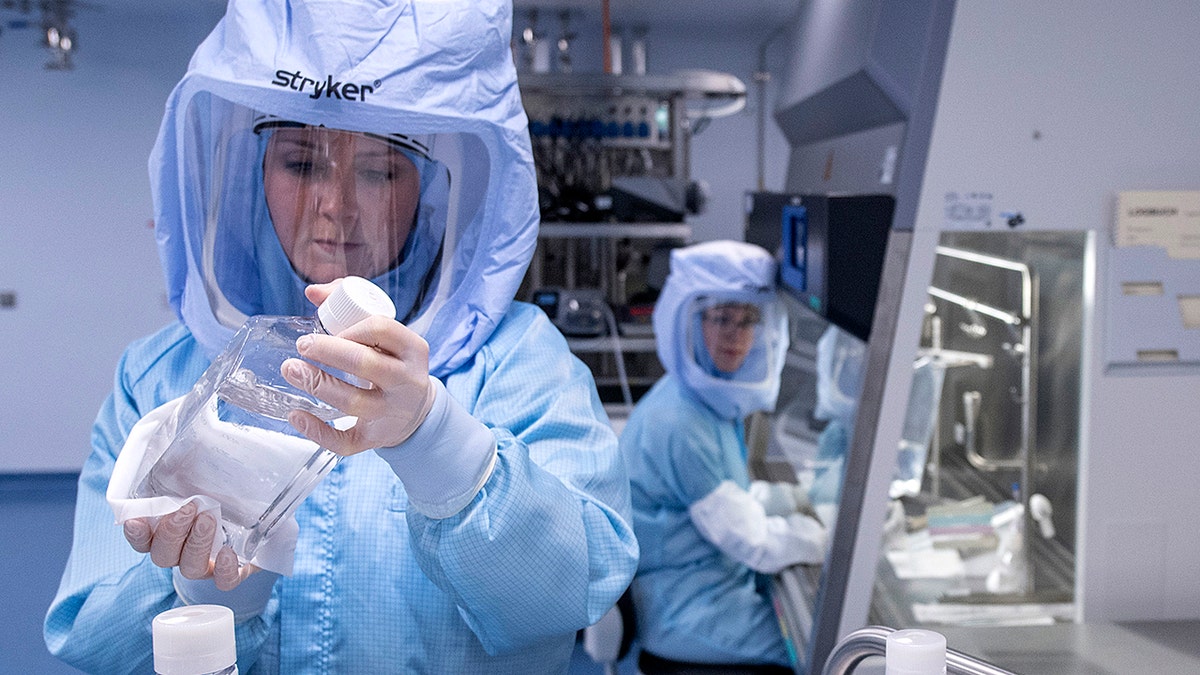
Laboratory assistants from the company BioNTech wear Stryker medical gear in a clean room at a production site in Marburg, Germany, in March 2021.(Boris Roessler/picture alliance via Getty Images)
What happened in the Stryker cyberattack
According to reports, the attack disrupted parts of Stryker’s global network environment. Reports indicate the outages began shortly after midnight on Wednesday on the East Coast. Employees suddenly discovered that their work-issued phones stopped functioning. Communication across teams stalled as devices became unusable.
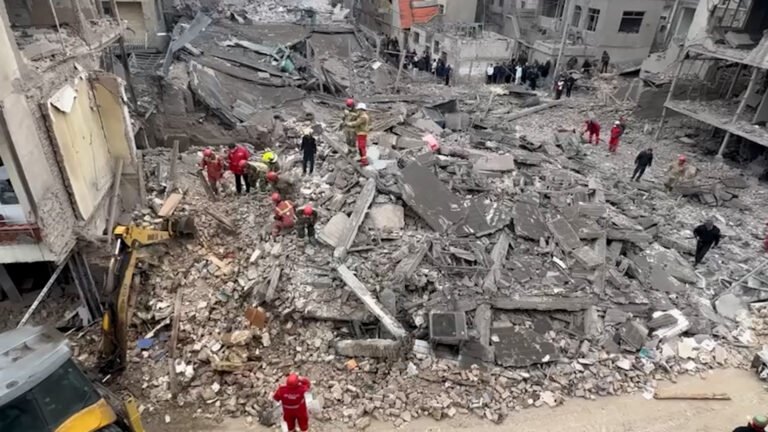
The hacker group Handala claimed responsibility on social media platforms, including Telegram and X. However, the claim has not been independently verified. Some employees also reported seeing the hacker group’s logo appear on company login pages during the disruption. In posts online, the group said the attack was retaliation for a bombing at a school in Minab, Iran, though those claims have not been independently verified.
Security experts believe the attackers may have gained access to the company’s Microsoft Intune management console. This platform allows companies to manage corporate devices such as smartphones and laptops remotely. Once inside that system, attackers appear to have triggered a powerful administrative feature. Reports suggest many company-connected phones and laptops were wiped back to factory settings.
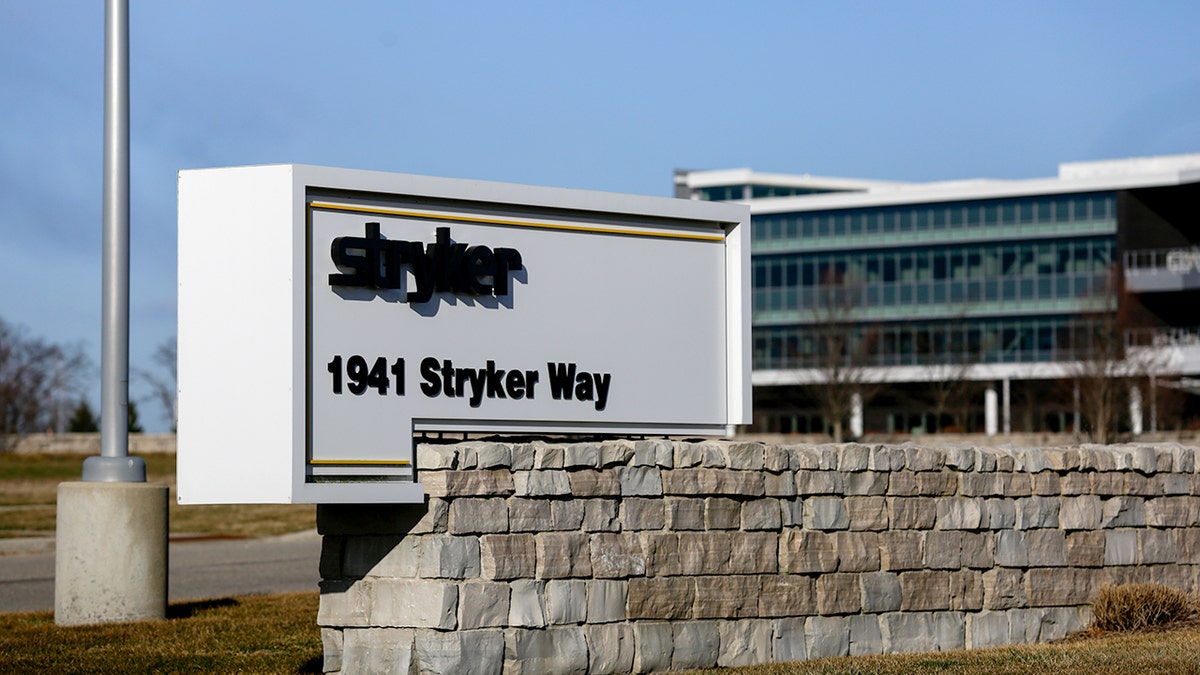
Signage at the Stryker Corp. headquarters in Portage, Michigan, on Thursday, March 12, 2026. A cyberattack on Stryker Corp. has kept the medical technology company’s ordering and shipping systems offline as the firm continues to struggle to address a crippling hack claimed by a group linked to Iran. (Kristen Norman/Bloomberg via Getty Images)
How hackers may have used legitimate tools against the company
The attack did not rely on traditional ransomware or malware. Instead, the hackers appear to have used a legitimate system feature in a destructive way. Remote wipe tools exist for good reasons. Companies use them when a device is lost, stolen or retired. However, if attackers gain control of the management console, those same tools can become weapons. Some cybersecurity researchers believe attackers may have accessed the company’s Microsoft Intune device management system, though the exact method of the attack has not been publicly confirmed.
Once the attackers accessed the device management system, they likely triggered remote wipe commands across multiple employee devices. The result looked like a mass reset event that effectively shut down normal operations. Stryker later confirmed it experienced a cybersecurity incident affecting its Microsoft environment. The company said it saw no evidence of ransomware or malware and believes the incident is contained. Stryker said it has activated business continuity measures so it can continue supporting customers and partners while systems are restored.
Iran’s long history of destructive cyberattacks
This type of attack fits into a broader pattern. Iran-linked groups have previously launched some of the most damaging “wiper” cyberattacks on record. These attacks aim to destroy data rather than steal it.
Two notable examples include:
Since the start of the current conflict, cybersecurity companies such as Google and Proofpoint have mostly observed Iranian groups conducting espionage operations. However, the Stryker disruption may signal a shift toward more aggressive actions targeting corporate infrastructure. We contacted both Stryker and Microsoft for comment, but did not hear back before our deadline.
Why this matters beyond one company
Large cyber incidents rarely stay isolated. When attackers demonstrate a new method, other groups often study and reuse it. That means techniques used against a corporation today can show up in smaller attacks tomorrow. Small businesses, hospitals and even individuals sometimes become targets when criminals adapt the same tactics. In other words, this story about a medical technology company also carries a warning for everyday digital life.
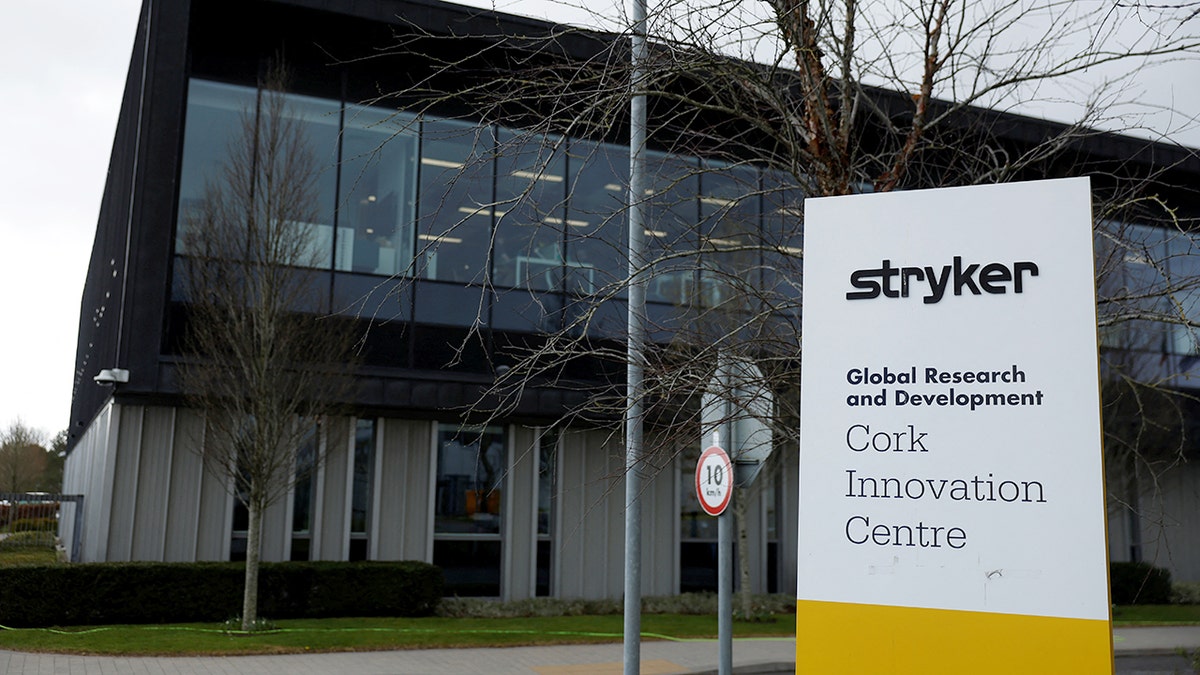
The logo of Stryker medical technology is seen on their plant in the IDA (Industrial Development Agency) estate, in Carrigtwohill, County Cork, Ireland March 28, 2025.(REUTERS/Clodagh Kilcoyne)
How to protect yourself from cyberattacks and device wipe threats
Cyberattacks against corporations reveal weaknesses that can affect anyone who uses connected devices. A few proactive steps can reduce your risk.
1) Use strong and unique passwords
Never reuse passwords across accounts. If attackers obtain one password, they often test it across many services. Also, consider using a password manager to generate and securely store complex passwords, so you do not need to remember them. Check out the best expert-reviewed password managers of 2026 at Cyberguy.com
2) Enable two-factor authentication
Adding a second verification step, such as two-factor authentication (2FA), can stop attackers even if they obtain your password.
3) Consider a data removal service
Data broker sites collect and sell personal details that criminals may exploit. Removing that information can reduce your exposure. Check out my top picks for data removal services and get a free scan to find out if your personal information is already out on the web by visiting Cyberguy.com.
4) Install strong antivirus software
Reliable antivirus protection helps detect suspicious activity, phishing attempts and malware before it can spread. Get my picks for the best 2026 antivirus protection winners for your Windows, Mac, Android and iOS devices at Cyberguy.com.
5) Back up important files regularly
If a device is wiped or compromised, backups allow you to restore critical data quickly.
Take my quiz: How safe is your online security?
Think your devices and data are truly protected? Take this quick quiz to see where your digital habits stand. From passwords to Wi-Fi settings, you’ll get a personalized breakdown of what you’re doing right and what needs improvement. Take my Quiz here: Cyberguy.com.
Kurt’s key takeaways
Cyberattacks once focused mainly on stealing information. Today, many attackers try to disrupt systems, erase data or create chaos. The reported incident involving Stryker shows how hackers can turn everyday administrative tools into powerful weapons. If someone gains access to the right controls, they may not need traditional malware at all. For many people, cyber conflict between countries can seem far away. Yet the same technology involved in those attacks powers the devices and services we rely on every day. Your phone, laptop and cloud accounts all connect to systems that depend on trust and access permissions. That is why digital safety now requires layers of protection. Strong passwords help. Secure devices help. Staying aware of threats helps too. Preparation can make the difference between a quick recovery and a major disruption. If something unexpected happens, the people who bounce back fastest are usually those who took a few steps to protect themselves in advance.
And that leads to an important question. If your phone, laptop or cloud account were suddenly wiped tomorrow, would you be ready to recover? Let us know by writing to us at Cyberguy.com.
Sign up for my FREE CyberGuy Report
Get my best tech tips, urgent security alerts and exclusive deals delivered straight to your inbox. Plus, you’ll get instant access to my Ultimate Scam Survival Guide — free when you join my CYBERGUY.COM newsletter.
Copyright 2026 CyberGuy.com. All rights reserved.
Kurt “CyberGuy” Knutsson is an award-winning tech journalist who has a deep love of technology, gear and gadgets that make life better with his contributions for Fox News & FOX Business beginning mornings on “FOX & Friends.” Got a tech question? Get Kurt’s free CyberGuy Newsletter, share your voice, a story idea or comment at CyberGuy.com.
As the war on Iran enters its third week, the upper hand that the United States and Israel hold militarily is being countered asymmetrically by Iran which has been targeting various economic pressure points outside of its borders.
With censorship and propaganda shaping coverage on all sides, news audiences are having to navigate a confused and often misleading maze of information.
Contributors: Vali Nasr – Professor, Johns Hopkins University Michael Omer-Man – Director of Research for Israel-Palestine, DAWN Matt Duss – Executive Vice President, Center for International Policy (CIP) Eskandar Sadeghi-Boroujerdi – Lecturer, University of St Andrews
On our radar
Israeli media outlets published near-simultaneous reports, citing anonymous officials, claiming Gulf states had attacked Iran. Qatar and the United Arab Emirates quickly denied the allegations, forcing corrections. Critics say that the aim of the coverage was to suggest Gulf support for Israel and pull those states into the conflict. Tariq Nafi looks at how the episode has fuelled anger across the Arab world towards Washington and Tel Aviv.
Battlefield AI: an interview with Matt Mahmoudi
Since the first attacks on Iran, the White House and Pentagon have been eager to test new military technologies. As seen previously in Gaza, AI systems appear to be playing a central role in identifying targets and guiding strikes. This raises serious ethical and accountability questions about how life-and-death decisions are being made on the battlefield.
Amnesty Tech researcher and assistant professor at the University of Cambridge, Matt Mahmoudi joins us to discuss AI-assisted warfare.
Featuring: Matt Mahmoudi – Assistant Professor, University of Cambridge
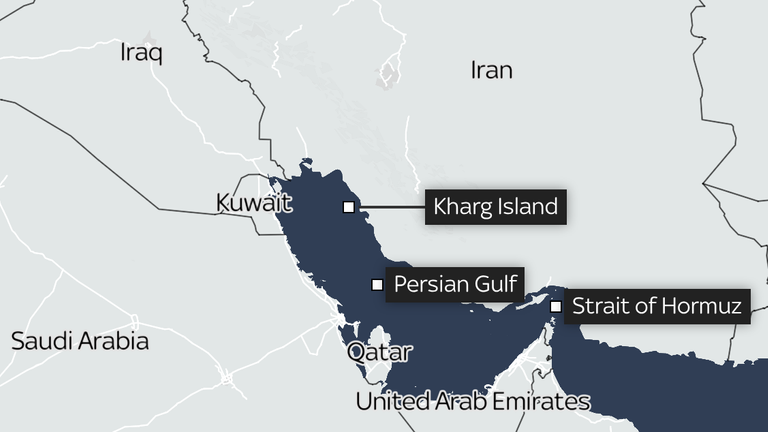
Donald Trump has said his forces carried out a bombing raid on Iran’s “crown jewel” Kharg, a small island in the north of the Persian Gulf, on Friday.
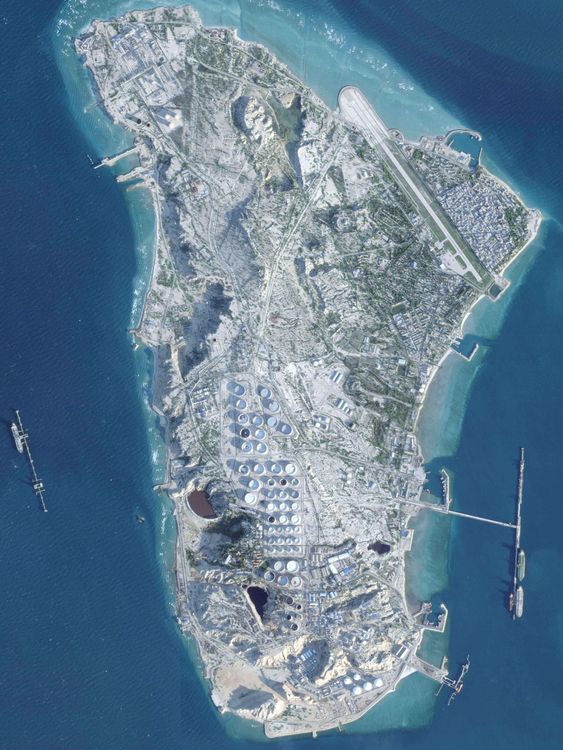
The five-mile-long coral island – twice the size of London’s Heathrow Airport – is in the north of the Persian Gulf, 16 miles (26km) from Iran’s coast and roughly 300 miles (483km) north of the Strait of Hormuz, the vital waterway through which 20% of global oil flows, that Iran has shut down.
President Trump said US forces “obliterated” military targets on Kharg Island, but significantly said he chose not to “wipe out” the island’s oil infrastructure. He threatened that this could change if Iran interfered with the safe passage of ships through the strait.
Tehran warned of a new level of retaliation if the oil infrastructure on Kharg was damaged, vowing on Saturday that Iranian forces would destroy the oil and gas infrastructure of companies cooperating with the US in the region if its sites were targeted, according to Iranian state media.
But why is the island so important?
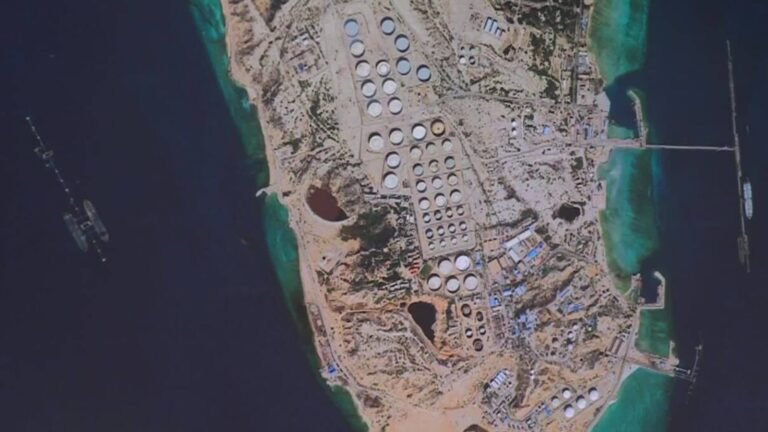
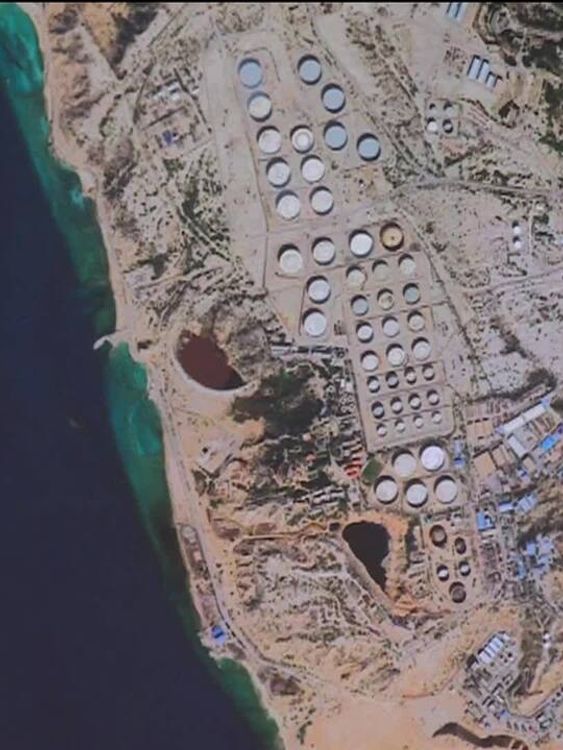
Image:Kharg Island. Pic: Planet Labs PBC via AP
Why was no oil infrastructure hit?
Kharg is the export terminal for 90% of Iran’s oil shipments and has the capacity to load around seven million barrels a day.
The island can handle as many as 10 supertankers at the same time, as its waters are deep enough to enable the docking of tankers that are too large to approach mainland Iran’s shallow coastal waters.
Before the war, the island handled most of Iran’s roughly 1.7 million barrels of crude exports per day, with the majority of it going to China.
Iranian oil accounts for 11.6% of China’s seaborne imports so far in 2026, according to tanker tracker Kpler. “Therefore, if [Mr Trump] was to take that out, he might risk the ire of China,” Sky News’ military analyst Sean Bell said.
Hitting Kharg’s oil infrastructure would also likely lead to oil prices surging even further, after they hit a four-year high on Friday.
Oil exports continuing despite war
In the week before the war broke out, Kharg shipped a record of 3.79 million barrels per day, and operations on the island have continued despite the conflict.
About 13.7 million barrels of oil have been exported from the island since the US-Israeli strikes were launched on 28 February, at a rate of 1.1 million to 1.5 million barrels per day, according to maritime intelligence company TankerTrackers.com and Kpler data.
Multiple tankers were still loading there on Wednesday, according to satellite pictures from Tanker Trackers.
Kharg has storage tanks in the south, along with housing for thousands of workers. It has a storage capacity of roughly 30 million barrels, and held about 18 million barrels of crude as of early March, according to a JP Morgan report citing Kpler data.
Trump posts footage of strikes after Kharg Island attack
Critical to funding of Iranian government
The island has long been seen as a key vulnerability that would provoke a severe response by Tehran if attacked.
Kharg is critical to funding Iran’s government and military, and if Iran were to lose control of the island, it would be difficult for the country to function, according to Petras Katinas, an energy researcher at the Royal United Services Institute.
Mr Katinas said a takeover would give the US leverage over negotiations with Iran because the island is “the main node” of its economy.
While there has been speculation that the US could be tempted to seize Kharg Island, experts say that would almost certainly require troops on the ground, making it extremely risky.
One Iranian politician has reportedly already threatened US troops with capture if they attempt to seize its crucial oil hub.
Is the attack on Kharg Island significant?
JP Morgan’s global commodity research team stressed the wider economic implications of a direct strike on the island, warning before the US struck military targets on Kharg that strikes would “immediately halt the bulk of Iran’s crude exports, likely triggering severe retaliation in the Strait of Hormuz or against regional energy infrastructure”.
“You take out Kharg infrastructure, then you take two million [barrels per day] out of the market for good – not until the Straits get fixed,” Dan Pickering, chief investment officer for Pickering Energy Partners, added.
Damage to the island
Iranian state media reported that no oil infrastructure was damaged in the US strikes, adding that air defences, a naval base, airport control tower, and a helicopter hangar were targeted.
The 55 crude oil storage tanks, which can hold more than 34 million barrels, are “most likely unscathed”, Tanker Trackers said.
“Although the island has some offshore oil production, the bulk of the oil actually derives from the mainland via multiple pipelines,” the tracking service said.
“The island first began exporting oil during the summer of 1960 and was built to [accommodate] 7 million barrels per day in exports, to reflect the potential in oil production. Iran hit 6.6 [million barrels per day] in production back in 1976.”
The maritime intelligence company added that there was a supertanker in the process of loading two million barrels of crude oil and a few smaller tankers loaded or berthed on the east side of the island just after midnight UK time on Saturday.
Activities on the island, including exports and imports, are “proceeding normally” after the strikes, the deputy governor of Bushehr, a port city close to Kharg, said, adding that no military personnel, oil company employees or island residents were killed.
Image:Infrastructure on Kharg Island
Was the island targeted before?
Despite being viewed as a critical vulnerability, the island has rarely been directly targeted.
The last time was during the Iran-Iraq war in the 1980s, but it did not stop crude oil exports from Kharg.
“When Saddam Hussein raided the island numerous times forty years ago and destroyed a number of storage tanks, Kharg Island was still able to export over 1.5 million barrels per day,” Tanker Trackers said in a post on X.
Bharatiya Janata Party (BJP) has launched a scathing attack on the viral pictures of Rahul Gandhi eating tea and biscuits during the protest at Makar Gate of Parliament House on the LPG issue across the country.
In a press conference organized at the Bihar BJP office in Patna, the party’s national spokesperson Guru Prakash fiercely targeted the Lok Sabha opposition leader. Describing it as a blatant violation of the rules of Parliament, he said that due to being away from power, Rahul Gandhi’s mental balance has deteriorated.
‘There was no protest at the Makar gate of the House, Rahul was having a picnic’
BJP spokesperson Guru Prakash called this step of Rahul Gandhi an insult to Baba Saheb Ambedkar and democracy. Called March 12 as a ‘black day’: Terming March 12, 2026 as a ‘black day’ for democracy, he said that Rahul Gandhi was having a picnic and drinking tea while sitting at Makar Dwar in the name of protest in the House.
Violation of Rule 384: He alleged that this act, done despite the express prohibition of the Speaker of the Lok Sabha, is a direct and open violation of ‘Rule 384’ of the Parliament.
‘Does Rahul Gandhi consider himself above the law?’
Guru Prakash raised tough questions on the mentality of Congress and Rahul Gandhi: He asked that all citizens are equal in the eyes of law, then does Rahul Gandhi consider himself above the law and Constitution of the country?
He taunted and said that when any decision does not go in favor of Congress, then the Court and the Election Commission are blamed for it, and now they are directly insulting the temple of democracy.
Making a sharp attack, he said, “Actually, due to being away from power for a long time, their mental balance has deteriorated. The country needs to be careful of such people.”
Government’s defense on LPG crisis and mention of Ujjwala scheme
While answering the opposition’s questions on the issue of LPG shortage, the BJP spokesperson strongly defended the government. He said that before 2014, the mothers and sisters of the country were forced to cook food on smoky stoves, but Prime Minister Modi’s ‘Ujjwala Yojana’ has connected every household with gas.
He clarified that the concerned ministers and officials have informed in the Parliament that gas and oil are available in sufficient quantity in the country and the current situation is much better than during the Congress rule.