Qualcomm teases agentic CPUs and smartphones • The Register


Qualcomm has quietly entered the market for custom hyperscale silicon, and datacenter CPUs

Speaking on the company’s Q2 earnings call, CEO Cristiano Amon said the company will provide custom product to “a leading hyperscaler,” expects shipments “in the December quarter” and is “thinking about a multi-generation engagement.”

Pressed on the details, Amon said Qualcomm is already working on a data center CPU and high-performance AI inference accelerators, and gained the ability to create custom ASICs by acquiring Alphawave.

He also revealed that Qualcomm has built what he described as “a dedicated CPU for agentic experiences in the data center.”

In Amon’s telling, AI kicked off with GPUs for training, dedicated inferencing hardware was the next necessity, but the market is now entering a new phase in which it is important to “generate demand for tokens” to power agentic AI.

“I think when you think about agents, CPU becomes very important,” he said, so Qualcomm has built one.

The company will stage an investor day in June at which it will reveal more about its plans.

The CEO also teased the advent of what he calls “agentic smartphones,” and cited recent products from Chinese handset-makers as examples. He mentioned a ZTE phone that includes the Doubao personal assistant developed by ByteDance, and Xiaomi’s miclaw – an AI-powered assistant that’s integrated with the OS kernel and divines smartphone users’ intent and then drives third-party tools to make it happen.

Asked what agentic smartphones will mean, Amon said “We see interesting associations now starting to form between smartphones and AI companies. We’re starting to see some very interesting dynamics there, which is changing the nature of designs.”

Those dynamics mean smartphone designs are “moving towards products [that] have much more capable CPU.” They may also need more memory, which is currently in short supply. Amon said “we see new memory players coming and building capacity. So we’re going to have to monitor the situation and see what happens in 2027.”

The CEO is already keenly aware of the memory shortage, because it’s hurting Qualcomm as smartphone manufacturers – especially Chinese companies – decide to build fewer units.

Amon and CFO Akash Palkhiwala both predicted demand will bottom out in Q3, then rebound.

The CEO also revealed that Qualcomm expects to win 70 percent of Samsung’s SoC business this year and next, up from its usual 50 percent. Samsung is trying to improve its Exynos SoCs, and make more of them. Clearly the Korean giant isn’t yet ready to stand on its own two feet.

The company won $10.6 billion of revenue for the quarter, down three percent year-over-year. Net income shot up by 162 percent, to $7.37 billion.

Amon said Qualcomm will highlight its plans to diversify at its June investor event, and emphasized how the company’s automotive business means it is already heading down the road to more sources of revenue and growth.

“In Q2, we exceeded $5 billion in annualized revenues for the first time, and we expect to exit fiscal ’26 at a run rate above $6 billion,” he said, before pointing out that over one million cars now offer advanced driver assistance and automated driving powered by Qualcomm processors.

He also offered one more tease: “By the end of the fiscal year, we will begin commercial shipments of our fifth-generation Snapdragon Digital Chassis platform.”

That hardware will come with three times higher CPU throughput, a threefold increase in GPU capability, and 12 times higher NPU performance. And because it’s 2026, the silicon will also support what Amon described as “in-vehicle agents and processing for Level 3 and Level 4 autonomous driving.”

The company’s PC chips were deemed worthy of just a few fleeting mentions. ®


Source link
Man who pocketed tiles from medieval priory as boy returns them 60 years later | Heritage

0

Fragments of a priory’s medieval tiled floor that spent almost 60 years stashed in a toffee tin after being pocketed by a nine-year-old boy during a family outing have finally been handed back.

The three pieces of decorative clay tiles, dating from the late 13th to early 14th century, were taken as a souvenir by Simon White during a family visit to Wenlock Priory in Shropshire in the late 1960s.

White, now a 68-year-old retired chartered surveyor, found the fragments in an old toffee tin during a house move and owned up to English Heritage. He told officials he recalled his father encouraging him to take the pieces but had always felt a little uneasy and was delighted when he rediscovered them.

“I can remember the day this all happened with my father standing guard,” he said. “Heaven knows what he would have said if we’d been caught. What happened to the tiles afterwards I’m not really sure, but they survived numerous house moves and assorted family upheavals only to turn up in my loft earlier this year in a battered tin.”

English Heritage was particularly thrilled that one of the fragments had a dragon motif on it, which was previously unknown at the site. Photograph: English Heritage

With the help of family diaries, White worked out that they probably came from Wenlock Priory and contacted the site’s custodians, English Heritage.

Matty Cambridge, assistant curator at the charity, said medievalists had concluded White was right to pinpoint Wenlock as the scene of the act. She said tiles like the ones White had taken were only known to have existed at three places in Shropshire: Haughmond Abbey, Bridgnorth Friary and Wenlock Priory.

Cambridge added: “Given Bridgnorth Friary has no in situ tile and wasn’t excavated until after Simon’s trip, and Haughmond Abbey only has a small patch of tile still at the site, we can narrow down the tiles found to Wenlock Priory.”

White met an English Heritage curator at Wenlock Priory, pictured, to hand the fragments back. Photograph: Justin Barton

Wenlock was once home to Cluniac monks, who were fond of elaborate architectural decoration. Cambridge said English Heritage was particularly thrilled that one of the fragments had a dragon motif on it, which was previously unknown at the site. “That’s quite exciting,” she said. Another fragment shows the face of what is thought to be a lion, or possibly a grimacing face.

White met Cambridge at Wenlock Priory to hand the fragments back. “He wanted to make a bit of a pilgrimage,” Cambridge said. “There are no hard feelings. He was only nine and was told: ‘Oh, this is pretty – take it home.’ We are very grateful to Mr White for coming forward.

“It’s not unheard of for mementos to have been taken from historic buildings, though is it unusual in this case that the artefacts were kept so well for so long and preserved. Nowadays we have far more stringent measures in place to prevent it, but if Mr White’s example pricks anyone else’s conscience from years ago, we’d love to hear from them.”

The tiles will not be put back on to the floor but will be moved to an English Heritage archaeology store for further analysis.

White said since his retirement he had taken a keen interest in archaeology. “The local society I’ve joined are likely to take a dim view of this. It’s only right and proper that the tiles are returned home.”


Source link

‘Profoundly distressing’: record number of deaths in custody and police operations in NSW | Deaths in custody

0

There were a record number of New South Wales deaths in custody and police operations last year, with almost a quarter of prisoner deaths recorded as self-harm, a coroner’s court report states.

Of those who killed themselves, most were by hanging, despite millions being invested to remove ligature points.

The state coroner, Teresa O’Sullivan, released her annual deaths in custody and police operations report on Thursday. It found 66 deaths in custody or as a result of police operations were reported last year – 18 more people than in 2024.

Thirty-nine of the deaths were in custody. Of those, 12 were First Nations people, a record high.

Nine of the 39 deaths in custody were reported as intentional self-harm. All but one of them died by hanging, making up 22% of the total deaths.

Sign up for the Breaking News Australia email

Last June, a Guardian Australia investigation revealed that nationally, at least 57 inmates had died in 19 separate prisons using hanging points that authorities knew about but failed to remove, often despite repeated suicides and stark warnings from coroners.

In response to questions during that investigation, Corrective Services NSW said it had invested $16m to make prisons “safer” by removing ligature points.

“This has included the removal of ligature points from almost 800 cells, as well as replacing cell doors, grills, beds, basins and tapware. An additional 145 cells are expected to be completed by July 2025,” tit said.

On Friday, a government spokesperson said the work to remove ligature points under the program was ongoing.

Last October, O’Sullivan released a rare statement announcing the state had already hit the record number of 12 Indigenous deaths in custody with three months still left in the year.

This week’s report showed half of those deaths were either by self-harm or accidental overdose, five were from natural causes, and the cause of death for one was unknown.

The coroner noted that death by natural causes inside prisons may still lead to findings in inquests to come that preventable issues – such as quality of care, treatment or supervision – contributed.

“This is a profoundly distressing milestone,” wrote the coroner about the record number of Indigenous deaths in custody.

“Each of these deaths represents a person whose life mattered and whose loss is felt deeply by families, loved ones and communities across the state.”

The report was sent to the state attorney general, Michael Daley.

O’Sullivan said that the number of people on remand in NSW prisons was at a record high due to an increase in bail refusals.

The number of Indigenous people on remand had surged by 63% in the past five years. Fifteen of the 39 people who died in custody in 2025 were on remand.

The causes of five, or almost 13%, of the deaths in custody were unknown. The coroner noted this was a “concerning” increase that triggered the state’s chief health officer, Dr Kerry Chant, to undertake additional toxicology testing of coronial samples to determine if a public health investigation was needed.

“Closer investigation of these deaths and additional toxicology screening did not reveal any new drug trends or issues of concern,” the coroner wrote.

Twenty-seven of the 66 deaths were as a result of police operations. A third of those were crashes via police car pursuits, which the coroner said marked an “increasing trend” with the “need for safeguards or qualifiers before police engage in a pursuit” being raised by coroners.

Three of the deaths that occurred as a result of police operations were in the context of the administration of sedation for agitation management.

Five of the total 27 deaths, or 18.5%, occurred in the course of a police operation to contain or restrain someone.

Indigenous Australians can call 13YARN on 13 92 76 for information and crisis support; or call Lifeline on 13 11 14 or Mensline on 1300 789 978


Source link

2 employees killed in U.S. Bank robbery in Berea, suspect at large


NEWYou can now listen to Fox News articles!

Two bank employees were shot and killed during a robbery at a Kentucky bank on Thursday and police are still on the hunt for the suspect.

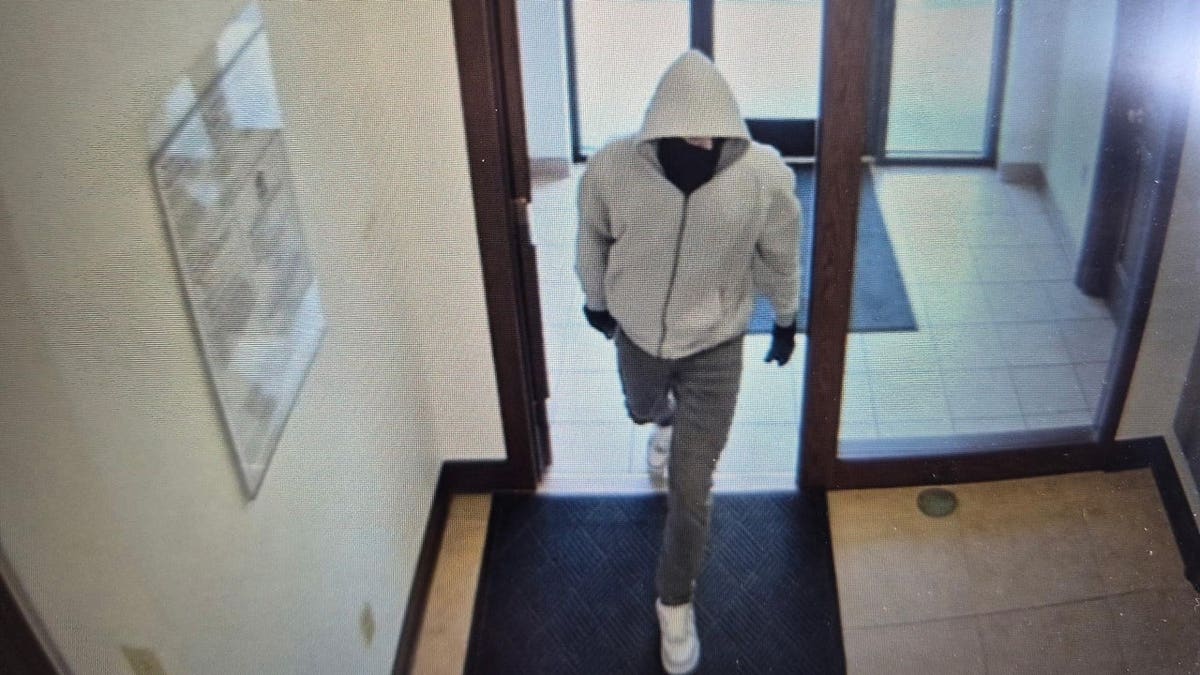
Trooper Scottie Pennington, a spokesperson for Kentucky State Police, said a man wearing a gray-and-white hoodie, gloves and a mask entered a U.S. Bank branch in Berea and opened fire, killing a male and female employee.

“They’re our people that work in our community, and they’re no longer with us,” Pennington said. “At this time we do have some leads, and we’re trying our best to bring this evil person to justice.”

State police released a photo of the suspect on social media. He is believed to be about 6-foot-3 and fled the scene toward East Chestnut Street.

MONTANA FUGITIVE’S BROTHER SERVING LIFE SENTENCE FOR SEPARATE MURDER CONVICTION IN SAME TOWN

An image of a suspect wanted in connection with a deadly bank shooting in Berea

Kentucky State Police released an image of a suspect wanted in connection with a deadly bank shooting in Berea. (Kentucky State Police)

Authorities said it remains unclear whether the suspect later escaped on foot, in a vehicle or with assistance.

Pennington declined to say whether anything was taken during the robbery.

Law enforcement agencies, including local police, state troopers and the FBI, are searching for the suspect, using helicopters, drones and K-9 units.

STUDENTS STABBED INSIDE WASHINGTON STATE HIGH SCHOOL AS POLICE RESPOND TO CHAOTIC SCENE

Kentucky State Police vehicle parked outside a building

Kentucky State Police are leading the investigation into a deadly bank shooting in Berea, authorities said. (Scotty Perry/Bloomberg)

“If you see something strange and you don’t feel right about it — you know, your dogs are acting weird — call us,” Pennington said.

Police said local schools were temporarily placed on lockdown, with students later released to their parents.

U.S. Bank said it is working closely with law enforcement and supporting those affected.

CLICK HERE TO DOWNLOAD THE FOX NEWS APP

Kentucky State Police logo on cruiser vehicle.

Kentucky State Police are searching for a suspect following a deadly shooting at a bank in Berea. (Lexington Herald-Leader / Contributor)

“We’re deeply saddened by the tragic event that took the lives of two of our employees at our Berea, Kentucky branch earlier today,” the company said in a statement. “Our hearts go out to the families of the victims, our colleagues and the entire Berea community.”

The Associated Press contributed to this report.


Source link

NatWest faces £140m hit from Iran war as UK growth slows and inflation rises | NatWest Group

0

NatWest said the economic fallout from the conflict in the Middle East could cost it £140m amid slowing growth and rising inflation even as it reported profits ahead of expectations.

Overall, the FTSE 100 lender booked a £283m impairment charge and said that almost half of that was because of a reassessment of its economic forecast to “reflect increased geopolitical risk and weaker equity markets”.

The bank said it expects its base case for UK gross domestic product growth to be only 0.4% this year, half that forecast by the International Monetary Fund earlier this month.

NatWest reported a 12% year-on-year increase in operating profits to £2bn in the first three months of the year, up from £1.8bn in the same period last year. The consensus among analysts was for an average of £1.9bn.

NatWest’s economic forecasts include a rise in the rate of unemployment in the UK to 5.5% this year. Last week the Office for National Statistics put the rate of unemployment at 4.9% in February but said it expected that to climb because of the conflict.

The bank said the impact of the Iran war will lead to inflation hitting 3.5% in its base case scenario.

However, NatWest believes the Bank of England will not move to increase the base interest rate, which stands at 3.75%, this year, and that it will be maintained at this level until at least 2030.

The market is factoring in at least two rate rises by the monetary policy committee by the end of this year.

Earlier this week, Lloyds Banking Group, which booked a £151m charge because of the changing economic conditions, forecast GDP growth of 0.5% this year as its base case.

On Thursday the Bank of England voted to leave the rate at 3.75% but warned of increases later this year, saying “higher inflation is unavoidable” as a result of the war in the Middle East.

NatWest also said that while it expects house prices to rise by an average of 0.7% this year, it forecasts a 1.8% contraction next year and a 0.5% fall in 2028.

The banking industry has benefited from the turbulence in markets because of the Middle East conflict, with NatWest saying that it expects income for the year to be near the top of previous guidance of £17.2bn to £17.6bn.


Source link

Election: Third Gender Voter Participation Increased, With Over 90% Voting In West Bengal And Puducherry

0

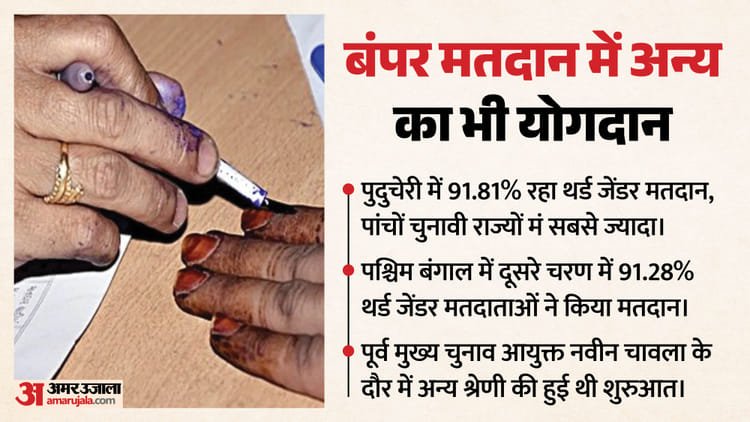
An encouraging picture has emerged regarding the participation of third gender voters in the country. According to the Election Commission, third gender voters registered a record 91.28 percent turnout in the second phase of West Bengal Assembly elections. In the first phase this figure was 56.79 percent, which increased rapidly in the second phase.

Highest number of third gender voters voted in Puducherry

A total of 1,257 third gender voters in West Bengal cast their votes in two phases, including 465 voters in the first phase and 792 in the second phase. At the same time, in the recently concluded assembly elections, Puducherry recorded the highest turnout of 91.81 percent among the third gender voters. A total of 139 voters were registered in this category. Of the 7,728 third gender voters in Tamil Nadu, 60.49 per cent voted on April 23. 57.04 per cent of 277 voters in Kerala and 36.84 per cent of 343 voters in Assam exercised their franchise.


Election dates varied across these states, with Tamil Nadu voting on 23 April, while Kerala, Assam and Puducherry voting on 9 April. Voting was conducted in two phases in West Bengal on 23 and 29 April. The results of all states will be declared on May 4.

What changed compared to Lok Sabha elections?

If compared with the previous Lok Sabha elections, the picture is mixed. In the 2024 Lok Sabha elections, the registration of third gender voters has increased to 48,194, which is 23.5 percent more than 39,075 in 2019. However, the voting percentage was only 27 percent i.e. only 13,058 people voted.

After whose efforts did we get this facility?

It is noteworthy that only after the efforts of former Chief Election Commissioner Naveen Chawla, people of third gender got the facility to register as voters in other or ‘O’ category. Now the Election Commission classifies voters as ‘male’, ‘female’ and ‘other’ (third gender).

Man facing charges for allegedly running meth lab at MSU academic building


NEWYou can now listen to Fox News articles!

A suspect was arrested after allegedly running a secret meth lab at Michigan State University’s Wells Hall, the institution’s largest academic building.

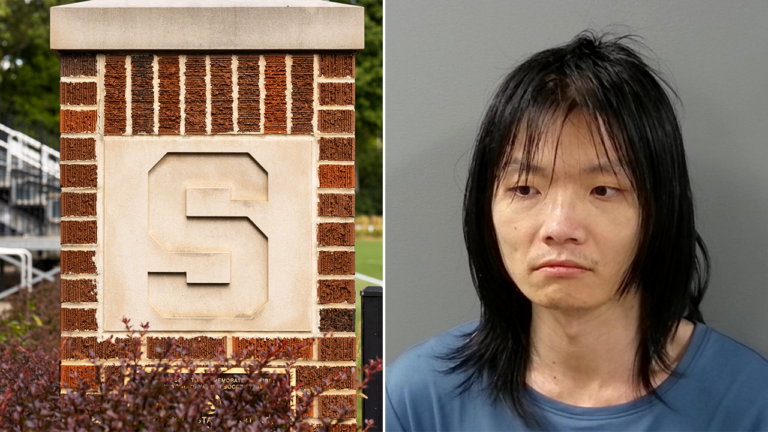
Xin Tong, 31, is facing felony charges in connection with the alleged operation, as well as misdemeanor trespassing, according to police.

Officers responded earlier this week to Wells Hall over reports of a suspicious person, a strong odor and unknown substances on the floor, WILX reported. Officers found Tong and confirmed his identity by using his expired MSU student ID.

FIVE MEXICAN NATIONALS INDICTED AFTER MASSIVE METH LAB BUST UNCOVERS ENORMOUS QUANTITIES OF DRUGS

Xin Tong

Xin Tong, 31, is facing felony charges in connection with the alleged operation. (Ingham County Sheriff’s Office)

Tong was in possession of multiple bags, which officers later searched through after obtaining a search warrant, discovering several bottles containing substances commonly used in the manufacture of meth, according to the outlet.

“The chemicals include sodium hydroxide pellets, hydrochloric acid, methanol, isopropyl alcohol, acetone, and butane. Multiple tests performed by the Office of Environmental Health and Safety (EHS) confirm the environment in Wells Hall does not pose a risk to our community,” MSU police said.

Officials later clarified that a meth lab was never located inside Wells Hall.

Michigan State

Officers discovered several bottles containing substances commonly used in the manufacture of meth inside Xin Tong’s bags. (Getty Images)

“The suspect was found in possession of chemicals and/or equipment that could be used in the production of methamphetamine, which were contained within his personal property,” police said.

Tong allegedly caused significant damage to the doors, flooring, and fixtures in Wells Hall between April 10 and April 26.

He has been charged with trespassing, malicious destruction of a building over $20,000 and felony controlled substance-operate/maintain lab involving methamphetamine.

HUNDREDS JOIN SEARCH FOR MISSING MICHIGAN COLLEGE STUDENT LAST SEEN ‘DISORIENTED’ ON VIDEO

MSU flag

Xin Tong allegedly caused significant damage to the doors, flooring, and fixtures in Wells Hall between April 10 and April 26. (Getty Images)

CLICK HERE TO DOWNLOAD THE FOX NEWS APP

Wells Hall was evacuated on Monday, and it remained closed through Friday “out of an abundance of caution,” the university said in a press release, adding that there “continues to be no known threat to the campus community.”

Tong is being held at the Ingham County Jail on a $500,000 bond. The Department of Homeland Security also reportedly placed a hold on his bond.


Source link

Up: Real estate businessman jumped from 11th floor, lost lakhs in Ipl betting; Cried on call from wife before dying – Up: Real Estate Businessman Jumps From 11th Floor After Losing Lakhs In Ipl Betting; Weeps To Wife Over Phone

0

Hurt by losing lakhs of rupees by betting on IPL in Lucknow, a real estate businessman committed suicide by jumping from the 11th floor of Janeshwar Enclave on Kursi Road on Thursday night. The incident created a sensation in the campus.


The police sent the injured to the trauma center, where the doctors declared him dead. A suicide note has also been recovered from the spot, in which there is mention of loss in betting. According to Inspector Gudamba Anjani Kumar Mishra, the deceased has been identified as Prabal Jain (32), resident of Mahmudabad, Sitapur. He along with his wife Shivani lived on rent in Om Prakash Srivastava’s flat D-1102 in Janeshwar Enclave. Shivani is the ground floor manager of a mall. Both of them got married about one and a half years ago.

Big change in Bpsc: Now there will be five options in Mcq, choosing one of them is mandatory, if not chosen then so many marks will be deducted – Bpsc Mcq Pattern Change 2026 Adds Fifth Option E Not Attempted Negative Marking Rule Introduced

0

Jobs Desk, Amar Ujala Published by: Akash Kumar Updated Fri, 01 May 2026 12:49 PM IST

BPSC: BPSC has made changes in the MCQ exam pattern and has now added the 5th option ‘E’, which will be Not Attempted. There will be a deduction of 1/3 marks for leaving the question without choosing any option. The new system will be implemented in the upcoming examinations and aims to increase transparency.

BPSC MCQ Pattern Change 2026 Adds Fifth Option E Not Attempted Negative Marking Rule Introduced

There will now be five options in the upcoming multiple choice examinations of BPSC. Marks will be deducted for not choosing any option. – Photo: Magnific

Expansion

BPSC: Bihar Public Service Commission (BPSC) has decided to make important changes in the answering system of multiple choice questions (MCQ) based examinations. According to the press release issued by the Commission, the objective of this amendment is to make the examination process more transparent, streamlined and reliable, as well as to ensure discipline among the candidates.

User found the perfect formula to make Excel misbehave • The Register


On Call Fridays can be a drag, but The Register has a formula to inject a little fun by delivering a new instalment of On Call – the reader-contributed column in which we share your tech support stories.

This week, meet a reader we’ll Regomize as “Albert” who told us about his time working for a substantial French consulting company’s outpost in the north of England.

“I was a software engineer working supporting various Oracle ERP integrations,” Albert told On Call, before explaining that one integration saw data from Big Red’s Payroll app piped into an Excel spreadsheet.

The integration had worked for more than a year when an urgent support ticket landed in Albert’s queue: The sheet’s calculation of billable hours worked by employees had suddenly and mysteriously started producing inaccurate results that were off by around a third – a ratio he felt was somehow important.

Albert opened the file provided by the user and quickly confirmed the sums were wrong.

He decided the integration had broken somehow, and so he started to investigate.

“After spending many hours digging through long PL/SQL functions on the database I could see nothing wrong with the logic,” he told On Call. “Even more confusingly, the files I generated myself showed the correct times.”

His next step was a chat with the chap who filed the ticket, which was when he learned the user wasn’t using the standard spreadsheet.

“Our files were output to their specifications, which called for billable time to be expressed in minutes,” Albert told On Call. “The user had divided the number by 100 as it looked ‘too large’ and they wanted the number in hours.”

It turned out that the user had therefore manually edited the spreadsheet to produce the number they wanted.

“I had to explain to the user that to get billable time in hours you must divide by 60 not 100,” Albert recalled. And that’s why the numbers were out by about a third!

Have you had to teach your users basic mathematics? If so, why not add your story to the On Call mailbag by clicking here to send us an email. We promise to handle your story carefully by Regomizing your identity so it won’t subtract from your career prospects, but will multiply the fun your fellow readers experience when reading a future edition of On Call. ®


Source link