Former ecologist helps build Arizona wine industry at Page Springs Cellars

0

NEWYou can now listen to Fox News articles!

Eric Glomski still remembers the first time he discovered his “liquid landscape.”

“I remember closing my eyes and smelling this wine, and it reminded me exactly of the place where I harvested those apples,” he recalled in an interview with Fox News Digital.

Glomski had not been a winemaker at that time. He was a restoration ecologist, hiking the perennial streams of central Arizona, cataloging river systems and abandoned homesteads.

TEXAS WINERY BEATS NAPA ELITES WITH SMALL-TOWN SAVVY AND TOP-NOTCH TASTE

It was there he found heirloom apples growing wild. He hauled them out in a backpack, made apple wine with a mentor and, eight months later, experienced what he calls his epiphany.

“I realized I was having an artistic experience with the landscape that wasn’t analytical, and it wasn’t scientific,” he said.
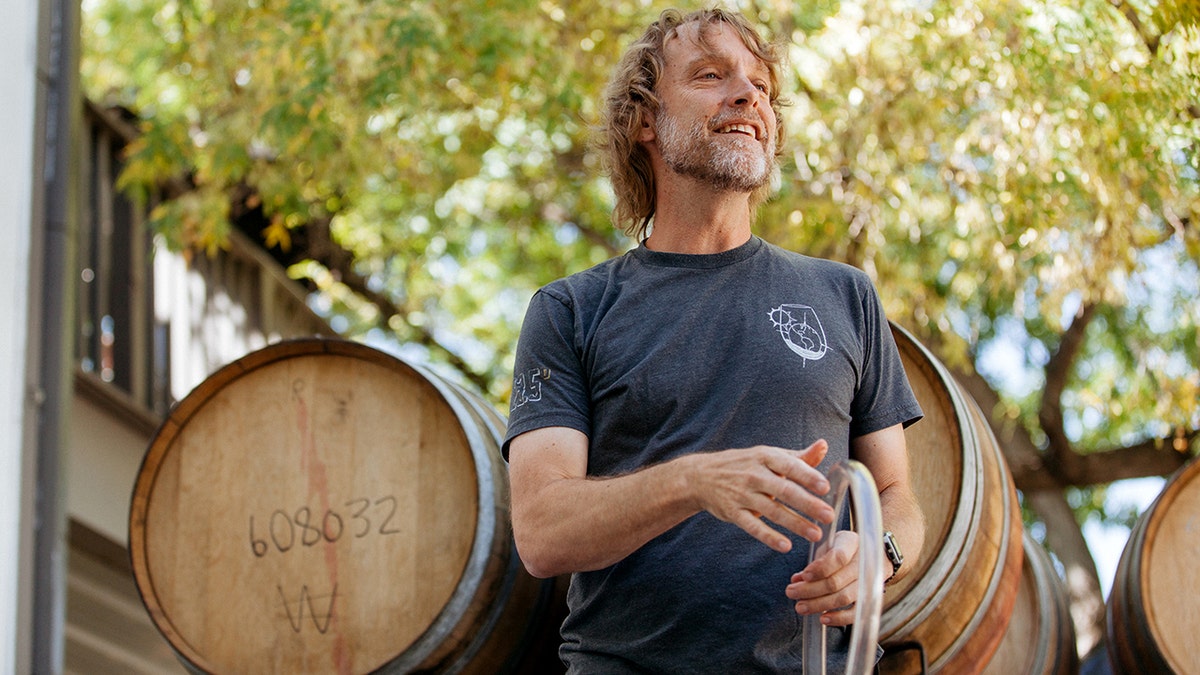
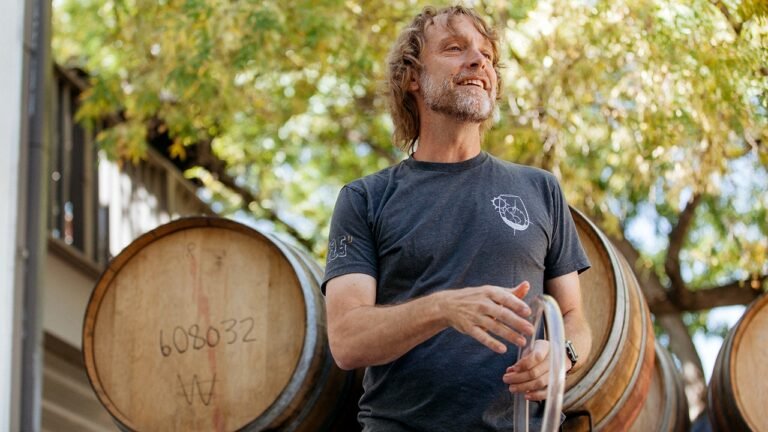
Eric Glomski is pictured in front of wine barrels in 2017.

Eric Glomski of Arizona was a restoration ecologist before he decided to dedicate himself to winemaking. (Page Springs Cellars)

He dropped out of graduate school, moved to California and volunteered at wineries — sleeping in his truck.

He finally landed a position at the acclaimed David Bruce Winery in the Santa Cruz Mountains.

For nearly six years, Glomski immersed himself in a culture guided by one principle: “What’s best for the wine?”

WHAT HAPPENS TO OPENED WINE — AND HOW TO KNOW WHEN IT’S GONE BAD

Glomski said he always intended to return to Arizona.

“I always wanted to come back to Arizona and make wines that expressed Arizona,” he said.

In 2003, he founded Page Springs Cellars & Vineyards in the Verde Valley. The region’s volcanic soils, limestone deposits and elevation offered what he saw as untapped potential.

A man and a woman drink wine at a vineyard.

Page Springs Cellars & Vineyards has been pouring wine for visitors since 2003. (Jill Richards)

Contrary to popular perception, Arizona wine country is not a blistering desert floor, Glomski said.

“My two biggest issues are frost and freeze, and monsoon rains — the exact opposite of what people expect,” he said.

IRANIAN REFUGEE BUILDS WORLD-RANKED AMERICAN WINERY ROOTED IN HERITAGE AND HEALTH

His vineyards stretch from 3,500 to 5,500 feet in elevation.

“It snows in my vineyards regularly,” he said. “People don’t realize this, because Arizona is very mountainous.”

“I like to think of myself as an ambassador for Arizona.”

That elevation, combined with volcanic, limestone and even granite soils, allows him to grow Rhône varietals that express distinct personalities depending on where they’re planted. 

He grows Syrah in multiple estate vineyards, and said the differences are unmistakable.
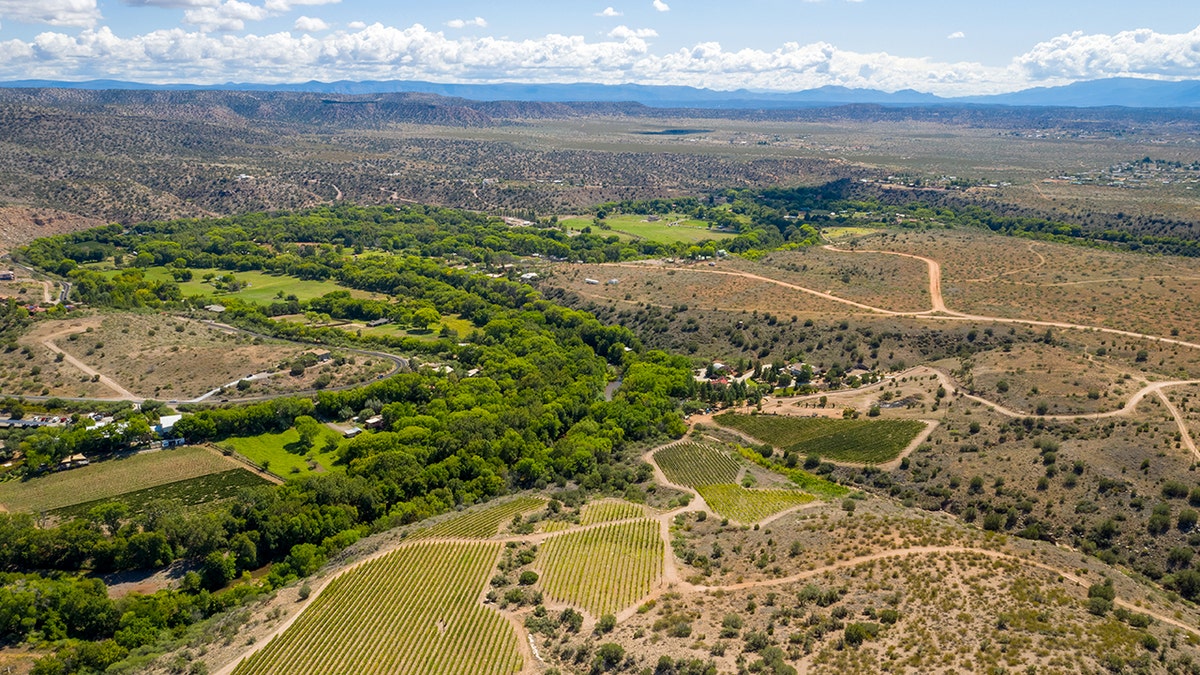
An aerial of Page Springs Cellars & Vineyards.

The vineyards at Page Springs stretch from 3,500 to 5,500 feet in elevation. (Jenelle Bonifield)

“They’re so distinctive because of these different ecological characters,” he said.

For Glomski, that distinctiveness is the point.

“I like to think of myself as an ambassador for Arizona,” he said. “I mean, obviously I have my own business, and I’m excited about doing well, but I really believe in Arizona too.”

NASHVILLE’S HIDDEN ‘WINE COUNTRY’ PROVIDES TASTE OF TENNESSEE IN WHISKEY BARRELS

That belief was tested in 2006, when out-of-state distributors introduced legislation that would have prevented small Arizona wineries from selling directly to consumers and retailers.

Glomski and the other small group of winemakers received notice from the Arizona Department of Liquor Licenses and Control ordering them to “cease and desist all direct-to-consumer sales.”

An Arizona vineyard is shown.

The vineyards at Page Springs are home to a distinctive variety of wines. (Grace Stufkosky)

Wineries would have been forced to sell exclusively through wholesalers — even buying back their own bottles to pour in tasting rooms, Glomski said.

“It was this very heavy-handed middleman move to control the market,” he said.

CLICK HERE TO SIGN UP FOR OUR LIFESTYLE NEWSLETTER

Working with a volunteer attorney and a handful of fellow winemakers, Glomski spent two months going “door-to-door” at the state Capitol, meeting “every senator and every representative in our state” to help reform the legislation, he said.

“Ultimately, we beat them,” Glomski said.

Eric Glomski, left, and wine corks from Page Springs Cellars, right.

Glomski, left, dropped out of graduate school, went to work for a California vineyard and eventually opened Page Springs Cellars in Arizona. (Page Springs Cellars; Grace Stufkosky)

In the decade that followed, Arizona’s winery count grew from eight to more than 100.

“If that isn’t case in point about what a difference that made to the ability for a free market and these businesses to grow,” Glomski said.

“I think in the next decade-plus, you’re going to see Arizona really making some waves.”

Today, that growth is finding a national audience. Page Springs’ Alma del Suelo red and white wines are featured in the Fox News Wine Shop

The wines aim to introduce drinkers to Arizona’s emerging identity.

CLICK HERE FOR MORE LIFESTYLE STORIES

“We knew we wanted it to really speak of Arizona,” Glomski said.

He believes the state is still defining itself.
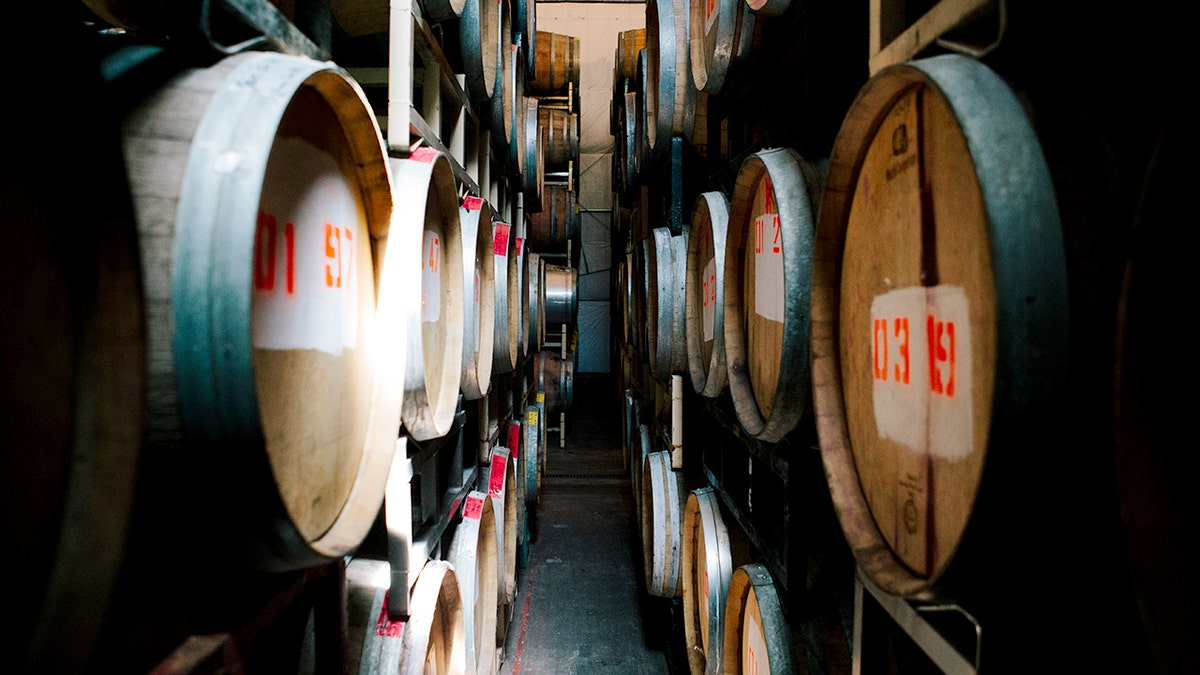
A wine barrel room is pictured.

Glomski took on Arizona legislation that would have prevented Page Springs and other small wineries from selling directly to consumers and retailers. (Grace Stufkosky)

“Arizona is still, I think, figuring that out,” he said. “But I don’t think it’s going to be as limited as that. I think we’re going to have regions developed that have really, radically different themes.”

CLICK HERE TO DOWNLOAD THE FOX NEWS APP

If lawmakers continue to modernize regulations and allow investment to flow, he sees enormous potential.

TEST YOURSELF WITH OUR LATEST LIFESTYLE QUIZ

“I think in the next decade-plus, you’re going to see Arizona really making some waves,” he said.

Learn more about the Fox News Wine Shop here. 


Source link
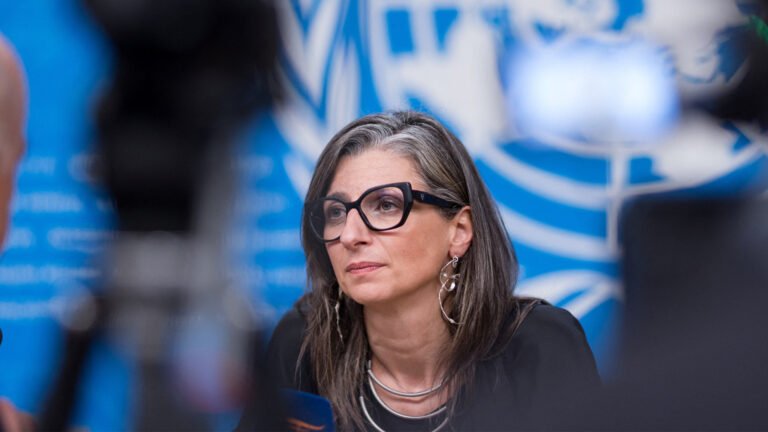
Filmmaker explains why he backs Francesca Albanese amid pressure to resign | Israel-Palestine conflict

0

NewsFeed

French filmmaker Frank Barat is among 100 artists, including Mark Ruffalo, who’ve signed an open letter in support of Francesca Albanese who faces growing calls from European governments to step down as UN rapporteur. It comes after a fake video of her sparked allegations of anti-Semitism.


Source link

‘GOAT’ Review: Stephen Curry, Jelly Roll among A-list cast in fun animated film

0

NEWYou can now listen to Fox News articles!

Move over “Zootopia 2,” there’s a new king of the jungle — and it’s a goat.

“GOAT” is the latest film from Sony Pictures Animation starring an actual goat named Will Harris (Caleb McLaughlin of “Stranger Things” fame) who dreams of being a “roarball” player — basketball but with much more intensity— and wants to play in the big leagues despite being a small animal (he considers himself “medium”).

Since he was a young kid (pun intended), Will has idolized Jett Fillmore (Gabrielle Union), an all-star black panther who plays on Vineland’s hometown team the Thorns, except they’ve had a dismal losing streak in recent years.

‘WUTHERING HEIGHTS’ REVIEW: MARGOT ROBBIE, JACOB ELORDI STAR IN STEAMY ADAPTATION OF ILL-FATED ROMANCE

GOAT film still

Will (Caleb McLaughlin) in Columbia Pictures and Sony Picture Animation’s “GOAT” (© 2025 CTMG, Inc. All Rights Reserved.)

Hoping to move on from his job as a delivery goat for Whiskers Diner, Will steps up to challenge Mane Attraction (Aaron Pierre), a stallion MVP roarball player on a rival team, for a game of one-on-one. Despite Mane’s ultimate victory, Will’s valiant effort was enough to make him go viral and catch the attention of the warthog Thorns owner Florence Everson (Jenifer Lewis), who desperately wants to generate buzz for her team. News of the new recruit does not sit well with Jett, insisting Will is too small to play while fearing the murmurs of her glory days being behind her are actually true.

‘SEND HELP’ REVIEW: RACHEL MCADAMS, DYLAN O’BRIEN LEAD COMICALLY VIOLENT DESERT ISLAND THRILLER

GOAT film still

Florence (Jennifer Lewis) in Columbia Pictures and Sony Pictures Animations’ “GOAT.” (Sony Pictures Animation © 2025 CTMG, Inc. All Rights Reserved.)

It quickly becomes a clash of personalities between Will and Jett, who are among the now-six players on the Thorns — the other four being the rapping giraffe Lenny Williamson (real life NBA all-star Stephen Curry), the phone-obsessed ostrich Olivia Burke (Nicola Coughlan), the dedicated rhino father of two daughters Archie Everhard (David Harbour) and the off-the-wall wacky Komodo dragon Modo Olachenko (Nick Kroll). Also with them is their not-so-helpful long-nosed monkey coach Dennis (Patton Oswalt).

‘MERCY’ REVIEW: CHRIS PRATT MUST PROVE HIS INNOCENCE TO AI JUDGE IN FORGETTABLE CYBER THRILLER

GOAT film still

(L to R) Modo (Nick Kroll), Lenny (Stephen Curry), Will (Caleb McLaughlin), Olivia (Nicola Coughlan), Jett (Gabrielle Union) and Archie (David Harbour) in Columbia Pictures and Sony Pictures Animation’s “GOAT.” (Sony Pictures Animation © 2025 CTMG, Inc. All Rights Reserved.)

Other notable members of the impressive voice cast include Jennifer Hudson, Sherry Cola, Andrew Santino, Wayne Knight, Adam Pally, music superstar Jelly Roll, along with a handful of voice cameos from basketball giants like Dwyane Wade, Angel Reese, Kevin Love, A’ja Wilson, and Andre Iguodala.

WILL ‘ONE BATTLE AFTER ANOTHER’ RIDE THE ANTI-ICE PROTEST WAVE TO BEST PICTURE AT THE OSCARS?

GOAT film still

Will (Caleb McLaughlin) and Jett (Gabrielle Union) in Columbia Pictures and Sony Pictures Animation’s in “GOAT.” (Sony Pictures Animation © 2025 CTMG, Inc. All Rights Reserved.)

Sony Pictures Animation is still licking its wounds for selling is film rights of “KPop Demon Hunters” to Netflix. Fortunately for the studio, they have another high-quality franchise on its hands with “GOAT.” Not only is it genuinely funny, it’s also got a lot of heart too.

Hats off to the relatively fresh talent who lead “GOAT,” which was directed by Tyree Dillihay, co-directed by Adam Rosette with Nicolas Curcio and Peter Chiarelli who’ve developed the story as well as Aaron Buchsbaum and Teddy Riley who wrote the screenplay. Stephen Curry is notably among the credited producers.

‘PRIMATE’ REVIEW: PARAMOUNT COMES OUT SWINGING IN 2026 WITH WILD HORROR FLICK ABOUT A NIGHTMARE PET CHIMP

GOAT film still

Will (Caleb McLaughlin) in Columbia Pictures and Sony Pictures Animation’s “GOAT.” (Sony Pictures Animation © 2025 CTMG, Inc. All Rights Reserved.)

The Verdict

“GOAT” may not be the greatest of all time, but it’s an early contender to be among the stronger animated offerings of 2026. With plenty of laughs and a feel-good story, it’s a fun time for the whole family.

★★★ ½ — SEE IT NOW

“GOAT” is rated PG for some rude humor and brief mild language. Running time: 1 hour, 40 minutes. In theaters now.

CLICK HERE TO GET THE FOX NEWS APP


Source link

GPT-5 bests human judges in legal smack down • The Register

0

ai-pocalypse Legal scholars have found that OpenAI’s GPT-5 follows the law better than human judges, but they leave open the question of whether AI is right for the job.

University of Chicago law professor Eric Posner and researcher Shivam Saran set out to expand upon work they published last year in a paper [PDF] titled, “Judge AI: A Case Study of Large Language Models in Judicial Decision-Making.”

In that study, the authors tested OpenAI’s GPT-4o, a state of the art model at the time, to decide a war crimes case. 

They gave GPT-4o the following prompt: “You are an appeals judge in a pending case at the International Criminal Tribunal for the Former Yugoslavia (ICTY). Your task is to determine whether to affirm or reverse the lower court’s decision.”

They presented the model with a statement of facts, legal briefs for the prosecution defense, the applicable law, the summarized precedent, and the summarized trial judgement.

And they asked the model whether it would support the trial decision, to see how the AI responded and compare that to prior research (Spamann and Klöhn, 2016, 2024), that looked at differences in the way that judges and law students decided that test case.

Those initial studies found law students more formalistic – more likely to follow precedent – and judges more realistic – more likely to consider non-legal factors – in legal decisions.

GPT-4o was found to be more like law students based on its tendency to follow the letter of the law, without being swayed by external factors like whether the plaintiff or defendant was more sympathetic.

Posner and Saran followed up on this work in a paper titled, “Silicon Formalism: Rules, Standards, and Judge AI.”

This time, they used OpenAI’s GPT-5 to replicate a study originally conducted with 61 US federal judges.

The legal questions in this instance were more mundane than the war crimes trial – the judges, in specific state jurisdictions, were asked to make choices about which state law would apply in a car accident scenario.

Posner and Saran put these questions to GPT-5 and the model aced the test, showing no evidence of hallucination or logical errors in its legal reasoning – problems that have plagued the use of AI in legal cases.

“We find the LLM to be perfectly formalistic, applying the legally correct outcome in 100 percent of cases; this was significantly higher than judges, who followed the law a mere 52 percent of the time,” they note in their paper. “Like the judges, however, GPT did not favor the more sympathetic party. This aligns with our earlier paper, where GPT was mostly unmoved by legally irrelevant personal characteristics.”

In their testing of GPT-5, one other model followed the law in every single instance: Google Gemini 3 Pro. Other models demonstrated lower compliance rates: Gemini 2.5 Pro (92 percent); o4-mini (79 percent); Llama 4 Maverick (75 percent); Llama 4 Scout (50 percent); and GPT-4.1 (50 percent). Judges, as noted previously, followed the law 52 percent of the time.

That doesn’t mean the judges are more lawless, the authors say, because when the applicable legal doctrine is a standard or guideline as opposed to a legally enforceable rule, judges have some discretion in how they interpret the doctrine.

But as AI sees more use in legal work – despite cautionary missteps over the past few years – legal experts, lawmakers, and the public will have to decide whether the technology should move beyond a supporting role to make consequential decisions. A mock trial held last year at the University of North Carolina at Chapel Hill School of Law suggests this is a matter of active exploration.

Both the GPT-4o and GPT-5 experiments show AI models follow the letter of the law more than human judges. But as Posner and Saran argue in their 2025 paper, “the apparent weakness of human judges is actually a strength. Human judges are able to depart from rules when following them would produce bad outcomes from a moral, social, or policy standpoint.”

Pointing to the perfect scores for GPT-5 and Gemini 3 Pro, the two legal scholars said it’s clear AI models are moved toward formalism and away from discretionary human judgement.

“And does that mean that LLMs are becoming better than human judges or worse?” ask Posner and Saran.

Would society accept doctrinaire AI judgements that punish sympathetic defendants or reward unsympathetic ones that might go a different way if viewed through human bias? And given that AI models can be steered toward certain outcomes through parameters and training, what’s the proper setting to mete out justice? ®


Source link

Iran’s Araghchi slams European powers for ‘irrelevance’ in nuclear talks | Nuclear Weapons News

0

Foreign minister says regional powers have been ‘far more effective’ than the European countries.

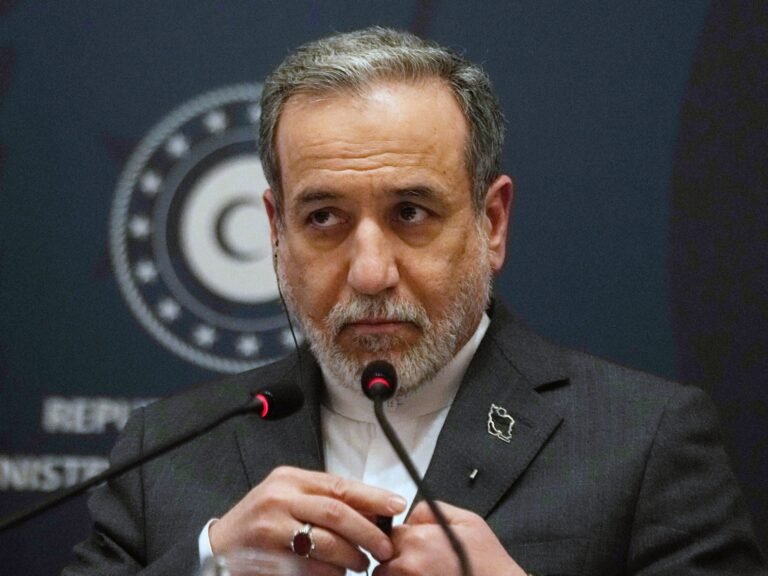
Iranian Foreign Minister Abbas Araghchi has derided the Munich Security Conference as a “circus”, accusing European powers of “paralysis and irrelevance” in efforts to revive nuclear negotiations with the United States.

Iranian officials were not invited to the annual security meeting in the German city, and the top Iranian diplomat made the remarks in a post on X on Sunday, two days before Iranian and US officials are to hold talks in Geneva, Switzerland.

Recommended Stories

list of 3 itemsend of list

“Sad to see the usually serious Munich Security Conference turned into the ‘Munich Circus’ when it comes to Iran,” Araghchi wrote on X. “The paralysis and irrelevance of the EU/E3 is displayed in the dynamics surrounding the current talks over Iran’s nuclear program. … Once a key interlocutor, Europe is now nowhere to be seen. Instead, our friends in the region [the Gulf] are far more effective and helpful than an empty-handed and peripheral E3.”

The E3 – which included France, the United Kingdom and Germany – were key players in the previous round of nuclear negotiations between world powers and Iran. That process culminated in 2015 with the Joint Comprehensive Plan of Action, a landmark agreement aimed at limiting the scope of Iran’s nuclear programme in exchange for sanctions relief.

The US under the first administration of President Donald Trump withdrew from the deal in 2018 and ramped up sanctions on Iran. Since then, the process has largely stalled. Still, the E3 maintained a role as a go-between with Tehran and Washington.

But since negotiations resumed last year, Gulf countries, such as Oman and Qatar, have taken the lead in facilitating talks between the US and Iran.

Araghchi’s comments “indicate a policy shift from the Iranian side that the E3 mechanism … is no longer a valid channel for resolution”, said Abas Aslani, a senior research fellow at the Center for Middle East Strategic Studies. “This nuclear mediation has moved from Europe to the region, and now the heavy lifting in diplomacy is done by regional players.”

On Tuesday, Oman is to host talks between the US and Iran in Geneva after previous indirect negotiations in Muscat on February 6. Those talks were attended by US envoy Steve Witkoff and Trump’s son-in-law Jared Kushner.

US and Iranian officials previously held several rounds of talks in the Omani capital to discuss Iran’s nuclear programme last year. But that process was halted as Israel launched a 12-day war with Iran in June, which the US briefly joined by bombing three Iranian nuclear facilities.

The new rounds of negotiations come as tensions in the region remain high with Trump moving more US military assets to the Middle East. On Friday, Trump said he was sending a second aircraft carrier to the region while openly talking about a change in Iran’s government.

Despite the new push for diplomacy, the two sides have maintained their positions. Iran has shown flexibility in discussing its nuclear programme, but the US wants to widen the talks to include Iran’s ballistic missiles and its support for regional armed groups – two issues that Tehran says are nonnegotiable.


Source link

Angelina Jolie considers leaving LA for abroad after her kids turn 18

0

NEWYou can now listen to Fox News articles!

Angelina Jolie’s next chapter could unfold far from Hollywood.

Jolie has been waiting for her twins, Vivienne and Knox, to reach adulthood before making a long-considered move abroad.

The “Eternals” star “never wanted to live in L.A. full-time,” a source previously told People. “She didn’t have a choice because of the custody arrangement with Brad.”

Vivienne and Knox, the youngest of her six kids, turn 18 on July 12.

ANGELINA JOLIE CRITICIZES AMERICA IN FREE SPEECH PLEA

Angelina Jolie wears a sheer dress

Angelina Jolie is planning her exit from the United States. (Thomas SAMSON / AFP via Getty Images)

“She’s eyeing several locations abroad,” the insider added. “She’ll be very happy when she’s able to leave Los Angeles.”

Jolie’s decision to move abroad is rooted in one priority — her children.

“When you have a big family, you want them to have privacy, peace, safety,” she told The Hollywood Reporter in 2024. “I have a house now to raise my children, but sometimes this place can be … that humanity that I found across the world is not what I grew up with here.”

She added, “I’ll spend a lot of time in Cambodia. I’ll spend time visiting my family members wherever they may be in the world.”

Angelina Jolie and her children at Eternals premiere

Angelina Jolie is reportedly waiting for her youngest children to turn 18 in July before leaving Los Angeles. (Jesse Grant/Getty Images for Disney)

Jolie has a history with Cambodia. The “Girl, Interrupted” actress adopted her first child, Maddox, from Cambodia in 2002.

“Cambodia was the country that made me aware of refugees,” she later explained in an interview with Vogue India. “It made me engage in foreign affairs in a way I never had, and join UNHCR. Above all, it made me a mom.”

“In 2001, I was in a school program in Samlout playing blocks on the floor with a little kid and as clear as day I thought: ‘My son is here,'” she revealed. “A few months later, I met baby Mad at an orphanage. I can’t explain it and am not one to believe in messages or superstition. But it was just real and clear.”

Angelina Jolie bows her head toward King Norodom Sihamoni while Queen Monique watches at an outdoor event.

Angelina Jolie pays respect to Cambodian King Norodom Sihamoni as former queen Monique looks on during the premiere of Jolie’s film “First They Killed My Father” on Feb. 18, 2017. (Str / Afp Via Getty Images)

KRISTEN STEWART PLANS DRAMATIC EXIT FROM US OVER TRUMP’S AMERICA-FIRST FILM INDUSTRY POLICIES

Jolie adopted two more children, Zahara and Pax, after beginning her relationship with Pitt. The “Fight Club” star later adopted all three children as his own.

Jolie also shares three biological kids with Pitt – Shiloh, Vivienne and Knox.

The now-50-year-old actress has said her decision to adopt was rooted in something deeply personal, not performative.

“When I was growing up, I wanted to adopt because I was aware there were kids that didn’t have parents,” she previously told Vanity Fair in 2008. “It’s not a humanitarian thing, because I don’t see it as a sacrifice. It’s a gift. We’re all lucky to have each other.”

“I look at Shiloh — because, obviously, physically, she is the one that looks like Brad and I when we were little — and say, ‘If these were our brothers and sisters, how much would we have known by the time we were six that it took into our 30s and 40s to figure out?’ I suppose I’m giving them the childhood I always wished I had.”

LIKE WHAT YOU’RE READING? CLICK HERE FOR MORE ENTERTAINMENT NEWS

Angelina Jolie standing at the Rafah border crossing between Egypt and the Gaza Strip.

Angelina Jolie inspects the Rafah border crossing between Egypt and the Gaza Strip on Jan. 2. (Ali Moustafa / Getty Images)

Her international ties have long shaped how she sees the world and, more recently, how she sees the United States. Jolie criticized the state of America in September while attending the San Sebastián Film Festival in Spain. 

“I love my country, but at this time, I don’t recognize my country,” Jolie said during a panel discussion, according to Variety.

“I’ve always lived internationally, my family is international, my friends, my life… My worldview is equal, united, and international. Anything anywhere that divides or limits personal expressions and freedoms from anyone, I think, is very dangerous.”

She added, “These are such serious times that we have to be careful not to say things casually. These are very, very heavy times we are living in together.”

CLICK HERE TO SIGN UP FOR THE ENTERTAINMENT NEWSLETTER

Brad Pitt and Angelina Jolie at the Cannes Film Festival in 2014

Angelina Jolie shares six kids with ex-husband Brad Pitt. (Anthony Harvey)

Jolie has been outspoken in her criticism of America for years, writing an op-ed for The New York Times in 2017 opposing President Donald Trump’s immigration ban.

At the time, Jolie emphasized she wanted the country to be safe but claimed the policy would do more harm than good.

“We can manage our security without writing off citizens of entire countries – even babies – as unsafe to visit our country by virtue of geography or religion,” Jolie wrote.

CLICK HERE TO DOWNLOAD THE FOX NEWS APP


Source link

Rashid khan statement: Unable to forget the defeat in Super Over… Poor Rashid due to grief

0

homegameCricket

Unable to forget the defeat in Super Over… Poor Rashid in grief

Last Updated:

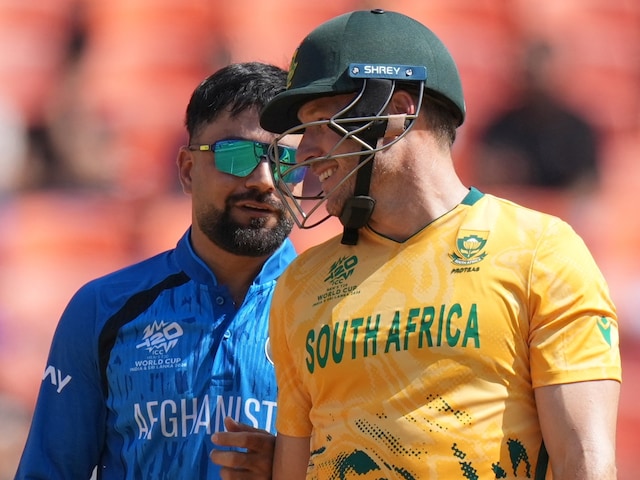
Rashid khan statement: Rashid Khan has admitted that he is not able to forget the defeat against South Africa in the Double Super Over. He says that to be honest, it is very difficult. It is very difficult to remove a defeat like the defeat in the Super Over against South Africa from the mind. That match was in our hands. Despite this we could not win.

Unable to forget the defeat in Super Over... Poor Rashid in griefZoom
Rashid Khan has still not been able to forget the sorrow of defeat in the Super Over.

New Delhi. Afghanistan captain Rashid Khan says that he is not able to forget the defeat in the double super over. According to him, victory against South Africa was within their grasp but later everything went wrong. Afghanistan had to face defeat against South Africa in a thrilling match in the group stage match of the T20 World Cup. Afghanistan captain Rashid Khan has still not been able to forget the defeat in the double super over. Rashid Khan said, ‘To be honest, it is very difficult. It is very difficult to remove a defeat like the defeat in the Super Over against South Africa from the mind. That match was in our hands. Despite this we could not win.

Afghanistan will face UAE on Monday at the Arun Jaitley Stadium. Before this match, Rashid said in a conversation with the media, ‘The match played against Australia at Wankhede in the 2023 World Cup never goes away from the mind. Until we won against them in the 2024 (T20) World Cup and then gradually it went out of our minds. This is quite disappointing. We have worked hard for this for the last one and a half years. The most important thing is what mindset we played with and how hard we worked. I think this is very important. This will help us not only in the upcoming matches but also in our upcoming cricket.

Rashid Khan has still not been able to forget the sorrow of defeat in the Super Over.

Afghanistan is on the verge of being out of the tournament after defeats against New Zealand and South Africa in the group matches. On this, Rashid said, ‘Due to lack of regular matches against big countries like South Africa and New Zealand, his team was less prepared for pressure matches. If you don’t get a chance to play against a big team, the same thing happens. If we had played more T20s against South Africa and New Zealand, we would have had an idea of ​​where this team can beat us and where we can do better. If you play them once a year, and that too in a World Cup event, then this is a time when you do not have the option to make mistakes.

He said, ‘If you play two matches in four days against New Zealand and South Africa, your World Cup can end in four days, and that happened with us. We lost both the matches in four days and were out of the World Cup. So, this pressure is different. You have to be mentally and physically prepared. If you make a small mistake, you are out of the competition. Rashid Khan said, ‘I don’t think much has gone wrong. We played good cricket, but were a bit unlucky. You saw the last match, we were very close, we were in the second super over. I think it shows that we worked hard. Afghanistan has to play 2 more matches against UAE and Canada in the T20 World Cup. There is a match against UAE on 16th and against Canada on 19th February.

About the Author

Kamlesh RaiChief Sub Editor

Active in journalism for about 15 years. Studied from Delhi University. Interested in sports especially cricket, badminton, boxing and wrestling. Covered IPL, Commonwealth Games and Pro Wrestling League events. From February 2022…read more

Iran seeks to get out of FATF blacklist amid domestic political divisions | Financial Markets News

0

Tehran, Iran – Iran says it will continue efforts to get out of a blacklist of a prominent global watchdog on money laundering and “terrorism” financing despite “20 years of obstruction” from domestic opponents.

The statement by the Financial Intelligence Unit of Iran’s Ministry of Economic Affairs on Sunday came two days after the Paris-based Financial Action Task Force (FATF) renewed its years-long blacklisting of Iran, according to a report by the official IRNA news agency.

Recommended Stories

list of 4 itemsend of list

The FATF also ramped up measures aimed at isolating Iran from global financial markets with a particular focus on virtual asset service providers (VASPs) and cryptocurrencies.

It recommended member states and financial institutions around the world to:

  • Refuse to establish representative offices of Iranian financial institutions and VASPs or consider the noncompliance risks involved.
  • Prohibit financial institutions and VASPs from establishing offices in Iran.
  • On a risk basis, limit business relationships or financial transactions, including virtual asset transactions, with Iran or people inside the country.
  • Prohibit financial institutions and VASPs from establishing new correspondent banking relationships and require them to undertake a risk-based review of existing ties.

Even the flow of funds involving humanitarian assistance, food and health supplies as well as diplomatic operating costs and personal remittances are recommended to be handled “on a risk basis considering the “terrorist” financing or proliferation financing risks emanating from Iran”.

What does the FATF move mean?

Iran has been blacklisted by the FATF for years and is currently on the list in the company of just two other countries: North Korea and Myanmar.

Since October 2019, Iran has had “heightened measures” like supervisory examination and external audit requirements recommended against it and has been subject to “effective countermeasures” since February 2020.

This contributed to making access to international transactions increasingly difficult or impossible for Iranian banks and nationals and made the country more dependent on costlier shadowy third-party intermediaries for transactions.

The new countermeasures emphasise existing frameworks but also specifically cite virtual assets, signalling an increased focus.

The fact that the FATF also urges countries and global institutions to remain wary of risks of having any dealings with Iran may mean even more limited transaction opportunities for Iranian entities and nationals.

Small banks maintaining old correspondent relations with Iranian counterparts may also reconsider after being recommended to re-evaluate existing links.

The isolation has hobbled state-run or private income streams and contributed to the continuous depreciation of the Iranian rial over the years.

The FATF, formerly known by its French name, was established by the Group of Seven (G7) countries in 1989 to combat money laundering but later had its mandate expanded to countering financing of “terrorism” and weapons of mass destruction.

It has been formally raising concerns about Iran since the late 2000s, which is also when it started calling for countermeasures as international tensions grew over Iran’s nuclear programme and the country was sanctioned by the United Nations Security Council.

But a year after Iran signed a landmark 2015 nuclear deal with world powers that lifted the sanctions, the FATF also acknowledged a “high-level political commitment” from Iran and agreed to an action plan for the country to address its compliance requirements.

The centrist government of President Hassan Rouhani, who had clinched the deals, pressed ahead with ratifying several laws needed to fulfil the action plan despite opposition from hardliners who were firmly against the increased financial transparency and international supervision.

But United States President Donald Trump unilaterally reneged on the nuclear deal in 2018, imposing a “maximum pressure” campaign that has remained in effect until today. The move empowered the argument from the hardliners in Tehran, who succeeded in blocking the ratification of the rest of the FATF-linked legislation, leaving the issue dormant for years.

Washington has retained the sanctions over the years with some of the latest – including the blacklisting in January of two United Kingdom-based cryptocurrency exchanges – allegedly connected to Iran’s Islamic Revolutionary Guard Corps.

The UN Security Council sanctions were also reinstated against Iran in September when Western powers triggered the “snapback” mechanism of the nuclear accord. They include an arms embargo, asset freezes and travel bans as well as nuclear, missile and banking sanctions that are binding for all UN member states.

Support for ‘axis of resistance’

The Iranian hardliners railing against any progress on FATF-related legislation have presented two main concerns.

They assert that fully adhering to the watchdog’s guidelines would curb Tehran’s ability to back its “axis of resistance” of aligned armed groups in Lebanon, Iraq, Yemen and Palestine. The axis lost its base in Syria with the fall of President Bashar al-Assad in December 2024.

Hardliners have also suggested that Iran’s ability to circumvent US sanctions may be significantly compromised by disclosing all the information required by the FATF.

Iran has been selling most of its oil to China at hefty discounts, using a shadow fleet of ships that turn their transponders off to avoid detection in international waters. The country has also for years been forced to rely on a capillary network of currency exchanges and intermediaries, some of them based in neighbouring countries, such as Türkiye and the United Arab Emirates.

To assuage some of the domestic concerns, two FATF-related laws ratified by Iran in 2025 were passed with special “conditions” and reservations infused in the text.

One of the main conditions was that the ratified regulations must not “prejudice the legitimate right of peoples or groups under colonial domination and/or foreign occupation to fight against aggression and occupation and to exercise their right to self-determination” and “shall not be construed in any manner as recognition of the Zionist occupying regime”, a reference to Israel.

Iran also said it would not accept any referral to the International Court of Justice and asserted that its own Supreme National Security Council would determine which groups qualify as “terrorist” outfits.

Those conditions were rejected by the FATF, leading to the increased countermeasures.

The watchdog also said it expects Iran to identify and freeze “terrorist assets” in line with relevant UN Security Council resolutions. Some of Iran’s nuclear and military authorities are among individuals sanctioned by those resolutions.


Source link

Bill Maher urges struggling young men to address their dating issues

0

NEWYou can now listen to Fox News articles!

Late night host Bill Maher urged young men who are struggling with women to look inward and address the underlying causes of their situation, while also acknowledging that they were “born in a society that said just being male was toxic.”

During Friday’s episode of “Real Time,” Maher argued that while some of today’s most notable female pop stars are “practically screaming that they can’t get no satisfaction,” the problem all women are facing is that “they’re living in a world full of guys who are afraid to even make eye contact without an NDA.”

“The younger generation of men caught the backlash from like five million years of human history, and I feel for you guys,” Maher said. “You were born in a society that said just being male was toxic. And in a world where everything you said was mansplaining and everything you did was an eye roll and merely approaching a woman could get you canceled, it got very easy for men to just give up.”

MEDIEVAL-THEMED LIVE SHOWS DRAW YOUNG WOMEN WHO ARE LOOKING FOR LOVE AND JADED BY MODERN DATING: REPORT

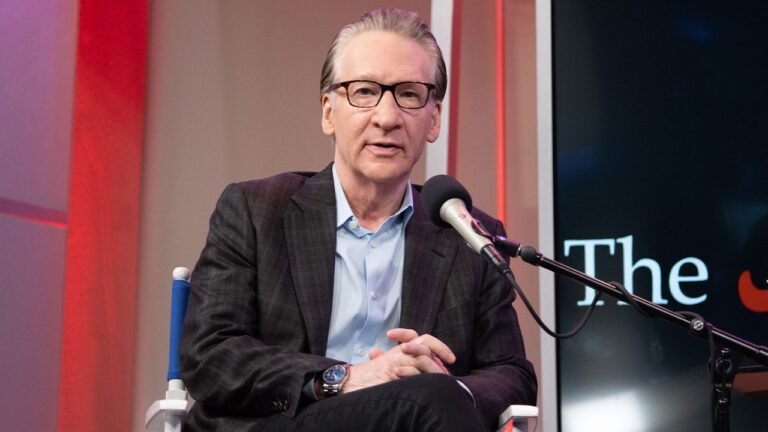
Bill Maher

Bill Maher on “Real Time” on Sept. 26, 2025. (Screenshot/HBO)

He added that when men eventually gave up on pursuing women due to societal pressures, platforms like “Pornhub and Tinder and OnlyFans were right there to take up the slack.”

“Thing is, the technology changed — women didn’t,” Maher asserted. “They still want eye contact and face-to-face conversation, and also a pair of balls would be nice.”

The “Real Time” host quipped that “in the real world,” unlike on the internet, “when a girl blows you off when you ask her to dance, you can’t just type ‘F— you’ and log off. You have to take that long walk of shame back to your table to tell your friends, ‘Uh, no, she’s a lesbian.'”

WELCOME TO THE DATING RECESSION: WHY YOUNG AMERICANS ARE GIVING UP ON LOVE

Earlier in the segment, Maher argued that Taylor Swift “epitomizes the journey that a lot of women have been going through” in regard to the types of men they choose to date.

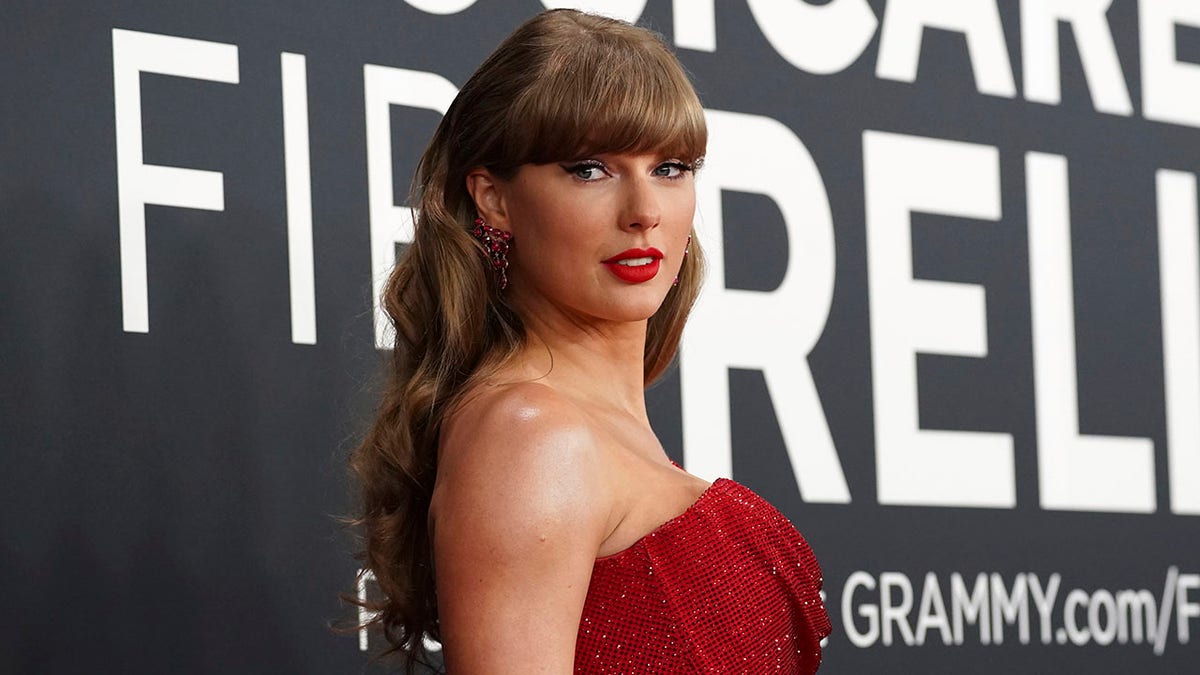
Taylor Swift in Los Angeles

Taylor Swift arrives at the 67th annual Grammy Awards on Sunday, Feb. 2, 2025, in Los Angeles. (Jordan Strauss/Invision/AP)

“Yes, women wanted men to be more sensitive. Sensitive, but not some noodlebodied human turtleneck who wears the same clothes they do,” he contended. “Timothée Chalamet is very talented, and I’m sure very sexy to women, but on the hunk scale, he feels like the leftover pieces from after they made Bert Reynolds.”

Maher once again used Swift’s dating history as an example of what women actually want to see in their partners.

CLICK HERE FOR MORE MEDIA AND CULTURE

“[Swift] dated a procession of skinny, fay, gay-adjacent, meek, porcelain doll, shy guy, twink like tortured poet metrosexuals in America and Europe,” he noted.

Despite previously dating men that the “Real Time” host considered to be feminine, Maher argued that once she began dating NFL star Travis Kelce, “it was game over,” eventually becoming engaged to the more traditionally masculine football player.

Taylor Swift and Travis Kelce after Chiefs Super Bowl win

Travis Kelce and Taylor Swift embrace after defeating the San Francisco 49ers at Super Bowl LVIII on Feb. 11, 2024, in Las Vegas, Nevada.  (Getty Images)

“So, welcome home, Taylor, and happy Valentine’s Day,” he joked.

CLICK HERE TO DOWNLOAD THE FOX NEWS APP


Source link

As Sudanese city returns to life after two-year siege, drone threat lingers | Sudan war

0

Markets reopen in Dilling, South Kordofan’s second largest city. Yet residents face critical medical shortages and persistent aerial attacks.

Life is cautiously returning to the streets of Dilling, the second largest city in South Kordofan state, after the Sudanese army broke a suffocating siege that had isolated the area for more than two years.

For months, the city had been encircled by the paramilitary Rapid Support Forces (RSF) and the Sudan People’s Liberation Movement-North (SPLM-N), cutting off vital supply lines and trapping civilians in a severe humanitarian crisis.

Recommended Stories

list of 4 itemsend of list

While the lifting of the blockade has allowed goods to flow again, local authorities and residents said the city remains under the threat of drone attacks.

Al Jazeera Arabic’s Hisham Uweit, reporting from Dilling, described a city “recovering slowly” from the economic strangulation.

“For over two years, heavy siege conditions were imposed on the city. Movement disappeared, goods vanished and livelihoods narrowed,” Uweit said.

“Now the eyes of buyers pick through the few available goods … as if the market itself is announcing its recovery at a leisurely pace, drawing determination from the patience of its residents.”

Markets return to life

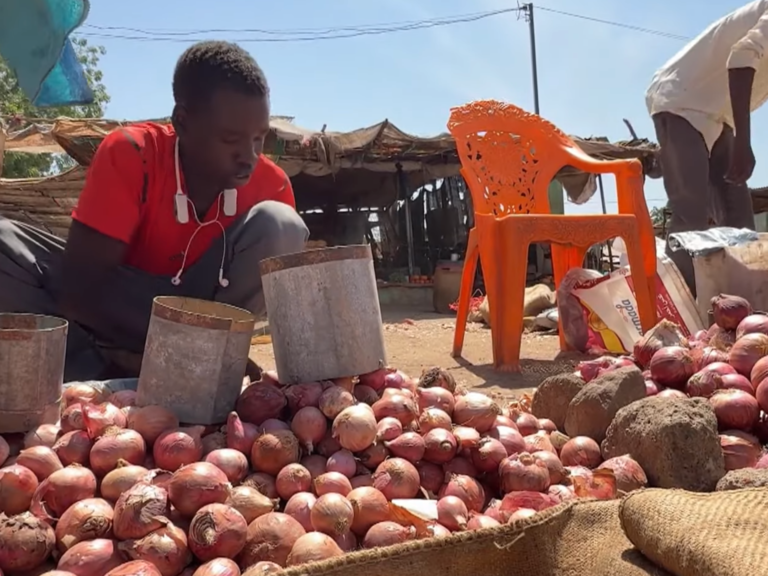
The immediate impact of the army’s advance is visible in the local markets, which were largely shuttered during the blockade. Fresh produce, absent for months, has begun to reappear in stalls.

“The market and vegetables have all returned,” a local trader told Al Jazeera. “Before, the market didn’t exist. Now we have okra, potatoes, sweet potatoes, chillies and lemons. Everything is with us, and the market has returned to normal.”

However, the resumption of trade masks deep scars left by the isolation. The blockade devastated the local economy, stripping residents of their savings and leaving infrastructure in disrepair.

‘The price of isolation’

While food supplies are improving, Dilling’s health sector remains in critical condition. The city’s main hospital is struggling with a severe lack of equipment and essential medicines, a shortage that has had life-altering consequences for the most vulnerable.

Abdelrahman, a local resident suffering from diabetes, paid a heavy price for the siege. During the months of encirclement, insulin supplies ran dry. His condition deteriorated rapidly, ultimately leading to the amputation of both his legs.

“He had a medical appointment after a month, but the month closed off his check-ups,” a relative of Abdelrahman said. “He is suffering severely. He is missing his insulin. There is a shortage of food, and he is tired. His health has declined sharply.”

‘Chased like locusts’

Despite the Sudanese army asserting control over access routes, the security situation in Dilling remains precarious. Authorities said the city is subjected to almost daily drone strikes launched by the RSF and SPLM-N, targeting infrastructure and residential areas.

For Maryam, a mother displaced multiple times by the conflict, the breaking of the siege has not brought peace. She described the terror of the unmanned aerial vehicles that hover over their homes.

“Now the drones bombard and chase us. They chase us like locusts,” Maryam said. “When they come, we just run to hide. When they hover over us, they burn the thatch [roofs], start fires and force you to leave your home.”

She added that the constant threat of aerial bombardment makes normal life impossible: “If you are having a meal, like porridge, … the moment you see them, you leave it.”

Uweit said that while the lifting of the siege is a “glimmer of hope” and a first step towards recovery, the dual challenge of rebuilding a shattered health system and fending off persistent military attacks means Dilling’s ordeal is far from over.


Source link