
Reference #18.c5d07868.1778007106.11131ab7
https://errors.edgesuite.net/18.c5d07868.1778007106.11131ab7
Source link

Reference #18.c5d07868.1778007106.11131ab7
https://errors.edgesuite.net/18.c5d07868.1778007106.11131ab7

Dana Perino and Bill Hemmer announce the US initiative ‘Project Freedom’ to ensure freedom of navigation through the Strait of Hormuz. President Trump issues a stern warning to Iran against any interference with shipping lanes. Bryan Llenas reports from Tel Aviv on recent drone attacks attributed to Iran by the UAE, and South Korea’s investigation into a vessel attack in the volatile region.
NEWYou can now listen to Fox News articles!
A new U.S.-backed proposal to build a network of overland energy pipelines bypassing the Strait of Hormuz is gaining attention as tensions in the region expose a critical vulnerability in the global energy system.
A policy memo reviewed by Fox News Digital outlines the concept, known as “ARAM Express,” a proposed consortium between the United States and Gulf partners to develop a multidirectional overland network for oil, gas and petrochemicals, originating with Richard Goldberg of the Foundation for Defense of Democracies.
The plan envisions pipelines extending westward to the Red Sea and Mediterranean, as well as southern routes toward the Arabian Sea, creating multiple export pathways that would reduce reliance on the strait, through which roughly one-third of the world’s seaborne oil currently flows.
TRUMP OPENS HORMUZ UNDER FIRE WITH ‘PROJECT FREEDOM’ AS IRAN WARNS OF ATTACKS

USS George H.W. Bush transits the Arabian Sea as U.S. forces enforce a naval blockade against Iran and support Project Freedom in the Strait of Hormuz, according to U.S. Central Command. (Fox News)
The proposal would rely on broad international participation, with European and Asian buyers investing in infrastructure and securing long-term supply agreements.
“European buyers are desperate for long-term supply resilience, and Asian customers are equally exposed,” Goldberg said. “Even China cannot tolerate the risk of a sustained disruption.”
The push comes as Iran’s threats to commercial shipping and ongoing U.S. efforts to secure the waterway under President Donald Trump’s “Project Freedom” highlight the risks posed by a single chokepoint to global energy flows.
Roughly one-third of the world’s seaborne oil passes through the narrow waterway, making it a critical artery for global markets. With Iran threatening shipping and U.S. forces now guiding vessels through the strait under President Donald Trump’s “Project Freedom,” the White House is framing the crisis in global terms.
“The President will not allow Iran to hold the global economy hostage and undermine the free flow of energy,” said White House spokeswoman Taylor Rogers, describing the launch of “Project Freedom” as a humanitarian effort to restore navigation through the strait.
That framing aligns with a growing view among U.S. officials and analysts that the risk is not only immediate but also structural.
U.S. Ambassador to the United Nations Mike Waltz signaled that Washington’s partners are already looking beyond the strait itself.
“I know our Gulf partners and allies are seriously thinking through that,” Waltz told Fox News Digital when asked about long-term alternatives during a conference call with reporters Monday.
“I know they’re looking at additional alternatives to frankly diversify their pathways and diversify their economies,” he added.
MIKE WALTZ PUSHES UN RESOLUTION TO STOP IRAN MINING KEY GLOBAL SHIPPING ROUTE

The surge in regional piracy risk is exacerbated by the volatility of the Strait of Hormuz as Iranian-backed threats persist in the Persian Gulf and global energy flows are shifting. (Mass Communications Specialist 1st Class Cassandra Thompson/U.S. Navy via Getty Images)
The idea that Hormuz represents a structural weakness is not new. But until now, it has largely been tolerated, with global markets relying on stability in the Gulf to keep energy flowing.
That assumption is now under strain.
Even with U.S. naval power deployed to secure the waterway, the current crisis has highlighted how quickly disruption, or even the threat of it, can ripple through global supply chains.
“This isn’t just a long-term idea anymore,” said Rich Goldberg of the Foundation for Defense of Democracies think tank. “There is a real threat to the Strait of Hormuz that isn’t going away so long as the regime in Tehran remains.”
AS IRAN WEAKENS, QUESTIONS GROW OVER MOHAMMED BIN SALMAN’S REGIONAL AMBITIONS

The proposal would rely on broad international participation, with European and Asian buyers investing in infrastructure and securing long-term supply agreements. (U.S. Central Command)
Saudi Arabia stands out as the country among Gulf states that has invested most heavily in reducing reliance on Hormuz.
Its East-West pipeline allows crude oil to travel from eastern fields on the Gulf to the Red Sea port of Yanbu, bypassing the strait entirely. From there, shipments can move toward Europe, Africa and Asia without entering the chokepoint.
“Saudi Arabia has treated the Strait of Hormuz risk with planning, not panic,” said Salman Al-Ansari, a Saudi geopolitical analyst.
“The East-West pipeline is strategic insurance,” he told Fox News Digital, “A Hormuz closure would be disruptive, but not paralyzing. Saudi Arabia has spent years reducing that vulnerability, and today it is uniquely positioned to absorb shocks and keep global flows moving.”
Al-Ansari argued that the kingdom’s strategy goes beyond energy exports, positioning the country as a broader logistics hub.
“Ports, pipelines, land bridges, storage and Red Sea access are all part of one Saudi contingency architecture,” he said.
HORMUZ CHOKE POINT PERSISTS AS IRAN HALTS OIL TRAFFIC DESPITE TRUMP CEASEFIRE
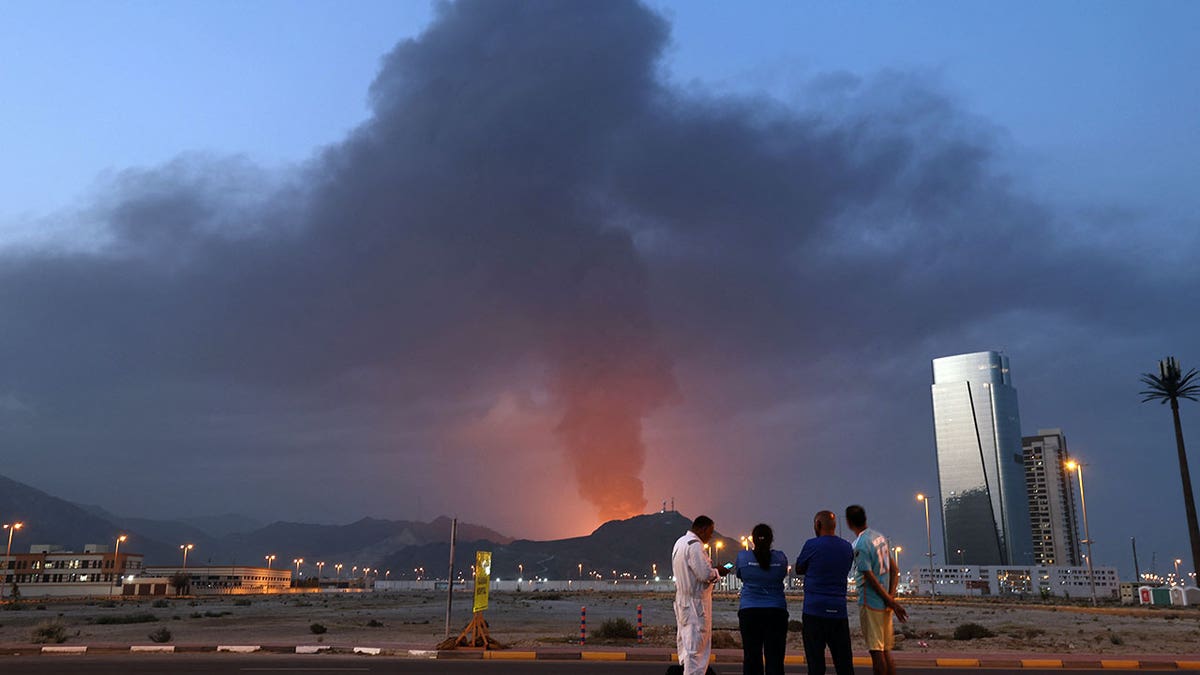
The plan envisions pipelines extending westward to the Red Sea and Mediterranean, as well as southern routes toward the Arabian Sea, creating multiple export pathways that would reduce reliance on the strait, through which roughly one-third of the world’s seaborne oil currently flows. (Fadel Senna / AFP via Getty Images)
Saudi Arabia is not the only player adapting.
The United Arab Emirates also has developed alternative export capacity through its pipeline to Fujairah, outside the Strait of Hormuz.
At the same time, some analysts argue that recent regional dynamics point to a deeper shift, one that goes beyond infrastructure and into the political structure of the Gulf itself.
Yonatan Adiri, an Israeli entrepreneur and former adviser to former Israeli President Shimon Peres, said the traditional model of a unified Gulf energy system centered on Hormuz is beginning to break down.
“The whole arrangement … it’s starting to expire,” Adiri said, referring to the long-standing reliance on the strait as a central artery for Gulf exports.
He pointed to emerging economic and geopolitical realignments, including new corridors and shifting alliances, that are fragmenting the region’s traditional energy architecture.
“The UAE stepping away from OPEC is not just about production policy,” Adiri said, referring to the country’s decision to leave the Organization of the Petroleum Exporting Countries effective May 1, 2026. “It reflects a broader shift toward an independent strategy — building its own routes, partnerships and leverage rather than relying on a collective system.”
These changes are driven in part by broader global competition, according to Adiri, particularly efforts by the United States and its partners to counter China’s Belt and Road Initiative.
“The entire system is being rethought,” he said, describing a shift toward diversified routes that reduce reliance on single choke points.
WHY GULF STATES AREN’T JOINING THE WAR AGAINST IRAN — DESPITE ATTACKS ON THEIR SOIL
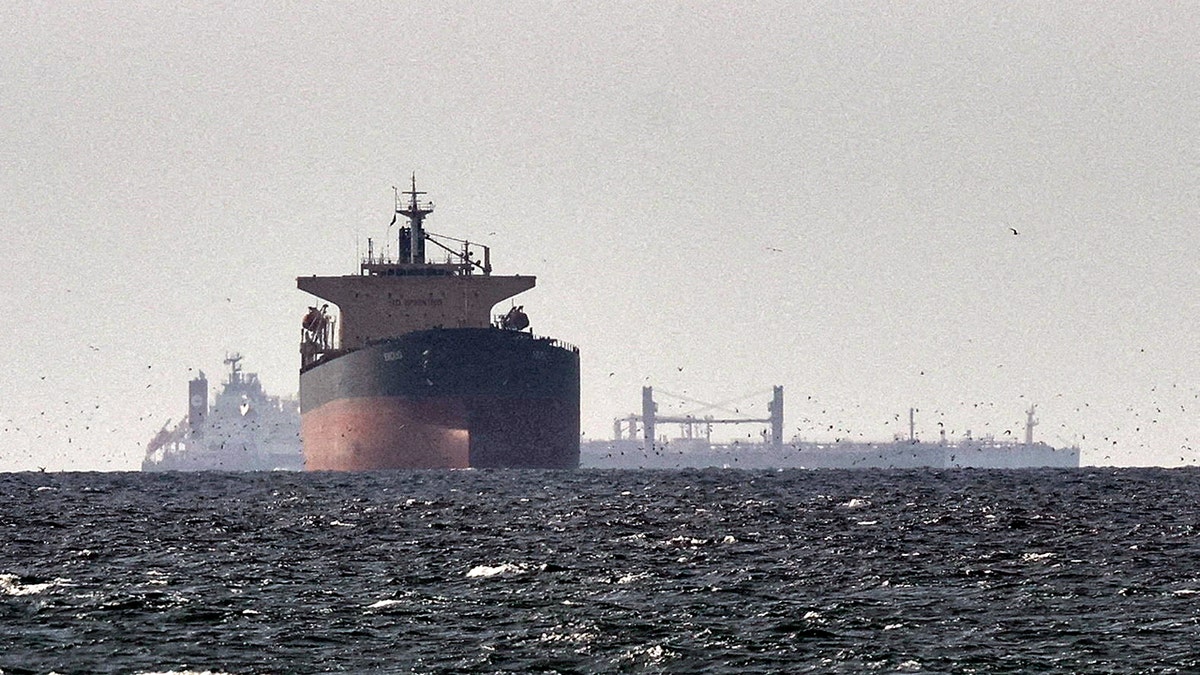
Cargo ships are anchored in the Gulf near the Strait of Hormuz as seen from northern Ras al-Khaimah, United Arab Emirates, March 11, 2026. (Reuters/Stringer/File Photo/File Photo)
Despite these developments, not all Gulf states are equally prepared.
“If you’re Kuwait, you’re in a world of hurt,” Goldberg said, pointing to countries that lack meaningful alternatives to maritime exports.
Qatar, one of the world’s largest exporters of liquefied natural gas, remains heavily dependent on the strait, with limited options to reroute supply if shipping is disrupted.
This uneven exposure could reshape regional dynamics, giving countries with alternative routes greater resilience and leverage in future crises.
While the technical case for alternative routes is growing stronger, political constraints remain.
One of the most sensitive issues is whether future corridors could involve Israel, even indirectly.
“As for routes involving Israel, even indirectly, the politics are extremely difficult under current circumstances,” Al-Ansari said. “I genuinely do not see it happening now.”
At the same time, he suggested that such cooperation could become more realistic in the future under different political conditions.
For now, the U.S. and its allies remain focused on stabilizing the immediate situation in the Strait of Hormuz, ensuring that ships can pass safely and global markets continue to function.
But as tensions persist, the current crisis is forcing a broader reassessment.
CLICK HERE TO DOWNLOAD THE FOX NEWS APP
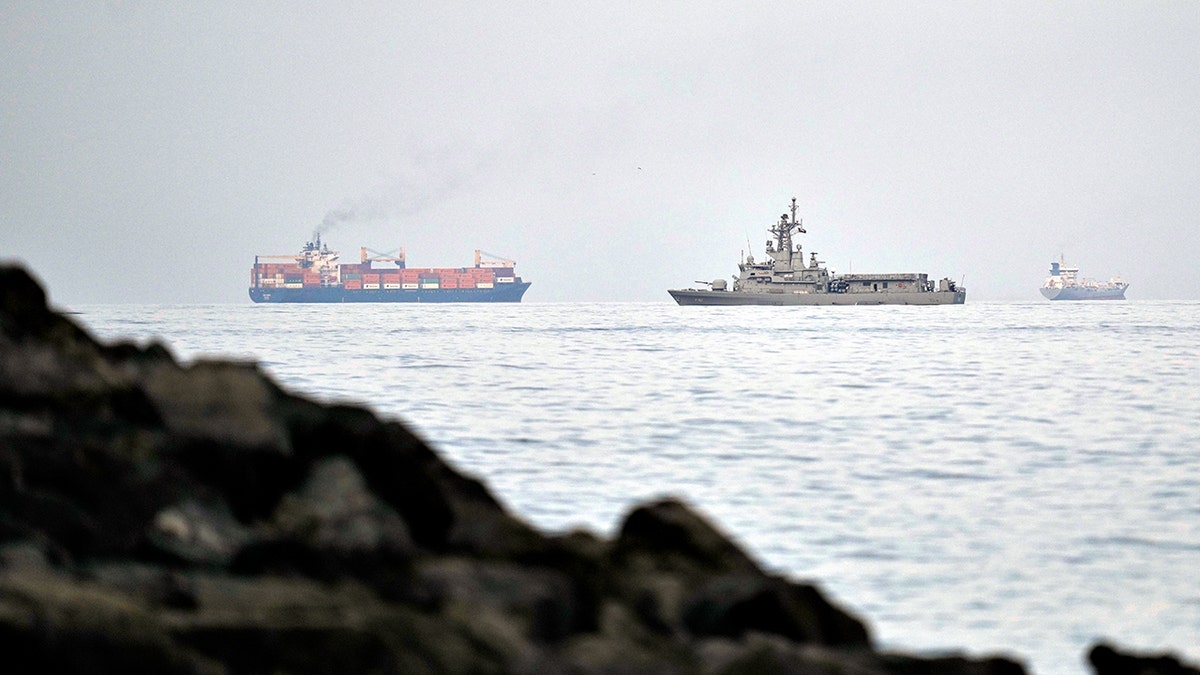
While the technical case for alternative routes is growing stronger, political constraints remain. (Altaf Qadri/The Associated Press )
The question is no longer just how to secure the strait, but whether the global energy system can afford to depend on it to the extent it has for decades.
If the current trajectory continues, Hormuz may remain critical, but no longer dominant, experts argue, as countries invest in new routes, new partnerships and a more diversified energy map.
Fox News Digital reached out to Saudi Arabia and the UAE for comment but did not receive a response in time for publication.

Written by Isaac Wuest, Principal Product Manager at HeroDevs.
When security teams think about end-of-life (EOL) open source software, the conversation usually starts and ends in the same place: no more patches.
That’s true, but it’s only half the story, and arguably the less dangerous half. There are two compounding problems most teams are unaware of.
When a vulnerability is discovered in an open source project, maintainers determine which versions are affected and file a CVE with a defined affected range. Every vulnerability scanner, SBOM tool, and CVE feed in the industry consumes that range.
If your version falls outside it, you get no alert. Not because you’re safe, but because no one checked.
EOL versions fall outside that range almost by default. The reason is straightforward: it’s a scale problem. In just five years, the global CVE count doubled while the number of unscored CVEs increased 37x, according to Sonatype’s 2026 State of the Software Supply Chain report.
Maintainers are already overwhelmed investigating and patching the versions they actively support, and as both CVE volume and the total number of package releases continue to grow, the investigative bandwidth required to cover older release lines simply doesn’t exist.
Maintainers must be realistic about how far back in their own release history they can reasonably go.
Sonatype’s research explicitly named “EOL versions omitted from advisories” as a driver of false security confidence, contributing to the 167,286 false negatives, exploitable components that went entirely unflagged, they identified in 2025 alone.
HeroDevs’ EOL DS tracks end-of-life status across 12M+ package versions on npm, PyPI, Maven, NuGet, and every other major registry.
Upload an SBOM or run the CLI to find every EOL dependency in your stack, including the transitive ones your scanners can’t flag.
Get Your Free EOL Risk ReportTwo recent critical vulnerabilities in the Spring ecosystem make this concrete.
CVE-2026-22732 — Spring Security (Critical, March 2026, CVSS 9.1)
This vulnerability causes security response headers, including Cache-Control, X-Frame-Options, Strict-Transport-Security, and Content-Security-Policy, to be silently dropped in certain servlet application configurations. The official affected range covers Spring Security 5.7.x through 7.0.x.
Spring Security 6.2.x is not listed. It reached EOL in December 2025. Spring Boot 3.2 ships with Spring Security 6.2. Any organization running Boot 3.2, one minor version behind the listed range, receives no scanner signal.
HeroDevs has confirmed Spring Security 6.2.x is affected and has backported a fix for NES customers. The upstream CVE record does not reflect this.
The Spring examples above are not outliers. They reflect a pattern HeroDevs encounters consistently across its Never-Ending-Support practice.
When a new CVE is disclosed on a supported package, HeroDevs finds it needs to patch an EOL version the official CVE record does not list as affected approximately 80% of the time. The blast radius of any given vulnerability is systematically wider than what the record shows.
Put plainly: for four out of every five CVEs disclosed on a supported version, there is a reasonable probability that an EOL version you are running is also affected, and no scanner in the world will tell you that.
The CVE investigation gap above applies to EOL software that the community actually knows is EOL. That turns out to be a very small fraction of the real problem.
The most widely cited source of EOL data is endoflife.date, which tracks roughly 350 actively maintained projects; major frameworks and runtimes where maintainers have explicitly published end-of-life dates.
Across those 350 projects, approximately 7,000 specific package versions are identified as EOL. That is the universe most scanners and security teams are working from.
Here is the actual scale of the problem.
In Sonatype’s 2026 State of the Software Supply Chain report, produced in partnership with HeroDevs, the data tells a different story. Analyzing lifecycle status across 12 million package versions spanning npm, PyPI, Maven, NuGet, RubyGems, Go, Packagist, and crates.io, HeroDevs found that 5.4 million of those versions are end-of-life.
However, the industry’s most complete public source (endoflife.date) only accounts for ~7,000 of them.
The breakdown by ecosystem is striking. Approximately 25% of npm package versions are EOL. NuGet sits at around 18%, Cargo at 13%, PyPI at 11%, and Maven Central at 10%. These are versions actively appearing in enterprise SBOMs today, with no CVE investigation coverage and no fix path.
The Sonatype report found that 5–15% of components in enterprise dependency graphs are EOL, indicating EOL exposure even when teams believe they are only using supported top-level libraries. Transitive dependencies, the packages your packages depend on, carry the majority of this hidden exposure.
Most organizations are profoundly underreporting their EOL exposure, and it is not their fault. Their tooling was never built to detect abandonment at scale.
HeroDevs has confirmed more than 81,000 EOL package versions with known CVEs and no available fix path, meaning these are CVEs that were actively investigated and confirmed.
Given that roughly 80% of CVEs on supported versions also affect EOL versions that were never officially investigated, the true number is likely far larger. HeroDevs estimates the actual figure may be closer to >400,000 across all registries.
This dynamic is not new. What is new is the rate at which it is compounding.
The OSS ecosystem is scaling faster than the security infrastructure built to monitor it. npm alone recorded over 838,000 releases associated with critical CVSS 9.0+ scores in 2025. PyPI download volume grew over 50% year over year.
Every new package version that enters a registry is a future EOL version, and the EOL population grows continuously, while the investigative capacity to cover it does not.
The more significant forcing function, however, may be AI.
In April 2026, Anthropic announced Project Glasswing alongside Claude Mythos Preview, documenting its ability to identify and exploit zero-day vulnerabilities across all major operating systems and browsers — including vulnerabilities undetected for decades.
The initiative is explicitly defensive, directed toward finding and fixing critical vulnerabilities before attackers can exploit them.
For software with active support, this is genuinely good news. Vulnerabilities found at AI scale can be routed to engineers who can address them.
For EOL software, the calculus is different. An AI that finds vulnerabilities across the entire codebase landscape will surface findings in versions no maintainer is watching. Those findings will not be officially investigated against the EOL-affected ranges.
They will not trigger scanner alerts for EOL users. No upstream patch will ever address them. The same capability that accelerates defense for supported software widens the exposure gap for everything already left behind.
The early signals of this shift are already visible. The full impact hasn’t arrived yet.
You don’t know. Your scanner doesn’t know. Your CVE feed doesn’t know.
Sonatype’s data says 5–15% of components in a typical enterprise stack are EOL. For npm alone, it’s 25% of all package versions. Spring Boot 3.2 shipped Spring Security 6.2, EOL since December, no scanner alert.
What’s your number?
The HeroDevs EOL Dataset tells you in under five minutes. Upload an SBOM or run the CLI. We check it against 12M+ package versions across npm, PyPI, Maven, NuGet, and every other major registry, including the transitive dependencies your scanner skipped. You get a report listing every EOL package in your stack. No sales call. No credit card.
As AI-assisted vulnerability research scales, the number of undisclosed vulnerabilities in uninvestigated EOL packages will only grow.
Sponsored and written by HeroDevs.
Labour MPs have been urged to stop plotting to remove Keir Starmer by Tom Watson, who as a junior minister spearheaded the last attempted coup against a Labour prime minister, when Tony Blair faced a revolt in 2006.
Watson’s warning came as Steve Reed, the housing and communities secretary, and a key Starmer loyalist, said Labour would risk “annihilation” if it decided to try to change leaders.
But with results for Labour expected to be particularly grim in Thursday’s elections for the Scottish and Welsh parliaments and English councils, senior party figures have told the Guardian that activists were being repeatedly told that the prime minister was the problem, rather than the party.
“They don’t hate Labour, they hate Keir, as unfair as that is, and I do think it is massively unfair,” one said.
There are nonetheless few expectations of a challenge soon after the elections, with expected challengers including Andy Burnham, Angela Rayner and Wes Streeting locked in what one cabinet minister called a “Mexican standoff”, with no one ready to move first.
Watson’s warning came in a Substack post in which he recounted his role in events in 2006, when Blair faced a letter from some MPs calling on him to set a date for his departure as prime minister, coupled with some junior ministerial resignations, Watson’s among them.
His advice to the current crop of Labour MPs, said Watson, who served as deputy leader under Jeremy Corbyn and is now a peer, was “not to be as reckless as we were in 2006”.
He went on: “Whatever the rights and wrongs of Labour’s current woes, the answer is not two-dozen backbench MPs writing a public letter calling on the prime minister to resign.” It would, he said, create a “Westminster psychodrama”, be seized on by opponents and go down extremely badly with voters.
“Voters will see a party talking to itself while the country is shouting at it,” he wrote. “The solution cannot simply be a different name on the door. The party has to listen harder, think deeper and recover its political purpose.”
Speaking earlier on Tuesday, Reed said he believed most fellow Labour MPs were not signed up to the idea of a challenge.
He told Times Radio: “The whole notion that we would copy the Conservatives and go doomscrolling through leaders in a way that means the government is completely incapable of dealing with the things that matter to most of the British public is absolute nonsense, and I’m not going to engage in it, and most of our MPs would not engage in that either.”
Steve Wright, the general secretary of the Fire Brigades Union, reiterated his call for Starmer to go in an interview published on Tuesday, saying that if results on Thursday were as bad as anticipated, the prime minister would be “a bit of a sitting duck”.
But one cabinet minister said an immediate challenge felt unlikely: “A number of candidates are in a Mexican standoff but nobody is ready to pull the trigger.
“It’s a reality that the next few months will be difficult. The idea that in that context the Labour party wants to turn in on itself and go round the country and have hustings, is frankly bizarre. My sense is that no one will trigger a contest. There will be a lot of noise and briefing and people will understandably be worried, but I think that Keir will still be here next week.”
Supporters of Burnham are thought to be waiting to see local election results across the north-west before potentially making an intervention on Friday evening. Backers of the Greater Manchester mayor say they will ask Starmer to set out a timetable for a dignified exit.
This timetable would give Burnham time to seek a seat in Westminster – and could mean he would no longer be obstructed by Labour’s national executive committee. If Starmer refused and Burnham sought to return to parliament nonetheless, he would almost certainly be blocked again.
Whatever happens, Burnham, Rayner and Lucy Powell, who replaced Rayner as Labour’s deputy leader, are expected to feel more free to express opinions once the election is over.
Some in Labour believe that such is the political hole Starmer faces, someone will act. One senior party source said: “Plenty of MPs now think they might as well just roll the dice and that anything would be better than where we are now.”
Reference #18.2f50db17.1778006881.aa21c8f
https://errors.edgesuite.net/18.2f50db17.1778006881.aa21c8f

NEWYou can now listen to Fox News articles!
Two hikers were injured in a bear attack Monday on a popular trail just miles from Yellowstone National Park’s iconic Old Faithful geyser, prompting officials to close a large swath of the park as investigators work to determine what went wrong.
The attack happened Monday afternoon on the Mystic Falls Trail, a heavily traveled route near the Midway Geyser Basin that features a loop to a 70-foot waterfall, park officials said.
Emergency crews with the National Park Service responded quickly after the encounter, which officials described as a single incident involving one or more bears. Authorities have not yet identified the species involved.
Park officials temporarily shut down the surrounding area, including multiple trails and backcountry campsites, as the investigation continues.
2 US ARMY SOLDIERS IN ALASKA INJURED IN BEAR ATTACK DURING TRAINING EXERCISE

A sign marks the north entrance of Yellowstone National Park with mountains visible behind it on May 7, 2018. (Jacob W. Frank/National Park Service)
Officials have not released details about the hikers’ conditions or whether they were traveling together.
The incident marks the first bear attack resulting in injuries in Yellowstone in 2026. The last similar incident occurred in September 2025, when a hiker was injured on a trail northeast of Yellowstone Lake.
Bear attacks in Yellowstone are rare despite the popularity of the park, which draws more than 4 million visitors each year. The last fatal attack inside the park occurred in 2015.

A black bear forages for food near a stream in Yellowstone National Park, Wyo., on May 18, 2024. (Jonathan Newton/Getty Images)
TEACHERS CALLED ‘TRUE HEROES’ AFTER REPELLING GRIZZLY BEAR THAT ATTACKED SCHOOL GROUP, INJURING 11
Yellowstone is home to both grizzly and black bears, with grizzlies generally larger and more aggressive. Officials said determining the type of bear involved will be part of the investigation.

A grizzly bear is seen in Yellowstone National Park in Wyoming. (Karen Bleier/AFP)
The fate of the animal or animals involved will depend on the circumstances of the attack, including whether it was a defensive encounter or something more unusual.
CLICK HERE TO DOWNLOAD THE FOX NEWS APP
Park officials are reminding visitors to take precautions when hiking in bear country, including staying at least 100 yards away from bears, carrying bear spray, making noise and hiking in groups.
The Associated Press contributed to this report.
Jonathan Pollard, a former US navy intelligence analyst jailed for 30 years for spying for Israel, has said he will stand for election to the Knesset this year on a platform of ethnic cleansing.
Speaking to Channel 13 television, Pollard said: “I personally prefer the forcible removal of all current residents of Gaza, and the annexation of Gaza and its repopulation by us.”
Pollard said he decided to enter politics because of the 7 October 2023 Hamas attack on southern Israeli communities that killed nearly 1,200 people and triggered the Gaza war. He blamed the Israeli government for failure to prevent the attack or intervene quickly after it began.
“Until then, I thought that the abandonment and betrayal I experienced from the government was an exception and not the rule, but after October 7 I realized that I was not an exception,” he said.
Pollard was released on parole at the age of 61 from US prison in 2015 after serving 30 years for selling military secrets to Israel for money. He and his wife, Anne Henderson, were arrested in 1985 after Pollard passed a huge volume of classified documents to Israeli intelligence – enough to fill a 10ft-by-6ft-by-6ft room, by Pollard’s own calculation. In return he received cash and jewels.
Marion Bowman, a Pentagon lawyer who assessed the damage to US national security by Pollard’s espionage, told NBC News in 2014 the spy had been motivated by money as much as allegiance to Israel, and alleged he had provided highly classified materials to two other countries.
He pleaded guilty in 1986 in hopes of avoiding a life sentence, but in 1987 the plea agreement was rejected by a federal judge. He was championed during his imprisonment by the Israeli prime minister, Benjamin Netanyahu, and he was awarded Israeli citizenship while in jail.
The terms of Pollard’s parole did not allow him to leave the US for five years, but he emigrated to Israel in 2020 after his parole term was over, and received a hero’s welcome from Netanyahu.
Despite Netanyahu’s past support for him, Pollard has become a fierce critic of the prime minister. In his television interview, he said Israel was not winning the war it had been fighting since 2023 and called for new leadership with a clearer and sharper policy.
According to Channel 13, Pollard will enter politics as part of a new party, formed with Nissim Louk, whose 22 year-old daughter, Shani, was murdered in the 7 October attack while she was attending a music festival near the Gaza border.
Despite his bitter criticisms over the security failures that made Israel vulnerable to attack, Pollard said that if Netanyahu comes out of the coming elections, expected in October this year, still in command of a governing coalition, “then we will have to support him”.


Reference #18.c5d07868.1778005977.10e2d87d
https://errors.edgesuite.net/18.c5d07868.1778005977.10e2d87d

A federal judge causes controversy by apologizing to Cole Allen, who is accused of attempting to assassinate President Trump at the White House Correspondents’ Association Dinner. Attorney Mark Smith calls the judge’s comments “reckless,” emphasizing that jail conditions should be tough. Smith notes video evidence of Allen’s dangerous intent and questions the comparison to Jan. 6th defendants.
NEWYou can now listen to Fox News articles!
A medical center in Los Angeles is responding after a nurse posted on social media expressing disappointment that President Donald Trump was not killed in the shooting during the White House Correspondents’ Association Dinner.
Matthew Shaffer, who is identified as a nurse practitioner on the website for Cedars-Sinai Medical Center in Los Angeles, reportedly responded to a social media post about the April 25 White House Correspondents’ Association Dinner shooting in which user Jason Cosler wrote, “Someone missed again? Who is hiring these people,” and Shaffer responded, “Up your game, people.”
A spokesperson for Cedars-Sinai told Fox News Digital in a statement that, “Social media postings of individual staff members do not reflect the views or positions of Cedars-Sinai.”
OHIO TEACHER FIRED AFTER VIDEO APPEARING TO LAMENT TRUMP SURVIVING WHCA DINNER SHOOTING

President Donald Trump in the Oval Office of the White House in Washington, D.C., on April 30, 2026. (Andrew Harnik/Getty Images)
Shaffer’s LinkedIn page lists him as working as a full-time nurse practitioner at Cedars-Sinai Medical Group since March.
The shooting suspect, Cole Tomas Allen, was arrested April 25 after authorities said he opened fire at the Washington Hilton Hotel during the dinner, which Trump was attending for the first time as president.
Fox News Digital reported that Allen, who is facing life in prison, wanted to target Trump administration officials in his foiled attack, according to law enforcement sources.
UNEARTHED VIDEO REVEALS COLE ALLEN AS QUIET INVENTOR YEARS BEFORE ALLEGED BID TO ASSASSINATE TRUMP

President Donald Trump posted a photo on social media showing law enforcement detaining Cole Thomas Allen following the shooting at the White House Correspondents’ Association Dinner in Washington, D.C., on April 25, 2026. (US President Trump via Truth Social/Anadolu/Getty Images)
According to Allen’s LinkedIn, he graduated from Cal State University, Dominguez Hills in May 2025 with a master’s degree in computer science.
He is facing three federal counts, including attempting to assassinate the President of the United States, transporting a firearm across state lines and discharging a firearm during a crime of violence.
MICHAEL SHELLENBERGER: THE LEFT IS GETTING PEOPLE KILLED

A Secret Service agent fires at Cole Allen, suspected in the assassination attempt on President Donald Trump at the White House Correspondents’ Association Dinner on Saturday, April 25, 2026. (Obtained by The Washington Post)
The post Shaffer replied to has received some backlash online, with radio host Doug Wagner writing, “@CedarsSinai So, are you good with an RN of yours cheering on the assassination of the President? What if someone who is clearly a Trump supporter is in your hospital? Think maybe he could kill that person. You down with that?”
CLICK HERE TO DOWNLOAD THE FOX NEWS APP
Fox News Digital reached out to Shaffer for comment but did not immediately receive a response.

IBM has added support for Google Vertex AI and Intel Gaudi to boost the AI-based management of its stalwart Db2 database.
With the update to its Db2 Genius Hub, launched earlier this year, Big Blue is now promising an automated database management system that acts on behalf of DBAs within certain guardrails.
The new release promises to integrate Db2 data with Google Cloud’s fully managed AI platform, Vertex AI, to help customers build, deploy, and scale machine learning models. IBM has also integrated AI accelerator Intel Gaudi with the promise of an improved price-to-performance ratio for large-scale AI deployments.
The two updates build on existing support for Amazon Bedrock and IBM watsonx.ai, while also adding Microsoft Azure AI Foundry, as Big Blue pushes toward more autonomous database operations.
Launched in the 1980s, Db2 has become a database of choice for applications that need to be both big and dependable. Banks make up nearly 43 percent of its users, among them American Express, Bank of America, Citibank, and Deutsche Bank.
These are not the kind of DBAs to take undue risk with their systems, but Big Blue now swears some routine tasks can be left to AI.
Announced in March, Db2 Genius Hub can cut management costs by 25 percent, manual intervention by 30 percent, and time to resolution by 35 percent, IBM said. As always, vendor claims should be taken with a grain of salt.
The latest additions mean it can allow AI to manage well-bounded tasks while keeping human judgment “at the core,” the company said.
“With this release, AI agents in Db2 Genius Hub can propose and execute database operations with user approval. That means teams can move more directly from diagnosis to action without giving up control of what happens in production,” said Miran Badzak, IBM Software director for databases, in a blog.
Speaking to IBM, industry analyst Sanjeev Mohan said that advances in GenAI coding showed that automation would come to DBAs sooner rather than later.
“This is the first step where it is proactively doing monitoring, root cause analysis, it’s soon going into making recommendations and autonomously executing a task,” said the former Gartner analyst.
“We want the DBAs to be upskilled; they should be sitting with business decision makers. A decision maker says, ‘I need to run a new campaign, massive campaign … and it’s going to blow up the database’. The DBA can be responsible for the business success, because Genius Hub can take care of all the nitty gritty, nuanced, heavy lifting of the database. We can get the DBAs into that room,” Mohan said.
After more than 40 years of existence, Db2 has come a long way in the last five. Back in late 2021, Db2u – IBM’s containerized Db2 deployment – was described as only available via containers on Red Hat OpenShift.
Other recent announcements include a partnership with PostgreSQL-like distributed database provider CockroachDB in a bid to help modernize mission-critical applications reliant on mainframe hardware. ®