NASA’s back to the ’90s • The Register


OPINION NASA’s budget and its new administrator’s statements are evoking a ghost from the agency’s past: Faster, better, cheaper.

The agency closed out the last century with a near decade-long experiment in doing more with less. Administrator Dan Goldin championed the philosophy as NASA faced criticism that its flagship programs, including the Cassini mission to Saturn, demanded years of development and billion of dollars. Was there another way?

The answer in the 1990s, was Faster, better, cheaper: run several smaller missions in the time it once took to build a big one, and lean on private industry to drive down costs.

Fast forward a quarter of a century and it sounds like the US space agency is retreading old ground.

The problem with the methodology was risk. After a run of successes, including the Mars Pathfinder and Mars Global Surveyor missions, NASA suffered a string of failures. These included the infamous loss of the Mars Climate Orbiter due to a measurement units error and the Mars Polar Lander, which crashed during its landing attempt.

Whether the philosophy was pushed too far, or whether repeated failure simply proved politically unpalatable, NASA retreated. The Mars rovers and the James Webb Space Telescope stand as monuments to what the old, expensive, methodical approach could achieve.

Now under the Trump administration, NASA is being pushed back toward austerity. New administrator Jared Isaacman wants more missions, more commercial involvement, while also expecting cheaper projects that carry a higher degree of risk.

The commercial environment has changed considerably since the 1990s. SpaceX, for example, has demonstrated that launches can be done relatively cheaply, and its rapid-iteration model has produced real results. But it has also produced real failures: Starship, despite reaching its third major version, is only now approaching the reliability threshold for uncrewed orbital flight.

NASA’s own Space Launch System, meanwhile, remains monstrously expensive and behind schedule, yet it has launched twice – both times successfully – including a crewed lunar flyby.

That contrast captures the core tension. The traditional NASA approach is slow and costly, but it works. Isaacman wants to raise mission cadence while cutting budgets. This is a combination that, given the administration’s fiscal goals, is very difficult to achieve without accepting a higher failure rate and simpler mission profiles.

The original faster, better, cheaper philosophy foundered partly on the stigma of failure. A similar reckoning is coming if Isaacman’s ambitions are to be met. The only real question is what happens when (and it is a when not an if) the first high-profile mission is lost. ®


Source link

Map of dominance: Why Iran can’t afford to give up Hormuz control | US-Israel war on Iran News

0

A new map featuring two red lines stretching beyond the Strait of Hormuz has become the latest symbol of the escalating war of attrition between Iran and the US.

Iran’s Revolutionary Guard Corps (IRGC) on Monday released a map marking an expanded maritime area of control to include lengthy sections of the United Arab Emirates’s coastline. In the west, a line stretches between the westernmost tip of Iran’s Qeshm Island to the UAE’s Umm al Quwain ‌emirate, while in the east, a second line joins Iran’s Mount Mobarak ⁠and the UAE’s Fujairah.

Recommended Stories

list of 3 itemsend of list

The announcement came after US President Donald Trump launched a new effort to open the vital energy chokepoint – which has been largely closed since the US-Israel war on Iran began on February 28 – by sending the navy to escort stranded tankers through the strait, in a campaign dubbed “Project Freedom”.

In a further escalation, the UAE on Monday reported drone and missile attacks, including one that caused a fire at a major energy hub in Fujairah, marking the first such incidents in a Gulf state since a US-Iran ceasefire on April 8. The UAE blamed Iran for the attacks. Though Tehran has not officially confirmed the strike, it appeared to acknowledge on Tuesday that it was behind the strikes, while saying that the US and its actions in the region were responsible.

Iranian Parliament Speaker Mohammad Bagher Ghalibaf said in a social media post on Tuesday that “the continuation of the current situation is unbearable for the United States, while we have not even begun yet.”

Behind the veneer of confidence, however, analysts say Iran is increasingly reliant on control of the Strait of Hormuz for vital leverage in its ongoing war with the US and Israel, formally only on pause under the ceasefire.

And that leverage is not something Iran can afford to give up easily, they say.

INTERACTIVE - IRGC releases map of control over Strait of Hormuz - May 5, 2026-1777975253
(Al Jazeera)

‘Strategic equaliser’

By disrupting maritime traffic in the Strait of Hormuz, a passageway for approximately a quarter of global seaborne oil trade and significant volumes of liquefied natural gas and fertilisers, Iran has been able to impose economic costs on the US, as well as the rest of the world. That, say experts, has given it negotiating heft as it tries to push back against US demands, such as Washington’s insistence that Tehran effectively end its nuclear programme.

The resulting ripple effects have affected energy markets, maritime transport and global supply chains, as tanker traffic was brought down from an average of 129 in February to a virtual standstill.

Mohammad Reza Farzanegan, professor of economics of the Middle East at Marburg University’s Center for Near and Middle Eastern Studies (CNMS), described Iran’s control of the Strait of Hormuz as a “strategic equaliser.”

“It allows Iran to signal that pressure on Iran will not remain confined to Iran,” Farzanegan, who also serves as a research fellow at the Hamburg Institute for Advanced Study (HIAS), told Al Jazeera.

“Iran cannot match US naval and air power symmetrically, but it has geography on its side,” he continued. “Hormuz is narrow, congested, and economically vital. In such a space, Iran does not need large-scale confrontation to impose costs. Mines, missiles, drones, fast boats, electronic disruption, and the threat of selective targeting can make transit risky even without a total closure.”

In effect, Iran does not need to defeat the US Navy to change the economic calculus of war.

“It only needs to make insurers, shippers, and energy traders understand that military pressure on Iran will carry costs for global markets. That uncertainty alone can raise oil and LNG prices, increase shipping costs, and transmit the conflict into inflation, food security, and financial markets,” Farzanegan said.

Iran’s primary requirement to deter oil tankers or LNG carriers from transiting can be achieved with nearly any explosive projectile. Throughout the conflict, Iran has shown that it possesses a sophisticated arsenal that includes one-way attack drones, fast attack craft armed with antiship cruise missiles, rocket launchers, and even antitank guided missiles that could potentially be launched in large numbers, including from underground coastal facilities.

But Iran’s disruptions come at a high cost. The US has imposed a naval blockade on all Iranian ports and shipping since April 13, limiting Iran’s ability to export oil, import essential goods and keep foreign-exchange inflows. Prices have surged, and millions of jobs have been lost or paused amid a near-total internet shutdown imposed by the authorities in Tehran.

“Hormuz is probably Iran’s key leverage point at this stage, although it is a dangerous asset,” Farzanegan said. “It gives Iran bargaining power precisely because using it fully would damage everyone.”

Regional power balance

The fragile ceasefire between the US and Iran appeared under strain on Tuesday after the UAE accused Iran of attacking the country’s Fujairah oil refinery, which exports more than 1.7 million barrels per day of crude oil and refined fuels, about 1.7 percent of daily world demand.

The attack on Monday came after the US military said two US merchant ships had made it through the strait with the support of Navy guided-missile destroyers. Iran denied any crossings, despite shipping company Maersk confirming that the US-flagged Alliance Fairfax had exited the Gulf under US military escort.

Additionally, the US military claimed its forces in the region destroyed six small Iranian boats, which Tehran also denied. Instead, Iran claimed, the US had killed five civilians in its attacks on Iranian vessels.

Muhanad Seloom, assistant professor of international politics and security at the Doha Institute for Graduate Studies, said the attack on Fujairah was a reminder that Iran does not need to directly attack US merchant ships in the Hormuz Strait — it could also strike Gulf states to keep up the economic pressure on the global markets.

“'[Iran is] trying to tell GCC countries that if the US attacks us, we will destroy all your infrastructure’ and cause an economic crash,” Seloom told Al Jazeera, referring to Gulf Cooperation Council members, Saudi Arabia, UAE, Qatar, Kuwait, Oman and Bahrain.

Over the course of the war, at least 6,413 missiles and drones were launched at seven Arab countries in the region, with the majority directed at the UAE. Abu Dhabi has deepened its strategic partnership with Israel – an ally of the US in its war against Iran – after normalising ties through the Abraham Accords in 2020. The UAE also quit the OPEC and OPEC+ oil cartels last month, which are effectively led by Saudi Arabia.

According to Seloom, Iran is tapping into this regional dynamic.

“The bigger question 1777992035 is what does this mean for GCC countries and how long will they practise their strategic patience?” Seloom said, referring to the policy of restraint adopted so far.

“At some point, they may see this as an existential threat,” he warned.


Source link

Pastor says fatherlessness crisis in America drives crime and child poverty


NEWYou can now listen to Fox News articles!

There is a lie that has been spreading throughout this country for the last several decades like poison: “You don’t need a father.” This lie shows up in our music, our politics, our policies and sometimes even in our churches. The lie pretends to be compassionate, inclusive and modern by passing no judgment. But if you walk the streets that I walk, if you sit with the children that I sit with, you will see the wreckage that this lie leaves behind.

When we lose fathers, we lose the core family structure. When we lose fathers, we lose the protection that the family and the neighborhood need. When we lose fathers, we lose morals, direction and discipline. When we lose fathers, we leave gaping holes in children that they will struggle to fill. When we lose fathers, we lose a generation.

Most people think that when we talk about fatherlessness, we’re talking about Black America. Yes, our community carries a heavy burden here, and tragically so. In 2023, 49% of Black children lived with one parent and 47.5% lived without a father in the home. In the poorer demographics, the numbers are worse. But if we stop here, we ignore the bigger picture.

Today, nearly 1 in 4 children in this country lives without a father in the home. This figure astonishes me. How is this not a national crisis?

FATHERS PLAY CRUCIAL ROLE FOR DAUGHTERS’ MENTAL HEALTH, SONS’ SCHOOL BEHAVIOR, STUDY FINDS

Around 20% of White children live with one parent, and roughly a third of Hispanic children live in single-parent homes. The share of White youth in two-parent families has fallen from more than 82% in 1980 to about 76% today, and for Hispanic youth, from about 75% to 67%. The trend is going in the wrong direction for everybody.

The lie is undermining us all.

The impact of fatherlessness is real. The vast majority of the criminals in our prisons grew up without a father. Research using national surveys, such as analysis from the Institute for Family Studies, shows that kids in married two-parent homes are far less likely to be victims of violence or to witness violence in their neighborhoods. For every 1,000 children living with both married parents, about 36 encounter neighborhood violence; among children living with never-married mothers, that number jumps to 102. That’s almost three times the exposure to violence.

BLACK FATHERLESSNESS IS TURNING DC INTO A WAR ZONE

In cities and neighborhoods where single parenthood is the norm, crime does not just inch up. It explodes. One recent national analysis from the Institute for Family Studies found that cities with high levels of single parenthood have 48% higher total crime rates, 118% higher violent crime rates and 255% higher homicide rates than cities where two-parent families are the norm. In Chicago, census tracts with lots of single-parent households see 226% higher violent crime and more than 400% higher homicide than tracts where most families are two-parent households.

You cannot look at numbers like that and say fathers don’t matter. This lie has a price, and that price is often lives.

One cure to all of this that I have consistently advocated for is marriage. I want to officiate at more marriages than funerals. Marriage is the answer to fatherlessness, and this truth couldn’t be plainer.

FAMILY BREAKDOWN IN PENNSYLVANIA PROMPTS FAITH-BASED EFFORT TO BRING MARRIAGE BACK

Children born into married households are far less likely to be poor. In 2021, the federal government reported that 6.8% of children in married households lived in poverty. In female-headed households with no male spouse, that number was 37.1%.

Marriage still matters even when it comes to different levels of education. A single mother with a high school degree faces a poverty rate of nearly 39%, while a married couple with the same education level faces a poverty rate under 9%.

Perhaps the most damning statistic is that if we returned to 1980-level rates of married parenthood, child poverty would be about 17% lower and family median income about 10% higher. Stronger marriages don’t just help individuals; they lift entire communities.

HOW FEMINISM HIJACKED THE CONVERSATION ON MASCULINITY

Meanwhile, we’re running around like chickens with our heads cut off, screaming about how White supremacy is the biggest driver of inequities in our nation. Getting married and staying married would do far more than most, if not all, policies to lower disparities.

But here’s the key thing for me that I know from personal experience: Marriage stabilizes men. It gives them a higher value than self-worship or the glamor of gang life.

I’ve seen marriage move men away from crime. When a man stands at that altar before God and commits to a wife and children, he’s swearing to a higher way of life that’s greater than any miserable gang can provide.

CLICK HERE FOR MORE FOX NEWS OPINION

Despite all of these facts and plain common sense, there are professors, activists and pundits who insist on the lie that fathers don’t matter. They say “love is love” and that as long as someone cares, the structure of the family does not matter. They warn us about masculinity as if it were the devil that needs to be slayed.

I’ve even heard some of them say that advocating for fatherhood is blaming single mothers instead of recognizing their sacrifices. I cannot tell you how many single mothers I know who would gladly welcome a good man into their lives.

The lie that fathers do not matter has been one of the most destructive forces in our society, and we must push back on it.

Fathers matter. Fathers are not disposable.

To be a father is one of the highest callings a man can have on this earth. To be a father means you are responsible for the lives you bring into this world. You created life, and it is your duty to mold that life into a mind capable of character, courage and real freedom.

CLICK HERE TO DOWNLOAD THE FOX NEWS APP

The shame is that we have allowed ideological forces to weaken this sacred bond and call it progress.

The first step back is simple: Tell the truth. Fathers matter, and our children cannot flourish without them.

CLICK HERE TO READ MORE FROM PASTOR COREY BROOKS


Source link

Why Europe’s car industry is at the centre of a new US trade war | Trade War News

0

Last week, US President Donald Trump announced to hike tariffs on cars and trucks manufactured in the European Union from 15 percent to 25 percent after accusing the bloc of taking too long to comply with the terms of the trade deal agreed last July.

Trump’s latest trade barb comes as the transatlantic ties have been strained, with the latest friction point emanating from the EU’s refusal to join Washington’s current war on Iran.

Recommended Stories

list of 3 itemsend of list

“I am pleased to announce that, based on the fact the European Union is not complying with our full agreed to Trade Deal, next week I will be increasing Tariffs charged to the European Union for Cars and Trucks coming into the United States,” Trump wrote, without providing any evidence for his claim.

The US president, however, said that vehicles made in the US by EU companies would be exempted from the levy.

So far, no additional tariffs have come into effect, but the move has surprised Brussels, with the European Commission rejecting Trump’s claim that the EU was not complying with last year’s trade deal.

So, how significant is Trump’s threat, and how will the EU respond?

Here’s what we know:

What is the current trade deal between the EU and US?

In July 2025, the US and the EU reached a wide-ranging trade agreement, capping US tariffs on most EU goods, including cars, at 15 percent after months of standoff. The EU also agreed to spend hundreds of billions of dollars on US weaponry and energy products, on top of existing expenditures.

Speaking to reporters at his Turnberry golf resort in Scotland after signing the deal, Trump had hailed the agreement as the “biggest deal ever made”.

Trump said that the EU would be “opening up their countries at zero tariff” for US exports, but added that US levies on steel and aluminium, which he had set at 50 percent on many countries, would not be cut for EU products. Aerospace tariffs would remain at zero for now, he said.

The US president said that the EU would spend an extra $750bn on US energy products, invest $600bn in the US and buy military equipment worth “hundreds of billions of dollars”.

European Commission President Ursula von der Leyen had said the agreement would “bring stability” and “bring predictability that’s very important for our businesses on both sides of the Atlantic”. Von der Leyen had also defended the deal, saying the aim was to rebalance a trade surplus with the US. Trump has made no secret of using tariffs to try to trim US trade deficits.

In 2024, the US ran a $236bn goods deficit with the EU. Last year, despite tariffs being announced, the goods trade surplus continued.

According to Eurostat, the statistics division of the European Commission, “In the third quarter of 2025, the EU registered a 40.8 billion euro ($47.7bn) trade in goods surplus with the United States. This was a 49.7 percent decline compared with the 81.2 billion euros ($95bn) trade surplus in the first quarter of 2025”.

Pharmaceuticals, car parts and industrial chemicals were among Europe’s largest exports to the US, according to EU data.

The July trade deal has yet to be implemented. In January, EU lawmakers initially paused its ratification after Trump threatened to annex Greenland, an autonomous territory of Denmark.

Then, in February, the US Supreme Court declared Trump’s sweeping global tariffs unlawful, putting the future of Washington’s trade deals with every country in limbo.

Trump, however, immediately signed an executive order under Section 122 of the US Trade Act of 1974 to impose a blanket 10 percent tariff on all countries the US trades with, starting on February 24. Later, he raised the tariff to 15 percent, the highest rate allowed under this trade law.

The EU is now facing a 25 percent tariff on cars and trucks in addition to the overall 15 percent tariffs.

The European Parliament has given conditional approval to the trade deal. EU lawmakers have also strengthened the deal’s safeguards by including a provision to suspend the agreement if the US imposes additional tariffs above 15 percent or introduces new tax levies. EU member states are yet to agree on the parliament’s proposals.

On Wednesday, representatives of the European Parliament and the European Council, the body representing EU governments, will resume negotiations on the matter. EU member nations have to agree on the European Parliament’s recommended safeguards before the deal is implemented.

EU members largely want a quick agreement between Parliament and Council on implementing the bloc’s side of the deal, diplomats told the Reuters news agency.

German Chancellor Friedrich Merz, whose country is likely to be hit hardest by a car tariff increase, told broadcaster ARD: “The Americans have it finalised, and ‌the ⁠Europeans haven’t – and that’s why I hope we can reach an agreement as quickly as possible.”

Shantanu Singh and Vikram Naik, two India-based international trade lawyers, noted that prior to the EU-US trade deal, cars and car parts faced US import tariffs of up to 27.5 percent. The deal struck in July established a tariff ceiling, reducing them to 15 percent, making the car sector one of its biggest beneficiaries.

“So, the threat of reversing those tariffs to 25 percent become quite significant commercially. At the same time, the threat is politically significant to US trade partners with deals. They can now see that there is no room for legal arguments or dispute settlement, and these deals can be rendered meaningless due to perceived non-compliance,” they told Al Jazeera in a joint response.

Peter Chase, senior fellow focusing on the transatlantic economy at the German Marshall Fund of the United States’s Brussels office, said Trump’s announcement reportedly stems from his impatience with the EU’s lengthy procedures to implement  the US-EU trade “deal” agreed last year, the so-called “Turnberry Accord.”

“We will not be able to gauge the significance of the president’s threat, made on social media, until it is finalised in an Executive Order issued by the White House,” Chase told Al Jazeera.

“But in general, although the EU sells nearly $40bn in finished cars and trucks to the United States each year, new tariffs as such might not have much effect on trade flows – that depends on whether American consumers want to continue buying the cars, regardless of the additional tax the president is imposing on them,” he said.

Chase noted that Trump has also imposed tariffs on cars imported from other countries, as well as on imported car parts and components, which in turn affects the huge manufacturing operations European – as well as US and other – companies have in the United States.

“All this complicates the competitive landscape in the US auto market … so that American consumers will probably not pay too much attention to this newest move,” he added.

While the legality of these additional tariffs in the US remains unclear, Camille Reverdy, an affiliate fellow at Brussels-based think tank Bruegel, said that the US can justify such tariffs under Section 232 of the Trade Expansion Act, since the US Department of Commerce reported that imports of other cars and car parts posed a threat to US national security.

“However, recent US Supreme Court rulings weakened the legal robustness of this justification. From an international law perspective, the EU argues that the threat violates existing trade agreements and may challenge the measure through the WTO [World Trade Organisation],” she added.

What is EU’s car trade with the US like?

According to a January report by Car Sales Statistics, the largest light vehicle manufacturing groups in the US in 2025 were GM, Toyota, Ford, Honda, and the FCA (Stellantis) groups. The best-selling car brands were Toyota, Ford, Chevrolet, and Honda.

The report also noted that, among these car brands in 2025, US light-vehicle sales totalled 16.3 million, with German brands like Volkswagen, BMW, Mercedes-Benz, Audi, and Porsche accounting for roughly 1.2 million – about 7.5 percent market share.

German Member of the European Parliament Bernd Lange told Euronews on Monday that Trump’s new tariff threat appears to mainly target Germany.

“There are no legal or no economic reasons for those tariffs. This is really politically against Germany,” Lange said. “He is targeting specifically German car manufacturers.”

The European lawmaker’s remarks came just days after German Chancellor Friedrich Merz criticised the US war in Iran, following which Trump announced the withdrawal of 5,000 US troops from the country.

President Trump has also often complained about an imbalance in the car trade, saying the EU does not import enough US-made cars.

According to The European Automobile Manufacturers Association (ACEA), the main lobbying and standards group of the car industry in the EU, the US remains the second largest market for new EU vehicle exports after the UK. “In terms of value, the US accounted for 18.4 percent of the EU export market in 2025, down from 21.9 percent in 2024, a May 4 report from the lobby said.
Reverdy from the Brussels-based think tank said that Germany is dependent on exports and is likely to be the most impacted EU country, given its strong dependence on exports.

“Other major European producers, such as France and Italy, will also likely be impacted but to a lesser extent as their automotive sectors are less reliant on the US market,” she added.

“Beyond the direct impact on final vehicle exports, the threat would also impact European countries in earlier production stages. For instance, Slovakia, Czech Republic, and Hungary are highly export-oriented and deeply embedded in European/German car supply chains, making them vulnerable to a contraction in external demand,” she said.

How will the EU respond?

On Monday, European Commission spokesperson Thomas Regnier told reporters that it is not the first time the EU has experienced such threats. “We remain very calm, focused on enforcing the joint statement in the interests of our companies, of our citizens,” he said.

While European Commissioner for Trade Maros Sefcovic is scheduled to meet his US counterpart Jamieson Greer on Tuesday before a G7 trade ministers’ meeting in Paris to discuss the tariffs, the EU’s automobile industry lobby ACEA has also urged the European Parliament and the Council to find common ground and end the trade negotiations in a swift and successful manner.

“Trump has some grounds for being annoyed at the EU’s lack of implementing the trade agreement, but that said, EU politicians argue that they entered into the deal under duress and they rightly question whether the US intends to stick to its own commitment … since this whole dispute began when the US unilaterally raised tariffs on EU products in the first place,” Chase said.

“The EU will continue to talk to the United States, but it should be cautious about entering into new commitments,” he added.

Reverdy said the EU also has credible retaliation tools, including the imposition of retaliatory tariffs on US goods, the use of trade defence instruments and safeguards measures.

“The EU could also pursue dispute settlement at the WTO,” she said.

“Beyond trade policy responses, the EU is also likely to rely on industrial policies measures to support its automotive industry, and to promote market diversification outside of the US.”

Source link

Seth Rollins deals with locker room resentment ahead of Bron Breakker Backlash match


NEWYou can now listen to Fox News articles!

Trust and loyalty were two of the biggest themes on “Monday Night Raw.”

Nobody on the WWE Raw roster has any trust in Seth Rollins, while Liv Morgan questioned the loyalty of Roxanne Perez after her impromptu meeting with Finn Balor last week.

First, let’s get to Rollins.

“The Visionary” broke the trust of many when he aligned himself with Paul Heyman to topple Roman Reigns and CM Punk in the main event of WrestleMania 41 Night 1 last year. He picked up the World Heavyweight Championship and brought in Bron Breakker and Bronson Reed to his group, The Vision, which later disintegrated under his watch. Breakker and Reed turned on him as he watched Austin Theory and Logan Paul join the faction before WrestleMania 42 rolled around.

PAUL HEYMAN TURNS ON CM PUNK AND ROMAN REIGNS TO DELIVER SETH ROLLINS WIN IN EPIC WRESTLEMANIA 41 MATCH

Bron Breakker attacking Seth Rollins in a wrestling ring

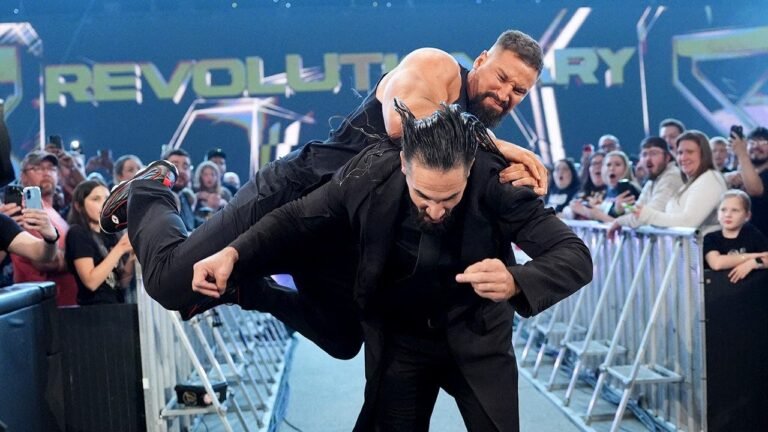
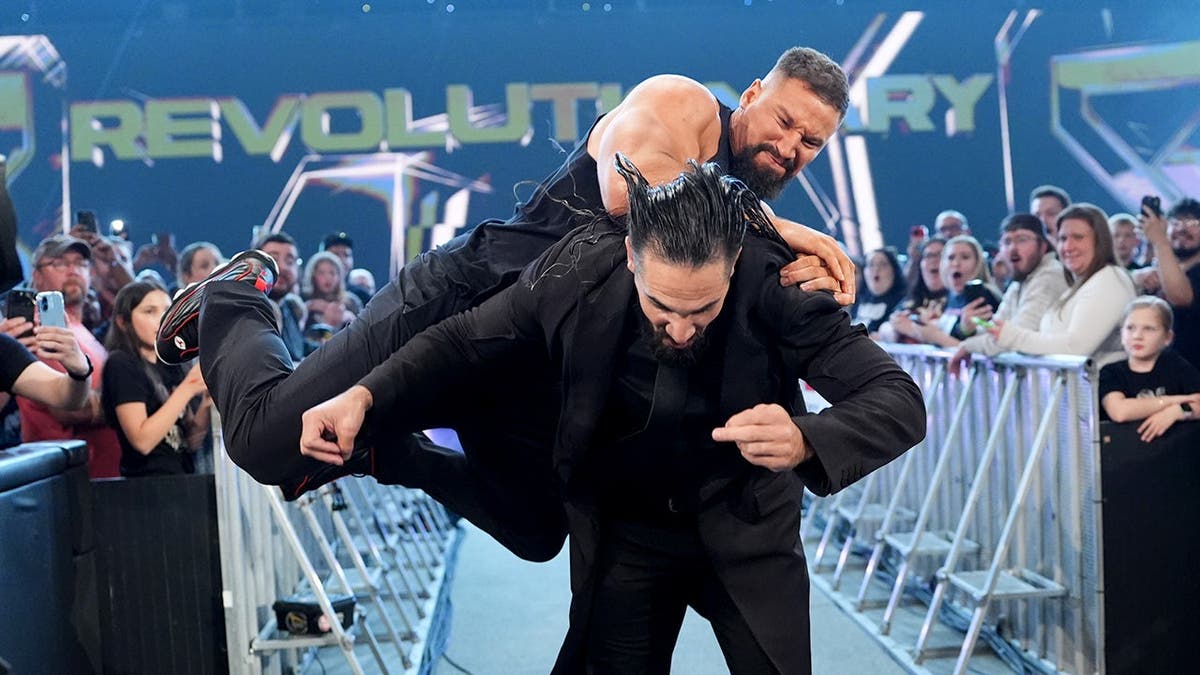
Bron Breakker attacks Seth Rollins during Monday Night RAW at the CHI Health Center in Omaha, Neb., on May 4, 2026. (Georgiana Dallas/WWE)

After Rollins lost to Gunther at WrestleMania 42, he’s turned his sights back on Breakker. And even though Montez Ford and Angelo Dawkins (the Street Profits) appeared to have his back, they’ve made it clear they have no trust in him. The trust issues became apparent again after Breakker brutalized Rollins at the start of the show and then took care of Ford and Dawkins later in the night.

Ford and Dawkins jumped Theory and Paul as Theory was taking on Joe Hendry in a singles match. Breakker handled Ford and Dawkins with relative ease. Rollins came out to save the Street Profits. But as Ford cleared out Theory and Paul on the outside, Rollins was distracted for a split second. It allowed Breakker to hit another spear on Rollins.

“Tez, thank you for getting me that second spear out there, pal,” Rollins told Ford in the back.

“Well, Seth, thanks to your past antics with The Vision, nobody, nobody, trusts you,” Ford fired back.

“Nobody trusts me. You don’t trust me. I don’t even know you (pointing to Hendry), you probably don’t trust me,” Rollins responded. “Guess what? I don’t even trust myself. Who cares? We’re in the same fight. You’re fighting The Vision, I’m fighting the Vision. Sometimes, those fights are gonna come together. Here’s the deal, you stay out of my way, I’ll stay out of your way.”

Rollins walked off getting the last word. He will face Bron Breakker at Backlash on Saturday.

Meanwhile, Morgan put Perez to the test. She wanted to make clear that “The Prodigy” wasn’t going to side with Balor and fracture the group even further.

“What the hell was Finn doing in the clubhouse last week? You see, I’m not worried about Finn, Roxanne, because JD is going to take care of Finn tonight, “Morgan said to Perez. “I’m worried about you. Why did Finn think it was OK to talk to you and why didn’t you tell me and why do I need to watch Netflix to figure out what’s going on in the Judgment Day?”

Perez said she didn’t say anything because she “made it very clear” to Balor to remove himself from the clubhouse and don’t comeback.

LIV MORGAN RETURNS TO THE TOP OF WOMEN’S DIVISION WITH WRESTLEMANIA 42 WIN OVER STEPHANIE VAQUER

“You’re right though, I should have said something. But Liv, you know I’m loyal to the Judgment Day,” Perez responded.

Morgan made Perez promise that she wouldn’t keep “anymore secrets from the family.” Perez agreed and repeated what Morgan told her.

Perez later helped Morgan, Raquel Rodriguez and Dominik Mysterio distract Balor in his match against McDonagh. It seemed Perez made clear where her loyalties lie.

Later, Morgan said that Rodriguez and Perez were going after tag team champions Brie Bella and Paige next.

Roman Reigns, Jacob Fatu contract signing

Jacob Fatu attacks Roman Reigns during Monday Night RAW at CHI Health Center in Omaha, Nebraska

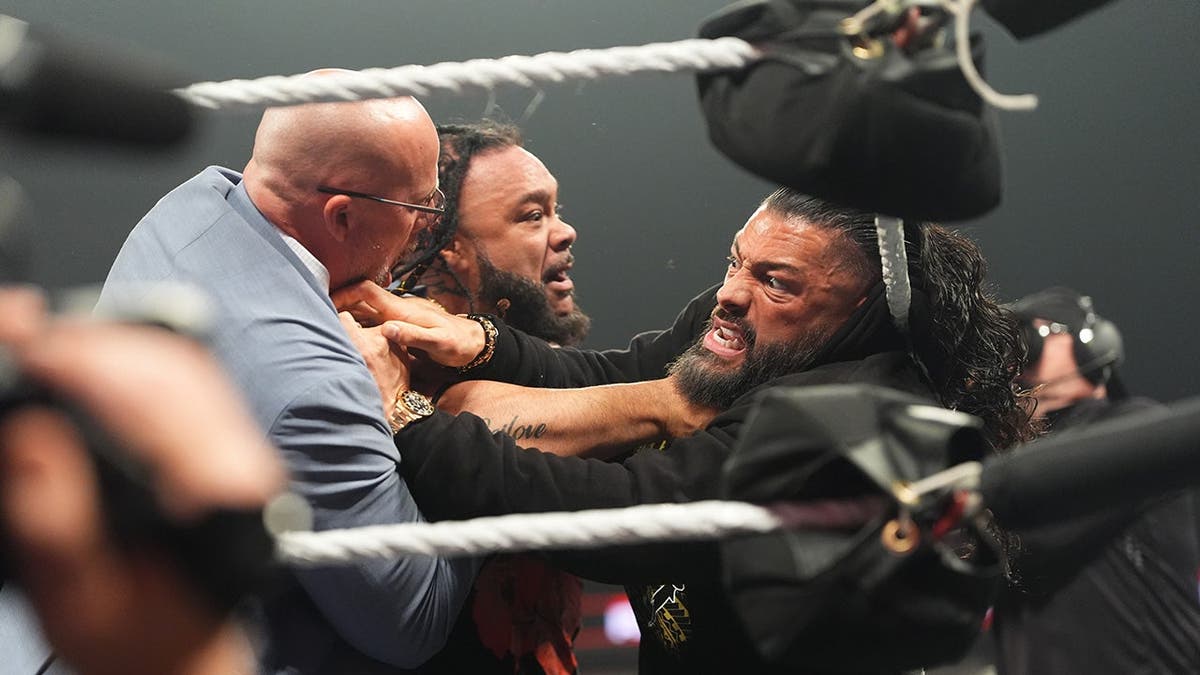
Jacob Fatu attacks Roman Reigns during Monday Night RAW at the CHI Health Center in Omaha, Neb., on May 4, 2026. (Georgiana Dallas/WWE)

Roman Reigns was hot coming into “Monday Night Raw” after receiving a Tongan death grip from Jacob Fatu to end the show last week.

He didn’t want to hear anything that Raw general manager Adam Pearce had to say. But after Pearce told him that Fatu wasn’t in the building yet, Reigns waited his turn to address the “Samoan Werewolf” until later in the night.

The two met in the ring to sign the contract for their World Heavyweight Championship match at Backlash. Reigns made clear to Fatu that he was always watching him from a distance as Fatu grinded his way to get to WWE and became a main-event player.

“I was the one in this company holding the door open for Solo (Sikoa),” he said after Fatu mentioned that it was Sikoa who got him into WWE in the first place. “Solo was the one who brought you in, huh? Well, guess what, I brought Solo in and therefore, I brought you in. And I will be damned if there was not respect to be had in this business from me.”

ROMAN REIGNS, CM PUNK PUT ON PROFESSIONAL WRESTLING MASTERCLASS AT WRESTLEMANIA 42

Reigns questioned Fatu’s use of the Tongan death grip he said Fatu used as a “desperate” measure.

“You don’t do that to family,” Reigns explained. “You don’t do that to your own. You don’t do that to your ‘Tribal Chief.”

Fatu stared down Reigns before he responded.

“Yes, I am desperate. Yes, it feels like it’s just me against the world. Yes, my back is against the wall. So, I had no other choice but to take you out, take this title and everything that comes with it,” Fatu explained. “And to keep it 100, then I’m going to put a chokehold on this game and I’m gonna squeeze out every dollar and every cent just the way this company has been doing our family for decades.”

Fatu said he has no intention of going back to where he came from and was as “desperate” as ever to win the World Heavyweight Championship.

Reigns responded that he wasn’t concerned about just Fatu’s “seven kids,” but the generations of their family that came before them and the ones that are up next.

When Reigns said that Fatu was “beneath” him, Fatu got up and tried to put the Tongan death grip on Reigns again. Reigns threw a desk chair at Fatu. As Fatu tried to go for the death grip again, Reigns broke out of it. Fatu ended up getting the advantage in the end, finally sinching the Tongan death grip on Reigns.

Fatu signed the contract and the match was made “official.”

CLICK HERE FOR MORE SPORTS COVERAGE ON FOXNEWS.COM

Sol Ruca steps up to “The Man”

There were a few moments of celebration on “Monday Night Raw” as newcomer Sol Ruca “officially” signed her contract with the Raw brand.

Pearce said he missed the days when he was at NXT and a “blue-chip” prospect was able to sign a contract with one of the main brands. He said “today was one of those days” as he introduced Ruca to the Omaha, Nebraska, crowd.

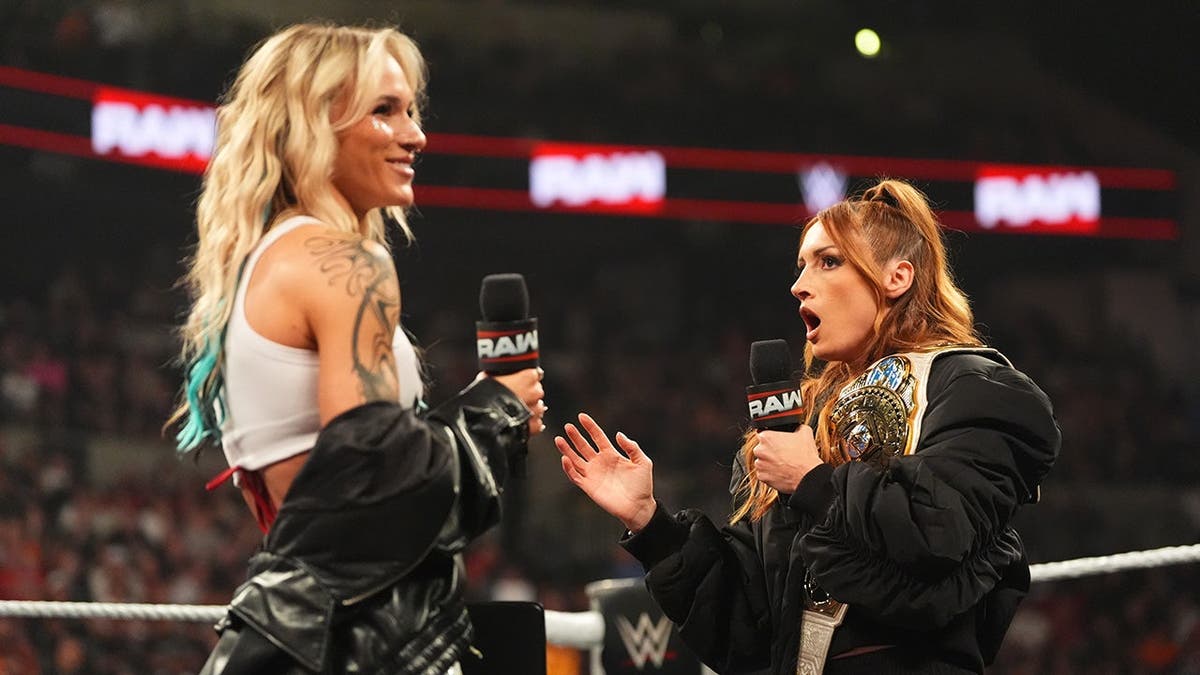
Women’s intercontinental champion Becky Lynch interrupted the ordeal. She claimed that Ruca’s time should have been given to her to celebrate her own greatness and was upset that Pearce scheduled Iyo Sky in a match against her last week.

Women's Intercontinental Champion Becky Lynch confronting Sol Ruca in a wrestling ring

Women’s Intercontinental Champion Becky Lynch confronts Sol Ruca during Monday Night RAW at the CHI Health Center in Omaha, Neb., on May 4, 2026. (Georgiana Dallas/WWE)

“Becky, not everything is about you,” Ruca declared. “Everyone knows who you are. I know who you are. I know what you’ve done and I know everything that you’ve accomplished. But the thing is, I didn’t expect to find out when I met you that you are exactly what everyone says that you are … a rude, big-headed, b—h.”

Lynch was flabbergasted and asked whether the crowd would let her talk to her like that. The crowd seemingly backed Ruca in the exchange.

“I’m Sol Ruca, and if you ever interrupt me again, not only will I kick your a–, I’ll snatch your soul,” she added.

Lynch went to hit Ruca, put slapped Pearce instead. Ruca hit Lynch with a Sol Snatcher to end the segment. Lynch appears to have a new challenger for her title.

CLICK HERE TO DOWNLOAD THE FOX NEWS APP

Raw recap

Asuka hit Iyo Sky with a mist in a confrontation before their Backlash match.

JD McDonagh def. Finn Balor.

Ethan Page and Rusev def. Penta and Je’Von Evans.

Joe Hendry def. Austin Theory via DQ.

Oba Femi def. Otis in Oba Femi’s Open Challenge.

Original El Grande Americano, Julis Creed and Brutus Creed def. El Grande Americo, Rayo and Bravo.


Source link

Access Denied

0

Access Denied You don’t have permission to access “http://hindi.gadgets360.com/mobiles/motorola-razr-fold-to-soon-launch-in-india-6000mah-battery-samsung-xiaomi-tecno-news-11453268” on this server.

Reference #18.50200117.1777994322.5972835

https://errors.edgesuite.net/18.50200117.1777994322.5972835

What SCA Tools Don’t Check.


NPM package listing

Written by Isaac Wuest, Principal Product Manager at HeroDevs.

When security teams think about end-of-life (EOL) open source software, the conversation usually starts and ends in the same place: no more patches.

That’s true, but it’s only half the story, and arguably the less dangerous half. There are two compounding problems most teams are unaware of.

Problem One: The CVE Ecosystem Doesn’t Investigate What It Doesn’t Support

When a vulnerability is discovered in an open source project, maintainers determine which versions are affected and file a CVE with a defined affected range. Every vulnerability scanner, SBOM tool, and CVE feed in the industry consumes that range.

If your version falls outside it, you get no alert. Not because you’re safe, but because no one checked.

EOL versions fall outside that range almost by default. The reason is straightforward: it’s a scale problem. In just five years, the global CVE count doubled while the number of unscored CVEs increased 37x, according to Sonatype’s 2026 State of the Software Supply Chain report.

Maintainers are already overwhelmed investigating and patching the versions they actively support, and as both CVE volume and the total number of package releases continue to grow, the investigative bandwidth required to cover older release lines simply doesn’t exist.

Maintainers must be realistic about how far back in their own release history they can reasonably go.

Sonatype’s research explicitly named “EOL versions omitted from advisories” as a driver of false security confidence, contributing to the 167,286 false negatives, exploitable components that went entirely unflagged, they identified in 2025 alone.

HeroDevs’ EOL DS tracks end-of-life status across 12M+ package versions on npm, PyPI, Maven, NuGet, and every other major registry.

Upload an SBOM or run the CLI to find every EOL dependency in your stack, including the transitive ones your scanners can’t flag.

Get Your Free EOL Risk Report

What This Looks Like in Practice

Two recent critical vulnerabilities in the Spring ecosystem make this concrete.

CVE-2026-22732 — Spring Security (Critical, March 2026, CVSS 9.1)

This vulnerability causes security response headers, including Cache-Control, X-Frame-Options, Strict-Transport-Security, and Content-Security-Policy, to be silently dropped in certain servlet application configurations. The official affected range covers Spring Security 5.7.x through 7.0.x.

Spring Security 6.2.x is not listed. It reached EOL in December 2025. Spring Boot 3.2 ships with Spring Security 6.2. Any organization running Boot 3.2, one minor version behind the listed range, receives no scanner signal.

HeroDevs has confirmed Spring Security 6.2.x is affected and has backported a fix for NES customers. The upstream CVE record does not reflect this.

How Often Does This Happen?

The Spring examples above are not outliers. They reflect a pattern HeroDevs encounters consistently across its Never-Ending-Support practice.

When a new CVE is disclosed on a supported package, HeroDevs finds it needs to patch an EOL version the official CVE record does not list as affected approximately 80% of the time. The blast radius of any given vulnerability is systematically wider than what the record shows.

Put plainly: for four out of every five CVEs disclosed on a supported version, there is a reasonable probability that an EOL version you are running is also affected,  and no scanner in the world will tell you that.

Problem Two: The Industry Is Counting the Wrong EOL Software

The CVE investigation gap above applies to EOL software that the community actually knows is EOL. That turns out to be a very small fraction of the real problem.

The most widely cited source of EOL data is endoflife.date, which tracks roughly 350 actively maintained projects; major frameworks and runtimes where maintainers have explicitly published end-of-life dates.

Across those 350 projects, approximately 7,000 specific package versions are identified as EOL. That is the universe most scanners and security teams are working from.

Here is the actual scale of the problem.

In Sonatype’s 2026 State of the Software Supply Chain report, produced in partnership with HeroDevs, the data tells a different story. Analyzing lifecycle status across 12 million package versions spanning npm, PyPI, Maven, NuGet, RubyGems, Go, Packagist, and crates.io, HeroDevs found that 5.4 million of those versions are end-of-life.

However, the industry’s most complete public source (endoflife.date) only accounts for ~7,000 of them.

The breakdown by ecosystem is striking. Approximately 25% of npm package versions are EOL. NuGet sits at around 18%, Cargo at 13%, PyPI at 11%, and Maven Central at 10%. These are versions actively appearing in enterprise SBOMs today, with no CVE investigation coverage and no fix path.

The Sonatype report found that 5–15% of components in enterprise dependency graphs are EOL, indicating EOL exposure even when teams believe they are only using supported top-level libraries. Transitive dependencies, the packages your packages depend on, carry the majority of this hidden exposure.

Most organizations are profoundly underreporting their EOL exposure, and it is not their fault. Their tooling was never built to detect abandonment at scale.

HeroDevs has confirmed more than 81,000 EOL package versions with known CVEs and no available fix path, meaning these are CVEs that were actively investigated and confirmed.

Given that roughly 80% of CVEs on supported versions also affect EOL versions that were never officially investigated, the true number is likely far larger. HeroDevs estimates the actual figure may be closer to >400,000 across all registries.

Why This Is Getting Worse

This dynamic is not new. What is new is the rate at which it is compounding.

The OSS ecosystem is scaling faster than the security infrastructure built to monitor it. npm alone recorded over 838,000 releases associated with critical CVSS 9.0+ scores in 2025. PyPI download volume grew over 50% year over year.

Every new package version that enters a registry is a future EOL version, and the EOL population grows continuously, while the investigative capacity to cover it does not.

The more significant forcing function, however, may be AI.

In April 2026, Anthropic announced Project Glasswing alongside Claude Mythos Preview, documenting its ability to identify and exploit zero-day vulnerabilities across all major operating systems and browsers — including vulnerabilities undetected for decades.

The initiative is explicitly defensive, directed toward finding and fixing critical vulnerabilities before attackers can exploit them.

For software with active support, this is genuinely good news. Vulnerabilities found at AI scale can be routed to engineers who can address them.

For EOL software, the calculus is different. An AI that finds vulnerabilities across the entire codebase landscape will surface findings in versions no maintainer is watching. Those findings will not be officially investigated against the EOL-affected ranges.

They will not trigger scanner alerts for EOL users. No upstream patch will ever address them. The same capability that accelerates defense for supported software widens the exposure gap for everything already left behind.

The early signals of this shift are already visible. The full impact hasn’t arrived yet.

What To Do

Start with visibility. HeroDevs offers a free EOL scan

Upload dependency files or use the CLI to identify EOL exposure across your stack in minutes, covering both announced and abandoned packages across all major registries.

Don’t treat scanner silence as safety. A clean scan against an EOL package means the package wasn’t checked, not that it isn’t vulnerable.

The Spring CVEs above are current proof — in both cases, EOL users were exposed without warning until HeroDevs investigated and reported.

EOL dates are not finish lines. They are the moment risk silently transfers from maintainer to operator. As AI-assisted vulnerability research scales, the number of undisclosed vulnerabilities in uninvestigated EOL packages will only grow.

Get started today with HeroDev’s free EOL scan.

Sponsored and written by HeroDevs.


Source link

Sweary first trailer for young Anthony Bourdain biopic | Biopics

0

The first trailer for the Anthony Bourdain biopic, Tony, has been released giving us a sweary look at the late food icon’s younger years.

Dominic Sessa, The Holdovers breakout, plays 19-year-old Bourdain as he gets his first job in a kitchen in mid-70s Cape Cod.

“I’m actually not a fucking cook, I’m a writer,” the character says as he struggles to find his place in the world of food. The film also stars Antonio Banderas, Emilia Jones and Leo Woodall.

Tony comes from Matt Johnson, the Canadian director who received acclaim for 2023’s BlackBerry, his unconventional retelling of the story behind the now discontinued mobile phone. He also recently directed and co-starred in Nirvanna the Band the Show the Movie which received positive reviews.

A statement from Bourdain’s estate reads: “We chose to support Tony because it is not a standard biopic and doesn’t attempt to summarise a life. Guided by the vision of director Matt Johnson, the film depicts one transformative summer in 1975 in Provincetown, Massachusetts. It is an interpretation, as that part of Tony’s life will always remain somewhat unknown. We appreciate the portrayal of Tony’s complexity, his intellectual appetite and his conviction – qualities that eventually took him around the globe and endeared him to so many. We hope this film serves as a reminder that every journey has a start, and that audiences see the beginnings of the man who taught us how to be better explorers on our own paths.”

Johnson told Entertainment Weekly that he picked Sessa as he shared many similarities with Bourdain. “[They are] both from Jersey, both sent to private school, but didn’t fit in, both restless and searching,” he said. “I knew if a scene was working when Dom said, ‘Seems right,’ and I knew it wasn’t when he said, ‘Why would I say this?’ More than any movie I’ve ever made, this film was a partnership with an actor. He is in every shot of the movie, and carries the entire story on his hunched shoulders.”

After his performance in The Holdovers, Sessa has been seen in Now You See Me 3 and the Christmas comedy, Oh. What. Fun.

Bourdain’s life has previously been told in 2021 documentary Roadrunner: A Film About Anthony Bourdain.

The beloved chef, author and TV personality killed himself in 2018 at the age of 61.

Tony will be released this summer.


Source link

Sen. Lindsey Graham urges ‘Second Amendment solution’ to topple Iranian regime


NEWYou can now listen to Fox News articles!

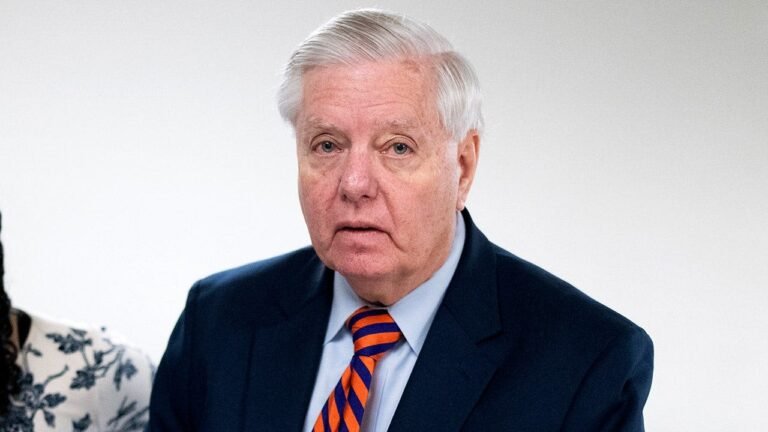
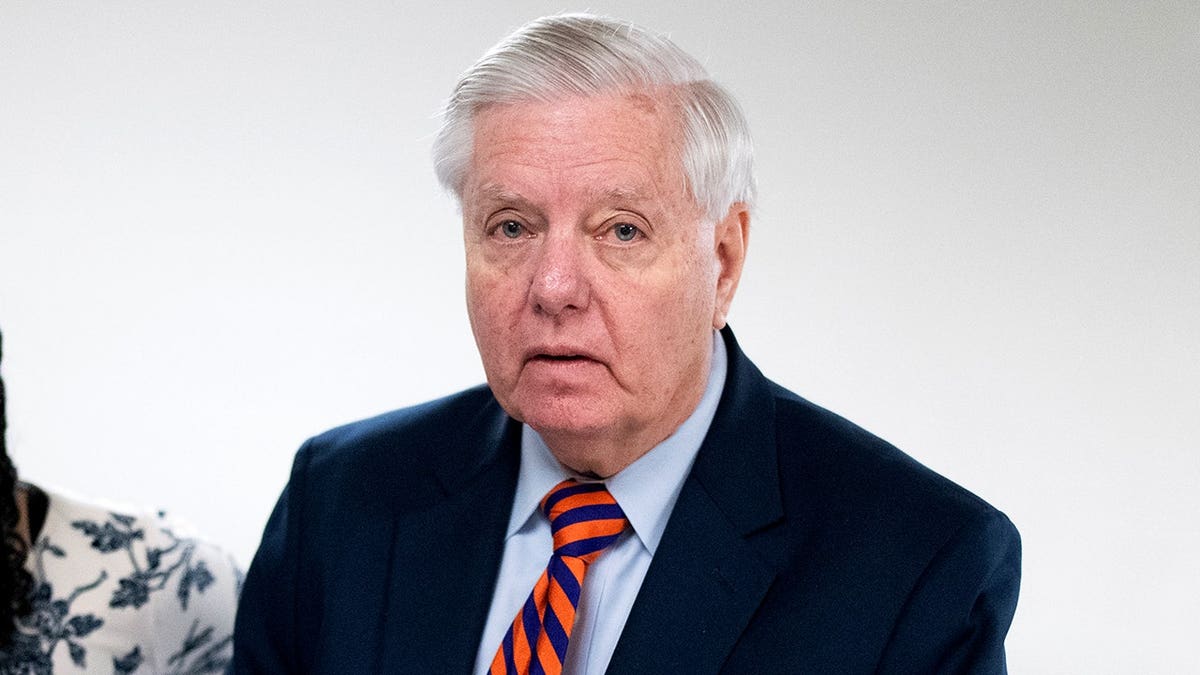
South Carolina Sen. Lindsey Graham called for a “Second Amendment solution” to the Iranian resistance Monday, arguing the U.S. and Israel should arm civilians inside Iran as tensions linger in the Middle East and the Trump administration keeps regime change front of mind.

“I love the idea of a Second Amendment solution for the Iranian people,” Graham told “Hannity.”

“If I were President Trump and I were Israel, I would load the Iranian people up with weapons so they could go to the streets armed and turn the tide of battle inside Iran,” he continued.

Graham’s remarks echo others who have pointed to internal resistance as a key factor in toppling the Islamic regime, including exiled Crown Prince Reza Pahlavi, who argued the regime is vulnerable and urged the world not to give Tehran “another lifeline.”

TED CRUZ URGES US TO ARM IRANIAN PROTESTERS AS MILITIAS THREATEN ‘TOTAL WAR’ AGAINST AMERICA

Sen. Lindsey Graham

Sen. Lindsey Graham, R-S.C., talks with reporters in the U.S. Capitol during votes on Tuesday, March 10, 2026. (Tom Williams/CQ-Roll Call, Inc. via Getty Images)

“We don’t need American boots on the ground,” Graham said. “We’ve got millions of boots on the ground in Iran. They just don’t have any weapons. Give them the weapons so they can rise up like we did to destroy this regime.

Taking such action, Graham said, would mirror America’s own path to independence, when armed colonists fought back against British rule.

“The first thing the king does is takes the guns away from his subjects,” Graham said.

TRUMP EXPLORING BACKING MILITIAS IN IRAN TO TOPPLE WEAKENED REGIME FOLLOWING STRIKES: REPORTS

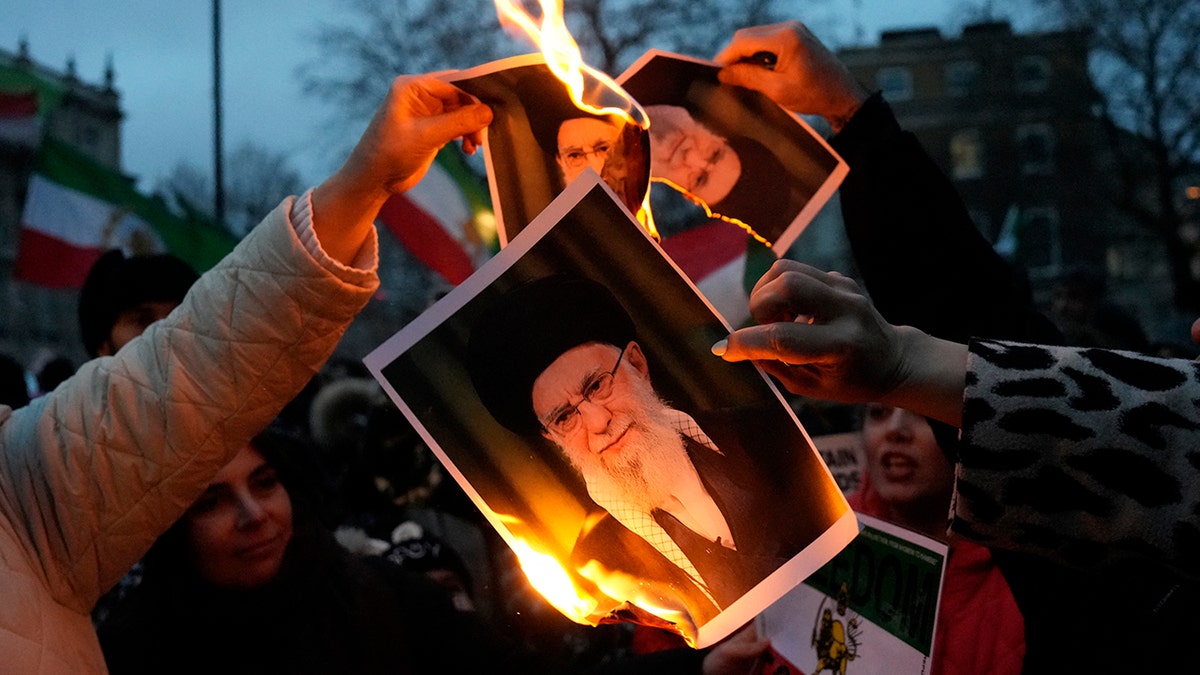
Protestors burning images of Ayatollah Ali Khamenei during a rally in London

Protesters burn images of Ayatollah Ali Khamenei during a rally in solidarity with Iran’s uprising on Whitehall in central London on Jan. 11, 2026, organized by the National Council of Resistance of Iran to protest the regime’s internet crackdown and affirm the right to self-defense against regime forces. (Carlos Jasso/AFP)

“The first thing a religious theocracy does is make sure that nobody can have a gun to threaten the regime.”

Host Sean Hannity noted that there have been previous attempts to funnel weapons to Iranian opposition groups, but said some efforts had been complicated by weapons allegedly being stolen before reaching their intended recipients.

Graham’s response was to simply “do it again.”

“I love the idea of empowering the Iranian people with weapons… to make the Revolutionary Guard’s life hell,” he added.

CLICK HERE TO DOWNLOAD THE FOX NEWS APP

“It’s one thing to be bombed by America, it’s another thing to have your neighbors shoot back at you because they’re tired of being slaughtered.”

Graham also argued that pressuring Iran’s economy and controlling key waterways like the Strait of Hormuz could bring the conflict to a decisive end.

“If we can control the straits… it is checkmate,” he said.

Fox News Digital’s Arabella Bennett contributed to this report.


Source link

How UK universities ‘spy’ on pro-Palestine students | Technology

0

A joint investigation by Al Jazeera and Liberty Investigates has found that 12 universities paid a private company, led by ex-military intelligence officials, to profile academics and scan social media use by students.

Al Jazeera’s Linh Nguyen explains.


Source link