Cushman & Wakefield confirms vishing cyberattack • The Register


Real estate giant Cushman & Wakefield has confirmed a data breach after two cybercrime groups, ShinyHunters and Qilin, separately claimed responsibility for attacks on the company.

A spokesperson told The Register the attack was “limited” in scope and stemmed from vishing (voice phishing), suggesting an employee was socially engineered.

The representative said: “Cushman & Wakefield recently became aware of a limited data security incident due to vishing. We have activated our response protocols, including taking steps to contain the unauthorized activity and engaging third-party expert advisors to support a comprehensive response. 

“Our systems and operations continue to run normally, and we are working diligently to investigate the incident. We recognize the trust placed in us to protect sensitive data and we take this responsibility very seriously.”

Cushman & Wakefield (C&W) did not address the apparent dual targeting by both ShinyHunters, which operates a pay-or-leak model, and Qilin, currently viewed as the world’s most prolific ransomware group.

There is no previously established coalition between ShinyHunters and Qilin, which suggests the two alleged attacks are separate but coincidentally timed.

In a message sent to The Register, ShinyHunters claimed they attacked the company on May 1, while Qilin listed C&W on its data leak site on May 4.

Qilin’s website listing did not detail how it allegedly attacked C&W, although ShinyHunters claimed it stole “over 500,000 Salesforce records containing PII and other internal corporate data.”

ShinyHunters set a May 6 deadline for C&W to make contact to prevent the data from being leaked, but the cybercriminals claimed this had yet to happen.

ShinyHunters has been on something of a tear recently. Known for its large-scale, high-impact attacks, the group’s latest wave of activity began in March when it laid claim to an expansive supply chain attack after breaching Salesforce customers via the CRM giant itself.

At the time, it said it had stolen data belonging to Salesforce and more than 100 of its high-profile customers.

Since then, big-name brands like ADT, Carnival Cruise Line, Rockstar Games, Vimeo, and others have all confirmed ShinyHunters-linked cyberattacks, although not all were explicitly linked to its earlier Salesforce compromise. ®


Source link

US, Iran, UAE trade Hormuz attack claims: What we know | US-Israel war on Iran News

0

Tensions in the Gulf have spiralled this week after the United States and Iran both claimed to have fired on and damaged each other’s ships despite a ceasefire in the US-Israel war on Iran.

After US President Donald Trump announced a US plan to “guide” ships stranded in the Gulf out through the Strait of Hormuz in an operation he called Project Freedom, Iran said ships trying to use the strait without permission from the Islamic Revolutionary Guard Corps (IRGC) would be fired on, igniting fears of a return to war.

Trump did not provide any details about how US forces planned to ensure safe passage for commercial ships. About 2,000 ships are currently stranded on either side of the strait, which has been almost completely closed since the start of the war on February 28.

On Monday, Iran’s Fars News Agency reported that a US warship that had refused to turn back from the Strait of Hormuz had been hit by two Iranian drones. The US military’s Central Command (CENTCOM) denied a warship had been hit and conversely claimed it had sunk vessels belonging to the IRGC. Iran, which denied that any IRGC vessels had been hit, issued a map of the strait that showed new boundaries of the area under its control that were farther to the east than before and included the territorial waters of the United Arab Emirates, sparking fears of a new regional confrontation.

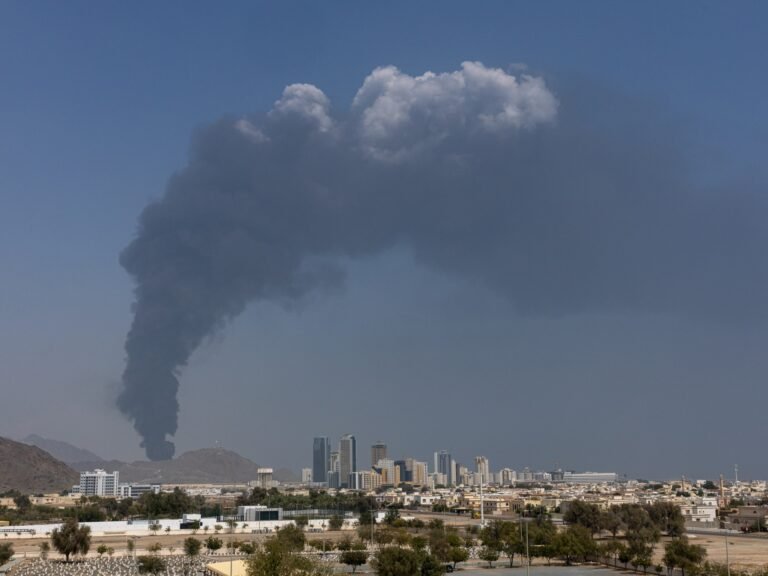
The UAE later accused Iran of attacking the eastern emirate of Fujairah with a barrage of missiles and drones, setting an oil refinery ablaze and wounding three Indian nationals.

The recent claims and counterclaims made by the US and Iran follow rhetoric used since early in the war in which both sides have claimed to have hit the other while denying any damage to their own assets.

INTERACTIVE - IRGC releases map of control over Strait of Hormuz - May 5, 2026-1777975253
(Al Jazeera)

What is Project Freedom?

On Monday, Trump said US forces would begin escorting stranded ships through the Strait of Hormuz, signalling a direct challenge to Iran’s closure of the strategic waterway, through which 20 percent of the world’s oil and liquefied natural gas supplies are shipped in peacetime. Iran’s threats to attack ships in effect have blockaded the strait since US-Israeli attacks started on February 28.

The closure of the vital maritime corridor has sent oil and fertiliser prices surging around the world and prompted fears of a global recession and food emergency.

In response, the US began its own naval blockade of Iranian ports on April 13.

Trump said operation Project Freedom was being mounted at the behest of countries whose vessels remain stuck on either side of the strait, and which he described as “neutral and innocent bystanders”.

“The Ship movement is merely meant to free up people, companies, and Countries that have done absolutely nothing wrong – They are victims of circumstance,” Trump posted on his Truth Social platform on Sunday, calling it a “humanitarian gesture”.

Did Iran attack a US warship on Monday?

Fars reported that a US warship had been hit by two Iranian drones after it refused orders to turn back from the strait. CENTCOM denied this, however.

The claim has not been verified by any independent observers.

“The Iranian leadership feel they need to match President Trump’s escalation with their own escalation,” Shahram Akbarzadeh, a professor in Middle East and Central Asian politics at Australia’s Deakin University, told Al Jazeera.

“If the Iranians cannot benefit from export revenue due to the US blockade, they want to inflict the same economic pain on the US and its regional allies.”

Did the US hit Iranian boats?

In a statement on Monday, US Admiral Brad Cooper said CENTCOM forces sank six IRGC vessels that had tried to interfere with Project Freedom. Trump later said seven boats had been hit.

On Tuesday, the Iranian state broadcaster IRIB, quoting an unnamed Iranian military commander, reported Tehran had launched an investigation after the US allegations of vessel attacks.

IRIB reported no IRGC vessels had been hit but its investigation had determined that US forces had “attacked two small boats carrying people on their way from Khasab on the coast of Oman to the coast of Iran on Monday”.

The attacks destroyed the boats and killed five civilian passengers, the commander said. The US “must be held accountable for their crime”, the commander added.

The US has not commented on this, and the claim has not been verified by any independent observers.

Was the UAE hit too?

The UAE accused Iran of attacks on Fujairah that caused a fire at an oil refinery. The Ministry of Defence said its air defences “engaged” 12 ballistic missiles, three cruise missiles and four drones launched from Iran on Monday.

The claim has not been verified by independent observers.

On Tuesday, IRIB quoted a military official as saying: “The Islamic Republic had no preplanned programme to attack the mentioned oil facilities, and what happened was the result of US military adventurism aimed at creating a passage for the illegal transit of ships through the restricted waterways of the Strait of Hormuz. The US military must be held accountable for this.”

The official called on the US to end the “improper practice” of using force in the diplomatic process and to stop “military adventurism in this sensitive oil region, which affects the economies of countries around the world”.

Akbarzadeh said the “attack on Fujairah” represented an example of Iran “spreading the pain”.

The attack – if indeed carried out by Iran – would mark the first on the UAE since a ceasefire agreed by Tehran and Washington went into effect on April 8.

The UAE’s Ministry of Foreign Affairs condemned in the “strongest terms the renewed terrorist, unprovoked Iranian attacks targeting civilian sites and facilities in the country”.

It said it will not tolerate any threat to the UAE’s security and sovereignty and warned that it reserves the “full and legitimate right to respond” to the attacks.

How significant is all this?

Akbarzadeh said the latest developments pose a serious threat to any diplomatic efforts to end the conflict.

“We see escalation after escalation against the backdrop of shuttle diplomacy,” Akbarzadeh said.

“Such attacks, even if they are aimed to be contained, risk exploding into another major combat.”

Akbarzadeh said neither the Americans nor the Iranians want war. But, equally, neither are prepared to show weakness, he said.

“This dynamic has locked them in a perpetual conflict and in desperate need of a circuit breaker. Pakistan is trying to offer that circuit breaker with limited success.”


Source link

‘We do not want war, but…’, America gives open threat to Iran regarding Project Freedom

0

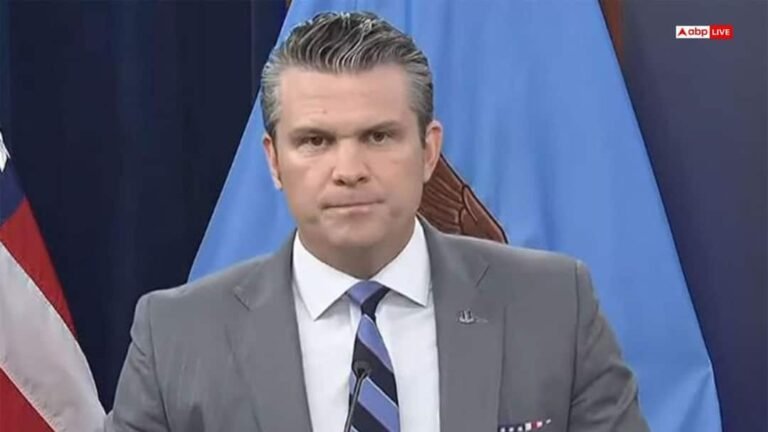
America has given a big statement amidst the fragile ceasefire between America and Iran. US Defense Minister Pete Hegseth has clearly said that Washington is taking steps to protect merchant ships, but it does not want to move towards any major or direct war. However, he warned that if Iran tried to disrupt ‘Project Freedom’, it would have to face American military power.

What is ‘Project Freedom’?
Hegseth said that ‘Project Freedom’ is a naval mission, which donald trump Was started during the tenure of. Its purpose is to provide safe passage to ships in one of the busiest oil routes in the world. He said that this operation is limited and it does not require the US military to enter Iran’s airspace or maritime border.

We don’t want a fight, but we will respond – Hegseth
“We don’t want a fight,” Hegseth said. Iran says that it controls this strait, but it is not so. He described Iran as the main aggressor in this situation.

‘Defensive and temporary missions’
The Pentagon chief described ‘Project Freedom’ as a completely defensive and limited-duration mission. He said that its sole purpose is to protect innocent merchant ships from Iranian aggression. He also said that under this mission, so far two American ships have passed through this route safely, while some ships had to return due to Iran’s port restrictions.

Ceasefire not over, separate operation: America
Hegseth also clarified that this operation does not signal the end of the ongoing ceasefire between America and Iran. He said, ‘Ceasefire has not ended, it is a separate and independent mission.’ He also warned Iran to take its steps carefully so that the situation does not worsen further.

US Army claims: Iran is attacking
Chairman of the Joint Chiefs of Staff, Dan Kane, said that Iran has attacked merchant ships and American forces several times in recent weeks. He alleged that Iran is ‘weaponizing the global supply chain’ and trying to put the entire world economy under pressure.

Attack statistics and current situation
According to America, after the ceasefire, Iran has fired on merchant ships 9 times and captured 2 container ships. Apart from this, there have been more than 10 attacks on American forces. However, the army has described it as ‘low level interference’ and said that the decision on a major war will depend on the political leadership.

IDF kills Hamas commander linked to Oct. 7 Nova massacre in Gaza airstrike


NEWYou can now listen to Fox News articles!

The Israel Defense Forces (IDF) said it eliminated Hamas commander Anas Muhammad Ibrahim Hamed, who infiltrated Israel and participated in the Oct. 7 Nova Music Festival Massacre.

Hamed was killed during a targeted Monday strike in Gaza, the IDF announced Tuesday.

“The IDF struck yesterday in the center of the Gaza Strip and eliminated Ans Muhammad Ibrahim Hamed, Nukhba commander in the Hamas terror organization, who raided the territory of the State of Israel and the Nova festival during the murderous massacre on October 7,” the IDF wrote in a Tuesday morning post on X.

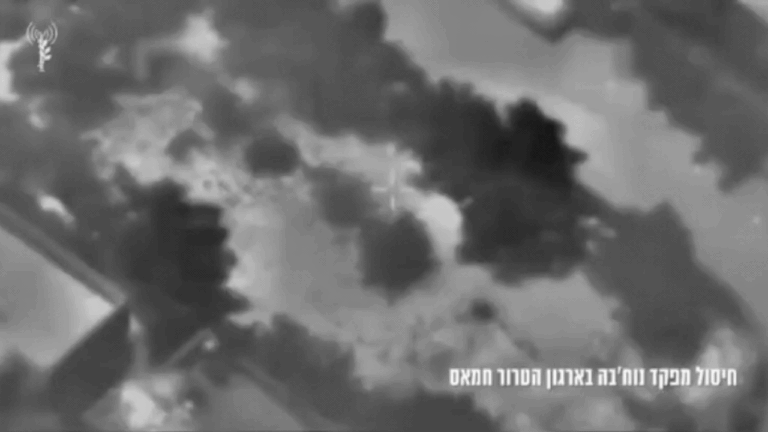
The IDF called Hamed an “immediate threat to IDF forces operating in the Gaza Strip,” and said he was “eliminated in a precise airstrike.”

ISRAEL ANNOUNCES IT KILLED ONE OF THE ARCHITECTS OF THE OCT. 7 ATTACKS

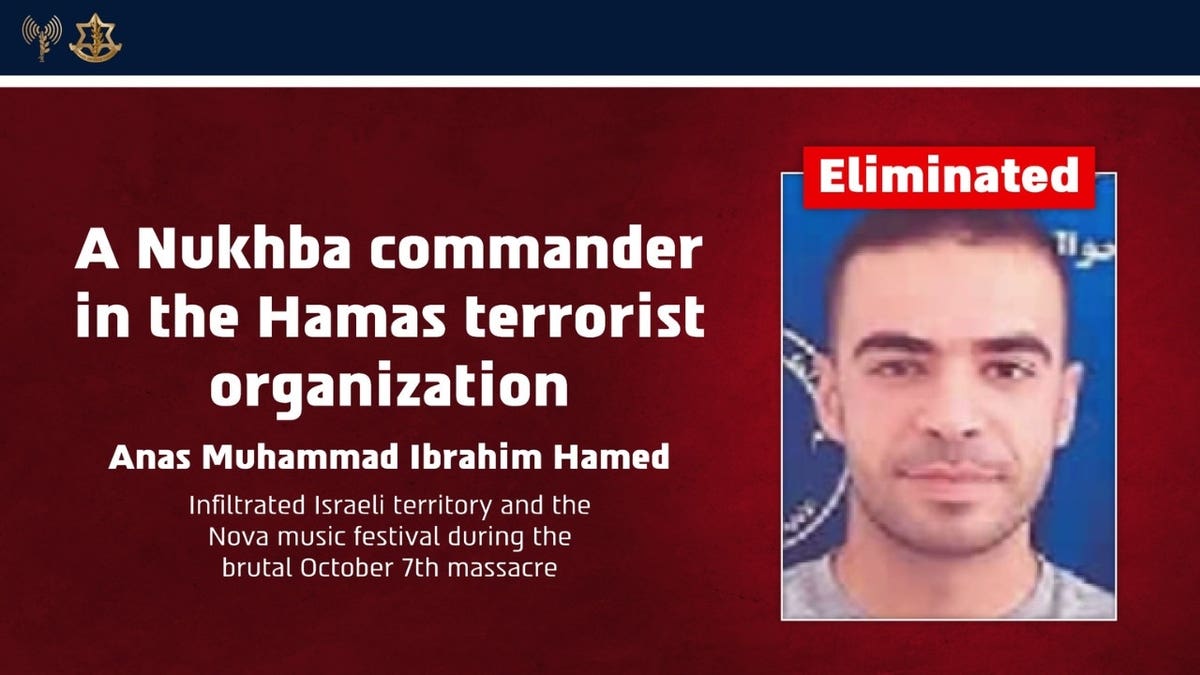
A red poster of Hamas Nukhba commander Anas Muhammad Ibrahim Hamed

A poster of Hamas Nukhba commander Anas Muhammad Ibrahim Hamed, who the Israel Defense Forces claim to have eliminated Monday May 4, 2026. (Israel Defense Forces)

The IDF said it has forces “deployed in the area in accordance with the agreement and will continue to operate to remove any immediate threat.”

Nukhba, which is Arabic for elite, are the special forces for the Al-Qassam Brigades, which is Hamas’ military wing.

Both units were instrumental in the Oct. 7 massacre. The Al-Qassam Brigades planned and executed the attack, according to the IDF and the Counter Extremism Project. Of the 6,000 terrorists who invaded Israel during the attack, more than 3,800 were Nukhba fighters, the IDF stated in an August 2024 assessment.

The Oct. 7 attack resulted in the deaths of more than 1,300 Israelis and prompted a sprawling Israeli military campaign in Gaza. During this campaign, the IDF eliminated two commanders of the Al-Qassam Brigades and numerous other members of the group’s military leadership.

ISRAELI MILITARY OPERATION IN GAZA EXPANDING TO SEIZE ‘LARGE AREAS’: ‘EXPANDING TO CRUSH AND CLEAN THE AREA’

Palestinian Hamas fighters marching in a military parade near the Gaza Strip border

Palestinian Hamas fighters of the al-Qassam Brigades participate in a military parade near the border in the central Gaza Strip on July 19, 2023, marking the anniversary of the 2014 war with Israel. (Mahmud Hams/AFP)

A July 2024 targeted strike killed then-Al-Qassam Brigades commander Mohammed Deif. In May 2025, another airstrike killed his replacement, Mohammad Sinwar.

The latest Israeli strike in Gaza comes just under seven months after Israel and Hamas agreed to a ceasefire brokered by President Donald Trump in October. The IDF accused Hamas of violating the ceasefire in February by using ambulances to transport terrorists and weapons around the Gaza Strip.

Hamas has also accused Israel of violating the ceasefire with daily airstrikes.

HAMAS TERRORISTS USE AMBULANCES, SCHOOLS, HOSPITALS IN VIOLATION OF US-BROKERED CEASEFIRE, IDF OFFICIAL SAYS

Fox News’ Trey Yingst asked Secretary of State Marco Rubio last week if Hamas’ refusal to put down its weapons would prompt the Trump administration to support Israel resuming combat operations in Gaza.

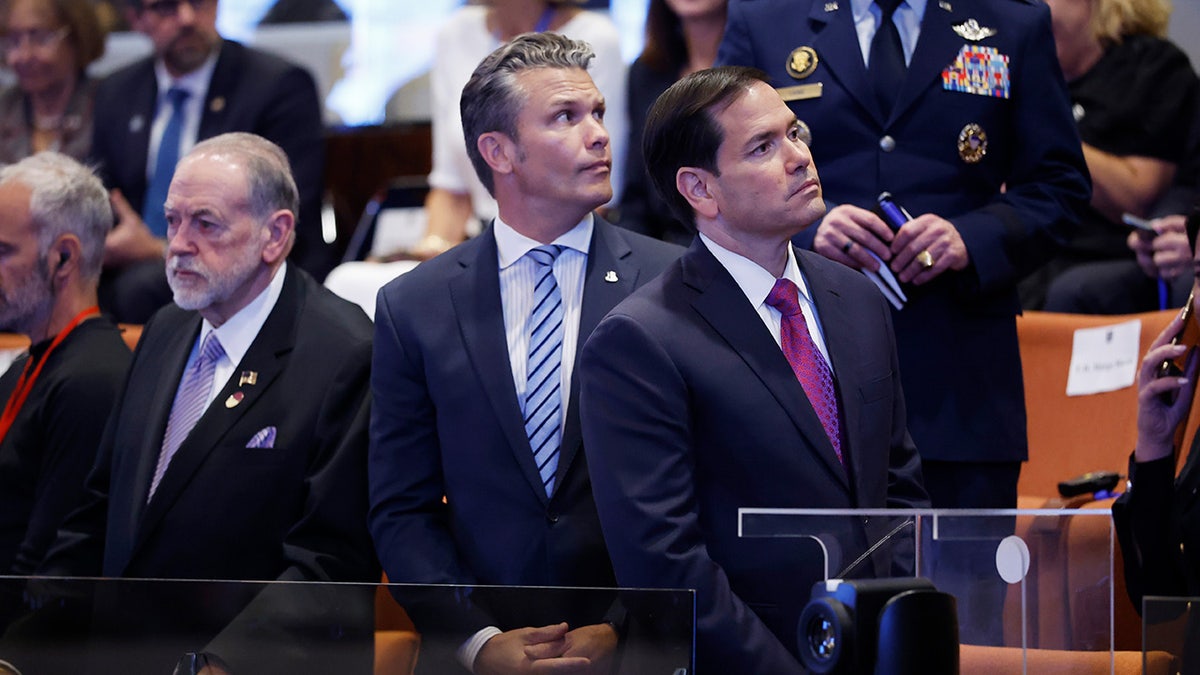
Pete Hegseth and Marco Rubio waiting inside the Knesset in Jerusalem

War Secretary Pete Hegseth and Secretary of State Marco Rubio wait as President Donald Trump prepares to address the Knesset in Jerusalem on Oct. 13, 2025. Trump visited Israel hours after Hamas released some Israeli hostages as part of a U.S.-brokered ceasefire deal in the Gaza conflict. (Chip Somodevilla/Getty Images)

“Let’s hope we can avoid that. That’s not the outcome we want,” Rubio told Yingst. “The outcome we want is for Hamas to be demilitarized and a Palestinian security force backed by an international security force is able to secure Gaza.   

Fox News Digital reached out to the IDF and the White House for comment but did not immediately receive a response.

Fox News’ Yonat Friling contributed to this report.


Source link

Mapping Mali’s gold and natural resource wealth | Interactive News

0

The West African country holds Africa’s third-largest gold reserves, plus vast lithium and uranium deposits.

Mali has been gripped by a succession of coups, political instability and a security crisis since at least 2012.

In the most recent upheaval on April 25, an al-Qaeda-linked armed group joined forces with Tuareg separatists to launch simultaneous attacks on targets across the country, killing Defence Minister Sadio Camara and prompting armed groups to declare a siege on the capital, Bamako.

Recommended Stories

list of 4 itemsend of list

Amidst this struggle for security and control, Mali’s 24 million people are sitting atop a vast, untapped gold resource, estimated at about 800 tonnes of proven reserves, the third largest in Africa after South Africa (5,000 tonnes) and Ghana (1,000 tonnes).

Mali’s government has claimed geological gold potential could be as much as 2,000 tonnes.

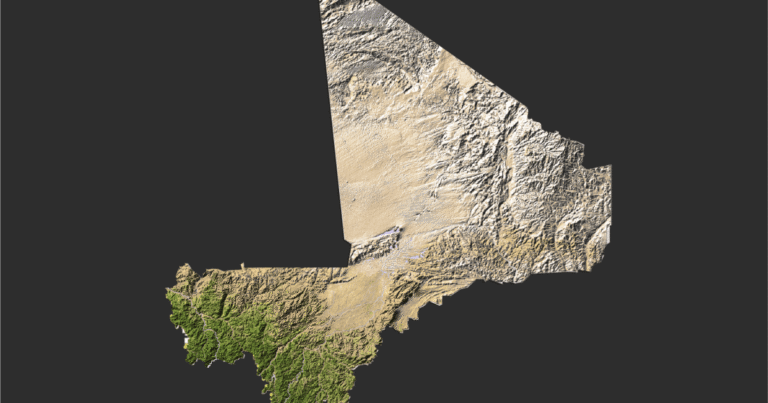
More than two million people depend on the mining sector for income, with most gold mines concentrated in the southern regions of Sikasso and Koulikoro and the western region of Kayes, along the Birimian volcanic belt.

INTERACTIVE-Where are Mali’s gold - MAY 4, 2026-1777987918
(Al Jazeera)

According to World Gold Council estimates, Mali produced about 100 tonnes of gold in 2024, including artisanal output, making it Africa’s second biggest producer after Ghana (140.6 tonnes) and just ahead of South Africa (98.9 tonnes).

This figure far exceeds Mali’s official annual output of roughly 57 tonnes, with the gap largely explained by widespread smuggling and undercounted artisanal production.

Gold is by far Mali’s largest export, accounting for nearly 80 percent of total exports and generating about $4.3bn in 2024, according to the United States Department of Commerce and the International Monetary Fund.

According to the Observatory of Economic Complexity, after gold, Mali’s biggest exports include raw cotton, refined petroleum, oily seeds and iron ore.

Mining dominated by foreign multinationals

Mali’s mining sector has historically been dominated by foreign mining companies, particularly Canadian and Australian firms, with Chinese involvement on the rise.

In 2023, Mali’s military transition government – which came to power in a coup in August 2020 – introduced a new mining code allowing the state to take up to a 35 percent stake in mining operations. Together with stricter tax enforcement, the new law was aimed at increasing national revenue from foreign operators.

Canadian mining company Barrick Gold is one of the biggest operators in Mali, producing gold at its Loulo-Gounkoto complex in the west of the country since 2005. Other major mines include Fekola, Syama and Sadiola Hill.

The Goulamina project is Mali’s largest lithium deposit. It is majority-owned by China’s Ganfeng Lithium, with a significant stake held by Australia’s Leo Lithium, while the Malian state holds a smaller minority share. The project contains tens of millions of tonnes of lithium-bearing ore.

What other natural resources does Mali have?

Besides its vast gold reserves, Mali also has significant deposits of lithium, uranium, phosphates, iron ore, manganese and diamonds.

The Goulamina project in southern Mali is estimated to contain more than 200 million tonnes of lithium-bearing resources, making it one of Africa’s largest lithium deposits.

Uranium exploration has focused on the Kidal and Falea regions, while diamond deposits have been identified along parts of the Niger River basin.

Much of Mali’s mineral wealth remains underexplored and untapped, particularly in the north of the country, where instability has slowed development.

According to the National Directorate for Geology and Mines, as of 2022, it was estimated that Mali had:

  • 2,000 tonnes of gold deposits
  • 40 million tonnes of limestone
  • 10 billion tonnes of shale
  • 2 billion tonnes of iron ore
  • 11 thousand tonnes of uranium
  • 10 million tonnes of manganese
  • 5.8 billion tonnes of lithium
  • 1.2 billion tonnes of bauxite
  • 2.4 million carats of diamond
  • 53 million tonnes of rock salt
  • 60 million tonnes of marble.

The map below shows some of the country’s largest mines.


Source link

Access Denied

0

Access Denied You don’t have permission to access “http://hindi.news18.com/videos/ajab-gajab/girl-dance-in-black-saree-on-bollywood-song-chammak-challo-dance-video-went-viral-10448182.html” on this server.

Reference #18.4a200117.1777992990.639217

https://errors.edgesuite.net/18.4a200117.1777992990.639217

Access Denied

0

Access Denied You don’t have permission to access “http://hindi.news18.com/cricket/unbreakable-cricket-records-5-batters-most-nineties-in-career-in-odi-nervous-nineties-sachin-tendulkar-virat-kohli-kane-williamson-nathan-astle-ws-n-10448172.html” on this server.

Reference #18.6e560e17.1777992218.17cb561

https://errors.edgesuite.net/18.6e560e17.1777992218.17cb561

Watchdog probes funding trail behind climate seminars for judges


NEWYou can now listen to Fox News articles!

FIRST ON FOX: A government watchdog group is pursuing a new possible paper trail to find out who is funding climate presentations for judges, filing public records requests for financial information that could reveal how outside advocacy groups influenced the presentations.

Government Accountability & Oversight (GAO), a nonprofit, made recent Freedom of Information Act requests, reviewed by Fox News Digital, for emails and financial records held by the Treasury Department that GAO says could show whether funds connected to the Environmental Law Institute (ELI) moved through the Federal Judicial Center Foundation. 

The effort comes as Republican lawmakers and legal critics scrutinize whether the seminars exposed judges to one-sided climate presentations from figures they say are connected to the broader plaintiffs-side climate litigation network, raising concerns about whether the programs created an appearance of partiality for judges who could later hear related lawsuits.

CLIMATE JUSTICE GROUP HAS DEEP TIES TO JUDGES, EXPERTS INVOLVED IN LITIGATION AMID CLAIMS OF IMPARTIALITY

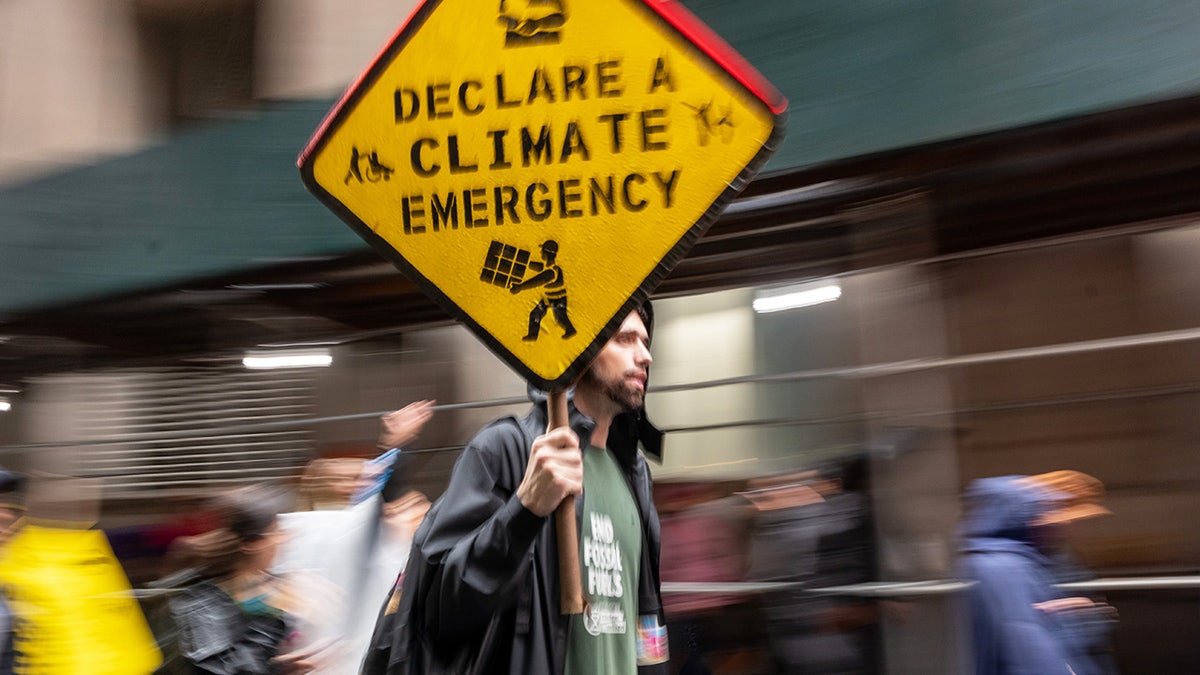
climate emergency sign

People involved in climate activism hold a demonstration in Manhattan to demand an end to fossil fuel funding by Wall Street and the American government on Sept. 18, 2023, in New York City. (Spencer Platt/Getty Images)

The FOIA requests were significant, GAO legal counsel Chris Horner told Fox News Digital, because they opened up a new path for his group and congressional investigators to pursue as they probe what role the Federal Judicial Center, which is a research arm of the taxpayer-funded judicial branch, had in hosting the seminars.

While it is not necessarily subject to FOIA requests, Horner said that records belonging to the Federal Judicial Center Foundation, created by Congress as a 501c1, are public. That means the foundation, which is authorized to take donor money to support events, should have a public paper trail, Horner said.

Fox News Digital reviewed ELI’s tax records, including 990 forms beginning in 2019, which showed multimillion-dollar lump sums designated, in part, for educating judges. Horner said his group was looking to understand the “mechanics” behind that funding.

“Judges are getting from the courtroom to the resort. How does that happen?” Horner asked, questioning if the Federal Judicial Center, a public, impartial entity, was improperly using ELI’s money to facilitate judges’ attendance at the controversial seminars.

The seminars at issue were climate-related judicial education programs involving the Federal Judicial Center and ELI’s Climate Judiciary Project, which ELI launched in 2018 to provide judges with instruction on climate science, climate impacts and climate-related litigation. 

The Federal Judicial Center previously told Fox News Digital it held a series of small, one-day seminars with ELI for fewer than 100 judges in 2019 and early 2020, before the programs became the subject of scrutiny from Republican lawmakers, conservative legal critics and energy industry advocates. The Federal Judicial Center said last year it stopped working with ELI in 2020. Fox News Digital reached out to ELI and the Federal Judicial Center for comment on the current status of the seminars.

Nick Collins, an ELI spokesperson, said in a statement that ELI’s climate project began because courts were seeking out education on the topic. He denied that the project had ties to current climate litigation that judges might be presiding over.

“[The Climate Judiciary Project] partners with leading educational institutions to provide those courses which are no different than other judicial education programs providing training on legal and scientific topics that judges voluntarily choose to attend,” Collins said. “CJP does not participate in litigation, coordinate with parties related to any litigation, or advise judges on how they should rule on any issue or in any case.”

GAO argued in its FOIA requests that the Federal Judicial Center Foundation is a government agency and that the statute that established the foundation authorized it to maintain a fund with the Treasury, where all the foundation’s donations could be held. GAO said the public should have access to those account statements showing deposits and disbursements.

The FOIA requests targeted records spanning multiple years, including the potential Treasury-held data dating back to 2015, as well as records from 2019 to 2021 tied to the climate seminars specifically.

The requests did not establish that any funds were improperly used, but GAO said the records could clarify how outside money was handled by a public institution.

Horner called it a “big gap in the stone wall,” referencing what he viewed as an opening to learn more about what has long been a murky understanding of financial ties between the Federal Judicial Center and private entities helping to bring the climate lawsuits.

Horner noted ELI’s well-documented connections to plaintiffs who have brought numerous lawsuits against major oil companies like Shell, BP and ExxonMobil in the name of addressing climate change.

“The judiciary has been caught in bed with the plaintiffs, and the judiciary apparently wants to hide the evidence rather than be transparent about it, which certainly does not inspire confidence,” Horner said.

MAJOR ‘CLIMATE DECEPTION’ LAWSUIT AGAINST BIG OIL VOLUNTARILY DISMISSED

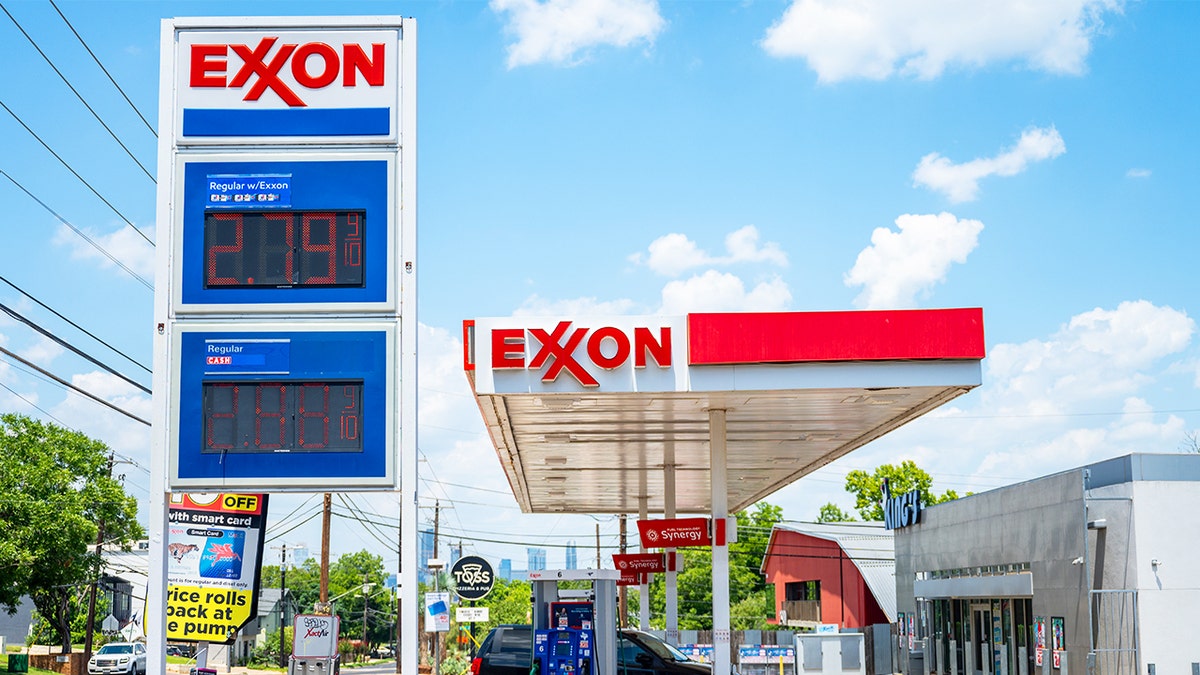
AUSTIN, TEXAS - AUGUST 05: An Exxon gas station is seen on August 05, 2024 in Austin, Texas. (Photo by Brandon Bell/Getty Images) 

AUSTIN, TEXAS – AUGUST 05: An Exxon gas station is seen on August 05, 2024 in Austin, Texas. (Photo by Brandon Bell/Getty Images)  (Brandon Bell)

ELI is connected to litigators involved in the uptick in recent years in the lawsuits against oil companies, including through its former board member Ann Carlson. ELI’s Climate Judiciary Project maintains that it is a “neutral, objective” resource for judges, but its curriculum has been fossil fuel-averse. The Climate Judiciary Project educates the very judges who could end up presiding over cases against the oil companies.

ELI “intends to accomplish via the courts what it cannot get enacted into law: a radical environmental agenda,” Sen. Ted Cruz, R-Texas, alleged in a 2024 letter.

GAO lawyers argued in their FOIA requests that the foundation’s financial information was of great public interest because judges were effectively being lobbied on how to handle climate cases through these seminars, and the foundation could have had a role in funding them.

“These seminars were arranged by parties affiliated with the plaintiffs’ legal team yet presented as the objective background which judges should know about climate science,” the GAO lawyers wrote in the FOIA requests. “The Federal Judicial Center Foundation is authorized to accept gifts to underwrite such seminars.”

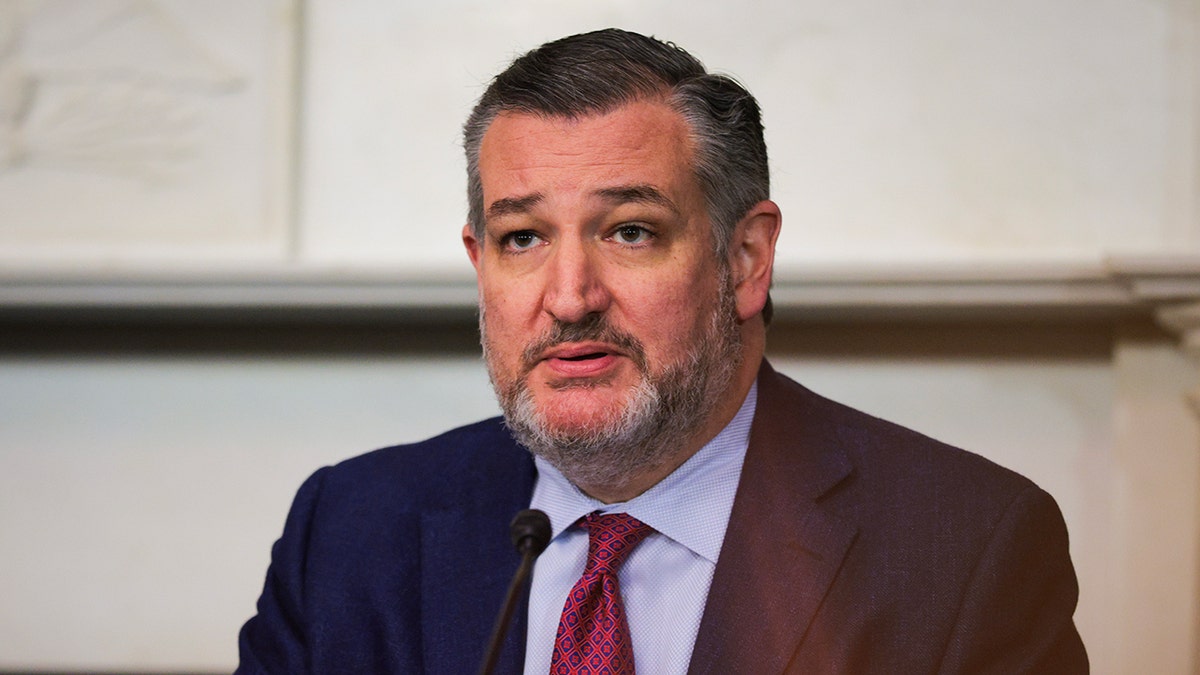
Sen. Ted Cruz

Sen. Ted Cruz speaks during a roundtable discussion at the U.S. Capitol on March 3, 2025, in Washington, DC. (Kayla Bartkowski/Getty Images)

Critics like Cruz and GAO have long contended that the seminars were not neutral and instead part of a broader climate litigation ecosystem. Judges attending seminars on any given topic would normally be a nonissue, but the concerns have zeroed in on who may be influencing the judges and whether they are part of the same network advancing the climate lawsuits.

Like GAO, Congress has been probing the financials as part of its oversight of the judicial branch. In January, the House Judiciary Committee said ELI, and its Climate Judiciary Project, appeared to target judges in jurisdictions where climate cases would be heard. The letter noted that ELI has said its Climate Judiciary Project began in 2018 “in coordination with” the Federal Judicial Center.

CLICK HERE TO GET THE FOX NEWS APP

GAO’s FOIA letters signal that the Federal Judicial Center Foundation could be a missing link in understanding who paid for the seminars and how the Federal Judicial Center was involved with the privately funded programs, which lawmakers say could be at odds with policies that the U.S. courts are required to follow.

Fox News Digital reached out to Carlson, as well as the Federal Judicial Center, the Federal Judicial Center Foundation and the Treasury Department for comment on the FOIA requests.


Source link

MetInfo CMS CVE-2026-29014 Exploited for Remote Code Execution Attacks


Ravie LakshmananMay 05, 2026Vulnerability / Network Security

Threat actors are actively exploiting a critical security flaw impacting an open-source content management system (CMS) known as MetInfo, according to new findings from VulnCheck.

The vulnerability in question is CVE-2026-29014 (CVSS score: 9.8), a code injection flaw that could result in arbitrary code execution.

“MetInfo CMS versions 7.9, 8.0, and 8.1 contain an unauthenticated PHP code injection vulnerability that allows remote attackers to execute arbitrary code by sending crafted requests with malicious PHP code,” the NIST National Vulnerability Database (NVD) states.

“Attackers can exploit insufficient input neutralization in the execution path to achieve remote code execution and gain full control over the affected server.”

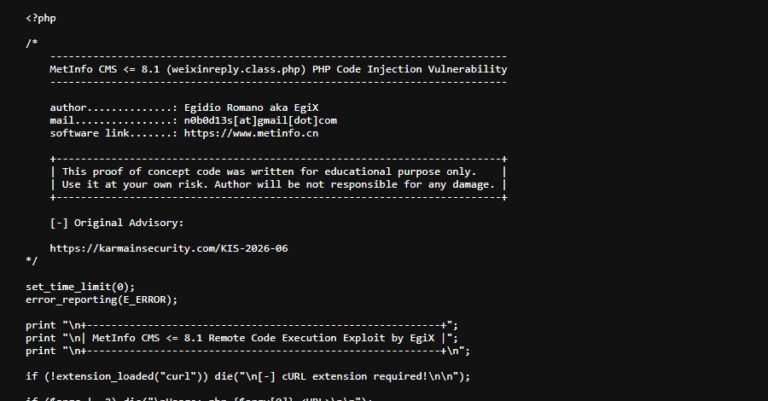
Per security researcher Egidio Romano, who discovered the vulnerability, the problem is rooted in the “/app/system/weixin/include/class/weixinreply.class.php” script, and stems from a lack of adequate sanitization of user-supplied input when issuing Weixin (aka WeChat) API requests.

As a result, remote, unauthenticated attackers could exploit this loophole to inject and execute arbitrary PHP code. One key prerequisite for successful exploitation when MetInfo is running on non-Windows servers is that the “/cache/weixin/” directory has to exist beforehand.The directory is created when installing and configuring the official WeChat plugin. 

Patches for CVE-2026-29014 were released by MetInfo on April 7, 2026. The vulnerability has since come under exploitation as of April 25, with a “small number of exploits” deployed against susceptible honeypots located in the U.S. and Singapore.

Although these efforts were initially sparse and associated with automated probing, the activity witnessed a surge on May 1, 2026, focusing on China and Hong Kong IP addresses, Caitlin Condon, vice president of security research at VulnCheck, said. As many as 2,000 instances of MetInfo CMS are accessible online, most of which are in China.


Source link

Broker’s Call: Navin Flourine (Buy)


Target: ₹8,500

CMP: ₹7,009.70

Navin Fluorine International has a strong presence across CDMO, Specialty Chemicals and High-Performance Products (HPP) segments. Leveraging deep fluorine chemistry expertise and backward integration, the company serves global pharma, agrochemical, refrigerant and specialty material customers, with exports (about 70 per cent) forming a significant share of revenues.

Q4FY26 was strong, with revenue up 34 per cent year on year to ₹938 crore. CDMO revenues grew 61 per cent, Specialty Chemicals 39 per cent, while HPP rose 20 per cent on firm HFC-32 pricing and higher utilization.

FY27 is expected to be a milestone year as major investments transition to revenue. R-32 refrigerant ramp-up in HPP will benefit from strong demand and pricing; multi-purpose plants debottlenecking will boost Specialty Chemicals and CDMO output, and the long-term strategic manufacturing and supply agreement with the Chemours company (in the US) will add long-term, high-margin contracted revenues. This is backed by about 80 per cent capacity utilization visibility for Specialty Chemicals and a 50-55 molecule CDMO pipeline.

As per market consensus, Navin Fluorine trades at 43x one-year forward P/E, below its five-year average P/E. The outlook remains positive, supported by strong medium-term revenue visibility, structurally-elevated EBITDA margins (over 30 per cent), rising export mix, a robust CDMO order pipeline, commissioning of the Chemours project, and sustained strength in ref-gas and R-32 capacity ramp-up.

Published on May 5, 2026