Bangladesh’s prime minister-to-be Tarique Rahman and newly elected lawmakers have been sworn into parliament, becoming the first elected representatives since a deadly 2024 uprising.
Published On 17 Feb 2026
Source link
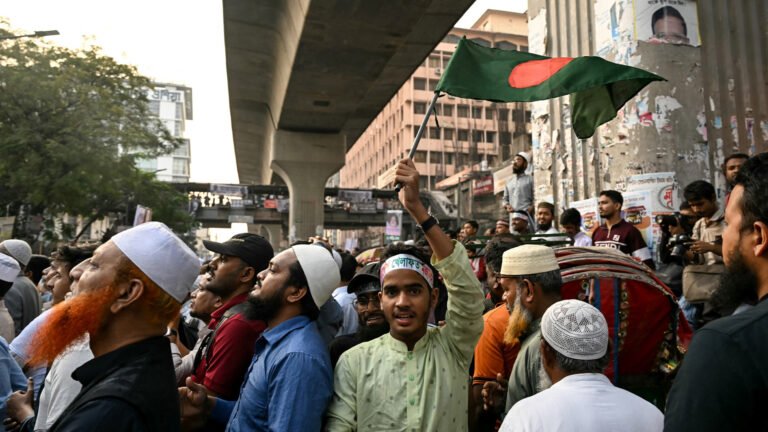
Bangladesh’s prime minister-to-be Tarique Rahman and newly elected lawmakers have been sworn into parliament, becoming the first elected representatives since a deadly 2024 uprising.
Published On 17 Feb 2026
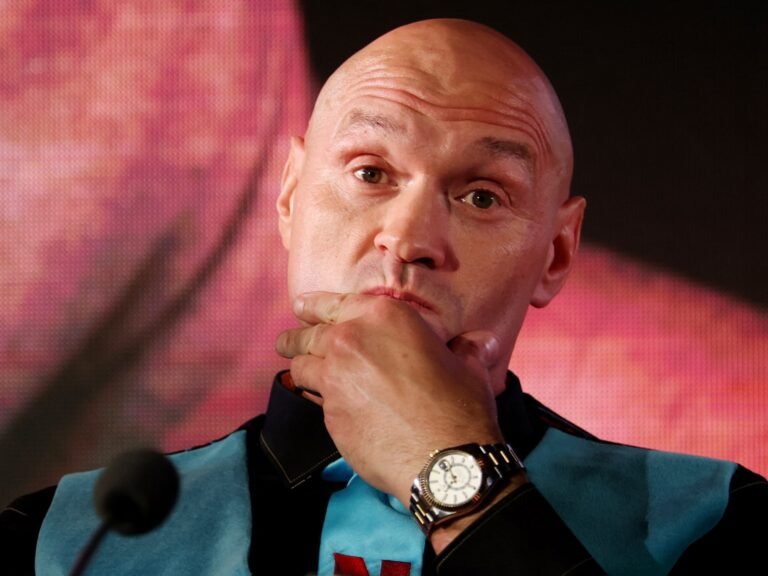
The accident that caused two deaths was ‘the biggest turning point’ in Fury’s decision to return to the ring.
Published On 17 Feb 2026
British boxer Tyson Fury says Anthony Joshua’s car accident in Nigeria that caused two deaths was a “turning point” for him in his decision to return to the ring.
Fury’s compatriot Joshua, a former heavyweight champion, sustained minor injuries in the crash in Nigeria in December that killed his strength and conditioning coach Sina Ghami and his trainer Latif “Latz” Ayodele.
A week later, Fury announced his comeback. Any plans to fight Joshua this year were set aside, but Fury acknowledged how his old rival played a part in his return.
“The biggest turning point in this comeback for me was the tragedy that happened with Anthony Joshua,” Fury told reporters on Monday at Tottenham Hotspur Stadium.
Former two-time heavyweight champion Fury (34-2-1) is ending a 15-month retirement from the ring on April 11 against Russian-born Arslanbek Makhmudov (21-2) at the London venue.
“I was on holiday with my family in Thailand for Christmas just to get away from the rain. I was sick of the rain, it was depressing me, and then I hear all about the bad news that’s gone on and I thought, ‘You know what, life is very, very short and very precious and very fragile and anything can happen at any given moment.’
“You should never put things off until tomorrow, or next year, or next week because tomorrow is not promised to nobody.
“I made my mind up there and then I was going to come back to boxing because it’s something I love, I am passionate about and I have always been in love with. There is no tomorrow, so that’s why I am back today.”
Fury, 37, announced his return from his latest spell of retirement in January. It will be the first fight for the former two-time world heavyweight champion since losing to Oleksandr Usyk in December 2024.
“Since I’ve retired for the fifth time over a year ago, boxing for me has gone on a downward slope and it’s become quite boring,” he said. “I am coming back to make boxing great again.”
Last Updated:
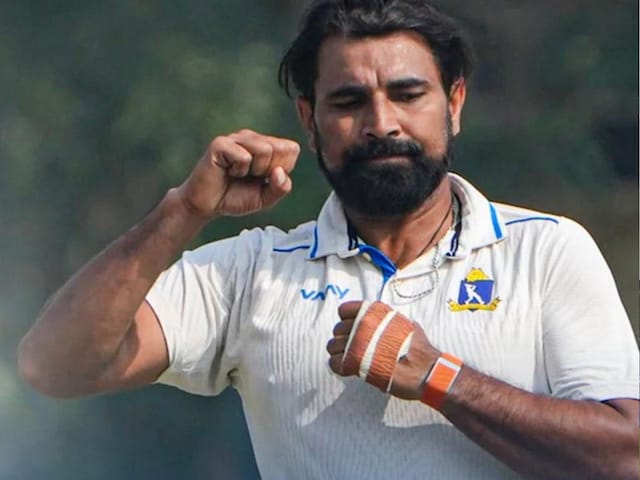

New Delhi. It is said that when talent speaks, there is no need to speak yourself and Shami must have gradually understood this in this season. There are not just spells in cricket, there are some spells which become a statement. At the age of 35, without a BCCI central contract and despite being out of the immediate limelight for the national team, Mohammed Shami has once again put a similar statement straight on the selectors’ table. There have been differences of opinion between BCCI chief selector Ajit Agarkar and Shami regarding fitness in the last one year. Agarkar believes that Shami is not completely fit for five-day cricket, but Shami has responded with his performance every time, this time too for Bengal.
At the Bengal Cricket Academy Ground in Kalyani, Shami, with his hand bandaged, gave a performance that every Indian fan would be proud of. He recorded figures of 8/90 in 22.1 overs, which is the best performance of his first-class career. Thanks to his lethal bowling, Bengal got a lead of 26 runs in the first innings over Jammu and Kashmir in the semi-finals. It is clear that if Shami had not been there, the path to the Ranji Trophy final would not have been easy for Bengal. Now the clash between Bengal and Karnataka in the final is almost certain.
superb shami
Playing ahead of 249/5, Bengal scored 328 runs. Sudeep Gharami’s innings of 146 runs proved to be the backbone of the team, while Aaqib Nabi impressed with 5/87. Nabi also completed his 50 wickets in Ranji Trophy this season but when Jammu and Kashmir started the counter innings, Shami was in complete control of the match. On the second day, with the new ball, Shami dismissed Shubham Khajuria and Yawar Hasan early to bring Jammu and Kashmir to 13/2 and later he broke the dangerous partnership of 147 runs between Paras Dogra and Abdul Samad. Shami changed the course of the match by dismissing both Samad (82) and Dogra (58). Dogra also completed 10,000 runs in Ranji Trophy during his innings.
Match winner Shami wreaked havoc
While Shami showed control on the second day, on the third day he completely dominated. Shami, who started the day with three wickets, soon completed his five-wicket haul but he did not stop there. When Aaqib Nabi and Yudhvir Singh Charak challenged Bengal’s lead by making a partnership of 64 runs, Shami made a comeback and he first dismissed Yudhvir with a brilliant ball and then bowled Nabi to wrap up the entire innings. Shami consistently took eight wickets with accurate line-lengths. This was a classic, old-fashioned seam bowling display of accuracy and patience. At the age of 35, Shami not only took wickets but also gave a strong message that class and passion are not dependent on age.
Mohammed Shami – Ranji Elite 2025-26 (for Bengal)
Innings: 12
Wickets: 36
Economy Rate: 2.71
Strike Rate: 36.00

Big feat at a young age! The child performed such a dangerous stunt on the train, remembering ‘Tarzan’ after seeing the stunt

Big feat at a young age! The child performed such a dangerous stunt on the train, remembering ‘Tarzan’ after seeing the stunt

At a young age, a child performed such a dangerous stunt that everyone was shocked. In the video going viral, the child is seen doing amazing stunts by climbing on top of the train. Seeing his balance and courage, people were reminded of ‘Tarzan’. Although this sight fills with thrill, such stunts can be extremely dangerous. A small mistake can turn into a major accident. While people are discussing the courage and confidence of the child on social media, many users are also advising to stay away from such dangerous stunts. This video is becoming increasingly viral and millions of people have seen it. Video Credit:Instagram- @chhotatarjan_147
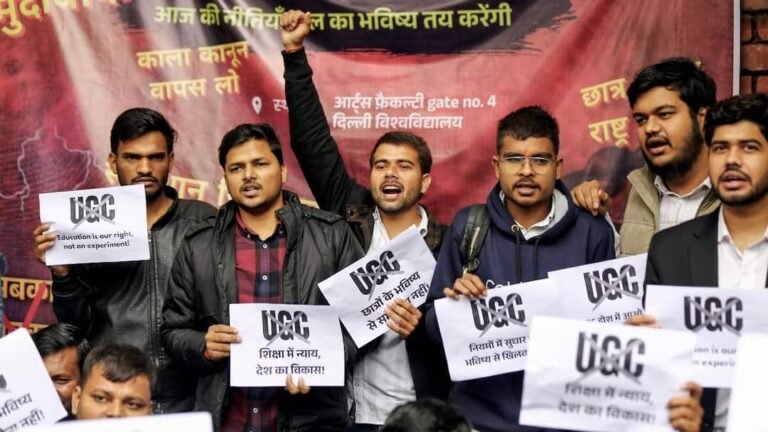
The administration has taken a big decision with the aim of maintaining peace, order and discipline in the Delhi University campus. The university administration has completely banned public meetings, processions, demonstrations and any kind of protest for a month. In this regard, University Proctor Prof. An official order has been issued by Manoj Kumar for students, faculty members and staff. This order will be effective from 17 February 2026 and will remain in force for the next one month.
The university administration says that this step has been taken to maintain law and order, academic environment and security in the campus. No kind of meeting, rally, protest or public event will be allowed under the order. The administration has appealed to all students and employees to follow the rules and maintain cooperation.
University Proctor Prof. Manoj Kumar has issued the order that unhindered public gatherings, processions or demonstrations in the DU campus may cause obstruction to traffic, threat to human life and disturbance of public peace. He said that in the past too the organizers have often failed to control such protests, leading to deterioration of law and order on the university campus.
Proctor also informed in his order that the Assistant Commissioner of Police, Sub-Division Civil Lines has also issued an order to this effect on December 26, 2025, in which a notification of the Ministry of Home Affairs, Government of India has been cited. According to this, there is a ban on any public meeting, rally, dharna, demonstration, agitation or any such activity in the university campus which may affect the peace of the common people or the smooth movement of traffic. This order is effective from 17 February 2026 and will remain in force for one month.
Read this also-Holashtak 2026 Start Date: When will Holashtak start, note the date, evil powers remain active during these 8 days
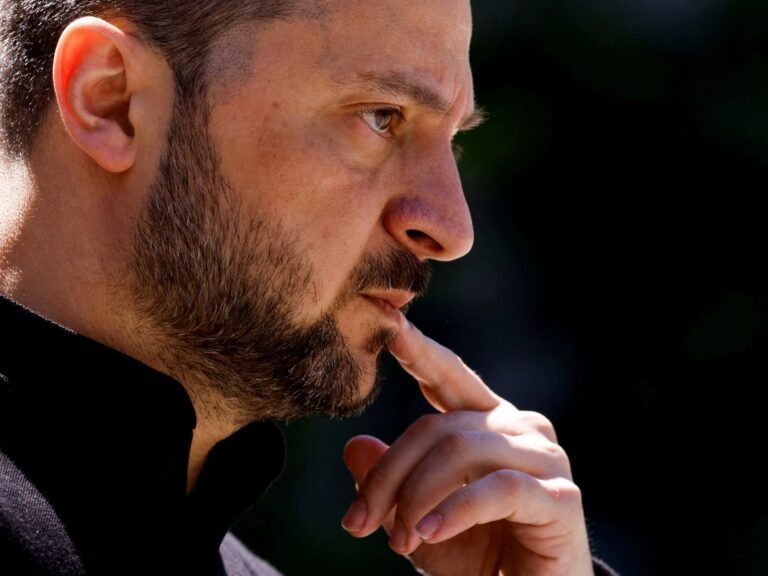
Kyiv, Ukraine – Volodymyr Zelenskyy’s fortunes have shifted since he was elected as an anticorruption outsider in 2019.
In the first months of Russia’s full-scale invasion, his defiance and everyman image won him global acclaim and overwhelming support at home.
But that unity, exhausted by four years of full-scale war, has given way to a more complex mood.
Now, while many Ukrainians still back him as an international figurehead, concerns about governance and corruption are reshaping his standing domestically.

In 2019, when Zelenskyy ran for president, he was a well-known comic actor, best known for playing a schoolteacher who wakes up to find he has been elected head of state after a video of him ranting against corruption, secretly recorded by his pupils, goes viral.
His campaign used much of the same anticorruption rhetoric as his on-screen character, positioning himself as an outsider to the entrenched oligarchic networks that dominated Ukrainian politics.
This was something that appealed to voters disillusioned by the status quo, and he stormed to a landslide victory, winning 73 percent of the vote.
After Zelenskyy came to power, the realities of governing began to erode his everyman image as he first dealt with an energy crisis and then, the impact of the global COVID pandemic.
In December 2021, two months before the war began, his popularity stood at just 31 percent, according to the Kyiv International Institute of Sociology.
It is a cycle that Peter Dickinson, the British publisher of Business Ukraine magazine and editor of the Atlantic Council’s UkraineAlert service, sees as common in Ukrainian politics.
Ukraine’s democracy is “very vibrant” and “very dynamic,” but also “very immature in a lot of ways”, often resembling a “high school popularity contest”. Politics revolves around individuals rather than institutions, he added.
Leaders are initially embraced as national saviours, only to be swiftly rejected when expectations of rapid change go unmet, something he called the “Messiah to pariah” effect.

On February 24, 2022, Russia invaded Ukraine, and overnight, Zelenskyy became a wartime president.
Donning a casual green military T-shirt, he addressed the nation in a series of self-shot videos published on social media.
His impassioned speeches urged Ukrainians to take up arms, and his refusal to leave Ukraine, despite warnings from the United States, won him praise at home and abroad.
His approval rating skyrocketed, hitting 91 percent in the first weeks of the invasion.
Several people Al Jazeera interviewed in the weeks before the full-scale invasion, who had been critical of the president, changed their minds in the first weeks.
Mykhail Hontarenko, from Odesa, told Al Jazeera at the time that he had warmed to Zelenskyy, who he saw as a seasoned entertainer suddenly thrust into an experience that made him display genuine emotion. “I don’t think he is acting now; he is scared,” he said.
However, since then, the Ukrainian president has spent less time on the street and more time at the Presidential Palace and on diplomatic trips as he seeks to rally international support.
In a December survey, the Kyiv International Institute of Sociology found that while 61 percent of Ukrainians trust Zelenskyy, 32 percent do not.
Some believe he would struggle to be re-elected in a post-war vote.
Dickinson said this is partly due to corruption scandals involving his associates and the perception that he is concentrating power and using wartime conditions to expand presidential authority.
Zelenskyy is facing growing pressure from Washington to organise national elections in 2026, but that would require legal and constitutional changes under the country’s wartime martial-law rules.
In recent days, Zelenskyy has stated that he is “ready” to hold an election – as long as Washington and, perhaps, Brussels could ensure its security.
In late 2025, Ukraine was shaken by a major corruption scandal, prompting searches and arrests involving senior figures and fuelling scrutiny of Zelenskyy’s inner circle, including longtime chief of staff Andriy Yermak, who resigned.

“Ukrainians are very, very cynical anyway when it comes to political corruption, so it was a disastrous optic for him to have personal friends of his who he’d appointed to senior roles to be implicated in a scandal,” Dickinson said.
He added that the latest scandal centred around the energy sector, which is particularly jarring for Ukrainians, considering that Russia’s attacks on infrastructure have left millions without electricity, water or heat in freezing conditions.
“The people [once] felt he was the everyman on the street, but now he’s part of the establishment”, Dickinson said.
Amina Ismailova, a manager at a textile company in Kharkiv, in Ukraine’s northeast, told Al Jazeera that she believes trust in Zelenskyy is lower than the polls suggest.
While many soldiers and veterans are not getting paid or receiving adequate healthcare, politicians are profiting from corruption schemes – something that is hard for people to accept, she said.
The problem, Ismailova said, echoing many people Al Jazeera spoke to, is the lack of a viable alternative.
Valerii Zaluzhnyi, Ukraine’s ambassador to the UK, was a name mentioned by a few, although the former head of Ukraine’s military has never announced political ambitions.
Zaluzhnyi, known as the “Iron General”, enjoys the image of a war hero and military mastermind, and Zelesnkyy’s decision in early 2024 to “renew the leadership” and send him to the UK raised suspicions that he saw him as a potential threat to his presidency.

But despite the current domestic mood, many Ukrainians still support Zelenskyy as a wartime leader.
Dickinson said Zelenskyy’s response to US President Donald Trump in their fractious Oval Office meeting in February 2025 – where the Ukrainian president was seen as being pressured or belittled by Trump – triggered a patriotic surge inside Ukraine.
Polls at the time showed an immediate rise in his approval ratings.
Many people felt that when Zelenskyy was attacked, Ukraine itself was being attacked, said Dickinson.

US President Donald Trump has hit back at claims made by Hillary Clinton of a “cover-up” over the release of the Epstein files, accusing her of having “Trump derangement syndrome”.
On Monday, Hillary Clinton accused the Trump administration of “slow walking” the release of the files relating to the late convicted sex offender Jeffrey Epstein and urged his team to “get the files out” in an interview with the BBC.
The former US secretary of state also said “everyone should testify [before Congress] who is asked to testify” and insisted hearings should be public and “fair”.
She also claimed that she and her husband, former President Bill Clinton, were being politically targeted.
“They want to pull us into this… to divert attention from President Trump, this isn’t complicated,” she said.
The Clintons are due to appear before the Oversight Committee next week, though they initially resisted calls to testify.
Bill Clinton’s name appears several times in the Epstein files, with several photos of him included as well.
Hillary Clinton has admitted to having met Epstein’s convicted associate Ghislaine Maxwell “on a few occasions”.
Both Clintons deny having known about Epstein’s sex offending.
Responding to Hillary Clinton’s accusations on Tuesday, Mr Trump told reporters: “I have nothing to hide, I’ve been exonerated, I have nothing to do with Jeffrey Epstein.
“They’re getting pulled in, and that’s their problem, we’ll have to see what happens.”
He added: “She seriously has Trump derangement syndrome.”
More than three million pages related to Epstein have been made public by the US Department of Justice.
However, the release of the files has been widely criticised by Democrats and some Republican politicians.
Last week, a Republican representative, Thomas Massie, accused Attorney General Pam Bondi, who oversees the files’ release, of concealing the names of powerful Epstein associates.
He also accused the justice department of a “massive failure” to comply with the law.
Lawmakers have complained that redactions in the files appear to go beyond the limited exemptions allowed in the law Congress passed nearly unanimously in November.
The department has also declined to publish a large volume of material, citing legal privileges.
The justice department, Ms Bondi and Mr Trump have repeatedly denied claims of unreasonably attempting to withhold or limit the release of information.
Read more from Sky News:
Why the UK’s ‘lost’ teenage boys are in crisis
Three people killed in shooting at US ice rink
The content of the files has caused shock and outrage and damaged the image of many of those named.
On Monday, Thomas Pritzker said he was stepping down as executive chairman of Hyatt Hotels, acknowledging “terrible judgement” in maintaining contact with Epstein and Maxwell.
Last week, Casey Wasserman, chairman of the 2028 Los Angeles Olympics, said he would sell his talent and marketing agency after publication of historic flirtatious emails with convicted sex trafficker Maxwell.
Being named in the Epstein files is not a sign of any wrongdoing.

6 year old little girl did a wonderful dance on the song Jugni, her expression made the public crazy!
6 year old little girl did a wonderful dance on the song Jugni, her expression made the public crazy!
Viral Video: A video of a little dancer is becoming increasingly viral on social media, in which a 6 year old girl is seen dancing brilliantly on the famous song Jugni. The girl’s expressions, confidence and rhythmic moves surprised people. Her innocence and enthusiasm of performance in the video is such that the audience is forced to watch it again and again. After the video surfaced, users are praising the girl a lot. Many people wrote in the comments that such a wonderful expression is rarely seen at such a young age. While some said that this girl looks like a future star. The video is being shared rapidly and seems to be winning the hearts of people on the internet.
Reference #18.50200117.1771318513.62c24bc
https://errors.edgesuite.net/18.50200117.1771318513.62c24bc
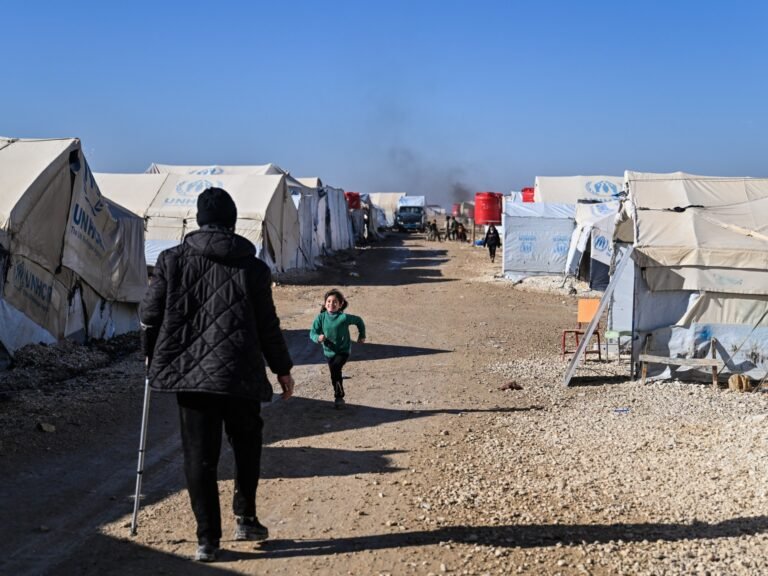
The number of residents at one of Syria’s most notorious camps has dropped rapidly, going from about 24,000 earlier this year to the low thousands at most, humanitarian, diplomatic and local sources from the country’s northeast have told Al Jazeera.
The al-Hol camp, near the Syria-Iraq border, had held mostly internally displaced Syrians and approximately 6,000 third-country nationals with links to ISIL (ISIS). It was managed by the Kurdish-led Syrian Democratic Forces (SDF) before a government offensive in Syria’s northeast in January forced the SDF to withdraw.
Since then, the camp has ostensibly come under government control.
Details and accounts about how families and individuals exited the camp, which at its peak in 2019 held about 73,000 families, are contradictory. What is clear, according to sources on the ground, is that most Syrian nationals left al-Hol for their home towns, while many of the foreigners have travelled west to the government strongholds of Idlib or Aleppo governorates.
The uncertainty and lack of information have left analysts, diplomats and humanitarian workers with security and human rights concerns.
In 2019, ISIL was defeated in Syria by a United-States coalition, which included the SDF. Al-Hol, located in the Hasakah governorate, was then established by the SDF after it took control of large parts of northeast Syria, with backing from the US.
It became the largest camp housing people suspected of links to ISIL. Of the total number of people in al-Hol in January, Syrians made up 14,500, and Iraqis made up 4,000. Approximately 6,200 people from other nationalities were also held in a highly securitised section of the camp, with more than 95 percent of them being women and children, according to Save the Children.
The SDF maintained control of al-Hol throughout the last years of Syria’s al-Assad regime, which ultimately fell in December 2024.
The Syrian government’s security forces entered al-Hol on January 21 to take control of the site. But humanitarian organisations were forced to stop working in the camp in recent days due to the conditions that followed the SDF’s abandonment and the government’s attempts to reestablish security.
It is unclear exactly how people housed in the camp left. Some of those held there told aid workers that they were directed – it is unclear by whom – to board buses. Others said that people pushed their way out of the camp and that guards were unable to stop them.
Smugglers are also reported to have transported Syrians and foreigners alike.
Al Jazeera could not confirm any of the reports, but aid workers and diplomatic sources believe the methods of escape described are feasible due to the size of the camp.
“There is still no clear, verified information about how the mass transfers from al-Hol to Idlib, and possibly other parts of Syria, took place after the SDF left the camp,” Beatrice Eriksson, spokesperson of the Swedish branch of Repatriate the Children, told Al Jazeera.
She said the information she was able to gather suggested that the movement of families “did not happen in a controlled or officially coordinated manner”.
“Families who were moved cannot be certain whether they have been liberated or effectively kidnapped,” she said. “That level of uncertainty alone illustrates the acute protection risks facing these families.”
A source with the SDF’s former administrative body told Al Jazeera there had been no “prior coordination between the SDF or the Autonomous Administration and Damascus” over al-Hol.
“Unfortunately, everything happened suddenly,” he said.
With so many families leaving the camp in unspecified and seemingly uncoordinated methods, analysts and diplomatic sources say they have serious security and humanitarian concerns.
Shortly after news broke of families leaving al-Hol, a video emerged online of a man in the office of former camp director Jihan Hanan. The man, who identified himself as Abu Sleiman al-Haskawi, called Hanan a pig and threatened her.
“Unfortunately, everything has ended, and I have become afraid for myself and my children,” Hanan told Al Jazeera.
The man in the video did not declare an affiliation. Analysts and diplomatic sources worry that some of the people who escaped would join groups seeking to undermine Syria’s stability.
A UN report released last Wednesday found that Syrian President Ahmed al-Sharaa and two of his senior cabinet ministers were targeted by ISIL in five foiled assassination attempts in the last year alone.
“If radicalised detainees are able to support ISIS attacks, or a resurgence in the next year or two, this could represent a major blow to the Syrian government,” Caroline Rose, director of the Crime-Conflict Nexus and Military Withdrawals portfolios at the New Lines Institute, told Al Jazeera.
“Already, during the transfer of detention centres with the SDF, there was a breakout attempt under the government’s watch. There have been ISIS attacks on both government and civilian targets as well. If this trend severely increases in the next year, I think the Syrian government will have to face mounting… distrust.”
For years, rights groups and international organisations called for the global community to act on the problem of al-Hol. Many people were detained there without ever facing trial. Many could not be repatriated because their countries of origin refused to receive them.
And now that many of the families are no longer there, new humanitarian concerns have emerged.
“While ending arbitrary, indefinite detention in places like al-Hol is important, the way this has unfolded is incredibly risky,” Sarah Sanbar, a researcher at Human Rights Watch, told Al Jazeera.
“When women and children leave in a chaotic, unplanned way, they often just become more vulnerable to trafficking, exploitation, or recruitment by armed groups. So the immediate priority should really be about identifying and protecting them.”
Sanbar added that “countries whose nationals are involved need to step up and repatriate them in a coordinated, safe, and dignified way. Women and kids should not be left to navigate smuggling routes and shifting front lines on their own.”
Conditions in al-Hol have also been criticised by rights groups and people familiar with the camp.
A 2022 report from Doctors Without Borders, known by its French initials MSF, said that people were not given adequate food or water, phones were banned, and medical care was insufficient. People interviewed by MSF for the report described the camp as a prison.
A little more than 40km (25 miles) away from al-Hol is the Roj camp, which also houses ISIL-linked people. Like al-Hol, it is based in Hasakah province, but Roj is still under SDF control. And following the recent developments at al-Hol, residents at Roj wonder what is next for them.
A European woman at the camp told Al Jazeera that detainees fear the camp may be dismantled and they will have to leave.
“I’m with my children,” she said. “Honestly, at night, there’s a lot of raids by the SDF. Sometimes they even hit the women… To be honest, I often fall asleep in fear.”
The woman in Roj said she wanted to be repatriated, but feared she would be sent to Idlib and get stuck in Syria. Her compatriots who were in al-Hol are now in Idlib, she said. “They’re being held captive and have not yet been registered. They want deportation; they don’t want to stay in Syria.”
“Our [home country] authorities are not responding. We’re asking them for guidance on this situation, but they’re not commenting,” she said. “We’ve been begging them to deport us for years.”