Reference #18.50200117.1777982082.4ba89b2
https://errors.edgesuite.net/18.50200117.1777982082.4ba89b2
Reference #18.50200117.1777982082.4ba89b2
https://errors.edgesuite.net/18.50200117.1777982082.4ba89b2
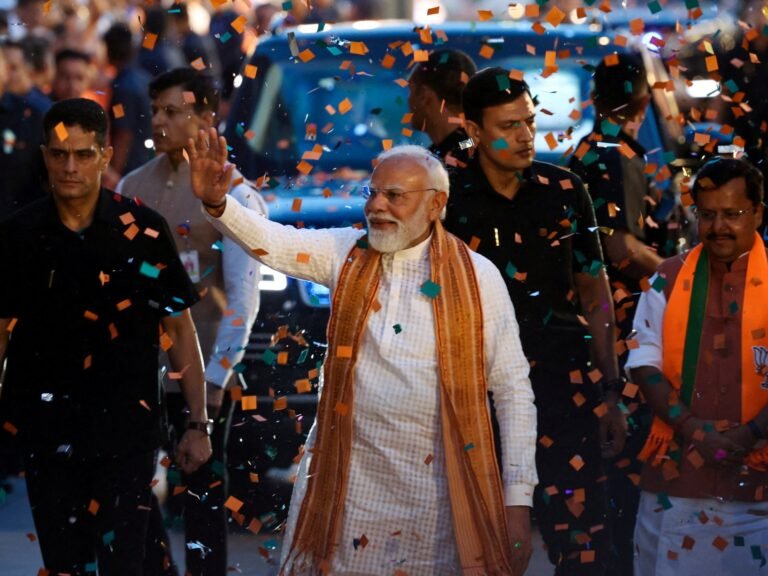
For the first time in its 46-year history, Indian Prime Minister Narendra Modi’s Bharatiya Janata Party (BJP) has won the state of West Bengal, arguably the Hindu nationalist party’s most consequential victory since 2014, the year Modi first came to power.
The legislative assembly elections were held on several dates in April in West Bengal, three other Indian states – Tamil Nadu, Assam and Kerala – as well as in the federally-governed territory of Puducherry.
The BJP retained Assam for a third consecutive term, while the coalition it is a part of also returned to power in Puducherry. The southern state of Tamil Nadu saw the rise of yet another film star, following in the state’s long tradition of cine icons turning into mass political leaders. Actor Joseph Vijay broke the stranglehold of two long-dominant state parties with a fledgling political outfit and is poised to become the next chief minister.
In neighbouring Kerala, a communist government lost to its traditional rival, an Indian National Congress-led alliance – a familiar election cycle in the state, which also marks the first time in 50 years that the left is not in control of any Indian state.
But while each of these votes matters — and we’ll return to them — the West Bengal outcome represents the biggest takeaway from Monday’s verdict.
Bengal is where the story of Indian colonialism began after the Battle of Plassey in the mid-18th century, when the British East India Company defeated the Nawab of Bengal, transforming from a trading firm into the sword arm of British imperialism in South Asia.
Some 150 years later, the British partitioned Bengal in 1905 – the first major instance of division along religious lines in modern South Asia. By separating the largely Muslim eastern regions from the Hindu-majority western districts, Lord Curzon, the then British viceroy, established a template in which religious identity could be mapped onto a territory and then mobilised politically.
Although annulled in 1911, the partition of Bengal catalysed a new political consciousness in the region that took various forms during the anticolonial movement, producing national figures of all hues, including several Hindu nationalist ideologues, the most prominent of them being Shyama Prasad Mukherjee, founder of the BJP’s precursor, the Bharatiya Jan Sangh.
Mukherjee founded the Jan Sangh two years before his death in 1953 to advocate for a culturally united India. He opposed a special status granted to the Indian-administered Kashmir after India and Pakistan emerged as independent nations in 1947. Modi fulfilled Mukherjee’s dream by scrapping the disputed region’s partial autonomy weeks after coming into power for a second term in 2019.
Addressing his party workers on Monday night, Modi said the West Bengal win “would bring peace to his [Mukherjee’s] soul”.

But despite its history of religious cleavages, Bengal displayed a much more complex post-independence political trajectory. It elected a communist government in 1977, which remained in power for a record 34 consecutive years before the Trinamool Congress (TMC), a centrist party led by the now-outgoing Chief Minister Mamata Banerjee, brought it down in 2011.
The state also remained relatively peaceful during some of the most tumultuous periods in modern India.
In 1984, anti-Sikh riots erupted in many states following the assassination of Prime Minister Indira Gandhi by her Sikh bodyguards. An estimated 3,000 Sikhs were killed in the national capital, New Delhi. West Bengal remained peaceful. Eight years later, the state again remained a sanctuary from the nationwide bloodbath that erupted following the 1992 demolition of a Mughal-era mosque in Uttar Pradesh state by Hindu hardliners led by Modi’s party.
Will that sense of communal exceptionalism and relative harmony that has long characterised West Bengal remain intact under a BJP government? That is one of the big questions emerging from the election results.
West Bengal is home to nearly 100 million people, 27 percent of them Muslims. The BJP, riding on a combination of anti-incumbency sentiment against Banerjee and its own tried-and-tested anti-Muslim rhetoric, won a stunning 207 seats, reducing the TMC to 80 legislators in the 294-member assembly – a remarkable rise for a party that until a decade ago had just three seats.
“The lotus has bloomed in West Bengal!” Modi posted on X on Monday afternoon, referring to the BJP’s election symbol, even as Election Commission of India (ECI) officials were still counting the votes. He called it a “historic victory”, which “will remain unforgettable”, promising a “politics of good governance” in the state.
The ECI, an autonomous constitutional body led by government-appointed bureaucrats, has faced severe scrutiny and criticism since 2014, with opposition parties and electoral watchdogs accusing it of vote theft, fraud, manipulation, and, more recently, of a controversial revision of electoral rolls that denied some 2.7 million people their voting rights in West Bengal.
The ECI denies the allegations, but an analysis of voter deletions in West Bengal by SABAR Institute, a Kolkata-based independent research organisation, showed that Muslims were disproportionately affected, mainly in districts where they constitute a high percentage of the population and could have swayed the election.
According to political commentator Yogendra Yadav, the deletion of 2.7 million votes amounts to 4.3 percent of votes cast in West Bengal, in an election where the BJP’s lead over the TMC was about 5 percent.
“The question is inescapable: If these 27 lakh [2.7 million] persons were allowed to vote, how would it have affected the outcome?” he asked in a column for the Indian Express newspaper on Tuesday, urging the opposition to stop legitimising “curated election results” that raise questions on the integrity of electoral processes.
Banerjee, who stunningly lost her own seat, alleged the BJP “looted more than 100 seats”. “The Election Commission is the BJP’s commission,” she told reporters in Kolkata, the state capital, promising to “bounce back”.
The BJP’s historic win in West Bengal follows a familiar election strategy, in which stirring up anti-Muslim sentiments is a central pillar.
In their campaign speeches, its leaders, including Modi, accused Muslims of being “Bangladeshi infiltrators” as the party called for a Hindu consolidation to drive out the “illegal immigrants” from the state. As the BJP takes West Bengal, fears of a crackdown on allegedly “illegal” Muslim residents will be more pervasive.
In a state famous for its roadside food stalls offering a wide range of fish and meat, including beef, delicacies, an insistence on and promotion of vegetarianism is difficult to rule out. BJP-led governments in several other states have tried to enforce rules around the sale and consumption of meat, especially beef.
Only fish is likely to be an exception. A hardcore staple for both Hindus and Muslims, fish is not just a protein source in West Bengal; it is also an integral marker of Bengali culture, with marriages and even religious rituals performed with it. To ward off people’s fears about the BJP policing their food choices if it wins the election, many party leaders were seen campaigning with a fish in hand.
Modi appeared to have such fears in mind when he thanked the people of West Bengal on Monday for electing the BJP.
“Our double-engine government will ensure equal opportunities and respect for all sections of society,” Modi posted on X, using a media-coined term, implying a political and administrative continuity between New Delhi and the BJP-ruled states that, according to the party, accelerates the formulation and implementation of government policies and prioritises their development.
But Modi has often promised to work for “all sections of society”. His successful 2014 election campaign was built on the slogan “Sabka Saath, Sabka Vikas”, which translates to “Support for all, development for all”.
On the ground, though, it is a very different kind of “double-engine” government that the BJP has delivered in several states — and one, in neighbouring Assam in particular, offers a glimpse of what could await West Bengal.
Assam and West Bengal share 263km (163-mile) and 2,216km (1,377-mile) borders, respectively, with Bangladesh, a Muslim-majority country that declared its independence from Pakistan – with India’s military help – in 1971.
Long before colonial cartographers divided the subcontinent into its modern nation-states, people from present-day Bangladesh had been migrating to what is now Assam to work in its rice fields and tea estates.
Today, one-third of Assam’s 31 million residents are Muslim, the largest percentage among Indian states, a majority of them having historically migrated to the northeastern state in waves. These Bengali-origin Muslims, pejoratively called “miyas”, have been the target of xenophobic campaigns for decades that the BJP has championed since coming to power in the state in 2016.
With 102 seats in the 126-member Assam assembly, Chief Minister Himanta Biswa Sarma has returned with a larger majority than in 2021. The emphatic victory is likely to see a more hardline Sarma doubling down on his attacks on Muslims. The last five years saw him and his government demonising the community as “infiltrators”, evicting them from their lands and demolishing homes.
A controversial gerrymandering exercise turned the state’s large Muslim voter base much less influential than it was previously. Of the 19 legislators from the opposition Congress who won in Assam, 18 are Muslim – a stark indication of the religious polarisation in the state.
Sarma promised a more virulent crackdown in his campaign speeches this year, pledging to “break the backbones” of “illegal Bangladeshi Muslims”. He has committed to implementing a Uniform Civil Code, a polarising proposal that replaces religion-based personal laws. The BJP, in its manifesto, has also promised to pass laws related to the alleged forced religious conversion of people, and on the so-called “love jihad”, an unsubstantiated right-wing conspiracy theory that accuses Muslim men of entrapping Hindu women into marriages in order to convert them to Islam.
The southern state of Tamil Nadu — one of India’s most developed — threw up a surprise.
The state has a long history of film stars turning into politicians. Actor Vijay, who launched the Tamilaga Vettri Kazhagam (TVK) party only two years ago, trounced the ruling Dravida Munnetra Kazhagam (DMK)-led alliance by winning 108 seats in the 234-member assembly. Like West Bengal’s Banerjee, state Chief Minister MK Stalin also lost his seat – a shock defeat for a leader whose government is credited with making Tamil Nadu the fastest growing economy in India at an impressive rate of 11 percent.
Vijay’s rise breaks a decades-long duopoly of Tamil Nadu’s two main Dravidian parties, which derive their names from a powerful movement against caste inequalities. The two Dravidian parties had also opposed attempts by north Indian-dominated parties to impose Hindi – and its accompanying so-called upper-caste Hindu values – on the non-Hindi speaking southern states.
However, the 51-year-old actor is 10 seats short of a simple majority mark of 118 in the Tamil Nadu assembly and needs an ally to form the government. The DMK joining that coalition is unlikely. Will that be the All India Anna Dravida Munnetra Kazhagam (AIADMK)-led alliance, which won 53 seats and includes the BJP?
In neighbouring Kerala, which boasts of developmental indices better than those of the United States, a familiar oscillation of power happened. The communist government led by Chief Minister Pinarayi Vijayan lost to an alliance led by the Congress, which won 101 of the 140 seats. Muslims, who, like West Bengal, form about 27 percent of the state’s population, won one-fourth of the seats, including a first-time female MLA from the Indian Union Muslim League (IUML).
Despite trying for decades, Modi’s BJP has not been able to make a significant dent in Kerala and Tamil Nadu. But even in those two states, the BJP’s vote percentage continues to rise.
The BJP, with Modi as prime minister, has long faced accusations of backing crony capitalism. However, the party denies those claims. What is indisputable, though, is that billionaires seen as being close to the prime minister have won rights to more and more land, forests and mines in recent years.
With Monday’s results, the BJP’s consolidation of power has grown. The party now governs or is part of the governing coalition in 21 of the country’s 28 states. These states now make up nearly 80 percent of India’s 1.4 billion people – a phenomenon last seen in the 1960s when the Congress was at the peak of its power.
Critics often call the BJP an “election machine”. It is the world’s richest political party with a total income of $712m, compared with nearly $96m for its closest national rival, the Congress, according to an assessment by the election watchdog Association of Democratic Reforms in 2025. “The race between a Ferrari and a bicycle,” as writer and activist Arundhati Roy had once said.
Now that the “machine” has delivered one of the most significant results in India’s recent electoral history, the state election results strengthen Modi midway through his third term. However, they also raise serious questions about whether India is turning more authoritarian. Is it moving towards one-party dominance? And will elections in the world’s most populous democracy be free and fair any more?

NEWYou can now listen to Fox News articles!
John Cena teased “history-making news” at WWE’s upcoming premium live event Backlash on Monday as he’s set to appear on the show in some form.
Cena ended his in-ring career in December, losing his retirement match against Gunther. It was possible that Cena might have been finished with WWE for a while, but he reappeared at WrestleMania 42 as the host. He wrote on social media that he was going to appear at Backlash.
ZERO BS. JUST DAKICH. TAKE THE DON’T @ ME PODCAST ON THE ROAD. DOWNLOAD NOW!
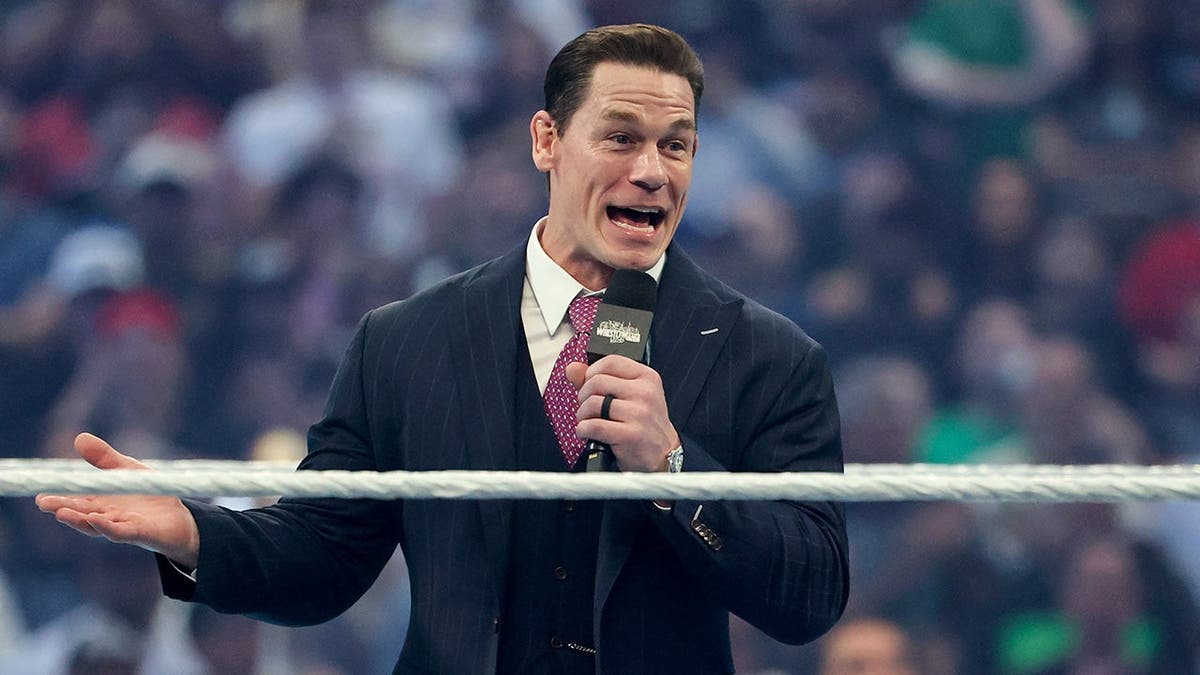
John Cena hosts WrestleMania 42 at Allegiant Stadium in Las Vegas, Nevada, on April 19, 2026. (Ethan Miller/Getty Images)
“It’s official! I’m headed to #WWEBacklash,” he wrote on X. “After months of planning and effort, I am SO excited to break some history-making news! I can’t promise it’ll be perfect but I can promise it will change the WWE experience for Superstars and fans!”
Backlash is set to take place at the Benchmark International Arena in Tampa, Florida.
There are several matches already set for Backlash.
CLICK HERE FOR MORE SPORTS COVERAGE ON FOXNEWS.COM

Danhausen and John Cena celebrate during WrestleMania 42: Night 2 at Allegiant Stadium in Las Vegas, Nev., on April 19, 2026. (Andrew Timms/WWE)
Roman Reigns will defend the World Heavyweight Championship against Jacob Fatu, Trick Williams will defend the United States Championship against Sami Zayn in a WrestleMania rematch, Seth Rollins takes on Bron Breakker, Iyo Sky will square off against Asuka and Danhausen and a mystery partner take on The Miz and Kit Wilson.
Cena was involved in last year’s Backlash show after he won the Undisputed WWE Championship at WrestleMania 41.

John Cena and Triple H look on during Saturday Night’s Main Event at Capital One Arena in Washington, D.C., on Dec. 13, 2025. (Rich Freeda/WWE)
CLICK HERE TO DOWNLOAD THE FOX NEWS APP
He defeated Randy Orton to retain the title. Before that, he hadn’t appeared at Backlash since taking on Edge. He lost the World Heavyweight Championship in a Last Man Standing match.

Shares of Raymond Limited fell 3.47 per cent to close at ₹442.95 on the NSE on Tuesday after the engineering conglomerate reported a sharp decline in quarterly profit and margins for the fourth quarter and full year ended March 31, 2026.
Net profit for Q4 FY26 fell 53 per cent year-on-year to ₹12 crore, while profit before tax dropped 43 per cent to ₹25 crore.
EBITDA for the quarter declined 14 per cent to ₹85 crore, with margins contracting to 13.9 per cent from 16.4 per cent in the same period last year. Total income for Q4 grew a modest 1.8 per cent to ₹613 crore.
For the full year FY26, total income rose 10 per cent to ₹2,312 crore, though EBITDA was flat at ₹335 crore. The full-year figure included a one-time land sale gain of approximately ₹13 crore in the second quarter. PBT for the year fell 20 per cent to ₹99 crore. The company said it remains net cash surplus at ₹68 crore.
The stock, which touched a 52-week high of ₹1,603.80 in May 2025, has shed over 71 per cent in the past year and is now trading in the NIFTY SMALLCAP 500 index with a total market capitalization of approximately ₹2,988 crore.
Raymond Limited operates two primary business segments. Its Aerospace and Defense unit — operating as JK Maini Global Aerospace Limited — posted revenue growth of 26 per cent for FY26 to ₹392 crore, with EBITDA margins holding steady at around 22-25 per cent. The Precision Technology and Auto Components segment reported 10 per cent revenue growth to ₹1,667 crore, with EBITDA margins improving to 13.4 per cent from 11 per cent a year ago.
The company is investing in a new manufacturing facility in Gudipalli, Andhra Pradesh, with a combined capex of ₹930 crore spread over five years across both segments, targeting commercial production by late 2027. The aerospace order book stands at over ₹2,350 crore over the next five years.
Published on May 5, 2026

Vodafone has struck a deal to take full ownership of VodafoneThree, the mobile network formed from last year’s merger of its British operations with Three, in a move designed to accelerate its UK ambitions.
The £4.3 billion ($5.8 billion) agreement will see Vodafone Group buy out Three parent CK Hutchison Group’s 49 percent minority stake, pending regulatory approval, in the second half of 2026.
The move came sooner than most industry watchers expected as the merger only completed last June, and the original terms gave Vodafone the right to bid for CK Hutchison’s stake after three years. Market intelligence firm Megabuyte values VodafoneThree at £13.85 billion under the deal, some £2.65 billion below the original £16.5 billion threshold.
“CK Hutchison is taking a haircut in favor of early cash, but this benefits the broader group’s strategy of exiting European assets,” Megabuyte senior analyst Tom Oughton commented.
Assuming the agreement is cleared, it will simplify the ownership structure of the business, Oughton added, though it is not expected to have any material effect on its strategy and operational plans.
“Accelerating the ownership change is logical, with CK Hutchison deeming the UK non-core and full ownership allowing Vodafone to accelerate its UK plans (which has now become a core market following several European disposals) and arguably taking advantage of a cheaper valuation.”
According to other market watchers, the move demonstrates the progress VodafoneThree has made in delivering on the network obligations attached to last year’s merger approval.
CCS Insight director for consumer and connectivity Kester Mann, said it “reinforces a wide-held industry view that the Vodafone brands will eventually prevail over the Three brands.”
PP Foresight founder and analyst Paolo Pescatore told The Register: “Integration is ahead of plan, network performance is improving, and customer service is being taken to a whole new level.”
“It should lead to better service for customers and the acceleration of new services, rather than requiring approval or having all stakeholders on board.”
The merger was originally driven by Vodafone and Three’s shared struggle to compete as Britain’s third and fourth-largest mobile operators against BT/EE and Virgin Media O2. Combining them reshaped the market into three dominant players.
The tie-up has not been without controversy. Staff were told last October that UK roles may be offshored to India under new contracts with Ericsson and Nokia.
Around the same time, Vodafone and Three announced mid-contract price hikes for customers, in defiance of guidance laid out by regulator Ofcom. But in this instance, it was following VMO2 and BT, which had also exploited a loophole in the rules that were intended to end unpredictable mid-contract increases.
VodafoneThree CEO Max Taylor said today: “Vodafone’s decision to take full ownership of VodafoneThree is a clear vote of confidence in our business, and the fast start we’ve made in creating one integrated team and delivering early benefits for our customers.”
The telco will host an investor event in the UK later this year to provide greater detail on its priorities and future growth ambitions. ®

Central banks hold rates steady as energy shock tests inflation fight.
Caught between rising inflation and slowing growth, the United States Federal Reserve, the European Central Bank and the Bank of England are keeping interest rates and borrowing costs steady.
That’s despite rising energy bills, fuel and food costs squeezing businesses and households worldwide.
The International Monetary Fund is warning of a global slowdown, and no one knows how long the energy shock set off by the US-Israel war on Iran will last.
The impact will be felt hardest in emerging markets and developing nations. Central banks face a tough choice: fight rising prices or support a weakening economy.
Published On 5 May 2026
Reference #18.f3680117.1777980839.5b4968b9
https://errors.edgesuite.net/18.f3680117.1777980839.5b4968b9
Reference #18.2d4adc17.1777981305.569ef1
https://errors.edgesuite.net/18.2d4adc17.1777981305.569ef1

NEWYou can now listen to Fox News articles!
It happens to a lot of us when we travel abroad. You land, open your streaming app, and realize the shows you watch are gone. The library has changed, and some of what you expect to see is suddenly unavailable. It is one of those inconveniences that may rarely cross your mind before a trip. Still, it happens to millions of travelers every year. But the streaming problem is just one part of a bigger issue.
Whether you are at home or on the other side of the world, the way you stream says a lot about how exposed your data is, how fast your connection runs, and how much control you actually have over what you watch. Most of us have never thought about any of that. Although we probably should.
Sign up for my FREE CyberGuy Report
WHY YOUR HOME WI-FI NEEDS MORE THAN JUST A STRONG PASSWORD

A VPN can help travelers access their usual streaming subscriptions while adding a layer of privacy on public networks. (Kurt “CyberGuy” Knutsson)
Every time you fire up a streaming app, your device sends and receives a large amount of data. That data passes through your internet provider, through various servers, and sometimes through networks like hotel Wi-Fi that are far from secure.
Your internet provider can see what you stream and when. On public or shared networks, that visibility can extend further. In the background, your IP address gets logged by every service you connect to, quietly building a record of your habits.
Most people assume streaming is passive. From a data standpoint, it is anything but.
A VPN encrypts your connection before it leaves your device. That means your internet provider cannot see what you are watching, networks you connect to cannot monitor your activity, and the IP address shared with streaming platforms isn’t your real one.
For everyday home streaming, that is a meaningful privacy upgrade that most people have never applied to their TV habits. The benefits become even more noticeable the moment you travel.
Not all VPNs are built for streaming. Performance matters here. A VPN that protects your connection but slows your speed misses the point. Buffering isn’t an acceptable trade-off.
The best options use high-speed networks and optimized servers designed for streaming. That helps HD and 4K content stay smooth, even when your connection routes through servers far from your location.
IS YOUR VPN ENOUGH WITHOUT ANTIVIRUS PROTECTION?

Simple steps like avoiding public Wi-Fi, updating devices and turning off auto-connect can help protect your data while traveling. (Kurt “CyberGuy” Knutsson)
When you are abroad and want to watch the content you subscribe to at home, like local news, sports, or your usual streaming lineup, a VPN lets you connect through a server back home and stream as if you never left.
With servers located around the world, including across the United States, your subscriptions stay within reach wherever you are.
It also means you avoid relying on hotel or airport networks for security. Your connection stays encrypted end to end, which matters more when you are away from your home network than almost any other time. For the best VPN software, see my expert review of the best VPNs for browsing the web privately on your Windows, Mac, Android and iOS devices at CyberGuy.com.
Traveling puts your devices on networks you do not control, which makes a few simple habits go a long way. If you want to keep your streaming private and your accounts secure, start here:
Airport and hotel networks are convenient, but they are also the easiest places for your data to be exposed or intercepted.
Turn on your VPN before joining any network, so your connection stays encrypted from the moment you go online.
Logging into streaming services on shared or hotel devices can expose your login details long after you leave.
Updates often include security fixes that protect against known vulnerabilities and exploits.
BEWARE OF FAKE WI-FI NETWORKS THAT STEAL YOUR DATA WHEN TRAVELING
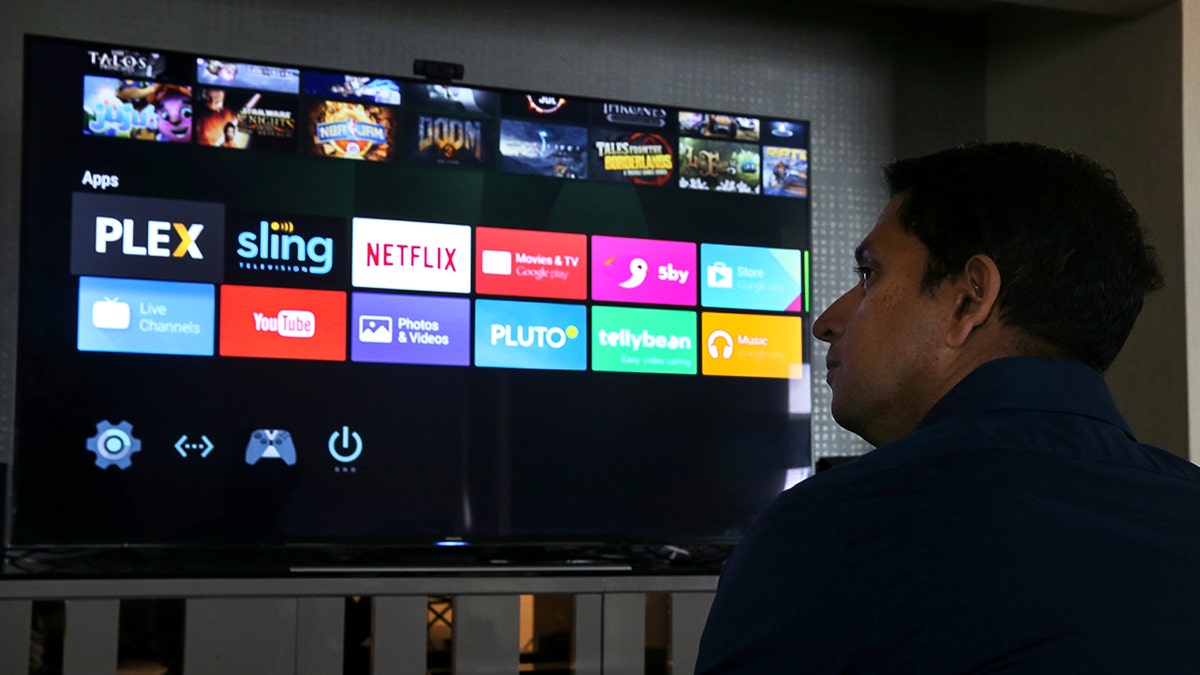
A VPN can help protect your streaming data by encrypting your connection before it leaves your device. (Paul Chinn/The San Francisco Chronicle/Getty Images)
Your device can automatically reconnect to saved networks without you realizing it, which can increase your exposure if those networks are unsecured or impersonated. Turn off auto-connect in your settings to stay in control of when and where you connect.
If you do sign in on a shared device, make sure you fully log out and clear the browser if possible.
Streaming has quietly become one of the biggest data pipelines in your daily life. Most people focus on content, not on what happens behind the scenes. Once you understand how much data moves every time you press play, the case for adding a layer of protection becomes much clearer. A VPN does more than unlock content while traveling. It gives you more control over your privacy, your connection, and your overall experience. That applies just as much on your couch as it does in a hotel room halfway around the world.
CLICK HERE TO DOWNLOAD THE FOX NEWS APP
If you pay for streaming every month, should you also have more control over who can see what you watch and where you can watch it? Let us know by writing to us at CyberGuy.com.
Sign up for my FREE CyberGuy Report
Copyright 2026 CyberGuy.com. All rights reserved.

Officials say a female player was subjected to inappropriate physical contact during a security check.
Published On 5 May 2026
Taiwan sports officials say one of their table tennis players has reported “inappropriate physical contact” during a security check while entering the venue at a major tournament in London.
Taiwan’s Ministry of Sport called for a safe environment for athletes in a statement on Tuesday.
The player has not been officially named, but Taiwan reports identified her as Cheng I-ching after she pledged on social media “to speak out for all female athletes”.
“As athletes, we endure immense physical and mental pressure in pursuit of better performance on the field, and we are also forced to confront various forms of unfair treatment,” she wrote in a statement posted on her social media accounts.
“These are not just my experiences, but challenges faced by countless female athletes around the world. That’s why this time, I’ve chosen to stand up. To speak out for all female athletes. Sports needs more than just equal opportunities; it needs the serious protection of human rights.”
Cheng promised to “continue to strive and never back down” after the incident.
The 34-year-old is Taiwan’s highest-ranked woman at the World Team Championships Finals in the British capital, but she has not played a match since it began on April 28.
“Ensuring all athletes compete in a fair, safe and respectful environment is a fundamental bottom line, and any form of inappropriate physical contact should never occur,” the Ministry of Sports said in a statement to the AFP news agency.
The International Table Tennis Federation (ITTF) said a female player reported the incident during an entry security check at the venue on Saturday and an investigation is under way.
The ITTF said it was “deeply troubled” by the allegation.
“We recognise that the UK is currently operating under heightened security threat levels, which necessitates stringent entry protocols at the venue,” the ITTF said. “However, these protocols must always be executed professionally and appropriately.”
Taiwan’s table tennis association said the incident happened as the women’s team entered the venue “to prepare for competition”.
Team officials lodged a protest with organisers, who apologised and informed them that the security staff member allegedly involved had been removed from duty, the association said.
The Taiwan women’s team, playing as Chinese Taipei, beat South Korea 3-1 on Saturday morning but lost to China 3-0 later the same day. They were defeated 3-1 by Romania on Sunday.
The competition runs until Sunday.