In Mauritania, push to phase out private schools divides opinion | Education

0

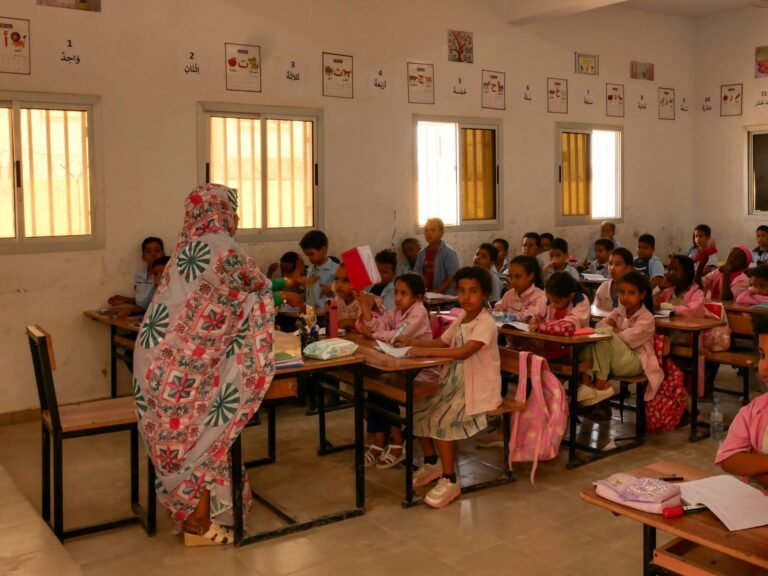
Nouakchott, Mauritania – Moulay Ould Rais waited to pick up his son and daughter from a government-owned school in west Nouakchott’s Sahraoui neighbourhood.

As the closing bell rang at the Abdellahi Ould Nouegued Basic School, streams of pre-teen children rushed out into the hallways with their bulky schoolbags and lunch boxes.

Recommended Stories

list of 4 itemsend of list

It was a Friday, so there was joy in the air as the weekend neared.

Retired engineer Rais, 67, was feeling optimistic for other reasons – he had hope in new changes to the school system.

He backs the government’s decision to phase out private schools in favour of state-run institutions, pitched as a bid to standardise education quality.

Despite protests by some parents and teachers, Rais believes the system will be better for children.

“Everyone will benefit from it,” Rais, who heads the school’s parents’ association, told Al Jazeera. He said he remembers a time when there were only public schools.

He was able to become a civil engineer who worked across West Africa. But when private schools emerged, impoverished families suffered, he said.

“It will bring back a generation like the first generation, where people were united and at peace with one another,” Rais added, as schoolchildren gathered around him, playfully tugging at his white boubou.

Pupils play at closing time at a public school in Nouakchott
Pupils play at closing time at the Abdellahi Ould Nouegued public school in Nouakchott [Shola Lawal/Al Jazeera]

Education in Mauritania often ranks poorly due to low investment in infrastructure and teachers.

The pivot to state-run schools is part of the current administration’s attempt at education reform. And it wants quick results.

But many children, especially in low-income rural areas, are out of school in a country where religious learning was historically prioritised. At least 30 percent of school-aged children are not enrolled in school at all, according to UNESCO.

Of those who enrol, many remain barely literate. About 95 percent of Mauritanian children cannot read or understand texts their peers in other countries would not have a problem with by age 10, the United Nations education agency noted.

Officials, who are now racing to revamp the sect

or by 2030, want to standardise the system while making education affordable. According to the World Bank, 58 percent of the population is too poor to access quality education or healthcare.

However, critics warn that rushing policies will be detrimental.


A knock for private schools

When proposed education reforms were signed off on in 2022, they were welcomed by most of the country’s 4.5 million people.

The policy ushered in free basic education for all children. Previously, only primary-aged children received free education, but the new measure includes middle school.

Education is now mandatory, too. All children must also enrol in primary school by the age of six.

Some children can learn in three local languages – Pulaar, Soninke, and Wolof – belonging to the minority Afro-Mauritanian population, which has long decried marginalisation, alongside Arabic.

But private school owners, teachers, and parents are worried that phasing out their schools will lead to job losses, lower education quality, and add pressure on government resources.

“The changes are too rushed and too sudden,” Meyey Ould Abdel-Wedoud, a teacher at a private school on the outskirts of Nouakchott, told Al Jazeera.

By law, his school must stop admitting new students after 2027.

The government has not announced detailed plans regarding the fate of teachers set to lose their jobs.

“We are going to face limited incomes and high prices,” Abdel-Wedoud said, sitting in his office.

He also leads a national teachers’ union.

School officials exit the Abdellahi Ould Nouegued public school in Noaukchott
School officials exit the Abdellahi Ould Nouegued public school in Noaukchott [Shola Lawal/Al Jazeera]

Already, some primary school classes in his school have been shuttered as part of the plan. As a result, the school is losing approximately 2 million ouguiyas ($5,000) monthly, he said, adding that similar scenarios are playing out across the country.

Many private schools will likely have to shut down in a few years, Abdel-Wedoud warned.

Only private high schools – or lycees, where students complete three more years of senior secondary education – are exempt from the policy.

Mauritania has long focused on the public school system, but authorities opened up the education sector to private schools in 1981 as the numbers of government-funded institutions failed to meet the needs of some pupils. As the number of private institutions grew, however, authorities struggled to regulate them.

It is unclear how many private schools there are in Mauritania but they are credited with helping to increase the number of kids in school. Between 2002 and 2012, for example, private primary schools enrolments went from 12,391 to 71,104 students, according to the World Bank.  By 2010, they accounted for 11 percent of all primary and 26 percent of secondary enrolments.

Although perceived as producing brighter students, detractors say private school curricula are not aligned with the government’s. They typically prioritise the French system, for example, as Mauritania was a former colony. Besides, they argue the quality of teaching is generally low and that some teachers also commonly work in both private and public schools at the same time, limiting the attention they can give to children in each setting.

Government officials have argued that the poorest sectors are excluded from private schooling.

Some schools, like Abdel-Wedoud’s, target low-income earners and charge about $100 per child each term, but others charge up to $1,000 or more.

Abdelwedoud said alternatives could have been explored.

Private school owners proposed a quota system where children from impoverished backgrounds would be allowed to study there for free, but there was never a response, he said.

Rais and his son, Ely Cheikh, pose in the Abdellahi Ould Nouegued public school after classes in Noaukchott
Rais and his son, Ely Cheikh, pose in the Abdellahi Ould Nouegued public school after classes in Noaukchott[Shola Lawal/Al Jazeera]

Fighting a troubled legacy

Mohamed El Saleck Ould Taleb, a public school coordinator at the Ministry of National Education, defended the government’s thinking.

He told Al Jazeera that the reforms are designed to tackle systemic inequalities.

“Everyone will wear the same uniform, sit at the same table, from the south to the north, and education will be the same thing,” the official said.

Located where the Arab world meets sub-Saharan Africa, Mauritania has historically been racially segregated, with the Arab-Berber population having political and economic dominance over the majority Haratin population, an Arabised Black group that was historically enslaved. Slavery was abolished in 1981 and criminalised in 2007.

Afro-Mauritanians, who make up about 30 percent of the population and do not speak Arabic, have also long complained of discrimination based on their languages and their colour.

Geographical divides overlap with social fractures, too.

Afro-Mauritanians are predominantly from the impoverished south of the country, where climate shocks resulting in erratic rainfall and drought have affected farming. Arabic-speaking groups are mainly in the richer coastal regions, which depend on fishing, or the northern regions rich in iron and gold.

Children from the most marginalised groups attend free public schools.

Taleb said the government wanted to level the playing field.

He downplayed the potential for mass job losses among private school employees, saying the number of those affected was not significant compared with the scale of the success expected years down the line.

“Private school teachers will also have the opportunity to apply to public schools, because we are expecting many kids to come,” he added.

A more urgent challenge is getting enough children in rural areas enrolled, he said. The vast but sparsely populated country is peppered with tiny settlements, making it harder for people in the countryside to reach their closest public school.

Abdel-Wedoud, the private school teacher and government critic, said the issue is being politicised. The legacies of division in Mauritania are being overblown, he argued, adding that different ethnic groups have interacted freely for decades.

“It is as if the state is asking for something that already exists,” he said. “It is asking for Mauritanian children to study in one school, while in reality, Mauritanian children are already studying together in private education, across all backgrounds, languages, and social classes.”

Back at the public school in western Nouakchott, Rais finally saw his son, Ely Cheikh, in the chaos of pick-up time.

“We are having this problem of discrimination, of racism, and all of that,” he said. But with the new law, “there will be unity”.

Note: Ely Cheikh Mohamed Vadel contributed to this report


Source link
Access Denied

0

Access Denied You don’t have permission to access “http://hindi.news18.com/cricket/sanjay-manjrekar-gives-advice-to-vaibhav-sooryavanshi-t20-cricket-can-bring-financial-success-respect-still-lies-in-test-cricket-10446804.html” on this server.

Reference #18.2d4adc17.1777975193.446bf4

https://errors.edgesuite.net/18.2d4adc17.1777975193.446bf4

Access Denied

0

Access Denied You don’t have permission to access “http://hindi.gadgets360.com/pc-laptop/how-to-speed-up-slow-windows-11-laptop-10-easy-tips-tricks-improve-performance-boost-pc-hacks-speed-guide-features-11451220” on this server.

Reference #18.50200117.1777968392.41b0042

https://errors.edgesuite.net/18.50200117.1777968392.41b0042

FIFA bans former Guyana official Alves for 5 years over sexual harassment | Football News

0

Former General Secretary Ian Alves found guilty of sexually harassing female staff ​members by FIFA’s Ethics Committee.

FIFA’s ‌independent Ethics Committee has banned former ⁠Guyana Football ⁠Federation (GFF) General Secretary Ian Alves from all football-related activities for five years after ⁠finding he sexually harassed female staff members.

FIFA also fined Alves 20,000 Swiss francs ($25,500) ⁠after determining that he had breached provisions of the FIFA Code of Ethics relating to the protection of physical and mental integrity, ‌abuse of position and general duties.

“FIFA has a strict stance against all forms of abuse in football,” the sport’s global governing body said on Monday.

The decision followed a review of written statements from the victims, documents provided ⁠by the GFF, submissions from ⁠Alves, and other evidence gathered during the investigation.

Alves stepped down from his position in 2024.

The ban came into ⁠force on Monday, when Alves was notified of the terms of the decision, and ⁠the full grounds for the ruling will be communicated within 60 days in accordance with the Code of ‌Ethics, FIFA added.


Source link

Access Denied

0

Access Denied You don’t have permission to access “http://hindi.gadgets360.com/mobiles/iqoo-neo-10-alpine-white-and-asphalt-black-variant-sale-start-know-price-features-news-11451201” on this server.

Reference #18.134adc17.1778013235.19d478c

https://errors.edgesuite.net/18.134adc17.1778013235.19d478c

Access Denied

0

Access Denied You don’t have permission to access “http://hindi.news18.com/news/ajab-gajab/viral-jija-saali-jokes-viral-majedar-trending-funny-comedy-chutkule-desi-funny-jokes-trending-in-hindi-10446475.html” on this server.

Reference #18.490dde17.1778027077.1c529a61

https://errors.edgesuite.net/18.490dde17.1778027077.1c529a61

Iran war: What’s happening on day 67 as Hormuz crisis deepens? | US-Israel war on Iran News

0

The UAE says it intercepted Iranian missiles after a suspected drone attack, with no comment from Iran.

The United Arab Emirates has said its air defences intercepted ballistic and cruise missiles fired from Iran, while a fire was reported at an oil facility in Fujairah after a suspected drone attack. Tehran has not officially commented.

Qatar, Jordan, Saudi Arabia and Kuwait, along with the Gulf Cooperation Council (GCC) and the European Union, have condemned the suspected Iranian strike on the UAE.

The incident comes as tensions rise, with United States President Donald Trump warning Iran would be “blown off the face of the earth” if US Navy ships are targeted in the Strait of Hormuz. Iran had claimed a US naval frigate was hit – a claim denied by the US military.

Here is what we know:

In Iran

  • The Islamic Revolutionary Guard Corps (IRGC) denied that any commercial ships had transited the Strait of Hormuz, after the US military said two US-flagged merchant vessels had passed through the vital waterway under escort.
  • US forces reportedly sank six small Iranian boats that were allegedly attempting to disrupt commercial shipping. This occurred during “Project Freedom”, a US operation designed to reopen the Strait of Hormuz. Iran has denied these claims.
  • State media reported that the Iranian fast boats the US military claimed to have targeted on Monday were not IRGC-affiliated but civilian vessels carrying goods and passengers, and that five innocent people were killed.
  • State media reported that a fire broke out on several commercial ships in a dock in Iran’s ‌southern port of Dayyer.
  • First Vice President Mohammad Reza Aref asserted that managing the Strait of Hormuz remains a “legitimate right” of Iran.
  • Foreign Minister Abbas Araghchi emphasised that the escalating situation makes it “clear that there’s no military solution to a political crisis”.
  • Former US Assistant Secretary of State Mark Kimmitt said Washington and Tehran remain “a long way apart”, but limited progress may be possible if both sides narrow their demands.

In the Gulf

  • UAE hit: The United Arab Emirates said it was targeted by Iranian strikes, including one on its vital Fujairah energy hub that wounded three Indians.
  • Two injured in Oman: Two people were injured in Oman, on its coast along the Strait of Hormuz, when a residential building was targeted, state media reported.
  • US destroyers in Hormuz: The destroyers entered the Gulf as part of a mission to escort ships through the Strait of Hormuz, the US military said.
  • Global condemnation: The alleged Iranian attacks on the UAE have triggered widespread international condemnation from Qatar, Jordan, Saudi Arabia, Kuwait, the GCC and the EU.

War diplomacy

  • Canada stands with UAE: Prime Minister Mark Carney said Ottawa stands in solidarity with the UAE after reported Iranian missile and drone attacks, praising efforts to protect civilians and reiterating a call for de-escalation and diplomacy.
  • UK condemns attacks on UAE: Prime Minister Keir Starmer said the “escalation must cease” after strikes on the UAE, blamed on Iran, adding the United Kingdom would continue to support its Gulf partners.
  • Saudi Arabia condemns attacks: Riyadh denounced the missile and drone strikes on civilian and economic sites in the UAE, as well as a vessel linked to an Emirati company, urging restraint.

  In the US

  • Trump issued a warning, saying Iran would be “blown off the face of the earth” if it targeted US vessels in the strait, and cautioned that Iran “better hope” the current ceasefire holds.

In Israel

  • An Israeli military official said the army remained on high alert and was monitoring the situation after the US destroyed Iranian boats and shot down missiles.

In Lebanon

  • Lebanese President Joseph Aoun said a security deal and an end to Israeli attacks were needed before any meeting with Israeli Prime Minister Benjamin Netanyahu, sought by Washington.
  • Hezbollah said its forces clashed with Israeli soldiers in southern Lebanon near the border, where troops are still operating, despite a ceasefire since April 17.

Global markets

  • Oil prices soared amid the renewed conflict, with the Brent crude contract for July delivery jumping more than 5 percent soon after the attacks on the UAE.


Source link

Access Denied

0

Access Denied You don’t have permission to access “http://hindi.news18.com/videos/ajab-gajab/the-girl-wreaked-havoc-at-the-haldi-ceremony-dancing-to-a-bollywood-song-and-it-went-viral-instantly-10446809.html” on this server.

Reference #18.50200117.1777967493.4138f2c

https://errors.edgesuite.net/18.50200117.1777967493.4138f2c

‘What comes next?’: Fear grips Pakistani families of Somali piracy victims | Crime

0

Islamabad, Pakistan – When Ayesha Ameen was leaving her house last week for a chore, her three-year-old daughter Zimal tugged at her sleeve and asked if she was finally going to the airport to pick up her father.

“How do you tell a three-year-old that her father is held captive and cannot come home?” Ayesha, 26, told Al Jazeera. “How can anybody answer that?”

Recommended Stories

list of 4 itemsend of list

Zimal’s father, Ameen bin Shams, 29, has been held hostage on board an oil tanker off the coast of Somalia for nearly two weeks. He is among 10 Pakistani sailors in the 17-member crew of the MT Honour 25, seized by Somali pirates on April 21. Besides the Pakistani nationals, the ship’s crew consists of four Indonesians – including the MT Honour’s captain – as well as one each from Sri Lanka, Myanmar and India.

Ameen’s daughter asks about him every day. His four-month-old son, Rahim, born on December 24, two weeks after Ameen left on his first merchant navy contract, has never met his father.

‘It was his dream’

Ameen had spent years working at a shipyard in Karachi before securing his first posting on board a merchant vessel. He joined the MT Honour 25 on December 9 through a Karachi-based crewing agency, serving as a fitter. The family lives in Malir Khokhrapar, a lower-middle-class neighbourhood of Pakistan’s biggest city.

The months before the hijacking were the happiest Ameen had been, Ayesha said. He would call at night, sometimes in the morning, often on video, showing her the sunrise over open water. He sent clips of dolphins, shared what he ate, where he sat, and what the ship looked like at different hours of the day.

“He often said: ‘This is a good life, I am quite enjoying this,’” she told Al Jazeera. “It was his dream to be part of the merchant navy.”

Ayesha’s sister’s wedding is on May 9. Ameen had been contributing from his earnings, more than he had ever made at the shipyard in Karachi. The family would go shopping and send him photographs of clothes and gifts. He would reply with excitement, even though he knew he would not be able to attend.

“He was glad the family was doing well,” Ayesha said.

One day in late April, Ameen mentioned he was filling out a next-of-kin form, a standard document for sailors in case something goes wrong at sea. Ayesha told him to stop, not to say such things, not to worry.

The next day, the ship was hijacked.

Ameen bin Shams celebrating his daughter Zimal's third birthday. [Courtesy Ayesha Ameen]
Ameen bin Shams celebrating his daughter Zimal’s third birthday [Courtesy Ayesha Ameen]

‘He was crying’

On April 23, two days after the capture of the vessel, a call came through. Ameen told Ayesha he was in a rush, panicked, as he disclosed the ship was hijacked. He said he loved his family. He asked her to give his love to Zimal and to Raheem, the son he had never seen.

“He was crying,” she said.

Families say pirates allowed brief, monitored calls in the days immediately after the capture. Several crew members managed to pass messages. Then contact thinned and, for some, stopped altogether.

Ayesha heard from him once more the following week. The call lasted three minutes. He asked her to contact civil society groups, charities, anyone who could push the government to act. In that last call, Ameen used the captain’s phone to speak to his father, said he was safe, and asked the family to pray for his return.

Also from Karachi, 23-year-old Muzammil Ahmed Ansari learned of his father’s captivity three days after the hijacking. Mehmood Ahmed Ansari, 55, has spent three decades at sea, working across ships, companies and oceans.

On this voyage, he was serving as third engineer, responsible for the engine room. He had joined from Dubai on January 17, with his contract due to end in July.

“He sent a voice note,” Muzammil told Al Jazeera. “He said, ‘We are hijacked, reach out to the company, to people, to the government.’ He said there were pirates on the ship, all armed. He panicked, but he said, ‘Don’t worry, ask the government to deal with it.’”

Nothing in those 30 years had prepared the family for this.

The days now blur into one another for them. “When we wake up in the morning, we wonder what news we will get,” Muzammil said. “When we sleep, we wonder what news will come the next day. It is like limbo. Not knowing what comes next.”

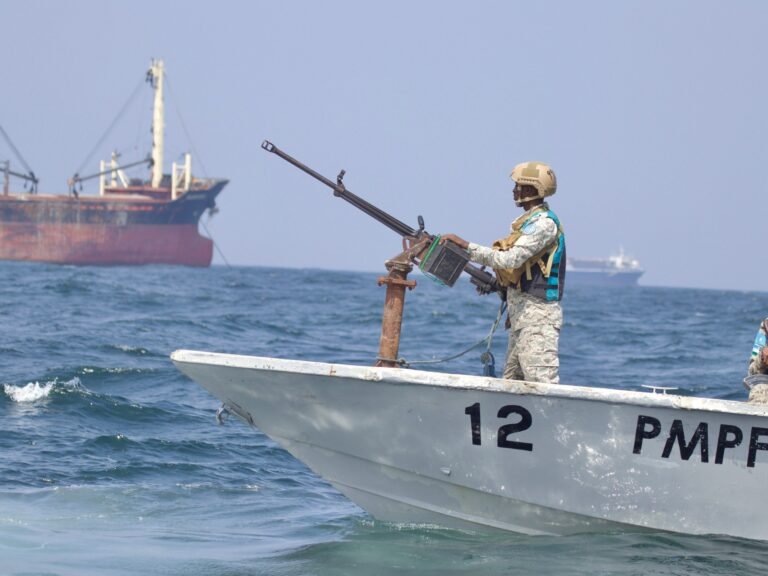
The MT Honour 25, a Palau-flagged product tanker carrying approximately 18,000 barrels of oil, was seized on April 21 about 30 nautical miles (equivalent to about 56km) off Somalia’s semi-autonomous Puntland region.

Six gunmen initially boarded the vessel; reinforcements later brought the number of pirates to at least 11. A Japanese Maritime Patrol aircraft from the Combined Maritime Forces confirmed the vessel’s location inside Somalia’s territorial waters, and EUNAVFOR Operation Atalanta deployed at least two warships to the region on April 25. Those ships remain in the vicinity of the MT Honour, according to the operation’s official statement.

The tanker is now anchored off the coast of Eyl in Puntland, Pakistan’s embassy in Djibouti said.

The vessel is operated by Wharf Chartering, registered in Indonesia, according to Pakistani media reports. Pakistan’s Ministry of Foreign Affairs said last week the ship is owned by a Puntland-based businessman.

Families say pirates have instructed crew members to appeal to their governments, insisting demands will be communicated directly to authorities. No ransom figure has been confirmed by Pakistani or Somali officials.

Al Jazeera contacted Pakistan’s Foreign Ministry and the Ministry of Information but received no response.

Conditions on board have deteriorated, according to families and the Ansar Burney Trust, a Karachi-based human rights organisation that says it has been in contact with the pirates.

Food and water supplies have run low. The ship’s fuel is reportedly near exhaustion. Some crew members have run out of essential medication. A video circulating on April 28 showed about a dozen people confined to a cramped cabin with no proper sleeping arrangements.

Some of the crew members of Honour 25 aboard the ship. Ameen bin Shams second from right in the front row. Mehmood Ansari is third from left standing. [Courtesy Muzammil Ahmed Ansari]
Several crew members of Honour 25 on board the ship before their vessel was hijacked. Ameen bin Shams is second from right in the front row. Mehmood Ansari is third from left standing [Courtesy Muzammil Ahmed Ansari]

‘They are busy saving the world’

Pakistan’s Foreign Office spokesperson Tahir Andrabi said on April 30 that Islamabad was in contact with Somalia’s Ministry of Foreign Affairs, which had provided written assurances it was monitoring the situation and engaging with pirates and Puntland authorities. Pakistan’s embassy in Djibouti, accredited to Somalia, had confirmed the vessel’s location and the crew’s status.

Andrabi pointed to what he called a “silver lining” – the ship’s owner is from Puntland, and the vessel is anchored in familiar waters.

“Based on this discussion with the Somali Ministry of Foreign Affairs, we have fair reason to believe that our crew members are safe and secure, and the pirates and the owner of the ship are in contact,” he said.

At a news conference at the Karachi Press Club the same day, families of the hostages, some holding photographs of the missing men, children standing beside them, called for more direct government engagement. They asked for a high-level committee to be formed and for a focal person to provide regular updates.

For Ayesha, the response has felt hollow.

“What has been most frustrating is how callous, how heartless the government has been,” she told Al Jazeera. “Not a tweet. No video. No message. Absolutely nothing – not even verbal support. They are busy saving the world from a war, but they cannot reach out to their own citizens in this hour of need. We cannot expect help from outsiders. We are Pakistanis, who else do we look to if not our own government?”

She was referring to Pakistan’s ongoing mediation efforts between the United States and Iran, following the US-Israeli attacks that began on February 28. Pakistan helped broker the ceasefire initially, on April 8, and has subsequently been holding talks with both parties to bring them back to the table in order to sign a peace deal.

Muzammil was more restrained, but equally pointed. “Nothing from the ministry. Nothing from the federal government. Nothing from them on social media. We held a press conference; all the mainstream media was there but it did not get much coverage,” he said.

A resurgence taking shape

The Honour 25 is not an isolated case. At least three vessels have been seized off Somali waters since April 20, marking the most concentrated burst of piracy in years.

Captured vessel MT Honour as seen from the EUNAVFOR Operation ATALANTA's Japanese Maritime Patrol aircraft from the Combined Maritime Forces. The plane flew over the area confirming the location of the HONOUR 25 inside Somalia’s territorial waters. [Courtesy EUNAVFOR]
Captured vessel MT Honour 25 as seen from the EUNAVFOR Operation Atalanta’s Japanese Maritime Patrol aircraft from the Combined Maritime Forces. The plane flew over the area, confirming the location of the vessel inside Somalia’s territorial waters [Courtesy EUNAVFOR]

On April 26, the cargo ship Sward was seized six nautical miles (11km) northeast of the Somali town of Garacad. Its 15-member crew of Syrian and Indian nationals was taken captive. The United Kingdom Maritime Trade Operations (UKMTO) has raised its threat level for Somalia’s coast to “substantial”.

The conditions for a resurgence have been building. Anti-piracy patrols that had suppressed Somali hijackings for more than a decade were diverted to the Red Sea in 2023 to counter Houthi attacks on shipping in the Bab al-Mandeb Strait.

The US-Iran war and the closure of the Strait of Hormuz have stretched those deployments further. Brent crude prices have risen by more than 50 percent since the start of the war, now trading above $110 per barrel, making fuel tankers like the Honour 25 more valuable targets.

Honour 25 itself had been caught in these shifting currents. After loading oil and heading towards the United Arab Emirates, it attempted to transit the Strait of Hormuz before turning back. It was bound for Mogadishu when the pirates struck.

For Ameen’s wife, Ayesha, the past two weeks have turned into what seems like unceasing torture. “It felt like he was caught between a rock and a hard place,” she told Al Jazeera. “On one end was the war. On the other, there was what ended up happening.”


Source link

‘We will be very happy if a woman is elected the next UN chief’, said China

0

China openly supported the appointment of a woman for the next Secretary General of the United Nations, saying that it would be very happy if this time a woman occupies this top post. In the 80 year history of the United Nations, no woman has yet been able to reach this position.

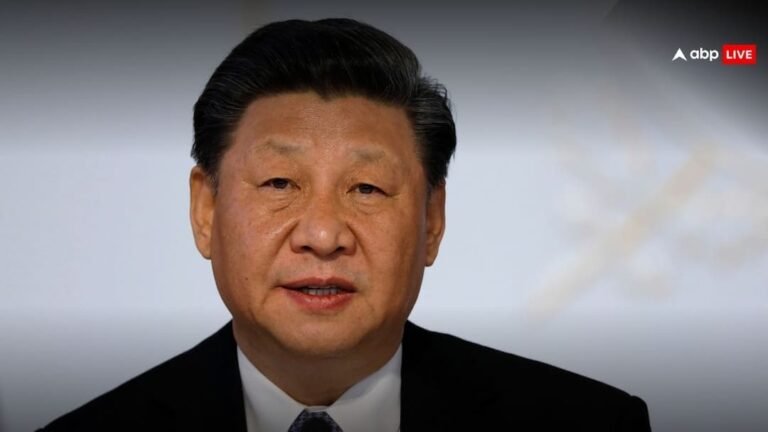
China’s Permanent Representative and Ambassador to the United Nations Fu Kong said on Monday (May 4, 2026), ‘We would be very happy to see a woman as Secretary General. It has been 80 years – if this time a woman can become the General Secretary, China will welcome it.

The process of electing the next Secretary General of the United Nations has started. There are currently four candidates in the race for this post, including two women. The first woman is Michelle Bachelet, United Nations High Commissioner for Human Rights, and the second woman is Rebecca Grinspan, Secretary-General of the United Nations Conference on Trade and Development (UNCTAD).

Male candidates include International Atomic Energy Agency (IAEA) chief Rafael Grossi and former Senegalese President Macky Sall. Last month, all four candidates presented their vision to UN member states and civil organizations and why they are best suited for the top post.

When Ambassador Fu Kong was asked if China had a favorite candidate, he said with a smile, ‘Even if there was, I wouldn’t tell you.’ However, he definitely made it clear that China has some priorities. Fu said that the United Nations is currently going through a very delicate period and in such a situation, there is a need for a strong Secretary General who is committed to multilateralism, strengthens the role of the United Nations and does not blindly follow the policies of any one superpower.

He also said that China wants the next Secretary General to be a supporter of the three basic pillars of the United Nations – peace and security, development and human rights. The second five-year term of the current UN Secretary General Antonio Guterres will be completed in December 2026. He took over as the ninth Secretary General of the United Nations in 2017.

The Secretary General is appointed by the 193-member General Assembly on the recommendation of the Security Council. The five permanent members of the Security Council – China, France, Russia, Britain and America – have the right to veto. In September last year, the United Nations General Assembly passed a resolution expressing “regret” that till date no woman has become Secretary-General and urged member countries to give priority to women candidates.

China on Friday took over the presidency of the Security Council for the month of May. Ambassador Fu said that efforts will be made to give a concrete shape to the process of selection of the Secretary General under the chairmanship of China. He said, ‘We will start the consultation on this at the beginning of this month and hopefully the selection process will start completely by June-July.’ Fu indicated that more candidates could also join the race for the post of UN Secretary General in the coming weeks.