The internal dispute in the health department of Shamli has now come to the fore. Doctors created a ruckus in the CMO office over the issue of thyroid testing of pregnant women in the Community Health Center (CHC). During this time, the gynecologist has also made serious allegations against the CMO like indecent behavior and illegal extortion. There has been a stir in the health department after the matter came to light.
It is being told that a few days ago, gynecologist Dr. Vijendra Kumar, posted at the Community Health Center of Shamli, had raised the demand to start thyroid testing of pregnant women in all the CHCs of the district.
The doctor says that thyroid testing is very important during pregnancy. If testing is not done on time, it can affect the health of both the mother and the child in the womb.
Doctors say that this facility is not available in many places, due to which pregnant women are not able to get the necessary tests. The doctors had decided to talk to higher officials regarding this problem.
Doctor reached to meet CMO regarding demand
In this connection, Medical Superintendent of CHC Shamli, Dr. Deepak Chaudhary and Gynecologist Dr. Vijendra Kumar had reached the office of CMO Dr. Anil Kumar to meet him. Doctors say that they had come up with an issue related to public interest and wanted the facility of thyroid testing to be started in all the CHCs of the district.
However, it is alleged that during the conversation the CMO did not listen to him carefully and behaved rudely with him and asked him to leave the office. Angered by this, the doctors started a ruckus in protest. The atmosphere in the office premises remained tense for some time.
CMO accused of red light and illegal recovery
Gynecologist Dr. Vijendra Kumar has made another serious allegation against the CMO. He says that the CMO roams around the district with a red beacon on his vehicle against the rules. He also alleged that illegal recovery is taking place in the department, due to which corruption is increasing.
Dr. Vijendra Kumar also said that a news was published by the CMO in a newspaper that thyroid testing of pregnant women is being done in the district, whereas in reality this facility is not available in many CHCs.
Controversy increased in health department
After this entire incident, the dispute within the health department has come to the fore. Doctors say that they were only raising demands related to public interest, but instead of listening to them, they were misbehaved.
Now the discussion regarding this matter has intensified in the department and it is expected that it may be investigated at a higher level. At the same time, questions have also started being raised regarding the provision of health services in the district.
{“_id”:”69b4eb06a6fe01627204228b”,”slug”:”woman-s-body-was-found-hanging-from-a-tree-bodies-of-her-brother-in-law-and-innocent-daughter-were-lying-below-2026-03-14″,”type”:”feature-story”,”status”:”publish”,”title_hn”:”UP: Woman’s body found hanging from a tree, Dead bodies of brother-in-law and innocent daughter were lying below; some unanswered questions”,”category”:{“title”:”City & states”,”title_hn”:”city-and-states”}}
Samvad News Agency, Khurja (Bulandshahr)
Published by: Akash Dubey
Updated Sat, 14 Mar 2026 11:03 AM IST
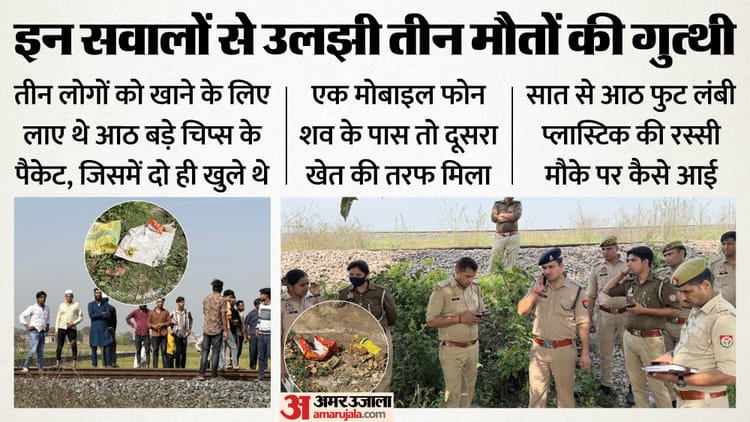
The incident took place in Nehrupur village of Khurja. Two broken mobile phones and food items were found on the spot. All three were residents of West Bengal. Police suspect suicide. Teams are involved in the investigation.
Three died in Bulandshahr
– Photo: Amar Ujala
Expansion
The body of woman Devi Sarkar (32) was found hanging from a tree along the railway line in Nehrupur village of Khurja Kotwali Nagar area of Bulandshahr. The bodies of his five-year-old daughter Sawanti and brother-in-law Saral Sarkar (28) were lying below. Police is busy solving the mystery of murder or suicide. The woman’s husband is being detained and interrogated. His role is doubtful. Chips, cold drink, water bottle and two broken phones were found at the incident site. Police and forensic team investigated on the spot.
In its current phase, the Israeli-US war against Iran and its proxies has become a proving ground for two competing concepts of military escalation, each of which threatens to become a trap.
On one side, Donald Trump and Benjamin Netanyahu have failed thus far in their ill-defined and shifting strategic aims. Despite killing Iran’s supreme leader, Ali Khamenei, and other key leaders in the opening salvo of the campaign, the clerical regime remains and Iran’s stockpile of highly enriched uranium is unsecured. Airstrikes are intensifying and hitting a greater number of targets.
Tehran’s counter is a “horizontal escalation”, one long prepared by the regime, that is intended to widen the conflict geographically, with strikes on the Gulf states, and also in terms of the costs to Washington and the global economy, not least in energy supplies.
The coming days and weeks are likely to reveal important lessons,not least about the potency of US military power in an increasingly fragile and multipolar world.
Experts point in particular to the risks of an escalation trap – whereby the attacker is drawn into an ever more complex, protracted and costly conflict than envisaged at the outset – from a widening disparity in the US-Israeli campaign between the tactical and strategic level. Put simply, the tactical level involves specific military tasks – such as airstrikes hitting their intended targets – where the campaign has been successful. The strategic level defines whether the political and national security aims of the war are being achieved and at what cost.
“The are several stages to the escalation trap,” said Robert Pape, a US historian who has studied the limitation of air power and has advised a number of US administrations.
Ground crew work on a US B1 bomber at RAF Fairford in England. Photograph: Phil Noble/Reuters
“What we saw with the initial attack was tactically almost 100% success,” he said. “The problem is that when that doesn’t lead to strategic success … you get to second stage of the trap.
“The attacker still has escalation dominance, so there is a doubling down, which then moves up the escalation ladder and that still does not lead to strategic success. Then you reach stage three, which is the real crisis, where you are contemplating far riskier options. I would say we are stage two, and on on the cusp of stage three.”
He said the Trump administration had become mesmerised by the initial attack and had an “illusion of control” based on the accuracy of its weapons. All of this has pushed Tehran towards its own model of escalation, one with a far wider global economic and political impact, Pape and other critics say.
By targeting the Gulf states and shipping in the strait of Hormuz, Iran has demonstrated it can escalate the costs of the war for Washington far beyond its military capabilities to meaningfully counter the US-Israeli attack directly.
Iran’ strikes “are designed to create wedges between the US and the Gulf states by in turn creating wedges between the Gulf states and their societies,” Pape said.
A Thai‑flagged vessel on fire in the strait of Hormuz on 11 March. Photograph: Royal Thai Navy/EPA
“They are forcing the publics in the Gulf to ask: ‘Why are we paying the price of a war that appears driven by expansionist Israeli policies?’”
Israel has signalled another escalation. Its defence minister, Israel Katz, said on Thursday that he had ordered the military to prepare for expanding operations in Lebanon, where it is fighting the Iran-backed Hezbollah, and that it would “take territory” if Hezbollah rocket fire did not stop.
Robert Malley, a former US envoy to Iran and lead negotiator in the nuclear talks with Tehran, said how the US proceeded in the conflict – and what level of escalation or de-escalation was adopted – was likely to be defined less by clearly delineated strategic considerations than by Trump’s psychology.
“A some point, I assume there will be an exit ramp, but I could imagine the escalation reaching levels we really wouldn’t have contemplated even a month ago … troops on the ground, going after basic infrastructure, taking over parts of Iran, working with Kurdish or other ethnic groups. All of that is escalatory in a different way.
A sniffer dog searches for survivors after a US-Israeli strike on a building in Tehran. Photograph: Majid Asgaripour/Reuters
“But that could trigger reactions on the Iranian side, and then who knows what happens. I wouldn’t be shocked if we saw terrorist attacks against soft targets, soft, quote-unquote, American targets. If that were to happen, whether it was directed by Iran or not, who knows how the president then reacts?
“But at this point, what we should fear is that the escalatory ladder is the one that Trump is most comfortable on, because I don’t think the Iranians are going make life any easier for him. I don’t think they’re going to offer him the victory on a platter that he wants and say: ‘Okay, we stop shooting.’”
Jack Watling of the Royal United Services Institute argues that the trajectory of the conflict is being driven by a series of debates: between US defence policy professionals and Trump’s inner circles; between the US and Israel; and between political and military echelons in Iran, not least the Islamic Revolutionary Guards Corps seeking revenge.
“There is a view in the US strategic community, if not in Trump circles, that sees a risk of state-on-state conflict with China in the near future,” he said. From that point of view there has been a desire in the US to avoid the risk of other simultaneous threats and conflicts – involving Russia, Venezuela and Iran – and this has led to a split between those who envisaged the war as a narrow set of achievable objectives to degrade Iran, and Trump’s desire for “coercive control” over the country’s future.
For Iran, he said, the pattern of retaliation in the Gulf was not simply about reciprocal strikes but also re-establishing deterrence in the region. He cautioned that if Iran struggled to maintain its current intensity of missile and drone strikes, it would not necessarily mark the end of Tehran’s horizontal escalation if it transitioned to a longer-term threat against shipping through the strait of Hormuz.
The US author and foreign affairs specialist Robert D Kaplan pointed to another risk, which, while not immediately escalatory, could lead to the same end point – “the slippery slope of incrementalism”.
“If a civil war, or something akin to it, breaks out in Iran, the [Trump] administration may feel compelled to send special forces and advisers to aid one side,” he wrote in Foreign Affairs.
“And the risks of escalation spiral from there. The war in Vietnam took years to evolve into a middle-sized war … The situation in Iran might follow a similar trajectory.”
Genes capable of creating antibiotic-resistant superbugs have been detected in the UK’s largest lake, which supplies drinking water to about 40% of Northern Ireland.
Testing of water from Lough Neagh, which has a surface area 26 times bigger than Windermere, found genes resistant to a wide range of antibiotics, including carbapenems – drugs reserved for life-threatening infections when all other treatments have failed.
The discovery comes as deaths linked to antibiotic-resistant infections are rising worldwide. Nearly 400 resistant infections are reported each week in England, with deaths linked to them reaching an estimated 2,379 in 2024, according to UK Health Security Agency data.
The World Health Organization (WHO) describes this antimicrobial resistance (AMR) as “one of the most urgent, complex and frightening health challenges of our time”.
Samples taken by Watershed Investigations and the Guardian found resistance genes spanning multiple antibiotic classes, from common penicillins to last-resort carbapenems, as well as quinolones, macrolides, aminoglycosides and cephalosporins, which are used to treat pneumonia and other serious infections. Genes resistant to tetracycline, widely used in livestock, were also present.
“Carbapenems are known as the last-line-of-defence antibiotics because they are only used when other treatments have failed,” said Will Gaze, a professor of microbiology at the University of Exeter. “If pathogens are resistant to the carbapenem antibiotics, they’re resistant to many others too.”
Samples from a designated bathing water area on the lough were also affected. Gaze said: “If a swimmer swallowed 30ml of the lough water, they’d get a pretty good exposure to carbapenem-resistance genes, but we don’t know what impact that has on the gut microbiome or risk of infection.”
Alongside the resistance genes, markers of human, cow and pig faeces were detected in the water. Sewage and livestock slurry create ideal conditions for superbugs, flushing pathogens, antibiotic residues and resistant bacteria into waterways where they can mix, multiply and spread.
“Sewage and livestock manures can contain pathogens that can cause serious infections,” said Gaze. “If those organisms are carrying resistance genes, they’re much harder to treat.”
Sewage and slurry pollution is widespread across the UK. In Lough Neagh it has fuelled vast toxic algal blooms, visible from space, that suffocate wildlife and help spread antibiotic resistance. Despite various environmental protections, the lake is now in such poor health that campaigners recently held a mock funeral for it.
Northern Ireland’s Department of Agriculture, Environment and Rural Affairs (Daera) minister, Andrew Muir, said more than 20m tonnes of untreated sewage spilled into the country’s waterways each year. About 30% of Northern Ireland Water’s storm overflows spill raw sewage into Lough Neagh, 106 directly and 618 indirectly via rivers.
A build-up of algae at Toome Lock, at the lough’s northern tip, in September last year. Photograph: Rory Carroll/The Guardian
But the scale of the problem may be even greater. A water industry expert warned that monitors were being installed on the water company’s storm overflows but not at outfalls from wastewater treatment works, where larger volumes can enter waterways unchecked.
“Much more raw sewage is getting into rivers and lakes than the water company estimates imply,” the expert said. “Forty per cent of Northern Ireland are drinking water from a fetid pond filled with bacteria from human and animal waste, and now, unsurprisingly, there are AMR genes.”
Yet, even treated sewage poses a risk. Davey Jones, a professor of environmental science and public health at Bangor University, warned: “Just because wastewater’s treated, it doesn’t mean it’s safe.”
“[Sewage overflows] are really bad, but they’re not always discharging and can be diluted, whereas AMR genes are pumping out every single day through treated sewage.”
He described sewer networks as a “mega-network of an epic breeding ground” for resistant microbes, and called for better treatment technologies at wastewater plants.
However, the Northern Ireland Fiscal Council, a non-departmental public body, said the company lacked sufficient funding for the scale of wastewater investment required and was forced to prioritise drinking water instead. As a result, Northern Ireland Water is spending public money trying to clean up pollution caused by its own infrastructure.
A Northern Ireland Water spokesperson acknowledged “decades of underinvestment”, saying the company had been left with “very limited scope for upgrades” and that only a “permanent, sustainable investment plan” would close the long-term funding gap.
In the meantime, “the consequences are restrictions on development, increased pollution risk and worsening pressure on the environment”, they said. “Stringent targets” to reduce pollution incidents are being introduced and new monitoring equipment is being installed to track storm overflows in the Lough Neagh catchment, they added.
Sewage is only half the story, however. Livestock slurry runs off farmland, feeding algal blooms and flushing antibiotics, pathogens and resistance genes into the lake.
The pressure from farming has intensified in recent years. Since a government policy promoting intensive agriculture was introduced in 2013, pig numbers in Northern Ireland have risen from 517,075 to 744,643, while poultry numbers have jumped from about 19.5 million to 25.8 million. There are now approximately 1.6 million cattle and 1.8 million sheep in the country.
Jones described cattle as “pathogen bioreactors on four legs”, arguing that streams should be fenced off to prevent animals defecating directly into waterways, and that farmers must stop spreading slurry at the wrong time of year. “I’ve seen people doing it because their slurry tanks are full and they’ve got to get rid of the stuff,” he said.
A recent study found E coli in every sample of cattle manure tested.
Lough Neagh, pictured near Ballyronan marina in February 2024. Photograph: Alexander Turner/The Guardian
Progress has also been hobbled by governance failures. The Office for Environmental Protection watchdog found that Northern Ireland lacked an environmental regulator free from government influence.
A source within Daera described collapsed morale inside the Northern Ireland Environment Agency. “They’re not allowed to talk, to breathe, to do their jobs. They’re not supposed to prosecute agriculture or take Northern Ireland Water to court, despite so many wastewater works being beyond capacity.”
Northern Ireland Water has largely avoided prosecution since 2007, when an agreement was signed limiting regulators’ ability to pursue the company, though Muir withdrew that agreement on 3 March this year.
Muir has also attempted to establish an independent environmental regulator, but the proposal has been blocked at Stormont by the Democratic Unionist party (DUP). The Daera source alleged that agriculture held significant political influence, with many farmers forming part of the DUP’s support base.
“Antimicrobial resistance is an urgent global challenge and evidence has been found in Northern Ireland’s aquatic environments, including Lough Neagh,” said Muir, adding that there were plans for more testing. “Restoring and protecting the ecological health of Lough Neagh cannot be overstated and work is under way on the Lough Neagh action plan.”
Overuse of antibiotics in both people and livestock underpins the increase in resistance.
In an attempt to tackle it, the UK government has a target to reduce their use in humans by 5% by 2029 from a 2019 baseline. NHS prescription of antibiotics fell slightly between 2019 and 2024, but private prescriptions more than doubled over the same period, pushing overall primary care use up 10.7%, with 22% of all antibiotics now dispensed privately. Northern Ireland has the highest rate of antimicrobial prescribing in the UK.
Ruth Chambers, a senior fellow at the thinktank Green Alliance, said the situation had “all the ingredients to be a perfect storm for the health of Northern Ireland’s people and environment” and called for an independent environmental protection agency to be fast-tracked.
Natalie Sims, a policy adviser at the Royal Society of Chemistry, warned that the UK risked falling behind the EU, which is introducing laws requiring countries to monitor AMR in wastewater. “We still understand far too little about how the aquatic environment contributes to the spread of AMR,” she said. “Without robust environmental data, we risk missing a major part of the problem.”
Without urgent action, the WHO warns, drug-resistant infections could claim 39 million lives worldwide by 2050 and impose an annual economic burden of up to $412bn (£307bn).
Girls did a tremendous dance on the song ‘Crazy Kiya Re’, showed off their moves by posting BTS video!
Dance videos often go viral on Instagram. Recently, a BTS video of dance video of some girls is also going viral, in which they are dancing on the song ‘Crazy Kiya Re’, in which Aishwarya Rai Bachchan and Hrithik Roshan were seen. His performance looks amazing and because of this he is being praised a lot. This video has also received 15 lakh views. The video has been posted on an Instagram account named @dancingwithanj. (Note: If the user has any objection to the use of this video, he can contact News18 Hindi for its removal.)
To add News18 as your favorite news source on Google click here Do it.
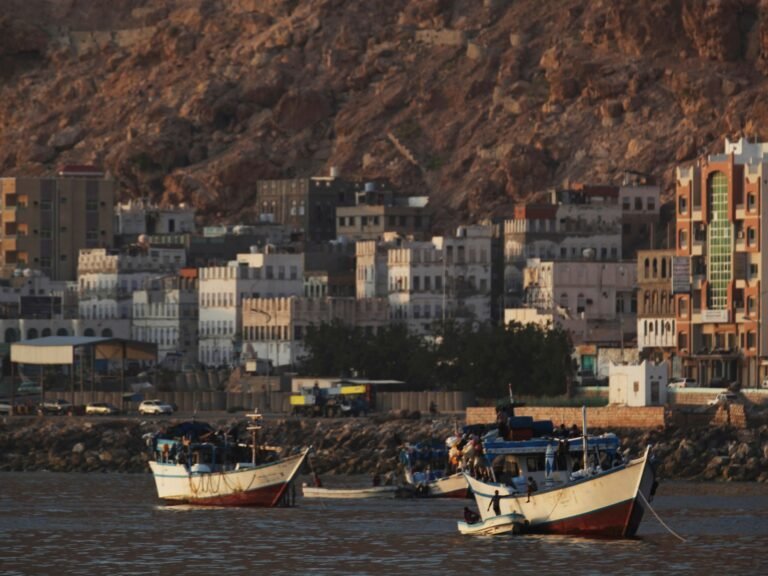
Mukalla, Yemen – A reported decision to impose thousands of dollars in fees on shipping headed for Yemen has experts worried that the price of imported goods and food will increase in the war-torn country, as it starts to feel the economic impact of the United States and Israel’s conflict with Iran.
Local traders and officials have said that international shipping companies informed importers earlier this month of the imposition of new fees of about $3,000 on each container bound for Yemen, described as “war risk” fees. The surprise move prompted government officials to scramble to assess and address its potential repercussions.
Recommended Stories
list of 3 itemsend of list
Because Yemen imports nearly 90 percent of its food and other essential commodities, economists and humanitarian organisations warn that the rise in shipping and insurance costs could quickly translate into higher prices for fuel, food and other goods, further worsening an already dire humanitarian situation.
Mohsen al-Amri, transport minister in Yemen’s internationally-recognised government based in the southern city of Aden, said he had instructed that the fees not be paid by ships already docked at Yemeni ports or those bound for the country, insisting that the ports remain safe.
“Our ports are far from the areas of geopolitical tension in the Gulf and the Strait of Hormuz, making the imposition of ‘risk’ fees on shipments to these relatively safe areas unjustified from both operational and security perspectives,” he said in a social media post last week.
Al Jazeera has reached out to shipping companies to confirm details of the fee, but has yet to receive responses.
For more than a decade, Yemen has been gripped by a bloody war between the Saudi-backed government, based in Aden, and the Iran-aligned Houthi movement, which controls the capital, Sanaa. The conflict has killed and wounded thousands of people and displaced millions, creating what the United Nations once described as the world’s worst humanitarian crisis. Hostilities have significantly declined since April 2022, when the warring parties agreed to a temporary United Nations-brokered truce.
‘High-risk’
Abdulrab al-Khulaqui, deputy chairman of the Yemen Gulf of Aden Ports Corporation, said Yemeni ports have long been classified as high-risk, prompting shipping companies to impose war-risk surcharges. These can reach about $500 per each 20-foot container and $1,000 per each 40-foot container, on top of regular shipping costs.
Al-Khulaqui said that the $3,000 fee now being demanded was “very high and unusual”, but was justified by shipping companies because they regard Yemeni ports as unsafe, despite their distance from Iran.
Although the Houthis are allied to Iran and previously attacked shipping in the Red Sea following Israel’s genocidal war on Gaza, the Yemeni group has yet to intervene in the US-Israel-Iran conflict. Other Yemeni parties are also not involved, making Yemen one of the few regional countries yet to see any violence related to the fighting.
In addition to barring local traders from paying the new charges, the Yemeni government is considering other measures to pressure shipping companies to cancel the fees, including threatening to stop vessels belonging to those companies from docking at Yemeni ports. Authorities may also allow traders to contact exporters directly in countries of origin to negotiate any additional charges.
The new surcharges come as the United Nations has again sounded the alarm over Yemen’s worsening humanitarian situation, saying nearly 65.4 percent of the population – about 23.1 million people – will require urgent humanitarian assistance and protection services this year. This marks an increase of roughly 3.5 million people compared with 2025.
“Yemen continues to face an escalating food security crisis entering 2026,” the World Food Program said in its February Yemen Food Security Update, released on March 5. “January data revealed that 63 percent of households nationwide are struggling to meet their minimum food needs, including 36 percent facing severe food deprivation.”
Bypassing Yemen’s ports
In addition to rising insurance fees on shipments to Yemen, the war in Iran and potential disruptions in the Strait of Hormuz could cut vital supply routes from regional hub ports such as Jebel Ali in the United Arab Emirates.
Mustafa Nasr, head of the Studies and Economic Media Center, told Al Jazeera that shipping companies may begin seeking alternative hub ports to deliver goods to Yemen, which could increase costs and cause delays.
“The closure of Jebel Ali port would force shipping lines to seek alternative ports that may be farther away and involve significantly higher transportation costs,” he said.
Nabil Abdullah Bin Aifan, manager of the government-run Maritime Affairs Authority in Hadramout province and a maritime researcher, said most goods arriving at Mukalla port – the province’s main seaport – are transported on wooden dhows from Dubai.
He said that if disruptions occur in the Strait of Hormuz, traders may turn to alternative regional hub ports such as Salalah in Oman or Jeddah in Saudi Arabia.
“Large ships come to Dubai to unload their containers, and traders then unload the goods from the containers and load them onto those primitive ships, which have no insurance,” Bin Aifan told Al Jazeera.
For now, wheat shipments from Ukraine and goods transported from China to Yemen may see price increases due to rising insurance costs, while products imported from Gulf countries could disappear from the market.
Shipping lines may also consider routing cargo through the Cape of Good Hope rather than the Gulf, Bin Aifan said.
“Even before the recent developments involving Iran, ports in our region were considered high risk. However, after the relative calm that followed the halt to Houthi attacks in the Red Sea, confidence gradually returned and ships began sailing back to the region. Now, the war has brought the problem back again,” he said.
All of this means that Yemenis, already struggling with poverty and hunger after years of war, will likely have to pay more for imported food and goods.
Abdullah al-Hadad, an English teacher from the city of Taiz with 40 years of experience in the profession, said that his monthly salary – less than $80 – is already not enough to cover his basic needs. Meat and fish have become luxuries for his family, and he still owes nearly one million Yemeni riyals (about $670) to a local grocery shop.
To make ends meet, he works additional jobs as a taxi driver and in a grocery store, while his children also work after school to help support the family and pay for medication for his 10-year-old son, who has autism.
“What I suffer from as a government employee is the extremely low salary, which does not even cover basic necessities such as bread, tea, salt and sugar,” al-Hadad told Al Jazeera.
“Other foods that are essential for a healthy diet, like meat or fish, have become a distant dream.”
{“_id”:”69b4e27c677ea882450ad450″,”slug”:”son-in-law-strangles-father-in-law-to-death-in-front-of-daughter-and-children-2026-03-14″,”type”:”feature-story”,”status”:”publish”,”title_hn”:”UP: Son-in-law strangles father-in-law to death, followed by murder He remained sitting in the room”,”category”:{“title”:”City & states”,”title_hn”:”City & States”,”slug”:”city-and-states”}}
Samvad News Agency, Harhua (Varanasi)
Published by: Akash Dubey
Updated Sat, 14 Mar 2026 10:29 AM IST
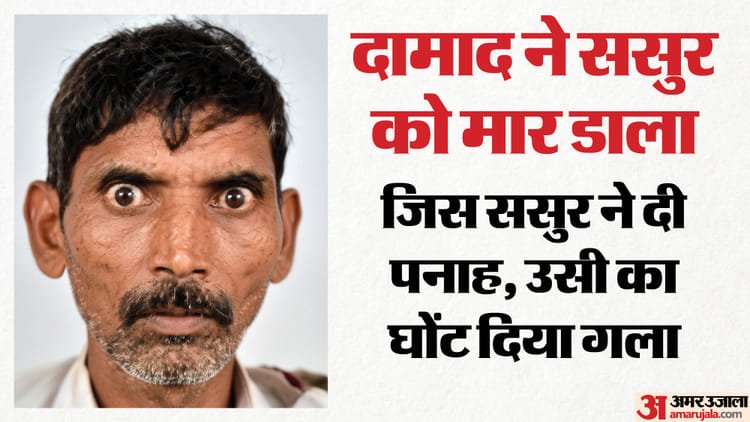
On Thursday night in Garhwa village, son-in-law Sanjay Kumar strangled his father-in-law Kishori Ram alias Jhagdu (60) to death over a dispute over money for the sale of land. Sanjay was drunk and abused.
son in law killed father in law
– Photo: Amar Ujala
Expansion
On Thursday night, in Gadwa village of Baragaon police station area of Varanasi, UP, drunken son-in-law Sanjay Kumar strangled his father-in-law Kishori Ram alias Jhagdu (60) to death over a dispute over money for the sale of land. Police arrived on the information of the daughter and arrested the son-in-law from the spot. Son-in-law Sanjay lived with his family in his father-in-law’s house for 12 years. The forensic team has also investigated.
Entry of Kuldeep Yadav and Vanshika on the tune of drums and drums, dance video via
The video of Indian cricket superstar Kuldeep Kumar and Vanshika’s mehendi ceremony at Hotel Savoy in Mussoorie has surfaced. Kuldeep Kumar and Vanshika are seen entering to the tune of drums.
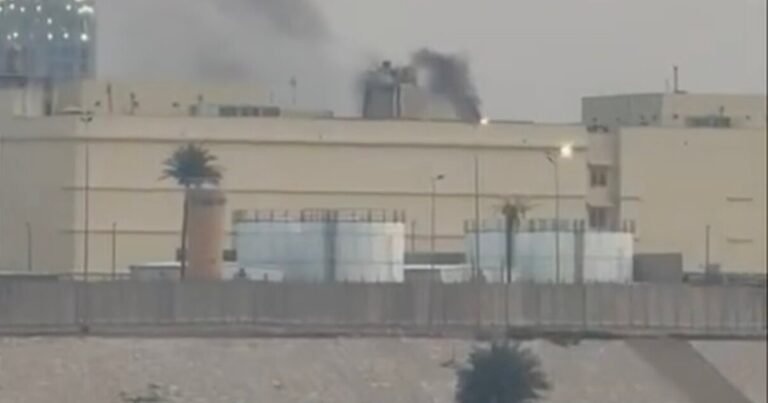
Videos posted by social media users showed smoke rising from the US embassy in Baghdad after a reported attack. Iraqi officials said a helipad at the embassy was hit by a missile.
Donald Trump shared footage of air strikes hours after saying the US carried out “powerful bombing raids” on Iran’s oil hub of Kharg Island. He said the US hit military targets but threatened to go after oil facilities if Iran blocks the Strait of Hormuz.