Reference #18.49200117.1777899185.1581ba3c
https://errors.edgesuite.net/18.49200117.1777899185.1581ba3c
Reference #18.49200117.1777899185.1581ba3c
https://errors.edgesuite.net/18.49200117.1777899185.1581ba3c
Labor has opted to retain its electric vehicle discount in full for another year, as Australians rush to buy EVs amid soaring fuel costs linked to the Iran war.
But the budget next Tuesday will include a number of “sensible changes” that wind back the scale of support over the next three years, as the government acknowledges the need to deliver a “more financially sustainable” tax incentive for EVs amid ballooning costs of the scheme.
The electric car discount was introduced at the start of 2023 and has cut thousands of dollars from the cost of leasing an eligible EV through an exemption to fringe benefits tax (FBT).
The treasurer, Jim Chalmers, and energy minister, Chris Bowen, announced in a joint statement on Monday evening that the policy would be extended until the end of March 2027.
The full FBT discount will then only apply to vehicles costing under $75,000 until the start of April 2029.
“The new rules will encourage manufacturers to offer more affordable and cheaper to run EVs in the Australian market,” Chalmers and Bowen said.
“The current new vehicle efficiency standards have seen a dramatic increase in the availability of affordable EV models, so now is the right time to focus the FBT exemption on these cars.”
During this second phase, electric vehicles costing more than $75,000 but priced below the luxury car tax threshold – currently set at $91,387 for fuel-efficient vehicles – would receive a 25% FBT discount.
Chinese carmakers such as BYD now sell EVs for as little as $26,000.
In the third and final phase, from 1 April 2029, the electric vehicle incentive will be limited to a 25% fringe benefits tax discount for all EVs below the luxury car tax threshold.
“We will continue to provide support for families who choose to switch to EVs as we transition to a permanent 25% discount on FBT for these cars,” the ministers said in their statement.
The unexpected popularity of the scheme has resulted in major cost blow-outs that, before the Iran war, had seemed to dampen its appeal in Canberra and triggered concerns among advocates that the government was going to ditch the discount.
When Labor first pitched the policy before the 2022 election, it was projected to cost $605m in the seven years to 2029.
Treasury most recently estimated it will cost $10.1bn over the same period, according to the Grattan Institute.
But the closure of the strait of Hormuz at the end of February and the ensuing spike in fuel costs triggered a flood of interest in electric cars, which may have changed the political calculus around the policy.
EVs accounted for 15% of new car sales in March, or twice the share from a year earlier, according to the Federal Chamber of Automotive Industries.
Sales of Tesla and Polestar vehicles in the first four months of this year were up 47% against the same period last year, data from the Electric Vehicle Council showed.
Four weeks after the start of the Middle East conflict and as unleaded prices pushed above $2.50 a litre in late March, Anthony Albanese energetically defended Labor’s backing for electric cars and home batteries, despite the cost blow-outs.
“I don’t think there’s anyone out there today who has bought an electric vehicle who’s regretting the decision at this point in time,” the prime minister said.
NEWYou can now listen to Fox News articles!
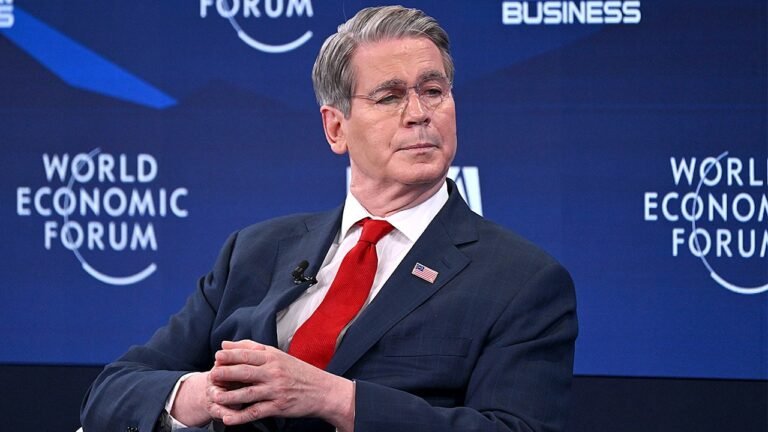
Americans should be concerned about AI-driven bank account hacks, Treasury Secretary Scott Bessent warned Sunday, pointing to growing risks as artificial intelligence tools rapidly evolve and expose new vulnerabilities in financial systems.
“The U.S. government has gotten involved. The AI companies are working with us,” Bessent said on “Sunday Morning Futures.”
“What we had in the past month was a step change in the power of one large language model, but we’re going to see it from the other AI companies.”
This comes after Bessent and Federal Reserve Chair Jerome Powell called a flash meeting with Wall Street bank heads to discuss cybersecurity risks stemming from Anthropic’s AI model, Claude Mythos Preview, a powerful new model that experts have warned marks a profound shift in the technology.
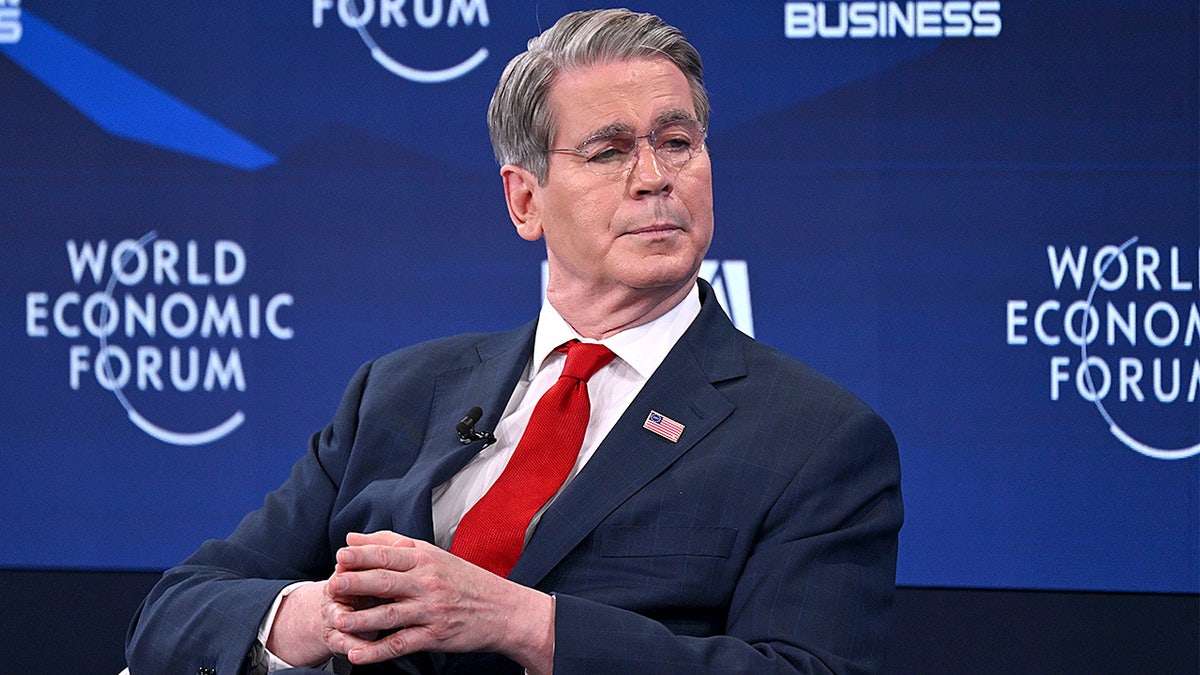
Treasury Secretary Scott Bessent speaks at the 56th World Economic Forum Annual Meeting in Davos, Switzerland, on Jan. 20. (Harun Ozalp/Anadolu via Getty Images)
Bessent said the meeting, though “less dramatic” than it seemed at the time, was meant to ensure major financial institutions are prepared for emerging AI-driven cyber threats.
Like others in the Trump administration, he emphasized the importance of the United States maintaining its lead in the global AI race, particularly against China.
“It’s important, Maria, that the U.S. stays ahead here. Imagine if China or some non-state actor were ahead of us…” he said, adding that the government’s role is to maintain safety while enabling AI companies to grow and innovate.
STEVE FORBES: THE AI COLD WAR HAS BEGUN AND AMERICA CANNOT AFFORD TO LOSE
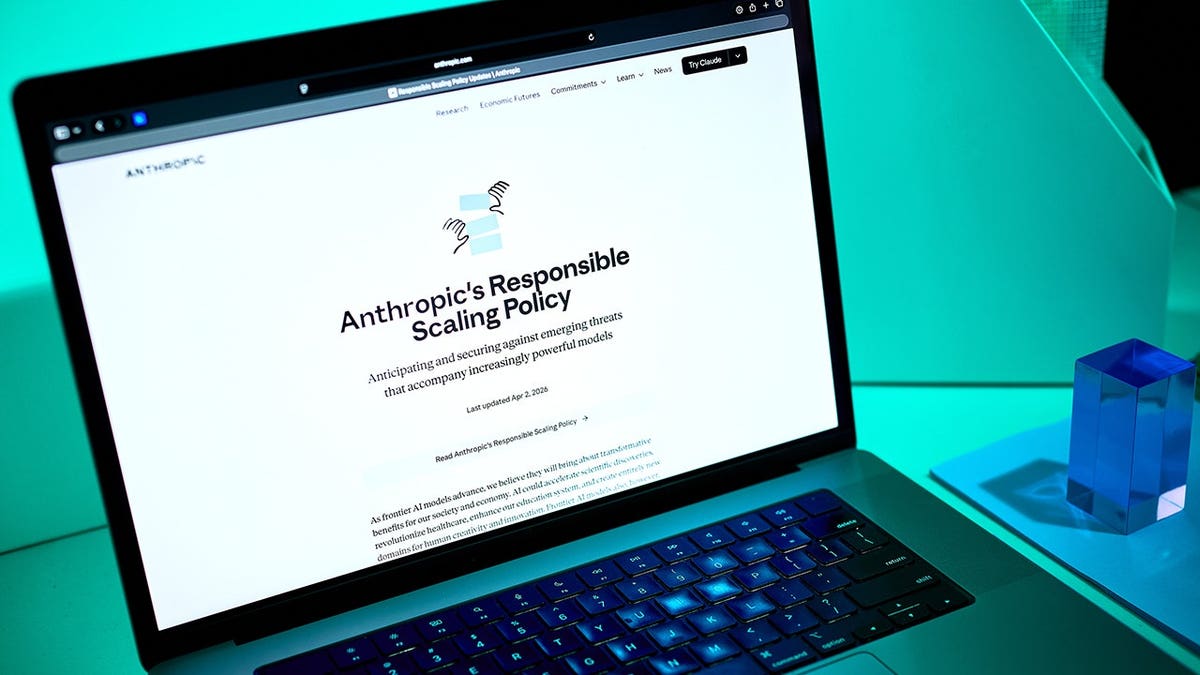
An image showcasing Anthropic AI on a laptop computer screen. (Gabby Jones/Bloomberg via Getty Images)
“There is a very important calculus here between innovation and safety,” he continued.
“And at the U.S. government, we’re going to make sure that things stay safe.”
The rapid advancement of AI has raised concerns among cybersecurity experts that increasingly sophisticated systems could be used to identify and exploit weaknesses in banking infrastructure, potentially allowing bad actors to carry out attacks at an unprecedented scale and speed.
CLICK HERE TO DOWNLOAD THE FOX NEWS APP
The pace of development has prompted closer coordination between regulators, financial institutions and AI companies to strengthen defenses and improve resilience, especially as the Trump administration vies for a leading position in the race to the future.
Fox News’ Robert McGreevy contributed to this report.
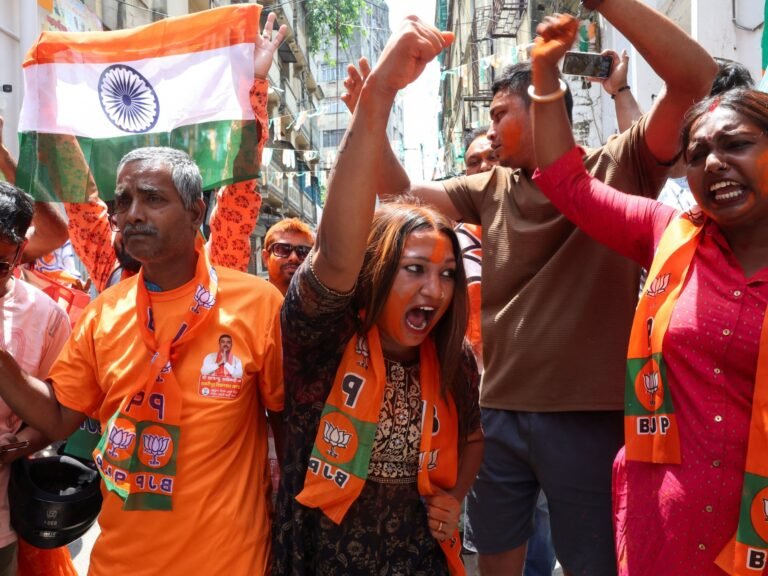
New Delhi, India – Seema Das, a househelp in New Delhi, took on a two-day journey to reach her village in India’s West Bengal state, changing trains to make sure she got home in time to vote in provincial elections.
Das had previously always voted for the All India Trinamool Congress (TMC) party under Chief Minister Mamata Banerjee, a centrist political force that has been in power in the eastern Indian state since 2011. But this time, she said, her mother-in-law had convinced her that “Didi” – a nickname for Banerjee, which translates to elder sister in Bangla – “favours Muslims”.
Das, a Hindu, added: “Didi has lost the track and only appeases Muslims to stay in power.”
That’s an accusation that Prime Minister Narendra Modi’s Hindu majoritarian Bharatiya Janata Party has long levelled against the TMC, which emphasises religious pluralism and the protection of minority rights. But for 15 years, Banerjee and her party have ruled the state of more than 90 million people, even as the BJP gained ground in a state where it had traditionally been a marginal player.
On Monday, that changed. Modi’s party won West Bengal. Early results from elections to the state’s legislature – which were held in April, but votes were counted on May 4 – show that Modi’s well-oiled election machinery is poised to deliver a thumping majority for the BJP in a state that its ideological founder was from, but that it has never won before. By 4:30pm India time, the BJP had won or was leading in 200 out of the state’s 294 seats, where its previous best performance was 77 seats in 2021. Banerjee’s TMC, meanwhile, was leading or had won just 87 seats.
The West Bengal elections were among five whose results were declared on Monday. In the southern state of Tamil Nadu, actor C Joseph Vijay threw up a surprise, defeating dominant parties to win with his upstart TVK party; in its neighbouring state of Kerala, the Congress party – the largest national opposition party – beat a coalition of left parties. A BJP-led alliance won the self-administered territory of Puducherry, once a French colony. And in the northeastern state of Assam, Modi’s party returned to power with a sweeping majority.
Yet it is the outcome in West Bengal that analysts say is by far the most consequential of the results that were declared on Monday, with the BJP walking the trails of religious polarisation and leveraging underlying anti-incumbency to win, experts told Al Jazeera.

Banerjee founded the TMC in 1998, breaking with the Congress party, disillusioned with its refusal to frontally take on a coalition of communist parties that had ruled West Bengal since 1977.
Rising from a humble background, the lawyer-turned-student-activist-turned-politician finally defeated the communists to win the state in 2011. Since Modi became prime minister of India in 2014, she emerged as a key challenger to the BJP – framing her politics, especially her defence of Bengal’s Muslims, as an act of opposition to Hindu majoritarianism.
She also launched a series of women-centric welfare schemes and pushed back against controversial land acquisition projects sought by big industry.
“There is visible support for Mamta and she remains popular, but there is anti-incumbency against the TMC machinery, and people were not happy with their interference in everyday life,” said Rahul Verma, an election observer who teaches politics at the Shiv Nadar University in Chennai.
He added that the BJP also ran a better-managed campaign this time, noting that he is not “shocked” by the results. “It was a difficult election for the BJP, but not impossible.”
To Verma, “there was a corridor available to them [in West Bengal], and one can now say everything aligned in a way to produce this outcome for them.”
Verma emphasised that “without serious anti-incumbency, West Bengal would not have gotten this kind of result.”
Nearly 68.2 million people voted in the election, or about 92.93 percent, a record high for the state.
Banerjee’s party failed to “offer anything new to the voters and to beat strong anti-incumbency sentiments against it”, said Praveen Rai, a political analyst at the Centre for the Study of Developing Societies, in New Delhi.
“The party system had turned hostile towards the people who did not subscribe to their ideology,” he argued, adding that “the TMC failed to read the growing resentment against economic deprivation and aspirational needs of the common people.”
Rai added that the loss in West Bengal also weakens Banerjee’s hopes of emerging as a national challenger for Modi’s job.
But the implications of the result extend beyond Banerjee, he said. The BJP’s win, and the TMC’s dramatic defeat, would “decrease the political capital of [all] the parties opposed to [Modi]”.
That’s a major shift from two years ago. In the 2024 national elections, Modi’s party had fallen short of a majority, leaving it reliant on allies’ support for survival. The election wins on Monday “offset the electoral setback” suffered in the national vote, Rai said.
“It substantially increases the national standing of Modi’s leadership and extends the hegemonic power of the party [BJP] to govern India,” Rai told Al Jazeera.

Neelanjan Sircar, a senior fellow at the Centre for Policy Research in New Delhi, who travelled across West Bengal before the polls, told Al Jazeera that his team identified “a big urban-rural gap among voters’ preferences”.
“We found urban men are very polarised,” he added. “In Bengal, the Muslim population is disproportionately rural, and given the levels of polarisation, the result ended up in a big difference for the BJP.”
Historically, election analysts have argued that due to the BJP’s Hindu majoritarian politics, the party did not stand a chance of winning West Bengal. More than a quarter of the state’s population is Muslim. “That has, of course, not turned out to be true, something we did pick during our research,” Sircar said.
The BJP has not shied from projecting itself as the party of Hindu voters.
Suvendu Adhikari, leader of the BJP in the state and potential chief minister candidate, said, “There has been a Hindu consolidation [of votes].”
He claimed, however, that many Muslims also did not vote for Banerjee’s TMC like earlier, and got swayed towards the BJP. It is impossible to verify the claim until the Election Commission of India (ECI) has released details of the vote count, expected in the next few days.
“I want to thank every Hindu Sanatani who cast their votes in favour of the BJP,” Adhikari said, referring to Banerjee’s TMC as a “pro-Muslim party”. Sanatan Dharma is an endonym for Hinduism.
For the BJP, the win in West Bengal is also deeply symbolic: Shyama Prasad Mukherjee, who founded the Bharatiya Jana Sangh – the forerunner of the BJP – in 1951, was from the state.
Al Jazeera reached out to TMC spokespersons but has not received any response.

Before the polling in West Bengal, the ECI carried out a so-called revision of its electoral rolls through a Special Intensive Revision (SIR), which authorities have conducted in more than a dozen states so far.
The exercise in West Bengal controversially removed more than nine million people – nearly 12 percent of the state’s 76 million voters – from the voting list, snatching their right to cast a ballot in the elections.
Nearly six million of them were declared absentee or deceased, while the remaining three million were unable to vote because no special tribunals could hear their cases in the short timeframe available before the elections.
Banerjee’s TMC and other opposition parties in several states have called out the discrepancies in the revision of the voter list, accusing the ECI of siding with Modi’s BJP. Right activists and observers believe that the exercise disproportionately disenfranchised Muslims before the election.
Banerjee also appeared before India’s Supreme Court, challenging the “opaque, hasty, and unconstitutional” revision process. The top court did not restore the voting rights of millions affected but directed the ECI to publish a list of affected voters.
“Once the question of whether ‘I should be on the voter list’ became the dominant question for vulnerable populations, it’s not politics as usual,” said Sircar. “The level of polarisation that the voter revision caused is something that people outside the state do not really grasp.”
The Modi government also deployed 2,400 companies of paramilitary troops to West Bengal for the elections – a record for such provincial votes. The federal government claimed this was to assist election officials in carrying out the exercise without fear of political violence.
But the TMC and other opposition parties argued that the forces served to intimidate – or influence – voters.
“The heavy presence of security forces could have also created a favourable situation for the BJP,” argued Verma, of Shiv Nadar University. “Those who might be fence sitters and might have been afraid of TMC’s machinery on the ground were moved by this.
“There is no doubt that the trust level between opposition parties in India and the Election Commission of India is very low,” added Verma.
However, the analysts who spoke with Al Jazeera, including Sircar and Verma, agreed that the voter revision exercise alone could not have delivered such a decisive victory for the BJP – and that it reflects several other factors, including anti-incumbency and religious polarisation.
Still, analysts said, Banerjee will likely not go out without a fight.
In her first reaction to the vote counting, Banerjee addressed her party workers in a video statement, calling all workers and leaders not to leave vote-counting booths until the last ballots are counted.
“It’s a total forceful use of central forces to oppress the Trinamool Congress everywhere, breaking offices, and forcibly occupying them,” she said. “We are with you. Don’t be afraid. We will fight like the cubs of a tiger.”
Those aren’t empty warnings, Sircar said. “We are definitely in for drama.”

NEWYou can now listen to Fox News articles!
America’s snack habits are getting a makeover — with Gen Z and Gen Alpha leading the charge.
The snack aisle at the grocery store may be looking a little different as younger consumers reshape demand, favoring snacks with simpler ingredients, more nutritional benefits and lower upfront costs, according to NielsenIQ data.
Thirty-five percent of parents who are buying snacks for their households with Gen Alpha kids born after 2010 say they prioritize natural ingredients, while 34% are actively seeking high-protein options, according to NielsenIQ data reported by the National Association of Convenience Stores (NACS).
BOOMERS LOVED IT, GEN Z WON’T TOUCH IT: WHY CEREAL IS NO LONGER A BREAKFAST STAPLE
“The baseline for Gen Alpha is a better product,” said Chris Costagli, vice president of thought leadership at NielsenIQ, according to the NACS.
“It’s a cleaner product. It’s a more transparent product.”

Today’s social media has been playing a growing role in how new snack products gain popularity with younger consumers. (iStock)
About 25% of consumers overall say they actively look for snacks without synthetic additives, including dyes, according to NielsenIQ.
The shift comes as regulators have also taken action, with the Food and Drug Administration (FDA) moving to ban Red Dye No. 3 from food and drinks beginning in 2027.
The shift is pushing brands to rethink not just ingredients, but marketing tactics as well.
Health-focused trends are playing a major role, with protein-packed snacks among the top trends for 2026 — while products touting functional benefits such as gut health are also gaining traction, according to Innova Market Insights, as reported by Fast Company.

High-protein and gut-healthy snacks are leading the way, according to data. (iStock)
Consumers are also paying more attention to labels, with many seeking organic and gluten-free certifications and simpler ingredients.
But younger shoppers are approaching brands’ claims with increased skepticism.
FANS ARE DEMANDING THESE 10 VANISHED ’80S AND ’90S SNACKS RETURN TO STORE SHELVES
“Young consumers are moving away from traditional brands because they don’t trust them unconditionally,” said Hana Ben-Shabat, the New Jersey-based author of “Gen Z 360” and the founder of the advisory firm Gen Z Planet.
“They question ingredients and marketing claims, and increasingly rely on third-party sources, influencers and reviews to decide what to buy,” Ben-Shabat told Fox News Digital.

Consumers are increasingly checking labels, sometimes using third-party apps. (iStock)
Compared to older generations, Gen Z consumers are more likely to use third-party apps such as Yuka and Fooducate to scan barcodes and evaluate food products, rather than relying solely on packaging claims, with nearly 30% saying they trust these tools more than product labels, according to NielsenIQ data.
CLICK HERE TO SIGN UP FOR OUR LIFESTYLE NEWSLETTER
Some brands are responding by simplifying labels or leaning into transparency in their packaging.
“Gen Z and Gen Alpha want to know what’s actually in what they’re eating or drinking, and they want that information upfront,” said Mitchell Madoff, the Texas-based head of retail partnerships at Keychain, an AI-powered manufacturing platform for the packaged goods industry.

Consumers are increasingly seeking out organic snacks and products made with simpler ingredients. (iStock)
Madoff pointed to products like RXBAR, which lists its protein bar ingredients on the front of the package, as an example.
CLICK HERE FOR MORE LIFESTYLE STORIES
Social media also plays a growing role in how snacks gain traction.
“If they want to know about a product, they’re checking TikTok or Instagram to see what people are saying,” Madoff told Fox News Digital. “When something goes viral and is backed by creators they trust, it doesn’t just trend. It flies off shelves.”
Rather than buying in bulk, many Gen Zers are opting for smaller packages, even if the per-unit price is higher.
Brands like Poppi, a “better-for-you” prebiotic soda, have built momentum through online buzz and influencer engagement, he noted.
CLICK HERE TO DOWNLOAD THE FOX NEWS APP
Younger shoppers are also responding to economic pressures, experts note.

Global flavors and nostalgic favorites are still popular among consumers, according to industry reports. (iStock)
Rather than buying in bulk, many Gen Zers are opting for smaller packages, even if the per-unit price is higher, while still showing a willingness to spend more on snacks they perceive as healthier, the NACS reported.
TEST YOURSELF WITH OUR LATEST LIFESTYLE QUIZ
Despite these changes, demand for snacks remains strong.
About three-quarters of consumers snack daily, according to surveys from Innova Market Insights, and experts say there is still an appetite for adventure, with global flavors and nostalgic favorites among the top picks.
Jean-Luc Mélenchon, France’s radical left leader, has confirmed he will run again for president next spring, saying it was urgent for the country to stand up against war being waged by the US and Israel in the Middle East.
The 74-year-old veteran leader of La France Insoumise (LFI), announced in an interview with the French broadcaster TF1 that he would run for the presidency for the fourth time in 2027.
“We are threatened by a widespread war, we are threatened by a spectacular change in the climate, and now we have an economic and social crisis approaching,” he said. He called for a common front with Spain against war in the Middle East.
A one-time Trotskyist and former teacher, Mélenchon spent 30 years in the traditional left party of government, the Socialists, where he served as a minister and was once the youngest ever Socialist senator. He quit in 2008, arguing the party wasn’t properly leftwing.
He ran for president on a radical left ticket in 2012, 2017 and 2022 – coming third that year behind the far-right leader Marine Le Pen and the president Emmanuel Macron, the president.
After the last presidential election, Mélenchon had vowed to stand aside to let a younger generation take the lead but now said he would run again next year because he had the most experience.
There are a large number of would-be candidates on the rest of the broader French left, from Greens to Social Democrats, which could split the vote. Mélenchon said his radical left economic programme could counter the far-right National Rally, which will be represented by either Le Pen or Jordan Bardella, and is polling high.
But in a polarised French political landscape, Mélenchon is seen by opponents as an increasingly divisive and provocative figure. Several polls at the end of 2025 found he was the political figure in France who attracted the most hatred from voters.
Political commentators and pollsters have said the wider electorate’s high feeling of antipathy towards him would prevent him from winning, even if divisions on the centre and the left allowed him to reach the final round.
Last month, the Socialist party national bureau accused Mélenchon of “intolerable antisemitic comments” and “caricature conspiracy theories” after public rallies in which he questioned the pronunciation of the name of the late sex offender Jeffrey Epstein and then appeared to deliberately stumble over Raphaël Glucksmann’s name, the French centre-left member of the European parliament , who is Jewish.
Glucksmann said that Mélenchon, by mocking Jewish or foreign-sounding names, had become the “Jean-Marie Le Pen of our times” and was “playing with the worst codes of the French far-right and antisemitism”.
Mélenchon then posted on social media saying he was sorry and that he had accidentally mangled Glucksmann’s name with others during a speech in Perpignan, in southern France. He denied any antisemitism, saying: “I’m the first one who is sorry, thinking about those it hurt.”
Announcing his candidacy on TF1 at the weekend, Mélenchon said there was too much division and social inequality in France and his main adversary was the far-right. “What most divides the unity of the French people is privilege and racism,” he said.
Under the French constitution, Macron cannot seek a third consecutive mandate as president next year.
Edouard Philippe, Macron’s first prime minister in 2017, has also announced he intends to stand in 2027, representing a centre-right ticket. Scores of other figures from the centre, left and right have said they are keen to run, amid a lack of clarity on how candidates will be chosen.


Reference #18.f3680117.1777898054.4af59346
https://errors.edgesuite.net/18.f3680117.1777898054.4af59346
NEWYou can now listen to Fox News articles!
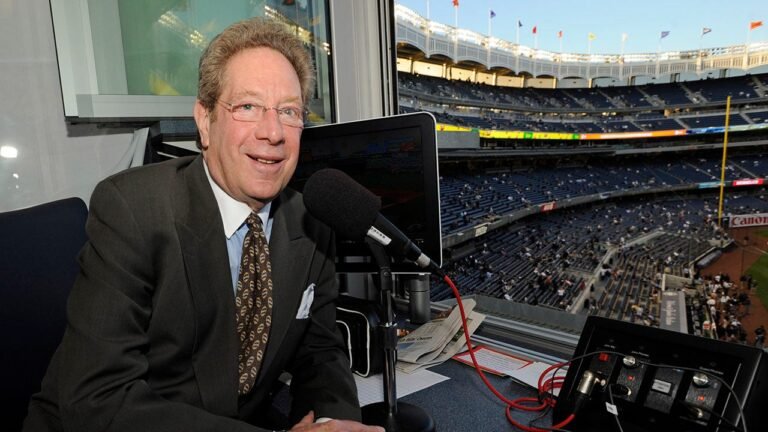
New York Yankees radio legend John Sterling has died, WFAN Sports Radio in New York announced on Monday. He was 87.
“We are devastated to hear about the passing of John Sterling, a WFAN and Yankees radio icon whose voice was synonymous with an entire generation of Yankee fandom,” the radio station wrote on social media.
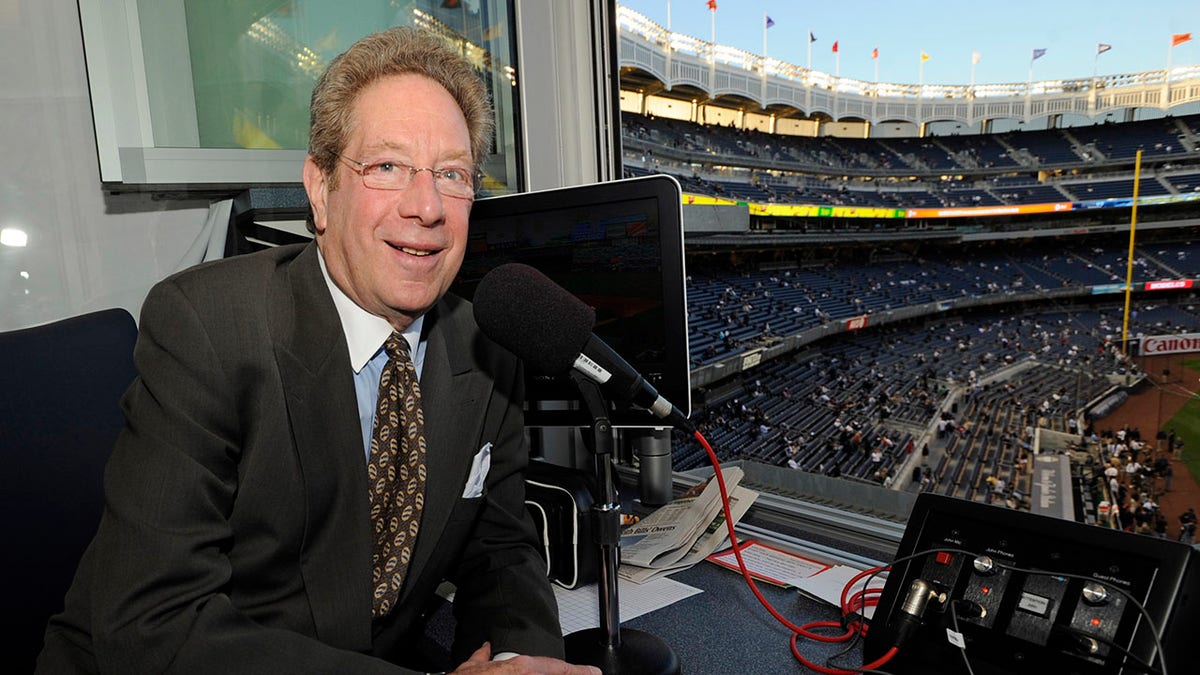
John Sterling sits in the broadcast booth before the New York Yankees game against the Boston Red Sox at Yankee Stadium in New York on Sept. 25, 2009. (Bill Kostroun/AP)
Sterling suffered a heart attack in January and was said to be in good spirits. He retired from broadcasting in April 2024 after 64 years in the industry.
Since 1989, Sterling has been gracing the New York airwaves as the voice of the Yankees, and that has included the multiple World Series titles.
CLICK HERE FOR MORE SPORTS COVERAGE ON FOXNEWS.COM
“It is high, it is far, it is gone!” is something Yankees fans have heard for decades, and Sterling usually followed it up with specific calls for each player, including, “It’s an A-bomb from A-Rod” for Alex Rodriguez and “Here comes the Judge!” for Aaron Judge.
CLICK HERE TO DOWNLOAD THE FOX NEWS APP
This is a breaking news story. Check back for updates.


Progress Software warned customers to patch a critical authentication bypass vulnerability in its MOVEit Automation enterprise-grade managed file transfer (MFT) application.
MOVEit Automation automates complex data workflows without requiring manual scripting and serves as a central automation orchestrator to schedule and manage file transfers between different systems, including local servers, cloud storage, and external partners.
Tracked as CVE-2026-4670, the security flaw affects MOVEit Automation versions before 2025.1.5, 2025.0.9, and 2024.1.8. Remote threat actors can exploit it without privileges on the targeted systems in low-complexity attacks that don’t require user interaction.
“We have addressed the vulnerability and the Progress MOVEit Automation team strongly recommends performing an upgrade to the latest version,” the company says in a Thursday advisory. “Upgrading to a patched release, using the full installer, is the only way to remediate this issue. There will be an outage to the system while the upgrade is running.”
The same day, Progress also released security updates to address a high-severity privilege escalation vulnerability (CVE-2026-5174) stemming from an improper input validation weakness in the same software.
According to a Shodan search shared by PwnDefend cybersecurity consultant Daniel Card, over 1,400 MOVEit Automation instances are exposed online, and over a dozen are linked to U.S. local and state government agencies.
However, there is no information regarding how many of these systems have already been secured against CVE-2026-4670 attacks.
While the company has yet to flag these security issues as exploited in the wild, other MoveIT MFT vulnerabilities have been targeted in attacks in recent years.
For instance, the Clop ransomware gang exploited a zero-day in the MOVEit Transfer secure file transfer platform in an extensive series of data theft attacks in 2023 that affected more than 2,100 organizations and over 62 million individuals, according to Emsisoft estimates.
MFT software is an attractive target for ransomware actors, as seen in previous Clop data-theft campaigns targeting security flaws in Accellion FTA, SolarWinds Serv-U, Gladinet CentreStack, GoAnywhere MFT, and Cleo.
Progress Software says its MOVEit MFT solutions are used by more than 3,000 enterprise organizations and over 100,000 users worldwide.

AI chained four zero-days into one exploit that bypassed both renderer and OS sandboxes. A wave of new exploits is coming.
At the Autonomous Validation Summit (May 12 & 14), see how autonomous, context-rich validation finds what’s exploitable, proves controls hold, and closes the remediation loop.
Claim Your Spot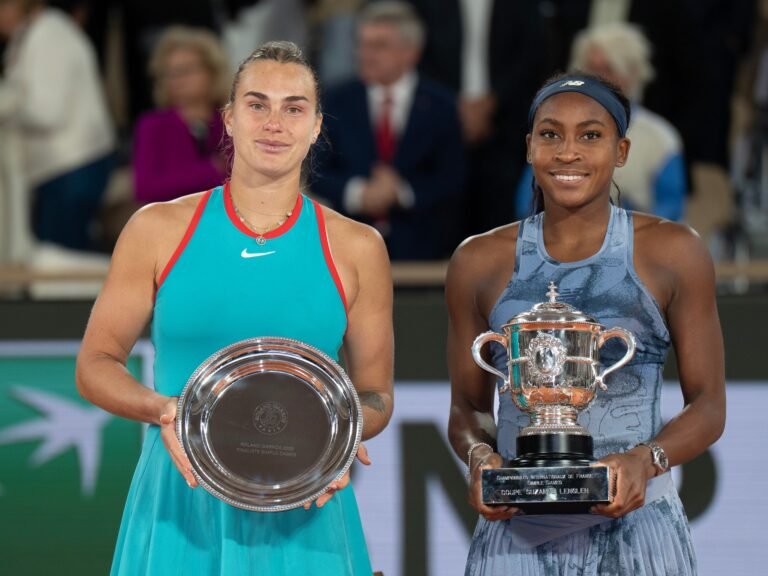
Players keep up the pressure on the Grand Slam tournaments by asking organisers to increase prize money.
Published On 4 May 2026
A group of leading tennis players, including Jannik Sinner, Aryna Sabalenka and Coco Gauff, have expressed “their deep disappointment” at the prize money on offer at Roland Garros during a lingering dispute with Grand Slam tournament organisers.
The clay court Grand Slam event starts on May 24 in Paris. The players said they have other demands that have not been addressed by officials, including better representation, healthcare and pensions.
The players’ call came after French Open organisers announced last month that the Roland Garros prize money increased by about 10 percent for an overall pot of 61.7 million euros ($72.1m), up by 5.3 million euros ($6.2m) from last year.
“Players’ share of Roland Garros tournament revenue has declined from 15.5 percent in 2024 to 14.9 percent projected in 2026,” the group of players responded in a statement on Monday.
The French Open men’s and women’s singles champions each receive 2.8 million euros ($3.27m) and the runners-up 1.4 million euros ($1.63m). Semifinalists earn 750,000 euros ($878,383), and first-round losers get 87,000 euros ($101,897). Men’s and women’s doubles winners pocket 600,000 euros ($702,739), and the mixed doubles champions get 122,000 euros ($142,882).
But the statement said “the underlying figures tell a very different story,” claiming that players receive a declining share of the value they contribute to the tournament.
“According to tournament officials, Roland Garros generated 395m euros ($462m) in revenue in 2025, a 14 percent year-on-year increase, yet prize money rose by just 5.4 percent, reducing players’ share of revenue to 14.3 percent,” they said.
“With estimated revenues of over 400m euros ($468m) for this year’s tournament, prize money as a percentage of revenue will likely still be less than 15 percent, far short of the 22 percent that players have requested to bring the Grand Slams into line with the ATP and WTA Combined 1000 events.”
The same group of players had already signed a letter sent to the heads of the four Grand Slam tournaments last year, seeking more prize money and a greater say in what they called “decisions that directly impact us”.
The players said they remain “united in their desire to see meaningful progress, both in terms of fair financial distribution and in how the sport is governed”.
They insisted they have not received any response to their proposals on welfare, including pensions and long-term healthcare, adding that no progress has been made “on fair and transparent player representation within Grand Slam decision-making”.
“While other major international sports are modernising governance, aligning stakeholders, and building long-term value, the Grand Slams remain resistant to change,” they said.
“The absence of player consultation and the continued lack of investment in player welfare reflect a system that does not adequately represent the interests of those who are central to the sport’s success.”