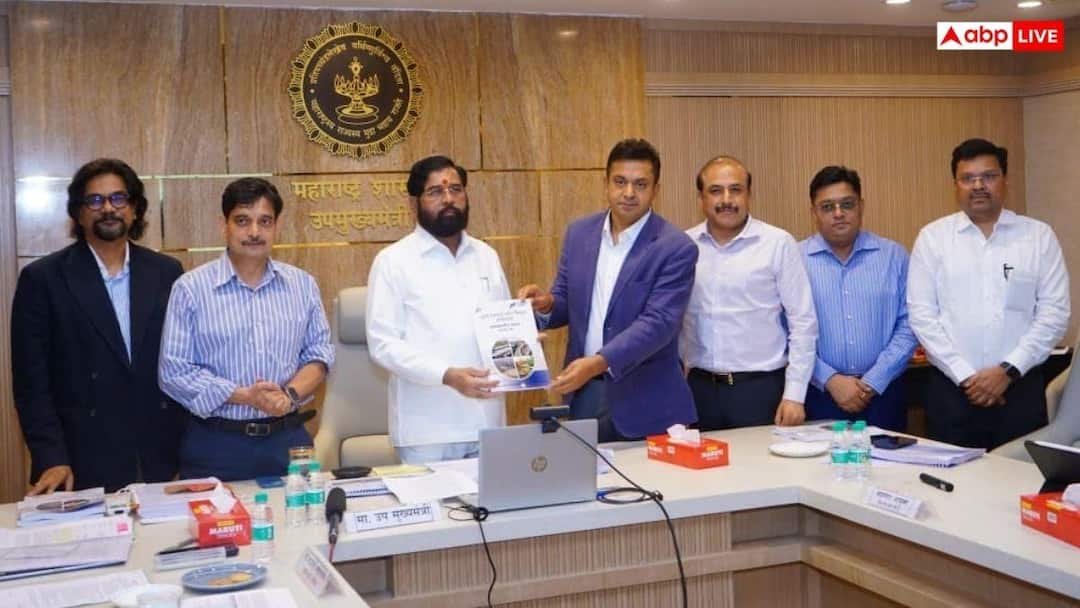
Mumbai Metropolitan Region Development Authority on February 16 presented a budget of ₹48,072.57 crore for the financial year 2026–27. For the first time since 2017–18, this budget has been in surplus and the authority has succeeded in achieving a surplus of ₹17 lakh. The special thing is that due to the continuous efforts and financial discipline made in the last three years, success has been achieved in converting the budget which was in deficit of ₹ 7,468 crore in the year 2024–25 into surplus in this financial year.
With an estimated income of ₹48,072.57 crore and proposed expenditure of ₹48,072.40 crore, the budget has projected a surplus of ₹17 lakh. This is a result of increasing income through better use of surplus land, strengthening the Urban Transport Fund (UTF), improving project-based revenues and capital mobilized through international partnerships and financial institutions. 87 percent budget allocation for projects.
Indicating a governance style that prioritizes development, a total of ₹42,026.14 crore, i.e. 87.42% of the total expenditure, has been earmarked for development projects and schemes. This clearly reflects MMRDA’s commitment towards large-scale capital investment.
The proposed budget provision of ₹48,072.57 crore for FY 2026–27 is 58.57% higher than the revised estimate of ₹30,316.18 crore for 2025–26. The proposed expenditure of ₹48,072.40 crore is 53.52% more than last year’s revised estimate of ₹31,313.13 crore.
This level of expansion and the accompanying surplus position reflect a structural change in the financial direction of MMRDA. The authority recorded deficit in most of the years during the financial year 2017–18 to 2026–27, after which financial balance was achieved with a nominal surplus of ₹0.17 crore in the financial year 2026–27.
Transformation of Mumbai Metropolitan Region
The Budget for 2026–27 advances the holistic development of the region, with an emphasis on working together on transport, economic decentralisation, water security, climate resilience and housing reform.
Chief Minister Devendra Fadnavis said that this first surplus budget of MMRDA after 2017–18 is an important achievement at the institutional level. This budget reflects the confidence of global investors and the long-term development vision based on infrastructure. Through this, the Mumbai Metropolitan Region is being established as a modern, investment-ready and globally competitive urban region.
Deputy Chief Minister and Chairman of MMRDA Shri Eknath Shinde “Having 87 per cent of the budget earmarked for projects reflects focused and accountable governance. Under the Growth Hub concept, MMRDA has set a new benchmark for planned regional expansion,” said.
Dr Sanjay Mukherjee (IAS), Metropolitan Commissioner, MMRDA, said, “This surplus Budget is the result of fiscal discipline, balanced capital raising and sustained infrastructure development. While we are expanding connectivity, decentralization of development and regional stability are also being strengthened through Mumbai 3.0. This Budget reflects a shift from a situation of financial stress to financial stability, while maintaining large-scale growth momentum.”
Restructuring of MMR
To reduce the increasing traffic pressure in the inner city and ensure faster movement between cities, MMRDA is continuously expanding the high capacity underground transport infrastructure.
Allocation (in ₹ crore) There is a provision for underground tunnel from Orange Gate to Marine Drive Coastal Road – ₹ 1,250.00, underground tunnel from Gaymukh to Fountain Hotel – ₹ 75.00, Thane–Borivali four lane underground tunnel – ₹ 3,029.51 and Mumbai Integrated Tunnel (BWSL–BKC–HSR–T2 connectivity) – ₹ 1,189.00. These projects are an important foundation of the long-term strategy to reduce traffic pressure and strengthen east-west connectivity.
Major road corridors and multi-ring road networks
The multi-ring road scheme has been further strengthened in the budget, so that there can be better distribution of traffic and support to the major corridors of economic activities.
Allocation (₹ in crore)
• MTHL to Mumbai–Pune Expressway Link – ₹603.00
• Anand Nagar to Saket Elevated Road – ₹880.12
• Thane Coastal Road (Balkum-Gaymukh) – ₹1,025.77
• Fountain Hotel to Bhayandar Elevated Road – ₹75.00
• Kalyan Ring Road – ₹600.00
• Worli-Shivadi Elevated Corridor – ₹936.07
• Extended Mumbai Urban Infrastructure Projects – ₹2,362.20
• Mumbai–Wadhawan Expressway Corridor (Uttan–Virar Sea Link) – ₹2,000.00
• Mumbai–Samruddhi Expressway: Saket to Amne Link Road – ₹500.00
• Extension of Eastern Freeway: Chheda Nagar, Ghatkopar to Thane – ₹1,106.75
• Kalyan-Murbad to Badlapur Road, elevated road parallel to Valdhuni River – ₹200.00
• Gaymukh to Payegaon Bay Bridge – ₹682.10
• Kasarvadavali, Thane to Kharbav Bay Bridge – ₹840.71
• Kolshet, Thane to Kalher, Bhiwandi Bay Bridge – ₹105.51
• Elevated road from NH-4 to Katai Naka – ₹900.00
Total – ₹12,816.53
Reshaping MMR through Development Centers (Mumbai 3.0)
Economic decentralization has been strengthened in the budget by giving impetus to the planned urban expansion under the Growth Hub framework.
Allocation (₹ in crore)
• KSC (Karnala-Sai-Chirner) New Town – ₹4,000.00
• Raigarh Pain Growth Center – ₹500.00
• Kharabav Integrated Business Park – ₹100.00
Total – ₹4,600.00
The allocation of ₹4,000 crore for Mumbai 3.0 marks the beginning of the next urban expansion phase of MMR. Its objective is to reduce traffic pressure on Mumbai, attract foreign investment and develop organized employment system in line with the Growth Hub concept of NITI Aayog.
MMR Integrated Metro Network
MMRDA is carrying forward the country’s largest metro expansion work through a single agency.
Major Corridors:
• Metro Line 2A (D.N. Nagar–Dahisar) – ₹45.19 crore
• Metro Line 2B (D.N. Nagar-Mandalay) – ₹1,224.60 crore
• Metro Line 4 (Wadala–Kasarvadavali) – ₹3,630.71 crore
• Metro Line 4A (Kasarvadavali–Gaymukh) – ₹176.54 crore
• Metro Line 5 (Thane–Bhiwandi–Kalyan) – ₹1,309.30 crore
• Metro Line 5A (Extension) Durgadi to Ulhasnagar – ₹183.35 crore
• Metro Line 6 (Swami Samarth Nagar–Kanjurmarg) – ₹2,407.78 crore
• Metro Line 7 (Andheri East–Dahisar East) – ₹24.05 crore
• Metro Line 9 & 7A (Dahisar–Mira-Bhayander/Andheri–CST Airport) – ₹1,151.87 crore
• Metro Line 10 (Gaymukh-Mira Road) – ₹100.00 crore
• Metro Line 12 (Kalyan–Taloja) – ₹1,054.54 crore
• Metro Line 13 (Ghodbunder-Virar) – ₹200.00 crore
• Metro Line 14 (Kanjurmarg–Badlapur) – ₹500.00 crore
• Mandalay Metro Building – ₹403.31 crore
• Employees Housing Project (Malvani, Malad and Mandalay) – ₹248.91 crore
• Kalyan Shilphata Junction to Rajnoli Chowk, Bhiwandi Flyover – ₹150.00 crore.
• Transport Stack – Digital Mobility Platform – ₹25.00 crore
• Planning and multi-modal integration design for Metro – ₹919.63 crore
• Metro Line 7 Elevated FOB – ₹84.10 crore
Total – ₹13,838.88 crore
This expansion of the Metro strengthens the high capacity public transport system across the region and will help in reducing traffic pressure in the long run.
Social Infrastructure and Inclusive Urban Development, Slum Redevelopment and Housing
Allocation (₹ in crore)
• Mata Ramabai Ambedkar Nagar SRA – ₹551.00
• Rehabilitation and Resettlement – ₹150.00
• Affordable rental housing – ₹30.33
Total – ₹731.33
Water resources and regional stability Projects include:
• Surya Regional Water Supply Scheme – ₹267.00 crore
• Deharji Medium Project – ₹247.07 crore
• Poshir Dam and other projects – ₹466.80 crore
Total allocation – ₹980.87 crore
These projects will strengthen long-term water security in Mira-Bhayandar, Vasai-Virar, Palghar and surrounding areas.
Green MMR: a climate-friendly future
Main focus areas:
• Blue-green infrastructure
• Integrated Waste Management
• Use of renewable energy
• Sustainable transportation
• Mumbai Climate Week
Total – ₹250.00 crore
This marks the beginning of regularly including climate-related preparedness in the budget.
Memorials of eminent leaders
• Bharatratna Dr. Babasaheb Ambedkar Grand Memorial at Indu Mill – ₹ 400.00
• Late Balasaheb Thackeray National Memorial at Mumbai Mayor’s Residence (Part 1 and 2) – ₹171.50
Total – ₹571.50
information technology
Main focus areas:
• Integrated Digital Delivery Program (IDDP)
• Regional Information System (RIS)
• ERP systems and other initiatives
Total allocation – ₹235.34 crore
revenue structure
• Estimated income of ₹48,072.57 crore includes:
• Land sale – ₹11,177.95 crore
• Urban Transport Fund – ₹6,368.42 crore
• Loan – ₹23,711.16 crore
• State subordinate debt – ₹3,520.00 crore
• Income from project operation – ₹441.71 crore
• Government grants and TDR – ₹1,189.14 crore
• Ground rent and interest – ₹1,664.19 crore
The surplus situation is the result of increasing income through better land utilization, strengthening the urban transport fund and balanced financial planning.
A turning point for MMR
The Budget 2026–27 marks a stabilization phase in MMRDA’s institutional journey, pursuing fiscal restraint and record level infrastructure development simultaneously.
This budget indicates:
• Return to financial stability after five years.
• Accelerate the expansion of transport corridors.
• Beginning of implementation of Mumbai 3.0 at the grassroots level.
• Strengthening water management and climate-resilience preparedness.
• Emphasis on decentralized economic development.
Not just a financial document, this budget is a roadmap to develop the Mumbai Metropolitan Region as modern, investment-friendly and in line with future needs. it Budget Not just a financial document, but a clear roadmap to develop the Mumbai Metropolitan Region in line with international standards, investment friendly and in line with future needs.