On April 27, a few hundred protesters gathered in front of the United States Supreme Court in Washington, DC, holding signs with slogans like “How much cancer is acceptable?” and “Monsanto knew”.
Inside, the court was hearing oral arguments in the case Monsanto Company v Durnell, which could make it harder to sue Monsanto’s parent company, Bayer, over allegations that the nation’s most widely used herbicide, glyphosate, causes cancer.
Recommended Stories
list of 4 itemsend of list
Glyphosate was, until recently, the key ingredient in the Bayer product Roundup. The company has, to date, settled almost 100,000 such cases, paying about $11bn to plaintiffs. Tens of thousands of unsettled cases remain, and cases continue to be filed.
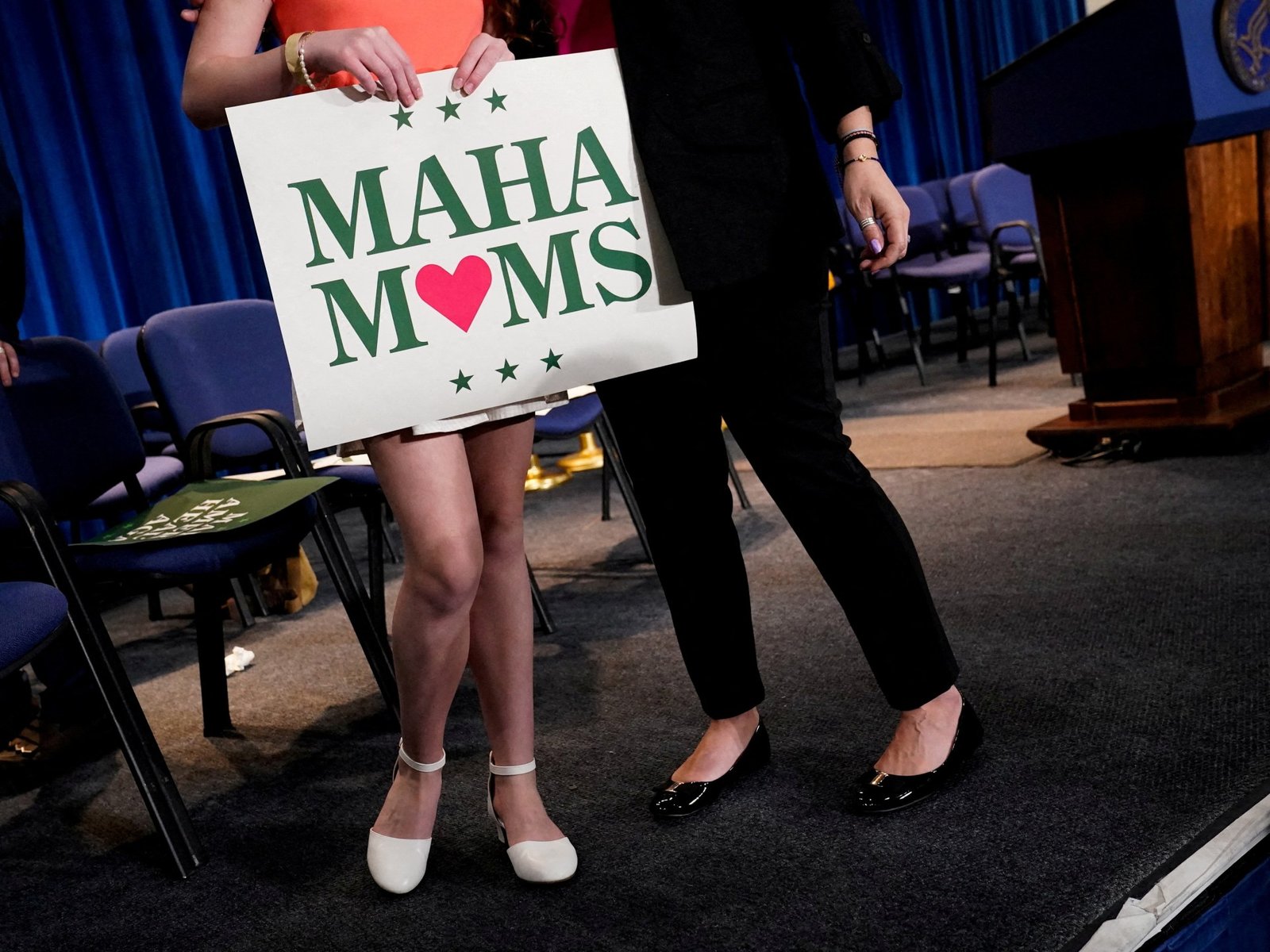
Headlining this “People vs Poison” rally were a handful of newly prominent “MAHA moms” – influencers and grassroots organisers who rallied behind Robert F Kennedy Jr’s presidential run. When US President Donald Trump promised to bring Kennedy on as health secretary to help “Make America Healthy Again”, he got a boost from that base.
But much to their dismay, the Trump administration backed Bayer at the Supreme Court.
“A government that shields corporations from the people does not serve the public. It is captured. And Americans see this capture!” said Kelly Ryerson, known on Instagram as “Glyphosate Girl”.
Since the election, these activists and influencers have supported Kennedy’s agenda while testing their political muscle more broadly, seeking to influence decisions in Congress, at the White House, in the courts and at the ballot box ahead of the midterms on issues of health, including chemicals used in foods.
Nationally prominent influencers
In addition to Ryerson, speakers at the April rally included a number of other “MAHA moms”, including Zen Honeycutt, who runs a group called Moms Across America; Vani Hari, who goes by “Food Babe” on social media and also runs a supplement company; and Turning Point USA contributor Alex Clark, who is not yet a parent, but who connected with MAHA activists after the election and now promotes MAHA causes to listeners of her Culture Apothecary podcast, where she discusses conservative views on politics, health, relationships and family life for her “Cuteservative” fans.
While about 40 percent of Americans say they support the “Make America Healthy Again” movement, according to a recent poll by the Kaiser Family Foundation, the women who spoke at the rally represent a narrower demographic.
Most are white, wealthy and well-educated. They attended prestigious schools, worked in management consulting, banking or media, and then moved into the health and wellness space, according to their LinkedIn profiles. They made these moves after navigating care options for themselves or their children, related to allergies, asthma or other chronic health concerns, many of them have said publicly. Many have no scientific or public health training, and some have reportedly been accused of peddling pseudoscience to their followers.
After the rally, these MAHA moms and their compatriots visited the House of Representatives and took to the social media platform X to pressure lawmakers. With a decision from the Supreme Court on Bayer’s liability expected as soon as this month, the House was considering adding liability protection language against pesticides, which include herbicides, to the Farm Bill. Such language could shield Bayer from potential lawsuits.
Congressional phones buzzed with calls from MAHA supporters, telling offices not to back Bayer. In a surprising display of bipartisanship, 73 Republicans joined most Democrats on April 30 to pass a MAHA-aligned amendment to remove those liability protections from the bill.
“It was really nerve-racking,” Ryerson told Al Jazeera later. “We watched the live voting and could not have been more relieved and excited.”
The Farm Bill vote was a substantial win for a group of influencers who have only become nationally prominent since Trump returned to office.
The MAHA moms quickly returned to X to blast House Republicans, who they say voted to protect chemical companies from liability.
Clark called Representative Mary Miller a “SNAKE!” who was “NASTY” for arguing for those protections on the House floor. She called Representative Jen Kiggans a “MAHA TRAITOR” for her vote.
They also framed the vote as an electoral mandate, threatening senators who still have time to bring the liability protections back in their version of the Farm Bill.
“Any Republican who voted against American children and families on behalf of chemical corps need to be voted out,” Ryerson wrote on X.
On Instagram, Honeycutt’s tone was softer, but the message was the same. “Dear Senators. MAHA moms are watching how you vote. Choose wisely,” she wrote.
The power of MAHA to drive midterm votes, however, remains unclear.
‘Post-partisan’
To outsiders, the MAHA movement may be best known for its anti-vaccine advocacy.
In May, Honeycutt asked her followers to oppose a state-level vaccine mandate in New York. She also shared a post about vaccines causing peanut allergies, a theory that the American Academy of Pediatrics refutes.
For his part, Health Secretary Kennedy removed every member of the Centers for Disease Control and Prevention’s (CDC) 17-person vaccine panel in 2025, replacing them with his own picks. He then removed six vaccines from the childhood vaccine schedule. Both changes are being litigated.
For many MAHA influencers, vaccines are just one example of many troubling threats to children’s health. Pesticides and other environmental toxins also loom large.
Kennedy’s own fears about pesticides and his anti-vax beliefs both appear connected to a rejection of “germ theory” – the cornerstone understanding in medical science that microbes cause many diseases.
Fears about environmental toxins are far from niche, however: a recent Reuters/Ipsos poll found that across party lines, roughly four in five Americans are concerned about pesticides, chemicals and food additives.
“I think it’s gone postpartisan,” said Ryerson, who identifies as politically independent. She noted that since 2021, her Instagram following has shifted from mostly “California hippie Democrat” types to self-described conservatives.
Tracey Woodruff, an epidemiologist at Stanford University who co-leads an interdisciplinary research centre on environmental pollutants, disagrees with MAHA on vaccines, but says they are right to be concerned about chemical exposures.
Children are more vulnerable than adults to toxic chemicals, Woodruff said. The current regulatory approval process for chemicals does not always fully account for those potential differences or for the potential effects of cumulative exposures to small amounts of lots of different chemicals.
Woodruff, who worked at the Environmental Protection Agency (EPA) earlier in her career, is also concerned about industry influence.
“We have a system that is not considering the science appropriately and is not taking the right actions to protect people,” Woodruff said. “People are naturally very frustrated.”
She credits the MAHA movement with bringing new visibility to chemical exposures.
Industry out-influencing influencers
While it is still unclear how much sway MAHA has over voters, at the White House, industry appears to be out-influencing the influencers.
Last year, a White House MAHA Report (PDF) called out the use of glyphosate, cumulative exposure to environmental toxins and corporate influence over the regulatory system – a MAHA win.
When a follow-up MAHA Strategy appeared, however, the only mention of pesticides was in a paragraph about how well the current system is working.
“Well, that’s a ‘screw you’ to the movement!” Woodruff remembered thinking. “It was so stunning.”
In February, the MAHA moms suffered another glyphosate setback: 10 days before the US attacked Iran, an executive order called for increased domestic production of glyphosate to support national security.
It also added a critical mineral listing for elemental phosphorus, which is the main ingredient in glyphosate and which includes white phosphorus, used in “incendiary weapons” that create smokescreens. White phosphorus can be deadly, according to the World Health Organization, and Human Rights Watch has recommended a complete ban.
The executive order included protections for the continued “corporate viability” of domestic producers of glyphosate-based herbicides. Bayer, which owns the only elemental phosphorus mine in the US, is the only domestic producer.
The MAHA moms were furious – and even more so when Kennedy, who previously led glyphosate class-action suits against Monsanto, came out in favour of the move.
Turning Point USA’s Erika Kirk arranged for a small group of MAHA moms to meet with Trump and Kennedy at the White House in early April to smooth things over.
After a World Health Organization panel in 2015 concluded that glyphosate is likely to cause cancer in humans, the US EPA re-reviewed the pesticide in 2016 and came to the opposite conclusion. It released another interim decision in 2020 reaching the same conclusion, which was overturned by the courts in 2022 and is being redone, with a new decision expected sometime this year.
While glyphosate science remains contentious and is continuing to develop, Ryerson says alternative herbicides may be even worse, so switching to other chemicals is not necessarily better.
“What you really don’t want to have happen is they say, “OK, no more glyphosate”, and then they bring in the things that are 40 times more toxic,” Ryerson said.
Frustrations
To that end, Ryerson said she asked the administration for billions of dollars to increase pesticide oversight and help farmers transition away from pesticides and towards regenerative agriculture.
She also asked for what she framed as an easier win: to stop spraying glyphosate right before harvest to dry out crops. Ryerson says this “pre-harvest dessication” is responsible for most pesticide residues on groceries and is already banned in Europe.
At the White House meeting, Ryerson felt heard. She posed, smiling, with Trump, Kennedy and the other MAHA moms.
A month later, however, new commitments on glyphosate have not materialised.
“I’m just incredibly frustrated that I don’t think that this movement belongs under this administration,” Ryerson said. “They’re not going to bat for the voters that put them in office.”
Cassidy DiPaola, an organiser working to hold oil companies accountable for climate damages, said Ryerson’s frustration feels familiar. “Outside populist energy versus institutional power is not unique to MAHA at all,” DiPaola said.
DiPaola has been watching MAHA’s fight with Bayer because climate activists are currently fighting similar “liability shields” that would protect fossil fuel companies from lawsuits around climate damages, including from recently enacted state “climate superfund” laws.
While grassroots groups have been fighting separately, industry groups are pursuing remarkably similar legal strategies.
“Big Oil is watching Bayer. Bayer is watching Big Oil,” DiPaola said.
DiPaola said Americans are increasingly frustrated by their sense that corporations play by different rules. She sees less agreement, however, on who should be trusted to fight that concentration of power.
“What does it mean when we have a very similar understanding and a very similar goal, but the process of getting there and who we get there with is deeply different?” she asked. “’Can we overcome those differences?’ is another part of that question.”
Ryerson is also looking ahead. “I really, really want to be sure that we keep conservatives on this team,” she said. “They very much care about this issue.”