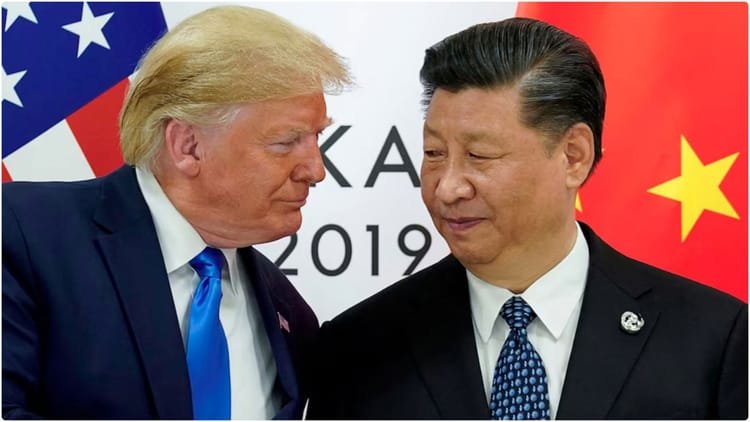
More than a month has passed since America and Israel started war against Iran in West Asia. Due to this war, the supply chain was affected so badly that the whole world is in confusion. However, this crisis is presenting a different picture for China. While on one hand the global markets are deteriorating due to Donald Trump’s tariff policies and attacks on Iran, on the other hand China is calling itself a symbol of stability and certainty even in this situation. A report by The Economist has claimed that this war will cause damage to China’s economy, but the impact will be much less compared to its rivals and neighbors.
Let us understand what new possibilities and challenges this geopolitical tension has brought for China on the front of energy, exports and economic development.
China’s strong preparations amid global energy crisis
On the energy supply front, China is in a very secure position due to its better preparation. Countries like Japan and South Korea import more than 70% of their crude oil through the Strait of Hormuz, while China’s dependence on this route is only a third. In addition, coal, nuclear power and rapidly growing renewable energy account for major shares of China’s total energy use.
If the supply chain is severely disrupted, China has about four months of reserve marine oil reserves, which the government currently plans to reserve just for the worst. However, on March 23, petrol prices in China were increased by 13%. According to economists, this rising cost of raw materials can help China get out of the dangerous phase of ‘deflation’ (continuous fall in prices) that has lasted for 41 months, which is the longest period of falling prices since 2012-16.
Pressure on China and what role do the New Three products play?
Due to disruption in the global supply chain, energy becoming expensive will reduce people’s spending on other goods, which will have a direct impact on Chinese factories. Last year, China posted a record trade surplus of $1.2 trillion, which contributed a third of its economic growth.
But the crisis has also created a huge opportunity for China’s ‘New Three’ products – electric vehicles, lithium-ion batteries and solar cells. China’s share in the global production capacity of these three sectors is more than 70%. If oil prices remain high, the demand for these green products will increase rapidly all over the world. One advantage of this is that the European countries which were preparing to impose strict restrictions on sugar imports, have now got distracted due to the war, which will directly benefit the sugar producers.
Will China bring a big relief package?
If the war drags on, China will face a huge challenge to achieve its growth target of 4.5-5% set for 2026, which is the lowest level since 1991. President Xi Jinping considers ‘stimulus’ packages that increase debt as a weakness of the economy and a moral failure. They want businesses and consumers to fend for themselves rather than relying on government bail-outs. But, if exports fall and the sluggish property market fails to recover, the government may be forced to cut interest rates sharply and increase public spending.
What is the opinion of experts about dragon?
Economic experts believe that in case of weak exports, China will have to increase its domestic demand. This increase in domestic demand through stimulus will prove to be very beneficial not only for Chinese families, but also for the stability of the global economy. However, from the US point of view, it would be a great irony that Donald Trump’s policies and war destabilized world markets, but ultimately this crisis could make China’s economy more balanced by removing it from export-dependence. In such a situation, it is obvious that China, which Trump claims to be trying day and night to weaken, is succeeding in improving his own situation through his own actions.