Khartoum, Sudan – Omar Othman, a gold miner in northern Sudan’s Abu Hamad town, had hoped for a fresh start to life in the capital – only for those hopes to be cut short by illness.
For months, he had worked deep in the gold mines under harsh conditions, which badly affected his health. At first, the symptoms seemed minor: a cough that lingered for weeks went largely unnoticed.
Recommended Stories
list of 4 itemsend of list
But after arriving in Khartoum, it developed into a sharp chest pain that forced him to seek medical attention. He was diagnosed with pulmonary tuberculosis, one of several infectious diseases spreading in Sudan, where a three-year war between the Sudanese army and the paramilitary Rapid Support Forces (RSF) has collapsed the African country’s health system.
At the Tropical Diseases Teaching Hospital in Omdurman, Sudan’s second largest city west of Khartoum, laboratory tests confirmed the diagnosis.

Othman told Al Jazeera that although the result left him anxious, counselling sessions and a clear explanation of the treatment plan helped ease his fears and allowed him to come to terms with his condition.
But his treatment was only the beginning, with many obstacles still ahead.
Shortage of supplies
During his first visit to hospital, Othman said he faced no difficulties. He paid a small fee for the tests and received treatment free of charge.
But on his second visit, essential medication was no longer available, forcing him to buy it privately at a high cost.
The Tropical Diseases Teaching Hospital, once a refuge for patients, now operates with limited capacity amid the wider collapse in health services across the country, with the war into its fourth year.
The Sudanese health ministry this month said 37 percent of its health facilities have been rendered non-functional due to the war, which erupted on April 15, 2023 following a power struggle between the Sudanese Armed Forces (SAF) chief General Abdel Fattah al-Burhan and the RSF leader Mohamed Hamdan Dagalo, widely known as Hemedti.
The SAF currently controls much of eastern and central Sudan, including Khartoum, while the RSF controls the western Darfur region.
The World Health Organization (WHO) earlier this month verified and documented at least 217 attacks on health infrastructure in Sudan, leading to the deaths of 2,052 healthcare workers, even as some 40 percent of the country’s 52 million people require urgent medical assistance.
“Given the high rates of malnutrition, a debilitated health system and low immunisation coverage, disease outbreaks will continue to have catastrophic impacts, particularly for children,” it warned.
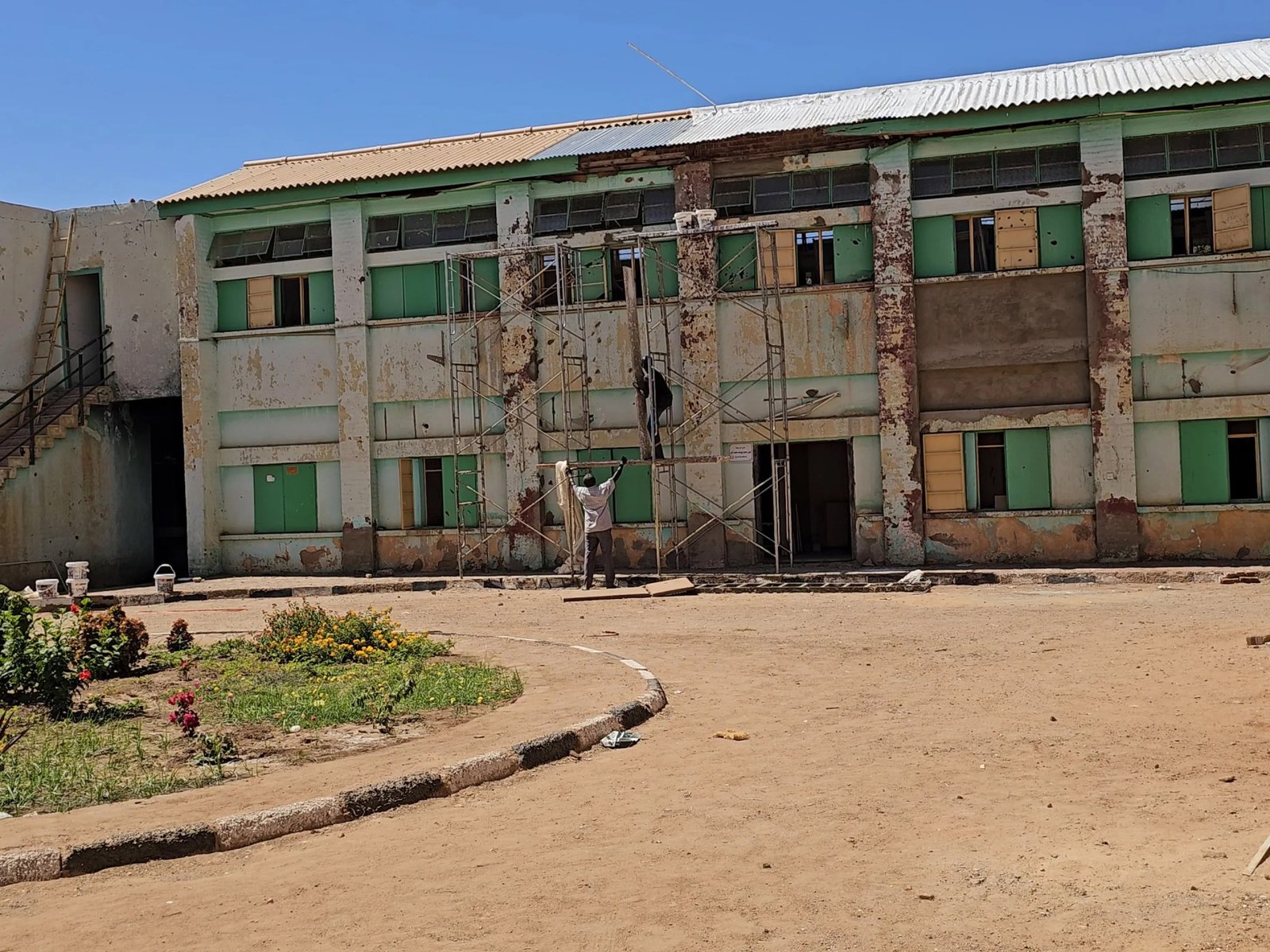
The Tropical Diseases Teaching Hospital in Omdurman was also shut for nearly two years due to the war, with hospital Director General, Abu Bakr Hassan Al-Mubarak, saying efforts are under way to restart key departments, including internal medicine, dermatology, sexually transmitted diseases, as well as clinics for psychological counselling and medical testing units.
He added that even as the hospital is partially operational, “huge challenges remain, particularly related to funding and the urgent need to repair damaged wards”. Outpatient clinics continue to operate in the country’s first specialised infectious disease hospital, receiving large numbers of patients daily.
The hospital’s Director of Media and Public Relations, Hasaballah Suleiman, says it depends heavily on support from health and humanitarian organisations to meet basic needs. The volume of patients “puts pressure on already limited equipment, medicines and staff”, adding that the facility suffered losses exceeding half a million dollars due to the war.

Rimah Fadl Al-Mawla, an officer in the Psychological Counselling Centre, says staff are under “growing strain due to rising patient numbers and limited resources”.
He said conditions were “significantly better” before the war, but damage to laboratories and counselling centres reduced space and forced them into less-equipped facilities, affecting quality of care.
Despite the setbacks, he said efforts continue to rebuild and restore the hospital’s role in providing medical and psychological services.
Collapsing healthcare system
The crisis at the Tropical Diseases Teaching Hospital is testimony to Sudan’s collapsing healthcare system, while also highlighting the resilience of the remaining facilities and staff.
Large parts of Sudan’s medical infrastructure, particularly in the worst-hit Darfur and Kordofan regions, have been rendered inoperative due to shelling and supply shortages.
Outbreaks of life-threatening diseases such as malaria, dengue fever, measles, rubella and cholera place further pressure on Sudan’s strained health facilities, raising concerns over their ability to meet rising demand.
Recent strikes, including on hospitals in White Nile and East Darfur states, have killed dozens of civilians and medical workers and further reduced access to emergency care.
The situation has been worsened by the collapse of basic infrastructure, with up to 40 percent of power generation capacity lost and main water systems destroyed or seized, cutting communities off from clean water and sanitation, and accelerating the spread of diseases.