Last Updated:
When traveling by flight, a tag is attached to your check-in luggage. We simply remove this tag after travelling. But have you thought that your sensitive information is hidden in this tag.
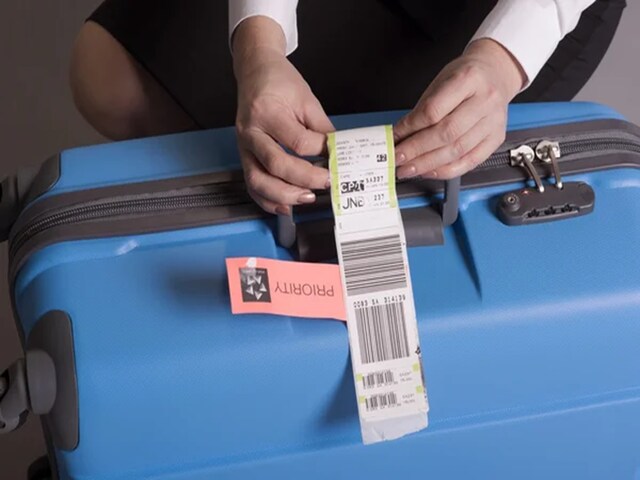

Next time, be careful before throwing the airplane tag (Image – File photo)
While travelling, the small paper tag (Airplane Tag) is attached to the check-in luggage at the airport. Most of us throw it in the garbage as soon as the flight lands. But do you know that this seemingly simple tag keeps a lot of your sensitive and personal information hidden?
Many travelers are now becoming aware of how dangerous it can be to just throw it away. Let us know the whole truth and how it should be disposed of properly.
What happens on the tag?
At the top of an airline luggage tag are your name (mostly last name or initials), flight number, destination airport code (e.g. DEL, BOM), and most importantly – a unique 10-digit license plate number (LPN). This LPN is encoded in the barcode. When the barcode is scanned, it connects to the airline’s internal system, where your Passenger Name Record (PNR) is stored. PNR is a 6-character code that is linked to your entire booking. This may include travel dates, seat numbers, frequent flyer details, sometimes even email or phone number.
there could be danger
Many experts and travel blogs have warned that scammers can misuse the discarded tags by picking them up. For example, a criminal picks up a tag lying in the baggage claim area of the airport, scans its barcode, extracts the PNR and then files a fake claim – like extorting money by claiming the bag is missing. In some cases, fraud has been committed by stealing travel itineraries. Although credit card details are not directly visible, a lot of information can be accessed from the PNR if someone infiltrates the airline’s system or uses social engineering. People like aviation expert Amit Mittal have clarified that the barcode does not contain information like a credit card, but it is just an LPN which works like a database pointer.
Can access phone number
A common man will not be able to see much by scanning with a smartphone, but professional scammers can extract PNR with tools. Also, if you have your phone number, address, or home address written on the tag (which many people do), that is a direct privacy risk – opening the door to identity theft, stalking, or phishing attacks. Then what should we do? The best way is to destroy the tag properly before throwing it away. Many sources recommend tearing the barcode vertically, so that the barcode lines are broken and cannot be scanned. This makes the information unreadable. Some people cut it completely or burn it. If there is a personal tag (which has your contact details written on it), tear it off separately or cross it out with a black marker.
About the Author

I am working as a senior sub editor in News 18. The aim of the regional section is to introduce you to the events happening in the states which are being liked on social media. So that you don’t miss any viral content.