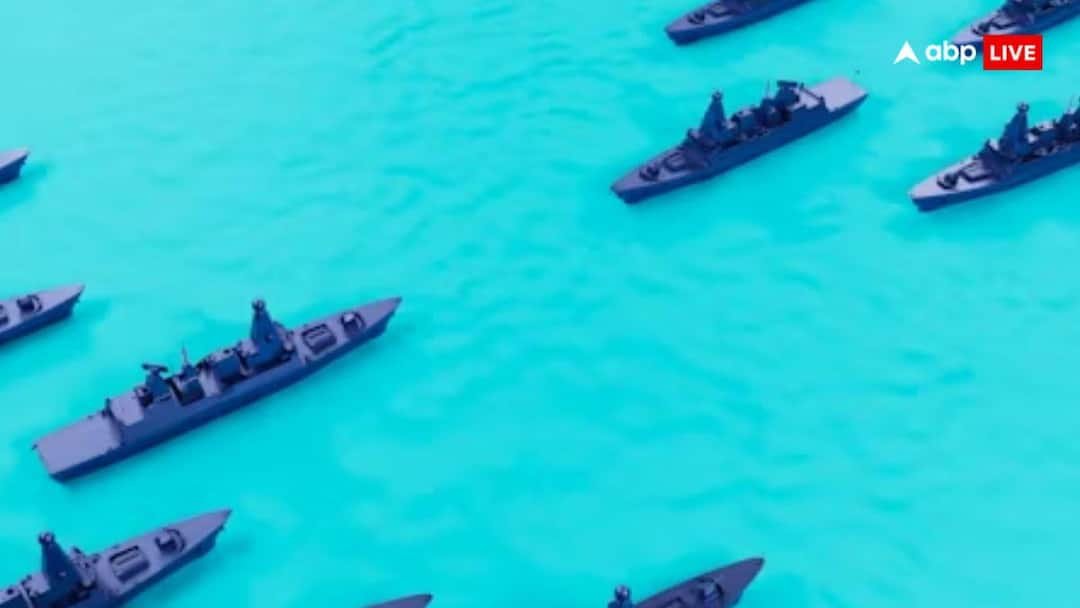
China’s military activities around Taiwan seem to be intensifying once again. Taiwan’s Defense Ministry (MND) informed on Wednesday that seven Chinese naval ships and one official ship were found active in its vicinity. This development has once again underlined the increasing tension in the Indo-Pacific region.
Taiwan’s Defense Ministry posted on social media platform
7 PLAN vessels and 1 official ship operating around #Taiwan Detected up until 6 am (UTC+8) today. #ROCArmedForces Have monitored the situation and responded. No flight path illustration is provided, as we did not detect #PLA aircraft operating around Taiwan during this… pic.twitter.com/cbSaSQ8sbZ
— 國防部 Ministry of National Defense, ROC(Taiwan) 🇹🇼 (@MoNDefense) May 6, 2026
That is, this time no activity of the Chinese Air Force was recorded, but movement was clearly visible on the maritime front.
Activity increased for the second consecutive day
This is not an isolated incident. A day before this, on Tuesday, Taiwan had also recorded China’s military activities. That day, one Chinese military aircraft, six naval ships and one government vessel were found active around Taiwan.
The MND then said, “As of 6 a.m. today (UTC+8), activity of 1 PLA aircraft, 6 PLAN ships, and 1 official vessel was detected in the vicinity of Taiwan. 1 of the 1 aircraft entered Taiwan’s northern ADIZ area. The ROC Armed Forces monitored the situation and responded.”
1 sorties of PLA aircraft, 6 PLAN vessels and 1 official ship operating around Taiwan detected up until 6 am (UTC+8) today. 1 out of 1 sorties entered Taiwan’s northern part ADIZ. #ROCArmedForces Have monitored the situation and responded. pic.twitter.com/Y3D9larU05
— 國防部 Ministry of National Defense, ROC(Taiwan) 🇹🇼 (@MoNDefense) May 5, 2026
The special thing is that the Chinese aircraft also entered the northern part of Taiwan’s Air Defense Identification Zone (ADIZ), which is generally considered a sign of increasing tension.
Maritime pressure strategy?
Experts believe that China is now increasingly using “gray zone tactics” to put pressure on Taiwan—that is, a sustained military presence without direct war. This time the absence of air activity and presence of only naval ships is being considered a part of this strategy. This allows China to demonstrate its power without open confrontation and forces Taiwan to remain alert.
Taiwan’s military said it monitored the situation and took necessary countermeasures. However, the nature of this “retaliatory action” was not made public. The increase in Chinese naval activities for two consecutive days is a clear indication that Beijing is continuing its policy of pressure. Although these activities are currently “low-intensity”, but if this pattern continues, larger military exercises or more aggressive steps may be seen in the future. For Taiwan, this is not just a question of security, but an issue of survival and identity.
Taiwan–China dispute: history and present
The dispute between Taiwan and China is not new, but its roots go deep in history. China claims that Taiwan is its integral part. This claim is part of its official policy and is repeated from domestic laws to international forums. Taiwan, on the other hand, considers itself a region with a separate identity. It has its own democratic government, army and strong economy. If we look at history, the Qing dynasty captured Taiwan in 1683. After the Sino-Japanese War in 1895, Taiwan came under the control of Japan and remained a Japanese colony for about 50 years. Taiwan returned to Chinese control after World War II, but a formal determination of its sovereignty was never made clear.