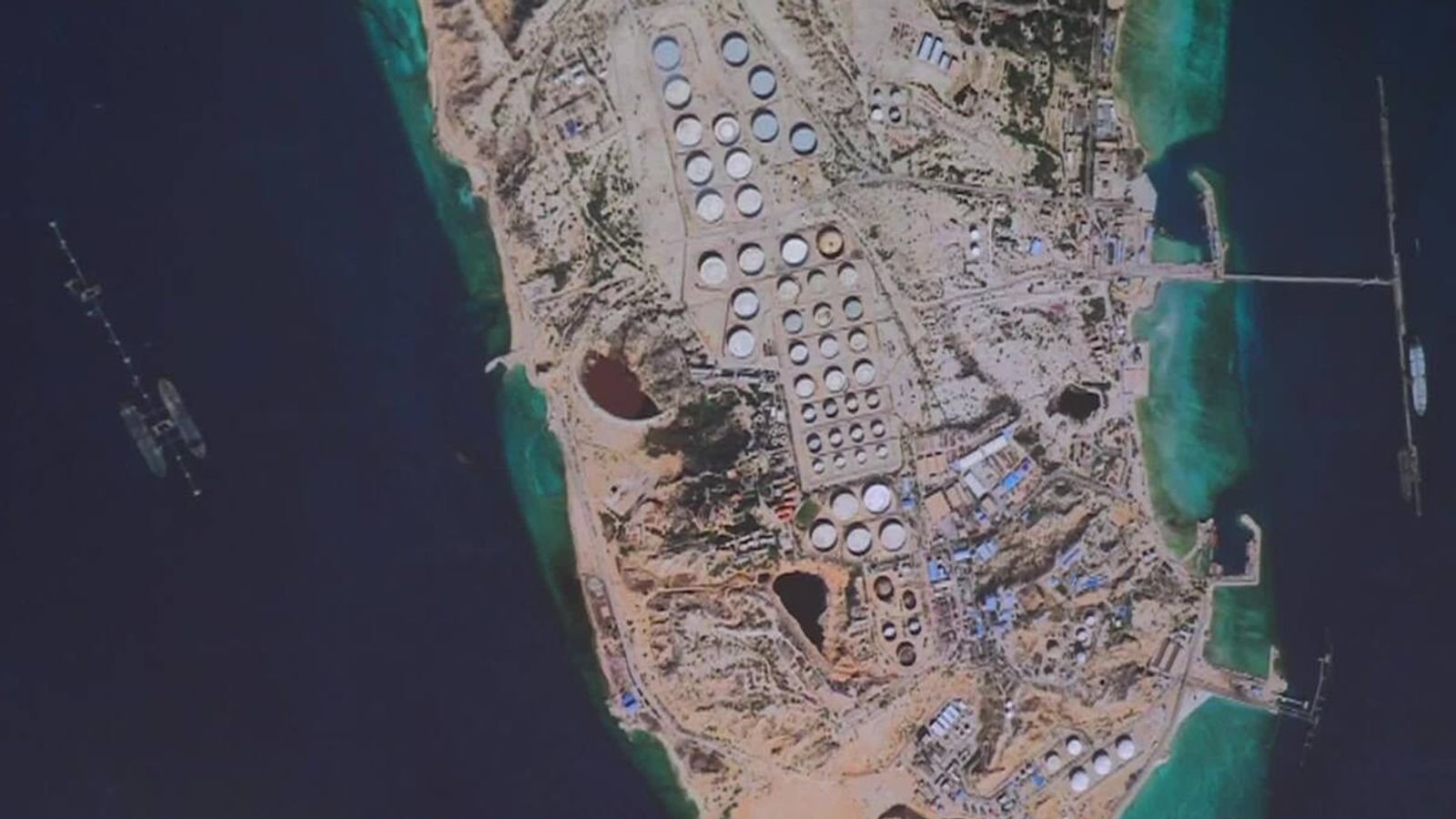
Donald Trump has said his forces carried out a bombing raid on Iran’s “crown jewel” Kharg, a small island in the north of the Persian Gulf, on Friday.
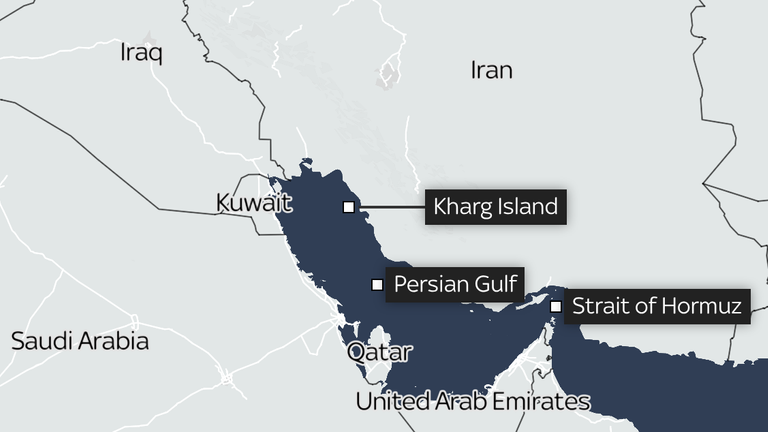
The five-mile-long coral island – twice the size of London’s Heathrow Airport – is in the north of the Persian Gulf, 16 miles (26km) from Iran’s coast and roughly 300 miles (483km) north of the Strait of Hormuz, the vital waterway through which 20% of global oil flows, that Iran has shut down.
President Trump said US forces “obliterated” military targets on Kharg Island, but significantly said he chose not to “wipe out” the island’s oil infrastructure. He threatened that this could change if Iran interfered with the safe passage of ships through the strait.
Iran latest – follow live updates
Tehran warned of a new level of retaliation if the oil infrastructure on Kharg was damaged, vowing on Saturday that Iranian forces would destroy the oil and gas infrastructure of companies cooperating with the US in the region if its sites were targeted, according to Iranian state media.
But why is the island so important?
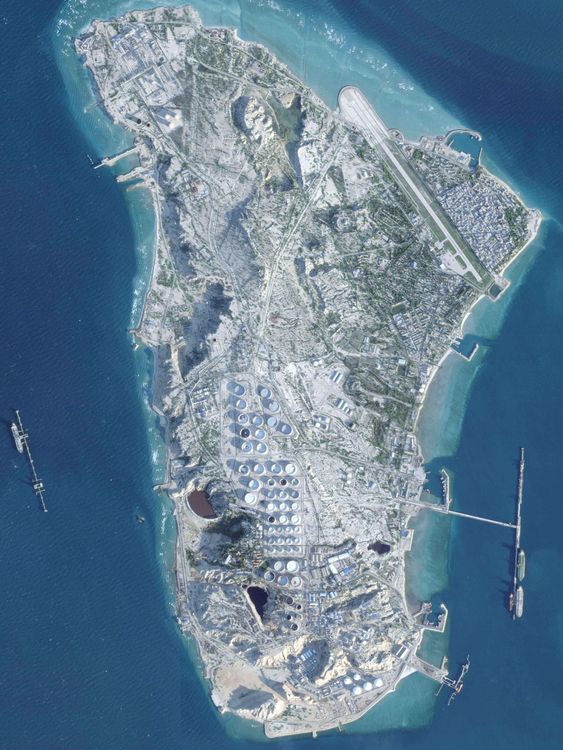
Kharg Island. Pic: Planet Labs PBC via AP
Why was no oil infrastructure hit?
Kharg is the export terminal for 90% of Iran’s oil shipments and has the capacity to load around seven million barrels a day.
The island can handle as many as 10 supertankers at the same time, as its waters are deep enough to enable the docking of tankers that are too large to approach mainland Iran’s shallow coastal waters.
Before the war, the island handled most of Iran’s roughly 1.7 million barrels of crude exports per day, with the majority of it going to China.
Iranian oil accounts for 11.6% of China’s seaborne imports so far in 2026, according to tanker tracker Kpler. “Therefore, if [Mr Trump] was to take that out, he might risk the ire of China,” Sky News’ military analyst Sean Bell said.
Hitting Kharg’s oil infrastructure would also likely lead to oil prices surging even further, after they hit a four-year high on Friday.
Oil exports continuing despite war
In the week before the war broke out, Kharg shipped a record of 3.79 million barrels per day, and operations on the island have continued despite the conflict.
About 13.7 million barrels of oil have been exported from the island since the US-Israeli strikes were launched on 28 February, at a rate of 1.1 million to 1.5 million barrels per day, according to maritime intelligence company TankerTrackers.com and Kpler data.
Multiple tankers were still loading there on Wednesday, according to satellite pictures from Tanker Trackers.
Kharg has storage tanks in the south, along with housing for thousands of workers. It has a storage capacity of roughly 30 million barrels, and held about 18 million barrels of crude as of early March, according to a JP Morgan report citing Kpler data.
Critical to funding of Iranian government
The island has long been seen as a key vulnerability that would provoke a severe response by Tehran if attacked.
Kharg is critical to funding Iran’s government and military, and if Iran were to lose control of the island, it would be difficult for the country to function, according to Petras Katinas, an energy researcher at the Royal United Services Institute.
Mr Katinas said a takeover would give the US leverage over negotiations with Iran because the island is “the main node” of its economy.
While there has been speculation that the US could be tempted to seize Kharg Island, experts say that would almost certainly require troops on the ground, making it extremely risky.
One Iranian politician has reportedly already threatened US troops with capture if they attempt to seize its crucial oil hub.
JP Morgan’s global commodity research team stressed the wider economic implications of a direct strike on the island, warning before the US struck military targets on Kharg that strikes would “immediately halt the bulk of Iran’s crude exports, likely triggering severe retaliation in the Strait of Hormuz or against regional energy infrastructure”.
“You take out Kharg infrastructure, then you take two million [barrels per day] out of the market for good – not until the Straits get fixed,” Dan Pickering, chief investment officer for Pickering Energy Partners, added.
Damage to the island
Iranian state media reported that no oil infrastructure was damaged in the US strikes, adding that air defences, a naval base, airport control tower, and a helicopter hangar were targeted.
The 55 crude oil storage tanks, which can hold more than 34 million barrels, are “most likely unscathed”, Tanker Trackers said.
“Although the island has some offshore oil production, the bulk of the oil actually derives from the mainland via multiple pipelines,” the tracking service said.
“The island first began exporting oil during the summer of 1960 and was built to [accommodate] 7 million barrels per day in exports, to reflect the potential in oil production. Iran hit 6.6 [million barrels per day] in production back in 1976.”
Read more:
Trump’s post reveals much about island strike
US Navy to escort oil tankers through Strait of Hormuz
The maritime intelligence company added that there was a supertanker in the process of loading two million barrels of crude oil and a few smaller tankers loaded or berthed on the east side of the island just after midnight UK time on Saturday.
Activities on the island, including exports and imports, are “proceeding normally” after the strikes, the deputy governor of Bushehr, a port city close to Kharg, said, adding that no military personnel, oil company employees or island residents were killed.
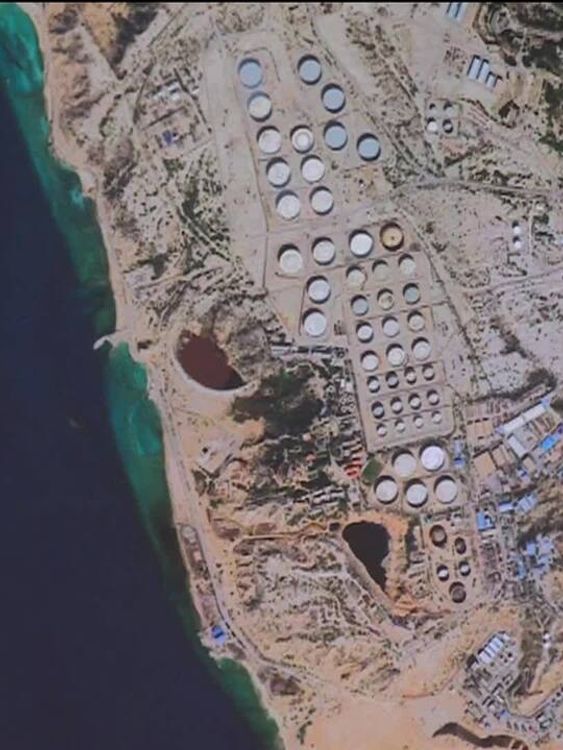
Infrastructure on Kharg Island
Was the island targeted before?
Despite being viewed as a critical vulnerability, the island has rarely been directly targeted.
The last time was during the Iran-Iraq war in the 1980s, but it did not stop crude oil exports from Kharg.
“When Saddam Hussein raided the island numerous times forty years ago and destroyed a number of storage tanks, Kharg Island was still able to export over 1.5 million barrels per day,” Tanker Trackers said in a post on X.