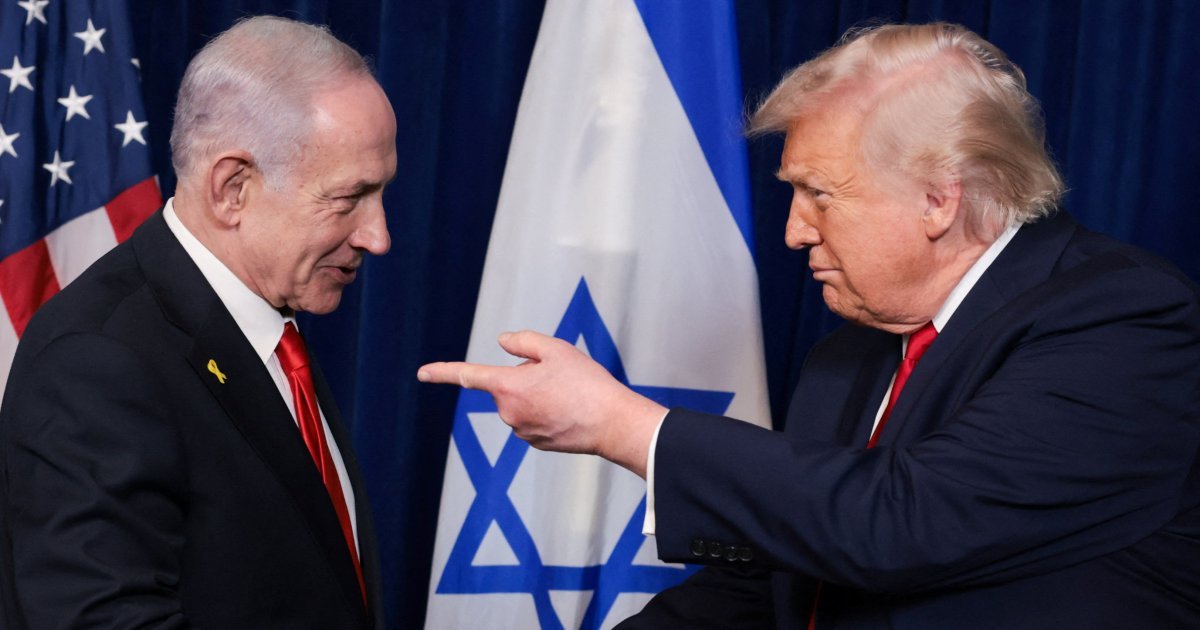
As the US-Israeli war on Iran drags on for another devastating day, pundits and politicians are eager to spin the uncertainty into clear narratives that justify their long-held views. Israel talks about “changing the Middle East”. The US speaks of “defending the American people”. Both repeat “regime change” like a mantra, even though the prospects of that in the Iranian context remain unclear.
So far, the assassination of Supreme Leader Ali Khamenei has failed to produce the mass uprising within Iran that Israel and the US have called for. Meanwhile, pundits continue to repeat that regime change cannot happen from the air.
Still, war exists to be won or lost. So who is winning?
The immediate impulse is to assume a victory for Israel and the US. After all, both countries pulled off a major surprise and appear to be decimating the Islamic Republic leadership from the air and sea. What greater achievement could there be but “decapitation”?
Considering the weak responses of the European Union and Asia’s absence from unfolding events, the impression that Israeli Prime Minister Benjamin Netanyahu and US President Donald Trump have won grows stronger. No one seems capable of even suggesting any kind of feasible alternative to the Israeli-American full-court press.
I would like to suggest a different take on the current state of affairs. Succinctly, I propose that Netanyahu and Trump may have won the first round of hostilities, the most tactical and immediate round, although even this “victory” is dubitable. It has come about because of their extremely short-term interests converging. However, the life expectancy of this resurgent alliance is as brief as the time it will take each party to leverage their own successes for their exclusive benefit.
The first converging interest is political survival. In Israel, Netanyahu must create distance between his leadership credentials and Israel’s serial failures in Gaza and the West Bank. While Israel’s genocide of the Palestinian people continues, Israel is also seeing full control over Gaza start to slip from its grasp. Its efforts to ensure Turkiye and Qatar have no role to play have so far failed.
In the West Bank, the Israeli state and military have completely committed to aiding and abetting land theft and ethnic cleansing. While the majority of Israelis don’t oppose either, their faith in state institutions that pretend to uphold the law while being thoroughly politicised decreases constantly.
To ensure his political future, Netanyahu must appear removed from these failings. A “win” in Iran, the country most Israelis consider their most significant enemy, should establish him, once again, as the only leader capable of defending Israel.
The prime minister is joined by the Israeli army, despite longstanding tensions between government and military over the past year. If Netanyahu is desperate for a win, the army is even more desperate. Its high command seeks to avoid being named solely responsible for the events of October 7, 2023, and is already demanding a significant budget increase. Only a “historic victory” would ensure the impunity of the military.
In the US, Trump is desperate not just for a win but also for a distraction. His “heroics” in Venezuela have already been forgotten while his “antics” chronicled in the Epstein files reverberate more and more powerfully every day.
His use of “regime change” appears intentionally ambiguous, open to any and all interpretations, allowing him to declare “mission accomplished” whenever he should so choose.
Trump is also eager to appear thoroughly capable of championing his vision of a world order, one consisting simply of “might makes right”. The obvious contradiction between his “no foreign wars” commitment to his base and the pursuit of American exceptionalism and triumphalism is easily resolved when it comes to the Islamic Republic, a perennial bogeyman.
All that said, Trump and Netanyahu do not trust each other. Neither side has anything but the most immediate interest in pursuing further cooperation.
Once the distraction wears off, both will be left with an uncertain war. Trump will feel the pressure to wrap up the operation quickly while Netanyahu will seek to prolong it.
Trump lacks the attention span and the public support required for a lengthy war. He cannot put “boots on the ground”, and this is the reason behind his repeated messages of “helping” and “being there” for the Iranians when they take over their country. He is coming under intense criticism at home, not just for starting this war without congressional approval but also over potential American casualties and a prolonged commitment.
Netanyahu, just as in Gaza, has no real plan other than destruction and death. He wants war for as long as possible to keep the opposition at bay and ensure his political survival. It is no wonder official messaging about the war has been that Israel is in it for “as long as it takes” and that it will be “longer than the June war” and a “historic operation”. The more the rhetoric soars, the more the campaign itself would become one of endless, indiscriminate bombing with civilian casualties mounting.
The gap will make itself apparent as the US and Israel issue gradually more distanced statements, each referring to its own exclusive rationale and timeframe. Trump will continue to send out feelers as the Islamic Republic begins a constitutional process to elect a new supreme leader, which means the Islamic Republic is very much still standing. Israel will remain intentionally ambiguous as it describes its progress in glowing, unlimited terms like “true regime change”.
Look for this unholy alliance to grow slowly and then rapidly undone in the immediate timeframe. Theirs stands to be a pyrrhic victory at best.
The views expressed in this article are the author’s own and do not necessarily reflect Al Jazeera’s editorial stance.