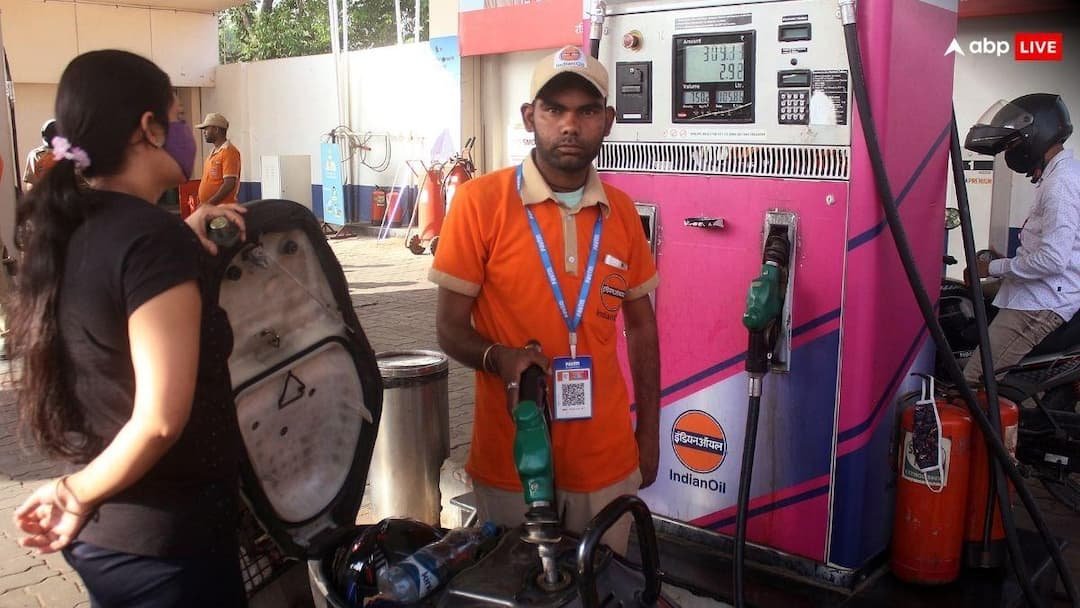
Amidst the fluctuations in the prices of crude oil in the global market, the rates of petrol and diesel are once again in the center of discussion. Amid reports of fuel becoming expensive in many countries, both questions and debate have increased regarding the relatively stable prices in India.
Experts say that tax structure, refining cost and currency exchange rate have a big impact on the prices of petrol and diesel in India. Due to taxes of the Central and State Governments, the impact of changes in international prices is not visible directly and immediately.
The ongoing war in the Middle East has now become not just a regional conflict but a crisis shaking the global economy. The increasing tension between Iran and America-Israel has changed the most important axis of oil supply- strait of hormuz– has been put in jeopardy. Its impact is now being felt in every corner of the world, and India is also not untouched by it.
The impact of the rise in oil prices is directly visible on the pockets of common people and the mood of the market. The Sensex fell by 1,555 points in early trading on Monday, while the Nifty also fell by about 480 points. Heavy selling in global markets and withdrawal of foreign investors has increased the concern of investors.
According to experts, about 20% of the world’s oil and LNG moves through Hormuz. In such a situation, due to deepening of the crisis, energy supply is certain to be disrupted. It is estimated that production in the Middle East may be affected by 70 to 100 lakh barrels per day. This is the reason why Brent crude remains above $112 per barrel.
Energy expert Narendra Taneja said, ‘Even after such a long war, the central and state governments have still given relief to the ordinary consumers. There are bad conditions in the world, yet relief has been given to the common people, despite the rising prices of crude oil, the common consumers have been kept safe from any impact. Oil companies themselves are suffering losses amid rising crude oil prices and are compensating for them. If the war continues, then it remains to be seen how the oil companies cope with this crisis.
Is only the market affected?
The impact of fuel rates is not limited to just drivers. Increase in transport costs also puts pressure on the prices of food and essential commodities, which may increase the risk of inflation. This is the reason why every movement in the global oil market is considered important for India’s economy.
The impact of this global turmoil is not limited to the stock market only. The income of taxi drivers is decreasing due to rising petrol prices in Taiwan, there is a possibility of fuel prices increasing in China and the electricity crisis in Cuba has shocked normal life. In Pakistan, the tax on high-octane fuel has been increased to three times.
The government in India claims that the situation is under control. Petroleum Minister Hardeep Singh Puri said in Parliament, ‘There is no shortage of petrol, diesel, kerosene, ATF or fuel oil. Availability is completely assured. The government argues that due to strong foreign exchange reserves and stable economic policy, India stands strong despite the global crisis.
government vs opposition
politically also petrol-diesel prices Has always been a sensitive issue. Both the government and the opposition, with their own arguments, look at it by linking it to public interest and economic policy. BJP leader Gaurav Vallabh said, ‘Despite such a serious geopolitical situation, should the prices of petrol and diesel increase in India? Prices increased by 25-40 percent in neighboring and European countries, but India’s strong macroeconomic condition has managed this.
However, the opposition does not agree with the government’s claims. Congress leader Rahul Gandhi described the fall of rupee and increase in industrial fuel prices as a sign of future inflation. He said, ‘The weakening of the rupee against the dollar and the sharp rise in the prices of industrial fuel are not just figures, but a clear indication of the coming inflation.’
Air travel is expensive!
The energy crisis is also affecting the aviation sector. Civil Aviation Minister Ram Mohan Naidu said, ‘The impact of ATF prices can be seen from April 1.’ Airlines have already started preparations to increase fuel surcharge, due to which air travel may become expensive. Analysts believe India’s energy diplomacy and emphasis on alternative sources – solar, nuclear and green hydrogen – may provide relief in the long run. However, in the short term, pressure on inflation, rupee and markets may remain.
The Civil Aviation Ministry has decided to remove the temporary fare cap imposed on domestic air fares from today (March 23, 2026). This control system was implemented last year to prevent large-scale flight disruptions and abnormal increase in ticket prices. The ministry said in the order that fare control is no longer necessary in the current circumstances. On this, aviation expert Sanat Kaul said, ‘The issue of setting lower and upper limits on fares should be discussed. Competition is necessary in the sector, but when there is a duopoly and public interest is involved, it has to be seen that excessive rent is not charged.
What could happen next?
In the coming time, global oil supply, geopolitical situation and domestic policy decisions will decide the trend of fuel prices in India. At present, petrol prices are not just an economic figure but have become a big question related to the budget of the common man and the pace of development of the country. The real impact of the Iran war will become clear in the coming months. At present, this crisis has become a big test of India’s economic strength, energy security and policy-making ability. Amidst the changing equations of the world, the question is – will India be able to emerge safely from this global energy storm or will the heat of inflation reach the common people?
Also read:-
Strait of Hormuz: Relief news for India, two LPG tankers crossed the Strait of Hormuz