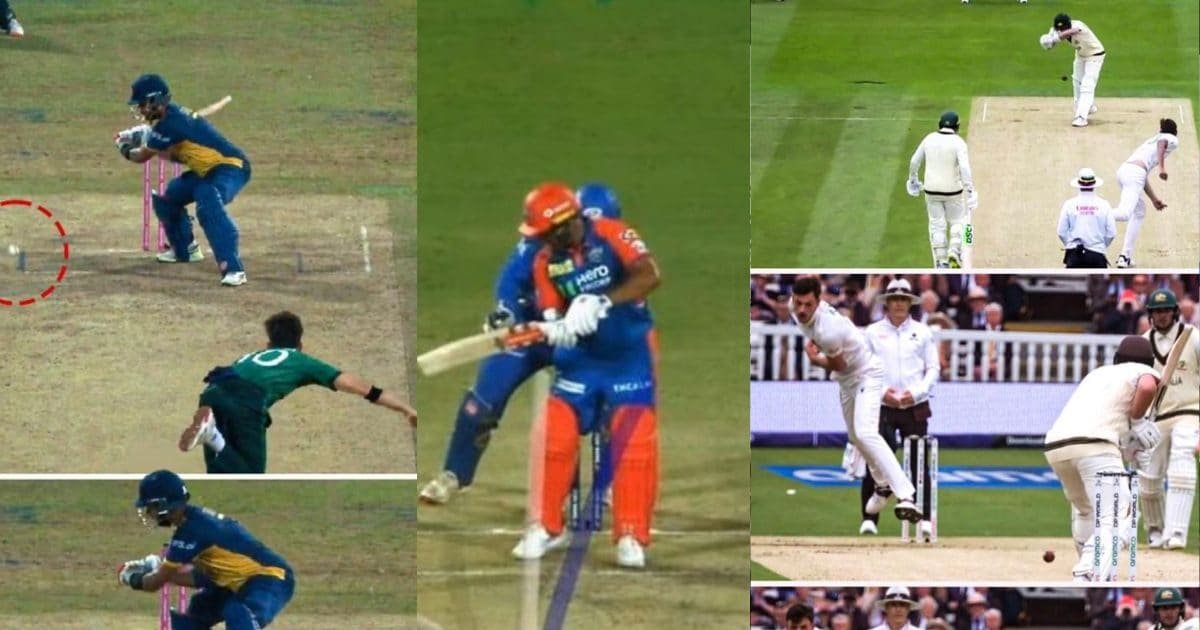
New Delhi. In cricket, when a bowler takes three wickets in three consecutive balls, one word echoes like lightning from the commentary box, “Hat-trick!” It is not just a statistic, but the magic of that moment when the bowler completely dominates the game. But have you ever wondered how this term originated? Its roots lie in 18th century England, where an extraordinary performance changed the cricket lexicon forever.
A hat-trick is not just a result of technique, it is also a test of mental strength. After taking two wickets in two balls, the pressure is at its peak on the third ball. The batsman is alert, the captain changes his strategy and the spectators hold their breath. In such a situation, taking the third wicket is a proof of both the art and restraint of the bowler.
1858: When the story started with “Hat”
In the year 1858, in a match played in England, bowler H. Stephenson created a sensation by taking three wickets in three consecutive balls. At that time, cricket was not as organized and professional as it is today, but the passion of the spectators was no less. Impressed by this amazing performance of Stephenson, his fans collected donations and presented him a special hat. At that time, hat was considered a symbol of respect and prestige. From here the word “hat” got associated with this achievement, later the word “hat-trick” came into existence by adding the art or skill of the bowler i.e. “trick”. This was not just three wickets, but an achievement which was remembered with special respect.
1879: Spofforth and official recognition
Although the 1858 incident laid the foundation for the term, the term “hat-trick” received official recognition in 1879, when Australian fast bowler Fred Spofforth took three wickets in three consecutive balls in Melbourne. Spofforth, known as “The Demon”, surprised the batsmen with his lethal bowling. It was during this period that the word “hat-trick” was formally used for the first time in cricket literature and reports.
Hat-trick: the thrill of rarity
A hat-trick is considered a rare achievement in all three formats of cricket. So far, a total of 185 hat-tricks have been taken in all three formats. So far, 49 hat-tricks less than 50 have been recorded in Test cricket. In ODI cricket this number is 52, whereas in T20 the chances of a hat-trick have increased due to aggressive play, and a total of 84 hat-tricks have been taken in this format, yet this achievement is not easy. Talking about India, the first hat-trick in Test cricket was taken by Harbhajan Singh in 2001 against Australia in Kolkata. In ODI, Chetan Sharma created history by taking a hat-trick against New Zealand in the 1987 World Cup. Deepak Chahar’s hat-trick against Bangladesh in T20 International in 2019 is still memorable.
“Double hat-trick” (four wickets in four balls) and “spread hat-trick” (wickets in three consecutive balls in two overs) have also been seen many times in the history of cricket, which shows the diversity of this achievement.
Most international hat-tricks
Sri Lanka’s legendary fast bowler Lasith Malinga holds the record for taking most hat-tricks in international cricket. Malinga has taken a total of 5 hat-tricks in which 3 came in ODI and 2 T20 international matches. His yorker bowling and precise line-length in the death overs helped him achieve this feat.
Bowlers who took hat-tricks in multiple formats
Taking a hat-trick in different formats of cricket is considered even more difficult, because each format has its own challenge. Nevertheless, there are some select bowlers who have proved their versatility by taking hat-tricks in more than one format. Wasim Akram and Mohammed Shami have taken hat-tricks in both Test and ODI formats. Brattley, Lasith Malinga, Thisara Perera, Hasaranga and Kagiso Rabada have achieved the feat of taking hat-tricks in both ODI and T20 Internationals. This achievement shows that these bowlers have been adept at adapting themselves according to the conditions and format.
Australia captain Pat Cummins is the only player to take two hat-tricks in the same edition of the T20 World Cup. He achieved this historic achievement in the 2024 T20 World Cup. England’s Jimmy Matthews is the only player in cricket history to take two hat-tricks in the same Test match. He did this incredible feat in 1912.