Last Updated:
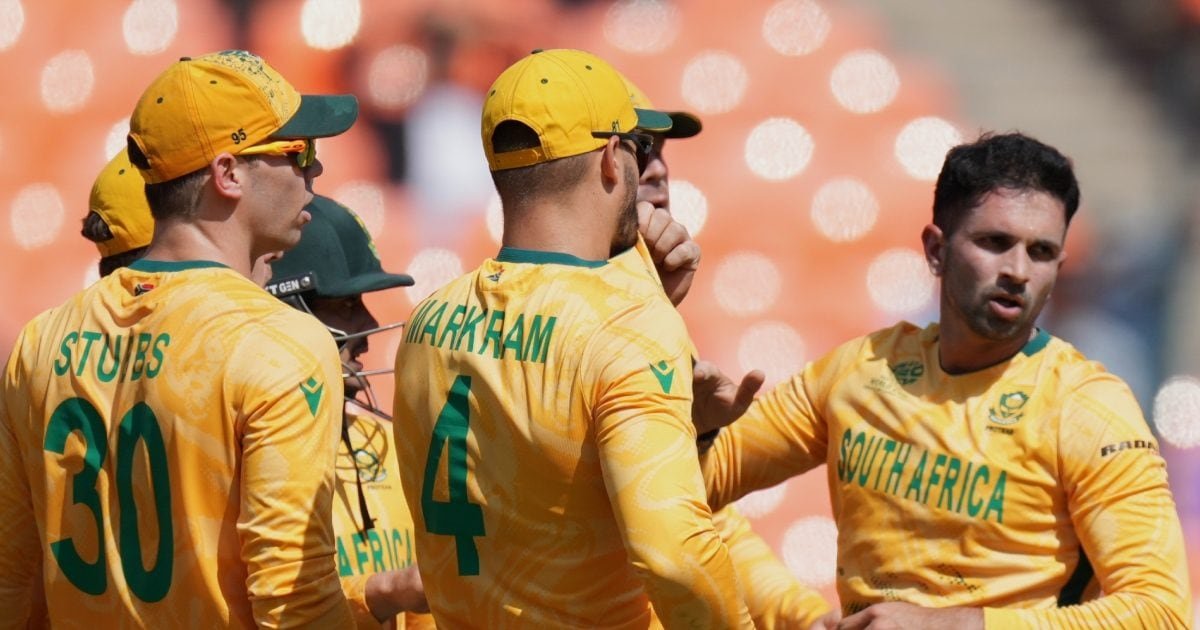
super over icc rule: Despite the courageous game of Rahmanullah Gurbaz, Afghanistan had to face defeat in the second super over in the match which reached the pinnacle of thrill against South Africa. With this defeat, the hopes of the Afghanistan team captained by Rashid Khan of reaching the Super Eight were dealt a blow. What would have happened if the second super over had also been tied in this breath-taking match. What is the rule of ICC? Let us know.


What would have happened if the second super over had also been tied?
New Delhi. What happened between South Africa and Afghanistan in the T20 World Cup 2026 changed the definition of the word ‘thriller’. Amidst the roar of the spectators and the heartbeats of crores of cricket fans, a match was played at the Narendra Modi Stadium, where the 40 overs game fell short and the decision reached the Double Super Over. This great battle that lasted till the last ball left a big question in everyone’s mind. What would have happened if the second super over had also been tied? Would the old controversial rule of boundary count come back, or would an endless sequence of ‘sudden death’ start on the field? Let us know about that interesting rule of ICC, which has been made to conclude such ‘infinite matches’.
If the score remains equal even after the second super over between South Africa and Afghanistan, then the ICC rules are very clear. According to the current ICC rules, the Super Over continues until the winner of the match is declared. That is, the third super over is played after the second, and the fourth super over is played after the third until one team wins. The bowler who has bowled in the previous Super Over (second) cannot bowl in the next (third) Super Over. Also, the batsmen who have been ‘out’ in the previous Super Over cannot come to bat again in the next Super Over.
What would have happened if the second super over had also been tied?
Super over is the ‘sudden death’ moment in the world of cricket
In the world of cricket, Super Over is that ‘sudden death’ moment, which takes the thrill of any match to its peak. In simple words, when the score of both the teams becomes exactly equal in the end in a limited over (T20 or ODI) match, then one over is played to decide the match. In this, each team is allowed to choose only 3 batsmen and 1 bowler. The innings is considered over as soon as two wickets fall.
afghanistan cricket team
When and why did the Super Over start?
ICC started Super Over in the year 2008. Earlier, there was a ‘bowl-out’ rule when the match was tied (like a penalty shootout in football), in which the bowler would hit the ball directly at the stumps without the batsman. After the famous ‘ball-out’ between India and Pakistan in the 2007 T20 World Cup, the ICC realized that the real thrill of the game lies in the battle of bat and ball, and not just in hitting the stumps.
First super over played between New Zealand and West Indies
The first International Super Over was played between New Zealand and West Indies in December 2008. After the 2019 ODI World Cup final, the ICC made a major change in its rules and removed the ‘boundary count’ rule and now the rule is that the Super Over will continue until a team clearly wins.
About the Author

Active in journalism for about 15 years. Studied from Delhi University. Interested in sports especially cricket, badminton, boxing and wrestling. Covered IPL, Commonwealth Games and Pro Wrestling League events. From February 2022…read more